
 Let’s Keep It Real
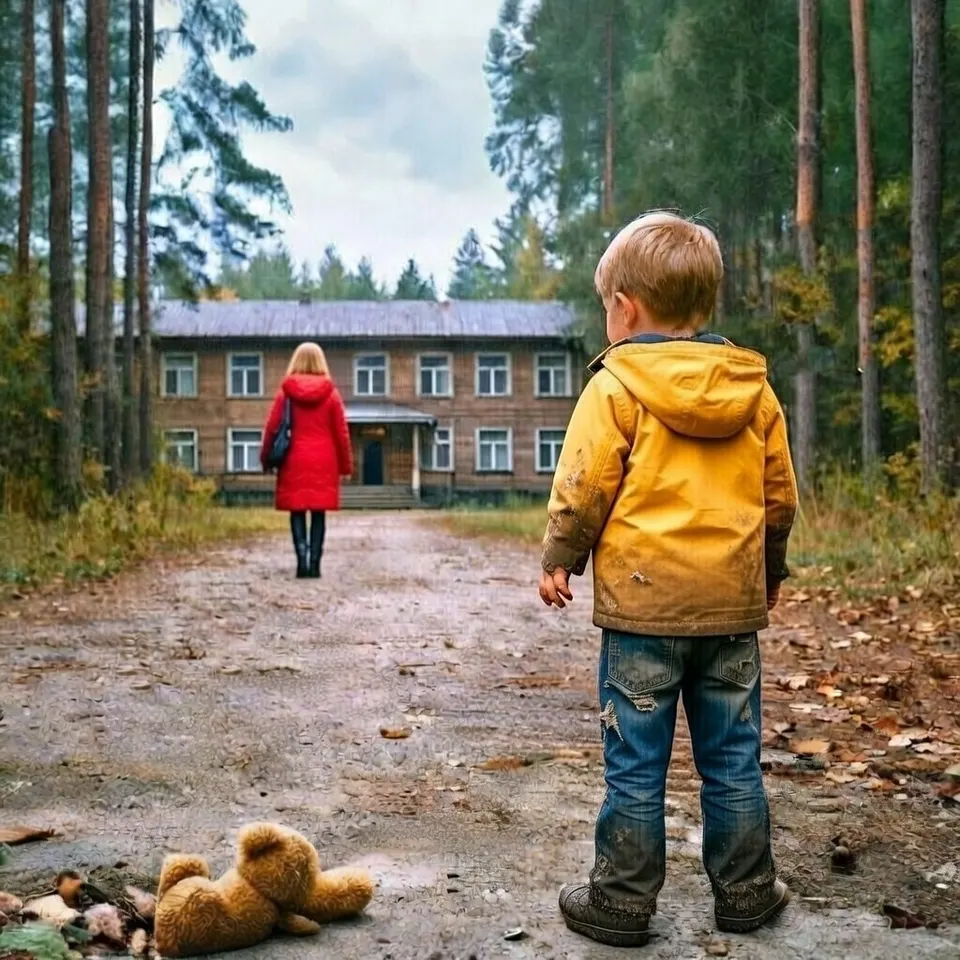
Twenty years ago, a three-year-old boy stood at the window of a children's home, waiting for his mom. He remembered her voice, the scent of her perfume, and the warm hands that had pointed out a squirrel in the pine forest. "This is our family's special spot," she had told him then.
Today, that boy, now a successful businessman, is walking into a bank for a meeting he’s been planning for a year. In his pocket is a private investigator’s business card and a phrase he has rehearsed a hundred times. A phrase that will turn the life of the woman behind the glass upside down. The woman who once said, "I can't do this anymore," and vanished forever. But the truth of that day would turn out to be nothing like he had imagined his entire life.
The ribbon trembled on the oversized scissors. Alex Morgan stood in the crowd, watching the director of Hillside Children’s Home prepare to cut the red ribbon. Two hundred thousand dollars—that’s how much he had donated six months ago, just to be able to stand here today, unnoticed.
“Thanks to our guardian angel, these walls will once again be filled with the laughter of children!” announced Eleanor Vance, the same director who, twenty years ago, had entered into a logbook: “Morgan, Alex, 3 years old; Morgan, Maria, 1 year old.”
The scissors snapped shut, and the ribbon fell to the linoleum floor. Alex adjusted his cuff—an old habit that betrayed his nerves. The crowd moved inside for a tour. In the lobby, a display board titled “Our Brightest Alumni” caught his eye, and his heart sank. In the center photo, he was hugging his sister, Maria. She was six then, he was eight. They were both smiling for the camera as if they shared a secret.
“‘Alex and Maria Morgan,’” a woman next to him read aloud. “Look how sweet! I wonder where they are now.”
Among the guests, Alex recognized a familiar face—a caregiver, Gail Evans, older now, but with the same kind eyes. She was telling visitors about the new playroom, and her voice took him back to his childhood, to the nights she read them bedtime stories.
“Gail remembers every single child who came through these doors,” the director was saying. “She’s dedicated thirty years of her life to them.”
Alex couldn’t take it. He turned and walked quickly toward the exit, not waiting for the ceremony to end. He sat in his car for half an hour, holding a folder of childhood photos, and cried in a way he hadn't since the day he learned they were trying to get Maria adopted without him.
The foam on his coffee looked like a cloud, formless and ready to dissolve at the slightest touch. Alex carefully placed the cup on its saucer, trying not to make a sound, and looked at Mr. Peterson. The private investigator looked like a tired high school history teacher: wrinkled jacket, worn briefcase, glasses perched on the end of his nose.
“Susan Krasnov, 45 years old,” Mr. Peterson said, fanning out a series of photographs. “Branch manager at Central Trust Bank. Lives alone, never married, no official record of children.”
Alex picked up the top photo with trembling fingers. A middle-aged woman was leaving the bank, a purse in her hand, a look of exhaustion on her face. But her eyes were the same—gray, like storm clouds.
“That’s her,” he whispered, a lump the size of a fist forming in his throat.
“She leads a very quiet life,” the investigator continued, his papers rustling like dry leaves. “Work, home, and the cemetery on Fridays. Same flowers, same grave. Her husband died in 2004.”
The same year he and Maria were put in the home. A coincidence? Alex was certain it wasn’t.
“You can stop digging,” he said, putting the photos back in his briefcase. “I’ll take it from here.”
Mr. Peterson nodded, finished his coffee, and stood up, leaving behind only a damp ring on the table—a small mark of a meeting that would change everything.
The mirror in his bedroom reflected a man rehearsing the most important conversation of his life. Alex straightened his tie and said aloud:
“Hello, I’d like to open a trust fund. For an Alex and a Maria.”
His voice shook. He sat on the edge of the bed and opened a notebook filled with letters to his mother—letters he had written but never sent. The pages rustled under his fingers, and he remembered how he used to comfort a crying Maria at the group home: “Mom will come back for us. I know she will.” He had believed it himself as he fell asleep in his narrow bed by the window.
A memory flashed in his mind: a clearing in the woods, tall pines, the smell of pine needles and mushrooms after a rain. His dad pointing out squirrel tracks in the soft earth, his mom gathering mushrooms in a basket, Maria asleep in her stroller under a warm blanket. “This is our family’s special spot,” his mom had said, her voice as sweet and thick as honey.
Alex snapped the notebook shut. Tomorrow, when his mother was sitting at her desk in the bank, he would walk in and say those words. And he would look into her eyes to see if there was any trace left of the woman who had once called him and Maria her treasures. The alarm clock on the nightstand ticked away the final hours before the meeting he had waited twenty years for.
The nameplate on the office door read like a verdict: “S. Krasnov, Manager.” Alex stood in the bank hallway, listening to the distant tapping of keyboards, the ringing of phones—the sounds of people solving problems that would be forgotten by tomorrow. He pushed the door open.
The woman behind the desk looked up from her papers, and time stopped. The same gray eyes, the same curve of her eyebrows, only her face was harder now, and lines around her mouth suggested she rarely smiled.
“How can I help you?” she asked, her voice polite, professional, and completely foreign.
“I’d like to open a trust fund.” Alex sat in the chair across from her, trying not to look at her hands—the same hands that had once wiped his nose and tied his shoes. “In the names of Alex and Maria.”
His mother didn’t flinch. She picked up a pen, slid a form toward her, and began filling it out in a neat, precise hand. As if he had just named the most common names in the world.
“The initial deposit amount?” she asked, her pen hovering over the paper.
“Fifty thousand,” Alex said. “It’s… for the kids. For their future…”
Susan nodded and continued writing. A door slammed in a nearby office, followed by footsteps that faded away. Alex studied the familiar features of her face and realized: either she truly didn’t remember, or she had learned to bury her feelings so deep that even she couldn’t find them.
“Do you have your ID?” she asked, and Alex handed over his driver’s license, wondering if she would recognize the last name.
But Susan copied the information mechanically, like a robot programmed for politeness. He opened a small account, but he already knew: this was just the beginning.
“Goodbye,” Alex said at the door.
“Have a good day,” she replied, already turning to the next stack of papers.
But as the door closed, Alex heard the soft clatter of a pen falling to the floor. And that tiny sound said more than words ever could.
The window of the apartment across the street was like a television screen. Alex had rented the place for a month and was now studying the daily routine of the woman who once sang him lullabies. Susan woke up at seven. Coffee, shower, business suit. No one ever visited; she never went to see anyone. But Fridays were different. On Fridays, she would buy a bouquet of white chrysanthemums and go to the cemetery.
Alex followed her and read the name on the headstone—Stephen Morgan. Loving Husband and Father. His father had died in 2004, the year they were left at the group home. Alex knew that to solve the mystery of that day, he had to learn more about their family’s history. About what happened twenty years ago, when their childhood world collapsed like a house of cards.
The notepad on his table was covered in notes. Alex studied his mother’s habits: when she arrived at the bank, who she spoke with, when she took her breaks. Susan wore a wedding ring on her right hand. There were no personal photos on her desk, just a single potted plant. When he mentioned the word “children,” her voice grew quieter. When he said “family,” she turned to her computer.
Alex devised a plan: regular visits under various pretexts. Corporate accounts, financial statements, wire transfers—any reason to sit across from her and study her reactions. He was already preparing childhood photos, inventing stories about group homes, about abandoned children. He wanted to force her to remember through a series of "coincidences." The goal was simple: to break down the protective wall she had built around her heart.
His phone rang. It was Maria.
“Alex, you haven’t answered my calls in two weeks. What’s going on?” His sister’s voice was filled with concern.
“I’m working on a difficult project,” Alex lied. “The most difficult one of my life.”
The sound of the printer was like machine-gun fire: short, sharp, and relentless. Alex sat in the same office, in the same chair across from his mother, but this time he had a plan. Susan was printing a corporate card agreement, occasionally glancing at her computer screen.
“So this is for an IT company?” she clarified, her eyes fixed on the keyboard. “What’s your field?”
“Mobile app development,” Alex replied, adjusting his tie. “And we also do charity work. We support local children’s homes.”
Susan froze for a second, then resumed typing. Alex noticed the rhythm of her keystrokes had slowed, as if she were weighing each word.
“That’s commendable,” she said neutrally. “Socially responsible businesses are important.”
“I grew up in a group home myself,” Alex said, watching her face. “I know how hard it is for kids without a family.”
At the words “group home,” his mother lowered her gaze to the documents. She no longer looked at him directly, speaking only to the papers. Alex took a glossy brochure for his company out of his briefcase.
“You can keep our information,” he offered. “In case the bank is ever interested in partnering with a charity.”
“Of course,” Susan replied and mechanically placed the brochure in a folder without even looking at it. The gesture was automatic, like someone who had long ago learned not to think about what they were doing.
The printer fell silent, leaving only the ticking of the wall clock. A photograph lay on the desk between them, a bridge between the past and the present. Susan picked it up, studying the interior details: high ceilings, large windows, herringbone wood floors.
“It’s a nice layout,” she said in a steady voice, but Alex saw her fingers were trembling slightly. “How many bedrooms are you planning?”
“Four,” he answered, watching her reaction closely. “I want a big place for my future family. I plan on having a lot of kids.”
The photo was of the renovated lobby of the children’s home, but it did look like a high-end apartment. Susan continued to study the picture, her face a stone mask.
“And how many children is the right number to plan for?” Alex asked, pretending it was casual conversation. “What do you think?”
“That’s a personal decision for everyone,” his mother replied formally, but her right hand shook as she handed the photo back.
Alex put the picture away like a piece of evidence. A car drove by outside, its headlights sweeping across the office for a second before plunging it back into shadow.
The employee time-off records lay before Alex like a treasure map. He had paid a clerk in the bank’s payroll department to get a look at Susan’s vacation schedule for the past few years. And he found what he was looking for. Every year on March 15th: a sick day. Always for one day, always without explanation. Alex checked a calendar from 2004. March 15th—the exact day they were brought to the group home.
He sat in his car across from her house all day. The lights were on, but his mother never left. Not for groceries, not for a walk—nowhere. The day passed slowly, like an old film in slow motion. As evening fell, Alex saw a silhouette in the window. Susan was sitting in an armchair, staring at nothing. Not at the TV, not at a book, just into the void. She sat like that until late at night, when the light finally went out.
“She remembers,” Alex whispered into the darkness of his car. “She remembers, she’s suffering, but she’s hiding it even from herself.”
The streetlights came on one by one, like candles on the grave of a day no one wanted to bury. The childhood photos were fanned out on her desk, and Susan picked them up with trembling hands. The pictures showed a boy of about eight and a girl of six, standing in a forest clearing among tall pines. The sun filtered through the branches, creating a play of light and shadow on their faces.
“Alex and Maria,” Alex said, watching his mother’s expression. “My niece and nephew. I want to open a savings account for them.”
Susan studied the photos for a long time, turning them under her desk lamp. Alex could see her eyelids twitching, like someone trying to recall a forgotten dream.
“It was their favorite place,” he continued softly. “A pine forest just outside the city. Their parents used to take them there.”
“They’re beautiful children,” his mother said quietly, and for the first time in all their meetings, her voice held a hint of emotion. “Where are their parents now?”
“They lost them,” Alex replied, each word a struggle. “A long time ago. The kids grew up and are looking for them.”
Susan placed the photos on the desk but kept her hands near them, as if she couldn’t bring herself to move away. A phone rang in the next office, but the sound seemed distant, like an echo from another world. The charity foundation’s brochure lay between them, its cover featuring a photo of the newly renovated Hillside Children’s Home. Alex pushed it closer to his mother.
“I’d like to make a donation to this facility,” he said. “Hillside Children’s Home. Perhaps you’ve heard of it?”
“We don’t typically handle donations to such institutions,” Susan answered dryly, but her hands were clenched into tight fists.
Alex leaned back in his chair, pretending to think.
“I have a friend who grew up there,” he began thoughtfully. “He told me some interesting stories. There was a caregiver named Gail Evans, a kind woman who read the children stories. And in the hallway, there was a board with photos of the graduates.”
Susan listened without interrupting, but her knuckles had turned white from the strain. Alex continued to describe the group home in minute detail: the dormitory on the second floor, the cafeteria with its long tables, the playroom with a piano in the corner.
“It’s strange that you know the layout so well,” his mother observed, a faint tremor in her voice.
“My friend told me,” Alex shrugged. “He has a good memory for details…”
The brochure remained untouched on the desk, but Susan couldn’t take her eyes off it.
The phone booth smelled of rain and other people’s conversations. Alex dialed the number for Andrew Peterson, a detective who specialized in archival research. His first PI was good with the present, but the past required a different set of skills.
“I need all the information you can find on a Susan Morgan for the year 2004,” he said into the receiver. “Before she changed her last name to Krasnov. Bank records, medical files, any official documents.”
The direct hints weren’t working. His mother had either truly forgotten them or had become so adept at hiding her emotions that not even childhood photos could break through her armor. But something had forced her to change her identity and leave her children twenty years ago. And Alex was determined to find out the truth, no matter how terrible it might be.
“Pay special attention to February and March,” he added. “What was going on in her life right before she disappeared.”
The detective’s calm, businesslike voice came through the line, promising results in a week. Alex hung up and stepped out into the rain. The drops drummed on the roof of the phone booth like a nervous person’s fingers on a table. In a week, he would know the truth about the day their world fell apart. And then he would know whether to continue this game or to let the past go forever. The rain intensified, turning the city into a blurry watercolor. Alex walked to his car, oblivious to his expensive suit getting soaked. One question spun in his mind: what if the truth was worse than anything he had imagined all these years?
The folder landed on the table with a dull thud, like a judge’s gavel delivering a sentence. Andrew Peterson, a thin man in glasses, opened it slowly, as if unsealing an ancient tomb.
“Susan Morgan,” he said, sorting through the documents. “2004. It was a hard year for your mother.”
Alex leaned forward, his heart beating so loudly he thought it could be heard in the next booth of the diner.
“In January, she took out her first loan,” the detective said, placing a bank statement in front of him. “Fifty thousand dollars, against the house. Her husband’s diagnosis was pancreatic cancer, stage four.”
Alex picked up the paper with trembling fingers. For 2004, it was a staggering amount of money.
“Then a second loan, a third…” Mr. Peterson laid out the statements one by one, like cards in a game of solitaire. “Experimental treatment in Germany. She spent over a hundred thousand dollars in total.”
“And it didn’t work?” Alex whispered.
“Stephen Morgan passed away eight months later,” the detective said, shaking his head. “He left his wife with two small children and a debt of nearly a hundred and fifty thousand dollars.”
Alex leaned back in his chair, trying to process the information. His mother had fought for his father’s life until the very end. She had spent everything she had, and more. Outside the diner window, snow was falling, blanketing the city in a white shroud of forgetting.
The audio recorder on the table looked like a small black snake. Mr. Peterson pressed play, and a rough male voice filled the silence:
“Listen, Susie, you think the Callahans are just going to forgive this debt? These are serious people!”
Alex flinched. He remembered hearing that name whispered with fear in his childhood.
“The Callahan brothers,” the detective explained. “Loan sharks. They fronted her money for the treatment at a high interest rate. When your mother couldn’t pay, the threats started.”
The recording continued. A second, harsher voice:
“If you can’t pay with money, you’ll pay with the kids. We’ve got buyers. Good families overseas.”
A cold dread washed over Alex.
“The kids… like property? Like something you can just sell?”
“The plan was to forge adoption papers,” Mr. Peterson explained, turning off the recorder. “Then traffic the children out of the country. There was good money in Europe for healthy American kids.”
“So, she…” Alex couldn’t finish the sentence.
“She was saving you,” the detective nodded. “From human traffickers.”
The coffee in his cup was long cold, but Alex didn’t notice. One thought consumed him: his mother hadn’t abandoned them. She had saved them.
The timeline of events had been reconstructed from documents with hour-by-hour precision. Mr. Peterson laid out the papers in chronological order, like stills from a horror movie.
“Eight a.m.,” he said, pointing to the first document. “The collectors showed up at your mother’s house. Neighbors heard shouting, children crying.”
Alex pictured the scene. Little Maria crying in her crib, and him, a three-year-old, hiding behind his mother’s skirt.
“The ultimatum was 24 hours. ‘The money or the kids.’” The detective turned the page. “Susan realized she had no time to find the money. The group home was the only protection she had.”
“Protection?” Alex asked, confused.
“State custody, paperwork, oversight,” Mr. Peterson explained. “The collectors couldn’t just walk into a state facility and take two children. Too many witnesses, too much red tape.”
The intake form from the children’s home was dated at 2 p.m. “Unable to provide for them,” the director had written, quoting his mother. That same afternoon, she went to the DMV; the detective showed him the stamp on her application for a new ID with a new name. By 6 p.m., she was on a bus to another state.
“She vanished,” Alex whispered.
“She was saving her own life,” the detective corrected him. “So that one day, she could come back for you.”
Her employment records told a story better than any novel. Alex flipped through the pages, seeing how his mother had survived those three years.
“Columbus, Ohio,” Mr. Peterson read. “Worked as a cleaner in an office building. Lived in a shared apartment under the name Susan Krasnov. Then a cashier at a grocery store. Then a bank teller at a small branch. Your mother clawed her way back, rebuilding her life piece by piece. She followed the news about the Callahan brothers,” the detective showed him printouts from the internet. “She was waiting for them to be arrested.”
“And were they?” Alex asked.
“In 2007. They were caught in a human trafficking sting.” Mr. Peterson nodded. “Only then did your mother return to her home state.”
The document reinstating her residency was dated August 2007.
“The first thing she did was go to the children’s home,” the detective continued. “But it was too late. You had already been adopted. The administration refused to give her any information, citing confidentiality laws.”
Alex pictured his mother standing in front of the same gates where he had recently sat crying in his car. Only she was looking for them, and all she found was an empty space.
The ad agency was buzzing like a beehive: phones ringing, meetings in progress, keyboards clacking. Maria sat at her computer in a glass-walled office, working on a layout for a baby food ad. The irony was not lost on him.
“Alex?” She looked up and saw her brother in the doorway. “Is something wrong?”
Alex walked in, closed the door behind him, and placed the folder of documents on her desk.
“I found out the truth,” he said simply.
For the next hour, he talked, and Maria listened, her face growing paler with every word. He showed her the loan statements, the transcripts of the threats, the timeline of that day in March. With each document, she looked more and more lost.
“Are you telling me she… saved us?” Maria whispered when he had finished.
“Yes,” Alex nodded. “From traffickers. The group home was the only safe place.”
Maria was silent for a long time, processing everything. Outside the glass walls of her office, life went on as usual, but in here, time seemed to have stopped.
“So I’ve spent all this time hating her for nothing?”
“I guess so.”
Suddenly, Maria shot up from her chair, sweeping the documents onto the floor.
“So what?!” she exploded. “What difference does it make what her reasons were?”
Alex bent to pick up the papers, but she stopped him with a gesture.
“I was one year old, Alex. One! She was twenty-five. Who do you think suffered more?”
“Maria, try to understand…”
“No, you understand!” She paced the office like a caged tiger. “A child’s trauma doesn’t care about adult motives. I don’t care if she was saving us or getting rid of us.”
“But she didn’t have a choice.”
“There’s always a choice,” Maria snapped. “She chose the easy way out—to get rid of us. And then she lived her life in peace for twenty years.”
“But she was looking for us…”
“Not hard enough!” Maria sat back down, crossing her arms. “I don’t want to see her. And I don’t want you to tell her anything about me.”
Her voice was as cold as ice. Alex knew he had lost this battle, for now.
That evening, Alex sat at home, the documents spread across his table. Each paper told a piece of the story, but fitting them together into a single, coherent picture felt impossible. Logically, his mother had saved them. A group home was better than being sold to traffickers. But emotionally, twenty years of trauma, pain, and feeling abandoned couldn’t just be erased. His head said one thing, his heart another. And somewhere in between was a truth he couldn’t quite grasp.
Alex stood up and walked to the window. The city below was alive, people rushing home to their families, to those who were waiting for them. He had a family, too. He had one then, and he had one now. But how could he piece it back together? He made a decision: tomorrow, he would go to the bank and tell his mother the truth. He would tell her he knew everything: about his father’s illness, the debts, the collectors. He would show her the documents. And he would look her in the eyes when she realized she had been found. He didn’t know exactly what he would say yet. But he couldn’t stay silent any longer.
The streetlights came on, and Alex saw his reflection in the glass. A man who had spent his whole life looking for his mother. And he had finally found not only her, but the truth. The question was, what to do with that truth now. What was about to happen in that bank would change everything. A mother and son were about to come face to face.
The numbers on the digital clock glowed in the dark: 3:27 a.m. Alex lay awake, the file of documents in his hands. The pages rustled in the quiet of the night like autumn leaves. He read and reread the papers, stared at the old photos, trying to assemble the puzzle of his past.
A faint memory surfaced: their last day at home. His mother was crying, packing their things into a small suitcase, whispering through her tears, “Mommy loves you. So, so much.” Back then, three-year-old Alex hadn’t understood. He thought they were going to visit their grandmother, just like she had promised last week. Maria was asleep in her stroller, unaware that her life was about to change forever. Now he understood: his mother was saying goodbye. She knew she would never see them again. The thought pierced his heart.
Alex got out of bed and went to the window. Outside, the sky was slowly lightening as the city began to wake. Somewhere out there, just a few miles away, another person was awake, also remembering that day. Today, he would give her the chance to explain. The chance to tell her truth after twenty years of silence.
The phone rang at 6:30 a.m. Alex grabbed it, thinking it was his alarm, but his sister’s name was on the screen.
“Maria?” he said, surprised. “Why so early?”
“I was up all night thinking about what you told me.” Her voice was strained, like a taut wire. “I couldn’t sleep.”
Alex sat on the edge of the bed, pressing the phone to his ear. The morning sounds of the city drifted in through the window: the hum of traffic, the voices of pedestrians.
“All I remember is the feeling of being abandoned,” Maria continued quietly. “The cold, strange hands, the institutional smell of the group home. But if the story about the collectors is true…”
“What if we’ve been wrong about her, Alex? Do you want to see her?” he asked carefully, afraid to scare away the fragile hope that was just beginning to emerge.
“No,” Maria answered quickly. “Not yet. I’m not ready.”
“But if you do meet her?”
A long pause. In the distance, a bus hissed to a stop.
“Tell her I’m not angry,” his sister finally said. “Just not ready. Maybe later, after I’ve had time to process all this.”
Alex felt something inside him begin to thaw. Maria was taking the first step toward reconciliation, even if it was only in her thoughts.
Two envelopes lay on his desk like two different fates, two paths, two possible futures. The first contained childhood photos from their years in the group home: graduations, birthdays, small achievements, little moments of joy amid great pain. The second held the documents detailing the debts and threats from 2004. Proof that his mother was a victim, not a villain.
Alex tried to rehearse his speech in the mirror but realized that words couldn’t be planned. In conversations like this, it wasn’t logic that mattered, but feeling. He put on his best suit—a dark, conservative navy, as if for the most important business meeting of his life. He took the journal with his unsent letters to his mother—maybe he would show it to her, if the conversation went well. The briefcase clicked shut. Alex glanced at the clock: 8:30. Time to go.
In the elevator, the mirrors reflected a man who had been preparing for this day for twenty years without even knowing it. Today, everything would be decided: either a family would find its way back to each other, or it would be lost forever.
The car started on the first try, as if it understood the gravity of the moment. The bank wasn’t open yet, but Susan was already walking along the sidewalk toward the employee entrance. Alex sat in his car across the street, watching her move: slowly, wearily, her shoulders slumped, her gaze fixed on the ground. Twenty years of loneliness had left their mark. She looked older than her years, as if she were carrying an invisible weight that grew heavier with each passing day.
His mother disappeared into the bank building. A few minutes later, a light came on in her office window. Alex could see her silhouette: Susan sitting down at her desk, arranging papers, turning on her computer. The mechanical movements of a person who had long forgotten how to live and was merely existing. On the windowsill stood the same potted plant—the only living thing in the sterile office. His mother watered it every morning, as if her own life depended on it.
Alex decided to wait until after lunch. In the morning, people are busy, thinking about their plans for the day. But in the afternoon, you can talk calmly, without rushing. About the things that matter most. Time stretched on, slow as honey dripping from a spoon.
The bank door opened with the soft chime of a bell. Alex walked through the main hall to the reception desk, the envelopes in his briefcase feeling heavy on his shoulder.
“I’d like to see the manager,” he told the young woman at the desk. “It’s about an important matter.”
Susan received him in her office like any other client. A gesture of her hand—please, sit—a polite smile, a professional tone.
“How can I help you?” she asked, folding her hands on the desk.
Alex slowly took out the envelopes and placed them in front of him, but he didn’t open them yet. He started indirectly, like in a good detective story:
“I wanted to tell you a story about a woman. Twenty years ago, she left her two young children. A boy and a girl.”
Susan listened, but her hands began to tremble at his first words. Alex could see she knew where this was going.
“People judged this woman,” he continued slowly, watching every flicker of emotion on his mother’s face. “They said she was heartless. But no one knew the truth about that day.”
His mother’s fingers clenched into fists. She stared at the envelopes as if they were snakes, ready to strike.
“What… What did this person want to say?” Susan asked, her voice trembling.
Alex rose from his chair, walked slowly to the window, then turned to face her. The light from the window illuminated his profile, and in it, the features of his late father emerged: the same curve of the eyebrows, the same shape of the eyes.
“He wanted to say that he understands,” Alex said, and his voice carried the same inflections as Stephen’s, which his mother had remembered for twenty years.
Susan stared at his face, finding the familiar in the unfamiliar. Her lips trembled, her eyes widened in recognition.
“Alex!” she whispered. “It’s you!”
“Hello, Mom,” Alex nodded, and the words sounded like a prayer after a long fast. “I found you.”
Susan covered her face with her hands and began to sob—bitter, uncontrollable tears, the kind shed for the dead or for irretrievably lost time. Twenty years of pain erupted in a single, long cry. Outside the window, life went on. People hurried about their business, cars carried passengers, the world spun on its axis. But in the small bank office, time had stopped, giving a mother and son the right to the tears they had held back for two decades. Alex didn't move, letting her cry it out. Some reunions can’t be rushed. They have to ripen on their own, like fruit on a tree.
The tears streamed down Susan’s cheeks, relentless as spring runoff after a long winter. She couldn’t speak, only weep and look at her son, as if afraid he would vanish if she blinked. Alex stood by the window, not knowing what to do with his hands, where to look, how to act. Twenty years he had imagined this meeting, and now he was at a complete loss.
“Come here,” Susan was the first to break the silence, holding out her trembling hands. “Please.”
He slowly approached the desk and carefully sat in the chair across from her. His mother studied every line of his face, like an archaeologist deciphering ancient script.
“You’ve grown so handsome,” she whispered, her voice breaking with emotion. “A real man.”
“I grew up without you,” Alex replied evenly, the words a statement of fact, not an accusation.
Susan flinched as if struck.
“Forgive me,” she said quietly. “Forgive me for leaving. For not being strong enough.”
“I don’t know if I can yet,” Alex interrupted, the honesty in his voice painful for them both.
The clock on the wall ticked away the seconds of their first conversation after two decades of silence. Alex took the folder of documents from his briefcase and placed it on the desk between them.
“Tell me about that day,” he requested. “Why did you leave us?”
Susan took a tissue, wiped her eyes, and tried to compose herself. She began slowly, struggling to find the words:
“Your father died in January. Cancer. I spent everything on his treatment, went deep into debt. When the money ran out…” She trailed off, reliving the nightmare. “The collectors came. The Callahan brothers. They said: either the money, or they take you.”
“They wanted to sell us overseas?” Alex asked, his voice tight. “Sell us?”
“A forged adoption. Then they’d ship you out. They paid well for American kids in Europe,” Susan said, staring at the desk. “My choice was between a group home and human trafficking.”
Alex opened the folder and took out the transcripts from the wiretaps.
“I know,” he said. “I have recordings of their threats.”
His mother looked up at him, surprised.
“I thought I’d come back for you in a year,” she continued. “Find a job, pay off the debts, and bring you home.”
“But you didn’t come back,” Alex stated.
“I couldn’t,” Susan whispered, a fresh wave of tears welling up.
Susan talked, and Alex listened, occasionally checking the documents. The story was coming together into a complete picture—tragic, but logical.
“For three years, I hid in Ohio. Lived under a different name, moved from apartment to apartment, terrified of every knock on the door.”
“You were afraid for us?” Alex clarified.
“For you. For myself. The Callahans were serious people. They would have killed me for less.” Susan shivered at the memory. “When they were arrested in 2007, I came back. I went straight to the group home.”
“And what did they say?”
“That you had been adopted. That the records were sealed. No information,” her voice turned bitter. “The director wouldn’t even look at me. She just said I should be happy the children were with a family.”
Alex pictured the scene. His mother standing in the same lobby where he himself had recently cried, being turned away by a stranger.
“I’ve spent seventeen years looking for you through private investigators,” Susan said quietly.
“You were looking?” Alex was surprised. There was nothing about that in the file.
Susan opened a desk drawer and pulled out a thick folder. She emptied its contents onto the desk: business cards from PIs, denial letters from social services, printouts of official inquiries.
“Seventeen years,” she repeated, sifting through the papers. “Everywhere, the same answer: the records are sealed.”
Alex picked up a few of the business cards—agencies he had never heard of. Small, low-budget outfits that took on hopeless cases.
“The investigators couldn’t get access to sealed adoption records,” his mother explained. “All I knew was that you were adopted in 2007. Nothing more.”
“What about social media?” Alex asked. “The internet?”
“I searched for the name ‘Morgan,’ but your last names had been changed. I was chasing ghosts,” Susan said with a bitter smile. “I lost your trail completely.”
Alex realized they had been living in parallel worlds. He was searching for his mother, and she was searching for them. But between them stood a wall of laws, bureaucracy, and indifference.
“Why didn’t you hire a better detective agency?” he asked.
“With what money?” His mother gestured to her pay stubs. “I’m a branch manager. The salary isn’t what you think. The top agencies charged fees I could never afford.”
Alex took out his phone and showed her photos of his sister. Susan took the phone with shaking hands, holding it close to her eyes.
“My baby girl,” she whispered. “What is she like?”
“She’s beautiful.”
The pictures showed Maria at the office, at a birthday party with friends, on vacation with her boyfriend. The ordinary life of a successful young woman.
“She looks like I did when I was young,” his mother remarked, swiping through the photos. “Same eyes, same chin.”
“She knows about the collectors,” Alex said carefully. “But she can’t forgive you yet.”
“She doesn’t want to see me?” Pain was evident in Susan’s voice.
“She told me to tell you she’s not angry. Just not ready,” Alex put his phone away. “She needs time.”
“I understand,” his mother nodded. “I’ll wait as long as it takes. What does she do for a living?”
“Advertising. She’s a designer. Very talented,” Alex managed a small smile. “At the group home, she used to draw cards for Mother’s Day. She always had an eye for beautiful things.”
Susan cried silently, picturing the daughter who had grown up without her.
Alex leaned back in his chair, gathering his thoughts.
“Forgiveness doesn’t erase the pain,” he said slowly. “For twenty years, I thought you didn’t want us. That you got rid of us. And now?”
“Now I know the truth. But the trauma is still there. The feeling of being abandoned hasn’t gone away.”
Susan nodded in understanding.
“I’m not asking you to forgive me right away,” she said quietly. “I know I have no right to ask.”
“I want to try to get to know you again,” Alex paused. “Slowly. A cup of coffee once a month. Maybe, over time…”
“I’ll wait as long as it takes,” his mother interrupted. “A lifetime, if I have to.”
Outside, it was beginning to get dark. The business day was ending, but their conversation was timeless.
“Is there… anyone in your life?” Alex asked. “A partner, a relationship?”
“No,” Susan shook her head. “After that day, I couldn’t let anyone get close. It’s just been work, home, and visiting your father’s grave. That’s it.”
“That’s not right,” Alex said. “You’re still young. You should be living.”
“How can you live when you’ve lost the most precious thing in the world?” his mother asked.
Alex had no answer to that question.
Alex stood up, took a business card from his pocket, and placed it on the desk.
“My number,” he said. “When you’re ready to talk, call me.”
“And you’re not ready now?” Susan asked.
“Right now, I need time to process all of this,” he answered honestly. “I’ve dreamed of this meeting for twenty years. And now I don’t know what I feel.”
He walked to the door and paused. He wanted to hug his mother but realized he wasn’t ready for that kind of closeness yet. There was too much pain between them.
“Goodbye,” he said.
“Goodbye, son,” Susan replied.
And that word, “son,” sounded like a prayer.
Alex walked out of the office, out of the bank, and onto the street. He breathed in the cold air and felt that something in his life had changed forever. Back in the office, Susan sat alone, holding her son’s business card. For the first time in twenty years, she felt a glimmer of hope—faint, fragile, but real. The path to forgiveness would be long and difficult. But it had begun. And that, in itself, was a miracle. The plant on the windowsill reached for the last rays of the winter sun, like a soul reaching for light after a long darkness.
The phone call came on a Friday afternoon while Alex was sorting through mail at his office. An unfamiliar number appeared on the screen.
“Alex?”
Her voice trembled like a string in the wind.
“It’s… It’s Susan. You can call me Sue.”
He wasn't ready for "Mom" yet. Alex set aside the documents and leaned back in his chair. The week since their meeting had been a blur of thinking, analyzing, trying to understand his own feelings. “I’m listening,” he said carefully.
“I was wondering… maybe we could meet?” Susan sounded hesitant, as if fearing rejection. “At a coffee shop. Neutral ground. There’s a small place near the subway.”
“Okay,” Alex agreed after a pause. “This weekend? Does Saturday work for you?”
“Yes, of course!” The relief in her voice was audible even over the phone. “I’m so afraid of saying the wrong thing. Of making a mistake.”
“Just be honest,” Alex advised. “That’s the only thing that matters.”
They both knew this was the first step toward reconciliation. A timid, uncertain, but crucial step.
“Anna’s Cafe” turned out to be a cozy little spot with checkered tablecloths and the smell of cinnamon. Alex arrived fifteen minutes early and chose a table by the window. Susan appeared right on time, carrying a worn photo album. They were both nervous; she fidgeted with the strap of her purse, he stirred his coffee with a spoon. How are a mother and son supposed to act after twenty years apart? There were no guidebooks for this.
“I brought something,” Susan said, placing the album on the table. “Photos of your father. I thought you might want to see.”
Alex opened the album. On the first page was a young man in a military uniform, smiling at the camera. Familiar features, the same shape of the eyes.
“What was he like?” Alex asked quietly.
“Kind,” his mother smiled through her tears. “Patient. When you were sick, he would sit by your bedside all night. He wanted to protect you from every bad thing in the world.”
Alex turned the pages. His dad and mom at their wedding, his dad holding him as a baby. Family picnics. A life he never had.
“You have his personality,” Susan noted. “Serious, responsible. And you have his eyes.”
For the first time since they met, Alex felt that his parents had truly loved them.
Alex carefully began to talk about his life in the group home. How he protected Maria from the older boys, how they split the last piece of candy, how he learned to read so he could tell her stories.
“You should have grown up at home,” Susan cried, listening to his stories. “In a warm, loving house.”
“But we didn’t become bitter,” Alex countered. “We became stronger. We learned to rely only on ourselves.”
He told her about school, college, his first job. How he built his career and started his own business. Susan listened with wide eyes.
“You’ve become so successful,” she said with pride. “Your father would have been so happy.”
For the first time, she spoke to him in a familiar way, and it sounded natural, as if it had always been that way.
“And Maria?” his mother asked.
“She’s successful too. She’s very talented,” Alex nodded. “A designer at an ad agency. A creative soul.”
“Did she draw at the home?”
“Constantly. On anything she could find.”
Susan smiled through her tears—the first genuine smile of their conversation.
Susan gently asked about his relationships, his family life. Alex was silent for a long time, choosing his words.
“I can’t seem to stay in a long-term relationship,” he finally admitted. “I’m afraid of being abandoned again. As soon as things get serious, I… pull away.”
His mother understood: this was the consequence of her decision twenty years ago.
“I ruined your life,” she whispered, covering her face with her hands.
“You didn’t ruin it,” Alex said softly. “You made it more complicated. But I’m managing. I have my work, my friends, Maria.”
“But what about a family? Children?”
“Not yet. Maybe someday,” he shrugged. “When I learn to trust.”
They agreed to meet every two weeks, no more often, to avoid rushing things. Alex knew that trust had to be rebuilt one piece at a time. His mother confessed that she hadn't had a relationship since losing the children.
“I couldn’t let anyone get close,” she explained. “Work became my only purpose. Home, the bank, the cemetery on Fridays. Every March 15th, I call in sick,” she added quietly. “It’s my day of mourning. I sit at home and imagine you growing up without me. Your first day of school, learning to ride a bike.”
For the first time, Alex felt true empathy for her. She had suffered too. Maybe even more than they had. Children adapt, but adults carry the guilt for a lifetime.
“I read everything I could find about group homes,” Susan continued. “I studied psychology, trying to understand what you were going through. I bought toys that I would have given you for your birthdays.”
“Where are they?”
“In the nursery. The room is still there. Untouched.”
Alex pictured the room—a museum of a childhood that never was.
Alex carefully brought up the subject of Maria.
“I want you two to meet,” he said. “But she’s not ready yet. She needs time.”
“I’ll wait,” Susan nodded. “As long as it takes. A lifetime if I have to.”
“Don’t be so dramatic,” Alex smiled. “She’ll come around. She was younger, she remembers less. It’s harder for her to understand the motives.”
They agreed to meet just the two of them for now. They discussed the possibility of going for walks, to the theater, to museums.
“Would you like me to show you your father’s grave?” his mother offered.
“Yes,” Alex agreed without hesitation. “I want to know my family’s history. To understand where I come from.”
“We’ll go next time,” Susan promised. “I’ll tell you everything I remember.”
Outside the cafe, a snowstorm was beginning, but inside it was warm and cozy. As they said goodbye, Alex touched his mother’s hand for the first time—a light squeeze, not a hug, but a step toward closeness.
“Goodbye… Sue,” he said, and the name sounded almost affectionate.
Susan felt the ice begin to melt. Slowly, carefully, but irrevocably.
Alex drove home with a lighter heart. For the first time in a month, he knew he was ready for a cautious reconciliation. His mother wasn't a monster, but an ordinary woman who had made an impossible choice long ago. At home, he called Maria and told her about the meeting.
“How is she?” his sister asked.
“She’s normal. Sad. Lonely. She loves you very much, even though she hasn’t seen you in twenty years.”
“And how do you feel?”
“Pity. Understanding. Not love, not yet, but… the beginning of something.”
“If you’re ready to have a relationship with her, I’m not going to stop you,” Maria said quietly. “Maybe someday I’ll… Don’t rush it. Everyone moves at their own pace.”
After hanging up, Alex realized his family was slowly coming back together. It was a slow, painful process, but it was happening. Outside, the snowstorm blanketed the city, but in his soul, a thaw was beginning.
The GPS showed 20 miles to the turnoff for the state park. Susan sat beside her son in the car, silent, watching the landscape fly by. Alex put on some quiet music; the silence felt too tense for such a trip.
“Turn left after the bridge,” his mother said when the sign for “Pine Ridge Park” appeared. “We always park here.”
The park greeted them with the scent of pine and damp leaves. Tall pines stretched toward the gray sky, and a carpet of cones and needles crunched under their feet. Alex walked beside his mother down a path that was both familiar and foreign.
“Do you remember this place?” Susan asked, stopping in a small clearing.
“Vaguely.” Images surfaced in fragments: tall trees, sunlight dappling the ground, someone’s laughter. Not memories, but echoes of memories.
“This is where you saw a squirrel for the first time,” his mother smiled. “Maria was so scared she hid behind your father’s legs.”
She told him about family picnics, games of hide-and-seek among the pines, mushroom picking. Alex listened and felt a strange connection to this place, as if the forest itself remembered his childhood.
“Your father dreamed of building a cabin here,” Susan added quietly. “He said kids should grow up in nature, not in the city.”
The wind rustled in the treetops, and for the first time, Alex felt like a part of his family’s story.
The cemetery was nearly empty on a weekday. Susan walked along the familiar paths, carrying a bouquet of white chrysanthemums—the same flowers she bought every Friday. Alex followed her silently, preparing to meet his father twenty years after his death. The grave was modest: a black granite headstone, a framed photo of a young man, a bench nearby.
Alex read the inscription: “Stephen Morgan.” Loving Husband and Father.
“Stephen,” he whispered. “My middle name is Stephen.”
Hearing his full name for the first time felt strange, as if he had finally found his place in the world.
“He asked me to tell you he loved you,” Susan said, placing the flowers in a vase. “Those were his last words about you.”
His mother told him about Stephen’s character, his final days. How he suffered not from the pain, but from the thought of leaving his family unprotected.
“Did he know about the debts?” Alex asked.
“He knew. And about the threats, too,” Susan nodded. “He was the one who told me to take you to the home if anything happened to him. He said, ‘Better there than in the hands of criminals.’”
Alex looked at his father’s photo and, for the first time, felt no anger. Only a sadness for a life that could have been.
They sat on the bench beside the grave. Susan spoke quietly, addressing both her son and the memory of her husband:
“I tell him about you every day. I tell him how handsome and smart you’ve become. How Alex built a business, how Maria became a designer.”
“Would he be proud of us?” Alex asked, a childish need for approval in his voice.
“He would be so proud,” his mother answered with conviction. “You’ve become exactly the man he dreamed you would be: strong, honest, and caring.”
Alex felt a warmth spread through his chest.
“Mom,” he said suddenly, and the word sounded natural, unforced.
Susan began to cry—from happiness and pain all at once. She had waited twenty years to hear that word.
“I’ve dreamed of hearing you say that for so long,” she whispered through her tears.
The cemetery was silent around them, giving a mother and son the space for their first real hug in two decades.
Susan told stories about little Alex, and with each word, the past came to life.
“You always protected Maria’s toys,” she smiled through her tears. “If a guest wanted to play with her doll, you’d say, ‘That’s Maria’s, don’t touch!’ You were always so serious, so grown-up for your age. You’d divide candy perfectly in half, counting every piece.”
Alex listened, and his childhood was pieced back together.
“In the forest, you used to collect pinecones for crafts,” his mother continued. “And you once said you would always protect Maria. You were two and a half years old then.”
“And Dad?”
“Your dad taught you how to build a fire. You tried so hard, blowing on the embers with your cheeks all red.” Susan laughed. “And do you remember when we built a fort out of branches?”
“No,” Alex shook his head.
“You said it would be our family home in the woods.”
His mother laughed and cried at the same time. And Alex laughed too. For the first time in twenty years, they were laughing together, like a family.
Alex took out his phone and showed her new pictures of his sister: at a company party, at a modern art exhibit, out with friends.
“She’s a designer, just like you dreamed,” he said.
“I wanted to be an artist when I was young,” Susan confessed, studying every detail in the photos. “I even got into art school. But then I met your father and got married. Maria inherited your talent. She’s beautiful. And she has intelligent eyes, like her father.”
His mother memorized her daughter’s features.
“What’s her personality like?”
“Fiery. Brutally honest. She doesn’t forgive lies,” Alex put his phone away. “She’s afraid of disappointing you.”
“She could never disappoint me,” Susan said firmly. “No matter what she does, no matter who she becomes, she is my daughter. My love for her doesn’t depend on her actions.”
Alex knew that was exactly what Maria needed to hear.
On the way back to the car, Alex suggested:
“Write her a letter. Not to ask for a meeting. Just so she knows the truth. Your truth.”
Susan stopped, considering the idea.
“What if she doesn’t want to read it?” she asked, her voice pained.
“Then we’ll wait longer,” Alex shrugged. “Time heals. Sooner or later, she’ll get curious.”
“What should I write?”
“What you feel. No excuses, no asking for forgiveness. Just the truth about how much you love her.”
Susan nodded.
“Okay. I’ll give the letter to you,” she agreed. “I want her to know that I love her. I have always loved her. And I will wait as long as it takes.”
They walked back to the car along the autumn paths of the cemetery, and Alex felt that something important had happened that day. Not just meeting his father, but a final reconciliation with his mother. Next up was Maria. The most difficult part of reuniting their family. But now he knew: they would get through it.
The notepad rested on her knees, the pen trembling in her hand like an autumn leaf. Susan sat on the same tree stump where she had once collected pinecones with her children, trying to find the words for a letter to her daughter. The pines whispered around her, a calming sound; this was where they had once been happy.
“My Dearest Daughter…” she began, then crossed it out. “My Maria…” That wasn’t right either. She crumpled the page and tossed it to the ground. A second sheet. A third. The ground around her was littered with the white clumps of failed attempts. The quiet of the forest helped her think. There was no rush here, no prying eyes, no phone calls. Just her and the memories of a time when Maria slept in her stroller under these very pines.
“My sweet girl,” she finally wrote, and the words felt right. The letter flowed from her then: about a love that hadn’t died in twenty years, about the pain of separation, about how she had imagined her grown-up daughter. Among the familiar trees, the words came easier.
“Did Alex tell you how your father taught him to read animal tracks?” she wrote. “You were just a baby, but I believed that one day we would all come back here together.”
The wind rustled the pages, as if suggesting what to write next.
The envelope lay on Alex’s desk for three days before he dared to open it. Susan had given him the letter with the words, “Read it first. If you think it’s right, give it to her.”
He read it at home, in an armchair by the window, and tears streamed down his face. The letter was so full of pain and love that his heart ached with every word. Susan wrote about his father: how kind and patient he was, how full of dreams. She wrote about how she pictured her adult daughter: beautiful, talented, and happy.
“You’ve become exactly what I dreamed you would be,” Alex read through his tears. “I saw your work online. You’re as talented as I once hoped to be.”
The letter ended with simple words: “I’m not asking for forgiveness. I’m not asking for a meeting. Just know that you are loved. You have always been loved.”
Alex folded the letter and put it back in the envelope. He knew he had to give it to her. Maria had a right to know she was loved.
The ad agency was buzzing with creative energy: designers hunched over mockups, account managers on the phone, art directors debating concepts. Maria sat in her cubicle, working on a campaign for baby food.
“Alex?” She looked up and saw her brother. “Is something wrong with Mom?”
The word “Mom” sounded natural, unforced. Alex noted the change.
“Everything’s fine,” he reassured her, perching on the edge of her desk. “She wrote you a letter.”
Maria put down her pencil and looked intently at the envelope in her brother’s hand.
“What does it say?” she asked quietly.
“I don’t know. I didn’t read it,” Alex lied. “Just a warning: it might be heavy.”
Maria took the envelope, turned it over in her hands, and put it in her purse.
“I’ll read it at home,” she decided. “Alone. I need quiet for things like this.”
“She’s not asking for a reply,” Alex added. “She just wanted you to know.”
Maria nodded, already mentally preparing herself for what was inside.
That evening in her apartment, Maria held the envelope for a long time before opening it. Then she tore it open quickly, like ripping off a bandage—all at once, to get it over with. She read slowly, rereading each paragraph several times. She cried without noticing the tears. The letter was filled with such maternal tenderness that her heart broke with pain and longing.
“Did Alex tell you about our walks in the woods?” she read, and realized she didn’t remember. She had been too young. But strangely, she felt a pull toward that place, as if something deep inside knew the way home.
That night, without thinking, Maria got in her car and drove to the state park. She didn’t need the GPS; her hands seemed to know which way to turn the wheel. She walked the trails in the dark, searching for a feeling of home. She found the clearing, sat under a tall pine, and stayed there until dawn, listening to the sounds of the forest and her own heart. As the sun rose, she understood: her mother had suffered no less than they had. Maybe even more. And the forest had given her the peace to make a decision.
Dennis was making coffee in the kitchen when Maria told him about the letter. He listened silently, occasionally stirring the pot.
“And how do you feel?” he asked when she finished.
“Confused,” Maria admitted honestly. “Pity. Curiosity. Fear.”
“Fear of what?”
“That I’ll be disappointed. Or that she’ll be disappointed in me.”
Dennis placed a cup of hot coffee in front of her.
“Meeting her doesn’t mean you have to forgive her right away,” he said thoughtfully. “You could just see her. Figure out how you feel.”
“What if I don’t feel anything?” Maria worried.
“And what if you feel something important?” Dennis smiled.
Maria drank her coffee and thought. The letter lay on the table between them, a bridge between the past and the future.
“I need more time to think,” she finally decided.
The phone rang late that evening. Alex was in bed with a book, getting ready to sleep.
“I read the letter,” Maria said without preamble. “I cried for two hours. I want to see her.” Her voice trembled with emotion. “But not meet her. Just see her from a distance.”
Alex sat up in bed.
“What do you mean?”
“Can you arrange a ‘chance’ encounter? You two are sitting in a cafe, and I walk by,” Maria explained. “I need to know if I’m ready for a real conversation.”
“You think that will help?”
“I don’t know. But it’s the only way I can do it right now,” his sister confessed. “I need to see her in person, not just in your memories.”
Alex understood this was an important, if small, step for Maria.
“Okay,” he agreed. “I’ll set it up.”
Susan was so nervous she was dropping dishes and forgetting words mid-sentence. Alex explained the plan for the chance meeting, and his mother treated it like a final exam on which her entire life depended.
“What if she comes over?” she asked for the hundredth time. “What will I say?”
“The truth,” Alex answered patiently. “Like always.”
“And what if she doesn’t?”
“Then we’ll wait until she’s ready for a real conversation.”
They arranged to meet at the same cafe where they’d had their first coffee. Saturday, at two o’clock. Susan bought a new dress, modest but pretty. She wanted to look nice for her daughter.
“Remember,” Alex warned, “she might just walk by and not stop. Don’t take it personally.”
“I’m prepared for any outcome,” his mother said, but her voice betrayed her anxiety.
Alex knew this meeting would change everything. Either the family would finally come together, or Maria would realize she wasn’t ready for reconciliation. Either way, the uncertainty would end. Outside, snow began to fall, covering the city in a white blanket of anticipation. The moment of truth had arrived. A mother and daughter were about to see each other after twenty years.
The coffee in her cup grew cold, but Susan didn’t notice—her entire focus was on the window. She sat across from Alex in Anna’s Cafe, the same place they had met a month ago, and couldn’t stop her hands from shaking.
“Mom, calm down,” Alex said quietly, using the word for only the second time. “It’s going to be okay.”
“What if she changed her mind?” Susan whispered, fixing her hair for the hundredth time. “Or what if she sees me and is disappointed?”
Her new dress, a conservative but lovely navy blue, fit perfectly, but she kept smoothing out imaginary wrinkles.
At five minutes to two, a young woman in a bright red coat walked past the cafe. Alex recognized Maria immediately; she was walking slowly, clearly nervous. She stopped at the window of the shop next door, then turned toward the cafe window. Maria looked through the glass at the woman at the table and was startled to see her own features reflected back. The same shape of the eyes, the same curve of the lips, the same stubborn chin.
Susan felt the gaze, looked up, and froze. Mother and daughter stared at each other through the glass, and the entire world shrank to that single moment. Twenty years of separation dissolved in a single look.
Maria stood on the sidewalk for a full minute, wrestling with herself. Her heart was pounding so loudly she thought passersby could hear it. Finally, she made her decision, pushed open the cafe door, and a bell chimed above her head. She approached the table slowly, uncertainly, as if walking a tightrope over a chasm. Alex stood to greet her.
“Maria, this is Susan,” he said, his own voice trembling with emotion.
Susan rose as well, unsure whether to offer a hand or not. Maria sank into the chair across from her and studied her mother in silence for a few seconds.
“You… you look a lot like me,” she finally said quietly, her voice full of surprise.
“You look like your father,” Susan replied, her voice shaking. “And like me, too. Especially the eyes—you have your father’s eyes.”
At the surrounding tables, people carried on with their conversations, unaware that a small miracle was taking place nearby. Maria didn’t waste time on small talk. She looked her mother directly in the eye and asked without preamble:
“Why did you leave us?”
Susan told the story concisely, without making excuses: her husband’s illness, the debts, the collectors’ threats. She spoke simply, stating facts, not trying to elicit pity.
“I only remember the feelings,” Maria confessed, comparing the story to what she already knew. “Feeling unwanted. Feeling like I didn’t belong in the world.”
“But I did want you!” her mother interrupted, the pain of twenty years in her voice. “I always wanted you. Every day, every minute of all those years.”
Maria began to cry, quietly, almost silently.
“Why didn’t you look for us sooner?” she asked through her tears. “Why didn’t you find us?”
“I did look.” Susan took the worn folder from her purse. “I looked for seventeen years. But I was afraid of disrupting your new life. I thought you had been adopted by good people.”
Maria took the folder, flipping through the PI business cards and letters from social services. She knew her mother was telling the truth.
Maria began to talk about the group home: the cold walls, the institutional food, the nightmares. About her fear that no one would ever take her home. Susan listened and understood the full extent of the damage her decision had caused.
“Forgive me, my sweet girl,” she wept. “Forgive me for all that pain.”
“I was angry for twenty years,” Maria replied wearily. “I hated you without even knowing your name. I’m tired of being angry. I just want to move on.”
She reached across the table and, for the first time, touched her mother’s hand. Susan froze, afraid to break the spell.
“Can I hug you?” she asked in a whisper.
Maria nodded. They stood up and embraced in the middle of the cafe, crying with both pain and relief. Alex watched them and felt it: his family was finally whole. The patrons at nearby tables tactfully looked away, respecting the intimacy of the moment.
When the first tears had dried, they sat back down and cautiously began to make plans. Alex looked at his mother and sister and knew the hardest part was over; his family was reunited.
“I want you to meet Dennis,” Maria said, wiping her eyes with a napkin. “He’s a good man. You’ll like him.”
“And I want to hear about your lives,” Susan replied. “Everything. Every single day I missed.”
They agreed to meet regularly, at least once a week, to slowly and carefully rebuild their family bonds.
“Maybe we could celebrate Dad’s birthday?” Alex suggested. “All together, as a family. He would be so happy to see us.”
“The three of us will go to the cemetery,” his mother agreed, her eyes filling with tears. “We’ll tell him we found each other.”
“And then to that forest,” Maria added, surprising herself. “I want to see the place where we were little.”
A month of regular meetings passed. The fears dissipated, the awkwardness faded, and they grew accustomed to one another. Susan suggested they all go to the forest together—with Maria and Dennis, who was already considered part of the family.
In the familiar clearing, among the tall pines, they spread out a blanket and had a picnic, just like in the old days. Alex showed Maria the spots where they used to play, pointing out where they built forts and picked mushrooms.
“You used to sleep in your stroller under this pine tree,” Susan said, pointing to the tallest one. “And Alex would stand guard, shooing away mosquitoes with a little branch…”
His mother told stories about every tree, every path, and Maria listened, reconnecting with a past she couldn’t remember. The forest welcomed them like its own: the wind whispered a friendly greeting through the branches, the sun filtered down in soft rays, and birds sang without fear.
“We’re home,” Alex said quietly, putting his arms around his sister and mother.
And it was true. Home isn’t four walls and a roof. Home is the people who love you and accept you for who you are.
The New Year’s Eve table was laden with food, and Susan’s apartment—a new, spacious two-bedroom—was filled with laughter and conversation. His mother had sold her old one-bedroom and moved closer to her children, so they could visit easily. On the holiday table, next to the salads, were photographs: their father in his military uniform, pictures from the group home, and new family photos from the forest and recent birthdays. The past and present coexisted peacefully.
“Remember in the cafe when I asked if I looked like you?” Maria laughed, pouring champagne into glasses.
“You do,” Susan nodded with a smile. “In personality, too. Just as stubborn as I was at your age.”
“And like Dad,” Alex added. “Painfully direct.”
“Is that a good thing or a bad thing?” Dennis asked, hugging Maria.
“It’s honest,” Susan replied. “And honesty is always a good thing.”
They laughed, hugged, and made wishes as the clock struck midnight. Dennis captured it all on his phone; they were finally building a family archive. Alex looked at the table, at these faces, and knew they had become a real family. Not a perfect one, scarred by the past, but a family that had journeyed through pain and found its way back to each other.










Share how the story made you feel
0Comments appear after a quick automatic check. Please no links, ads or personal data.
Next to your name we show your country, determined from your IP address; the address itself is never shown, and only a hashed fingerprint of it is kept to stop spam.