
 Let’s Keep It Real
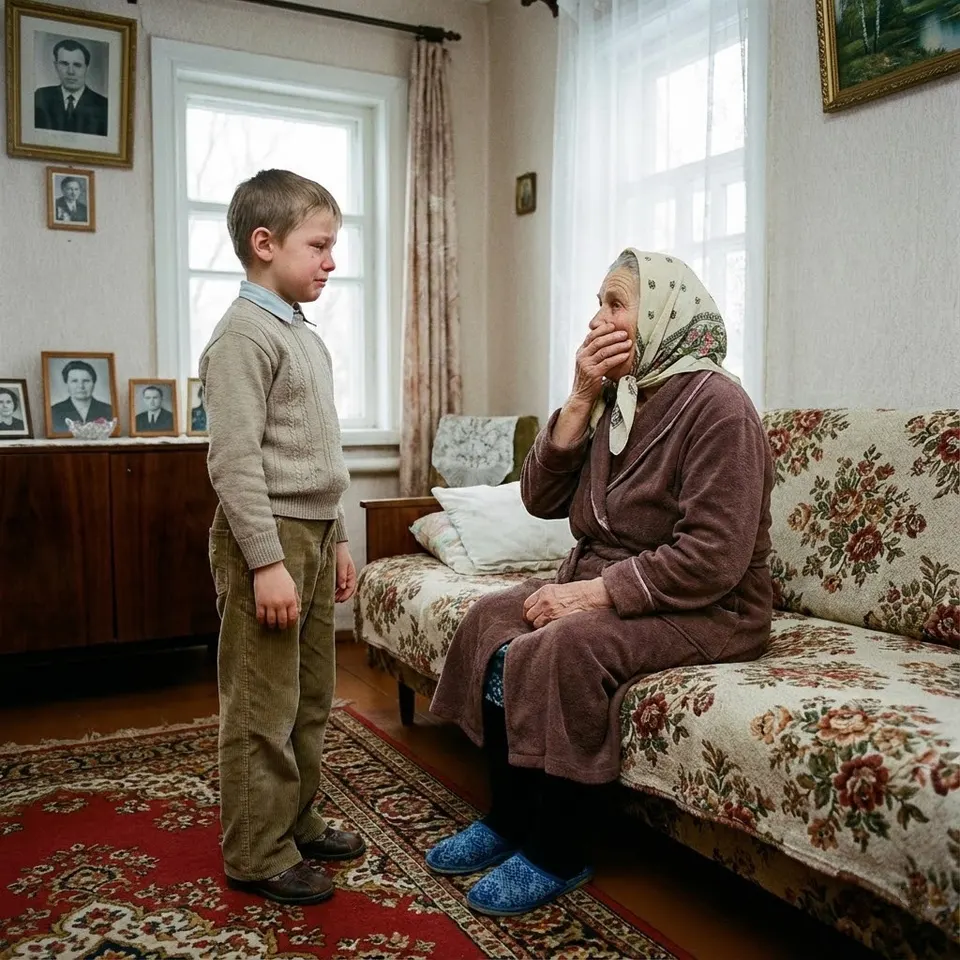
— "Grandma, leave the tea!"
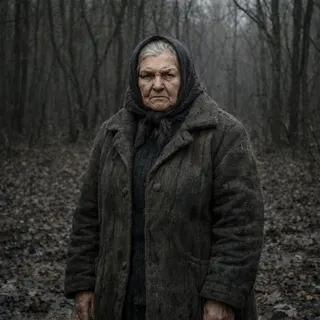
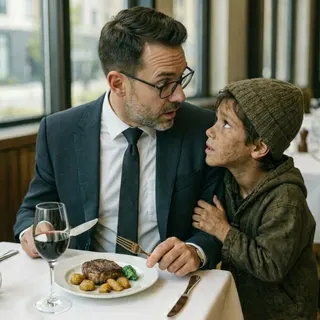
The voice was so close and clear that Lyudmila Sergeevna started. The tea bag slipped from her fingers and plopped into the mug. The water in the kettle was already coming to a boil, and the kitchen was filling with steam. She slowly turned around. Kirill was standing in the doorway. Straight. Calm. Without his usual swaying. He was clutching an old plush elephant to his chest—the only valuable thing he never parted with.
He had been silent for eight years. The doctors called it a peculiarity, Alena—a difficult case, and Lyudmila Sergeevna had long grown used to communicating with her grandson through looks, gestures, and patience. Now he was looking directly at her.
— "Grandma," he repeated more quietly, "leave the tea!"
He swallowed and added:
— "She used to do that before."
Something inside Lyudmila Sergeevna snapped. Her heart pounded sharply and heavily, as if it had stumbled. The room suddenly felt too small.
— "Kirill!" she whispered. "You… you can talk?"
The boy couldn't show any joy. His lips trembled, his fingers tightened their grip on the elephant.
— "Please!" he said. "Just leave it!"
The kettle whistled—piercingly, anxiously. Lyudmila Sergeevna mechanically turned off the stove and sank onto a chair. Her hands felt weak. Her head was buzzing.
Just ten minutes ago, everything had seemed normal. Her son, Sergey, was rushing to the car with suitcases. Alena, neat and confident, stood in a light coat, speaking in the calm voice of someone used to keeping everything under control.
— "Mom, are you sure you can handle it?" Sergey asked for the third time. "Seven days is a long time."
Lyudmila Sergeevna smiled, although her back ached with fatigue:
— "I can handle a child. Everything will be fine!"
Alena came closer. She smelled of expensive perfume and something sterile, medical. A habit left over from her previous job. She had once worked as a caregiver for many years—fifteen, as she liked to repeat, as if it were a mark of quality.
— "Lyudmila Sergeevna, I've prepared some tea for you," she said softly, placing a box on the table.
A neat inscription on the lid read: "For Mom."
— "Chamomile. It will make you feel better. Your sleep will be calmer, your blood pressure lower."
Lyudmila Sergeevna thanked her. Because it was the polite thing to do. Because Alena always did everything right: called on time, made doctor's appointments, brought food in containers, smiled at the neighbors. She wanted to believe that her son had a reliable woman by his side, and that she, in turn, was safe.
— "And one more thing," Alena placed her hand on her shoulder. Her fingers were cold. "Kirill's routine is important. Bedtime at eight. Any deviation causes him severe anxiety."
Lyudmila Sergeevna nodded. She knew: restless nights, sharp reactions, fear. It was all explained by the files from the orphanage: diagnoses, recommendations, signatures. Alena often showed these documents as proof of her words.
The door closed. The car drove away. The apartment filled with silence. Even the air felt softer. Kirill was playing in the living room, arranging figurines in neat rows. Lyudmila Sergeevna was solving a crossword puzzle and suddenly felt: it was easier to breathe without Alena.
The kitchen. The kettle. The box with tea bags. She grabbed the first one she saw. Tore it open. Chamomile, yes. And something else. A bitter, medicinal scent. She lifted the mug and heard the voice.
Lyudmila Sergeevna looked at her grandson as if the familiar world had cracked.
— "Why did you speak?"
The boy quickly shook his head, as if afraid the walls were listening.
— "Later, Grandma. For now, just leave the tea."
— "How do you know?" her voice trembled. "Alena… she cares for us."
Kirill took a step, then another. The elephant served as his shield.
— "I heard," he said. And added very quietly: "Yesterday. When she thought I was asleep."
Lyudmila Sergeevna covered the mug with her palm, as if she could hold back the misfortune with her hand. The last few months flashed through her mind: mixed-up days, keys in the refrigerator, afternoon naps with no memory. And Sergey's worried glances, and Alena's whispers in the kitchen: "It's her age. We need to think about her safety."
She leaned towards him:
— "Kirill, are you sure?"
The boy nodded. Calmly. Like an adult.
— "She used to do that before," he repeated. "And then people start forgetting everything."
Lyudmila Sergeevna was silent for a long time. She sat opposite Kirill, her hands on her knees, afraid to move. It seemed that one wrong move and the boy would shut down again, returning to the place where fear and silence had lived for eight years.
— "You said," she finally spoke quietly. "You said it had happened before." She swallowed. "Tell me what you can. I'll understand."
Kirill nodded. He looked at the elephant, running his fingers over the worn fabric, as if gathering his thoughts.
— "She worked," he began uncertainly. "Before. At other grandmas' and grandpas' houses."
Lyudmila Sergeevna felt something unpleasant tighten inside her.
— "Did you visit them?" she asked.
— "Yes. I went with her." He said it simply, as if talking about a trip to the store. This simplicity was terrifying.
— "What were they like?" she asked cautiously.
Kirill thought for a moment.
— "Normal at first."
— "What does 'normal' mean?"
— "Well..." he shrugged. "They laughed. They talked. One grandpa always asked when my birthday was, or if I had a cat or a dog…"
— "Did they remember you?" Lyudmila Sergeevna asked.
— "Yes. At first." He said the word separately, with a pause. "And then Mom started giving them pills. Or injections."
He looked at his grandmother, as if checking if he could continue.
— "She would say: 'To make them calmer. So they don't get nervous'."
Lyudmila Sergeevna remembered Alena saying almost the same words: "You need to worry less. Nerves are bad for everyone these days."
— "And what happened to them?" she asked.
— "They started to get confused," Kirill said faster, as if afraid he would forget. "They asked the same things over and over. They would ask who I was, then again, and again." He frowned. "One grandma kept asking if it was morning or evening. Even when the sun was shining."
Lyudmila Sergeevna closed her eyes. Her own kitchen and her confusion flashed before her mind's eye: what day is it today?
— "They were forgetting?" she said quietly.
— "Yes," Kirill confirmed. "A lot." He thought for a second. "One grandpa was looking for his slippers and got angry. He said they were stolen. But they were on his feet."
Lyudmila Sergeevna clenched her fists.
— "And then?" she asked.
Kirill fell silent.
— "Then we would go. We always went somewhere."
— "Where?"
— "To one place. An office. There was an uncle with glasses there."
— "Was it a doctor?" she asked.
Kirill shrugged:
— "I don't know. He didn't talk much. He just showed where to write." He traced a signature in the air with his finger. "They had to sign there."
— "And you?" Lyudmila Sergeevna asked. "What did you do?"
— "I sat quietly," Kirill answered. "Mom said: 'Sit and look at the floor. And be quiet'." He pronounced the word "quiet" almost in a whisper.
— "And after that?" she asked.
Kirill lowered his head.
— "Then the grandma didn't live there anymore." He paused, then added: "We didn't visit her anymore."
The room became hushed, as if the air had thickened. The clock ticked too loudly. Lyudmila Sergeevna leaned forward.
— "Kirill, do you understand what this means?.."
He shrugged.
— "I just know what happens next." He said it calmly, almost indifferently. As if talking about something inevitable.
— "And you…" she faltered. "You knew all this time that this would happen?"
Kirill nodded.
— "They took me in like this," he said. "Right away."
— "Like what?" she asked.
— "Quiet." He thought and added: "Convenient."
The word sounded strange, adult, heavy in a child's voice.
— "Mom said, 'You have to be quiet'," he continued. "'Otherwise, you'll ruin everything. People will start asking questions. This way, no one asks questions'."
Lyudmila Sergeevna felt her throat tighten, but the tears remained inside.
— "And what if you had spoken?" she asked.
Kirill squeezed the elephant so tightly that its ear crumpled. He fell silent, gathering his courage.
— "She said… She said they would send me back to the orphanage." He looked up at his grandmother—his eyes serious, far too adult. "And you," he added quietly, "would get worse. You would fall asleep faster."
Lyudmila Sergeevna sat, looking at her grandson, and understood: he really knew few words, but he knew what his mother was doing, he knew how it all ended. And if he spoke today, it meant the scheme had started again. Only this time, in her house.
Lyudmila Sergeevna barely slept. The night passed in fragmented pieces: a lapse into sleep, then a sudden awakening with the feeling that someone had just left the room. The apartment was quiet, Kirill was sleeping in the next room, clutching his elephant. And in Lyudmila Sergeevna's mind, the same fragments swirled: pills, office, sign, then didn't live there anymore.
In the morning, she looked at herself in the mirror longer than usual. Her face seemed older than its years. And suddenly—anger. Cold, clear. The kind that comes when fear has receded and given way to resolve.
That same day, she went to the doctor. Irina Sergeevna had known Lyudmila Sergeevna for a long time. A local physician, calm, attentive, the kind who listens first and draws conclusions later. She frowned, flipping through the records.
— "You say you've been feeling drowsy lately, with memory lapses," she said slowly. "But I haven't prescribed you anything new."
— "I've been drinking tea," Lyudmila Sergeevna replied. "Herbal tea. My daughter-in-law gave it to me."
Irina Sergeevna looked up.
— "Do you know how many elderly people are hospitalized precisely because of such herbal blends?"
She wrote a referral for tests, calmly, but a tension had entered her voice.
When the results came back, there was no doubt.
— "There are sedative drugs here," Irina Sergeevna said, tapping her finger on the paper. "And in a dosage that, with regular use, causes confusion, lethargy, and memory impairment. This is not an accident..."
The word "drugs" was sobering. Everything suddenly fell into place. Next was Evgeny Arkadievich. An old acquaintance, a lawyer who had once helped Lyudmila Sergeevna with inheritance matters. He listened in silence, not interrupting, only occasionally making notes in his notepad. When she finished, he leaned back in his chair.
— "This is a classic scheme," he said calmly. "Very old. Very dirty."
— "What kind?"
— "Weaken a person with medication. Create the impression of age-related decline. Then—documents. Deeds of gift, powers of attorney, re-registrations. Often through trusted notaries."
Lyudmila Sergeevna felt a chill run down her spine.
— "And the child?" she asked. "Why is the child there?"
Evgeny Arkadievich sighed.
— "A witness no one would believe. A backdrop. A legend. A heroic woman with a difficult adopted child inspires trust. Especially in lonely old people." He looked at her intently. "You understand that this is most likely not the first case?"
The realization didn't come immediately. It came in waves. Lyudmila Sergeevna began to recall names. The neighbor downstairs who suddenly had distant relatives show up. The lonely man from the next building whom Alena had once cared for, and who then suddenly disappeared—they said his children took him. An old acquaintance from the clinic who signed some papers after a stroke and died in a nursing home six months later. Notaries. Apartments. Too many coincidences.
— "This has been going on for years," Evgeny Arkadievich said. "Such people rarely stop on their own. They are only stopped by circumstances."
Lyudmila Sergeevna returned home a different person. Kirill was sitting at the table, drawing. He looked up, saw her gaze, and understood everything without words.
— "Did I say everything right?" he asked cautiously.
She went to him, hugged him, held him as tightly as she hadn't hugged anyone in a long time.
— "You said everything you could," she answered. "The rest is my job."
Later, sitting in the kitchen, Lyudmila Sergeevna laid out the papers in front of her: test results, notes, dates, names. For the first time in a long while, her mind was clear. The car pulled up in the afternoon, right when Lyudmila Sergeevna was expecting it. She heard the familiar sound of the engine from the kitchen and caught herself feeling no fuss, no fear. Only composure. Cold, clear, measured, as if before an important conversation she had long been preparing for.
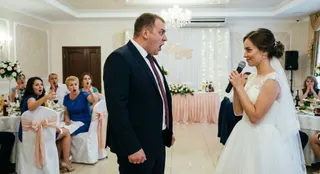
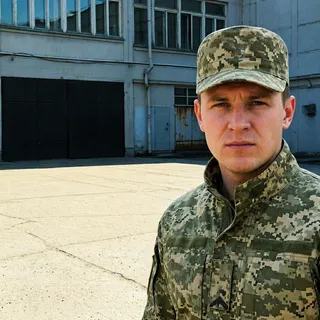
Alena entered first. As always. Confidently, with a slight smile, as if returning to a house where everything rightfully belonged to her. A rolling suitcase, a neat hairstyle, a calm gaze. Sergey followed, tired, a bit lost, with the expression of a man glad to be back and hoping everything went smoothly.
— "Mom, how have you been?" he asked, looking around.
— "Fine," Lyudmila Sergeevna answered. "Come in."
Alena immediately noted the details: the mug on the table, the clean kitchen. Kirill sitting on the floor with his toys. The house looked calm. Proper. As it should be.
— "See," she said, taking off her coat. "I told you everything would be fine." She came closer, lightly touching Lyudmila Sergeevna's hand. "How are you? Your head? Your sleep?"
Her voice held the usual concern, confident, practiced over the years. Alena spoke like someone accustomed to being believed.
— "It's been varied," Lyudmila Sergeevna replied. "Sit down. We need to talk."
Alena glanced briefly at Sergey, then at Kirill. The boy was sitting quietly, his head bowed. Just as she had left him. Convenient. Predictable.
— "Kirill, go play in your room," she said in her usual tone.
He didn't go. It was so unexpected that Alena was momentarily flustered.
— "Kirill?" she repeated, more sternly this time.
The boy slowly raised his head. He looked first at his grandmother, then at his mother.
— "You said I had to be quiet," he stated.
The sentence was simple. Without reproach. Without emotion. Sergey straightened up abruptly.
— "What?" he breathed.
Alena smiled, automatically, almost reflexively.
— "Kirill, you're tired," she said softly. "You're mixing things up. Come on, I'll help you…"
— "You said," he continued, "that Grandma would forget."
The silence in the room became thick. Oppressive. Even Sergey stopped breathing.
— "Alena?" he said slowly.
She took a step forward, but Lyudmila Sergeevna stood between them.
— "Sit down," she said calmly. "And listen."
Kirill continued speaking, as if pulling words from a long-established order within him.
— "You said that then everything would be ours." He fell silent. He looked at the elephant. He had said just as much as he could.
Alena turned pale. The smile vanished, as if erased. She opened her mouth, closed it, then opened it again.
— "It's a fantasy," she said finally. "He overheard conversations. He has his peculiarities." She turned to Sergey. "You know. He can repeat things…"
— "Enough!" Lyudmila Sergeevna interrupted.
She walked to the table and turned on a voice recorder. Alena's voice filled the room—calm, confident, familiar. Words about doses. About "while they're still lucid." About "we've done this before." About "it will all be settled later."
Sergey listened without moving. His face changed slowly, as if he were reliving it, but this time with his eyes open. Lyudmila Sergeevna placed a folder with the test results next to it. Then printouts. Addresses. Dates. Surnames.
— "This is enough," she said. "Even without the child's words."
Sergey looked up at his wife.
— "Alena…" his voice broke. "Is this true?"
Alena looked around, as if searching for an exit. Then she straightened up sharply.
— "You will regret this," she said. "You have no idea who you're up against."
— "We have an idea," Lyudmila Sergeevna replied. "All too well."
Kirill walked over to his grandmother and took her hand. He hadn't said everything. But it had been enough. Because from then on, the documents spoke. The recordings. The test results. And the adult words that had finally found their place.
The investigation moved slowly but surely. Like a puzzle that had long been scattered on a table and then suddenly began to assemble itself, piece by piece. Alena's recordings formed the basis of the case. Dry, business-like, without emotion. The voice of a person accustomed to calculating doses, deadlines, and seeing people not as people, but as stages. The tests confirmed the drugs. The documents—the chain of transactions. Notaries, apartments, elderly people who first became confused, then moved out, and then disappeared from others' lives as quietly as they had once entered them.
Kirill was called in several times. Without pressure. Without a courtroom. He sat in an office with a psychologist, clutching his elephant, and answered as best he could. Briefly. Simply. Sometimes with gestures, sometimes with fragments of phrases. "I went with her." "There was an uncle with glasses." "She spoke quietly." "Then the grandma left."
It was enough. Because Kirill was not a child with a scheme. He was the one who saw the beginning. The one who saw the end. And the one who managed to point in the direction where the adults finally started looking.
Alena held out until the very end. At first, confidently. Then sharply. Then angrily. She tried to talk about slander, about illnesses, about fantasies. She tried to make Kirill convenient, quiet, dubious, unreliable again. But it didn't work anymore. The recordings spoke louder. The documents were more precise. And the calm, steady voice of a child who was no longer hiding shattered the whole construction for good.
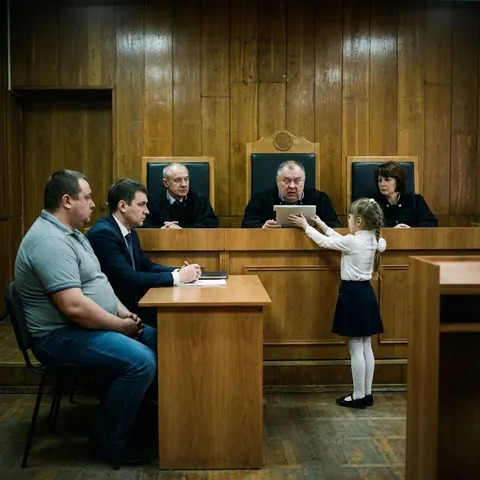
The sentence was real. No probation. No leniency. When Lyudmila Sergeevna left the courthouse, she felt a weariness for the first time in a long while—an ordinary, human exhaustion. The kind after which you can go to sleep and wake up without anxiety.
Arranging for guardianship took time. Paperwork, committees, interviews. But now she knew: this time was working for them. At first, Kirill hardly spoke. Sometimes the words got stuck. Sometimes he got confused. Sometimes he was just silent, out of habit. And Lyudmila Sergeevna no longer rushed him.
He started small.
— "Grandma…" another time he suddenly asked, "Can I talk all the time now?"
She hugged him and nodded.
— "Always. As much as you want, my sunshine."
He was learning to speak again. Without rules. Without threats. Without conditions.
And Lyudmila Sergeevna found herself thinking more and more that the most terrifying thing in this story was not the pills, the documents, or the apartments. The most terrifying thing is when a child is taught to seem sick and be convenient for the system and illegal operations. When silence becomes a way to survive.





Share how the story made you feel
0Comments appear after a quick automatic check. Please no links, ads or personal data.
Next to your name we show your country, determined from your IP address; the address itself is never shown, and only a hashed fingerprint of it is kept to stop spam.