
 Let’s Keep It Real
— Inna, sunshine, how is life in that apartment I gave you?
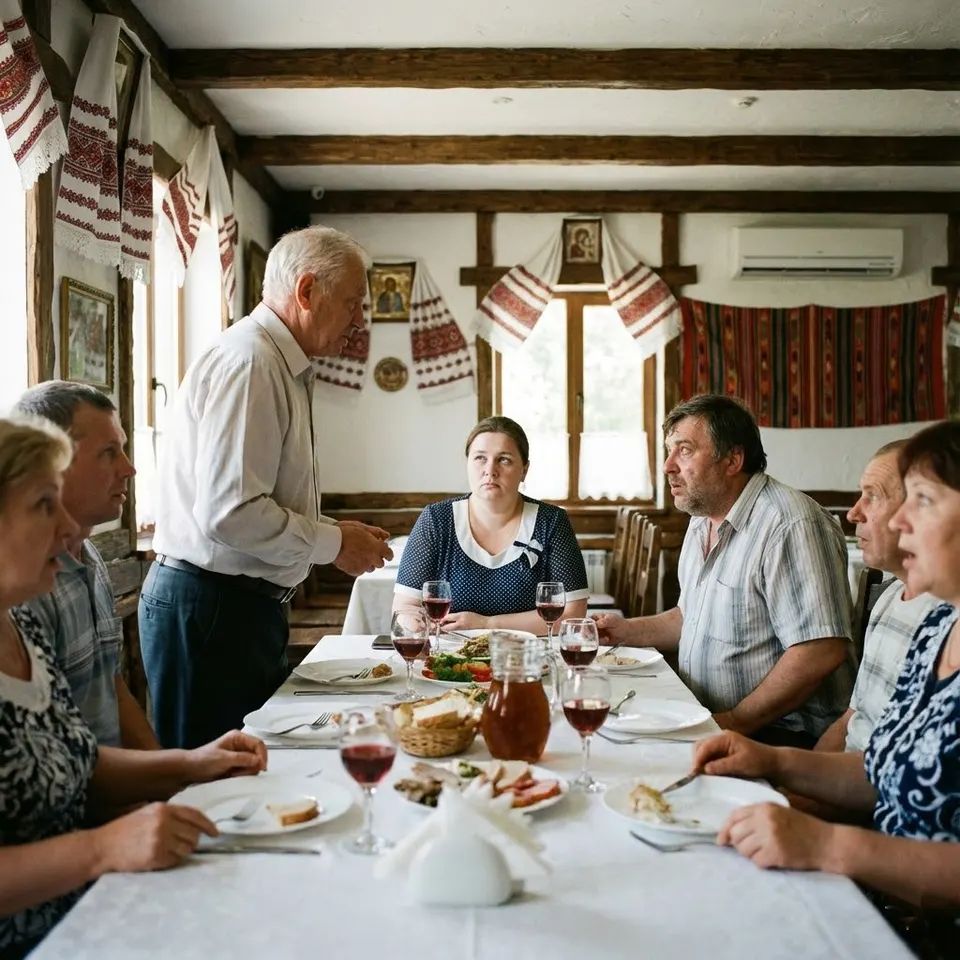
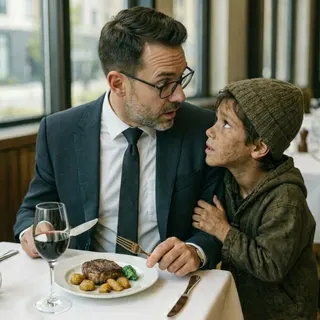
Ivan Petrovich, sitting at a table in a restaurant in the city center, raised his glass and smiled so warmly, as if it were an ordinary family lunch full of memories and laughter. His eyes, framed by wrinkles, sparkled with pride, and his gray beard twitched slightly as he took a sip. I hadn't seen Grandfather for ten years; he lived abroad, and now he had finally returned and knocked me off balance with his question.
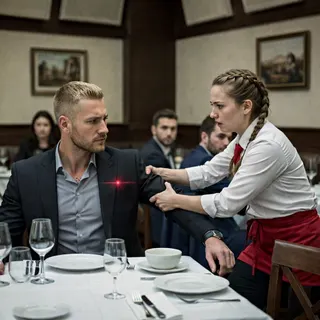
I froze. The fork with a piece of meat froze in the air, never reaching my mouth. The water in my glass trembled, reflecting the light of the chandelier. The air in the hall seemed to thicken, becoming heavy like before a storm. Mom, sitting opposite, slowly lowered her spoon, her neatly painted lips parted in surprise. Dad, seated next to her, dropped his utensil onto the plate, and the ringing sound cut through the silence like a knife.
My younger sister, Katya, tore herself away from her phone; her fingers froze over the screen, and her gaze, usually indifferent, was now riveted on me. Even the waiter passing by with a tray slowed his pace, as if sensing the tension.
— Apartment? — I asked again, my voice trembling despite all efforts to appear calm.
I put the cutlery on the table, wiped my sweaty palms on the napkin on my lap, and looked at Grandfather.
— Ivan Petrovich, I live in a rented semi-basement.
Grandfather's smile slowly faded like a candle blown out by a gust of wind. His eyes, usually so lively, narrowed, and his brows furrowed, forming a deep crease on his forehead. He set the glass on the table, and the glass clinked quietly against the wooden surface.
— What do you mean, semi-basement? — he asked. His voice was quiet, but there was a steeliness in it that made me straighten up.
Ivan Petrovich was always kind, but I knew: when he speaks in such a tone, the jokes are over. I swallowed, feeling the gazes of the whole family stuck to me as if I were an exhibit in a museum. Mom looked at Dad, her fingers nervously gripping the edge of the tablecloth. Dad stared at his plate as if instructions on how to get out of this situation were written there. Katya seemed to forget about her social media stories for the first time all morning and was now looking at me with her mouth open.
— I never received any apartment, — I said louder, trying to keep my voice steady, though everything was boiling inside. — For four years now, I've been renting a semi-basement from a woman who smokes so much the walls have turned yellow. The boiler hums right next to the bed, and there are almost no windows—just narrow slits under the ceiling through which light barely breaks through.
The silence became unbearable. I felt the blood pounding in my temples, my heart beating somewhere in my throat, drowning out all sounds. Ivan Petrovich looked at me, then slowly shifted his gaze to Dad. His fingers gripping the edge of the tablecloth turned white, and his knuckles stood out like those of a man ready for a fight.
— Sergey, — he said, and every word fell like a stone. — I transferred the money to you four years ago. Seven million. I said it was for Inna, for her new life after the institute. You said you arranged everything, that she lives in a cozy apartment in the center.
Dad coughed, reached for a glass of water, but his hand shook so much that water splashed onto the tablecloth. He quickly wiped the stain with a napkin, but it didn't save him from Mom's gaze. She turned to him, her lips pressed into a thin line, and a mixture of horror and disbelief flashed in her eyes.
— Sergey, — she whispered, her voice barely audible. — You said you helped and found a cozy little apartment in the center. You showed me photos, said she was happy.
I looked at Dad, waiting for what he would say. That it was a mistake, that he would explain that the money got stuck somewhere, that this was all a misunderstanding. But he was silent, and his silence was louder than any scream. His face, usually so confident, now seemed gray, like a concrete wall.
— Dad, — I said, and my voice was cold as the winter wind in January. — You didn't give me anything. No apartment, no money, not even advice on how to survive. Only said that I should work harder, that I'm lazy, that I shouldn't wait for handouts.
And I didn't wait. I worked two jobs to pay for this semi-basement. Katya gasped, covering her mouth with her palm; her nails with bright manicure sparkled in the lamp light. Mom looked at Dad like a stranger. And Ivan Petrovich leaned back in his chair as if he had been hit. His face, always so open, was now a mask of pain and anger.
— Inna... — he began.
But I interrupted, feeling something inside snap, something I had been holding back for years. I didn't intend to say anything today.
— I didn't want to ruin your birthday, Ivan Petrovich. But since we are all here, let's stop pretending everything is fine. I'm tired of this. Tired of the lies, of the silence, of not being noticed.
I stood up, the chair creaked on the wooden floor, and the sound seemed deafening to me.
— I'm leaving.
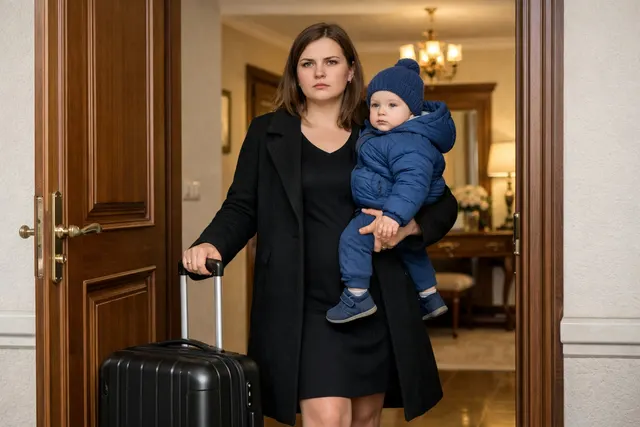
I walked out of the restaurant without looking back. Behind me, I heard footsteps, the clatter of dishes, muffled voices. Someone, it seemed like Mom, called me, but I didn't stop. A fire raged inside me—not tears, not weakness, but a rage I had suppressed for so long. I walked along the sidewalk, the cold city wind whipping my cheeks, but I didn't feel the cold. I felt that for the first time in years, I had told the truth.
Grandfather's voice caught up with me in the parking lot:
— Inna, wait!
Ivan Petrovich was running, his coat flapping in the wind, and his breath escaping in clouds of steam. He looked older than at the table, his shoulders slumped, and his eyes were full of pain.
— Did you really not receive the apartment?
I shook my head, feeling my throat tighten.
— I rent a semi-basement from a woman who doesn't believe in banks and demands payment in cash. It smells of dampness and cigarettes, the bed stands by the boiler, and instead of a table, I have a fruit crate. I eat sitting on the floor more often than at a table. There's almost no light, only through slits under the ceiling. I'm used to it, but this isn't living, it's survival.
He swallowed, his face turning gray like the asphalt beneath our feet. He ran a hand through his beard as if trying to gather his thoughts.
— Your father said you didn't want help. That you are building your life yourself, that you are ungrateful. That you live in your dream and didn't even say thank you.
I laughed bitterly, and that laugh was sharp, almost alien.
— I didn't know what to thank him for. Once I asked him for a contact to find a job. He said: start with washing dishes, it tempers character. And when I asked for help with rent, he said I should cope on my own, that I was too spoiled.
Ivan Petrovich ran his hand over his face, as if trying to erase what he had heard. His fingers trembled, and for the first time, I noticed how much he had aged.
— I want to see where you live, — he said suddenly. His voice was firm, despite the trembling.
— Why? — I was surprised, crossing my arms over my chest.
— Because if everything is as you say—and I believe you—then your father deceived not only you but me as well. And I won't let anyone lie to me anymore.
That same night, I took Grandfather to my home. The city sparkled with lights, the high-rises in the center shone like stars, but in my world, there was little light. We stopped at an old five-story building on the outskirts, in a neighborhood where the streetlights worked intermittently, and the asphalt was littered with cracks. I led him down the concrete steps to the semi-basement door. The bulb above the entrance flickered, casting shadows on the peeling paint, and the steps were slippery with dampness.
— Welcome to my palace, — I said, opening the door.
The smell of dampness and tobacco hit my nose, as always, but today it seemed even more suffocating. I stepped inside, letting Grandfather pass. Ivan Petrovich entered, his steps echoing in the cramped space. He looked around: a tattered sofa bought on "OLX" for three thousand, a crooked shelving unit assembled from boards, a ceiling with mold spots, a bed pressed against the humming boiler. His gaze lingered on the crate I used as a table and on the stack of plates on the floor, next to which lay a tattered book—the only one I allowed myself to buy. Narrow slits under the ceiling, which I called windows, let in the dim light of a street lamp, but it only emphasized the squalor of the room.
He was silent for a few seconds, then sat on the edge of the bed. The mattress creaked under his weight. His sigh was so heavy it seemed he exhaled his entire life.
— This is where you live, — he said, not asking, but stating. His voice trembled, but there was no weakness in it, only pain.
— Since I finished the institute, — I replied, crossing my arms to hide how my fingers were trembling. — Four years. I worked as a waitress, then in a call center, sometimes cleaned apartments. Anything to pay for this place.
His eyes glistened, but he didn't let the tears fall. He ran a hand through his beard, his fingers freezing, clutching the fabric of his coat.
— Your father said he saved the rest of the money for your wedding. I thought it was reasonable. That you live in a good place, and he's just taking care of the future.
— There is no rest, — my voice was flat, almost lifeless.
Ivan Petrovich looked at the floor, then at me again. His gaze was full of determination.
— Enough, — he said, standing up. His voice was hard as granite. — Tomorrow we are going to the bank. And to a lawyer. And then your father will answer for everything.
I nodded, but something wavered inside me. Not fear, not hope, but something in between—a feeling that I was no longer alone.
The next morning I woke up to the smell of burnt coffee and Ivan Petrovich's voice talking on the phone. He stood in the hallway of my semi-basement, his figure seeming too large for this cramped space. His voice was cold as ice, and I had never heard him speak like that.
— I don't care that it's Sunday, Igor. Find all the documents. I want to know where every penny went. And prepare a letter stating that Sergey no longer has the right to act on my behalf in financial matters. Yes, right now.
I stood barefoot on the cold concrete floor, listening. My T-shirt, in which I slept, was old, with a faded print, but I didn't feel vulnerable. For the first time in years, I felt that someone saw me—not the Inna who was considered lazy or weak, but the real one, the one who fought even when no one noticed.
By noon we were at the bank, in the city center. The office was sterilely clean, with wooden panels and the smell of expensive coffee. The banker, a woman of about fifty in a strict suit, clicked on the keyboard; her lips were pursed as if she already knew the news would be bad.
— Here, — she said, finally adjusting her glasses. — Transfer from your account, Ivan Petrovich, to Sergey Ivanovich's account. Marked as a gift for Inna for an apartment. Seven million. Date—four years ago.
She turned the monitor toward us. Date, amount—everything matched. And then she clicked again, and my heart sank.
— Five days later, Dad transferred the entire amount to another account, under his own name. Without a note, without my name, without anything.
The money wasn't spent, but it didn't reach me either. It just lay there, on his account, like a trophy. Ivan Petrovich looked at the screen, his face was stony, but I saw his hands trembling.
— Print this, — he said quietly, but his voice was such that the woman nodded immediately. — Everything. Every line.
When she left, he turned to me:
— He stole from you. Didn't spend it, but hid it. And lied to me. This isn't just a family quarrel, Inna. This is a crime.
I nodded, but something was boiling inside me. I remembered how Dad looked at me when I asked for help. How he said I needed to toughen up, that I was too weak for adult life. While he held my money, my chances, my life in his account.
— Don't worry, — Ivan Petrovich added, putting his hand on my shoulder. — I'll sort it out.
— No, — I said quietly but firmly. — We will sort it out.
That same afternoon we went to my parents'. I hadn't been to their house in years. The same two-story cottage on the outskirts of the city with a neat lawn and a white fence. The same house where I once baked muffins with Mom, where Dad taught me to ride a bike until he started brushing off my calls. Where Katya threw a party when I moved out and threw my boxes of books onto the lawn because they were in the way of her friends.
Ivan Petrovich rang the doorbell. Dad opened it, his face a mixture of irritation and surprise. Seeing us both, he froze, his hand freezing on the door handle.
— We need to talk, — Grandfather said, his voice hard as granite.
— I'm busy, — Dad grumbled, but Ivan Petrovich interrupted:
— Sit down.
He didn't raise his voice, but there was something in his tone that made even Dad obey. He stepped back, letting us into the house. Mom stood in the doorway of the living room, her eyes darting from me to Grandfather. Katya peered from the stairs, her hair in a messy bun, but her eyes glinting with curiosity like a cat scenting prey.
We sat in the living room, on the sofa I remembered from childhood. It was still just as soft, but now seemed alien. Ivan Petrovich placed the folder with documents on the coffee table. Dad didn't even look at it, his hands clasped, gaze fixed on the floor. Grandfather opened the folder and began:
— You told me Inna lives in the apartment I bought for her. Seven million—my savings that I accumulated for years. But the money didn't reach her. You took it. Hid it in your account. And lied to me and your daughter.
Dad chuckled nervously, his fingers drumming on his knee.
— Father, you're blowing everything out of proportion. I...
— She lives in a semi-basement! — Grandfather barked, and his voice made everyone freeze. Even Katya, standing on the stairs, froze, her phone lowering. — Eats on the floor, works two jobs to pay for that hole. And you hid her money to keep it for yourself.
— I was holding it for her future, — Dad began, his voice tense, but I saw him trying to wiggle out of it. — Inna wasn't ready for such responsibility. I wanted her to learn to appreciate...
— Don't, — I interrupted, and my voice was sharp as a knife. — Don't lie. You said I was lazy, that I didn't deserve help. You made me feel like I was worth nothing. Yet you held my money, my chances, my life in your account. You didn't spend it, but didn't give it either. Why?
Mom whispered, her voice trembling:
— Sergey, say it's not true.
Dad was silent. His jaw clenched, eyes darting around the room, but he didn't look at me or Grandfather. Ivan Petrovich pushed the papers toward him:
— I spoke with a lawyer. We can sue. But you will return every penny. And explain yourself to the family at the next lunch. Stop hiding behind your excuses.
Dad clenched his jaws but didn't answer. Ivan Petrovich turned to me, his gaze softening.
— You are moving in with me next week. I already called a realtor. We'll find you a proper place. Don't argue.
I looked at Dad. The one who said I would never cope without him now looked small, shrinking under the weight of the truth. I didn't feel victory. I felt freedom, and that was better.
The next Sunday lunch was at the same restaurant, at the same table, but everything had changed. I sat next to Ivan Petrovich, at the head of the table. His hand lightly touched mine while we waited for the others. Dad entered, and I barely recognized him: he looked older, his shoulders slumped, and the usual self-confidence with which he always carried himself had evaporated. Mom stuck close to him, her lips pressed together, and her eyes red as if she had been crying all night. Katya wore dark glasses as if wanting to hide from what was happening, but her fingers nervously fiddled with the edge of her sweater.
Ivan Petrovich stood up, not letting anyone start chatting about the weather or the menu. His figure, despite his age, seemed majestic, and his voice rang through the hall, making the waiter freeze with a coffee pot in his hands.
— I will be brief, — he said, and his words were sharp as a blade. — I gathered you because last week I learned of an injustice committed in my name. Four years ago I sent money, my savings, to help Inna start adult life. I was told she received it. That she is thriving. That was a lie.
The hall went quiet. I felt my eyes burning, but I held back. This wasn't about tears. This was about the truth.
Ivan Petrovich continued:
— Sergey took this money. Hid it in his account, didn't spend it, but didn't give it to Inna either. He made her feel unworthy, lazy, dependent, pretending to be a caring father. He lied to us all.
Aunt Galya, sitting in the corner, gasped, covering her mouth with her palm. My cousin, Dima, blinked, his face turning serious as if he finally understood what was happening. Dad shifted in his chair, his fingers gripping the napkin, but he looked at no one. Ivan Petrovich turned to him.
— You betrayed us both. From this moment on, you will not receive a penny of my inheritance. Everything will be rewritten to others. And you will answer to everyone.
He pulled a folded sheet from his jacket pocket and placed it in front of Dad.
— Read it. Aloud.
Dad looked at the paper like poison. His hands trembled when he unfolded the sheet. His voice cracked on every word, and I saw how hard it was for him.
— To my family. I stole from my daughter, Inna. I took money intended for her future and hid it. I wronged her, my father, and the honor of our family. I take full responsibility and will return the full amount within six months. I sincerely regret it.
When he finished, silence fell. No applause, no gasps, only heavy breathing, as if the whole room exhaled at once. I looked at Dad and for the first time didn't feel small. I felt that I was seen, that my pain, my years of struggle were finally acknowledged.
That night, standing on the porch of Ivan Petrovich's house, I looked at the stars. The city slept, its lights twinkling in the distance, and the sky was so clear it seemed one could touch the stars. Grandfather stood nearby, his coat buttoned up to the top, hands hidden in pockets.
— I still can't believe you never asked for anything, — he said quietly, his voice soft, almost guilty.
— I got tired of asking, — I replied, looking at the stars. — I thought if I worked harder, if I proved I was worth something, someone would notice.
— But no one noticed. Except you.
He nodded, his gaze fixed on the horizon.
— Forgive me for not checking sooner. I should have made sure the money reached you.
— And I don't regret it, — I said after a pause, and my voice was firm. — If things were different, I wouldn't have known who is really for me. Now I know.
He smiled faintly, his eyes glinting in the light of the lantern.
— You won't return to that semi-basement. I found you a place. In the center, with wooden floors, with real windows. With a view of the river.
I laughed quietly, and that laugh was light, genuine.
— That already sounds like a palace.
— You deserve it, — he said, and there was such conviction in his voice that I believed him.
Maybe I really did deserve it. But most of all, I deserved to stop fighting for crumbs, for the right to be heard.
The new apartment was on the sixth floor, in a building with large floor-to-ceiling windows. On the first morning, I woke up to sunlight pouring into the room like a river. There was no barking of the neighbor's dog, no creaking pipes, no smell of dampness. Only silence, soft and warm as a blanket. I sat on the edge of the new bed—not an old mattress, but a real bed with a wooden frame—and looked at the city.
The sky over the city was so big I wasn't used to it. It seemed endless, like my dreams that I had hidden for so long. That day I did what I had been putting off for years. Opened the laptop, found the old folder hidden behind bills, resumes, and rejection letters. The folder labeled "Designs".
Inside were interior sketches, blueprints, ideas I created at night when I couldn't sleep due to the boiler's hum. Drawings I showed to Dad when I still believed he would support me. He said then: "Cute, but when will you get serious? Design is not a job, it's a hobby."
Now I got serious. I updated my portfolio, sent it to design studios, registered on freelance platforms, launched a small website. The money Dad returned, I used not only for rent and living but also for a start. I bought a graphic tablet, paid for courses on modern design software, invested in advertising my portfolio. This was my chance, and I wasn't going to miss it.
Weeks passed, then months. I worked nights creating sketches for clients who found me through the site. My projects were simple: re-planning small apartments, designing children's rooms, decorating offices. But each one was a step forward. I learned to speak with clients, defend my ideas, ask for decent pay. I learned to believe in myself.
One afternoon I got a call. An architectural studio, "New Project," saw my work on one of the platforms. They were launching an affordable housing project for young families and were looking for a designer who knows how to turn small spaces into cozy and functional ones.
— We need someone who understands how to live in limited conditions, — said the director at the interview, a man with thick eyebrows and a kind smile. — Your work shows that you know how to make a small space a home.
— I know what it's like, — I replied, looking him in the eye. — I lived in a semi-basement for four years. I know how to turn a corner into a bedroom and a crate into a table.
He nodded, and I saw respect in his eyes. When I left their office with a contract in my hands, I put on the same coat that Mom once called cheap and childish. Now it seemed perfect to me. This wasn't just a contract. It was proof. Proof that I wasn't the failure they thought I was. That the semi-basement didn't define who I am. That I can create, dream, live.
Six months later, I hosted a lunch. Not in a restaurant, not in a stranger's house. At my place. In my new apartment, which smelled of freshly brewed coffee and warm bread. The table was set with real plates I bought on sale, but they seemed more beautiful to me than any restaurant tableware. Light poured through the windows, reflecting on the wooden floor, and the guests' laughter filled the room with warmth.
Ivan Petrovich brought a bouquet of daisies and put them in a vase I bought with my first paycheck. He looked at me with pride, his eyes shining like that day he first saw my apartment. Dima, my cousin who used to roll his eyes when I talked about design, was now asking about color palettes, about how to choose wallpaper to make a room seem bigger. Aunt Galya, who always stayed silent at family gatherings, suddenly said she wanted to hire me to renovate her dacha. Even Katya, who usually sat on her phone, put it down and asked to see my sketches.
Dad wasn't there. He returned the money on time, as promised in his letter. Seven million returned to Ivan Petrovich's account, and he used it to buy me this apartment. But Dad's apologies remained on paper. He called a couple of times, tried to explain that he wanted the best, that he was afraid I wouldn't cope. But I didn't want to listen. Not because I was angry, but because I realized: his words no longer have power over me. His absence was the best gift he could give me.
When I was passing the tray of appetizers, I caught Ivan Petrovich's gaze. He looked at me with a soft smile, his hand resting on the table next to the vase of daisies.
— This, — he said quietly, so only I could hear. — This is what I dreamed of when I sent that money. For you to live, Inna. Truly live.
I touched his hand, my fingers warm from the cup of tea.
— Me too, — I replied, and my voice was soft but confident. — Me too.


Share how the story made you feel
0Comments appear after a quick automatic check. Please no links, ads or personal data.
Next to your name we show your country, determined from your IP address; the address itself is never shown, and only a hashed fingerprint of it is kept to stop spam.