
 Let’s Keep It Real
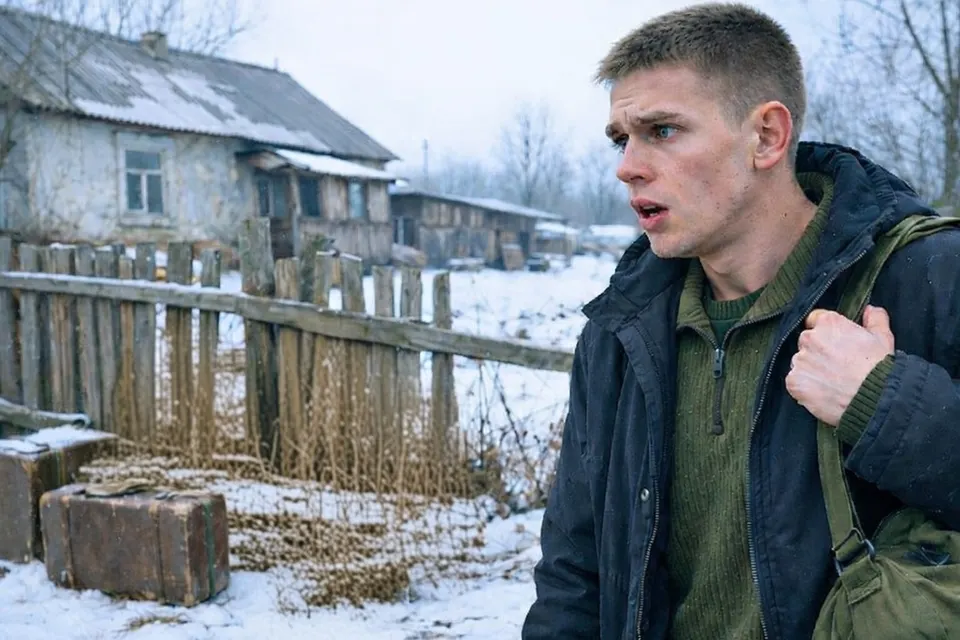
Mike Sullivan had been counting down the days for a year. Returning home after his tour of duty was all he thought about. He pictured pulling into the driveway, hugging his mother on the porch, and seeing the spot in the backyard where his father planned to build the new workshop.
Simple things. The smell of home. His mom’s cooking. Mike had no idea that while he was away, everything had changed. His parents had been careful during their brief phone calls, hiding the truth behind phrases like "everything’s fine" and "don't you worry about us." He was about to learn that "fine" can sometimes mean the exact opposite, and that coming home isn't always the celebration you imagined.
Mike gripped the envelope in his pocket. Inside was $10,000—every cent he’d managed to save from his combat pay and allowances over the last year. The Uber driver was rambling about the new highway construction, but Mike barely heard him.
Outside the window, the familiar sights of his hometown rolled by: the rusted fence of the old mill, the giant oak tree at the corner of Maple Street, and Miller’s General Store with its faded sign. He’d been gone a year. A long, hard year.
— "Just getting back from overseas?" — the driver asked, glancing in the rearview mirror.
— "Yeah," — Mike replied shortly, his eyes fixed on the road ahead.
— "Bet it’s good to be back in the States. Rough over there?"
— "It had its moments."
Mike reached for his phone, then hesitated. He wanted to call his parents and tell them he was five minutes away, but he wanted it to be a surprise. He could already see his mom’s face lighting up. His dad would just give a firm nod, but his eyes would say everything.
Mike smiled at the thought. The car slowed down as they turned onto his street. He checked his phone: three missed calls from his mom last night. He’d been in transit and his battery had died.
He’d texted her this morning: "Heading home, see you today." She’d replied with a simple "Okay." No emojis, no "Love you," which was strange for her. He figured she was just overwhelmed with the news.
— "Do your folks know you're coming?" — the driver asked as he turned onto the Sullivans' block.
— "They know."
Mike checked the envelope one last time. Ten grand. It wasn't a fortune, but it was enough to help his dad finally fix the roof or upgrade the old furnace that had been acting up for years.
They passed the neighbors' houses. The Petersons had a new fence. Mrs. Gable’s garden was overgrown. Everything looked the same, yet slightly off.
One more turn. He expected to see the blue shutters his dad had painted five years ago. The slightly crooked garage door. The row of hydrangeas by the gate. The car rounded the corner.
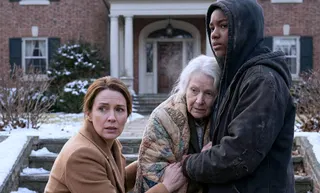
Mike saw them immediately. Two people were sitting on the curb in front of the house. Suitcases were piled next to them—the old, battered luggage that usually lived in the attic. His mother was huddled against his father, her shoulders shaking. His father had his arm around her, his head bowed low.
For a second, Mike’s brain stalled. The image didn't make sense. Two people on a curb. Suitcases. Then he recognized his father’s old Carhartt jacket. His mother’s red cardigan—the one he’d bought her for her birthday three years ago.
— "Stop! Pull over right here!" — Mike barked.
The driver slammed on the brakes. Mike threw the door open before the car had even stopped, leaving his duffel bag in the backseat. He ran, his boots thudding on the pavement.
— "Mom! Dad!" — his voice cracked.
His mother looked up. Her face was pale, her eyes red and swollen. She let out a small cry and covered her mouth with her hands.
— "Mike? Oh, Mike!" — her voice trembled. — "You're home."
His father tried to stand, but Mike saw him stumble, grabbing the fence for support. Mike reached him in two strides, catching him by the arm. His father felt light—too light. He’d lost weight. He looked like he’d aged ten years in the twelve months Mike had been gone.
— "Dad, what’s going on?" — Mike pulled them both into a tight embrace. — "Why are you out here?"
His mother buried her face in his chest, sobbing silently. Mike felt her fingers clutching his jacket as if she were afraid he’d vanish if she let go.
— "Mike..." — his father cleared his throat, his voice raspy. — "Son, you shouldn't have seen this. Not today."
Mike looked toward the house. The lights were on, but it wasn't the warm glow he remembered. It was harsh, bright. Shadows moved behind the curtains—strangers. A black, high-end SUV with tinted windows was parked in the driveway.
— "What is this?" — Mike felt a cold stone settle in his gut. — "Whose car is that? Who’s in our house?"
His mother just cried harder. His father wiped his face with a trembling hand. Mike noticed a bruise under his father’s left eye—fading, but clearly the result of a blow.
— "Dad!" — Mike gently took his father’s chin, turning his face toward the light. — "Who hit you?"
— "It doesn't matter," — his father muttered, looking away. — "It’s my fault. I messed up, Mike."
— "Messed up how?"
Mike knelt on the sidewalk in front of them, taking their hands. His mother’s hands were ice cold.
— "Tell me everything."
— "Take a breath, Mary," — his father said softly. His mother took a shaky breath and nodded.
— "Six months ago..." — she started, then paused. — "Your father had a heart attack. A bad one, Mike. The ambulance took him to the city hospital."
Mike felt the blood drain from his face. Six months ago. He’d been in a desert halfway across the world. They hadn't said a word.
— "Why didn't you call me?"
— "You were deployed!" — his father cut in. — "What were you going to do? Worry from thousands of miles away? It wouldn't have changed anything."
— "The doctors said he needed surgery," — his mother continued quietly. — "A bypass. Without it... they said he wouldn't make it."
Mike squeezed her hand.
— "But the insurance... they fought us on the 'out-of-network' provider. We needed $80,000 upfront for the specialist and the facility. We didn't have it, Mike. We’re just living on my school janitor salary and your dad’s disability."
Mike thought of the $10,000 in his pocket. It felt like pocket change now.
— "I tried to get a second mortgage," — his father said. — "But with my health and our credit score, the bank laughed at us. Then Victor Vance offered to help."
His mother looked at Mike with fear in her eyes:
— "You remember him? He owns that 'private equity' firm and the auto shop on the edge of town. People call him 'The Shark.'"
Mike remembered. Victor Vance. A guy who always wore expensive suits but had the eyes of a predator. He’d heard rumors about Vance lending money to people in trouble, but he’d never thought his own parents would be the ones.
— "He gave you the money?" — Mike asked.
— "He did," — his father nodded. — "Eighty thousand. Wired it that same day. He said, 'Pay me back when you can, Frank. We’re neighbors.' I signed a paper. He told me it was just a formality."
Mike felt a familiar anger simmering in his chest.
— "And then?"
— "The surgery worked," — his mother wiped her eyes. — "Thank God for that. We started trying to pay him back. I took extra shifts, your dad did some light consulting. But three months in, Vance showed up." — His father gritted his teeth. — "He said time was up. I told him we were doing our best, but he told me to read the fine print. The interest... it was 20% a month. We didn't see it, Mike. It was buried in the legalese."
Twenty percent a month. Mike did the math. $80,000. In three months, that debt would have ballooned to nearly $140,000. Then $170,000.
— "How much does he want now?" — Mike asked, his voice low.
— "Two hundred and fifty thousand," — his father whispered. — "In six months, it hit a quarter of a million. I tried to make payments, but he refused them. He said 'all or nothing.' Or the house."
— "A week ago, some men came by," — his mother sobbed. — "With papers. They said there was a 'private foreclosure.' We didn't even know there was a court date. We never got a notice. And this morning, the movers showed up." — His father lowered his head. — "With the Sheriff’s deputy. They said it was all legal. They gave us two hours to pack. This is all we could take."
Mike looked at the suitcases. Two old bags. His parents' entire lives reduced to what they could carry.
— "Where’s Vance?" — Mike asked. His voice was cold, professional.
— "I don't know," — his father shook his head. — "But his guy, Vince, is inside. He says he’s the new owner, that Vance sold the property to him. On paper, it looks like a clean sale."
Mike stood up slowly. He looked at the house. The lights. The SUV. Inside, something hot and dark was boiling over. In the Army, he’d learned discipline. He’d learned to think before acting. But right now, logic was losing the fight.
— "Mike, don't!" — his father tried to grab his arm. — "They’ve got the law on their side. Sheriff Miller is in Vance’s pocket. You’ll just end up in jail."
— "Dad," — Mike gently pulled his arm away. — "I’m just going to have a conversation."
— "Mike, please!" — his mother begged. — "It’s not worth it. We can stay with Mrs. Gable for a few days."
Mike leaned down and kissed her forehead.
— "Mom, I’m just going to talk to them. I promise."
He walked toward the house. His feet moved on autopilot. All he could see was his parents sitting on the curb while some thug made himself at home. He walked up the porch steps—the same ones he’d helped his dad sand and stain three summers ago.
The front door was propped open. Warm air drifted out, smelling of expensive cigars and cologne. Not his dad’s pipe tobacco. Mike pushed the door open.
In the living room, sitting on their old sofa, was a man in his late thirties. Leather jacket, gold watch. He looked smug. Two younger guys stood nearby—short hair, gym-rat builds, wearing matching tactical-style jackets. Security. One of them was holding his father’s hand-carved humidor, flipping it over like it was a piece of junk.
— "Put that down," — Mike said.
All three men turned. The man on the sofa smirked.
— "Well, look at this," — he drawled. — "Who are you, kid?"
— "I live here," — Mike replied. — "Who are you?"
— "Used to live here," — the man corrected him. — "The name’s Vince. I’m the new landlord. And you are?"
— "Mike Sullivan. The son."
— "Ah, the soldier boy!" — Vince nodded. — "Welcome home. Just in time to help your folks move, I see."
— "I want to know what the hell you're doing in my house," — Mike stepped further into the room. His fists were clenched at his sides.
Vince laughed. It was a greasy, condescending sound.
— "Not your house, pal. Mine. You want to see the deed?" — He tapped a stack of papers on the coffee table. — "Everything’s above board. Private sale. Your old man defaulted, and the property was liquidated. Go talk to a lawyer if you don't believe me."
— "My father didn't sell this house," — Mike said, his voice dropping an octave. — "He took a loan."
— "He took a loan he couldn't pay," — Vince countered, blowing a cloud of smoke toward the ceiling. — "The contract had a 'deed in lieu of foreclosure' clause. He signed it. Vance exercised it. Then he sold it to me. Law’s the law, buddy."
One of the guards set the humidor down with a thud. The other was scrolling through his phone, looking bored. Vince flicked ash onto the hardwood floor—the floor Mike’s dad had spent weeks refinishing.
— "I have money," — Mike said. — "I can settle the debt."
— "Too late." — Vince stood up. He was taller than Mike, broader. — "Property’s already flipped. I like this place. I think I’ll stay. You and your parents need to clear out. You’ve got until sundown to get the rest of your junk off the lawn."
— "This is our home," — Mike repeated quietly.
— "Was your home." — Vince stepped closer, trying to use his size to intimidate. — "Now it’s my investment. You got a problem? Go see Vance. He’s the one who took it. I’m just the guy who bought it."
Mike looked at him. Then at the guards. Then at the ash on the floor. He looked at the family photos still on the wall—his parents' wedding, his high school graduation. One of the guards stepped forward, putting a hand on Mike’s chest.
— "You heard the man," — the guard said. — "Time to go."
Mike felt something snap inside, but he held it. He could take these guys. He knew he could. But he remembered his dad’s warning: they had the Sheriff. If he swung now, he’d be the one in handcuffs, and his parents would be even more vulnerable.
— "Fine," — Mike said, stepping back. — "I’m leaving. But this isn't over."
— "It’s over, kid," — Vince smirked. — "Trust me. It’s over."
Mike walked out. He closed the door softly, resisting the urge to kick it in. He walked down the path to where his parents were still sitting. His mother looked at him with a sliver of hope. Mike shook his head.
— "No," — he said. — "Not yet."
His mother started to cry again. Mike pulled out his phone and scrolled to a contact labeled 'Alex.' They’d served in the same platoon. Alex was the kind of guy who’d walk through fire for his friends. He lived two towns over.
Mike texted: 'Hey man. I’m home. I’ve got a situation.'
The reply was instant: 'Name the place. I’m there.'
Mike put his phone away. He looked at his parents, then back at the house. He didn't know the legal system, and he didn't have a quarter of a million dollars. Но he knew how to conduct a reconnaissance mission, and he knew how to find a weakness.
— "Come on," — he told his parents. — "We’re going to Mrs. Gable’s. We’ll get some sleep. Tomorrow, we figure this out."
He picked up one suitcase. His father took the other. They walked slowly down the street. Mike looked back one last time. Vince was standing in the window, smoking, watching them go. He was smiling. Mike turned away and kept walking.
The guest bed at Mrs. Gable’s creaked every time Mike moved. He gave up on sleep around 3:00 AM. He just lay there, staring at the ceiling, the words 'interest,' 'foreclosure,' and 'Vance' looping in his mind like a bad song.
At 5:00 AM, he got up quietly. The water in the bathroom was freezing, but it helped clear his head. Army habit: cold water for a sharp mind. Through the cracked door, he could see his parents in the spare room.
His father looked gray even in sleep, his breathing heavy. His mother was restless, clutching the blanket. Mike went to the kitchen and sat in the dark. He’d left a note: "Back by noon. Don't worry."
He didn't wear his uniform. He put on jeans, a dark hoodie, and his work boots. He checked the envelope: $10,000. It was a drop in the bucket, but it was his only leverage. He knew talking to Vance was a waste of time—men like that don't negotiate with people they think they’ve already beaten. You don't ask a shark for your arm back.
He spent the morning talking to people. Small towns have long memories and loose lips. He found out he wasn't the only one. Vance had been doing this for years—targeting seniors with medical debt, using a crooked notary and a friendly judge in the next county to fast-track "private sales."
He found out where Vance’s "enforcers" lived. The main guy was a local thug named Miller—no relation to the Sheriff, but they were "cousins" in the way bad people often are.
When Mike got back to Mrs. Gable’s, his parents were sitting at the small kitchen table. His mother gasped when she saw his face—he’d spent the morning looking into the abyss, and it showed.
— "Mike! Where have you been?" — she asked, grabbing his hand.
— "I went to see Vance’s office," — Mike said, sitting down. — "He wouldn't see me. Said the 'transaction is closed.'"
His father just stared at his coffee. He knew the score.
— "Just let it go, Mike," — his mother whispered. — "We’ll find a small apartment. As long as we’re together."
— "I’m not letting it go, Mom," — Mike said firmly. — "He stole your life. I’m getting it back."
That evening, Mike sat with a notebook. He’d gathered names. Three other families had lost their homes to Vance in the last year. Two had moved away, ashamed. The third was still in town, living in a trailer park. The pattern was identical: a predatory loan, a missed notice, a "legal" seizure.
Vance worked through the system, but he used thugs to keep people from fighting back. Sheriff Miller looked the other way because Vance "donated" heavily to his re-election campaigns. To beat them, Mike needed more than just anger. He needed leverage.
At 11:00 PM, Mike waited until the house was silent. He slipped out the back door. The night air was crisp. He headed toward the woods behind the neighborhood—a place he knew like the back of his hand from his childhood.
He reached a small clearing near Miller’s house—the enforcer, not the Sheriff. Miller lived in a run-down rancher at the end of a dead-end road. Mike watched from the tree line. The lights were out. A beat-up truck sat in the driveway.
Mike didn't want to hurt anyone, but he needed the truth. He knew Miller was the one who "delivered" the notices that never actually arrived. He was the weak link.
He approached the house silently. He found the back window unlocked—amateur mistake. He slipped inside, smelling stale beer and cigarettes. He found Miller passed out on the couch in the living room.
Mike didn't use a weapon. He just sat in the chair opposite the couch and waited. When Miller finally stirred and opened his eyes, he saw a shadow sitting three feet away.
— "Who... who’s there?" — Miller stammered, scrambling to sit up.
— "Sit down, Miller," — Mike said, his voice calm and terrifyingly steady. — "We’re going to talk about the Sullivan house. And the Peterson house. And the Gable house."
— "I don't know what you're talking about, man! Get out of my house!"
— "I’m a Sergeant in the United States Army," — Mike said, leaning into the light. — "I’ve dealt with people a lot scarier than you. You're going to tell me how Vance rigs the notices. You're going to tell me which notary he uses. And you're going to do it now, or I’m going to make sure the Sheriff can't protect you from what comes next."
Miller looked at Mike’s eyes and saw a year of combat experience staring back. He started talking.
By 4:00 AM, Mike had what he needed. Miller had confessed to "losing" the legal notices in exchange for cash. He’d even kept a log of the addresses—his own insurance policy against Vance. Mike took the log and recorded a quick video of Miller’s statement on his phone.
— "If you tell Vance I was here," — Mike said as he headed for the door, — "this video goes to the State Police. If you stay quiet, maybe you just get a slap on the wrist for 'clerical errors.'"
Mike disappeared into the night. He felt a surge of adrenaline. He had the thread. Now he just had to pull it until the whole thing unraveled.
The next morning, Victor Vance was sitting in his office at the auto shop when his phone buzzed. It was a message from an unknown number. He opened it and saw a photo of Miller, looking terrified, holding his logbook. The text read: "The paper trail starts here. We need to talk. My house. Noon."
Vance didn't panic. He was a man who believed everyone had a price or a breaking point. He called Vince and two other guys.
— "Get to the Sullivan place," — Vance ordered. — "The kid thinks he’s a hero. Let’s show him what happens to heroes in this town."
At noon, Mike was standing on his parents' front porch. He’d told his parents to stay at Mrs. Gable’s, no matter what. He saw the black SUV pull up. Vance got out, followed by Vince and two large men Mike hadn't seen before.
— "You've got a lot of nerve, Sullivan," — Vance said, walking up the driveway like he owned the pavement. — "Breaking into a man’s home? Recording illegal statements? That’s a lot of jail time for a veteran."
— "I’m not worried about jail, Victor," — Mike said, leaning against the porch railing. — "I’m worried about my parents. And I’m worried about the fact that you’ve been defrauding the county for years."
— "Defrauding? Those are big words. I have signed contracts. I have court orders."
— "You have forged service-of-process forms," — Mike countered. — "And I have the guy who did it. The State Police love public corruption cases. Especially when they involve a local Sheriff."
Vance stopped at the bottom of the porch steps. His smug expression flickered for a microsecond.
— "What do you want?"
— "The deed to this house. Returned to my parents. Debt cleared. And the same for the other two families you robbed this year."
Vance laughed, but it was forced. — "You're dreaming. I’ll have you arrested before you can even hit 'send' on that video."
— "Go ahead," — Mike shrugged. — "My friend Alex is sitting in a parking lot ten miles away. If I don't call him in twenty minutes, that video and the logbook go straight to the District Attorney’s office in the city. Not your friend Miller. The big office."
Vance’s eyes darted to his men, then back to Mike. He was calculating. He knew the Sheriff couldn't protect him from a state-level investigation.
— "You think you're so smart," — Vance spat. — "Fine. I’ll give you the house. But you give me the phone and the logbook. And you leave town. Permanently."
— "The house first," — Mike said. — "And the others."
Vance gestured to Vince, who pulled a folder from the SUV. They’d come prepared for a 'negotiation.' But before they could move, a second car pulled up. It was a nondescript sedan. Alex stepped out, holding a tablet.
— "Everything’s uploaded to the cloud, Mike," — Alex called out. — "We’re live."
Vance realized he’d been outmaneuvered. He wasn't dealing with a grieving son; he was dealing with a soldier who knew how to secure an objective.
The "transfer" took an hour. Vance’s lawyer was called. Papers were signed. It wasn't a movie ending—it was a tense, quiet legal transaction conducted on a suburban porch. Vance looked like he wanted to kill Mike, but he knew he was beaten. For now.
As Vance got back into his SUV, he rolled down the window.
— "You won a battle, kid. But I still run this town."
— "Not for long," — Mike replied. — "I think the town’s going to have some questions for the Sheriff at the next town hall."
When the SUV pulled away, Mike sat down on the porch steps. His hands were finally shaking. Alex walked up and sat next to him.
— "You okay, man?"
— "Yeah," — Mike breathed. — "I’m home."
He called his parents. When they arrived twenty minutes later, Mike was standing at the gate, holding the keys. He didn't say anything. He just held them out to his father.
His father took the keys, his hand trembling. He looked at the house, then at his son. He didn't ask how. He just pulled Mike into a hug that smelled of old wood and home.
— "Welcome home, Sergeant," — his father whispered.
The next few weeks were a whirlwind. With the evidence Mike and Alex had gathered, the "house of cards" Vance had built began to tumble. It turns out, when one person stands up, others find their courage. Two more families came forward. The State Bureau of Investigation opened an inquiry into Sheriff Miller’s office. He resigned "for health reasons" a month later.
Mike didn't get off completely scot-free. There was a hearing about his "unorthodox" methods of gathering evidence from Miller the enforcer. But given the circumstances and the massive fraud uncovered, the judge gave him a suspended sentence and community service.
Mike used his $10,000 savings to pay off the original $80,000 medical debt—Vance was forced to accept the principal amount as part of his plea deal to avoid racketeering charges. The predatory interest was wiped clean.
A year later, Mike was standing in the backyard. The new workshop was finally finished. He could hear his dad inside, running a saw. His mom was on the porch, reading a book in the new swing Mike had installed.
He looked at his hands. They were steady now. He’d learned that sometimes, the hardest battles aren't fought in a desert halfway around the world. Sometimes, the most important ground you’ll ever hold is the quarter-acre your family calls home.















Share how the story made you feel
0Comments appear after a quick automatic check. Please no links, ads or personal data.
Next to your name we show your country, determined from your IP address; the address itself is never shown, and only a hashed fingerprint of it is kept to stop spam.