
 Let’s Keep It Real
That was the day Alex Miller lost everything. His wife, who called him a man going nowhere and slammed the door behind her. The respect of his brother, Victor, who inherited their grandfather’s $400,000 house while Alex was left with a rundown garage on the edge of town.
He even lost faith in himself. If his own grandfather left him nothing but a rusty tin box, then maybe everyone was right: he really wasn’t worth much. That night, in the driving rain, he drove out to that godforsaken garage. He didn’t know why.
Maybe to confirm that his life had truly hit rock bottom. Maybe just for a place to sleep—he had nowhere else to go. The rusty lock didn’t give way easily.
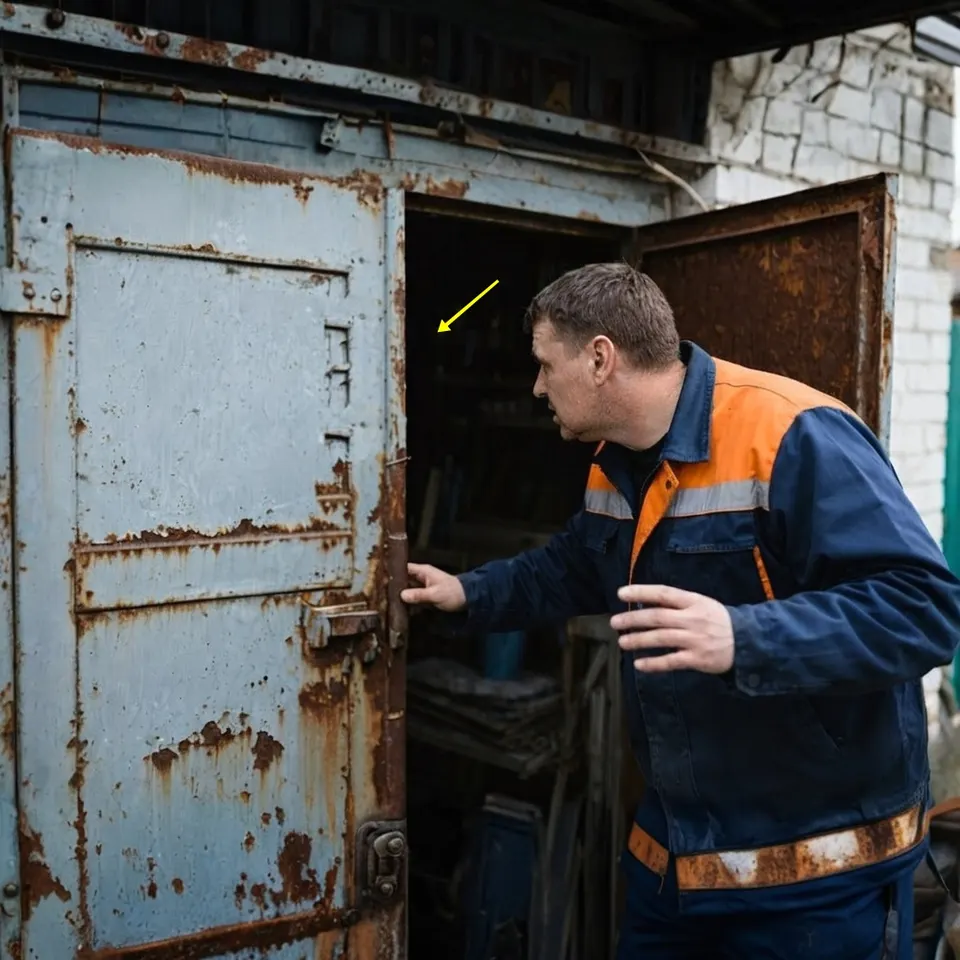
The door groaned open with a long, painful screech. Alex stepped inside, swept the flashlight from his phone across the dark space, and froze in utter shock.
Alex Miller sat in the stuffy lawyer’s office, watching the older woman in a severe pantsuit read his grandfather’s last will and testament in a monotone voice. His brother, Victor, lounged in the chair beside him, wearing an expensive Italian suit that smelled of cologne. Victor was drumming his fingers on the armrest—a telltale sign of his impatience.
Grandpa Pete had passed away a week ago. He was 95, and had lived a long, full life. Alex still couldn’t believe he’d never again hear that deep, slightly gravelly voice, or see those sharp eyes that seemed to look right through you.
For the last few years, his grandfather had been a homebody, but he always lit up when Alex visited every weekend.
“The residential property at 17 Sunshine Avenue, including all structures and the adjoining land, I bequeath to my grandson, Victor Miller,” the lawyer continued.
Out of the corner of his eye, Alex saw Victor straighten up. A faint, satisfied smile touched his lips. Of course, the house. Grandpa’s house in the historic downtown district, where a shoebox cost a fortune. It was a two-story craftsman built in the 50s, back when Grandpa Pete had just returned from the war and started his life.
Alex wasn’t jealous. He’d never expected an inheritance and didn’t really need one. It was enough that his grandfather had loved him, spent time with him, and shared stories from his incredible life.
“And Garage Unit #42, in the ‘Eastward’ storage complex on Industrial Road, I bequeath to my grandson, Alex Miller.”
Silence hung in the air. Alex blinked, the words not quite registering. A garage? That old storage unit on the industrial side of town? Grandpa had mentioned it a few times, but as far as Alex knew, he hadn't been out there in twenty years.
Victor snorted. It was a short, sharp sound, somewhere between a laugh and a dismissive puff of air.
“Is that it?” he asked the lawyer.
“There is no other property listed. According to the will, that is all,” the woman confirmed, taking off her glasses to rub the bridge of her nose. “Any bank accounts were closed during his lifetime. No other assets have been recorded.”
“I see.” Victor stood, buttoned his jacket, and looked down at his brother. “Well, Alex. Congratulations on the inheritance. A garage is a serious asset.”
There wasn’t a trace of sympathy in his voice, only poorly concealed gloating. Alex rose slowly, a knot of humiliation tightening in his stomach. It wasn’t about getting less than his brother—that didn’t matter. It was the way Victor looked at him. That look said, “See? Even Grandpa knew which one of us was worth something.”
“You’ll both need to sign the documents to accept the inheritance,” the lawyer said, laying out the papers. “Sign here, please.”
Alex signed automatically, barely reading the text. Victor’s signature was a confident scrawl, done with obvious pleasure. He handed the lawyer his business card.
“If you need any other paperwork, call this number. My assistant will handle it.”
They walked out of the office together. It was an overcast day, with a light autumn drizzle starting to fall. Victor popped open an expensive umbrella with a leather handle.
“Hey, don’t take it so hard,” he said, a flicker of something like pity in his voice. “A garage isn’t bad. You can rent it out, make a little extra cash. Not like the house, of course. I figure the house is worth at least four hundred grand. I’m selling it, obviously. What do I need that old shack for? I’ll buy a condo in a new high-rise, invest the rest in my business.”
Alex listened in silence, a dull anger building inside him. A shack? Grandpa had lived his whole life in that house, raised his children there, grew old there. Every floorboard had its own unique creak, every corner held a memory. And Victor was going to sell it off like a piece of old furniture at a yard sale.
“You know, if you want, I can help you out,” Victor continued, walking toward his black Mercedes parked at the curb. “I can find a buyer for your garage. For a small commission, you know, brother to brother. You could probably get a thousand for it. Maybe two, if you’re lucky.”
“Thanks, I’ll think about it,” Alex managed to say.
“Suit yourself, but the offer’s on the table. Just don’t wait too long. Nobody wants those old storage units anymore. Everyone’s got built-in garages now.”
Victor got in his car, slammed the door, and drove off without another word. Alex was left standing in the rain, which was now coming down harder. He hadn’t brought an umbrella; he hadn’t even thought about it. Cold water trickled down his collar, but he barely felt it.
A garage. An old, beat-up garage in an industrial park you had to drive clear across town to get to. A place that was sketchy during the day, let alone at night. Why? Why would Grandpa leave him that?
Alex pulled out his phone to call a cab, but changed his mind. He decided to walk. Maybe the fresh air would help him clear his head, figure out how he was going to explain this to Tina.
Tina. His wife. They’d been married for eight years. Eight years that lately had felt more like a slow, fading ember of what once burned bright.
They met at a friend’s party. Back then, Alex had just started as a mechanic at a small auto shop. He didn’t make much, but it was enough. Tina worked as a receptionist at a salon; she was vibrant, funny, and full of life. They fell in love hard and fast, marrying six months later. They rented a one-bedroom apartment on the outskirts of town, ate ramen noodles, and were happy.
But over time, something changed. Tina changed. Or maybe she just stopped hiding who she really was. She started comparing him to her friends’ husbands, his salary to theirs, their life to everyone else’s. And in those comparisons, Alex always came up short.
“Look, Karen and her husband are going to Mexico. For the third time this year. And Mike just bought Susan a new SUV. A real one, not some used junker. Why are we still renting this dump? All our friends bought houses years ago.”
Alex tried. He took on extra shifts, stayed late at the shop, saved every penny he could for a down payment. But it was never enough. And Tina’s expectations grew with every passing month.
For the last six months, she’d barely spoken to him. She came home late, left early. Whenever he tried to talk, her answers were short and clipped with irritation. Alex felt their marriage cracking, but he didn’t know how to fix something that might have been broken from the start.
And this morning, as he was getting ready to go to the lawyer’s office, Tina had suddenly shown interest.
“So, what do you think you’ll get?”
she asked, applying mascara in the hallway mirror.
“I don’t know. Probably nothing much.”
“Oh, come on. Your grandpa was well-off. He had that amazing house downtown. If you get that, we can finally start living a normal life.”
Alex hadn’t said anything then. He didn’t bother explaining that his grandpa was never rich. That he’d built that house with his own two hands after his shifts. That he’d driven company cars his whole life and worked for a modest salary. That there were no millions to be had.
Now, walking through the rain-soaked streets, Alex dreaded going home. But he had no choice. He opened the apartment door around seven, soaked to the bone, exhausted and empty. Tina was on the sofa, flipping through a glossy magazine. She looked up as he came in.
“Well? How did it go?”
Alex silently took off his jacket and hung it on the hook. He kicked off his boots, walked into the living room, and sat on the edge of the sofa.
“Alex, I’m asking you…” Tina’s voice sharpened. “What did you get?”
“A garage,” he said quietly.
“What?”
“A garage. An old storage unit on the edge of town…”
Silence fell. Alex didn’t look at his wife, but he could feel her stare. He could feel the tension in the room thickening, the air growing heavy.
“A garage,” Tina finally repeated, her voice dripping with so much contempt it made Alex flinch. “Your grandfather left you a garage?”
“Yes.”
“And your brother?”
“The house.”
Tina shot up, throwing the magazine to the floor. Her face was twisted with fury.
“Are you kidding me? The house? The one downtown that’s worth a fortune?”
“Tina, listen…”
“No, you listen to me!” she cut him off, her voice rising to a shout. “Eight years… For eight years I’ve been waiting for our life to finally change! To stop living in this dump, to stop pinching pennies, to stop being broke! And for what? A garage? A damn garage on the edge of town? I don’t give a damn about your grandfather or his decision! You’re a loser, Alex. You’ve always been a loser. Even your own grandfather knew it. That’s why he left you that piece of junk and gave the real inheritance to your brother.”
Alex clenched his fists. He was boiling inside, but he fought to keep his composure. He never raised his voice at Tina, not even when she started fights.
“Your brother is a successful businessman. He has a nice condo, a new car, money. And you? What do you have? Greasy hands and dirt under your fingernails. You tinker with other people’s cars for peanuts and you call that a life?”
“I earn an honest living…”
“Honest?” She laughed, a hysterical, sharp sound. “Honest? You can’t even buy a new pair of jeans with your ‘honesty’! Do you have any idea how much my friends’ purses cost? More than you make in six months!”
“Then why did you marry me?” The words escaped him before he could stop them.
Tina fell silent, giving him a long, appraising look.
“I thought you’d change. I thought you had ambition, goals, a plan. But you’re still a nobody. A mechanic for life. And that garage—it’s a symbol. A symbol of who you really are. A failure that not even your own grandfather trusted with anything valuable.”
Every word was a punch to the gut. Alex was silent, with nothing to say. What was there to say? Maybe she was right. Maybe he really was a failure.
“You know what?” Tina marched toward the bedroom. “I’m done. I’m done with all of it. You, this poverty, your complacent attitude. I’m not going to waste my life rotting away next to you.”
She started pulling clothes from the closet, stuffing them into a suitcase. Alex watched, feeling like he was in a dream.
“You’re leaving?”
“Of course I’m leaving. You think I don’t have options? I’ve had someone who actually values me for a while now. Someone who can give me a decent life. I should have left you a month ago, but I decided to wait. I thought maybe you’d get something decent from your grandpa. But no. A garage. A damn garage on the edge of town.”
She zipped the suitcase shut.
“Tina, wait. Let’s talk…”
“Talk about what? About how you’ll promise to change? How many times have I heard that? No, Alex. It’s over. I’m tired of waiting for a miracle. There won’t be one. You’ll stay a mechanic, rotting in this apartment that, by the way, I’ve been paying the rent on for the last six months because your salary only covers groceries.”
She walked past him to the door without a backward glance.
“I’ll leave the keys with the neighbor. I’ve paid the rent through the end of the month. After that, you can live wherever you want. For all I care, you can live in your garage.”
The door slammed shut. Alex remained on the sofa, staring at a fixed point on the wall. He felt a strange emptiness inside. Not pain, not despair—just a void. As if something had been drained out of him, leaving only a shell.
He didn’t know how long he sat there. An hour, maybe more. It was completely dark outside. The rain picked up, drumming against the windowpane. The apartment was silent except for the hum of the pipes.
Alex got up, went to the kitchen, and opened the fridge. It was nearly empty. A carton of milk, a slice of cheese, two eggs. He closed the door without touching anything. He wasn’t hungry. He went back to the living room, lay down on the sofa, and stared at the ceiling.
His thoughts were a jumble, one tumbling over the other, making it impossible to focus. A failure? “Even your grandpa knew who you really were.” “I have someone who values me.” Tina’s words played on a loop in his head.
Maybe she was right. Maybe he was nothing. Thirty-five years old. What had he accomplished? A rented apartment, a meager salary, and a wife who left him the second she realized he wouldn’t live up to her expectations. And a garage. The garage he’d inherited. The garage that had just destroyed his family.
No, not the garage. His family had been falling apart for a long time; he just hadn't wanted to see it. The garage was just the final straw.
Alex closed his eyes, trying to sleep, but his mind wouldn’t shut off. He tossed and turned, but the day’s events kept replaying. The lawyer’s face, Victor’s smug grin, Tina’s look of contempt. “Live wherever you want. For all I care, you can live in your garage.”
Actually, that was an idea. Since he had a garage, why not spend the night there? Everything in this apartment was a reminder of his failed life. Tina’s clothes in the closet, her makeup in the bathroom, their photos on the wall. No, he had to get out. At least for one night.
Alex stood up without turning on the lights. He found his backpack in the dark, threw in a change of clothes, a toothbrush, and a thermos. He pulled on his jacket, still damp from the rain. He locked the apartment and stepped out into the night.
It was around midnight. The rain had stopped, but the asphalt glistened with puddles. The few people on the street hurried along, paying no mind to the lone man with a backpack.
Alex pulled out his phone and opened the map. He typed in the address. Industrial Road, Eastward Storage Complex. The route showed it was clear across town. He could take a cab, but he decided to save the money.
He had some cash, but not much. After Grandpa Pete’s death, he’d had to cover the funeral and reception costs. Victor, of course, hadn’t offered to help. He claimed he had just made some large investments and his funds were tied up.
Alex waited twenty minutes for a late-night bus. He sat by the window, resting his forehead against the cold glass. The city’s nightscape drifted by: brightly lit 24-hour convenience stores, the occasional car, the dark windows of sleeping houses.
He thought about his grandfather. Pete Miller, a man who had lived 95 years and seen more than his grandsons could ever imagine. Grandpa Pete was born in 1928, during the Great Depression. His childhood was marked by hardship, poverty, and then war.
In 1941, when the war broke out, Grandpa was 13. He told Alex how he’d tried to enlist but was turned away for being too young. So he went to work in a factory, machining tank parts for 12 hours a day. In ‘43, he finally managed to join the army, lying about his age to get in.
He didn’t fight for long. In 1944, he was wounded by shrapnel and sent home with a Purple Heart. He returned an injured veteran, but he didn’t give up. He learned to drive, got a job as a chauffeur for a big manufacturing company, and drove the top executives, CEOs, and visiting bigwigs from out of town.
It was a good job for the time. Steady, with a decent salary and perks. But he never looked down on an honest day’s work. In the evenings, he’d do side jobs—driving people to weddings, to the hospital, wherever they needed to go.
And so he lived. He got married, raised two sons—Alex and Victor’s fathers. He built his house, saw his kids grow up, and became a grandfather. He kept working almost until he was 80, no longer as a driver but as a consultant at a local car service, teaching the young mechanics.
Alex loved visiting his grandpa. Especially in recent years, when Pete was mostly housebound but always happy to have company. They would sit on the porch, drink iced tea, and Grandpa would tell stories from his life.
He rarely spoke about the war. Only sometimes, in quiet moments, his memory would take him back to those terrible days. Digging foxholes under bombardment. Burying his friends on the battlefield. The shrapnel that hit his back, missing his spine by less than an inch.
More often, Grandpa would talk about the post-war years. How the country rebuilt itself. How they built factories, houses, and highways. How they believed in a brighter future, that their children would have a better life.
“We believed, Alex,” Grandpa would say, squinting in the sun. “We believed it wasn’t all for nothing. The war, the hardship—it all had a purpose. We were building a new world, a fair one, where every person could have a job, a home, a decent life.”
“And did you build it, Grandpa?”
“I don’t know, son. I just don’t know. For some, life got better, for others, worse. But I learned one thing in my long life. Happiness isn’t about money. It’s not about big houses or fancy cars. It’s about living with a clear conscience. Being able to sleep at night. Being able to look people in the eye without shame.”
Alex would nod, not fully understanding what his grandpa meant. Now, sitting on this late-night bus, he mulled over those words.
A clear conscience. He hadn’t done anything wrong, had he? He worked hard. He didn’t steal or cheat. So why did he feel so awful? Why did it feel like life had passed him by, like he’d missed something important?
The bus reached the end of the line. Alex got off and looked around. It was another twenty-minute walk to the storage complex. He pulled up his hood—the drizzle had started again—and walked down the deserted street.
The industrial park was dark and silent. A few streetlights cast weak pools of light on the road. All around were abandoned warehouses, old factory buildings with broken windows, and overgrown lots. It was a grim place, especially at night.
Alex checked the address on the document. Unit #42, Row 3. He walked along a long line of identical garage doors, looking at the numbers. Some units looked well-maintained, with new locks and fresh paint. Others were derelict, with rusted doors and caved-in roofs.
Finally, he found it. #42. It was in the middle of the row and looked abandoned. The metal door was covered in a thick layer of rust, the paint was peeling, and in some places, the metal had rusted through. The lock was old and heavy, clearly untouched for years.
Alex took out the key the lawyer had given him. It was heavy, old-fashioned, with an intricate cut. He put it in the lock and tried to turn it. It wouldn’t budge. He applied more force. The mechanism was rusted shut.
“Come on, you piece of junk!” he muttered, jiggling the key.
Suddenly, the lock gave way with a loud click. Alex slid the bolt and pulled on the handle. The door opened with a groan that echoed through the empty industrial park.
Alex pulled out his phone and turned on the flashlight. The beam cut through the darkness, revealing the shape of something large covered by an old canvas tarp. He stepped inside, moving cautiously, as if afraid of disturbing something. He walked over to the tarp and pulled at the corner. The fabric was heavy, stiff with dust and damp. Alex pulled harder, and the tarp slid off, revealing…
A car.
Alex froze, unable to believe his eyes. Before him stood a 1953 Chevrolet Bel Air. Seafoam green, with gleaming chrome trim, big round headlights, and a massive grille. The car looked like it had just rolled off the assembly line. The paint shone in the beam of his flashlight, the chrome was brilliant, and the whitewall tires were pristine, without a single crack.
“No way,” Alex whispered.
He walked around the car, his eyes glued to it. It was in perfect condition. Not a single scratch on the body, not a speck of rust. Even the hubcaps were polished to a mirror shine.
The Bel Air was an icon of post-war America, a symbol of optimism and prosperity. Grandpa had mentioned once that he’d always dreamed of owning one, that he’d saved for years. But Alex had always assumed it was a dream that never came true.
And now here it was. Sitting in a forgotten garage, perfectly preserved. Like a museum piece.
Alex went to the driver’s side and pulled the handle. The door opened smoothly, without a creak. The interior smelled of leather and that unique old-car scent—a mix of oil, gasoline, and time.
He slid behind the wheel, running his hand over the steering wheel. The leather wrap was soft, not dried out. The bench seat was also leather, without a single tear. The dashboard was polished, and the needles on the speedometer and gauges were all intact.
This wasn’t just a car. This was a car that someone had meticulously cared for all these years. Grandpa. Of course, it was Grandpa.
Alex opened the glove compartment and froze again. Inside was an envelope. Thick, sealed. And underneath it, neat stacks of cash, held together with rubber bands.
With trembling hands, Alex took out the envelope. Written on it in his grandfather’s familiar script was: “For Alex. Open when you find the car.”
He set the envelope aside and pulled out the stacks of cash. He counted them. Ten stacks of one hundred dollar bills. Ten thousand. Another five smaller stacks of fifties. A total of thirty-five thousand dollars.
Alex sat there, holding the money, unable to process what was happening. Where did Grandpa get this kind of cash? He’d worked as a driver his whole life, earning a modest salary, then living on a small pension. Where did thirty-five grand come from?
His hands reached for the envelope. Alex carefully opened it and pulled out several handwritten pages. His grandfather’s handwriting—firm and steady, despite his age. Alex held the pages up to the light of his phone and began to read.
“My dear Alex, if you’re reading this, it means I’m gone. It means you’ve inherited my garage and found what I’ve kept hidden here all these years. My Bel Air, my pride and joy, my secret.
I know you must be surprised. Why did I leave you a garage instead of the house? Why did I choose you, and not Victor? I’ll explain. But first, let me tell you a story. A story I’ve never told anyone. Not even your grandmother, God rest her soul.
I got this car in 1953. I was 25 at the time. I was working as a private driver for a very wealthy industrialist, a Mr. Blackwood. It was a demanding job, but it paid well. Plus, I could do side jobs in my off time.
In 1953, Mr. Blackwood got into some serious trouble. I don’t know the details, something about his business partners and the government. All I know is he had to leave town, fast. One night, he called me. He told me to meet him, no questions asked. He needed a driver he could trust.
I drove him all night in his own car, a big Cadillac. He was quiet, just staring out the window. He had a briefcase with him. We drove to a small airfield a few states over. A private plane was waiting. Before he got on, he turned to me. He said he was leaving the country and wouldn’t be back. He thanked me for my loyalty and discretion over the years.
Then he handed me two things. The keys to this Bel Air, which was his personal car that he kept in a private garage. And the briefcase. He told me to take them and disappear. I tried to refuse, but he was already walking toward the plane. I never saw him again.
A month later, the official title for the car arrived in the mail. A 1953 Chevrolet Bel Air. Owner: Peter Miller. All legal and clean. I never understood how he managed it. But I didn’t ask questions. My dream had come true.
I drove this Bel Air for 10 years. I took your grandmother and your father on trips in it. The car was my pride. I cared for it like it was my own child, polishing it, changing the oil, keeping it perfect. It never once let me down.
But in 1963, the company I worked for gave me a new car. A brand-new Ford Galaxie. It was a company car, more prestigious. I couldn’t turn it down. I was supposed to sell the Bel Air. But I couldn’t. I couldn’t part with it. This car was a part of my life. A part of my story.
So I bought this storage unit. On the edge of town, in a complex that was just being built. I brought the Bel Air here and hid it. I didn’t tell anyone. I even told your grandmother I’d sold it.
Ever since then, I’d come here once a month. I’d start the engine to keep it from seizing up. I’d wipe down the body, change the fluids, check the tire pressure. I protected it. As a memory. As a piece of a life that existed before everything changed.
Years went by. The country changed. I got older. But I kept coming to the garage. I drove myself here until I was 85. Then my eyesight started to go, my reflexes weren’t what they used to be. I had to leave the car. The last time I was here was 10 years ago. But I knew she was waiting. Waiting for her time. Waiting for someone who would appreciate her.
Alex, I left this car to you because you’re the only one who will understand. Victor wouldn’t get it. To him, it’s just an old car he could sell to a collector for a lot of money. But for you? For you, it will be more.
You’ve always been special, Alex. Ever since you were a kid. I remember you coming over, sitting on the porch, listening to my stories. You never interrupted, never rushed me. You just listened. You looked at me with those serious eyes of yours and listened. Victor never did that. He wasn’t interested. He wanted money, connections, opportunities. You wanted stories. You wanted the truth.
I’ve watched you live your life. I’ve seen that it hasn’t been easy. That you work yourself to the bone for peanuts. That your wife, God forgive me, doesn’t appreciate you. That your brother thinks you’re a failure. But I know better. I know you’re an honest man. You have good hands and a good heart. You’ve never betrayed anyone, never cheated, never let anyone down. And that’s worth more than anything.
Alex, this car is worth a lot of money. I had a friend look into it. A Bel Air in this condition is a rarity. Collectors would pay anywhere from eighty to a hundred thousand dollars for it. Maybe more. But I don’t want you to sell it. At least not right away. Live with it for a while. Drive it. Feel what it’s like to own a piece of history. A piece of an era when people believed in the future. When they built, created, and dreamed.
The money in the glove box is what was in that briefcase. I saved it for you all these years. Thirty-five thousand dollars. It’s your seed money. You can use it to open your own auto shop. Or buy a small house. Or just live on it for a while until you figure out what to do next.
Don’t waste it on foolish things. Don’t give it to anyone. Especially not to those who once called you a failure. This money is for you. For your new life.
I know things are tough for you right now. I know your wife left. Yes, I know. I saw it coming a year before I died. I saw the way she looked at you. The way she’d grimace when you came home from work. I saw it, but I didn’t say anything. You wouldn’t have believed me. You had to see it for yourself. Don’t regret it, son. Tina was not the woman for you. She never was. She didn’t love you; she loved the idea of what you could provide. When she realized you couldn’t, she left. And it’s a good thing she did. Better late than never.
You have your whole life ahead of you. You’re young, healthy, and smart. You have gifted hands; you can fix any car. That’s a talent, Alex. A real talent. Not everyone has it. Use this chance. Use what I’ve left you. Not for revenge. Not to prove something to your wife or your brother. But for yourself. For your life. For your happiness.
Live, Alex. Live a life you can be proud of. Keep your conscience clear. Sleep well at night. And remember: you are not a failure. You never were. You were just on the wrong road. A road others chose for you. Now, it’s time to choose your own. I believe in you.
Your Grandpa, Pete Miller.
95 years. Lived a long time. Saw a lot. But I only felt happy when I was doing what I knew was right. I hope you find what’s right for you, too.
P.S. There’s something else under the back seat. The car’s title, registration, all the service records. Keep them safe. They’re part of the car’s history. Part of our family’s history.”
Alex finished the letter and couldn’t move. His grandfather’s words resonated deep inside him, striking chords he didn’t even know he had. “You are not a failure. You never were.” How many times had he heard the opposite? From Tina, from others, even from himself. Failure, loser, a mechanic for life. Those words had become part of his identity. But his grandfather saw something different. His grandfather saw something else in him.
Alex carefully folded the letter, put it back in the envelope, and placed it in the breast pocket of his jacket, close to his heart. Then he leaned over and felt under the back seat. His fingers brushed against something. He pulled, and a worn but sturdy leather portfolio slid out. Inside were the documents. The title for a 1952 Chevrolet Bel Air, seafoam green. Registered to Peter Miller. Dated 1953. There were old receipts for parts, service manuals, and logbooks where his grandfather had meticulously recorded all the work he’d done. Oil changes, brake checks, valve adjustments. The last entry was from 2013. Ten years ago. Grandpa really had been coming here. He’d cared for the car until his health no longer allowed it.
Alex ran his hand over the steering wheel. The cool leather felt alive under his fingers. This car held decades of history, stories, memories, and hopes.
He remembered his grandpa talking about the post-war years. How he and Grandma used to take this car on road trips to the coast. Driving across the country, sleeping by the side of the road, singing along to the radio. Grandma was young and beautiful then. She’d laugh when the car got stuck in the mud, and help push it out without a single complaint.
“Those were the best years of our lives, Alex,” Grandpa had said. “We were poor, but we were happy. You understand? Happy, because we were together, because we loved each other.”
Alex closed his eyes. A lump formed in his throat. When was the last time he’d been truly happy? When had he felt like he was living, not just existing? He couldn’t remember. The last few years had been a gray blur. Work, home, work. The same routes, the same faces, the same conversations.
Tina had grown more and more distant, closing herself off. Intimacy became a chore, then it stopped altogether. They slept in the same bed but were strangers. When did it start? A year ago? Two? Or was it always like this, and he just hadn't wanted to see it?
“Tina was not the woman for you. She never was.” Grandpa was right. Tina didn’t love him. She loved an idea. The idea of a successful husband who would provide her with a beautiful life. When she realized he didn’t fit that idea, she lost interest.
Alex opened his eyes and looked at the dashboard. The speedometer was at zero. The odometer read 47,000 miles. Not much for a car that was over 70 years old.
He wondered if it would start. He looked at the ignition key. Old-fashioned, solid. He turned it. A relay clicked. The gauge needles twitched. Alex pushed the starter button. The engine coughed, sputtered, turned over a few times, and then roared to life. It settled into a low, steady rumble—no knocking, no smoke. It was as if the car had been turned off yesterday, not 10 years ago.
Alex sat behind the wheel of the running Bel Air, still in disbelief. Grandpa had prepared everything. Absolutely everything. He must have drained the old fuel, put in fresh. Checked the battery or left a new one. He’d preserved the engine so perfectly that it started after years of sitting. This was incredible. This was love. Love for a car. Love for his grandson. Love for a life that continues even after death.
Alex shut off the engine, got out of the car, and walked around the garage. Now that his eyes had adjusted to the dim light, he noticed other details. In the corner was a workbench. On it, tools were laid out neatly. Wrenches, screwdrivers, hammers—all clean and oiled.
On the wall hung an old framed photograph. Alex walked closer, holding up his phone. The photo showed a young Grandpa Pete, no older than thirty. He was standing next to the Bel Air, one hand on the hood, smiling. Beside him was a young Grandma in a light-colored dress. She was laughing, covering her mouth with her hand. Behind them was the ocean. Happy, young, beautiful, in love.
Alex’s eyes stung. He turned away, unable to look at the photo. It was too painful. A sharp reminder of what he’d never had. That he and Tina had never shared that kind of love, that closeness, that happiness.
He sat down on an old wooden stool by the workbench and buried his head in his hands. He was tired. Bone-tired. Not physically, but mentally. Tired of a life that felt meaningless. Of a job that brought no joy. Of a marriage that was an empty formality.
“You have your whole life ahead of you.” Life. Thirty-five years old. Half of it gone. Or half of it still to come. It was all a matter of perspective.
Alex lifted his head and looked at the car. The Bel Air stood in the dim light—green, silent, waiting. Waiting to be brought into the light, to drive on the open road again.
“Don’t sell it, at least not right away. Live with it for a while. Drive it.”
Grandpa was right. He couldn’t sell it right away. He needed to understand it. To feel it. Alex stood up and walked to the garage door. He looked outside. Night. Silence. A few stars peeked through the clouds. The industrial park was asleep.
What should he do? Where should he go? Back to the apartment Tina had paid for through the end of the month? And then what? Find another place to rent? On what money? A mechanic’s salary—$2,500 a month. Rent would take most of that, leaving almost nothing for food and everything else.
Or he could use his grandpa’s money. Thirty-five thousand dollars. He could rent a decent apartment. Or even buy one. He could use it as a down payment on a mortgage. Become a homeowner. He could open his own auto shop, like Grandpa suggested. A small one, with 2-3 bays. Hire an assistant. Work for himself, not for someone else.
He could do a lot of things, but right now… Right now, he just wanted to stay here. In this garage. Next to the car his grandpa loved. Next to the memory of the man who believed in him.
Alex went back into the garage and closed the door from the inside. He found an old blanket in the corner, neatly folded. He unfolded it. It was clean. It smelled of mothballs, but it wasn't damp. Grandpa had thought of this too. He lay down on the floor, right next to the car, and covered himself with the blanket. He used his backpack as a pillow. He closed his eyes.
Silence. Peace. For the first time in a long time—peace. Alex fell asleep without thinking about tomorrow. Without planning, without worrying. He just slept, as if he had finally come home after a long journey.
He woke up from the cold. He opened his eyes. Gray light was filtering through the cracks in the garage door. Morning. What time was it? Alex checked his phone. Eight o’clock. Friday. A workday. He was supposed to be at the shop by nine.
Should he call? Say he was sick? Take a personal day? What did it matter? What did any of it really matter? He dialed the number of his boss, Greg.
“Greg? It’s Miller. I can’t make it in today. Family stuff.”
“Alex, we’re swamped. We’ve got twenty cars lined up. You can’t come in?”
“I can’t. Sorry. Get someone to cover.”
“Where am I gonna find someone now? Alex, just come in for a few hours.”
“Greg, my grandpa just died. I’m dealing with the inheritance. Funeral, paperwork, all that. You understand.”
A pause.
“Alright. But I need you here Monday, bright and early.”
“I’ll be there.”
Alex hung up. He felt a slight pang of guilt. He’d lied about the funeral. It was a week ago. But Greg didn’t know. And in the end, what difference did it make?
He stood up, stretching his stiff muscles. A night on the garage floor was not the most comfortable rest. His back ached, his neck was stiff. But he felt strangely light. Maybe because for the first time in a long time, he had done what he wanted to do. Not what was expected of him, but what he himself wanted.
Alex walked over to the car and ran his hand over the hood. The metal was cool and smooth. He wanted to see it in the daylight. To see how the paint gleamed, how the chrome sparkled. He opened the garage door. Morning light flooded the space.
The Bel Air practically glowed in the light. The seafoam green paint reflected everything around it like a mirror. The chrome trim was dazzling. A beauty. A real beauty. Alex walked around the car, examining every detail. No dents, no scratches. The tires were old, but intact. He’d have to replace them, of course. Seventy years is a long time. Even if tires aren’t used, they age. But overall, the car was in perfect condition. A museum piece.
“Eighty to a hundred thousand,” Grandpa had said in his letter. Alex let out a low whistle. He knew old cars were valuable to collectors, but he had no idea they were worth that much. So, he had thirty-five thousand in cash and a car worth at least eighty thousand. A total of over one hundred thousand dollars.
He was rich. Unexpectedly, he was rich.
Victor got a house worth four hundred thousand. But Victor was already rich. He had his own company, real estate, investments. To him, Grandpa’s house was just another asset. But for Alex, this money was a chance. A chance to start over. A chance to change his life.
The only question was—how?
Alex sat on the edge of the garage, pulled out his phone, and did a search. “Classic car buyers.” A ton of ads popped up. Collectors, antique car dealers, auctions. He clicked on one. A photo of a Bel Air, similar to his grandpa’s. The price was thirty-eight thousand. And it wasn’t in perfect condition. The photo showed scratches and worn spots. His grandpa’s Bel Air was worth more, for sure.
But sell it? He didn’t want to. Grandpa had asked him not to sell it right away. He’d asked him to live with it, to drive it.
And then another thought occurred to him. What if he restored it? Not repaired it—it was already in excellent condition. But restored it to its completely authentic, original state. Replace the tires with the same kind they used in the 50s. Change all the fluids. Rebuild the engine if needed. And then drive it. Drive this car. Show it to people.
He could enter it in classic car shows. They had those, right? Alex searched again. Yes, they did. Classic car festivals were held regularly. People came from all over the country to show off their cars, compete in elegance contests. That would be interesting. To go to a show like that. To display his grandpa’s Bel Air. Maybe even win a prize.
But that would take money. For the restoration, for transporting the car, for entering the festival. Good thing he had money. Thirty-five thousand. He could spend some on the car. Some on living expenses. And put some away.
He also needed to sort out the paperwork. The car was registered in his grandpa’s name. He needed to transfer the title to himself. Get it inspected. Get insurance. A lot to do. But it was interesting. For the first time in a long time, Alex felt interested in something. Not just an obligation, not a routine, but a genuine interest.
He stood up, brushing off his jeans. He decided: today, he would deal with the paperwork. He’d go to the DMV, find out what he needed for the title transfer. Then he’d find specialists who could inspect the car and give him an official assessment of its condition. And then… then he’d see.
Alex went back into the garage and closed the door. He carefully covered the car with the tarp. He gathered his things. He tucked the money into his backpack and the letter into his breast pocket. He took one last look at the car.
“See you later, beautiful. I’ll be back soon.”
He left the garage, locking it behind him. He walked to the bus stop. It was a gray, overcast day. But to Alex, it suddenly seemed like the sun was shining brighter than usual.
Alex got downtown by noon. The whole way, he was planning his next steps. First, transfer the car title. Second, get it inspected by a specialist. Third, figure out his living situation. Fourth… he hadn’t figured out fourth yet.
He went into the nearest cafe, ordered a coffee and a sandwich. He sat by the window, pulled out his phone, and started looking up information on transferring the title of a classic car. It turned out to be more complicated than with a regular car. He needed an appraisal for authenticity, a valuation, and a pile of documents. But it was doable. Totally doable.
Alex jotted down the addresses and phone numbers of the necessary agencies. Then he opened up apartment rental listings. He found a few options not far from his job. One-bedroom apartments for $800-1000 a month. He called one of the numbers.
A woman’s voice answered.
“Hello?”
“Hi. I’m calling about the apartment on Main Street. Is it still available?”
“Yes, it is. Would you like to see it?”
“Could I see it today?”
“Today?” A pause. The rustle of papers. “How about four o’clock? Does that work for you?”
“That works. What’s the address?”
The woman gave him the address. Alex wrote it down, thanked her, and hung up. So, at four, he’d look at the apartment. In the meantime, he could take care of the car stuff. He finished his coffee and sandwich, paid, and went back outside.
The DMV was a twenty-minute walk away. Alex took his time, looking at the city around him. It was strange, but everything seemed different. Brighter, somehow. More alive. He noticed details he’d never paid attention to before. The intricate carvings on old buildings, the graffiti on walls, the faces of passersby. Maybe it was because he had hope now? Hope that his life could change, that not all was lost.
The DMV was crowded. Alex took a number, sat down, and waited for almost an hour. Finally, his number appeared on the screen. He went up to the counter. Behind the glass sat a woman in her forties, with a tired face and a bored expression.
“What can I help you with?” she asked without looking up.
“Hi. I need to transfer a vehicle title. It was an inheritance.”
“Do you have the vehicle’s documents?”
“Yes. The title.”
“Let me see it.”
Alex took the portfolio out of his backpack, pulled out the title, and passed it through the slot. The woman took the document and opened it. She glanced at it, and suddenly her eyes widened.
“Is this for real? A ‘53 Bel Air?”
“Yes.”
“And it runs?”
“Yes. It’s in excellent condition.”
The woman studied the document carefully, then looked up at Alex.
“You do realize this is a classic, right? That there’s a special process for registering these cars?”
“No, I didn’t. That’s why I’m here.”
She nodded, pulled out a folder, and flipped through it.
“Okay, to transfer the title for a classic vehicle, you’ll need: the certificate of inheritance, an expert appraisal of the vehicle’s authenticity, a market valuation, a technical inspection report, plus the standard packet—application, ID, and proof of paid fees.”
“Where can I get an expert appraisal?”
“There are a few places. Here, take this list.” She handed him a printed sheet with addresses and phone numbers.
“Thanks. How long does this usually take?”
“If all the documents are in order, two to three weeks. Maybe faster if you’re lucky.”
“Got it. Thanks a lot.”
Alex took his documents and left the building. He looked at the list of appraisal services. He chose the first one on the list. “Classic Auto Appraisals.” He called. A man’s voice, pleasant and professional, answered.
“Classic Auto Appraisals. How can I help you?”
“Hi. I need an appraisal for a classic car for a title transfer.”
“What’s the model?”
“A 1953 Chevrolet Bel Air.”
A pause. Then the voice, now with unconcealed interest:
“A ‘53 Bel Air? What kind of condition is it in?”
“Excellent. Almost perfect.”
“Seriously? Can you send photos?”
“I can. But I haven’t taken any yet. The car is in a garage; I just inherited it yesterday.”
“I see. Listen, would it be possible for us to come take a look? We can do a free preliminary inspection. If the car is really in that good of a condition, we’d be very interested.”
“Sure, you can. When would be good for you?”
“Tomorrow.”
“In the morning?”
“Tomorrow morning is perfect. Would ten o’clock work?”
“That works. Where should I meet you?”
Alex gave him the address of the garage. They made the arrangements. The appraiser introduced himself as Mike. He said he’d been working with classic cars for 20 years and had seen a lot of Bel Airs, but only a handful in perfect condition. Alex said goodbye and hung up.
Good. The appraiser was coming tomorrow. The process had begun. He checked the time. Three-thirty. Time to go see the apartment.
The apartment was small, but clean and cozy. First floor of a five-story building, with windows facing the courtyard. The furniture was old but in good shape. Fridge, stove, washing machine—everything was there. The landlady, a pleasant, talkative woman in her fifties, showed him around. She told him about the neighbors and the utilities.
“I moved to another city a month ago to be with my daughter,” she explained. “I decided to rent out the apartment for some extra income. A young man was living here, but he moved out yesterday. Found a place with his fiancée in another part of town. Are you looking for a long-term rental?”
“I’m not sure yet. Maybe a few months, maybe longer.”
“That’s fine with me. As long as you’re neat and quiet.”
“The neighbors are elderly; they don’t like a lot of noise.”
“I’m quiet. I don’t drink, don’t smoke, don’t have parties.”
“Then it’s perfect. Eight hundred a month plus utilities. First and last month’s rent up front. Does that work for you?”
Alex did a quick calculation. Sixteen hundred now, then eight hundred a month. That was fine. He had over thirty thousand in his backpack; he could afford it.
“That works. When can I move in?”
“Whenever you like. Are you bringing furniture?”
“Just a few things. I can move in tonight.”
“Then let’s get the lease signed. I have a standard form; we just need to fill in your information.”
They went to the kitchen and sat at the table. The landlady took out a lease agreement and a pen. Alex gave her his information and signed the lease. He took out the money from his backpack and counted out sixteen hundred dollars. He handed it to the landlady. She counted it, gave him a receipt and the keys.
“There you go. Welcome. If anything breaks, give me a call, and I’ll tell you who to contact for repairs.”
“I’m a mechanic. If something breaks, I can probably fix it myself.”
“Oh, wonderful. Then we’re all set. I’ll come by once a month to check the meters. If you have any questions, call me anytime.”
Alex thanked her, said goodbye, and left the building with the keys to his new apartment in his pocket. So, housing was taken care of. Now he could move his things from the old apartment.
He hailed a cab and went to his old rental. On the way, he wondered: what if Tina was there? What if she’d come back, wanted to talk? But the apartment was empty. Quiet, empty, cold. Tina had taken all her things. All that was left was his: his clothes, a couple of books, his toothbrush in the bathroom.
Alex quickly packed everything into two duffel bags. He didn’t have much. A mechanic’s life doesn’t involve accumulating a lot of stuff. He walked through the apartment one last time, checking to see if he’d forgotten anything. On the nightstand in the bedroom was a photo—their wedding picture. He picked it up and looked at it. Young, happy. Or pretending to be happy? Alex was about to throw the photo in the trash, but he changed his mind. He put it in one of the bags. Let it be. A part of his life, a part of his past.
He locked the apartment and went downstairs. He knocked on the neighbor’s door and left the keys, as Tina had asked. The neighbor, an elderly woman, took the keys and gave Alex a sympathetic look.
“Are you leaving for good?”
“Yes, I’m moving.”
“That’s a shame. You were a good neighbor, so quiet. But your wife…” She shook her head. “Well, it’s none of my business. Good luck to you.”
“Thanks.”
Alex went outside and hailed another cab. He went to his new apartment. On the way, he thought about how his entire previous life fit into two duffel bags. It was both funny and sad.
At the new apartment, he unpacked his things, took a shower, and changed his clothes. He took the backpack with the money and hid it in the closet, under a pile of linens. Then he thought: not the safest place. Tomorrow, he needed to open a bank account and deposit the money. That would be safer.
He lay down on the sofa and turned on the TV. Some news program, commercials, a sitcom. Alex watched without really paying attention. It was just background noise. His thoughts were on the car. The Bel Air. His grandpa’s inheritance. The appraiser was coming tomorrow. What would he say? Would he confirm that the car was authentic, that it was in excellent condition? And what if he didn’t? What if it turned out to be a replica, that his grandpa had been fooled, that the car wasn’t worth what he’d written about?
No, that was silly. Grandpa couldn’t have been wrong. He’d cared for the car himself for 70 years. He knew every nut and bolt.
Alex closed his eyes. Exhaustion hit him suddenly. A heavy weight. He didn’t realize he’d fallen asleep right there on the sofa, fully clothed, with the TV murmuring in the background.
He woke up in the morning to his phone ringing. He grabbed it without looking at the screen.
“Hello? Miller? It’s Greg. Where are you?”
Alex sat up, rubbing his face. Crap. Work. He’d only taken one day off.
“Greg, sorry, I completely forgot. I’m on my way.”
“Don’t bother. It’s Saturday. I’m calling to see if you’re coming in on Monday or not.”
“Saturday?” Alex looked at his phone screen. It was indeed Saturday. So yesterday was Friday. And he thought… “I’ll be there. I’ll definitely be there.”
“Well, you better be. We’re swamped. If we can’t keep up, we’ll lose customers.”
“I get it. I’ll be there on Monday.”
Greg grumbled something and hung up. Alex fell back onto the pillow. Saturday. That meant the appraiser was coming at ten. What time was it? Eight in the morning. He needed to get going to the garage.
He got up, washed his face, and got dressed. He ate the rest of yesterday’s sandwich for breakfast, washed it down with tea, and left the apartment. It was a long drive to the garage, clear across town. Alex took the bus, then transferred to another. He stared out the window, thinking about the upcoming meeting. Mike. The classic car appraiser. 20 years of experience. He was probably picky. He’d notice every flaw, every imperfection. Though what imperfections could there be? The car was in perfect condition. Grandpa wouldn’t have let it fall into disrepair.
Alex arrived at the garage at ten to ten. He opened the door and went inside. He pulled the tarp off the car. The Bel Air gleamed in the morning light that streamed through the open door. Beautiful. Just unbelievably beautiful.
At exactly ten, a white van with “Classic Auto Appraisals” written on the side pulled up. Two men got out. One was in his fifties, wearing jeans and a plaid shirt. The other was younger, in his thirties, with a camera in his hand. The older man walked up to Alex and extended his hand.
“Mike. This is my assistant, Tony. He’s our photographer and an all-around good guy.”
“Alex.” He shook the appraiser’s hand. “Come on in.”
Mike stepped into the garage and stopped dead in his tracks. Tony froze right behind him.
“Holy cow,” the appraiser breathed. “This… this is impossible.”
He slowly walked around the car. He ran his hand over the hood, the fender, then crouched down to look underneath.
“Alex,” he said, his eyes still fixed on the car. “Do you have any idea what you have here? A ‘53 Bel Air? This isn’t just a Bel Air. This… this is a museum piece. I’ve seen maybe two or three like this in my entire career. And none of them in this condition.”
“So the car is authentic?”
Mike chuckled.
“Authentic? It couldn’t be more authentic. Look: factory stamps, serial numbers, everything is here. The body hasn’t been repainted. The chrome is original. The engine… Tony, hand me that flashlight.”
Tony handed him the flashlight. The appraiser opened the hood and looked inside.
“Oh, my God! The engine is like new. Clean, no leaks, no corrosion. Who took care of this?”
“My grandfather. His whole life.”
“Your grandfather was a saint. This kind of care is a once-in-a-lifetime find.”
He continued to inspect the car, commenting on every detail. Tony took pictures from every angle. Alex stood to the side, listening, a sense of pride swelling inside him. Grandpa. Grandpa did this. He saved the car for him. Through decades, through all the hardships, he saved it.
“Can I start it?” Mike asked.
“Of course.”
Alex got behind the wheel, turned the key, and pushed the starter button. The engine started on the first try, settling into a smooth idle. The appraiser walked over to the exhaust pipe, took a sniff, and listened closely.
“Runs like a clock. No strange noises, no knocking. Compression seems to be good. Alex, I’ll be honest with you, this car is worth a lot of money.”
“How much?”
“On the collector’s market…” Mike paused to think. “At least eighty thousand. Maybe a hundred, if you find the right buyer. At auction, it could go for as much as one-twenty.”
Alex’s breath caught in his throat. One hundred and twenty thousand dollars. Plus the thirty-five thousand in cash. A total of over one hundred and fifty thousand dollars at his disposal. He was rich. He, Alex Miller, a mechanic making thirty grand a year, was suddenly worth over one hundred and fifty thousand dollars.
“Are you looking to sell the car?” Mike asked.
Alex was silent for a moment. Sell it. Get the money. Start a new life. But Grandpa had asked him not to sell it right away. He’d asked him to live with the car, to drive it.
“No,” he said. “I don’t want to sell it yet. I want to transfer the title to my name, drive it. Maybe take it to a car show.”
The appraiser smiled.
“A wise decision. Cars like this shouldn’t be sold; they should be preserved. They’re a part of history, a part of our culture.”
“Can you do the appraisal for the title transfer?”
“Of course. We’ll take care of everything. The report, the valuation, the technical inspection, the whole package. Does a week work for you?”
“That works.”
“Excellent. I’ll draw up a contract and email it to you. You sign it and send it back. The documents will be ready in a week.”
They finalized the details. Mike gave Alex his business card and asked for his phone number. Tony took another hundred photos. Before they left, the appraiser said:
“Alex, if you ever decide to sell, give me a call. I have clients who would kill for a car like this. In a good way.”
“Thanks. I’ll definitely let you know if I decide to.”
The appraisers left. Alex remained alone, sitting behind the wheel of the Bel Air. One hundred and twenty thousand dollars. He could buy a house. A nice one, downtown. He could open his own auto shop. A big one, with all the latest equipment. He could not work at all for three or four years, if he lived modestly. He could do so much.
But for now, he just wanted to drive this car. To feel what his grandpa felt when he sat behind this wheel. To understand what he was thinking, where he was going, what he was dreaming of.
Alex patted the steering wheel. The leather under his fingers was warm, alive.
“Thanks, Grandpa,” he whispered. “Thanks for everything.”
He started the engine and let it warm up. Then he put it in gear and slowly drove out of the garage. The car moved smoothly, gracefully. The steering was a bit heavy, but responsive. The brakes worked perfectly. The engine didn’t sputter or stall.
Alex drove around the industrial park. He returned to the garage, parked the car, and shut off the engine. He sat there for a moment, thinking. He needed to replace the tires. The old ones, even though they looked fine, could blow out at any moment. He needed to check the brake system. The fluid was probably old. He needed to replace all the technical fluids and filters. It would take time. A week, maybe two. But it had to be done before he took it out on the road.
Alex pulled out his phone and searched: “tires for 1953 Chevy Bel Air.” He found a few options. Prices ranged from $800 to $1200 for a set. Expensive, but manageable. He called one of the shops and checked their stock. They had them and could deliver them tomorrow.
“Deliver them,” Alex said. “I’ll give you the address.”
He placed the order. Then he called a few other places and ordered brake fluid, oil, and filters. All for delivery the next day. The money was flowing. He’d already spent about two thousand dollars. But these were necessary expenses.
Alex got out of the car and covered it with the tarp again. He closed the garage and went home. At home, he opened his laptop and started researching the Bel Air. He read articles, watched videos, and browsed forums for classic car owners. He learned more and more. About the car’s design, its features, its common problems. About how to properly care for it, how to repair it, where to find parts.
He was immersing himself in this world. The world of classic cars, retro festivals, and collectors. It was interesting. Genuinely interesting. The hours flew by. Alex was glued to the screen. Reading, watching, taking notes. By evening, his head was buzzing with information, but he felt a strange sense of joy. He had found his passion. Something that truly captivated him. Something he wanted to do not for the money, but simply because it was interesting.
In the evening, he ordered a pizza, ate, and continued his research. He found a forum for Bel Air owners, registered, and created a new thread: “Just inherited a 1953 Chevy Bel Air. Advice for a newbie.” Within half an hour, the replies started pouring in. Dozens of comments. People gave advice, asked questions, and requested photos. Alex uploaded a few pictures he’d taken on his phone.
The reaction was immediate. “That’s a masterpiece.” “A car in that condition is a unicorn.” “Are you selling?” “I’ll give you eighty grand for it right now.” “Where was it stored?” “How did it stay in such good shape?”
Alex answered the questions and thanked everyone for their advice. He felt like he was part of a community, part of something bigger than just owning a car.
That night, before going to sleep, he reread his grandpa’s letter, slowly taking in every word. “Live, Alex, live a life you can be proud of.” Alex folded the letter, put it in the nightstand, lay down, and closed his eyes. A new life, new opportunities, a new him lay ahead. And he was ready.
The next two weeks flew by. Alex threw himself into working on the car. During the day, he went to his job at the auto shop—he couldn’t just leave Greg in the lurch, and he still needed the money, however little. But his evenings and weekends were spent in the garage.
The new tires arrived. Alex mounted and balanced them himself, using equipment he borrowed from a friend at a tire shop. He replaced all the fluids: engine oil, transmission fluid, brake fluid, coolant. He flushed the fuel system, cleaned the carburetor, and replaced the spark plugs.
The work came easily. His hands knew every move; his years as a mechanic had not been wasted. But this was different. It wasn’t routine, it wasn’t for money. It was for himself. For his soul.
Mike sent over all the documents: the expert appraisal, the valuation, the technical inspection report. Everything was in perfect order. Alex took the documents to the DMV and submitted his application for the title transfer. Two weeks, three at most, the same woman at the counter told him. This time, she was much friendlier—apparently, the impressive paperwork for a classic car had made an impression.
Alex also opened a bank account and deposited most of the money from his grandpa’s inheritance. He kept only a few thousand in cash for current expenses. The rest was in the bank, earning a little interest.
Life was looking up. The new apartment was comfortable and quiet. The neighbors were indeed elderly, didn’t make noise, and greeted him when they met. His job at the auto shop continued as usual: cars, customers, oil changes, suspension repairs—all the same. But inside, everything had changed. Alex felt like he was living differently. He had a purpose, a meaning, something to wake up for in the morning.
Tina never called. Not once. Alex didn’t call her either. What was the point? Everything had been said; it was over. Sometimes he thought about her, remembered moments from their life together, but without pain. Just as memories of something long past that no longer mattered.
Victor didn’t get in touch either. But they had rarely spoken before, anyway. Only at family holidays, and even then, more out of obligation than desire. Everything was calm. Too calm.
Then, on a Wednesday, while Alex was at work, he got a call from an unknown number.
“Hello? Is this Alex Miller?”
A woman’s voice, formal and stern.
“Yes, this is he.”
“This is the law firm of Sterling & Associates. We’re calling on behalf of your brother, Victor Miller, who has filed a petition to contest the will of your grandfather, Peter Miller. You will be served with a summons to appear in court. The hearing is scheduled for the 20th of this month.”
Alex froze, the phone pressed to his ear.
“I’m sorry, what? Contest the will?”
“Your brother believes the distribution of the estate was inequitable. He is demanding a re-evaluation of the assets and a redistribution of the shares.”
“But the will was written by my grandfather. It’s all legal.”
“The court will decide that. You will receive an official notice. We recommend you retain legal counsel. Goodbye.”
She hung up. Alex stood in the middle of the auto shop, unable to move. Victor. Victor was suing him. But why? He got the house, worth $400,000. Why would he want an old garage?
Then it hit him. The car. He found out about the car. Somehow, he found out that a classic Bel Air worth a fortune was in the garage. But how could he have known? Alex hadn’t told anyone. Except for the appraiser and the people on the forum. But on the forum, he hadn’t used his real name, his city, or the exact address.
So, it had to be the appraiser. No, Mike seemed like a decent guy. He wouldn’t do that. Alex tried to clear his head. He called the appraiser.
“Mike? This is Alex Miller, the owner of the Bel Air.”
“Oh, Alex, hi. How’s the car coming along?”
“It’s great. Listen, this is a strange question, but did you happen to mention my car to anyone? I mean, to any third parties.”
A pause.
“I did. I mentioned on a collector’s forum that I’d seen a rare model in pristine condition. But no details, no names, no addresses. Just as a point of interest. What’s wrong?”
“My brother found out about the car. He’s suing me, demanding a share of the inheritance.”
“Damn, Alex, I’m sorry if I somehow…”
“No, no, it’s not your fault. I’m just trying to figure out how the information leaked.”
“I have a theory. The collector’s world is a small one. If your brother is interested in classic cars or knows someone who is, the information could have gotten back to him.”
“Victor doesn’t care about cars. He doesn’t care about anything but money.”
“Then maybe someone in his circle saw my post and told him. I’m really sorry, Alex. I never thought it would cause any problems.”
“It’s okay. Thanks for being honest.”
Alex hung up. So that was it. Victor found out about the car through his connections in the collector’s world and decided he was entitled to it. Greed. Plain and simple human greed.
Alex went back to work, but his mind was racing. Court. He’d never been in a lawsuit before. He didn’t know how it worked, what he needed to do. He needed a lawyer. A good lawyer who specialized in inheritance law.
During his lunch break, he searched online and found a few law firms with good reviews. He called one of them and scheduled a consultation for that evening.
The lawyer, a man in his forties with sharp eyes and a confident demeanor, listened to Alex’s story and reviewed the documents.
“This is a straightforward case,” he said, leaning back in his chair. “The will was properly executed, certified by a notary, and you inherited the property legally. Your brother has no grounds to demand a revision.”
“Then why is he suing me?”
“Because he can. In our legal system, anyone can file a lawsuit for any reason. The real question is, will he win? I don’t think so.”
“But what if he does?”
The lawyer shrugged.
“It’s unlikely. But theoretically, a court could find the distribution unfair if it’s proven that one heir received a disproportionately large or small share. However, in your case, the testator himself determined who got what. That was his right.”
“So I shouldn’t worry?”
“I wouldn’t say that. Your brother has hired lawyers, which means he has a strategy. He might try to argue that the will was signed under duress, or that the testator was not of sound mind, or that the property was improperly valued.”
“My grandpa was completely lucid until the very end. He wrote the will a year before he died, with a doctor’s note confirming his mental capacity.”
“That’s good. That makes it difficult for them to challenge it on those grounds. That leaves the property valuation. Did you have the garage re-appraised after you inherited it?”
“No. Only the car that was inside it.”
“And your brother knows about the car?”
“He does now.”
“That could be the problem. If he can prove that the car was part of the inheritance that should have been valued when the will was written, he could demand a redistribution.”
Alex frowned.
“But the car belonged to my grandpa. He had the right to do whatever he wanted with it.”
“Correct. But if the will only mentioned the garage and not the car, then technically, the car could have been overlooked. It’s a legal loophole.”
“What should I do?”
“First, prepare for court. I will represent you and build our defense. Second, do not sell or gift the car until the court makes a decision—that could be seen as an attempt to hide assets. Third, gather all the evidence you can that your grandpa intended for you to have the car.”
“I have a letter from my grandpa. He wrote to me, explaining why he left the garage and the car to me.”
The lawyer’s eyes lit up.
“A letter? That’s excellent. Bring it to our next meeting. It’s strong evidence of the testator’s intent.”
They agreed on a fee and discussed the details. The lawyer took the case. Alex left the office with a heavy heart. Victor. His own brother. Suing him to take away the last thing he had from their grandfather.
He pulled out his phone, found his brother’s number, and dialed. It rang for a long time. Finally, Victor answered.
“Yeah?”
“It’s me, Alex.”
“Oh, Alex. What’s up?” His voice was indifferent, almost bored.
“I wanted to ask what the hell you think you’re doing, suing me?”
“Oh, you heard. They work fast.” Victor chuckled. “Listen, Alex, it’s nothing personal. It’s just business.”
“Business? We’re brothers, Victor!”
“Exactly. And that’s why I thought you’d do the brotherly thing. Share what you got unfairly.”
“Unfairly? Grandpa left me the garage in his will.”
“The garage, yes. But he didn’t know there was a car worth a fortune inside. If he had, he would have done things differently.”
“He did know. He put it there himself. He took care of it his whole life.”
“Well, that’s what you say. But do you have any proof?”
“I do. A letter from Grandpa, where he explained everything.”
Victor was silent for a moment.
“A letter? What letter?”
“He left me a letter. He told me the story of the car and explained why he was leaving it to me.”
“You can show it in court. We’ll see how authentic it is.”
“Victor, do you seriously think I would forge a letter from our grandfather?”
“I think you’re smarter than you look. You played the quiet, unsuccessful type your whole life. And then you walk away with an inheritance worth over a hundred grand. Nice one, Alex. You played it well.”
“I didn’t play anything. I didn’t even know about the car until I opened the garage.”
“Right. Tell it to the judge. I’m getting my share, one way or another. We can do this the easy way or the hard way—your choice.”
“What do you mean?”
“I mean we can make a deal. You sell the car, we split the money fifty-fifty. I already sold the house. Got four hundred and twenty thousand for it. Plus your hundred grand from the car—that’s five-twenty total. We split it down the middle—two-sixty each. That’s fair, right?”
Alex couldn’t believe what he was hearing.
“You want me to sell Grandpa’s car and give you half the money?”
“Exactly. It’s only fair. We’re both his grandsons; we both have a right to the inheritance.”
“But Grandpa left you the house. A house worth four hundred thousand dollars!”
“It’s not my fault you got less. But now that it turns out you have the car, the situation has changed. Let’s be reasonable. You give me fifty grand, and we walk away peacefully. I’ll drop the lawsuit, no more legal battles.”
“No.”
“No? Are you sure? The court case could drag on for months. It’ll cost you a fortune in legal fees. Not to mention the stress, the time. Are you ready for that?”
“I’m ready. I’m not selling the car, and I’m not giving you a dime.”
“Your call. See you in court, then.”
Victor hung up. Alex stood in the middle of the street, clutching his phone. He was shaking with anger, hurt, and disappointment. Victor—his own brother, for whom four hundred and twenty thousand dollars wasn’t enough. He wanted more. He wanted to take the last thing Alex had from their grandfather. Greed, avarice, a complete lack of conscience.
“I always knew you were a failure.” Victor’s words from long ago echoed in his mind. Back then, Alex had just swallowed the insult. But now… now he wasn’t going to stay silent. He wasn’t going to give up what his grandfather had left him. What had been given to him with love, with faith in him.
Alex clenched his fists. Fine. Let there be a court case. He was ready to fight. Ready to defend what was rightfully his.
The days leading up to the court date dragged on. Alex met with his lawyer, prepared documents, and gathered evidence. He brought his grandfather’s letter; the lawyer studied it and said it was a strong piece of evidence, but Victor could challenge its authenticity. They needed a handwriting analysis. They got one. The expert confirmed: the letter was written by Peter Miller, with no signs of forgery or coercion.
Alex also found old photos of his grandpa with the car. He found entries in his grandpa’s journals. He had kept a log of all the work he’d done on the Bel Air. Dates, descriptions, receipts for parts. All of it was carefully stored in the garage. The lawyer was pleased.
“We have a strong case. It will be difficult for Victor to prove anything.”
But Alex wasn’t convinced. He knew his brother. Victor didn’t file a lawsuit without a plan.
The day of the hearing arrived. Alex went to the courthouse half an hour early. He wore the only suit he owned, bought for his wedding eight years ago. It was a little loose—he’d lost weight from the stress of the past few weeks. His lawyer was already waiting in the hallway.
“Ready?”
“Ready.”
“Remember: only answer the judge’s questions. Don’t get into an argument with your brother or his lawyer. Keep your cool.”
“I’ll try.”
They entered the courtroom. Victor was already there, sitting with his lawyer—a woman in her fifties with a sharp suit and a predatory expression. Victor was impeccably dressed. An expensive suit, polished shoes, cufflinks. He looked confident, relaxed. When he saw Alex, he gave a curt nod. Cold, without a smile. Alex sat down, took out his documents, and laid them out in front of him. His hands were shaking slightly; he clenched them into fists, forcing himself to calm down.
The judge entered—a woman in her sixties with a stern face and piercing eyes. She sat down, put on her glasses, and opened the file.
“Case number 734. Miller versus Miller, regarding the contest of a will.” She looked up. “Are both parties present?”
“Yes, Your Honor,” the lawyers replied.
“Very well. We will hear from the plaintiff.”
Victor’s lawyer stood up and began to present their case. She spoke professionally, clearly, with figures and legal citations. The gist was this: when the will was written, the testator, Peter Miller, had not accounted for the presence of a classic car worth a significant amount of money in the garage. If this fact had been known, the distribution of assets would have been different. Therefore, it was necessary to revise the heirs’ shares and redistribute the property fairly.
The judge listened, taking notes, then asked:
“Do you have any evidence that the testator was unaware of the vehicle’s presence?”
“Your Honor, the will only specifies the garage. The automobile is not mentioned. Therefore, the testator either did not know about it or did not consider it significant.”
“Or,” Alex’s lawyer interjected, “he considered the automobile part of the garage’s contents and intentionally bequeathed it along with the garage to the defendant.”
“Do you have any proof of that?”
“Yes, Your Honor.” Alex’s lawyer stood up and took the grandfather’s letter from his folder. “A letter from the testator, addressed to Alex Miller, in which he explains in detail the history of the automobile and his reasons for bequeathing it specifically to him.”
The judge took the letter and read it. She read for a long time, several pages. Victor tapped his fingers nervously on the table. Finally, the judge looked up.
“Has the authenticity of this letter been verified?”
“Yes, Your Honor. Here is the report from the handwriting expert.” The lawyer handed her the document.
The judge reviewed the report. The letter was deemed authentic. Written by Peter Miller. She looked at Victor’s lawyer.
“Do you have a response?”
Victor’s lawyer stood up.
“Your Honor, the existence of a letter does not change the fact that the automobile is not mentioned in the will. A letter is private correspondence and has no legal standing.”
“The letter serves as evidence of the testator’s intent,” Alex’s lawyer countered. “It clearly states that the automobile was intended for Alex Miller but was not included in the will because it was located in the garage, which was included in the will.”
The judge raised her hand, stopping the argument.
“That’s enough. I will review all the case materials and make a decision. The hearing is adjourned for two weeks.”
She banged her gavel. The hearing was over.
Alex stood up, feeling empty. Uncertain. Two more weeks of waiting.
Victor approached him in the hallway.
“Alex, this is my last offer. Let’s make a deal. Sixty grand for you, forty for me. As brothers.”
“No deal.”
“You’re stubborn. You were always a loser, and you still are. Even when you get lucky, you manage to screw it up.”
“Get lost, Victor.”
Alex turned and walked away. Victor shouted after him:
“You’ll regret this. I’m not giving up.”
Alex didn’t look back. He left the courthouse and sat on a bench. He pulled out a pack of cigarettes. He hadn’t smoked in five years, but he desperately wanted one now. He lit one, took a drag, and coughed.
His lawyer sat down next to him.
“Don’t worry. It’s going well. The letter is a strong piece of evidence. The judge will take it into account. And if she doesn’t, we’ll appeal. But I think the decision will be in your favor.”
Alex nodded, not entirely convinced. Two weeks. Two more weeks of not knowing.
He went back to work, trying to distract himself. Cars, customers, routine. But his thoughts kept returning to the court, to Victor, to the car. What if he lost? What if the judge decided Victor was right? Would he have to sell the car? Give the money to his brother?
No. That wasn’t going to happen. He wouldn’t let it.
That evening, Alex drove to the garage. He opened it, went inside, and sat in the car. He put his hands on the steering wheel and closed his eyes.
“Grandpa,” he whispered, “if you can hear me, help me. I don’t know what to do. Victor wants to take the car. And I… I can’t give it up. It’s all I have left of you.”
Silence. Only the sound of the wind outside the garage walls. Alex opened his eyes. Of course, his grandpa wouldn’t answer. He was gone. There was only his memory, the car, the letter. But maybe that was enough?
He started the engine. He let it warm up, put it in gear, and slowly drove out of the garage. He drove through the city at night. Slowly, unhurriedly. The car moved smoothly, confidently. People on the street turned to look, pointing. A classic car on the road was a rare sight.
Alex turned the wheel, shifted gears, listened to the purr of the engine, and gradually calmed down. The car was like medicine, like therapy. His grandpa had driven it for decades. He had driven it and been happy. Maybe he could be happy too.
Alex returned to the garage an hour later. He parked the car and covered it with the tarp. He closed the garage. He walked home, thinking. Thinking about what would happen after the court case. If he won, he would start a new life. He would open his own auto shop, restore old cars. That was what he loved, what he was good at. If he lost… well, he would find another way. He wouldn’t give up. He wouldn’t let himself down. His grandpa believed in him, and he wouldn’t disappoint him.
The two weeks crawled by. Alex went to work in a daze, mechanically performing his tasks. Greg asked him a few times if everything was okay, but Alex brushed it off. Personal problems, he said, they’ll be resolved soon.
In the evenings, he went to the garage and spent time with the car. He polished the body, checked all the systems, or just sat behind the wheel, thinking. Sometimes he would take it for a drive through the city at night—it calmed him, helped him gather his thoughts.
He continued to chat with people on the classic car forum, sharing his experiences and asking for advice. A few people sent him private messages with offers to buy the Bel Air, with some offering as much as one hundred thousand dollars. But Alex didn’t even consider them. The car was not for sale. Ever.
On Wednesday, the day before the final hearing, his lawyer called.
“Alex, there’s an update. The plaintiff has submitted additional materials.”
“What kind of materials?”
“Witness testimonies. Your brother found three people who will allegedly testify that they heard your grandfather say he was planning to sell the car and split the money equally between his grandsons.”
Alex’s heart sank.
“That’s not true. Grandpa never said that.”
“I understand. But that’s their testimony. They will be questioned in court tomorrow. We need to be prepared to refute their claims.”
“How?”
“Do you have any witnesses who can testify to the contrary? People who your grandpa told about his intention to leave the car to you?”
Alex thought. Who could his grandpa have told? He was a private person, didn’t like to share his personal affairs. He didn’t talk much with his neighbors, and most of his friends had passed away or moved.
“I don’t know. Maybe his neighbors? Or one of his old friends?”
“Try to find someone. Even one person who can confirm that your grandpa wanted you to have the car. It would help a lot.”
After work, Alex drove to his grandpa’s house. Or rather, his former house—Victor had already sold it, but the new owners hadn’t moved in yet. The house stood empty, the windows boarded up. Alex knocked on the neighbor’s door. To the left lived an elderly woman, Mrs. Gable, who had been friends with his grandmother.
“Alex!” she said, her face lighting up when she opened the door. “Come in, come in. Would you like some tea?”
“Thanks, Mrs. Gable. I can’t stay long. I wanted to ask you… Did Grandpa ever talk to you about a car? A Bel Air that he kept in a garage?”
The woman thought for a moment.
“A car? Of course, he did. He said it was his pride and joy, that he’d cherished it his whole life. Why do you ask?”
“Well, my brother is suing me. He wants to take the car. He claims Grandpa was going to sell it and split the money between us.”
“What?” Mrs. Gable threw up her hands. “You don’t say! Pete would never have sold that car. He told me so himself, about three years ago, when I was taking him to a doctor’s appointment. He said, ‘Vera, if anything happens to me, I’ve got a car in a garage. It’s for Alex. He should take it, drive it. It’s for him.’ I was surprised at the time and asked why not Victor, since he’s the older one. And Pete said, ‘Victor wants money, but Alex understands the soul of things. I’m leaving it to him.’”
Alex could barely breathe.
“Are you sure you remember that? Could you testify to that in court?”
“Of course, I remember it like it was yesterday. And I’ll go to court if I have to. I’ll tell it just like it was. Pete was a good man. May he rest in peace. As for your Victor…” She grimaced. “Forgive me, Alex, but your brother is a greedy man. He didn’t even dress properly for his grandfather’s funeral. Showed up in a tracksuit. A disgrace.”
Alex thanked Mrs. Gable, took down her phone number, and passed it on to his lawyer. He was pleased.
“Excellent. This is exactly what we need. A witness who can confirm the testator’s intent.”
The next day, they were back in the courtroom. Victor looked confident, even smug. His lawyer had her documents laid out, ready for the witness examination.
The judge opened the session.
“We will continue the hearing. The plaintiff may proceed. You have witnesses to call?”
“Yes, Your Honor. We have called three witnesses who can confirm the testator’s intentions.”
The first to be called was a man in his sixties who introduced himself as George Peterson.
“Did you know the deceased, Peter Miller?”
“Yes, I did. We worked together at the car service about 20 years ago.”
“And did he ever speak to you about his car?”
“He did. Said he had an old Bel Air. Wanted to sell it. Said he’d leave the money to his grandkids.”
“Did he say he wanted to split the money between both grandsons?”
“Yeah, between the grandkids, both of them.”
Victor’s lawyer nodded with satisfaction. Alex’s lawyer stood up.
“Can you tell us when exactly Peter Miller told you this?”
The witness hesitated.
“Well, it was a long time ago. Maybe 10 years back.”
“10 years ago. And have you spoken with Peter Miller in the last few years of his life?”
“No, we lost touch. I moved to another part of town.”
“So you don’t know if his intentions changed over those 10 years?”
“Well… I guess not.”
“Thank you, no further questions.”
The next two witnesses were two other men of a similar age. Their testimonies were similar. Grandpa had mentioned the car and his desire to sell it at some point. But all these conversations had taken place many years ago, and none of them had spoken to him in the final years of his life. Alex’s lawyer systematically dismantled their testimonies, pointing out the passage of time and the lack of current information.
Then it was the defense’s turn.
“Your Honor, we call to the stand Mrs. Vera Gable, the deceased’s neighbor.”
Mrs. Gable entered the courtroom, looking a little nervous. She took the witness stand.
“Did you know Peter Miller?”
“Of course, I did. We were neighbors for thirty years.”
“Did he ever speak to you about his car?”
“Yes, he did. He loved it very much. Cared for it like the apple of his eye.”
“Did he ever say he was going to sell it?”
“Never. He said he was leaving it to Alex. About three years ago, before he went to the hospital, he told me just that: ‘The car is for Alex. He’ll understand what it is.’”
“Are you certain you remember those words?”
“I remember it like it was yesterday. I even asked him: why not Victor, the older grandson? And Pete replied: ‘Victor loves money, but Alex understands the soul of things.’”
A hush fell over the courtroom. Victor’s face went pale. His lawyer was scribbling furiously. The judge looked at the plaintiff’s lawyer.
“Any questions for the witness?”
Victor’s lawyer stood up.
“Mrs. Gable, were you friends with the Miller family?”
“Yes, I was.”
“With whom specifically? With Peter Miller or with his grandson Alex?”
“I was friends with Peter’s wife, God rest her soul. And I respected Peter; he was a good man.”
“And do you have a relationship with Alex?”
“Occasionally. He would come to visit his grandfather and say hello to me.”
“So you have a good relationship with the defendant?”
“Well, a normal relationship.”
“Is it possible that you are testifying in his favor out of personal sympathy?”
Mrs. Gable flushed.
“I am telling the truth. What I heard from Peter Miller. I have no reason to lie.”
“Thank you. No further questions.” The lawyer sat down.
The judge looked at both sides.
“Are there any other witnesses or evidence?”
Alex’s lawyer stood up.
“Your Honor, we would like to present additional evidence. These are entries from Peter Miller’s journals, where he describes the maintenance work on the automobile and repeatedly mentions that the car is intended for his grandson Alex.”
The judge took the journals and flipped through them. There were dozens of entries from the last 20 years. All of them mentioned: “For Alex,” “Alex will appreciate it,” “Alex will take care of it.” She looked up at Victor. This was quite convincing evidence of the testator’s intent.
Victor’s lawyer tried to object.
“Your Honor, personal journal entries have no legal standing…”
“They do,” the judge interrupted. “As proof of a person’s intentions. Taken together with the letter, the witness testimony, and the will itself, the picture is quite clear. Peter Miller consciously and deliberately prepared the automobile as an inheritance for his grandson Alex.”
She closed the case file.
“The court will now recess to deliberate.”
Twenty minutes passed. Alex sat gripping the arms of his chair. His lawyer was next to him, writing in a notepad, calm and confident. Victor was pacing nervously in the hallway, talking on his phone.
Finally, the judge returned. Everyone stood.
“Please be seated.”
She put on her glasses, opened a document, and began to read.
“Having reviewed the case materials, heard the witness testimonies, and examined the evidence presented, the court has reached the following conclusion.” Alex held his breath. “The will of Peter Miller was executed in accordance with the law, certified by a notary, and supported by a medical certificate of the testator’s mental capacity. The presence of the automobile in the garage is not grounds for revising the will, as the automobile is part of the property located within the garage and automatically transfers with it.”
The judge paused, looking at Victor.
“The witness testimonies presented by the plaintiff do not refute the testator’s intent, as they refer to a period significantly preceding the drafting of the will. At the same time, the testimony of the witness for the defense, as well as the letter and journal entries of the testator, unequivocally indicate his intention to leave the automobile to his grandson, Alex Miller.” She looked up. “The plaintiff’s claim is denied. The court’s decision is final and may be appealed within thirty days. This court is adjourned.”
The gavel struck.
It took a moment for Alex to understand what had happened. Then it sank in. He had won. The car was his. He turned to his lawyer. He was smiling.
“Congratulations. Justice has been served.”
Alex stood up, extended his hand to his lawyer, and shook it.
“Thank you. Thank you so much.”
Victor sat in his seat, pale, his face like stone. His lawyer was gathering her documents, clearly unhappy with the outcome. Alex walked over to his brother.
“Victor…”
“Get away from me,” Victor hissed, not looking at him. “You won. Happy?”
“I didn’t want to go to court. You started this. I thought you would understand…”
“Understand what? That you would share like a brother? No. You turned out to be just as greedy as everyone else.”
“Greedy? Victor, you got a house worth four hundred and twenty thousand dollars. Isn’t that enough?”
“It’s never enough.” Victor stood up and grabbed his briefcase. “You know what, Alex… you’re no longer my brother. Consider yourself an only child. I don’t need loser relatives.”
He turned and walked out of the courtroom. Alex watched him go, feeling a strange mix of relief and sadness. His brother. His own brother. The one he grew up with, shared a childhood with, played in the yard with. And now, they were strangers. Maybe it was for the best.
Alex left the courthouse. It was a bright, sunny day. The first truly warm day of spring. The trees were green, the birds were singing, people were smiling.
He pulled out his phone and called Mrs. Gable.
“Mrs. Gable, it’s Alex. I wanted to thank you. We won the case.”
“Oh, Alex, I’m so happy! I knew it would turn out this way. The truth always wins.”
“Thank you. Thank you so much. If it weren’t for you…”
“Oh, don’t be silly, dear. I just told the truth. Your grandfather was a good man. He wanted you to have the car, and so you shall.”
Alex said goodbye and hung up. He sat on a bench, closed his eyes, and turned his face to the sun. It was over. The court case, Victor, the whole ordeal… The car was his. His grandfather’s inheritance was his. Now, a new life was beginning.
Three months passed. Alex quit his job at the auto shop. Greg was unhappy, but Alex had made up his mind: no more working for someone else. It was time to start his own business.
He found a small space on the outskirts of town, a former warehouse that he converted into an auto shop. He bought equipment and hired two assistants—young guys who were passionate about working on classic cars. He named the shop “Pete’s Pride” in honor of his grandfather’s car.
Customers started coming in quickly. Word of mouth worked wonders. Classic car owners heard about the new shop where professionals worked, and they came from all over the city.
Alex loved his work. He restored old cars, bringing them back to their former glory. It wasn’t just repairs. It was art. Every car had its own story, its own soul. And he was helping those stories continue.
His grandfather’s Bel Air had a place of honor in the shop. Alex didn’t sell it. Sometimes he would take it to classic car shows and win awards. People would take pictures with the car and ask about its history. Alex would tell them about his grandpa, about the war, about how the car had been preserved for 70 years.
At one of these shows, a woman approached him. She was in her thirties, with short dark hair and intelligent eyes.
“Excuse me, is this your car?”
“Yes, it is.”
“It’s incredible. Could I take a picture?”
“Of course.”
She took a few shots, then asked:
“Do you do restoration work?”
“Yes, I have my own shop.”
“Could you take a look at my car? I have a 1967 Ford Falcon. I want to restore it, but I don’t know where to start.”
“I’d be happy to. Here’s my card.”
She took the card and smiled.
“Thanks. My name is Anna, by the way.”
“Alex.”
They shook hands. Her hand was warm and firm.
“Well, I’ll see you around, Alex.”
“Definitely.”
She walked away. Alex watched her go, feeling a warm stirring inside him. He hadn’t felt anything like this in a long time. It had been six months since Tina left, but he hadn’t been interested in women. He had neither the desire nor the time. But this woman… there was something about her. Something real.
A week later, Anna came to the shop in her Falcon. The car was in rough shape. Rust, dents. The engine barely ran. But Alex saw the potential.
“Can you fix it?” she asked.
“It’ll take about three months of work, but we can fix it.”
“How much will it cost?”
He gave her an estimate. Anna nodded.
“Deal. Just one request. Can I come by and watch the work in progress?”
“Of course. Come by whenever you like.”
She started coming by often. At first, once a week, then twice, then almost every day. She would help, handing him tools, holding parts, learning. It turned out she was a history teacher, and car restoration was her hobby.
“My dad loved old cars too,” she said, while Alex worked on the engine. “He had a Falcon just like this one. I grew up helping him in the garage. After he passed away, the car was sold. Recently, I decided to buy one just like it. In his memory.”
Alex understood. He was also keeping his grandpa’s car in memory of the man he loved.
They spent more and more time together. They talked about cars, about life, about their dreams. It turned out they had a lot in common.
One evening, after the work was done and the assistants had gone home, they were sitting in the shop, drinking tea.
“Alex,” Anna said, “can I ask you a personal question?”
“Of course.”
“Are you seeing anyone? A girlfriend, a wife?”
“I had a wife. We divorced six months ago.”
“I see.” She paused. “Have you thought about starting a new relationship?”
Alex looked at her, at her intelligent eyes, her gentle smile.
“I’ve thought about it,” he answered honestly, “but I haven’t met anyone who understands.”
“Understands what?”
“That life isn’t just about money, that there are more important things. Memory, history, soul.” He fell silent, feeling awkward. “Sorry, that probably sounds stupid.”
“Not stupid at all,” Anna said softly. “Not at all.”
She stood up, walked over to him, and took his hand.
“Alex, I’m not one to beat around the bush. I’ll just say it: I like you. I have since the first time we met. And I can see that you’re a good person—honest, talented, kind. I’d like to get to know you better, if you’re open to it.”
Alex looked at her, hardly believing this was real. A woman who understood him, who shared his interests, who saw him not as a source of money, but as a person.
“I’d like that too,” he breathed.
She smiled, leaned in, and kissed him—gently, cautiously. It was his first kiss since Tina, but it was completely different. It was real.
Another year passed. Alex stood in his garage, polishing his grandfather’s Bel Air. Tomorrow, he and Anna were driving to a big car show in the city. A huge international festival of classic cars. Hundreds of participants from all over the country.
Anna walked into the garage, holding two tickets.
“Everything’s ready. Hotel is booked, route is planned.”
“Excellent.” Alex straightened up, wiping his hands on a rag. “The car is in perfect condition, ready for the trip.”
Anna walked over and hugged him.
“You know, sometimes I think about your grandfather. How wise he was. To leave you not just a car, but a whole legacy. Faith in yourself. The chance to change your life.”
“He believed in me when I didn’t believe in myself,” Alex said quietly. “He saw something in me that I couldn’t see.”
“And he was right. Look at what you’ve accomplished. Your own business, a job you love, dozens of clients. Are you happy?”
Alex thought for a moment. Was he happy? A year ago, he wouldn’t have been able to answer that question. A year ago, he didn’t know what happiness was. And now? Now he had a job he loved. A woman who understood and accepted him for who he was. A car that connected him to his grandfather, to his family’s history.
“Yes,” he said. “I’m happy.”
Anna smiled and kissed him.
“Then your grandfather got his wish. He wanted you to be happy. And you are.”
Alex hugged her, resting his chin on the top of her head. He looked at the car.
“Thank you, Grandpa, for everything. For the faith, for the inheritance, for this new life.”
Somewhere deep in his soul, he felt that his grandfather could hear him. And that he was smiling. Because everything had turned out just as he had wanted.
The next day, they set off for the city. The Bel Air ran smoothly, without a single issue. People on the highway turned their heads, pointed, and took pictures. A classic car on the road is always an event. They drove at a leisurely pace, enjoying the journey, the conversation, the closeness. They stopped at roadside diners and walked through small towns.
In the city, a triumph awaited them. The Bel Air was a sensation at the festival. The judges gave it the highest score. Alex won the grand prize. The trophy for the best-preserved classic car.
Standing on the stage, holding the trophy, he thought of his grandfather. Of how he had dreamed of a car like this. How he had cared for it his whole life. How he had saved it for his grandson.
“This is your victory, Grandpa. Not mine—yours.”
After the ceremony, an elderly man in an expensive suit approached him.
“Young man, I’m a collector. I’d like to buy your car. Name your price.”
Alex smiled.
“I’m sorry, but it’s not for sale. It will never be for sale.”
“But…”
“It’s a family heirloom. It can’t be sold. I’m sorry.”
The man nodded with understanding.
“I respect that. There aren’t many people who value history more than money.”
He walked away. Alex looked at Anna. She was smiling, proud.
“The right decision. The only possible one.”
They returned home a week later. Happy, rested, and full of plans. Life went on. The business was growing, and they were getting more and more clients. Alex was thinking about expanding, maybe opening a second location, hiring more people.
Anna moved in with him. They talked about marriage, about children, about a future that now seemed bright and full of possibilities.
And it was all thanks to his grandfather. Thanks to an old garage that no one seemed to want. Thanks to a car that held not just history, but also love, faith, and hope.
Sometimes in the evenings, Alex would go to the garage, sit in the Bel Air, put his hands on the steering wheel, close his eyes, and imagine his grandfather sitting next to him, smiling, proud of him.
“I didn’t let you down, Grandpa. I found my way. I became the person I was meant to be. Thank you. For everything.”
And in the silence of the garage, he felt like he could hear his grandfather’s voice:
“Well done, Alex. You did it. Live. Be happy. That’s all I ever wanted.”
Alex would open his eyes. Start the engine. And drive out of the garage into the evening city.









Share how the story made you feel
0Comments appear after a quick automatic check. Please no links, ads or personal data.
Next to your name we show your country, determined from your IP address; the address itself is never shown, and only a hashed fingerprint of it is kept to stop spam.