
 Let’s Keep It Real
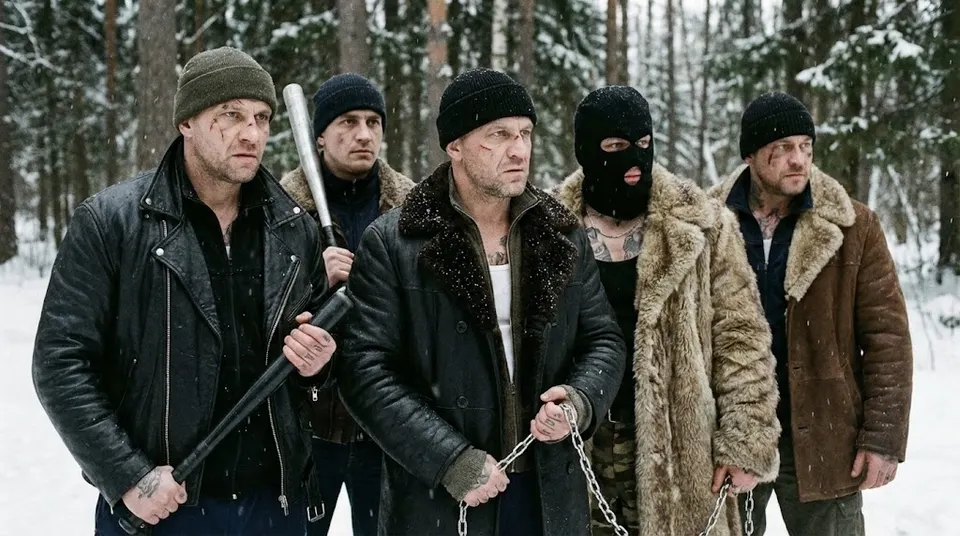
The crunch of snow under heavy tactical boots broke the silence of the winter woods in the Appalachian high country. Three men stepped out from behind the ancient hemlocks, their breath hitching in clouds of steam, predatory grins fixed on their faces. They felt like kings of the mountain, convinced they were untouchable in this wilderness.
A few yards away, his back to the uninvited guests, stood a hunched man in a worn Carhartt jacket, quietly splitting dry wood for his stove. The leader of the group, fiddling with a folding hunting knife, laughed out loud, anticipating an easy score and a chance to bully a helpless old-timer.
“Hey, Pops, drop the axe if you want to see tomorrow!” he shouted, stepping forward. The man slowly straightened his back and turned around. The thugs saw only deep wrinkles and a gray beard, but they missed the one detail that would have saved their lives if they’d been paying attention.
They didn't notice the way the man’s eyes instantly changed. The weary look of an old man vanished, replaced by the icy, calculated stare of a predator. The muscles under his old clothes didn't tense from fear, but from reflexes honed by years of service in Delta Force.
These punks thought they had cornered a frail hermit, but they had made a fatal error. They had awakened a man who was feared in the world's most dangerous hotspots. Now, the mountain would bear witness to why the callsign "Ghost" was only ever spoken in whispers.
The wind howled through the treetops with a low, threatening moan, as if nature itself were trying to warn the intruders of their mistake. But the three men surrounding the old man were deaf to it. They were drunk on the moment, enjoying the perceived power they held over a lone, seemingly defenseless senior.
Mike Sullivan, known to the local rangers simply as Mike, but listed under a very different name in classified JSOC archives, slowly loosened his grip on the handle. The heavy splitting maul thudded into the snow, barely missing his boot. This apparent gesture of surrender brought another round of laughter from the leader.
A tall, wiry man with a scar running down his cheek—the others called him "Scar"—was dressed in an expensive but impractical leather jacket. He held a pump-action shotgun loosely, the muzzle now leveled at Mike’s chest. Mike slowly raised his hands, showing empty palms.
His movements were intentionally sluggish, mimicking the frailty of age with a slight, practiced tremor. However, behind that mask of infirmity, a mind as precise as a Swiss watch was at work. While Scar gloated, Mike’s eyes, squinting against the wind, scanned his targets.
Three of them. Distance to the leader: twelve feet—too far for a lunge in deep snow. The second one, a stocky guy with a baseball bat sticking out of his pack and a hunting knife on his belt, stood to the left, blocking the path to the woodpile.
The third, the youngest, was fidgeting nervously a bit further back. He was clutching a handgun, and from the looks of it, the safety was still on. Amateurs. Dangerous and cruel, but amateurs nonetheless.
“That’s more like it, old man,” Scar spat into the snow, stepping closer. He smelled of stale beer and cheap cigarettes—scents that felt like a sacrilege in the crisp mountain air. “We thought you were deaf. I said drop the hardware.”
“Now, show us where you keep the stash. We’re cold, and we’re hungry.” Mike stayed silent. He knew this type.
City scavengers who had likely gotten into trouble down in the flatlands and decided to hide out in the sticks, thinking the woods would cover their tracks. But the mountains don't hide debts. They collect them with interest.
The old man coughed, hunching even more, and spoke in a raspy, cracked voice: “The cabin’s just past the hemlocks. But I don’t have much. Just some beans and coffee. You can see how I live.”
“We’ll be the judges of what you have,” the stocky one, "Tiny," interrupted. He stepped forward and gave Mike a hard shove on the shoulder. Mike stumbled, barely keeping his balance, but he didn't fall.
The shove was a test. They were testing the boundaries, like a pack of coyotes testing a stray calf. But under that old jacket, Mike’s muscles were as hard as oak roots.
He allowed his body to give way, absorbing the impact, but his mind was already mapping out the engagement. If he wanted to, the man in front of him would be neutralized in exactly 1.5 seconds. But it was too early.
Too much open ground, knee-deep snow that hampered movement. And the kid with the pistol—he was twitchy, his finger trembling on the trigger. One sudden move and a stray bullet could go anywhere.
He needed to lure them inside, into the tight quarters where distance didn't matter and situational awareness was everything. “Lead the way, guide,” Scar commanded, poking the shotgun into Mike’s back. They started down the narrow path Mike had packed down toward the creek.
The old man went first, shuffling his feet, but every step was calculated. He listened to the breathing of the men behind him, gauging their fitness. Scar’s breath was heavy and wheezing—a long-time smoker.
Tiny stomped like an elephant, breaking the crust of the snow and making enough noise to alert every animal within a mile. The kid, whom they called Jimmy, was sniffing and constantly looking over his shoulder as if expecting a state trooper to jump out from behind a tree. The cabin was only two hundred yards away.
It was a sturdy structure built from hand-hewn logs, weathered gray by time but as solid as a bunker. Mike had built it himself when he decided to walk away from a world he knew too well and had grown tired of. There was no electricity, no cell service—just a wood stove, a bunk, and silence.
A silence he valued more than gold, and which these men were now shattering. As they approached the porch, Mike felt a cold anger rising. Usually, his dog, a large wolfhound mix named Blue, would be waiting on the porch.
But today the porch was empty. Mike silently thanked his luck. Blue had headed into the woods early that morning to track something.
If the dog had been here, he would have lunged at the intruders and likely taken a bullet. The death of his only friend would have been the trigger that forced Mike to act immediately, messy and fast. But with Blue safe, Mike had room to maneuver.
“Open it!” Tiny barked, kicking the door with a heavy boot. Mike pulled the latch, and the door creaked open, releasing a puff of warm air smelling of cedar and woodsmoke. The thugs barged in, immediately filling the small space with their bulky presence.
Mike entered last, carefully closing the door to keep the heat in. His eyes instantly noted the position of every object in the room. The hatchet by the stove. The heavy cast-iron skillet on the table.
The skinning knife he’d left on the bench after cleaning some trout that morning. Scar walked over to the table, sweeping a mug of coffee onto the floor. The sound of shattering ceramic cut through the room.
“Alright, Pops, where’s the jar? Where’s the cash?” he laughed, looking around the modest room. “Don’t play poor with us. We know you hermits always hide your social security under the mattress. You probably haven't spent a dime in years.”
“I don’t have any cash,” Mike said calmly, taking off his hat and shaking the snow from it. “What would I need it for out here? There aren't any stores.” “Don’t lie to me!” Scar barked, and with a quick motion, he backhanded Mike across the face.
The blow was hard and insulting. Mike’s head snapped back, and blood began to trickle from his lip. He stumbled back against the log wall.
The taste of his own blood was salty and metallic. It was the taste of the field. A taste he had tried to forget for fifteen years.
Inside him, in the deep recesses of his mind where the professional lay dormant, something clicked. The safety was off. The targeting system was active.
But outwardly, he remained the same—a frightened old man wiping his lip with his sleeve. “Don’t hit me, fellas. Look around, maybe you’ll find something. I don’t remember much,” he muttered, looking down.
“That’s better,” Tiny smirked. “Jimmy, check the trunks. I’ll look behind the stove.” The thugs began to tear the place apart.
They dumped drawers onto the floor, ripped open bags of flour, scattering food across the dirty planks. Jimmy, the youngest, opened an old wooden chest in the corner. It held clothes—wool socks, spare flannels, old sweaters.
He tossed the items out one by one until his hand hit something hard at the bottom, wrapped in an oiled cloth. “Hey, Scar, look at this!” Jimmy shouted, unwrapping the bundle. It wasn't a wallet or a stack of bills.
It was an old, worn holster with a service pistol, the grip engraved with a commendation. Beside it lay a small velvet pouch. Jimmy emptied its contents onto the table.
The clink of metal on wood silenced the room. A Silver Star, a Purple Heart, a Distinguished Service Cross, and several other medals that were only given to those who did things the newspapers never wrote about. Scar walked to the table and picked up the Silver Star, turning it in his fingers.
His face changed. The mockery turned to confusion, then a mean squint. “A soldier boy, huh?” he drawled, turning to Mike.
“A real hero. And I was wondering why you were standing so tall. You think these shiny trinkets are gonna save you?” Mike looked at his medals lying among the spilled flour and cigarette ash.
It was a desecration. It was worse than the blow to his face. Those medals were paid for with the blood of his friends—men who didn't come back from the Gulf, from Mogadishu, from the mountains of Tora Bora.
Each one was a story of pain and sacrifice. And now, the dirty fingers of a common criminal were pawing at them like cheap jewelry. “Put them back,” Mike said quietly.
His voice had changed. The elderly crack was gone. It was the voice that gave orders under mortar fire.
A voice that didn't accept "no." The room went silent. Scar froze, surprised by the sudden shift in tone.
Tiny stopped rummaging through the cupboard and turned around. Jimmy giggled nervously. “You think you’re invincible, old man?” Scar asked, slowly sliding the Silver Star into his jacket pocket.
“This is my trophy now. And you’re gonna tell me where the rest is. You have a gun, you have ammo. And you have a stash.”
He stepped right up to Mike, looming over him. “Listen close, Grandpa. We’re gonna play a game. I’m gonna hurt you until you remember where the money is.”
Scar reached out to grab Mike by the collar. It was his last mistake as the hunter. The moment the thug’s fingers touched the rough fabric of the jacket, time slowed down for Mike.
He saw the dilation of Scar’s pupils, the bead of sweat on his temple, heard the floorboard creak under Tiny’s weight as he stepped closer. Mike’s brain, trained by decades of special operations, instantly calculated the tactical solution. Threat One: Scar.
Contact distance. Weapon: shotgun in right hand, muzzle down, finger off the trigger. Left hand reaching for a grab.
Threat Two: Tiny. Distance: six feet, to the right. Hands empty, bat still in the pack. Dangerous due to size.
Threat Three: Jimmy. Distance: nine feet, by the table. Holding the service pistol he just found.
He doesn't know how to use it, but he might fire out of panic. Priority: neutralize the leader, use him as a shield, seize the weapon. Mike didn't wait.
His left hand flashed upward with unnatural speed, intercepting Scar’s wrist. Simultaneously, his right hand delivered a short, devastating palm strike to the underside of Scar’s chin. There was a sickening crack.
The thug’s jaw slammed shut with enough force to shatter teeth and cause an immediate concussion. Scar didn't even have time to scream. His eyes rolled back, and his knees buckled.
But Mike didn't let him fall. He yanked the limp body toward him, spinning it to face Jimmy. In the same motion, Mike stripped the shotgun from the leader’s failing grip.
“What the—” Tiny managed to yell, staring in shock as the frail old man turned into a blur of motion. Jimmy panicked and raised the pistol. His hands were shaking.
“Don’t move! I’ll shoot!” he screamed, pointing the barrel at Mike, who was now safely tucked behind Scar’s semi-conscious body. “Drop the gun, kid!” Mike growled from behind his human shield.
His voice sounded like grinding stone. “That pistol isn't loaded. I keep the mags separate.” It was a bluff. A partial bluff.
The magazine was in the gun, but there wasn't a round in the chamber. And the old slide required a heavy pull that a panicked city kid might not know how to manage. Jimmy hesitated, looking from the gun to Mike.
Animal terror filled his eyes. He pulled the trigger. Click!
Nothing. The hammer dropped on an empty chamber. That split second was all Mike needed. He shoved Scar’s heavy body directly into Tiny.
Tiny instinctively reached out to catch his leader, losing his balance as he tripped over the scattered furniture. Mike didn't fire the shotgun. In the small room, the blast would have deafened him, and the long barrel was clumsy for close quarters.
He used the buttstock. Stepping forward, he delivered a precise strike to Tiny’s knee. Tiny howled, collapsing to the floor and clutching his leg. The pain was paralyzing. Only Jimmy was left.
The kid, realizing the gun wouldn't fire, threw it at Mike in a panic and bolted for the door, tripping over the mess they’d made. “Stay put!” Mike roared. But Jimmy was already out the door and into the freezing darkness of the gathering dusk.
Mike paused for a second. Two down, one on the run. The situation had shifted, but it wasn't over.
Scar was out cold. Tiny was on the floor, moaning. But Jimmy... Jimmy was outside, and he might have his own weapon, the one he’d arrived with.
More importantly, he’d run into the woods. The woods Mike knew by heart, but where darkness made a stray bullet a deadly lottery. Mike reached down and picked up his service pistol from the floor.
With a practiced motion, he racked the slide. A round seated perfectly. The weapon was hot.
He looked at the thugs on the floor. “Stay quiet if you want to keep breathing!” he snapped at Tiny, who looked at him with pure terror. The big man’s eyes asked the silent question: "Who are you?"
Mike didn't answer. He threw his jacket back on and stepped toward the door. The hunt was just beginning.
They had come to his home. They had threatened him. They had touched his past. Now they would find out why there had once been a bounty on his head that no one was ever able to collect.
Stepping onto the porch, Mike inhaled the freezing air. Adrenaline surged through him, washing away the aches of age. He felt twenty years younger.
Jimmy’s tracks in the snow were clear—deep ruts from a panicked run. He hadn't run toward the road where they’d likely left their car; he’d run deeper into the brush, toward the ravines. Fool.
In the ravines, the snow was waist-deep, and that was where the wild things lived. Mike checked the magazine of the shotgun he’d taken from Scar. Four shells.
Plus a full mag in his pistol. More than enough for one scared kid. But something was bothering the old operator.
The intuition that had saved him a hundred times whispered that this was too simple. Three city punks in the middle of nowhere? How did they find the cabin?
Who tipped them off? And why were they so sure he had money? He stepped off the porch, walking silently, like a ghost.
The woods, which had felt hostile just minutes ago because of the intruders, now seemed to embrace him, hiding him in the shadows. He was the master here. They were the prey.
Suddenly, in the distance, from the direction Jimmy had run, a shot rang out. The sharp, dry crack of a handgun. Then—a wild, terror-filled scream that cut off as abruptly as it began.
Mike froze. That wasn't the scream of someone being shot. It was the scream of someone seeing something worse than death.
Mike gripped the shotgun tighter and picked up his pace, moving in a low tactical jog. The game had changed. There was someone else in the woods.
Or something else. And Mike was going to find out who had decided to join his private war. A shadow flickered among the trees ahead.
Too fast for a man. Too heavy for a coyote. Mike pressed himself against the trunk of a pine, merging with the bark.
His heart beat steadily; his breath was silent. He was part of the forest. He was the Ghost.
The night lay ahead of him. A long, cold night full of secrets. And Mike Sullivan was ready for all of them.
The silence that followed Jimmy’s blood-curdling scream was heavier and more ominous than the wind. Mike Sullivan stood perfectly still, a shadow against the hemlock. His breathing was shallow, invisible.
His heart rate slowed, obeying a mind forged in dozens of black ops. He was a part of the mountain now. The snow didn't crunch under his feet.
Mike knew how to distribute his weight so that even dry twigs under the crust remained silent. In his head, a tactical map of the terrain was unfolding. The enemy was ahead—thick brush to the left where the sound came from, and an open clearing to the right, bathed in ghostly moonlight.
He moved forward, flowing from tree to tree. Scar’s shotgun felt natural in his hands, though he preferred his own gear. But you use what you have.
He had seven rounds in the pistol and four in the shotgun. Enough for a small war, but what had happened in the dark worried him. Jimmy’s scream hadn't just been fear; it was primal horror.
And that shadow—massive, fast, silent. In these woods, only big predators cast shadows like that. But wolves rarely attacked an armed man alone unless provoked.
After fifty yards, Mike caught a scent. It wasn't the smell of gunpowder he expected after the shot. It was the smell of fresh blood, hot and metallic, sharp against the scent of pine.
And another smell—wet fur and dog. Mike allowed a small smile to touch his lips. The pieces fit.
He reached the edge of a small ravine choked with laurel. Below, in the snow, a figure was curled up. Jimmy lay on his back, clutching his right arm to his chest. Blood was soaking into the white snow, turning it a deep crimson.
His pistol lay a few feet away, useless. And standing over him, baring white fangs and letting out a low, guttural growl, was a massive dog. “Blue!” Mike said softly but firmly, lowering the shotgun.
The dog, a wolfhound mix with a chest like a barrel, instantly turned his head toward his master’s voice. The fire of the hunt was still in his eyes. But recognizing Mike, the beast stopped growling.
He wagged his tail once but didn't move, keeping his eyes on the intruder. Blue hadn't been "out on his own business." The old dog had likely caught the scent of the thugs long before they reached the house and had circled back to wait.
His guardian instinct was flawless. He’d let them in, but he’d cut off their escape. Jimmy, seeing Mike, began to whimper.
His face was as white as a sheet. His eyes were wide with terror. “Get him away! Get that monster away from me!” he screamed, his voice cracking.
“He bit me. I’m bleeding out. Help me.” Mike slowly descended into the ravine.
He didn't rush. Every step was a display of control. Reaching the thug, he kicked the discarded pistol further into a snowbank.
Then he knelt down, looking into the eyes of the kid who had been threatening him thirty minutes ago. “Blue, easy,” Mike commanded. The dog reluctantly backed off a step but kept a heavy gaze on Jimmy.
“Let me see the arm,” Mike said curtly. Jimmy, sobbing, pulled his hand away; the forearm was mangled. Blue had done a clean job: the grip was solid, the fangs had pierced the winter jacket.
But the bone looked intact. No major arteries hit, or there would be a fountain. “You’ll live,” Mike said indifferently. “If you don’t freeze first.”
“Now get up. And don’t try anything. Blue is faster than a bullet, and I’m a better shot than you are a runner.” “I can’t... it hurts...” Jimmy whined.
Mike grabbed him by the collar and yanked him to his feet. The kid cried out but stayed upright. “Pain is just a signal that you’re still alive, kid. Get used to it.”
“We have a long talk ahead of us.” He shoved the prisoner toward the trail leading back to the cabin. Blue fell in at his side, occasionally nudging Mike’s hip with a wet nose, checking on his master.
Mike patted the dog’s thick neck. This animal was the only creature in the world he trusted completely. The walk back to the cabin took longer.
Jimmy kept stumbling and crying, trying to stop, but a hard poke from the shotgun barrel kept him moving. The wind was picking up, the sky was heavy with clouds, and the first big flakes of snow began to fall. A blizzard was coming.
That was a double-edged sword. Good, because it would cover their tracks. Bad, because if these guys had backup, they were either very close or they’d be stuck for a long time, turning this into a siege.
When they reached the porch, Mike stopped. The cabin was dark and silent. The door was pulled shut.
Inside were two men. One with a concussion, one with a blown-out knee. Were they dangerous? Absolutely.
A cornered animal is twice as lethal. “You go first,” Mike told Jimmy. “If you twitch or yell to your buddies, Blue will hit you before I even pull the trigger. Got it?”
Jimmy nodded frantically. He was broken. The encounter with the "monster" in the woods and the old man’s icy calm had destroyed his spirit.
He pushed the door open and stepped into the warmth. The scene inside hadn't changed much, but the air was thick with the smell of sweat, blood, and fear.
Tiny was still where he’d fallen by the stove. He’d made a makeshift tourniquet out of his belt and was sitting against the woodpile, pale and sweating. His face was twisted in pain, but his eyes were full of malice.
Scar was starting to come around. He was groaning on the floor, trying to push himself up. His jaw was swollen, turning his face into a mask of bruises.
“You’re back, old man,” Tiny rasped, seeing Mike. His hand twitched toward his boot, where a knife might be hidden, but he froze when he saw the shotgun and the massive dog entering behind Mike. “Sit!” Mike barked—not at the dog, but at the thugs.
He shoved Jimmy toward the wall where Tiny sat. “In the corner. Next to your friend. Hands where I can see them.” Jimmy slid down the wall, cradling his arm.
The trio was back together. Mike quickly assessed the room. Weapons collected.
The enemy was demoralized and physically impaired, but he couldn't relax. The veteran knew the most dangerous moment is when you think you’ve already won. He walked to the table, keeping the thugs in his sights, and lit the kerosene lamp.
The yellow light revealed the mess they’d made. Spilled flour, overturned chairs, books tossed on the floor. Mike winced; he liked order.
The chaos annoyed him more than the presence of the enemies. “Well, boys,” he began, sitting on the edge of the heavy oak table and resting the shotgun on his lap. “You had your fun. Now let’s talk business.”
“I know who you are. Punks who thought the woods were a playground. But who tipped you off about my place? That’s the interesting question.”
Scar finally managed to sit up. He spat a glob of blood onto the floor. Speaking was hard for him, his jaw wouldn't cooperate, but he was still full of rage.
“You’re dead, old man...” he lisped. “People... are looking for us...” “Let them look,” Mike nodded calmly. “The mountains are big, the bears are hungry. But while they’re looking, I’m right here. And I decide if you see tomorrow morning.”
He looked at Tiny. The big man seemed the toughest, despite the injury. “You’re a big guy. Knee hurting?”
“Go to hell,” Tiny spat. Mike stood up, went to the stove, and stuck a poker into the embers. “In my old line of work, we learned that pain is a tool.”
“It opens doors that the mind wants to keep shut. You have a bad knee. If it’s not treated, you’ll lose the leg.”
“I can help. Or I can not help.” He pulled out the poker. The tip was starting to glow dull red.
Mike didn't intend to torture them. That was barbaric and beneath him. But the psychological effect was necessary. The fear of pain is often stronger than the pain itself.
“Jimmy!” Mike snapped, focusing on the weakest link. “Your arm. The dog’s mouth isn't clean. Infection is already setting in.”
“You want to lose that arm?” Jimmy started shaking. “I’ll tell you! Don’t! It was Lefty. Lefty sent us!”
“Shut up, you coward!” Tiny roared, trying to kick Jimmy with his good leg. But Blue snarled, lunging toward him. Tiny pressed himself back against the wall.
“Go on,” Mike nodded. “Who is Lefty? Why did he send you?” “Lefty is... he’s a local fixer in the city,” Jimmy babbled, tears streaming down his face. “Word got out you had gold hidden up here.”
“That you were prospecting back in the nineties. That you had stones. Lefty said: the old man is alone, no one will look for him. Scare him, take the stash, and...”
“...and finish me,” Mike finished for him. No witnesses. Classic.
Mike sighed. Simple greed. No high politics, no revenge for past ops.
Just thugs who believed local legends. He had prospected once, but that was a long time ago, and he’d sold it all legally. He lived on a pension that sat in a bank account because he had nothing to spend it on here.
“Where’s the car?” Mike asked. “On the highway, by the old logging road. About three miles from here,” Jimmy answered.
“You have a radio?” “Radios. Scar has one in his pocket. I lost mine in the woods when I ran. Cell phones don't work out here.”
Mike walked over to Scar. He searched his jacket without ceremony. He found a portable Motorola radio.
Professional grade, encrypted. Not a cheap toy for common thugs. “Lefty, you say? A local fixer?”
Mike turned the radio in his hands. “Fixers don't carry these. This is PMC gear or high-end security tech. You’re lying to me, kid.”
“Or you don’t know the whole story.” He looked at Scar again. The leader smirked, despite the pain.
Something new appeared in his eyes. Not fear, but malice. “You don’t get it, soldier boy?” he managed to say. “Lefty is just the middleman.”
“The client is serious. He didn't want gold. He wanted you.” Scar’s words hung heavy in the air.
Mike felt a chill run down his spine. If they came for him, everything changed. It meant the past he’d tried so hard to bury had found him.
“Who?” Mike asked shortly. Scar just laughed hoarsely, coughing up blood. “You’ll find out. Soon.”
“There’s a check-in on that radio. Twenty minutes. If I don’t answer, the others come. Not like us. Pros.”
Mike looked at his watch. An old Hamilton. A gift from a general.
The hands glowed in the dim light. Twenty minutes. The situation had shifted from "criminal trespass" to "combat operation."
If Scar was telling the truth, a cleanup crew was on the way. These three were just scouts, cannon fodder to see if the old man was still alive and what kind of shape he was in. Or to flush him out.
Mike changed instantly. The casualness vanished. The irony was gone.
His movements became sparse and precise. “Get up!” he commanded Jimmy. “Rope in the corner. Now!”
He made Jimmy tie Tiny’s hands and feet. Tiny growled but didn't resist. The pain in his knee and the sight of the massive dog were enough.
Then Mike tied Jimmy himself. Professionally. A knot that couldn't be undone without help.
He tied Scar last, cinching his hands tight behind his back. “Listen to me!” Mike said, checking the knots. “It’s about to get hot in here.”
“If you want to live, stay quiet and pray. You move—I shoot. You yell—I shoot. You try to help your friends—I shoot. Am I clear?”
The thugs stayed silent. They saw the change in this man. The woodsman was gone. A killing machine stood before them.
Mike blew out the lamp. The cabin plunged into darkness. Only the red embers in the stove gave off a faint glow.
He went to the window, carefully moving the curtain. The snow was coming down hard. Visibility was zero.
Perfect conditions for an assault. And perfect conditions for defense if you know the ground and the enemy doesn't. He began to prepare.
He pulled a crate from under the floorboards that the thugs hadn't found. Inside, wrapped in oiled paper, was not money, but things that could stop a small army: ammo cans, a few old but reliable grenades, a roll of tripwire, and an old-school but functional night vision set.
“You thought I was just picking berries?” Mike whispered, loading magazines. “I’ve been waiting for you for fifteen years.” He knew they’d come eventually.
The ones who didn't forgive him for the failure of Operation Sunset back in '98. The ones who lost millions because of his principles. He didn't know their names then, but he knew men like that had long memories.
Mike staged his weapons. The shotgun by the window facing the porch. The pistol tucked into his belt, a grenade in his jacket pocket.
Blue sat beside him, sensing his master’s tension. The dog let out a tiny whine. “Quiet, boy. We’re going to work,” Mike calmed him.
The radio on the table hissed. Through the static, a voice broke through. Cold, authoritative, emotionless.
“Unit One, report. Unit One, status. Over.” Mike picked up the radio. He waited.
“Unit One, respond. If no response, we initiate Phase Two. Grid sweep. ETA five minutes.”
Mike keyed the mic. He didn't try to mimic Scar’s voice. There was no point.
“Base,” he said in his calm, deep voice. “Unit One is out of the game. Two and Three as well. Send the rest, just bring plenty of body bags.”
“The ground is frozen; digging is hard work.” There was a long silence on the other end. Then the voice replied, and there was a hint of recognition in it.
“Ghost. You’re still alive. Good. I like finishing things personally.”
The connection cut. Mike put the radio down. So, they knew who he was, and they were coming.
Five minutes. ETA. Was it a chopper?
In this weather? Unlikely. Probably snowmobiles.
The wind muffled the sound of engines, but they’d be here soon. “Alright, boys!” he told the tied thugs. “The party’s starting.”
“I’m putting you in the root cellar. It’s safe there unless they toss a grenade through the window. Stay quiet as mice.” He opened the hatch in the floor that led to the small cellar where he kept his preserves.
One by one, he lowered his prisoners down. Tiny groaned in pain as he was lowered, but Mike ignored it. He needed a clear field of maneuver.
Closing the hatch, he slid a heavy chest over it. Now he had an empty house turned into a pillbox. Mike put on the night vision goggles and checked the fit.
A greenish light filled the room. He saw everything: every crack, every corner. He stepped onto the porch, letting in a swirl of snow.
Blue followed. “Flank!” Mike commanded, pointing into the dark. The dog understood without words.
His job was to be the invisible flank attack. Mike stood alone on the porch. In the distance, through the howl of the blizzard, he heard a growing rumble.
The steady, powerful roar of engines. Snowmobiles. And there were several of them.
Four, maybe five. Their headlights cut through the forest darkness, dancing across the tree trunks. They were moving confidently, in a wedge formation.
Pros. These guys wouldn't talk or ask for money. They’d shoot on sight.
Mike raised the shotgun. He felt the years falling away. The ache in his back was gone.
His hands were as steady as granite. He was at war again. And the war had come to his front door.
The first snowmobile burst into the clearing in front of the house. The rider was in white camo. He held a submachine gun.
He braked, kicking up a fountain of snow, and immediately raised his weapon, scanning the windows. Mike didn't wait. He pulled the trigger.
The roar of the 12-gauge blast tore through the night. The buckshot hit the rider, knocking him clean off the seat. The machine, losing control, flipped over.
“Welcome to the neighborhood,” Mike whispered, racking the slide. The fight was on. And this time, he wasn't facing street punks; he was facing the elite.
Shadows of the past coming for his soul. But they forgot that a Ghost has no soul. He only has a mission and a target.
And his mission tonight was to survive and eliminate anyone who dared disturb the peace of the mountain. The roar of the shotgun was the signal for a real war, the kind the ancient trees hadn't seen since the days of the moonshiners. The rider’s body hadn't even hit the ground before the other machines veered sharply, scattering.
This wasn't the reaction of scared kids; it was a practiced maneuver. Engines roared at redline, kicking up snow screens that instantly hid the attackers. Mike, not waiting for return fire, rolled away from the doorway and into the dark interior of the cabin—just in time.
A split second later, the doorframe where he’d been standing was chewed into splinters. Bursts of automatic fire raked the logs with such density that the air filled with the whine of ricochets. They were firing in tight, disciplined bursts, likely using suppressors, as the shots were muffled by the engine noise.
Mike, pressed against the thick logs inside, gauged the caliber by the sound of the impacts. Heavy-duty rounds, punching through light cover. Below, under the floor, panicked shouts erupted.
The prisoners in the cellar realized hell had broken loose and were terrified a stray bullet would come through the floorboards. “Shut it!” Mike hissed, though he knew they couldn't hear him. His focus was entirely on the tactical picture.
He pulled down his night vision. The world turned a toxic green. Through the shattered windows, he saw the heat signatures of the snowmobile engines circling the house, box-cutting the perimeter.
There were four left, not counting the one he’d dropped. Four trained operators against one old man in a wooden box. It was a stalemate if he played by their rules, but Mike didn't plan on playing fair.
“Sector one—clear. Sector two—movement,” he muttered, tracking a figure. A shooter in a white ghillie suit hopped off a snowmobile and, staying low, moved toward the woodpile.
His movements were fluid, professional. He wasn't afraid; he was working. Mike recognized the style.
This was JSOC or CIA Ground Branch level work. It confirmed his worst fears. They hadn't just sent mercenaries; they’d sent people from the same school he’d attended.
This was a duel of masters, where the price of a mistake was instant death. Mike knew he couldn't stay in the house. The logs were sturdy, but automatic fire would eventually turn the walls into a sieve.
Plus, they definitely had grenades. One flashbang or frag through the window and he’d be easy pickings. The house was becoming a coffin.
He needed space. He needed the woods. He crawled across the floor, keeping his head below the sills.
Glass shattered above him, showering him in icy shards. Bullets bit into the stove, throwing sparks from the brick. Mike reached the back wall, where there was a small, narrow window facing the ravine.
Usually, he used it for a breeze, but now it was his only exit. Before leaving his position, he needed to buy time. Mike pulled a grenade from his pocket.
Old, reliable. He straightened the pins but didn't pull the ring. This was a surprise for whoever decided to breach the front door.
He carefully set the grenade in an empty tin can, pinning the spoon against the side of the can, and tied a thin fishing line to the ring, stretching it across the entrance at ankle height. A primitive tripwire, but in the heat of a breach, in the dark and smoke, it was easy to miss. “Compliments of the host,” he smirked.
At that moment, the firing stopped. It wasn't a truce; it was a tactical shift. They were reloading and prepping for the breach.
In the sudden silence, Mike heard a voice amplified by a megaphone: “Ghost, we know you’re in there. Come out with your hands up. We don’t want to kill an old man. We just want to talk.”
Mike snorted. Talk. Sure.
First they’d shoot his kneecaps, then his elbows, then maybe they’d talk. Standard psychological pressure. Make the target doubt, give them false hope.
“Go to hell,” he thought, carefully opening the back window. The hinges were oiled; they didn't make a sound. He rolled out into a deep drift, landing softly, and immediately moved under the cover of the foundation.
The cold hit him instantly, biting through his clothes. But the adrenaline was better than any heater. He was outside now.
He was in his element. On the other side of the house, where the entrance was, he heard a crash. The breach team had kicked in the door.
Mike froze, counting the seconds. One. Two.
Three. Boom. The muffled, heavy thump of the grenade inside the enclosed space sounded like a hammer hitting a hollow barrel.
Shouts followed. The tripwire had worked. Someone in the breach team had lost their discipline.
“Minus one, or at least a heavy casualty,” Mike noted. Now the chaos would start. They’d think he was still inside.
Barricaded in the back room or down in the cellar. This gave Mike precious minutes to flank them. He moved toward the woods, taking a wide arc.
The snow was deep. It was hard going. His heart was pounding in his throat, a reminder of his age.
Seventy isn't thirty. His joints ached, his breath was short. But the muscle memory of years of training forced his body to work efficiently.
Suddenly, to his left, in the thick brush, a scream of terror rang out. Then—sounds of a struggle, growling, and the snap of breaking branches. Blue.
The faithful dog had joined the fight. Mike stopped, pressing against a pine. Through his night vision, he peered into the thicket.
Fifty yards away, one of the mercs, who had likely been pulling perimeter duty, was rolling in the snow, trying to throw off a massive weight. The dog was working silently and lethally. He didn't bark.
The merc tried to reach for his sidearm, but the dog didn't give him a chance. A second shooter nearby turned toward the noise and raised his rifle, trying to aim into the tangle of bodies but afraid of hitting his own man. “Wolf! There’s a wolf!” he screamed into his comms.
This was the chance. Mike raised his pistol. Distance: thirty yards.
For a pistol in a winter forest, that was the limit, but he had no choice. He’d left the shotgun behind; he needed a surgical shot. He exhaled, caught the pale glow of the second merc’s head in his sights, and squeezed.
The shot was dry and sharp. The bullet hit right under the rim of the helmet, in the unprotected neck.
The merc jerked, dropped his rifle, and slumped into the snow. “Blue, here! Break!” Mike whistled a specific bird call they’d practiced for years.
The dog, hearing the signal, instantly let go. The merc under him was no longer resisting. Blue, looking like a shadow demon, vanished into the dark, moving deeper into the woods to change position.
Mike didn't linger either. He knew the others would be coming. He ran to the next cluster of trees, feeling his strength begin to fail.
The adrenaline spike was fading, replaced by a leaden exhaustion. He needed a break, even just a minute. He dropped into a hollow formed by the roots of a fallen tree and covered himself with snow.
In the earpiece of the radio he’d taken from Scar, a voice spoke. That same cold, authoritative voice. “Group Two, report. Group Three, status?”
“Silence.” “Group Two, answer!” “It’s a slaughter out here!” someone rasped. Apparently, the one Blue had mauled was still alive.
“A beast. Huge. Mike is down. My arm... it’s shredded.”
“Stow the panic!” the voice barked. “It’s a dog. Just a big dog. Ghost is in the woods. He’s out of the house.”
“Regroup. Thermal on. Find and eliminate. Work in pairs.”
Mike closed his eyes for a second. Thermals. That was bad.
Very bad. His jacket held heat well, but his face and hands would glow like a Christmas tree. He needed to cool down.
Literally. He started rubbing snow on his face, trying to drop his skin temperature. It was an old trick.
It didn't work for long, but it could save his life. He looked out from his cover. The woods around the house were alive now.
They were angry, focused, and they knew who they were dealing with. Mike noticed two shooters separate from the group and head his way. They were moving smart.
One was looking forward, the other covering the flanks. They’d clearly picked up a heat signature or heard a noise. Mike realized running was pointless.
They were younger, faster, and better equipped. He’d have to take the fight here. He checked his pistol mag.
Three rounds. Not much. Two in the shotgun.
Even less. No more grenades. Just his knife.
His old, faithful combat knife he’d carried since the Gulf. A blade that could cut through anything. The mercs moved closer.
They were fifteen yards away. Mike pressed into the roots, trying to become invisible. He heard them whispering.
“Got a heat signature by the deadfall, fresh.” “Copy, flanking left, cover me.” They knew where he was.
The element of surprise was gone. Mike knew if he popped up, he’d be cut down by a burst. He needed something unconventional.
Something crazy. He felt around under the snow for a heavy rock and gathered his last bit of strength. He threw the rock to the side, about ten yards to the right, into some bushes.
The sound of it hitting a tree trunk was loud in the night silence. The shooter on the left reflexively jerked toward the sound, swinging his barrel. “Contact right!” he yelled and fired a short burst into the brush.
At that moment, Mike lunged from his cover. Not like an old man, but like a coiled spring. He didn't shoot.
He threw himself at the closest merc—the one covering. He covered the fifteen feet in two bounds.
The merc saw the movement. He started to turn, but it was too late. Mike slammed into him with his full weight, knocking him down.
They tumbled into the deep snow. The merc’s rifle fired into the sky, lighting up the treetops. It was a hand-to-hand struggle.
Brutal, dirty, no rules. The merc was strong, young. He had body armor and a helmet.
Mike only had the advantage of position—he was on top—and experience. He headbutted the man in the face, right against the helmet visor. The pain blinded Mike for a second, but the merc was disoriented too.
Mike tried to reach for his knife, but the merc’s hand caught his wrist. The grip was iron. “Die, old man!” the shooter hissed, trying to roll Mike over.
Mike felt his strength failing. His muscles were cramping; he couldn't overpower the young thug. So he did what his hand-to-hand instructor had taught him back in the seventies.
If you can't win with strength, use the enemy’s weakness. He suddenly went limp, letting the merc roll on top of him. The man, feeling victory, reached for Mike’s throat.
At that moment, Mike, using the momentum, pulled his knees to his chest and kicked out with everything he had, slamming his heavy boots into the man’s unprotected midsection. The merc gasped. His grip loosened.
Mike didn't waste a second. He twisted out from under him. His knife flashed in the moonlight. One precise strike where the armor met the neck.
The enemy went limp. Mike breathed heavily, gasping for the freezing air. His heart was beating so hard it felt like his ribs would crack.
“One more down,” he whispered. But there was the second one. The one who had shot at the bushes.
He’d realized his mistake and was running back. Mike grabbed the dead man’s rifle. A short-barreled carbine with a red dot and a suppressor.
The weapon felt familiar, right. He rolled behind a tree trunk, using the dead man’s body as a barricade. The second merc burst into the clearing, swinging his rifle.
He saw his partner’s body and the snow, but he didn't see Mike. “Where are you, you coward?” he screamed, losing his cool. Mike aimed.
The red dot settled on the merc’s chest. But he didn't fire. Something about the way this guy was acting was off.
He was too nervous for a pro, and he was too exposed. “Drop the gun!” Mike yelled from behind the tree. “You’re surrounded! Your partner is dead, you have no chance!”
The merc froze. He peered into the dark, trying to find the source of the voice. “Go to hell!” he yelled and opened fire blindly toward the tree.
Bullets chipped the bark, showering Mike in splinters. Mike sighed. “Fool.”
He fired a short burst at the man’s legs. The merc fell, dropping his rifle. He screamed, clutching his shattered thighs.
Mike stepped out from cover, rifle ready. He walked up to the wounded man, kicked his weapon away, and ripped off his balaclava. It was a young guy with hard, mean eyes.
On his neck was a "Black Scorpion" tattoo. Mike froze. Scorpion.
A special forces insignia. But this kid was too young to have served back when that symbol meant something to Mike. This was a new generation.
Mercenaries using symbols of honor for dirty work. “Who’s the CO?” Mike asked, stepping on the wound. The kid hissed in pain.
“You... you’re a dead man. The Colonel is already here. He’s gonna tear you apart.”
“The Colonel?” Mike repeated. A name surfaced in his memory. A man he’d thought was dead for fifteen years.
A man who had betrayed their unit in the mountains, selling their route to the insurgents. Colonel Vance. Callsign "Vulture."
If it was Vance, everything made sense. This wasn't just a cleanup; it was a personal vendetta. Vance had survived, climbed the ladder, started his own PMC, and now he’d come to close the final chapter.
The radio on the wounded kid’s chest crackled. “Ghost... I heard the shots. My boys are running out, aren't they?”
The voice was calm, almost cheerful. “You were always stubborn, Mike. But your ammo isn't infinite. And I brought something interesting with me. Look at the roof of your house.”
Mike spun toward the cabin. Through the trees, he saw a tall figure standing on the roof, lit by the snowmobile headlights. The man wasn't holding a rifle.
It was an M72 LAW—a rocket launcher. And beside him, kneeling, was a small, hunched figure. Mike’s heart skipped a beat.
It was Mrs. Gable, his neighbor from the valley who occasionally brought him fresh eggs. How did she get here? They must have picked her up on the way.
“You have a choice, Mike,” the radio crackled. “You walk into the clearing, drop your gear, and we talk like old friends. Or I turn your cabin into a bonfire, along with the old lady and your friends in the cellar. I’m counting to ten.”
Mike looked at the wounded kid at his feet. The boy was smirking at him. “It’s over, old man!” he whispered.
Mike turned toward the house. His eyes no longer held exhaustion or doubt. Only cold, crystal-clear fury remained.
Vance had broken the last taboo. He’d brought in civilians. “One! Two!” the voice on the radio counted.
Mike checked the rifle’s mag. Almost full. He ripped two grenades off the dead merc’s vest.
“Hang on, Mrs. Gable!” he whispered. “I’m coming.” He wasn't going to surrender.
He was going to give the Vulture the kind of war that would make hell look like a vacation. Mike vanished into the dark, moving toward the house in a spiral, closing in for the final act of this bloody drama. The end was near.
“Three!” Colonel Vance’s voice, amplified by the radio, echoed over the snowy clearing, drowning out the wind. Every second of the countdown hit Mike like a hammer. He knew Vance.
He knew the man wasn't bluffing. The Vulture had earned his name for his total disregard for human life to get what he wanted. If the count reached ten, the thermobaric blast from that launcher would turn the cabin into a funeral pyre, incinerating the hostages in the cellar, Mrs. Gable on the roof, and the very memory of the peace Mike had built.
Mike moved through the deep snow with unnatural speed for his age, but smoothly, like water. He didn't run straight; that would be suicide. The headlights of the snowmobiles, parked in a semi-circle, created overlapping zones of light, but narrow corridors of darkness remained between them—blind spots only a professional eye would catch.
Mike used the terrain: a small dip, a fallen hemlock, a snowdrift. His heart was redlining, pumping blood thick with adrenaline, but his mind stayed cold. He had a plan—risky as hell, but the only one he had.
He couldn't attack Vance head-on; any sudden move and the Colonel would pull the trigger. He had to make him slip up, make him look away. “Mike, you’re disappointing me. You’re really going to let an innocent old woman die? That’s not very heroic,” Vance taunted, scanning the woods through the thermal scope on his helmet.
But Mike already knew the weakness of that tech—snow. Heavy, dense snowfall created interference, and what if he added a heat screen? Mike reached the overturned snowmobile, the one whose rider he’d taken out first.
The machine was on its side, the track still spinning slowly, and gas was leaking from the tank, filling the air with a sharp chemical smell. It was a gift. Mike pulled the pin on a captured grenade, but he didn't throw it at the house.
He carefully placed it in the puddle of gas under the snowmobile, shielding it with his body from the view on the roof, and after a two-second count, he bolted, rolling behind a thick tree. The explosion was deafening. The gas fumes ignited instantly, creating a fireball that shot fifteen feet into the air.
The bright flash momentarily blinded everyone looking that way. And Vance’s thermal scope, set to find human body heat, was completely whited out by the massive heat signature. “Damn it!” Vance instinctively flinched, shielding his face from the heat and light, and ripped the now-useless goggles from his head.
That second of hesitation was all Mike needed. While the enemy’s attention was fixed on the fire, the Ghost moved. He covered the last fifty feet to the cabin wall in three massive bounds.
Pressed against the logs, he heard Vance’s heavy breathing and Mrs. Gable’s sobbing above him. Now came the hard part—getting onto the roof unseen. There was no ladder, but the corner of the cabin was notched in a way that left protruding log ends.
For a normal person, it was impossible. For Mike, it was a ladder. He slung the rifle over his back so it wouldn't snag and started climbing.
His gloved fingers dug into the frozen wood, his back muscles screamed, and old wounds flared with sharp pain, but he climbed stubbornly and silently. On the roof, Vance, blinking away the spots, raised the launcher again. “You want to play with fire, Mike? Fine! Eight!” he yelled nervously, swinging the tube around.
He’d lost visual contact and was starting to panic. The mercenary psychology, used to total superiority, cracked when the situation went south. Mike hauled himself up and rolled over the ridge of the roof, coming up behind Vance.
The snow on the roof was slick; one wrong move and he’d slide off. “Nine,” Vance started to turn, sensing something or perhaps hearing the snow crunch. “Ten,” Mike said softly, standing up.
Vance spun around. Two veterans stood facing each other on the narrow, icy roof, lit by the glow of the burning snowmobile. Between them, a small woman in a wool shawl knelt, her eyes squeezed shut in terror.
“You...” Vance breathed. His face, scarred and aged, twisted with hate. He still held the bulky launcher.
At this range—three steps—firing it was suicide. The blast would kill them both. “Drop the tube, Vance!” Mike said calmly, keeping his hands down.
He didn't reach for a weapon. He knew Vance wouldn't fire the LAW. The Vulture’s survival instinct was always stronger than his hate.
Vance snarled and threw the launcher aside. The heavy tube clattered down the roof and vanished into a snowbank. “You think you won?” the Colonel sneered, pulling a sidearm from his holster.
“I’m ten years younger than you. I’m in peak condition. And you’re just a relic rotting in the woods.”
“Age is wisdom, Vance. And you’re still as arrogant as ever,” Mike replied. Vance raised the pistol.
But Mike was waiting for that exact moment. He didn't dodge or drop. He threw a handful of snow he’d scooped up while climbing right into Vance’s face.
A simple playground trick, but effective. Vance reflexively blinked, and his shot went wide, whistling past Mike’s ear.
In the next heartbeat, Mike closed the distance. He kicked Vance’s wrist, knocking the pistol away. The gun flew into the dark.
The hand-to-hand fight began. It wasn't a movie fight. It was a dirty, lethal struggle on a slick, slanted surface.
Vance was physically stronger. He landed a heavy punch to Mike’s chest, knocking the wind out of him. Mike stumbled, nearly sliding off the edge.
Vance followed up with a knee to the ribs, aiming for the liver. The old operator gasped, pain lancing through him, but he stayed upright. He caught Vance’s arm, used the momentum of the next punch, and went for a throw.
But on the icy roof, the move was sloppy. They both crashed onto the shingles, rolling together. “You’re dying here!” Vance hissed, trying to gouge Mike’s eyes with his thumbs.
Mike was suffocating. The odds were against him. The years were catching up.
Red spots danced before his eyes. He felt the Vulture’s grip tightening on his throat. “Mrs. Gable, jump!” Mike wheezed, trying to give his neighbor a chance.
But the woman was paralyzed. Suddenly, from below, a fierce bark erupted. A dark shape flew upward, launching off the woodpile stacked nearly to the eaves.
Blue. The faithful dog, despite his wounds, had found a way to his master. He couldn't jump onto the roof itself, but he reached Vance’s dangling leg.
The wolfhound’s powerful jaws clamped onto the Colonel’s ankle. There was a crack and a wild scream. Vance, howling in pain, loosened his grip on Mike’s throat to try and shake the dog.
“You damn beast!” he screamed, kicking at the dog with his free foot. That was the opening Mike needed. He took a deep breath of freezing air and gathered his remaining strength.
While Vance was distracted, Mike delivered a strike with the edge of his hand to the man’s throat. A strike designed to crush the windpipe. Vance gagged, clutching his neck.
His eyes bulged, his mouth opened in a silent scream, but no sound came out. He started to fall back, losing his balance. Blue, sensing the enemy was done, let go and dropped back onto the woodpile.
Vance took a step back, trying to steady himself, but his foot hit the icy edge. He flailed his arms and plummeted into the darkness. The dull thud of his body hitting the frozen ground ended the story.
Mike lay on the roof, staring at the black sky as large snowflakes fell. He breathed heavily, every breath a struggle. “That’s it, Mike. It’s over,” he whispered to himself.
He rolled over with effort and crawled to Mrs. Gable. “Mrs. Gable, you okay?” he asked, touching her shoulder.
The woman opened her eyes, full of tears, and whispered a prayer. “Mike! You’re alive! Oh, Lord, that was terrifying!” “I’m okay. You’re okay. Let’s get you down,” he comforted her.
The descent took time. Mike had to find a ladder in the shed—luckily, the mercs hadn't burned it—and help his neighbor down. Once on the ground, he went straight to Blue.
The dog was lying in the snow, licking a gash on his side, but his tail was wagging. Mike checked him over. He’d be fine.
Scars build character, for men and dogs alike. Then he walked over to Vance’s body. The Colonel lay in an unnatural position, his neck broken from the fall.
His eyes, glassy and empty, stared at the sky. Mike felt no triumph. Only exhaustion and a strange emptiness.
He searched Vance’s pockets and found a satellite phone. This was important. Mike dialed a number he’d remembered for fifteen years, though he hadn't called it once.
It rang for a long time. Finally, someone picked up. “Go ahead.”
The voice was dry, lifeless. “This is Ghost,” Mike said. “Code Sunset '98. I have a mess here. A big one. And the Vulture is down.”
There was a pause. A long one. “Copy, Ghost. Clean-up crew is en route. Sit tight.”
“And...” “Welcome back, Major.” “I’m not back,” Mike said and hung up.
He went back into the cabin. It still smelled of smoke and fear. But the stove was miraculously intact and still giving off heat.
Mike opened the cellar hatch. “Alright, heroes, come on out!” he called. Jimmy’s head appeared first.
He was pale as death, shaking uncontrollably. Tiny and Scar followed, groaning and cursing. They looked pathetic.
Dirty, beaten, terrified by the sounds of the battle above. They saw Mike. In his blood-stained jacket.
Rifle slung over his shoulder, face smeared with soot and blood. To them, he wasn't a man anymore; he was a legend, a mountain spirit that couldn't be killed. “We... we didn't... we’ll leave...” Scar stammered, forgetting his broken jaw.
All his bravado was gone. Mike sat on the bench, resting the rifle on his knees. “You’re not going anywhere,” he said tiredly. “I burned your car. I shot out the tires on the other one.”
“You won’t make it a mile in this snow. You’ll freeze or the coyotes will get you. And the coyotes are hungry tonight, believe me.” The thugs looked at each other.
The prospect of freezing in the woods scared them more than jail. “What’s gonna happen to us?” Jimmy asked, sniffing. “You’ll live,” Mike answered, pouring himself some water. His hands were shaking slightly. “Some serious people are coming.”
“You’ll tell them everything. About Lefty. About the hit. About scaring an old lady. If you cooperate, maybe you’ll get a lighter sentence. If not, there’s plenty of room in the state pen.”
He didn't bother tying them up again. There was no need. They were broken.
They sat in the corner, quiet as mice, looking at Mike with pure awe and terror. Mike went over to Mrs. Gable, who was sitting by the stove, wrapped in a blanket. “I’m sorry I got you into this, Mrs. Gable,” he said softly. “Oh, Mike. You saved me. I thought it was the end. I had no idea you were... well, that.”
She looked at him differently now. Not as the grumpy neighbor, but as a protector. “Who are you, really?”
Mike smiled for the first time that night. It was a tired smile, but a real one. “I’m just a woodsman, Mrs. Gable. Just a woodsman keeping the pests away.”
Two hours later, the thump of rotors broke the morning silence. Two black helicopters with no markings hovered over the clearing. Men in full tactical gear fast-roped down.
They worked fast, efficiently, without a word. The mercs' bodies were bagged. Weapons collected.
The snowmobiles were loaded. The thugs—Scar, Tiny, and Jimmy—were handcuffed and led to the chopper. They went willingly, glad the nightmare was over.
The team leader, a fit man in his forties with sharp eyes, walked up to Mike. He didn't salute, but he offered his hand. “Major,” he nodded. “The General sends his regards. Asked if you wanted to come back to civilization?”
“You’ve got a commendation coming, medical care, a place in D.C.” Mike shook his hand. The grip was firm.
“Tell the General thanks. But my home is here. There’s not enough air in D.C. And too many people.”
The commander nodded understandingly. He looked at the bullet-riddled cabin, the broken windows, the blood in the snow. “We’ll send a crew. They’ll fix the windows, the door. Bring supplies. It’s the least we can do.”
“Vance’s file is closed. No one will bother you again. His organization will be dismantled by nightfall.” “Good,” Mike said. “Let the mountain have some peace.”
The helicopters left, kicking up a snowstorm. Mike stood on the porch, leaning against the frame of the new temporary door the team had put up. Blue sat beside him, bandaged up, watching the machines disappear.
The sun was rising over the ridges. It was a cold, winter sun, but bright. The rays played on the hemlocks, turning the snow into a field of diamonds.
The silence returned. That ringing, primal silence Mike loved. He pulled an old cigarette case from his pocket, then remembered he’d quit ten years ago and put it back.
“Well, boy?” he told the dog, scratching his ear. “Enough war for one day. Let’s get the stove going and make some breakfast. Life goes on.”
Mike Sullivan, the legend they called Ghost, turned and went inside. He knew the scars would remain, on his body and his mind. But he also knew that as long as he was here, in these woods, evil would think twice before coming back.
Because the mountains don't forgive weakness, but they always protect those who belong to them. And somewhere far away, in a secure office, a file marked "Classified" was being archived, and the story of the old man who took down an elite merc squad alone was becoming another myth. A story whispered by recruits at Fort Bragg.

Share how the story made you feel
0Comments appear after a quick automatic check. Please no links, ads or personal data.
Next to your name we show your country, determined from your IP address; the address itself is never shown, and only a hashed fingerprint of it is kept to stop spam.