
 Let’s Keep It Real
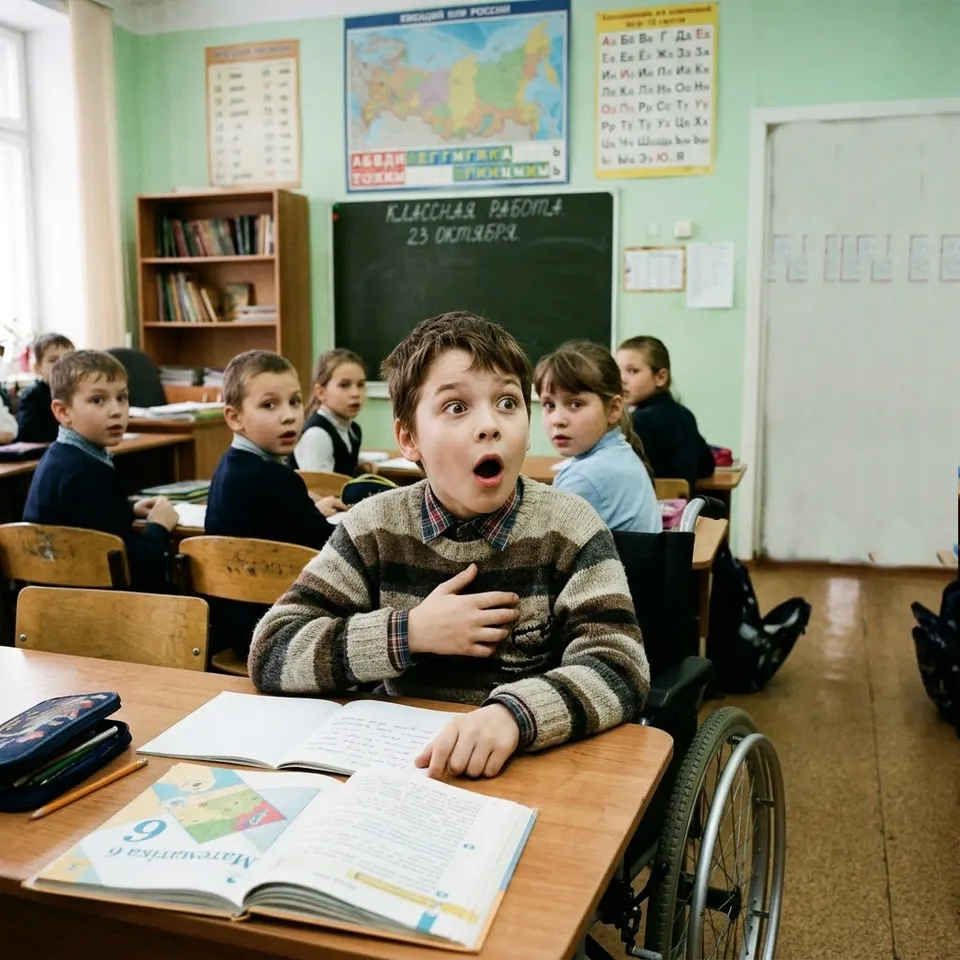
In the long, echoing hallways of an old state-run children’s home, people had called him Limp since he was little. Sometimes quiet, withdrawn Alex felt with a sharp bitterness that the nickname had replaced his real last name for good. “Hey, Limp, move out of the way and quit slowing us down!” the older boys would yell as they played soccer in the dusty back lot.
The old leather ball kept thudding off toward the chain-link fence buried in weeds. “Go get it, come on, use those legs,” lanky Nick Zayler would say with a smirk, knowing full well Alex couldn’t keep his footing on the uneven ground. “Man, Limp, you’re no help to anybody,” he’d add, every time, just to get a rise out of him.
Alex would say nothing, just lower his blond head with its stubborn cowlicks sticking every which way. Deep in the pockets of his faded gym shorts, he clenched his thin fists until his knuckles went white. The hurt sat in his throat like a stone, but he had long ago made himself a promise: he would not give those boys the satisfaction of hearing him break.
He had already forgotten how to cry over the daily jabs. Instead, he would turn away from the noisy crowd and limp off into the back of the neglected old park. The kids called him Limp for a simple reason: one of his legs had been shorter than the other since birth.
That was also the reason he had ended up inside the cold walls of the institution. Eleven years earlier, when doctors told his mother that her baby had been born with a permanent disability, she signed the papers and left him there. Alex found that out by accident one day when a staff member asked him to carry a stack of case files to the nurse’s office.
The gray-haired nurse, always in a hurry, handed him the folders and rushed off to answer a ringing phone in the hallway. It never crossed her mind that the quiet boy would open one. But when Alex saw his own last name on a file, he opened it with shaking hands and slowly read the official statement in which his mother gave him up.
Most kids in crowded foster institutions spend years hoping their parents will come back. That day, the boy with the sad gray eyes stopped waiting for good. And after that, he stopped crying into his pillow at night too.
It was as if his bruised little heart put on a layer of steel. That emotional armor protected him from the cruelty of other kids, from loneliness, and from the feeling that nobody in the world had really chosen him. Still, even in that loud, crowded children’s home, there were traditions people held onto.
Every year before Christmas, all the kids wrote letters to Santa. The director collected them carefully and passed them along to local donors. People with money did what they could to grant at least some of the children’s wishes.
By chance, some of those sealed envelopes ended up each year with officers at a nearby Air National Guard unit. Most of the children asked for the kind of miracle no adult could really provide. They wanted a mom. A dad. A family.
And the adults who opened those letters often had a hard time figuring out what kind of gift could possibly comfort a child like that. This year, one of the letters landed in the hands of flight engineer Major Mike Chandler. He slipped the envelope into the pocket of his flight jacket and headed for his car.
He planned to read it that evening at home and talk it over with his wife and daughter so they could choose a good gift together. Later that night, over tea at the kitchen table, he remembered the letter in his jacket. He brought it in from the mudroom, opened it neatly with a butter knife, and read it out loud.
“Dear grown-ups, if you really can, please get me a real laptop for Christmas. Please don’t spend your money on stuffed animals or clothes, because we already have those here. But with the internet, I could try to find some real friends, and maybe even people who might turn out to be family.”
At the bottom of the lined notebook paper was a careful signature in blue ink: “Alex Iverson, age 11.” “Well,” his wife said softly, “that is one smart kid.”
She looked at her husband and said the boy was thinking more clearly than a lot of adults would. “He’s right,” she added. “With the internet, he might actually be able to find the people he’s looking for.” Their daughter Annie quietly picked up the letter and read it again to herself.
Mike, with the sharp eyes of a military pilot, noticed right away that her lips trembled a little. He set down his mug and looked at her. “What is it, honey?” he asked gently.
“Dad, I don’t think this boy really expects to find his biological parents,” she said quietly. “I think he already knows they’re not coming. The laptop isn’t really about that. It’s his last shot at not feeling so alone.”
The girl looked up at her parents with clear, steady eyes. “He says it right there—he wants friends, or people who feel like family. Sometimes the people who become family are the ones who simply show up and care.”
Her parents sat in silence, struck by the plain truth of what she had said. “Let’s use the money from my savings jar,” Annie said. “Add whatever else we need, buy him a really good laptop, and take it to him ourselves.” Mike and Susan exchanged a look, smiled at their daughter’s big heart, and agreed without another word.
The Christmas celebration at the children’s home was held in three separate rounds because there were so many kids. Alex, based on his age, was in the middle group. Their party usually took place in the busiest part of the day.
First came the usual holiday performance put on by the staff. Then the guests helped light the big tree while the children shouted and clapped. After that, the donors took turns stepping forward and handing out gifts.
Some of the luckier children were invited to spend the holiday break with sponsor families. But Alex—quiet, guarded, and limping—wasn’t expecting anyone. He had long since noticed that the children people most often chose were the healthy, outgoing girls with easy smiles.
He had written his letter to Santa mostly because everyone else did. Still, that day, among the many dressed-up visitors, he noticed a tall man in military dress blues.
At the sight of the uniform, something in his hardened little heart gave a small, uncertain stir. But he forced himself to look away and took a slow breath. After receiving the standard bag of candy, he turned and headed for the exit, limping as usual.
“Alex Iverson, hold up a second,” a man’s voice called from the crowd.
Alex stopped near the door and looked back over his shoulder. Standing behind him, towering over the children, was the same military officer.
Alex tipped his head back and noticed the ribbons on the man’s chest and the polished insignia. “Hi, Alex. Merry Christmas,” the man said warmly. “Our family got your letter, and we’d really like to give you the gift you asked for.”
He spoke in a calm, easy way, as if they had known each other awhile. “But before we get to the surprise, let’s introduce ourselves properly,” he said with a friendly smile. “I’m Mike Chandler. You can call me Mike, or Mr. Chandler if that feels better.”
From behind his shoulder stepped a graceful, well-dressed woman. “And I’m Susan,” she said in a gentle voice. Then a red-cheeked girl with bright eyes leaned around her mother and smiled.
“I’m Annie, and I’m really glad to meet you,” she said. “I think we’re about the same age, so this should be easy.”
“I’m Alex,” the boy said, guarded. Then, with a trace of dry humor that surprised even him, he added, “Most people here call me Limp.” He braced for the usual reaction.
But Annie only opened her mouth to ask him something else when Mike handed Alex a heavy rectangular box. “This is for you,” he said. “Exactly what you asked for. Let’s find a quiet room, and we’ll show you how to use it the right way.”
The four of them slipped away from the crowd into an empty classroom where the kids usually did homework in the evenings. Annie showed him how to turn the laptop on and off, how to log in, and how to set up his own account online.
Mike sat nearby on a little chair, stepping in now and then with a calm suggestion. Alex could almost feel the steady warmth coming off the man—the kind of presence that made a room feel safer. Meanwhile Annie talked a mile a minute, explaining programs and settings without taking a breath.
But Alex noticed right away that she wasn’t spoiled or showy. She knew what she was doing. And from her running commentary, he also picked up that she had been training seriously in martial arts for years.
When it was time to say goodbye, Susan stepped close and wrapped him in a quick, gentle hug. The light floral scent of her perfume caught him off guard, and suddenly his eyes burned. For one long second, Alex went completely still, startled by the simple kindness of it.
He wanted to stay there, but he pulled himself together, carefully stepped back, and headed down the hallway without turning around. “We’ll come see you again soon,” Annie called after him brightly.
After that, Alex’s gray, repetitive life at the children’s home changed for the better. He stopped reacting to the nickname and quit paying much attention to Nick. With the new laptop, the internet opened up a whole world of useful and fascinating things.
He had always been drawn to machines, especially military aircraft. He read article after article and soon learned that the Antonov An-8 had been one of the first mass-produced military transport planes of its kind, and that the An-12 was a later, more advanced version.
Every weekend, Mike and Annie came to visit him. Sometimes they took him to the circus. Sometimes they spent the afternoon at an arcade or family entertainment center. At first Alex was deeply uncomfortable with any of it.
He had grown up with hand-me-downs and institutional basics, and it embarrassed him that these people—still almost strangers, in a way—were spending money on him. But one sunny morning in August, he was unexpectedly called into the director’s office.
He opened the heavy door, stepped inside, and saw Susan sitting there, smiling. Something in his chest tightened at once. His throat went dry.
“Alex, come in and have a seat,” the director said in his usual formal tone. “Mrs. Chandler has asked permission to take you with her for two days, if you agree to it. If you’re comfortable with that, I’m prepared to sign off.”
“Alex,” Susan said, standing up, “today is Aviation Day, and Mike’s unit is hosting a big event at the base. He asked me to invite you personally. So I’m asking—would you like to come with us?”
Alex was so stunned he could only nod, fast and hard, unable to get a word out.
“Good,” Susan said with a happy smile as she signed the necessary forms on the director’s desk. A few minutes later, Alex was hurrying after her out into the sunshine, doing his best to keep up.
Their first stop was a large shopping center. They spent a long time in different stores and finally bought him a pair of good jeans and a soft plaid shirt. When Susan looked at his old worn-out sneakers, she took him by the hand and led him straight into a shoe store. Finding something that worked took time, since his feet were different sizes.
Alex was mortified by all the attention from the sales staff and wished he could disappear. But Susan handled it with quiet tact. Pulling him a little aside, she said, “It’s okay, sweetheart. Right after the event, we’re going to an orthopedic specialist and getting you fitted for proper shoes.”
She crouched down in front of him and tied the laces on the temporary pair they had found. “One shoe will have a built-up sole, and that should level things out. You’ll walk much more comfortably, and most people probably won’t notice a thing.”
After that they stopped at a barbershop, where he got a neat haircut, and only then did they head to the Chandlers’ home to pick up Annie. For the first time in his life, Alex stepped not into another institutional building, but into a real family home. He had never been a guest in an ordinary, comfortable household before.
The smell hit him first: something baking, clean laundry, and the warm, lived-in scent of a place where people belonged to one another. He walked quietly into the bright living room and sat carefully on the edge of the couch, taking everything in. In one corner stood a large aquarium full of brilliantly colored fish.
Alex had only seen fish like that on TV in the common room at the children’s home. And by the window, in another glass tank, sat a real turtle, stretching its wrinkled neck and staring at the boy with beadlike eyes.
“I’m ready,” Annie called cheerfully as she came into the hallway dressed to go. She fixed her hair in the mirror and waved Alex along. “Come on, Alex. Let’s get moving. Mom will catch up with us outside.”
The two of them rode the elevator down and headed toward the car parked by the curb. Near the sandbox, a neighborhood boy with trouble written all over him was poking at the dirt with a stick. When he saw Alex limping beside Annie, he shouted out a nasty little rhyme.
“Hey, gimpy, what happened—run out of gas?” he yelled.
“Wait here one minute,” Annie said to Alex in a voice so calm it was almost cold. She clenched her fists and walked straight over to the boy.
In the next instant, Alex saw her pivot fast. There was one clean move, and the kid landed flat in the sandbox with a yelp.
“Okay—wow,” the boy blurted, staring up at her from the sand. “I was kidding.”
“Try your jokes somewhere else,” Annie said evenly. “Not here.”
The air base was bright with flags and balloons that day. Mike met them near the gate in full dress uniform, beaming. He took Alex by the hand and, with unmistakable pride, led him straight to the aircraft he worked on.
Alex could hardly breathe when he saw the huge silver plane up close. He was overwhelmed by the sheer size and power of it. Later there was a concert, family activities, and finally the air show itself.
Hundreds of people stood looking up into the clear blue sky. They waved at the planes overhead and shouted as they passed. And when the aircraft Mike was assigned to came into view, Annie started waving both arms.
“That’s my dad up there!” she shouted, thrilled and proud.
Caught up in the excitement, Alex forgot about his bad leg and bounced in place, tears springing to his eyes. He threw back his head and yelled before he even realized what he was saying.
“Dad—that’s our dad up there!”
The words came straight out of him. Only afterward did he notice that Annie had gone quiet. She stood beside him with a knowing little smile, while Susan turned away from the crowd and quickly wiped tears from her cheeks.
Late that night, after a good dinner at home, a tired but happy Mike sat down beside Alex on the couch. He put an arm around the boy’s narrow shoulders.
“You know,” he began seriously, “every child deserves to grow up in a family. That’s where you learn how to love people, how to look out for each other, how to stand by someone and be stood by in return.”
He paused for a moment, then looked Alex straight in the eye. “Would you like to become a permanent part of our family?”
Alex felt a hot knot rise in his throat and steal his breath.
He threw his arms around the man with all the strength in his small body. Through tears, he whispered the words that mattered most.
“Dad—I’ve been waiting for you my whole life.”
Just one month later, a happy, almost disbelieving Alex was saying goodbye to the children’s home for good. He came carefully down the front steps, holding tight with both hands to the large, steady hand of his legal father.
Now he wore custom orthopedic shoes made just for him. He walked with confidence, barely limping at all, heading toward the gate and toward a new life. At the old iron entrance, they paused for a moment to say goodbye to the past.
Alex turned, smiled, and waved to the kids standing on the steps. He also waved to the staff members who had come out to see him off. “Right here,” his father said quietly, “we’re stepping across a line. On the other side is the rest of your life.”
He straightened the collar of Alex’s jacket and looked at him seriously. “Don’t carry the worst of this place with you. Leave that behind. But remember the good people here. They helped you make it through.”











Share how the story made you feel
0Comments appear after a quick automatic check. Please no links, ads or personal data.
Next to your name we show your country, determined from your IP address; the address itself is never shown, and only a hashed fingerprint of it is kept to stop spam.