
 Let’s Keep It Real
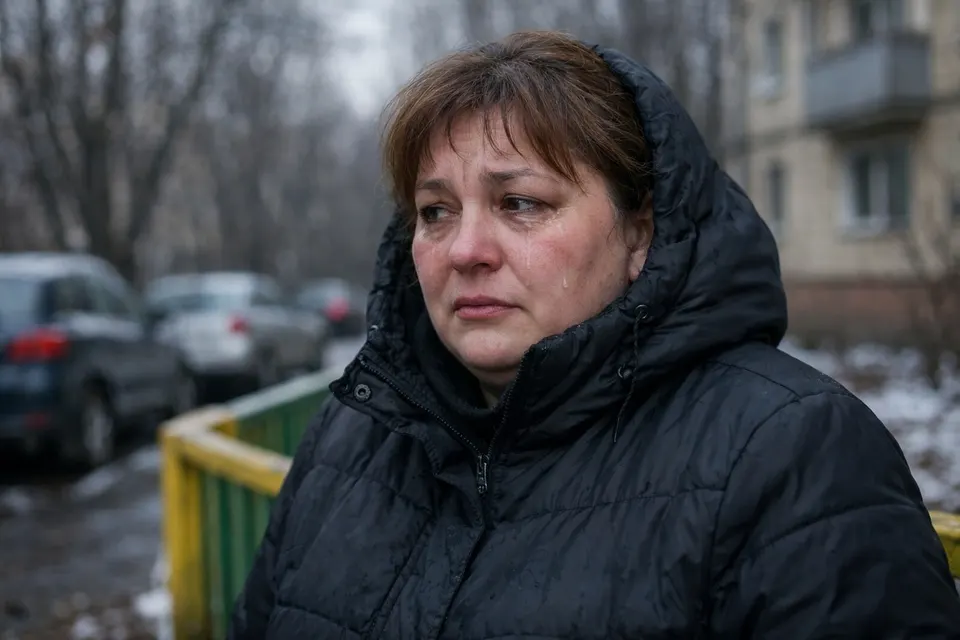
The October wind played with the fallen leaves, swirling them around the feet of hurried commuters. The sky, heavy with slate-gray clouds, looked moody and uninviting. Sarah pulled her raincoat hood tighter and quickened her pace, trying to escape the biting dampness.
The Sunday farmers' market was closing in an hour, and she still needed to grab produce for the week—a small ritual left over from the days when she was cooking for two. Her mind was a checklist of unfinished tasks: the report due Monday morning, the data audit for her client, the weekly call to her mother. Her hand instinctively gripped the grocery list scribbled on the back of an old receipt.
It was just another day in a long line of identical weekends, marked by duty rather than joy. Near the main entrance, the crowd was thick. People were bagging the last of the season's apples, and tired vendors were already packing up their crates.
In the chaos of sounds and smells, she felt like a tiny speck in the vast suburban sprawl, where everyone chases a version of happiness they can't quite define. Suddenly, she felt a tug on her sleeve—so light she almost dismissed it as someone bumping into her. But when Sarah turned around, she froze.
A young boy stood before her. At first, she only noticed his eyes—gray like the storm clouds above and far too serious for a child. It was the look of someone who had seen too much.
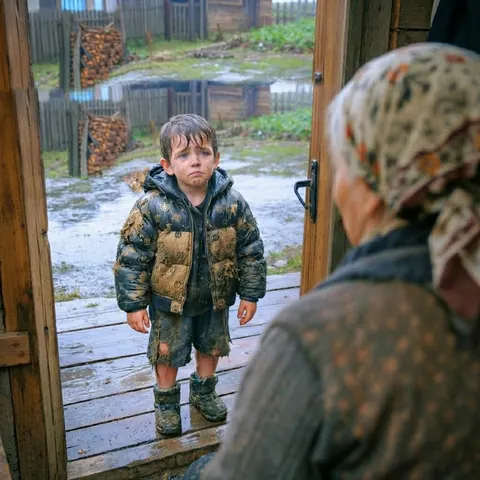
He wore a thin jacket that was clearly too small, frayed jeans, and messy hair. But it was that adult-like gaze that stayed with her. "Can you help me?" he asked, his voice quiet but steady. Only then did Sarah notice the bundle in his arms.
Peeking out from a dirty, once-white fleece blanket was the face of an infant. The baby’s pink cheeks were a sharp contrast to the older boy’s pale, hollow face. The little nose twitched in sleep. Sarah’s mind raced.
Where were their parents? Why were they alone? Was their mother just in a nearby store? The questions hit her all at once, but there were no easy answers.
"Ma'am," the boy said, looking her straight in the eye as if weighing her soul. "Do you need a baby? Please take my brother. He’s only five months old, and he’s so hungry." The words hit her harder than any physical blow.
The world seemed to dim for a second. It was as if the comfortable scenery of her life had been ripped away to reveal a raw, ugly reality. Sarah looked around at the shoppers flowing past them like a river around a stone. Some looked away in shame; others didn't even notice two children standing alone in the cold.
The world kept moving, while these two small people balanced on the edge of an abyss. "Where is your mom?" Sarah asked, kneeling so she was at eye level with him. "I don't know," he said, his shoulders slumping with a fatigue no eight-year-old should know.
"Mom left a few days ago. She said she’d be right back, but..." He hugged the bundle tighter. "We don't have any food left. And Ben won't stop crying."
"What about your dad? Or a grandmother?"
Sarah searched for a lifeline. "Nobody," the boy shook his head. "Mrs. Gable from next door helps sometimes, but she’s in the hospital right now."
The infant stirred, letting out a thin, weak wail. The boy immediately began to sway, an instinctive, awkward motion. "My name is Nathan," he said, his eyes never leaving the baby.
"And this is Ben. He’s five months. He’s a good baby, he only cries when he's really hungry." The protective tone in his voice broke Sarah’s heart.
She looked at this boy who had taken on an impossible burden, acting as the sole protector for a helpless infant. "I'm scared they'll take us," Nathan whispered, his voice trembling for the first time. "The state. They’ll split us up. I won't see Ben anymore."
Ben’s crying grew louder. His tiny hands escaped the blanket, waving helplessly in the cold air. His face scrunched up, turning a deep red. "He's starving," Nathan said, panic flickering in his eyes.
"I tried to give him some old milk, but it was sour, and I don't have any money." Time seemed to stop for Sarah. She saw the crisis for what it was—life or death.
The decision came without the usual internal debate that governed her life. "Come on," she said, reaching for the bundle. "Can I hold Ben? I’m going to get you both fed and warm at my place, and then we’ll figure out what happened to your mom."
Nathan hesitated, searching Sarah’s face for any sign of a lie. Finally, he nodded and carefully handed over the baby. The feeling of the warm, tiny body in her arms sparked a tenderness she hadn't felt in years.
The baby quieted for a moment, staring at the new face, then resumed a soft whimper. "We’ll stop at the pharmacy first for formula and bottles," Sarah said, standing up. "I have some chicken soup and roast beef at home for you, Nathan. We’ll take it one step at a time."
Nathan followed her, gripping the edge of her coat. He looked like a man who had finally found a safe harbor but was still waiting for the storm to return. As they walked through the crowd, Sarah’s mind swung between "What am I doing?" and "I can't leave them."
Memories of her own failed dreams of motherhood bubbled up, but she pushed them down. Now wasn't the time for self-pity. She glanced at Nathan, who was holding onto her coat for dear life.
There was a resilience in him that only comes from early loss. He reminded her of herself years ago, learning to survive alone when her world collapsed. "It’s going to be okay," she said, mostly to herself.
Nathan didn't answer; he just held on tighter. The wind picked up, bringing the first heavy drops of rain. That evening, after the boys were bathed and fed, Sarah laid Ben in a makeshift crib—a large laundry basket lined with soft blankets and new linens she’d rushed out to buy.
She sat on the edge of the sofa, exhaustion finally hitting her. Nathan was curled up in the armchair nearby, refusing to sleep in the guest room. "I have to stay with Ben," he had insisted with the stubbornness of a sentry on duty.
In the silence of the apartment, the past came rushing back like a flood. "You’re the most beautiful bride in the world," Tom had whispered, spinning her around on the pier after their wedding. The September sun had turned the water into a sheet of diamonds.
Sarah had laughed, her veil fluttering like a white cloud. She felt weightless. The wedding had been small, not because Tom’s family couldn't afford more, but because they wanted it to be real—no corporate guests, just family.
Tom’s mother, Hope, had initially frowned at the guest list, but eventually admitted the intimacy was nice. "Honey," she had told Sarah, "I’m just so glad Tom found you."
Hope was a high-powered cardiologist, a woman of sharp intellect and impeccable manners. Sarah had always felt a mix of admiration and intimidation toward her. She was a woman used to making life-and-death decisions, her posture always perfect, her hair always in a neat bun.
Tom’s father, John, was a history professor—a classic academic with messy gray hair and glasses that always slid down his nose. He lived in the world of the 18th century and seemed perpetually surprised by the modern world. Sarah felt like she had married into a storybook family.
The first two years of marriage were a dream. Tom, a rising architect, treated her like his muse. He brought her breakfast in bed on Sundays and surprised her with weekend trips to the mountains. "My girl," he’d say, burying his face in her hair.
"I'm so lucky I have you." In their sun-drenched apartment, they planned their future. "She’ll have your eyes," Tom would say.
"Big, brown, with those gold flecks when you laugh." "And your stubborn chin," Sarah would tease.
"An architect's trait," he’d laugh. But as the months turned into years, the pregnancy tests stayed negative.
At first, they weren't worried. They were only twenty-six; they had time. Hope would occasionally glance at Sarah’s midsection during dinner, but she was too polite to ask. That tact was something Sarah had always respected.
But toward the end of their second year, the atmosphere shifted. Sarah couldn't pinpoint the exact moment the cracks appeared. Tom started coming home later. He was quiet at dinner, avoiding any talk of the future.
Sometimes she’d catch him looking at her as if she were a puzzle he couldn't solve. "Is everything okay?"
she’d ask. "Just tired," he’d say, rubbing the bridge of his nose.
"Work is a grind. The clients are never happy." She wanted to believe him. Until one rainy spring evening, the floor fell out from under her.
"It’s been two years, Sarah. Nothing." Tom looked at her with a stranger's eyes. "Is it true? About the procedure you had in college?" The question felt like a slap.
For a second, she thought she’d misheard him. "What? What are you talking about?" "I know. Someone told me."
"Who?" She felt a cold wave of dread. "Who would say something like that?" "It doesn't matter," he said, turning away.
"What matters is that you lied. You told me I was the first. But you had a history." "Tom, listen to me," she said, grabbing his arm.
"You *were* the first. I never had an abortion. I don't know where you're getting this. It’s a lie."
"Then why can't you get pregnant?" He spun around, his face a mask of anger and pain. "Is nature punishing us? Or just you?"
Tears blurred her vision. "I don't know," she whispered. "Maybe we should see a specialist."
"My mother says these things happen after 'complications,'" he said, his voice dripping with sarcasm. "Scar tissue. It’s a common consequence." "Your mother!" Sarah gasped.
"You discussed our private life with your mother?" He shrugged, a cold, detached gesture. "She’s a doctor, Sarah. And she’s wondering why she doesn't have grandkids yet."
The argument was brutal. Sarah screamed that she’d never lied, that she was raised in a strict household where honesty was everything. "Maybe it's not me!" she cried out in desperation.
"Maybe the problem is you!" She regretted it instantly. Tom’s face went white. He turned and slammed the door so hard the picture frames rattled.
Sarah spent the night curled up on the bed. Tom returned the next morning, looking haggard. "I'm sorry," he said, sitting on the edge of the mattress.
"I shouldn't have said that. It’s just the stress." They hugged, but the warmth was gone. A wall had been built between them.
A week later, they were in a fertility clinic. The doctor, a woman with tired but kind eyes, looked over their charts.
"You have some hormonal imbalances and signs of chronic inflammation," she said to Sarah. "It looks like the result of an untreated infection from years ago. Did you know about this?" Sarah shook her head.
When she was sixteen, she’d had a terrible flu and high fever, but her mother, working two jobs, couldn't take her to the doctor. "Take some aspirin and get to bed," she’d said. "Can it be fixed?" Tom’s voice was tight.
The doctor sighed. "Completely? Probably not. We can try treatments, but... honestly, I’d suggest looking into adoption. There are so many children who need a home."
The drive home was silent. Sarah watched Tom’s profile—the set jaw, the furrowed brow. She knew that for him, as an only son, carrying on the family name was a mission, not just a wish.
"We’ll figure it out," she said, taking his hand. "I’ll do the treatments. We can do this." He nodded, but his eyes were empty.
The next few months were a nightmare of hormones, injections, and diets. Sarah felt like her body was a battlefield.
Every month brought hope, followed by the crushing reality of a period. She cried into her pillow at night so Tom wouldn't hear. He grew more distant, spending weekends at his parents' house, telling her she "needed her rest."
Six months later, he came home late, smelling of scotch and expensive perfume. Sarah was sitting in the dark kitchen. "I met someone," he said, his voice flat.
"She... we’re working on a project together. And she’s..." "Pregnant?" The word felt like glass in her mouth.
He nodded, unable to look at her. "I'm sorry," he said. "I can't spend years waiting for a miracle. I’m almost thirty. I want to be a father."
In that moment, Sarah felt a strange sense of relief. The weight of trying to be "enough" for him and his family finally vanished. "Get out," she said calmly. "Now."
The divorce was quick. Tom was generous with the settlement, leaving her most of the furniture and half their savings. He moved in with his parents and later bought a house in a gated community for his new family.
The pain hit later, in the quiet. She’d wake up gasping with guilt. Had she tried hard enough?
Should she have been more patient with his "needs"?
Then came the void. Sarah moved into a two-bedroom apartment in an older part of town where she’d grown up.
Her mother had passed away years ago; she’d never known her father. She was alone. Her job as a freelance editor paid the bills, but barely.
She ran into Hope at the grocery store once. Her former mother-in-law gave her a cold nod and walked past as if Sarah were a ghost. At thirty, Sarah realized the true depth of her loneliness. Friends with families stopped calling.
The silence of her apartment became a second skin. The idea came to her while she was browsing the internet and saw an article about the foster system.
She remembered the doctor’s words: "So many children need a home." Sarah started researching adoption and foster-to-adopt programs. "If I can't have my own, I’ll give a home to someone who needs one," she decided. It gave her a sense of purpose.
She worked more, took on extra projects. She started a "future kid" fund. She knew it wouldn't be easy.
A single woman with a modest income—agencies would find a dozen reasons to say no. Но for the first time in years, she felt a spark of hope. She had no idea that a chance encounter at a farmers' market would change everything.
The night was long and restless in Sarah’s apartment. Ben woke up several times, his cries echoing with the sound of a child who had learned that the world doesn't always answer. Sarah got up every time, warming formula, changing diapers made from old towels, and whispering soft, meaningless words—promises she wasn't sure she could keep.
At dawn, she noticed Nathan wasn't sleeping. He was sitting upright in the armchair, staring at the wall. "You should rest," she said, sitting beside him and touching his shoulder.
The boy flinched like a stray dog, then looked at her with a mix of fear and hope. "If... if Mom came back and we aren't there..." he started. Sarah squeezed his shoulder, feeling the thin bones beneath his skin.
"We’ll go to your place this morning," she promised. "Right after breakfast. We’ll figure it out." Nathan nodded and briefly leaned against her—a fleeting moment of trust before he pulled back.
Breakfast was quiet. Sarah made eggs and toast. Nathan ate slowly, with a strange politeness, scraping every last bit from the plate.
She watched him, noticing the bitten-down fingernails and the bruises on his elbows. A life lived on the edge. Ben, full of formula, was sleeping peacefully.
With a clean face and a fresh blanket, he looked like any other baby. Only the diaper rash hinted at the neglect. "Ready?" Sarah asked when Nathan finished.
The boy nodded. His eyes held a look adults rarely see in children—the knowledge that miracles are temporary. That you always have to go back.
The neighborhood they drove to was one Sarah usually avoided. The apartment buildings were gray, with crumbling brick and broken benches. The puddles in the parking lot never seemed to dry up.
"There!" Nathan pointed to a building, his hand trembling. The hallway smelled of stale cigarettes, trash, and damp concrete.
The stairs were littered with junk. On the first floor, a rusted stroller sat abandoned. Sarah pulled Ben closer, shielding him from the very air of the place.
The baby whimpered but went quiet, as if sensing the need for silence. "Second floor," Nathan whispered. The door to the apartment was ajar—a cheap wooden door with peeling paint and a kick-mark at the bottom.
The smell of sour beer and unwashed laundry wafted out. Sarah realized it was the smell of a life that had been given up on. "Mom?" Nathan peeked inside, his voice turning small and pleading.
The only answer was a raspy cough and the sound of something hitting the floor. Nathan looked back at Sarah, his face tight. "She’s home," he said, and the resignation in his voice was devastating.
Sarah pushed the door open. It was exactly what she expected, but seeing it was different. The hallway was dark, the lightbulb smashed. Piles of clothes, empty bottles, and crumpled fast-food bags covered the floor. A cockroach scurried across the wall.
"Come in," Nathan said, leading the way. In the small kitchen, a single bare bulb illuminated the squalor.
Dirty dishes were piled so high they looked like a strange sculpture. An old jar was filled with cigarette butts. A woman sat at the table.
Sarah couldn't believe this was the boys' mother. She looked decades older than she likely was. Her hair was greasy and thin, her face gaunt, her eyes bloodshot. Her skin was a sickly gray with red blotches.
She wore a stained bathrobe over a dingy t-shirt. She looked up, her eyes struggling to focus. "Where the hell have you been, you little brat?" Her voice was a gravelly rasp that made Sarah flinch.
Nathan stepped back, pressing against Sarah and trying to shield Ben. "I... we..." he started, but the woman was already looking at Sarah. "Who are you?"
She tried to stand, wobbled, and grabbed the table. "Social services?" Sarah gripped Ben tighter, a wave of fury and horror rising in her chest.
This woman, the person who brought these boys into the world, had become a shell. "No," Sarah said, keeping her voice steady. "I found your children yesterday. They were alone and starving. This baby could have died."
The woman, Alice, squinted, a sly look crossing her face. "So? You took 'em in?" She let out a hacking laugh.
"Now you're gonna lecture me, right?" "Do you realize they could be taken away?" Sarah’s voice shook. "CPS, the police..."
"Where are they gonna go?"
Alice waved a hand dismissively, nearly falling over. "You know how many kids are in the system? Nobody wants 'em. Let 'em take 'em, it’d be easier for me."
She sat back down and poured something from a bottle into a chipped mug. Her hand was shaking violently. Sarah was speechless.
She tried to imagine how Nathan had survived here, caring for an infant while his mother was in a drunken stupor. Alice suddenly looked up, her eyes clearing for a second. "Why are you here in your fancy clothes?" She looked at Sarah’s neat outfit and leather boots.
"You want to buy the kid?" "His name is Ben," Nathan whispered, but his mother ignored him. "I'm serious," she said, her voice turning business-like in the middle of the rot.
"He cries all night, I don't have any milk, and formula is too expensive. You look like you got money, a house. Take him. I won't charge much."
Sarah felt sick. The horror and rage made it hard to breathe. This woman was offering to sell her son like a piece of used furniture.
"Are you... are you insane?" Sarah’s voice was a whisper. "This is your child. Your own flesh and blood." Alice shrugged, taking a drink.
"So? I can't feed him. If the state takes him, he goes to a group home. You look like a decent lady, not a junkie."
She laughed again. "Think of it as a rescue mission." Sarah realized then that Alice had fallen into a pit so deep that even the most basic human instincts had vanished.
She looked at Nathan, who stood there with a look of profound shame. A child should never have to be ashamed of his mother. Sarah’s mind raced: call the police now? Take them by force?
But she knew the system. If she called the police, the boys would be snatched away and likely separated. Nathan’s greatest fear would come true. "I..." Sarah swallowed hard.
"I can come back in two days. I’ll bring some money. But you have to sign papers. A formal relinquishment."
Alice perked up, the greed visible in her eyes. "How much?" She leaned forward. "Two hundred dollars," Sarah said, naming the cash she had in her purse.
"I can give you a deposit now." "Make it five hundred," Alice rasped. "Two hundred," Sarah stood firm.
"And I won't call the police about the neglect." It was a bluff, but Alice bought it.
"Fine," she said, waving a hand. "Give me the paper." Sarah pulled a notepad and pen from her bag.
Alice scrawled a few lines—a receipt for the money and a promise to sign over her rights. Sarah didn't know if it would hold up in court, but it was a start. She laid the bills on the table.
Alice grabbed them with a speed that was terrifying. "Come back in two days," she said, already focused on the money. "Bring the rest. And don't try to screw me, I’m still the mother."
Sarah felt a wave of revulsion. "Nathan," she said, turning to the boy, "get your things. You’re coming with us. I’m taking care of you and your brother."
The boy looked at his mother, but Alice just waved him off. "Go on, one less mouth to feed." Nathan vanished into the back and returned a minute later with a tattered backpack.
Sarah heard a soft clink—toys for his brother. The last things they owned. "We're leaving," Sarah said, mostly to herself. They walked out, and Nathan closed the door gently.
Sarah saw his fingers trembling. Even this hellhole was the only home he’d ever known. "It’s going to be okay," she said as they reached the car. "I promise."
Nathan nodded, but he didn't speak. He looked like someone who had learned that promises are just words adults use before they leave.
As they drove away, Sarah took a deep breath of the fresh air. But her heart was pounding. What had she done? She’d just made a deal with a desperate woman to "buy" a child.
Should she go to the police? CPS? What about Nathan, who was terrified of being separated from Ben? Her head said one thing, her heart another.
She remembered her own loneliness after Tom left, the empty rooms, the silence. She remembered her promise to adopt. And now, she was standing at the edge of a decision that would change everything.
The warmth of Ben sleeping in the back and Nathan’s small hand on the armrest felt like a bridge to a new life. "Let's go home," she said. And for the first time, the word "home" felt like it meant something.
The night stretched on, the minutes ticking by like a slow leak. Sarah sat in her kitchen, clutching a cold cup of tea.
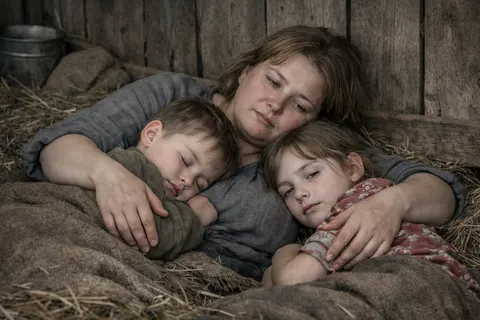
The children were asleep: Ben in his basket, Nathan on the sofa, curled up so small he barely made a dent in the cushions. The image of Alice’s face—gray, bloated, and indifferent—was burned into her mind.
How could a mother do that? But a darker question haunted her: wasn't this what she wanted? Hadn't she been looking for a way to be a mother? Was she taking advantage of a tragedy to get what nature had denied her?
Her thoughts circled like a hawk. Calling the police meant losing control. It meant putting the boys into a machine that didn't care about their bond.
Nathan and Ben would be split up. Nathan, an eight-year-old with trauma, would be hard to place. Ben, a healthy infant, would be gone in a heartbeat. Not calling the police meant she was technically part of an illegal transaction.
And what if Alice wanted more money later? What if she started blackmailing her? Near dawn, Sarah made her choice.
"Nathan, wake up," she said, gently shaking his shoulder. "We need to talk."
He was awake instantly. No grogginess, just alertness. "Are we going back?"
There was no surprise in his voice, just a flat acceptance. He expected the worst. Good things always ended; he knew that.
Sarah sat on the edge of the sofa. "I have to call the authorities, Nathan," she said, her voice cracking. "What happened to you is a crime. And your mom... she needs help. She’s sick."
The boy’s face turned to stone. "They’ll take Ben," he said. "And I’ll go to a home. I know how it works. A kid at school told me. They split him and his sister up."
Sarah felt a physical pain in her chest. "I want to..." She hesitated. "I want to apply to be your legal guardian. Both of you. But we have to do it the right way. We can't lie to the system."
He looked at her, searching for the catch. "Do you promise?" he asked. "Promise we stay together?"
Sarah wanted to say "yes" immediately. But she couldn't lie to him. "I promise I will do everything in my power," she said slowly.
"I will fight for both of you." Nathan nodded.
There was no hug, no cheering—just that small nod. But Sarah felt the shift. A tiny thread of trust had been spun.
The police station smelled of industrial cleaner and stale coffee. The desk sergeant, a tired-looking man, looked up at Sarah. "I need to..." she started.
"I need to report a case of child endangerment." The sergeant sighed, as if he’d heard it a thousand times. "Do you have evidence?"
"I saw it myself," Sarah said, her voice gaining strength. "The children were abandoned and starving. The mother is intoxicated, and the apartment..."
She remembered the smell. "It’s unlivable. And she... she tried to sell the baby to me."
The sergeant froze. He put down his pen. "Wait. Start from the beginning," he said, his tone changing.
"Sell the baby?" Sarah nodded, her throat tight. "Do you have proof?"
She felt the note in her bag but didn't pull it out yet. That note could implicate her too. "I was there," she said.
"I can testify." He sighed. "I’ll call a detective and CPS. We’ll need to send someone to that address. If it’s as bad as you say, the kids go into emergency custody."
"And then what?" Sarah asked.
"Then they go to a shelter or a foster home," he said. "Until a judge decides."
"What if..." Sarah gripped her purse. "What if I want to be their foster parent?"
The sergeant looked at her skeptically. "Are you a relative?" "No."
"Then it’s tough," he shook his head. "They usually go to state-run facilities first. It’s a long process for a non-relative. But you can talk to the caseworker."
The bureaucracy began. The next few days were a blur. The apartment was raided. Alice was taken into custody.
Nathan clung to Sarah’s hand until they forced him into a state car. Sarah handed Ben over to a caseworker with a feeling like her heart was being ripped out.
The boys were placed in a temporary shelter. Ben was diagnosed with malnutrition and a severe ear infection.
The doctor talked about developmental delays. Nathan had signs of old injuries—cracked ribs that had healed poorly. Sarah watched through the glass of the clinic, feeling every one of his scars as if they were her own.
Alice was released on bail. She looked confused in the police footage Sarah saw later. "Kids? What kids? Oh, them. Yeah, I had a drink, so what? Nathan’s a liar, he’s just trying to get back at me for being strict."
The court dates began. Sarah sat in the back of the room, her back straight, her lips pressed together. She didn't want to say anything that would hurt her chances.
Outside the courtroom, life went on. Sarah went to work, but her mind was at the shelter. She visited the boys every day, bringing books and toys. Nathan was starting to thaw, even smiling occasionally.
"When are we going home?" he asked once, and that "home" sounded like a prayer. Sarah could only hug him, unable to make a promise she couldn't guarantee. She filed the paperwork for foster-to-adopt, but the response was cold.
"Single woman. No parenting experience. Freelance income. And two kids at once, one with medical needs. Do you understand the responsibility?" the caseworker asked, a woman with sharp glasses and a skeptical frown.
"We have to put the children's best interests first." As if Sarah hadn't thought of that every second.
As if she hadn't woken up in a cold sweat dreaming of Nathan calling for her. "I can do this," she said, looking the woman in the eye. "I love them. I will do whatever it takes."
"Love," the caseworker said, "doesn't pay the mortgage or provide a two-parent home. These kids need stability." As if their father hadn't abandoned them.
As if Alice hadn't tried to sell them for a bottle of gin. As if a marriage certificate was a magic shield. The judge made a ruling.
Alice’s rights were suspended, and she was given a suspended sentence with mandatory rehab. She looked annoyed, as if she’d been given a parking ticket. When the judge asked if she had anything to say, she uttered a line that haunted Sarah.
"Who wants 'em anyway? They're just a burden." In that moment, Sarah realized Alice hadn't just lost her way; she’d lost her soul.
The foster process dragged on. Sarah collected references, passed inspections, and met with psychologists. She worked late into the night on freelance projects to boost her savings.
She painted the second bedroom, putting up shelves and buying a crib. She was determined to prove she could provide a home.
One day, when another delay was announced, Sarah snapped. "Listen," she said, her voice low but like steel. "I was married to a man from a 'perfect' family. He had money, status, and a big house. And he left me the second he found out I couldn't give him a biological child. Is that your ideal of a stable home? A man who walks away when things get hard?"
She took a breath. "These boys had a father. Where is he? Why wasn't he there when an eight-year-old was raising a baby? So don't talk to me about 'traditional' families. I know what loyalty is. I know what unconditional love is. And I’m ready to give them everything I have."
The room went silent. The caseworker looked at her for a long time. "I’ll need your updated tax returns," she said finally.
"And a letter from your employer. A full one." It wasn't a 'yes.'
But it was a crack in the wall. Sarah walked out on shaky legs, her heart pounding.
But the hope was there. "Do you really want us?" Nathan asked during a visit. They were in the shelter's common room.
Ben was asleep in a playpen nearby. Sarah looked at the boy—haggard, but so brave. "More than anything," she said.
"Why?" He wasn't being rude; he was genuinely confused. "You're alone. You don't have a husband. Why do you want us?"
She could have talked about her infertility or her loneliness. She could have given him an adult explanation. But he needed the truth.
"Because I already love you," she said, reaching out to touch his hand. "And because we’re better together. Don't you think?"
Nathan searched her face for a lie. Then he gave a small nod. "Yeah," he whispered, and for the first time, he reached out and hugged her.
They sat like that for a long time—the woman who couldn't have children and the boy who didn't have a mother. Two lonely souls finding each other. Four months after that day at the market, Sarah stood in a judge's chambers, holding the guardianship papers.
Nathan was standing beside her, and Ben was asleep in her arms. "Congratulations," the judge said, her expression softening. "Temporary guardianship is granted. We’ll review for permanent adoption in six months."
Sarah nodded, unable to speak. She still couldn't believe it was real. "Nathan," the judge said, "do you want to live with Sarah?"
He looked up, the fear finally gone. "Yes," he said firmly. "I want to stay with her. She’s my mom now."
Hearing that word from a child who had seen so much was the greatest reward Sarah could imagine. They walked out of the courthouse into a bright spring day. The sun was warm, as if the world was celebrating with them.
Sarah felt weightless. "Well," she smiled at Nathan, "let's go home." He nodded, gripping her hand tight.
They weren't a "traditional" family. Maybe they never would be. But they were together.
A new chapter was starting—with all its fears and bills and sleepless nights, but also with joy. Sarah knew it wouldn't be easy. Nathan had trauma to work through, Ben had health hurdles, and her bank account was thin.
But she was ready to fight. For them, for herself, for their future.
She’d been left alone once. She wouldn't let that happen to these boys.
"We’ve got this," she said. And for the first time in years, she really believed it.
The first few weeks were like walking through a minefield. Sarah had never been a mother and constantly doubted herself. Was she too strict? Too soft?
She tried to find the balance between structure and affection. Nathan was quiet and guarded at first. He thanked her for every little thing as if it were a massive favor.
He woke up at dawn and made his bed with military precision. He tried to help with everything—dishes, laundry, Ben. "You don't have to work like a grown-up," Sarah told him one day, watching him scrub the floor after Ben spilled some juice.
"You're a kid. You should be playing or doing homework." Nathan looked at her with confusion, almost fear.
"I have to help," he insisted. "Or else..."
He didn't finish the sentence, but Sarah knew: "Or else you'll send us back." That fear—that they had to earn their place—haunted him. Ben adjusted faster; he was young enough that his memories were short.
He bonded with Sarah quickly, smiling and saying his first words. "Ma," he called her, filling the word with total trust. But with Nathan, it was a slow process.
She had to peel back the layers of armor he’d built. She enrolled him in a local elementary school—a small one with a good counselor. Nathan started second grade, even though he was old enough for third, because he’d missed so much school.
"He's bright," his teacher told Sarah. "But he’s a loner. He doesn't play with the other kids." Sarah saw it too.
Nathan ate his lunch fast, as if someone might take it. He watched the other kids play from the sidelines. At night, he had nightmares, shouting in his sleep. Sarah would sit by his bed, not touching him—he flinched at sudden contact—and just talk softly.
"You're okay," she’d say. "You're safe. It’s just a dream." Slowly, day by day, she broke through.
The first real breakthrough happened six months in. It was a Tuesday evening. Sarah was working on her laptop, and Nathan was doing homework at the table. Ben was asleep.
Nathan looked up and asked, "Are you really keeping us?" The question was so sudden Sarah stopped typing. "Always," she said.
"You're my boys. I love you." She expected him to look away, but he smiled—a real, genuine smile. "I know," he said.
That night, Nathan came over to the sofa and sat next to her, letting her put an arm around him. As the months passed, Sarah watched them bloom like plants finally getting water. Nathan stopped flinching.
He started sleeping through the night. He learned to laugh—a loud, infectious sound that lit up the room. At school, he started raising his hand.
He made a friend—Caleb, a kid from down the street who loved Legos. One day, Nathan came home from school looking excited. "We're having a track meet," he said.
"And I'm running the relay!" "That's amazing!" Sarah hugged him.
"I’ll be there cheering the loudest." Standing on the sidelines that day, Sarah watched Nathan sprint down the track, his face a mask of concentration. He wasn't the fastest, but when he looked at the stands and saw her, Sarah felt a pride so deep it hurt.
"There's a cycling club at the community center. He said I should try it." Sarah hesitated.
A club meant fees, a bike, gear. Her budget was tight, even with the state assistance. But the look in Nathan’s eyes was everything.
"Of course," she said, mentally calculating what she could cut to make it work. "We’ll sign you up tomorrow." Nathan beamed. "Thanks, Mom."
It was the first time he’d said it naturally. Not "Sarah," not just a mumbled "Ma'am." "Mom."
Their first Christmas together was quiet but perfect. Sarah got a small tree and they made ornaments. They made cookies and watched old movies. Ben, now a toddler, was obsessed with the wrapping paper.
"When I was little," Nathan said suddenly, watching Ben, "Mom was okay sometimes." Sarah held her breath. He never talked about the past.
"She’d make pancakes," he continued. "And sing. She had a nice voice when she wasn't... you know."
His face scrunched up. "Then her friends would come over. And they’d drink. And it would get bad again."
Sarah put a hand on his shoulder. "It’s okay to miss the good parts, Nathan," she said gently. "You can love someone and still know that you couldn't stay there."
Nathan looked at her with teary eyes. "I don't want to go back. Ever. I want to be here."
"And you will be," Sarah promised. "We're a family."
That night, Nathan didn't lock his door—a small gesture of trust that meant the world. The months turned into years. Their life found a rhythm.
Nathan turned out to be a natural at math and science. But his real passion was cycling. He trained with a focus that impressed his coach.
"He’s got grit," the coach told Sarah. "In this sport, that's more important than anything." Nathan started winning medals.
He brought his first trophy home and handed it to Sarah. "This is for you," he said. "Because you believed in me."
Ben grew into a happy, curly-haired kid who loved everyone. He didn't remember the apartment or the cold. To him, Sarah was just Mom.
On their third anniversary as a family, Sarah threw a party. She looked at her boys—Nathan, now eleven, tall and strong; Ben, a healthy preschooler.
She couldn't believe these were the same kids from the market. Nathan was a star student and an athlete. Ben was the light of the house.
The past was a fading shadow. They were happy. But Sarah wanted to do more.
She’d always been good with her hands. As a kid, she’d made dolls and toys. One day, she found an old box of fabric scraps and made a stuffed rabbit for Ben.
He loved it. He took it everywhere. Then a mom at preschool asked for one. Then another.
Sarah started sewing at night. First simple toys, then more intricate ones. Each had a name and a story.
It brought in extra money and gave her a creative outlet. On that third anniversary, Sarah made an announcement. "I have news," she said.
"I'm opening a shop." Nathan’s eyes went wide. "A shop?"
"For my toys," Sarah smiled. "A small studio downtown. I’ll do classes and sell my designs. It’s called 'Family Stories.'"
"That's awesome, Mom!" Nathan said. "You're finally doing it."
"I am," she nodded.
"You guys taught me that it’s never too late for a new story." Ben cheered, even though he didn't quite get it. "Mom’s toys are going to have a house!"
Everyone laughed, and Sarah felt a surge of gratitude for the life she’d built. The shop opened a month later. It was cozy and bright.
She still did her editing work part-time, but the shop was her heart. It became a local favorite. People loved the "Family Stories" toys.
Every evening, when she came home to her boys, Sarah felt complete. One Sunday morning, they were doing their usual routine.
Ben was helping set the table, very seriously. Nathan was packing his gear for a bike race. The sun was streaming through the windows.
"What's for breakfast?" Ben asked, climbing onto a chair. "Pancakes," Sarah smiled.
"Then we’re going to the grocery store. We need supplies for the week." Nathan came in with a list.
"I checked the pantry," he said. "We need milk, eggs, and that specific thread you use for the bears."
Sarah took the list, her heart full. This boy was her rock. "You're the best," she said, ruffling his hair.
They went to the big supermarket on the edge of town. It was crowded. Sarah was checking off items when her cart bumped into another.
She looked up to apologize and froze. Tom. Her ex-husband was standing right there.
He looked older. There was gray at his temples and lines around his eyes. But he was still the same Tom. "Sarah," he said, stunned.
"I haven't seen you in years." The voice was a ghost from another life. "Tom," she nodded, feeling surprisingly calm.
"It's been a while." Ben tugged on her hand. "Mom, can I have the cereal with the tiger?"
She lifted him up and put him in the cart. Nathan stepped closer, sensing the tension. Tom looked at the boys, his jaw dropping.
"Sarah... are these your kids?" There was a mix of shock and something else in his voice.
"Yes," Sarah smiled, putting a hand on Nathan’s shoulder. "This is Nathan and Ben. My sons."
Tom stared at them, his mind clearly racing. He remembered the woman who "couldn't" have kids. And here she was, a mother of two. "But..." he stammered.
"I thought... you know, the medical stuff." Sarah shrugged.
"Motherhood doesn't always start with a biological connection," she said. "Sometimes it starts with a choice." Ben tugged her hand again.
"Mom, can we get the chocolate milk? Please?" "Sure, honey," Sarah said.
"Nathan, can you go grab it?" Nathan nodded, giving Tom one last look before heading to the dairy aisle with Ben. Tom looked defeated.
"How are you?" he asked. Sarah didn't feel the need to brag.
"I'm good, Tom. I have a shop, a home, and my boys. I'm happy." Tom looked away.
"That's good," he said. "My son is in second grade. Things with the wife are... complicated. We both work a lot."
He didn't sound happy. He sounded like a man who had followed a blueprint and ended up with a house he didn't like. The boys came back with the milk.
"We got it!" Ben cheered. "Okay, let's go," Sarah said.
She turned to Tom. "It was nice seeing you. Give my best to your parents."
"Yeah, sure," he said, still staring at the boys. Sarah walked away, her sons by her side.
She didn't look back. The past was gone. She wasn't the woman he’d left; she was someone much stronger.
"Who was that?" Nathan asked as they checked out. "Just someone I used to know," Sarah said.
"A long time ago." Nathan nodded. He didn't need to know more.
"He looked sad," Ben said, sipping his chocolate milk. "Why was he sad?" "I don't know, honey," Sarah said.
"Maybe he just realized he missed out on something great." That night, Sarah sat in her studio, finishing a toy knight.
She thought about the encounter. Years ago, she’d imagined this moment. She’d wanted him to see what he’d lost.
But seeing him today, she realized she didn't need his regret. She had everything she needed right here. Tom had his "perfect" family on paper, but he was empty.
She had a "broken" family that was actually whole. She looked at the photos on her desk—Nathan winning a race, Ben at the park, the three of them at the beach. This was her life.
It wasn't the life she’d planned at twenty, but it was the life she was meant to have. She went into the boys' rooms to check on them. Nathan was asleep with a book; Ben was hugging his bear.
Life doesn't always give you what you want. Sometimes it gives you what you need. Sarah had the courage to say "yes" to these boys when the rest of the world said "no."
And in saving them, she’d saved herself. She looked out the window at the quiet street. She was Sarah, a mother, a business owner, a survivor.




Share how the story made you feel
0Comments appear after a quick automatic check. Please no links, ads or personal data.
Next to your name we show your country, determined from your IP address; the address itself is never shown, and only a hashed fingerprint of it is kept to stop spam.