
 Let’s Keep It Real
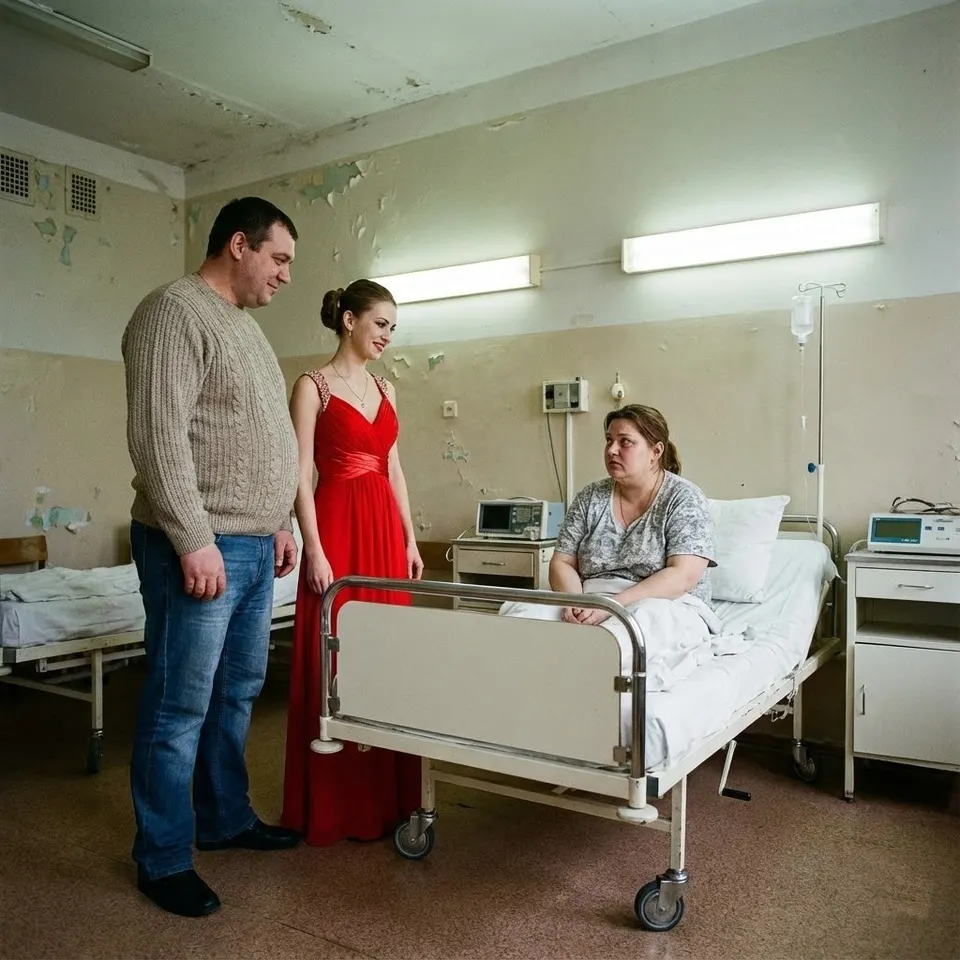
My husband asked me to give a kidney to his mother. "Prove your loyalty," he said, and I agreed. Four days after the surgery, he came to my room, but he wasn't alone.
Beside him walked a woman in a scarlet dress, and behind them, they wheeled in my mother-in-law in a wheelchair. Arseny threw an envelope with divorce papers onto my chest. But he didn't know the most important thing.
Arina lost her parents on the highway when she had just turned nine. A truck crashed into their car at full speed. Her father didn't even have time to turn the wheel, and her mother, sitting in the front seat, took the first impact. From that day on, her life was split in two. In one half remained her mother's hands that smelled of vanilla cream and her father's laughter on Sundays when he would toss her up to the ceiling and catch her at the last moment.
And in the other, there was only the orphanage with its echoing corridors, iron beds in a row, and the strange faces of caregivers who changed every six months and never remembered any of the children's names.
After graduating, she received a diploma from an economics college not because she dreamed of accounting, but because it was the only free major with a dormitory. But without connections and money, even a modest position remained an unattainable dream. Employers would look at the line "orphanage graduate" on her application and politely promise to call back, which they never did.
Arina moved to the city and got a job as a consultant in a clothing boutique in a shopping center. The work was easy, the salary was small, but she could look at beautiful things every day and imagine that someday everything would change, that fate would notice her efforts and give her what she had been deprived of since childhood.
Arseny Rossinsky appeared in her life two and a half years ago. He came in to choose a gift for his mother's anniversary, spent a long time looking through scarves and shawls, setting aside one then another. Tall, confident, with that special way of carrying himself that gives away people who have never known need and never counted money before a purchase.
Arina helped him choose a silk scarf with a subtle pattern, without fawning or pushing expensive items, although the sales commission would have been useful. He looked at her with unexpected interest, holding his gaze longer than politeness required.
— Do you always speak to customers so calmly? — he asked, paying with a no-limit credit card.
— And how should I?
— Usually, they either grovel or look down on you. You're neither.
He returned the next day for a scarf they didn't have in stock and never had. Then again, without a reason, just to talk, just to stand by the counter while she arranged the new collection. A month later, he invited her to dinner at a restaurant whose name Arina had never heard before, although it was in the very center of the city, five minutes from her work.
She sat across from him, looking at a menu without prices and not understanding half of the dish names, and couldn't believe that all this was happening to her — an orphan from a state home, whom fate had for some reason decided to reward for years of loneliness.
— Are you all alone? — he asked then, covering her palm with his.
— No relatives. No one. At all.
— That can be fixed.
They got married six months later — a modest wedding, almost without guests, at a registry office on the outskirts of the city. Arseny explained it was his mother's reluctance to spend money on "show." And Arina didn't argue, although she secretly dreamed of a white dress and a bouquet, of photos to hang on the wall and show her children. The main thing was different: she had finally found a family, a home, and a man who promised to be by her side for the rest of her life. Even if her mother-in-law, Alla Mikhailovna, looked at her with poorly concealed contempt and never missed an opportunity to remind her of her origins. Even if in the huge house in an elite neighborhood, Arina felt like an uninvited guest, afraid to walk down the corridor or open the refrigerator. All this could be endured, waited out, earning love with patience and devotion, as she was used to earning everything in her life.
For two years, she tried her best, putting her soul into every little thing. She cooked dinners from internet recipes, which her mother-in-law barely tasted, wrinkling her nose and pushing the plate away. She bought gifts for holidays: perfumes, shawls, jewelry, which disappeared into the depths of the walk-in closet and never appeared on Alla Mikhailovna again. She smiled when her mother-in-law called her "our Cinderella" or "Arseny's find" in front of guests with an intonation that left no doubt about the true meaning of those words.
And then her mother-in-law fell ill. The diagnosis sounded like a sentence: chronic kidney failure, dialysis three times a week at a private clinic, her heart weakening with each month. Doctors in expensive offices threw up their hands: the waiting list for a donor kidney from the state registry would stretch for years, and the patient had no time; it was a matter of months, maybe weeks.
Arseny started the conversation in the hospital corridor while his mother lay behind the wall, connected to a dialysis machine. He knelt before Arina on the cold tiled floor and took her hands in his. A gesture she had only seen in movies and read about in books, never believing it happened in real life.
— I know what I'm asking, — his voice trembled. — I know it's too much, but you are the only one who can save her. The only one in the whole world. I… your test results… Remember you had a check-up six months ago? I asked the doctors to check for compatibility at the same time, just in case. You're a perfect match, Arina. A one-in-a-thousand chance, and it's you.
Arina was silent, trying to process what she had heard through the growing noise in her head. To give a kidney, a part of her body, an organ… However, people live with one, she had read about it, searched for information at night when she couldn't sleep.
— And you? — she finally asked, her voice sounding hoarse, unfamiliar. — You're her son, her own blood, why not you?
Arseny took a folded piece of paper from his jacket's inner pocket and handed it to her. A medical report from a year ago, covered in stamps and signatures: incompatibility in the Human Leukocyte Antigens system.
— I was the first to get tested, back when Mom was diagnosed. Do you think I would ask you if I could do it myself? Do you think I wouldn't give her both my kidneys if it were possible?
She looked at the neat lines, at the incomprehensible abbreviations and numbers, at the Latin terms that meant nothing to her, and she believed. Because she wanted to believe, because she didn't know how to do otherwise, because her whole life was built on the belief that people are good deep down and incapable of real evil. Arseny would never have asked her for such a thing if there were another way. He loves her, doesn't he? Can someone pretend for two years?
For three days he didn't back down, giving her no time to think, to weigh the options, to consult with anyone. He brought her coffee in bed, stroked her head, said the right words in the right voice, hugged her so tightly that she forgot her fear.
— You will become a real part of the family, — he whispered at night in the darkness of the bedroom. — Not just a stamp in a passport, but blood and flesh. Mom will love you like her own daughter, I swear to you. And after the surgery, we'll fly to the Maldives, just you and me, for a whole month. You've earned it. You deserve the very best.
Arina imagined Alla Mikhailovna's grateful smile, imagined her mother-in-law hugging her for the first time without tension and coldness, saying "thank you, daughter," and the fear of the scalpel receded, shrank, became insignificant. She had dreamed of a family for so long, so desperately wanted to be needed, to belong to someone, and now here was a chance to prove her worth — not with words that mean nothing, but with a deed, a sacrifice, with blood.
— Okay, — she said on the third day, and her own voice seemed foreign and distant. — I agree.
Arseny held her tight, buried his face in her hair, and she didn't see how his lips trembled in a triumphant smile.
On the eve of the surgery, Arina was signing documents in the head of department's office. The stack of papers grew and grew: informed consent, waiver of claims, protocols and acts, each with its own number and stamp. Her head was buzzing from insomnia, the lines blurring before her eyes, merging into a gray mess.
— And here, — Arseny pointed to another clause, his voice sounding casual, business-like. — A standard formality in case of force majeure, they require it in all hospitals.
Arina read it without grasping the meaning: something about the possibility of using the organ for another patient if the primary recipient became medically unfit. What difference did it make, what force majeure? She just wanted one thing: for it all to be over, for tomorrow to come, the day after, a week later, when the stitches would heal and the pain would go away, and her mother-in-law would look at her in a new way, with gratitude and warmth. The pen glided across the paper, leaving a sweeping signature. Done.
In the morning, they wheeled her down the corridor on a gurney, and the lamps overhead merged into a solid white line, pulsating in time with her heartbeat. Arseny walked beside her, holding her hand.
— I'll be waiting, — he said at the operating room doors, leaning in for a kiss. — As soon as you wake up, I'll be there. The first thing you'll see is my face. And then right to the Maldives, you hear? As soon as you're on your feet.
She wanted to answer, to say something important, something she had been carrying inside for a long time, but the orderly had already pushed the gurney forward. And the last thing Arina remembered before the anesthesia enveloped her in a cottony cloud was his face in the opening of the closing doors. So dear and beloved, so infinitely precious.
She woke up in a different world. The ceiling above her was not white, but gray, with uneven streaks of old whitewash. Instead of the private room with a view of the pines that Arseny had promised, there were four beds in a row. Instead of peace and quiet, there was the hacking cough of the neighbor by the window, the creak of wire-mesh bedsprings, and the muttering of a TV showing some quiz show. The pain in her left side came in waves, thick and heavy, growing with each breath until it was unbearable, filling her entire body. Arina tried to move, but her body wouldn't obey, her muscles refused to respond. She felt a drainage tube under her hand, leading somewhere under the thick gauze bandage, and the touch of this foreign object in her own body made her nauseous.
Where was Arseny?
He promised to be there, he promised his face would be the first thing she saw. He promised.
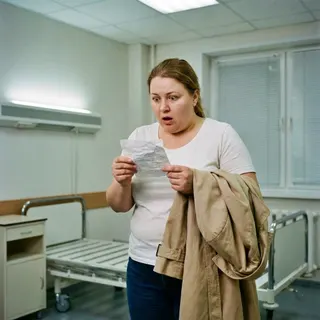
The door opened on the fourth day after the surgery. Arina was still on an IV drip, every word was a struggle, and she was beginning to think there had been some monstrous mix-up, that they would find her any moment, take her from here, back to where she was supposed to be.
Arseny entered first: in an expensive, perfectly tailored suit, clean-shaven, composed and calm, without a shadow of worry on his face. Behind him, an orderly wheeled a wheelchair with Alla Mikhailovna, wrapped in a cashmere blanket. And following them was a woman Arina had never seen before: tall, black-haired, with a model's figure and in a dress the color of fresh blood that clung to every curve of her body. She held Arseny's arm with the kind of casualness one holds what is theirs, rightfully and lawfully.
Arseny walked up to the bed and threw a brown envelope onto her chest, without saying a word, without asking how she felt. The thick paper was cold even through the thin fabric of the hospital gown.
— This is for you.
No "sunshine," "darling," "how are you feeling," "I was so worried." His voice sounded as if he were talking to a waitress who had brought him the wrong order: polite and infinitely indifferent. With disobedient fingers, Arina opened the envelope and pulled out the documents: a divorce petition, filed in court three days ago. On the very day she was lying on the operating table.
— I don't understand, — she whispered with difficulty, her own voice seeming foreign, thin, childish. — Why? But I… I did everything you asked. Everything.
Alla Mikhailovna gestured for the orderly to stop and turned the wheelchair to face her daughter-in-law completely, not to miss a single emotion.
— You did. At least you were good for something. — Her pale, gaunt face after the procedures twisted into a grimace of contemptuous triumph, which she no longer bothered to hide. She looked at Arina the way one looks at a used napkin before crumpling it and throwing it in the trash. — You didn't seriously think my son married you for love, did you? An orphan from the gutter with not a penny to her name, no education, no money, not a single relative who would stand up for you, ask where you disappeared to?
The monitor by the bed started beeping anxiously. The numbers on the screen jumped, but Arina didn't hear. A roar was growing in her ears, drowning out everything else, the entire world.
— You were needed because you had the right blood type and no one who would ask questions. That's all. And used goods are not kept in a decent house.
The woman in red stepped forward, and on her ring finger flashed a ring with a stone the size of a pinky nail — so huge it seemed fake, unreal.
— My name is Yana, — she said with a smile that made you want to shut your eyes, to hide, to disappear. — Yana Trunikova. Arseny and I have been together since university, since the first year. While I was building my career in Milan, he found a temporary replacement. With the right parameters.
She placed a hand on her stomach — a gesture so simple and so monstrous at the same time, a gesture Arina had imagined so many times, dreaming of her own child.
— This is the future heir of the Rossinsky family. The legitimate heir everyone has been waiting for. We planned this whole marriage farce over a year ago, as soon as Mom got her diagnosis and it became clear a donor was needed.
Arseny nodded, short, business-like, confirming every word of his former and future fiancée. The mask had finally slipped from his face, revealing what had been hiding underneath for two years: the cold calculation of a man accustomed to getting what he wants at any cost, regardless of others' feelings, others' pain, others' lives.
Yana looked at Arina, at her pale, pain-sharpened face, at the drainage tubes sticking out from under the blanket, at her hands still clutching the envelope with the divorce papers. And in that gaze, there was not a drop of pity, not a shadow of sympathy. Only condescending contempt for the naive fool from the orphanage who was so easy to trick, and a thick, viscous pleasure from someone else's humiliation, from her complete and final victory.
Arina lay motionless, staring at the gray ceiling, and the fragments of her world slowly, agonizingly slowly, pieced themselves together into a new, terrifying picture. Two years of love that never existed. A marriage that was a trap from day one, from the first meeting in the boutique. A sacrifice that meant nothing to them, only made their task easier, saved them the trouble of finding another donor. It was all planned long before she signed the first paper. They found her through her test results, tamed her with beautiful words and promises, used her to the last drop. And now they were throwing her away like a disposable item that had served its only purpose and was no longer good for anything.
Arseny was the first to break the silence that had fallen in the room after his fiancée's words. He reached into his inner jacket pocket and took out a thin stack of bills, held together by a bank band, which he placed on the bedside table next to a carafe of water.
— One hundred and fifty thousand, — he said in the tone of someone closing a tiresome formality. — It'll be enough for a room in a communal apartment while you recover. Sign the consent for a divorce without claims, and we'll part on good terms.
Arina looked at the money, at this pathetic stack of paper thrown at her like a handout, and something inside her shifted, cracked, began to break. She tried to prop herself up on her elbow, and the pain in her side slashed through her, taking her breath away. But she spoke anyway — hoarsely, through tears she could no longer hold back.
— One hundred and fifty thousand for my kidney? For two years of my life with you? I'll go to the police, I'll tell them everything!
— Tell them what?
— Arseny didn't even raise his voice, and this calmness made it even more terrifying. — That you voluntarily signed the informed consent? "Voluntarily," Arina, that's the key word. No coercion, no pressure. Any court, any investigator will say so. We have your signature on every document.
Alla Mikhailovna grimaced and waved her hand at the orderly to turn her wheelchair towards the exit.
— Let's get out of here, it stinks of bleach and poverty. It's not good for me to get worked up before my surgery.
Yana took Arseny's arm, and they moved towards the door, all three of them, without looking back, confident in their victory. Every step they took echoed in Arina's head like a heavy blow, knocking the last of her strength, the last of her faith in justice, in people, in the very possibility that good ever triumphs over evil.
Arseny was already reaching for the doorknob when the door swung open sharply from the outside, almost hitting him in the face. A tall man in a white coat entered the room, with graying temples and the look of someone used to making life-and-death decisions several times a day. He was followed by two nurses and a young resident, and all their faces were tense, focused.
— What is going on here? — the doctor's voice cut through the air, forcing Arseny to take a step back. — Who authorized subjecting a post-nephrectomy patient to this kind of stress? On the fourth day after surgery, still on an IV drip!
He cast a quick glance at the monitor recording Arina's vitals, at her tear-stained face, at the trio of visitors frozen by the door, and something like poorly concealed disgust flickered in his eyes.
— Doctor Efimov, — Arseny tried to regain his usual arrogance. — This is a family matter, we're just leaving.
— A family matter… — Efimov turned to him, and something in his gaze made Arseny fall silent mid-sentence. — I'm afraid I have some news for you, Mr. Rossinsky. For all of you.
He paused, and in that pause, for the first time in this entire nightmarish day, Arina felt something akin to hope — a tiny, barely smoldering spark.
— Your mother's transplant has been canceled.
The words fell into the silence of the room, and for a few seconds, no one moved, no one breathed.
— What do you mean, "canceled"? — Alla Mikhailovna's voice broke into a shriek. — I feel better, they're giving me IVs, I…
— You feel better thanks to painkillers and supportive therapy, — Efimov spoke professionally, stating facts without emotion. — Immediately before the transplant, when the donor kidney was already removed and prepared for transplantation, a final express analysis of your blood revealed an acute phase of Hepatitis C and a critical deterioration of your cardiac function. If we had proceeded with the surgery, you would have very likely died on the table. The council of physicians decided to cancel the transplant.
Arseny's face turned gray, taking on the shade of the hospital walls. Alla Mikhailovna clutched her side: there was only a preparatory incision under the bandage, but no new kidney. Yana covered her mouth with her hand, and the diamond on her finger gleamed dimly under the institutional lights.
— And the kidney? — Arseny forced out. — What about the kidney? A removed organ can only survive outside the body for a maximum of 4-6 hours.
Efimov folded his arms across his chest.
— When the primary recipient is deemed unfit, the organ, according to protocol, is offered to the next priority patient from the federal registry with compatible parameters. Thanks to the clause in the consent form your wife signed, we had the full legal right to use the organ to save another life.
— That's our property! — Arseny stepped towards the doctor, his voice cracking. — We paid for the operation, we have the right to.
— A human organ is not property! — Efimov cut him off sharply, with unconcealed contempt. — It's not a commodity you can put in the refrigerator and use when it's convenient for you.
Arina lay motionless, trying to comprehend what she was hearing through the haze of pain and shock. The document Arseny had made her sign to protect himself and gain control of the situation was now working against him. A bitter, terrible irony.
— To whom? — she whispered, her own voice seeming foreign, distant. — Who got my kidney?
Efimov turned to her, and his gaze softened.
— The recipient has given permission to disclose his identity to the donor. He wants to thank you personally. It's Yaroslav Nikolaevich Golitsyn.
The name sounded in the cramped room like a thunderclap on a clear day. Arina didn't know the man personally, but she had heard of him, like everyone in the city. The founder of the construction holding "Golitsyn Development," owner of shopping centers and logistics complexes throughout the region, one of the wealthiest men in the area, written about in business publications and shown on the news. There were rumors he had disappeared from the public eye due to a serious illness, and here it was — the explanation.
Arseny's legs gave way, and he grabbed the back of the neighboring patient's bed to keep from falling. His lips moved, silently repeating the magnate's name, and on his face, fear was replaced by anger, and anger by confusion. His textile factory with all its workshops was not even a utility room for a man of Golitsyn's level.
— Yaroslav Nikolaevich's assistant asked me to convey, — Efimov continued, now addressing only Arina, — that he would like to move you to a VIP suite. Golitsyn wants to personally thank the woman who saved his life.
Arina shifted her gaze to the trio at the door — to the people who just a minute ago were radiating triumphant arrogance, and now stood with faces stretched in horror. Arseny instantly changed his tactics, his voice becoming honeyed, pleading, so familiar and so disgusting.
— Arisha, darling, forget about those papers, it was a joke, a test, we got carried away… — He reached for her hand, and Arina pulled it away so sharply that the pain in her side shot through her body like a red-hot poker.
But she didn't make a sound, just turned to the doctor and said in a voice she didn't expect from herself — firm, calm, icy:
— Call security. There are unauthorized people here.
The security guards appeared within a minute. They led out a resisting Arseny, wheeled out the wheelchair with Alla Mikhailovna, who was hissing curses and threatening lawsuits, complaints, destruction. Yana trailed behind, her heels clicking on the linoleum, and the diamond ring on her finger no longer seemed so dazzling. The door closed behind them, and the room became quiet.
The transfer to a private room on the top floor took less than an hour. The contrast was so stark that Arina couldn't immediately believe what was happening was real. A wide window with a city view, a leather sofa for visitors, a private shower, a TV on the wall. Golitsyn's assistant, Platon Eduardovich Nikiforov — a fit, middle-aged man with attentive gray eyes and the manners of someone accustomed to solving any problem — informed her that all treatment and recovery expenses would be covered by the holding company.
— Why? — Arina asked, and tears flowed down her cheeks again, but this time they were different, not from pain or humiliation, but from the unbearable contrast between what she had endured and what was happening now.
— For Yaroslav Nikolaevich, your kidney is a second chance to see the sun rise over the region, — Nikiforov answered. — He always pays his debts. Always.
A week later, when Arina could sit up without sharp pain, Roman Georgievich Nesterov, the head of the holding's legal department, came to see her — an elderly man with the sharp gaze of a courtroom wolf who had seen hundreds of cases and won most of them. He laid out a folder of documents on the bedside table and spoke quietly but forcefully, weighing every word.
— Your husband made a mistake, Arina Kirillovna. During your two years of marriage, he registered assets in your name: a sewing workshop at the factory, a share in the factory, commercial premises in the city center, a country house. He wanted to protect the property from creditors and the tax authorities. He was confident that you would forever remain under his control.
Arina listened, not believing her own ears.
— Now, by filing for divorce without demanding a division of property, he is legally renouncing everything that is registered in your name. My advice: sign the consent silently, without mentioning the assets, and wait for the court's decision. The man who called her a naive fool has fallen into the trap of his own overconfidence.
The meeting with Golitsyn took place three weeks later on the clinic's rooftop, where a relaxation area with a view of the tower had been set up. Yaroslav Nikolaevich was around seventy, and even in his weakened state after the surgery, wrapped in a blanket in a wicker chair, he exuded that special aura of power that distinguishes people accustomed to their words becoming reality.
— So this is you, — he said, looking at her for a long time from under his gray eyebrows, — the woman who gave a part of herself to a demon, and God redirected her gift to me.
He spoke directly, without social pleasantries. He said he had studied her story from the orphanage to the betrayal. That he saw something in her that reminded him of his granddaughter who had died ten years ago.
— The money from Rossinsky's assets is good, — he continued. — But without the ability to manage it, it will melt away like snow. The world is cruel: a good person without teeth will be eaten alive. — He held out his wrinkled hand to her. — Become my adopted granddaughter. Legally, it's just a change of surname, but in fact, it's family. Join it. Get trained and transform into a woman who can look at her ex-husband and see not a giant, but a pathetic ant.
Arina remembered Alla Mikhailovna's taunts, Yana's contemptuous smile, Arseny's cold eyes. If she returned to the world as just Arina, without connections, without support, they would find a way to crush her again. She took Golitsyn's hand, and her grip was stronger than one might expect from a woman who had been on an operating table three weeks ago.
— Teach me, — she said. — Teach me how to destroy them.
Golitsyn smiled broadly, with a predatory glint in his eyes.
The schedule for the following months was ruthless. Five in the morning meant rehabilitative physical therapy with an instructor. At seven, breakfast with Yaroslav Nikolaevich while reading business publications. Why did the steelmakers' stocks fall? How will this affect the construction industry? From nine to three, private lessons: management, corporate law, accounting, public speaking. From four to seven, practice in real negotiations in the holding's offices.
Arina immersed herself in her studies with the fury of a person who has nothing to lose and something to prove. Her education from the economics college turned out to be a good foundation; she just never had the opportunity to develop it before. Each lesson became a brick in the wall of her new personality, each skill displaced her former insecurity. She learned to read financial reports, understand market mechanisms, and carry herself among people with money and power. In the evenings, she sometimes cried from exhaustion; the scar on her side healed slowly, aching before it rained. But in the morning, she got up and continued.
The external changes reflected the internal ones. Long hair gave way to an elegant bob, baggy clothes were replaced by business suits from good brands. But the most important change was in her eyes: no more pleading for approval, no more orphanage fear of being unwanted and cast aside. Only a sharp, analytical gaze of a person who knows her own worth.
Reports from the lawyer Nesterov arrived every week, neatly filed in a folder with the holding's logo, and Arina studied them with the same attention a surgeon studies scans before a complex operation. The divorce was finalized four months ago. The magistrate stamped the papers in a single hearing, without even asking unnecessary questions, not interested in the reasons for such a swift separation. Meanwhile, Arseny was preparing a lavish wedding with Yana, had booked a restaurant for 150 guests, a dress from a Milanese atelier, and wedding rings from a jeweler who served half the city's elite.
Alla Mikhailovna's condition, meanwhile, was steadily worsening. Dialysis three times a week at a private clinic, cardiac complications that required constant monitoring, bills piling up like a snowball — about 200,000 a month just to keep his mother in a relatively stable condition.
— He's started selling off the cars, — Nesterov reported at their next meeting, laying out documents on the conference room table. — First the Porsche went, then the SUV. Rumors on the market are that 'Our Textile' is looking for a major investor to cover a cash flow gap. Desperately looking.
Arina turned to the window, beyond which the night city stretched out: a scattering of lights reaching to the horizon, the towers of the business center, shimmering advertising screens on the roofs of shopping malls.
— Then we'll give him an investor. Create a company with no visible connection to the holding. A legal address in the capital, nominee directors, an opaque ownership structure through a chain of offshore companies. We'll call it 'Renaissance-Invest'.
— What is the ultimate goal? — Nesterov took out a notepad, preparing to write. — Not to buy his company?
— That's too fast and too simple, too merciful for a man who left me to die after surgery. No. We'll hang a golden rope around his neck, one he'll gladly put on himself, mistaking it for a life preserver. And slowly, very slowly, tighten it.
Arseny received the invitation to a private reception for investors of the "Golitsyn Development" holding by courier two weeks later. A luxurious envelope with gold embossing, expensive handmade paper. A hint of a possible partnership with the owner of a promising textile business. He didn't question why a giant of Golitsyn's stature would suddenly take an interest in his sinking business with overdue loans and fleeing clients. He didn't check who was behind "Renaissance-Invest," didn't make inquiries through lawyer acquaintances. He only saw the zeros on a potential check and was already mentally calculating how many problems he could solve in one fell swoop.
The "Vertical" restaurant on the 25th floor of the tower shone that evening with hundreds of lights, reflected in crystal champagne glasses and the diamonds on the necks of guests who had come from all over the region for the event. Arseny stood at the bar, adjusting his cufflinks and scanning the room for the right people, representatives of that very investment fund, when Yaroslav Golitsyn took to a small stage by the window and tapped the microphone, drawing the crowd's attention.
— Ladies and gentlemen, allow me to introduce the new director of 'Renaissance-Invest,' my adopted granddaughter, Arina Golitsyna.
She descended the staircase in an emerald-colored dress that accentuated her figure, with a necklace sparkling with dozens of diamonds — a gift from Golitsyn to celebrate the completion of her training. Her voice, when she spoke about the company's vision of seeking honest partners with clean reputations and transparent reporting, sounded confident and firm, and her gaze belonged to someone accustomed to commanding and making decisions on which fates depend.
The glass slipped from Yana's fingers and shattered on the parquet floor, drawing the gazes of those around and causing a waiter to rush over with a napkin. Arseny stood motionless, having forgotten to breathe, forgotten everything in the world. The woman they had left to die in a general ward with sick neighbors was now the heiress to the region's largest holding, the hostess of the evening, the center of everyone's attention.
— This is impossible, — Yana muttered, grabbing his sleeve. — We need to leave. Immediately.
— Wait, — Arseny shook her hand off with an annoyed gesture. — She used to love me once. Maybe she still does, somewhere deep down. This is my chance, you understand? Our chance.
He pushed through the crowd of guests, shoving people with glasses aside, and called out her name. Arina turned, her face expressing a polite emptiness, the kind usually directed at strangers on the street.
— I'm sorry, do we know each other?
— Arina, it's me, Arseny. Your… ex-husband?
— Ah yes, Rossinsky. Textiles. I've read your file, my analysts prepared it. Falling revenue, overdue payables, a cash flow gap of several million. Interesting. Come to the office on Monday, we'll discuss the possibilities. But I'll warn you right now: business only, no personal topics.
On Monday, Arseny sat at the far end of a long conference table, surrounded by lawyers and financial analysts in expensive suits who, in a minute, tore his fake financial report to shreds. The numbers didn't match the bank statements, the counterparties didn't exist in the registries. The revenue had been fabricated overnight with his accountant, who was now nervously wiping his forehead with a handkerchief.
Despite all this, Arina paused, letting the silence hang over the table.
— We are prepared to invest one hundred million.
Arseny's head snapped up, not believing his own ears, thinking he had misheard. One hundred million!
— A convertible loan secured by all company shares and the borrower's personal property. If the sales targets are not met in three months, everything transfers to 'Renaissance-Invest'. You are a professional, Arseny Viktorovich, a man with experience and connections. Or are you not confident in your own abilities?
He signed, barely glancing at the documents, in a hurry to lock in his luck before it slipped away. After he left, Nesterov didn't hide a predatory smile as he collected the signed papers into a folder.
— He just took out a loan secured by property that, according to the divorce court's decision, is your property, Arina Kirillovna. The workshop at the factory, the premises on Vaynera, the country house in the village — all of it is registered in your name. To offer someone else's property as collateral falls under Article 159 of the Criminal Code, 'Fraud on a particularly large scale.' Up to ten years.
Arina nodded, leaning back in her chair.
— And the targets we set are physically impossible to meet. We have already blocked his main distribution channels by pressuring key distributors.
Nikiforov brought the file on Yana Trunikova a week later: a thick folder with photographs, bank statements, medical reports. Yana on romantic dinners with a tattooed man named Timur, the owner of a chain of car washes, known for his criminal connections. Regular transfers from Arseny's company accounts to her lover's accounts — hundreds of thousands monthly. And most importantly: the term of her pregnancy, according to the prenatal clinic, was 20 weeks.
Arina did a simple calculation that any schoolchild could have done. Conception occurred about 4.5 months ago. During that period, Arseny was on a business trip in the capital, at a textile exhibition, for a whole week without a break. Hotel cameras in the city recorded Yana with Timur, entering and leaving a room over several days.
— Arseny's blood type is O-positive. Yana's is A-positive. The fetus, according to the screening results, has type B. The child is not his, — she stated, closing the folder.
— Yana was planning to clean him out and run away with her lover as soon as she got access to a sufficient amount of money, — Nikiforov confirmed. — A classic scheme.
Arseny, buoyed by the signed contract and the prospect of saving his business, invited Arina to dinner — "to celebrate the beginning of our partnership." A restaurant in a historic 19th-century mansion in the city center, candles in silver candelabras, white tablecloths, live music from behind a screen. He turned on the charm full blast, confessing his remorse with the air of a man tormented by his conscience.
— My mother was pressuring me, you understand, she has always been a domineering woman. And Yana — a mistake of youth, a burden I am ready to cast off. I have always loved only you, Arina. I'm ready to leave her tomorrow, send my mother to a nursing home, just to get you back and start all over again.
The voice recorder in her handbag was recording every word, every intonation, every sigh.
— I'll think about it, — she said, getting up from the table and draping her coat over her shoulders. — Enjoy your dinner, Arseny Viktorovich. It might be your last dinner of this caliber.
The three months were up in mid-March, when snow still lay on the city streets in dirty drifts. The "Renaissance-Invest" team arrived at the office with security and court bailiffs in uniform. He sat at his desk, confident in another fake report showing a 200% sales growth. But an unannounced on-site inspection revealed empty warehouses, idle equipment, and fictitious counterparties that existed only on paper.
— The police are in the reception area, — Nesterov announced, putting the documents back in his briefcase. — Article 159, part 4. Up to ten years in prison.
Arseny jumped up, knocking over his chair with a crash, ran out through the back door to his car, and sped to the hospital — to say goodbye to his mother before the inevitable arrest. In Alla Mikhailovna's room, cluttered with medical equipment, he found Yana frantically packing his watches and gold cufflinks into her bag.
— You! What are you doing?!
— Before it's too late, before the cops get here.
The door opened, and Arina walked in, dressed in a white suit — calm and cold as the March ice on the river. She silently threw a folder onto the floor, and photographs scattered across the linoleum: Yana with Timur at a restaurant, in a car, at the entrance to his building, statements of stolen money transfers, a medical report on the term of pregnancy and the fetus's blood type.
Arseny grabbed the pictures. His face twisted, turning purple.
— The baby is not mine…
— Blood type B, — Arina said without expression. — You have type O. Basic genetics, high school biology.
He backhanded Yana across the face with such force that she flew into the wall. She fell to the floor and screamed, her voice breaking into a shriek:
— You idiot! Your mother is an old hag! I hate you both! I've always hated you!
Then Arina took out her phone and played the recording from that dinner. Arseny's voice filled the room, echoing off the walls. "Yana is a burden, the baby is a mistake." "I'll send my mother to a nursing home — I'm tired of her ailments."
Alla Mikhailovna, tethered to the dialysis machine, entangled in tubes and wires, heard every word. Her son, the one for whom she had humiliated Arina, demanded a stranger's kidney, destroyed another's life, was planning to put her in an old folks' home, to get rid of her like worn-out furniture. The monitors began to beep alarmingly, the numbers on the screens darting about. The old woman wheezed, reached a bony hand towards Arina, clutching at the air.
— Help me… daughter… I beg you…
Arina walked over to the bed and looked at that hand — the very one that had waved dismissively when her mother-in-law called her an orphan from the gutter and used goods.
— My kidney was a gift of love. I was giving it to a mother — the mother I lost at nine on a highway in an accident. You are not my mother, Alla Mikhailovna. You are the person who ordered her son to divorce me while I was lying in intensive care after surgery, bleeding and not knowing if I would survive.
The monitor erupted in a hysterical screech, turning into a flat line. Arseny was sobbing on the floor, smearing tears across his face. Alla Mikhailovna's heart had stopped not just from kidney failure, but from the betrayal of her own son, heard with her own ears in the last moments of her life. Arina turned and walked out of the room, not looking back at the screams and commotion behind her.
The arrest took place two days later, at his mother's funeral. The ceremony at the cemetery was pathetic: a few distant relatives who came out of a sense of duty, and the funeral home staff, indifferently doing their job. News of the bankruptcy and criminal case spread through the city instantly, turning the Rossinskys into pariahs everyone shunned. Yana had been detained the day before at the airport trying to fly to Dubai with a suitcase full of cash: Article 160, "Misappropriation and Embezzlement on a particularly large scale."
When the priest finished the service and the gravediggers began to lower the coffin into the frozen earth, two plainclothes men with stone faces approached Arseny. The handcuffs clicked shut on his wrists right by the fresh grave, under the gazes of the few witnesses. They were leading him to the service car when he noticed a black executive-class Mercedes on the cemetery lane, in the shade of old birch trees. The tinted window lowered a few centimeters. There, wearing sunglasses despite the overcast day, sat Arina. She looked at him without gloating, without triumph, without any visible emotion. Just looked, as at a finished painting, as at a closed chapter. The window slid smoothly up. The car started and disappeared around a bend in the lane.
A year later, Arina stood at the cemetery before two modest gray granite headstones. She placed white lilies on her parents' graves — now well-tended, with trimmed grass and fresh flowers in vases, and spoke quietly, telling them how her life had changed over the past year. How she now helps people who have found themselves in similar situations, pays for treatment for those who cannot afford it, hires lawyers for those who are being deceived just as she was.
The scar on her left side had long since faded to a pale line, barely noticeable under her clothes. She used to hate it, seeing it as a symbol of her own naivety and foolishness. Now she looked at it differently: as a medal, proof that she had been through hell, had fallen to the very bottom and risen, becoming stronger, smarter, more dangerous.
— Am I interrupting?
She turned at the familiar voice. Maxim Efimov stood on the path with two cups of coffee in his hands, wearing jeans and a plaid shirt with rolled-up sleeves, without the white coat she was used to seeing him in.
— Yaroslav Nikolaevich asked me to tell you: don't be late, there's a board of directors meeting tomorrow, an important decision.
— Tell him thank you for his concern.
— He hesitated, shifting from one foot to the other. — Arina, do you have time for dinner? Not a business dinner. Just dinner. The two of us, without protocols and agendas.
She looked at him — at the man who had protected her on that terrible day in the hospital room, who had come to check on her condition every evening while she was in the clinic, who had patiently waited a whole year for her to heal in body and soul. In his eyes, there was no calculation or self-interest, only sincere admiration and timid hope.
— How do you feel about barbecue at 'Ogonyok' on Vaynera? Or do you need restaurants with a city view and white tablecloths?
He laughed — lightly, openly — and held out his hand to her.






Share how the story made you feel
0Comments appear after a quick automatic check. Please no links, ads or personal data.
Next to your name we show your country, determined from your IP address; the address itself is never shown, and only a hashed fingerprint of it is kept to stop spam.