
 Let’s Keep It Real
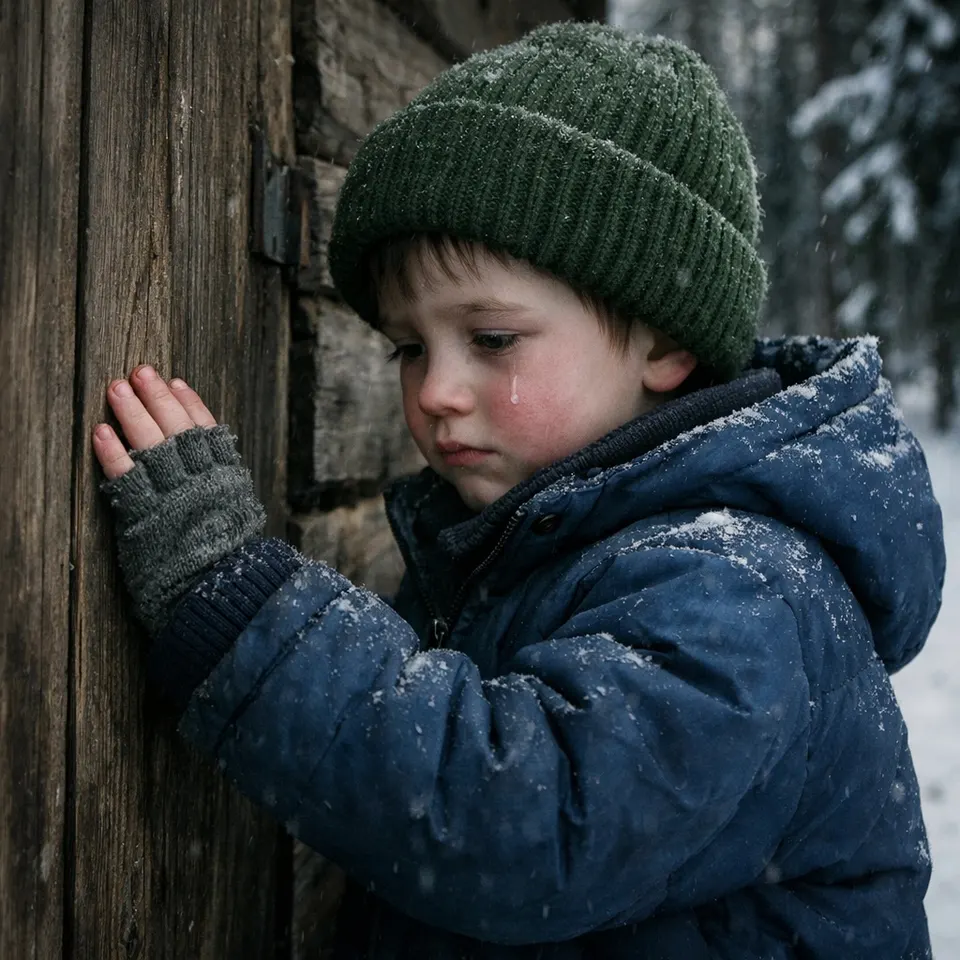
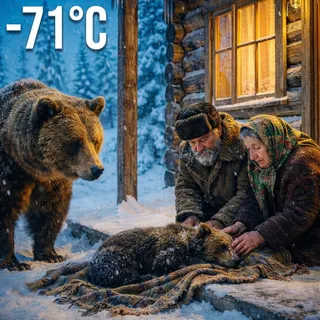
The boy stumbled through the winter woods, shivering. His lips were blue, his legs barely holding him up. He was looking for any kind of shelter when he came across an old cabin. A fire was burning inside, and a stranger was cooking soup. The man took the freezing teenager in, never suspecting that this random act of kindness would turn both their lives upside down. Because in a few days, the boy would find something in an old dresser that would make his heart pound. This story proves that sometimes, fate itself leads us to the ones we thought we’d lost forever.
Leo Miller was walking home from school, taking his usual shortcut through the old city park. The fourteen-year-old’s backpack was heavy with textbooks, and all he wanted was to get home and do his homework in peace. From behind the old maintenance shed, he heard loud voices and a cruel laugh. Leo stopped, listening. Over the rough shouts, he could make out a pitiful yelp—someone was hurting an animal. He peeked cautiously around the corner and saw three teenagers, maybe sixteen, kicking a small stray dog. The dog was lying on its side, injured, its eyes wide with terror.
“Come on, let’s finish this mutt off,” a red-haired kid in a leather jacket sneered.
Leo felt a knot of anger tighten in his stomach. He was never a fighter; in fact, he tried to avoid conflict. But he couldn’t stand by and watch them torture a defenseless creature.
“Hey! Leave him alone!” Leo shouted, stepping out from behind the shed.
The older boys turned, looking the skinny kid in his school uniform up and down with contempt.
“Well, look what we have here. A hero,” the tallest one drawled. “Get lost, kid, before you get hurt.”
“I said, leave the dog alone,” Leo repeated, trying to keep his voice from shaking.
The redhead walked right up to him and shoved him in the chest. Leo stumbled but kept his footing.
“What are you gonna do about it, shrimp?”
The redhead shoved him again, harder this time. Leo fell, hitting his elbow hard on the pavement, but scrambled back to his feet.
“Stop it! Just leave him alone!” He stood between the bullies and the dog.
The teenagers exchanged a look, apparently deciding the stubborn kid wasn't worth the trouble.
“You’re an idiot, getting beat up for a stray,” the redhead spat. “Let’s go, guys.”
They walked off, still laughing loudly and glancing back. Leo waited until they were out of sight before approaching the injured animal. The dog was alive, but badly hurt. Leo gently scooped it into his arms. The mutt didn't even struggle, seeming to understand that this person meant no harm. The boy pulled all the money he had from his pocket—fifty dollars he’d been saving for a new video game. It was just enough to cover a taxi to the veterinary clinic.
At the clinic, a kind, older veterinarian in a white coat examined the dog carefully.
“It’s a good thing you brought him in when you did,” she told Leo. “A little longer, and it might have been too late. No broken bones, but he has a deep gash that needs stitches.”
“Will he be okay?” Leo asked, his voice filled with worry.
“He’ll be fine, don’t you worry. You’re a good kid. Not many would risk getting into a fight for a homeless dog.”
Leo left his phone number and asked them to call with an update. With no money left for the bus, he had to walk home. He didn’t get back until almost six-thirty.
The large suburban house greeted him with a cold silence. In the spacious living room, Brenda, a well-kept woman of thirty-two with cold eyes, sat on the sofa. Next to her, her three-year-old son from a previous marriage, Kyle, was playing. On the coffee table were plates with the remains of dinner; apparently, his stepmother had only fed herself and her own child.
“Been out messing around again?” Brenda shot Leo a disdainful look, noticing the dirt stains on his jacket sleeve.
“I was saving a dog,” Leo answered honestly. “Some older kids were beating it up.”
Brenda rolled her eyes.
“A waste of money. Besides, we have more important things to worry about than your stray dogs.”
Little Kyle reached for Leo with a happy smile—he always adored his older stepbrother—but his mother sharply pulled him back.
“Don’t touch him, he’s filthy. Kyle, go to your room.”
Brenda stood up and looked sternly at her stepson.
“Tomorrow after school, you’re cleaning the entire house. I’m going out with my friends, so have it spotless by the time I get back.”
Leo nodded silently and went to his room. On his desk, a simple frame held a photograph: him with his parents at their lake house three years ago. His mom was smiling, her arm around his shoulders, while his dad looked at the camera with pride. Those days now felt like a distant fairy tale.
Around nine o’clock, the phone rang. Leo rushed out of his room, hoping it was his father—David Miller had been on a business trip for a week and hadn't been in touch.
“Hello?” Leo answered cheerfully.
“Good evening, this is the veterinary clinic. Did you bring in an injured dog today?”
A flicker of disappointment crossed Leo’s face, but he quickly perked up.
“Yes, that was me. How is he?”
“He’s doing great, the surgery was a success. The little guy is recovering well and should be able to walk in a few days.”
“Thank you so much!” Leo smiled for the first time all day.
When he hung up, Brenda’s sarcastic voice drifted from the kitchen.
“So, did your mutt survive? They’ll probably ask for more money for the treatment.”
“The important thing is that he’s going to be healthy,” Leo replied.
He tried calling his father’s number, but it went straight to voicemail. He tried a few more times with the same result.
“Daddy’s busy with real work. He doesn’t have time for you,” Brenda said casually as she walked by.
Leo went back to his room, lay on his bed, and clutched the old photograph of his mother. Eleanor had died two years ago after a long illness. His dad had been different then: attentive, caring. But everything changed after he married Brenda.
The next morning, a sharp knock on the door woke Leo.
“Get up, you lazy bum!” Brenda yelled. “You’ll be late for school.”
At breakfast, Brenda only served Kyle. The little boy got warm pancakes with syrup and cocoa. For Leo, she tossed a piece of dry toast onto a plate.
“Is there any milk?” Leo asked cautiously.
“We’re out. You should have thought about that yesterday before you spent your money on that dog.”
Kyle accidentally spilled some juice on the table. Brenda instantly whirled on Leo.
“You’re the one who taught him to be so messy!”
“What does that have to do with me?” Leo said, surprised. “He’s just a little kid, accidents happen.”
“Don’t you talk back to me!”
Brenda stood up and raised her hand. A sharp slap stung his cheek. Leo pressed his hand to his face, feeling tears well up in his eyes.
“When your father is out of the picture, my son will be the man of this house,” Brenda hissed. “You remember that.”
Leo grabbed his backpack and ran out of the house. Behind him, he heard Brenda on the phone with someone.
“Yes, tomorrow it’ll all be over. I’ll finally be rid of him.”
At school, Leo couldn’t focus on his lessons. His left cheek still burned from the slap, and his stepmother’s words echoed in his head. What did she mean?
“Leo, what happened to your face?” his classmate Dan asked during a break, noticing the red mark.
“Nothing, I fell at home,” Leo lied.
In math class, the teacher called him to the board to solve a problem, but he couldn’t even understand the question—his mind was a million miles away.
“Miller, you’re not prepared for class,” Mrs. Peterson said sternly. “That’s an F.”
Leo silently returned to his seat. After class, the teacher came over to his desk.
“What’s going on, Leo? You’ve always been such a good student.”
“Everything’s fine, Mrs. Peterson,” he answered quietly.
During lunch, Leo tried calling his dad from the school office, but the number was still unavailable. The anxiety in his chest grew with every passing minute.
Leo got home around three-thirty. By the front door stood two suitcases: one large, one small. His heart began to pound. In the living room, Brenda was waiting for him with a cold smirk. Little Kyle was playing with his toy cars in the corner, oblivious to what was happening.
“Get your things,” Brenda said curtly. “You’re going to stay with relatives.”
“What relatives?” Leo felt the floor drop out from under him.
“Your father isn’t coming back from his business trip,” Brenda said harshly. “There’s no money, and I’m not about to feed someone else’s child.”
She pulled a document from her purse and handed it to Leo. An official form, stamps, signatures—it all looked real. It was a death certificate for David Miller. Cause of death: heart attack.
“No… This isn’t true!” Leo grabbed the paper with trembling hands. “Dad couldn’t have died!”
“He could, and he did. You can read it for yourself.”
“I’m not going anywhere!” Leo fell to his knees. “This is my home!”
“This is *my* home,” Brenda corrected him coldly. “And I decide who lives here.”
Kyle dropped his cars and ran to Leo.
“Leo, are you crying? Don’t cry!” The little boy wrapped his arms around his stepbrother’s neck.
“Kyle, get away from him!” his mother snapped, pulling her son away and leading him to his room.
Leo was left alone in the living room with the suitcases and the death certificate in his hands. Outside, the sky was beginning to darken.
The next morning, Brenda loaded Leo’s suitcases into her silver sedan. The boy sat in the back seat, still unable to believe what was happening. He clutched the certificate, hoping it was all just a terrible nightmare.
“Where are we going?” he asked quietly.
“To your Aunt Susan’s,” Brenda answered curtly, without turning around. “She lives out in the country. She agreed to take you in.”
Leo had never heard of an Aunt Susan, but he said nothing. The car left the city and sped down a snow-dusted highway. Bare fields and scattered trees flew past the window. An hour later, Brenda turned onto a dirt road.
“We’re almost there,” she said, but her voice held no trace of sympathy.
Another thirty minutes later, the car stopped at the edge of a dense forest. There wasn’t a single house in sight, only snow-covered pines and firs stretching into the distance.
“Get out,” Brenda ordered. “Follow the path straight ahead. Aunt Susan’s house is down there.”
Leo hesitantly grabbed his suitcase and got out of the car. A narrow, snow-covered path did indeed lead from the road into the woods.
“Aren’t you coming with me?” he asked.
“I don’t have time,” Brenda snapped. “Go on, you’re not a little kid.”
Leo started walking down the path, dragging his heavy suitcase behind him. After a few yards, he turned back to wave goodbye, but all he saw were the red taillights of the car as it sped away.
“Wait!” he yelled. “Where are you going?!”
But the car had already disappeared around a bend. The boy was alone in the middle of the forest, and the truth finally hit him: he had been tricked. There was no Aunt Susan. Brenda had just gotten rid of him, like a piece of trash.
“Brenda! Come back!” Leo shouted into the emptiness, but only the echo answered him.
Dusk was falling, and the first snowflakes began to drift down from the sky. The temperature was dropping noticeably. Leo decided the path had to lead somewhere. Maybe there really was a house, and Brenda hadn't been lying completely. He dragged his suitcase further down the narrow trail between the trees.
The path wound between tree trunks, up and down small hills. Leo had been walking for half an hour, but there was no sign of human life. Just the darkening forest and the falling snow. Gradually, the path became less distinct, overgrown with brush and fallen branches, until it disappeared altogether.
Leo stopped, looking around in confusion. There was nothing but trees—all identical, all alien. The suitcase felt impossibly heavy. His hands were numb from the cold and the strain. Leo left the suitcase under a large pine tree and pulled out his phone. The screen flashed: “Battery 8%.” There was no signal, of course—they were far from the city.
It was completely dark now. The snow was falling thicker, and the temperature continued to drop. Leo understood the terrifying truth: he was lost in a winter forest with no food, no warm clothes, and no one knew where to find him. He knew he couldn’t panic—even at fourteen, he understood that. He needed to find shelter and build a fire.
Nearby, he spotted a large fallen pine log—it could offer some protection from the wind. The boy began gathering dry twigs and last year’s leaves. Luckily, there was less snow under the big pines, and he managed to find some dry material. From his jacket pocket, Leo pulled out a lighter—a birthday gift from a classmate. His hands were shaking from cold and fear, but he managed to get a fire going. Small flames licked at the kindling, illuminating a small space around the fallen tree. Leo carefully added more wood, trying to keep the fire from going out.
From his backpack, he took out the only food he had—an apple from the school cafeteria. He ate it slowly, in small bites, trying to make it last. He warmed his hands by the fire, feeling life slowly return to his frozen fingers.
Somewhere deep in the woods, a long howl echoed. Then another. Coyotes. A chill that had nothing to do with the cold ran down Leo’s spine; he’d heard enough stories about what happened to people who ran into a pack. The boy quickly threw more branches on the fire, and the flames leaped higher. The howling stopped.
“Maybe Dad really is dead,” Leo thought, staring into the dancing flames. Tears streamed down his cheeks. He remembered his mother: how she used to hug him before bed, read him stories, and tell him she would always protect him. Now his mom was gone, his dad was probably dead too, and he was completely alone in the world.
He was terrified to fall asleep, but exhaustion was taking over. Leo settled as close to the fire as he could, using his backpack as a pillow. He slept in short bursts, waking up every hour from the cold to add more wood to the fire. When he finally woke for good, he saw the fire had nearly died out, leaving only glowing embers. The lighter still worked, and he managed to relight it. His legs were stiff and his hands were numb, but it seemed he didn't have frostbite—the fire had provided just enough warmth through the night.
The boy stood up and tried to get his bearings. Which way should he go? All the trees looked the same; there were no landmarks. He tried to find his tracks from yesterday, but they had been covered by the new snow.
“Help!” Leo screamed as loud as he could. “Is anyone out there?”
His voice echoed in the forest silence, but there was no reply. Only a distant crow cawed in response. Leo picked a direction at random and started walking.
An hour later, he tripped over a root hidden by the snow and fell face-first into a drift. The cold crystals went down his collar, and the boy felt his last bit of strength leave him. He lay in the snow, with no desire to get up.
“Maybe this is for the best,” Leo thought. “Just lie here and not think about anything anymore.”
But then, in the distance, he saw a thin column of smoke. It was faint against the gray winter clouds, but it was definitely coming from a chimney. That meant there was a house somewhere. There were people. Leo forced himself to get up. His legs sank into the snow up to his knees, and every step was a struggle, but he pushed on toward the smoke.
“Just a little further,” he told himself. “Just a little more, and everything will be okay.”
The smoke grew thicker, and finally, a small wooden cabin appeared between the trees. A warm yellow light glowed in the windows, and thick smoke poured from the chimney. The house was real, lived-in.
Leo staggered to the porch on his last legs. He knocked on the door with his numb hands—first quietly, then louder and more desperately. A few seconds later, the door swung open. On the threshold stood a middle-aged man with a kind but surprised face. He was wearing a warm plaid shirt and old jeans.
“My God, son!” the man exclaimed. “Get in here, quick! You’re freezing!”
The stranger didn’t ask any questions; he just grabbed Leo by the arms and pulled him inside. It was warm and cozy in the cabin. A wood stove was burning, and a steaming mug of tea sat on the table.
“Sit by the stove,” the man instructed, helping Leo into a soft armchair near the fire.
He pulled off the boy’s wet boots and socks and wrapped him in a thick wool blanket. Leo was shaking uncontrollably—from the cold, or from the shock, he couldn’t tell.
“What’s your name?” his rescuer asked gently.
“My name is Leo,” the boy answered through chattering teeth.
“I’m Mike.”
Mike brought him a mug of hot tea and a bowl of soup. But Leo’s hands were shaking so badly he couldn’t hold the spoon. So Mike sat beside him and fed him like a small child, carefully bringing the spoon to his mouth. The warm food and the peace of the cabin worked their magic. Leo felt exhaustion finally win. His eyes closed on their own.
“Sleep, kid,” Mike said quietly. “We’ll talk in the morning.”
Leo fell asleep right there in the armchair by the stove, feeling safe for the first time in two days.
Leo woke up in a strange bed under warm blankets that smelled of fresh linen. For a few seconds, he lay with his eyes closed, savoring the feeling of warmth. Then the memories came flooding back: the forest, the cold, the fear, and the kind man who had saved him.
The room was simple but cozy: varnished wood walls, old but sturdy furniture, a small window with a homespun curtain. On the wall hung photos of the forest in different seasons and an old cuckoo clock. Mike appeared in the doorway, holding a tray. On it was a bowl of oatmeal, a glass of milk, and a few sandwiches.
“How are you feeling?” he asked, setting the tray on the nightstand.
“Much better, thank you.” Leo tried to sit up and felt that his strength had mostly returned.
“You were out in that forest for almost two days,” Mike said, sitting on a chair next to the bed. “It’s a good thing I found you when I did. A little longer, and it would have been too late.”
Leo struggled to remember the last few hours; it was all a blur of cold, despair, the smoke from the chimney, and the warm hands of this man.
“I’m a park ranger,” Mike explained. “I live out here alone, look after the forest, and put out feed for the animals in the winter. Now, tell me: what’s your name? Where are your parents?”
Leo hesitated. He was scared to tell the whole truth. What if Mike kicked him out too?
“My name is Leo,” the boy began cautiously. “My parents… My mom died two years ago, and my dad…” He trailed off, not knowing how to explain. “My stepmom drove me out to the woods and said a relative lived here. But there was no one. And when I turned around, the car was already gone.”
Mike frowned. What kind of cruel person would do that to a child?
“And where’s your father?”
“My stepmom said he died on a business trip,” Leo answered quietly. “She showed me a certificate.”
“I see.” Mike was silent for a moment, processing what he’d heard. “We need to call the police, let them sort this out.”
Leo grabbed his arm in panic.
“No, please, don’t! They’ll send me to a foster home. I won’t survive there.”
There was such terror in the boy’s eyes that Mike was taken aback. He could see the kid was telling the truth, and it was a horrifying truth.
“Alright,” he said slowly. “We’ll figure out what to do.”
Mike stood up and paced the room, thinking. Leo watched him with an anxious gaze.
“Okay,” the ranger finally decided. “You can stay here for now, but it’s temporary. Got it? Until we figure this situation out.”
Leo nodded, unable to believe his luck.
“But I have a rule,” Mike continued sternly. “You’ll help with the chores, you won’t make a racket, and you’ll listen to me. Deal?”
“Deal!” Leo exclaimed happily.
Mike showed him a small room next to the kitchen.
“This will be your room. There’s a washbasin here, towels here. I’ll give you some clothes. They’re old, but they’re clean.”
He brought a stack of clothes: a sweater, jeans, warm socks. Everything was too big, but Leo didn’t care.
“Thank you,” he said, nearly crying with relief. “I’ll be a good helper, I promise.”
“We’ll see about that,” Mike chuckled. “For now, let’s get some lunch. You need to get your strength back.”
At lunch, Leo helped set the table and serve the plates. For the first time in months, he felt safe. No one was yelling at him, hitting him, or kicking him out.
The next day, Mike took Leo with him into the forest. The boy walked beside him, looking at everything with interest. The forest that had seemed so hostile and frightening just yesterday looked completely different today.
“This is my ranger station,” Mike said, pointing to a small cabin among the pines. “This is where I monitor this section of the forest.”
He explained to Leo how to tell a rabbit’s tracks from a squirrel’s, showed him the bird feeders, and pointed out which trees needed to be marked for removal.
“And those are wild boar tracks,” Mike said, pointing to the upturned earth under an oak tree. “See how they dig for roots?”
Leo listened intently, asking questions. He was curious about everything: why a feeder needed to be placed in a specific spot, how to tell if a tree was healthy or sick.
“You’re a smart kid,” Mike noted with surprise. “You pick things up fast. It’s a shame what happened to you.”
By evening, they were both tired but satisfied. Leo felt useful, and Mike felt like he was doing a good deed. That evening, they sat by the fireplace. Mike told stories about the forest, the animals, and how nature changes with the seasons. Leo listened, mesmerized; he had never known a life like this.
“Do you have a family?” the boy asked cautiously.
Mike’s face darkened.
“I had a wife, Sarah. She passed away five years ago from an illness.”
“I’m sorry, I didn’t mean to upset you.”
“It’s alright,” Mike said with a sad smile. “We never had kids, and now… well, now you’ve shown up.”
Leo thought for a moment and said quietly, “I thought I didn’t have anyone left in the world.”
“There’s always someone who will help,” Mike replied. “The important thing is to never lose hope.”
Those words warmed Leo more than the fire. For the first time in a long while, a small but real flicker of hope ignited in his heart.
That night, Leo couldn’t sleep for a long time. His mind was racing. What if his father really was dead? What if the certificate Brenda showed him was real? He remembered the happy days with his parents: going to the lake house, his dad teaching him to fish, his mom baking pies and reading him bedtime stories. It all seemed like a distant dream now. But maybe his father was alive. Maybe he was looking for him right now and couldn’t find him. Leo imagined his dad coming home from his trip, not finding his son, and starting a search.
“If Dad’s alive, he’ll find me,” the boy decided. “He wouldn’t abandon me.”
Outside, the night forest rustled. Branches scraped, and somewhere in the thicket, tree trunks creaked in the wind. But these sounds no longer scared Leo. He gradually calmed down and fell asleep, for the first time in days not afraid of what tomorrow would bring.
Leo woke up and, for the first time in months, felt truly rested. There was no familiar fear of the new day, no feeling of having to be constantly on guard. In this house, no one hurt him. Mike was already up and making breakfast in the kitchen. The smell of frying eggs and fresh bread filled the house with a sense of home. On the table were two identical plates, two mugs—here, Leo wasn’t considered a burden.
“Morning,” Mike said when he saw Leo. “Today we’re going to fix the feeders in the far sector. A few of them got damaged in the last storm.”
“I’d love to!” Leo responded eagerly. He liked feeling needed, useful. At his stepmother’s house, he was always in the way; here, he was a helper.
They ate breakfast in silence, but the atmosphere was warm and calm. No one was correcting him, criticizing him, or rushing him. Leo looked at Mike cautiously.
“Thank you for not kicking me out. I know I’m an inconvenience.”
“It’s a big house, there’s plenty of room,” Mike replied calmly. “As for inconveniences… there are different kinds. Some come from bad people, others from good ones. Yours is the second kind.”
They walked along a snowy path, Mike pointing out different animal tracks and telling Leo about the forest’s inhabitants. The boy listened with interest; he had never known a life like this.
“Look, don’t move,” Mike said quietly, stopping.
Leo froze and saw a family of deer nearby: a doe with two fawns. The animals were cautiously crossing a clearing, occasionally lifting their heads to listen.
“They’re beautiful,” Leo whispered, afraid to scare them off.
“They trust me,” Mike answered just as quietly. “I put out feed for them in the winter when food is scarce. They know I won’t harm them.”
The deer disappeared into the trees, and the two continued on their way. At the broken feeder, Mike took out his tools, and they got to work. Leo deftly handed him the right tools and held boards in place while Mike screwed them in.
“You’ve got a good head on your shoulders, kid,” Mike said approvingly. “You learn fast.”
Leo beamed at the praise—it had been a long time since anyone had genuinely complimented him. When the feeder was fixed, they built a small fire and sat down to rest. Mike put a kettle of water on the fire to make tea.
“What was your wife’s name?” Leo asked, watching the dancing flames.
Mike paused, as if deciding whether to answer.
“Sarah. Her name was Sarah.”
“Was she nice?”
“Very kind,” Mike’s voice softened. “She was a teacher. Loved kids.”
Leo nodded.
“My mom was really kind, too. She always defended me when Dad got angry.”
“What was her name?” Mike asked.
“Eleanor Miller,” Leo replied.
Mike flinched, as if he’d been struck. But Leo was staring at the fire and didn’t notice the ranger’s reaction.
“And her last name? What was her maiden name?” Mike asked, his voice trembling.
“Thompson, before she got married,” Leo answered, surprised. “Why?”
Mike turned pale. His hands were shaking as he took the kettle off the fire.
“How old was she?” he asked, barely audible.
“Thirty-two, when she died.”
Leo looked at Mike closely.
“What is it? Did you know her?”
Mike turned away, trying to compose himself.
“No. Just a similar name. A coincidence.”
But inside, his world was turning upside down. Eleanor Thompson. Thirty-two years old. A teacher. It all fit. His little sister, Ellie, whom he had argued with fifteen years ago and never seen again.
The walk home was silent. Mike walked, stealing glances at the boy’s profile. He looked so much like Ellie as a child. The same stubborn chin, the same intelligent eyes. Leo was quietly humming a tune to himself—an old nursery rhyme. Mike recognized the melody and almost stopped in his tracks. It was the song his sister used to sing when she was little. Their mother had always hummed it while putting them to bed.
Mike could barely restrain himself from bombarding the boy with questions. He needed to think, to be sure. What if he was wrong? What if it was just an incredible coincidence?
Back at the cabin, he was distracted, his thoughts a jumble. He cooked dinner, thinking about his sister, their fight, how she had left and never written.
“You seem sad today,” Leo remarked at dinner. “Did something happen?”
“No, everything’s fine,” Mike answered quickly. “Just a little tired.”
That evening, Mike couldn’t sit still. He paced around the house, trying to gather his thoughts. It couldn’t be a coincidence. Eleanor Thompson, a teacher, 32 years old. It just couldn’t be.
“So many years have passed,” he thought. His mind took him back to that terrible day, 15 years ago, when they had fought. He had yelled at Ellie that her fiancé was a con man, that she was making a huge mistake. And she had retorted that he wasn't her brother anymore, and left. For good. Ellie had said then that she was going to marry David. And then she just vanished from his life.
Mike quietly opened the door to the room where Leo was sleeping. The boy was lying on his side, wrapped in a blanket. In profile, he looked astonishingly like his sister as a child.
“Could he really be my nephew?” Mike thought, feeling his heart pound.
He gently closed the door and went back to his room. He had to find a way to confirm his suspicions. But how? And more importantly, was he ready for the truth? Because if he was right, it meant he’d had a nephew for 14 years without knowing it, that his sister had died, and he hadn’t even been to her funeral. It was going to be a very long night.
At breakfast, Mike couldn’t focus on his food. He had tossed and turned all night and had now decided to gently question Leo further. He had to be sure.
“Tell me more about your dad,” he asked, as casually as he could. “What does he do for a living?”
“Dad’s a contractor,” Leo answered readily. “He has his own construction company, so he travels a lot for work. Sometimes he’s gone for a month at a time.”
Mike nodded, continuing his questions.
“And your mom, did she work?”
“Yeah, at a school. She taught history.”
Mike’s heart beat faster. Ellie had also dreamed of being a history teacher.
“Which school?” he tried to ask, keeping his voice steady.
“Northwood High, on Garden Avenue. Mom said she loved teaching older kids because you could have real discussions about history with them.”
Mike remembered: that was exactly the kind of school Ellie had wanted to work at. She always said teaching little kids was boring, but with teenagers, you could have real debates.
“What was your mom’s favorite color?” Mike asked, surprising himself.
Leo looked at him, puzzled.
“Blue. She always bought blue dresses, said the color made her feel young.”
Mike flinched. Blue had been his sister’s favorite color since they were children.
“Why are you asking?” Leo wondered. “Are you sure you didn’t know my mom?”
“Just… just curious,” Mike stammered. “Trying to get to know you better.”
“Go get some firewood,” Mike asked after breakfast. “I’ll tidy up the house a bit.”
As soon as Leo was out the door, Mike frantically started searching through old papers. He kept them in a chest of drawers in his bedroom—all the important documents he had saved over the years. His hands trembled as he found what he was looking for—his sister’s birth certificate. Eleanor Thompson, born June 15, 1992, in Charlotte, North Carolina. If Leo was 14, and his mother was 32 when she died, the timeline fit perfectly.
With shaking hands, Mike pulled out an old box of photographs. He had put most of them away after his wife died—it was too painful to look at them. But among the family photos were childhood pictures with his sister. There she was, Ellie at 14, at her birthday party. The same eyes, the same face shape, the same stubborn set of her mouth. A spitting image of Leo right now.
Mike sank onto the bed, clutching the photo of his sister. Tears streamed down his cheeks; he couldn’t hold them back any longer.
“Ellie! My little sister! I’m so sorry!” he whispered.
His memory took him back to that awful day, 15 years ago. Ellie had come home so happy, talking about her fiancé, David. And he, the older brother, had decided he knew what was best for her.
“Your fiancé is a schemer!” Mike had yelled. “He’s using you. Wake up, Ellie!”
And she had shot back that he was just jealous of her happiness, that he’d become bitter after his own divorce and didn’t want her to be happy.
“I hate you!” Ellie had screamed, packing her things. “You’re not my brother anymore!”
And she left. And his pride kept him from looking for her. He thought she’d come back on her own once she realized he was right.
There was a knock on the door, and Leo came in with an armful of wood.
“What’s wrong?”
the boy asked, frightened, seeing the tears on Mike’s face. “Are you okay?”
Mike quickly wiped his eyes and put the photos back in the box.
“It’s nothing serious,” he said, trying to sound calm. “Just remembering things.”
Leo set the wood down in the corner and looked at the ranger with concern.
“You can tell me what’s bothering you. Maybe it’ll help to talk about it.”
“Someday I will. Not now,” Mike replied. “Some memories are too painful.”
For the rest of the day, he acted strangely, lost in thought. He would start to say something to Leo, then stop mid-sentence. He would stare at the boy for long periods, studying his face. Leo sensed the tension but didn’t understand the reason. He tried to act normal, helping with chores, but he could tell something had changed.
That evening, they sat in the living room. Leo was reading a book Mike had given him, while the ranger pretended to fix an old clock. In reality, he was secretly watching the boy. In profile, Leo was the spitting image of his sister. The same shape of his eyes, the same way he furrowed his brow when he didn't understand something in the text. He even smiled just like Ellie did as a child.
Mike wrestled with the question: should he tell Leo the truth, or wait? On one hand, the boy had a right to know he had an uncle. On the other, what if he was wrong? Shouldn’t he find more solid proof first?
“Uncle Mike,” Leo said suddenly, looking up from his book. “You’ve been looking at me funny all day. Am I doing something wrong?”
“No, everything’s fine,” Mike answered quickly. “Just thinking. About life. About how everything is connected.”
Leo shrugged, confused, and went back to his reading.
That night, Mike couldn’t sleep. He made a decision: tomorrow, he would drive into town and try to get some official records. He needed more concrete proof before talking to Leo. Maybe he could find Ellie’s marriage license, or Leo’s birth certificate. Until then, he wouldn’t say a word to the boy. He couldn’t risk hurting a child who had already been through enough.
If this really was Ellie’s son, it meant he’d had a nephew all these years and never knew. And Ellie had died, and he hadn’t even been to her funeral. The thought was so painful he squeezed his eyes shut. Tomorrow, he would drive to town and find out everything. For now, he had to act normal, so he wouldn’t scare Leo.
Mike finally fell asleep in the early hours of the morning, and in his dreams, he saw a little girl who looked like Ellie, crying and calling his name.
The next morning, Mike was unusually focused and quiet. He drank his coffee staring out the window, clearly deep in thought.
“I have to go into town for a bit,” he finally told Leo. “Need to take care of some paperwork, pick up a few things.”
“Can I come with you?” the boy asked hopefully. “I’d like to walk around town for a little while.”
“No,” Mike said firmly. “You stay here, keep an eye on the place.”
He wrote a list of chores on a piece of paper and handed it to Leo.
“Feed the birds at the feeders near the house, bring in some water from the well, and keep the stove going. I’ll be back this evening.”
Mike started up his old Ford pickup and drove off, leaving a cloud of exhaust behind him. Leo waved from the porch for a long time, feeling strangely alone. For some reason, Uncle Mike seemed anxious and distant today. It was going to be a long, boring day.
Leo finished all his chores in two hours. He fed the chickadees and finches, brought in four buckets of water, chopped some kindling, and stacked it by the stove. Now there was nothing to do, and evening was still a long way off. He wandered around the house bored, looking at the old books on the shelves, studying the photos on the walls. They were all pictures of nature: the forest in different seasons, animals, birds. But there were almost no family photos. Leo noticed a few empty frames on a shelf—someone had clearly removed the pictures. He wondered who had been in them. Probably Uncle Mike’s late wife. It must have been too painful to look at them.
Wanting to do something nice for his uncle, Leo decided to tidy up the house a bit. He dusted the furniture, swept the floor, and arranged the books more neatly. In Mike’s bedroom, while dusting an old dresser, Leo accidentally bumped one of the drawers. It slid open unexpectedly—the lock must have been broken for years, and the drawer just stuck. Inside was a stack of documents and old photographs. Leo was about to push the drawer shut; it wasn’t right to snoop through someone else’s things. But the first thing he saw made him freeze.
A birth certificate. Eleanor Thompson. The exact same name as his mother. Could it just be a coincidence? With trembling hands, Leo picked up a photograph lying next to it. It showed a girl of about ten with pigtails and cheerful eyes. The boy gasped: she was the spitting image of his mother as a child. He had seen similar pictures in his family’s photo album at home.
Leo sank to the floor in the middle of the room, unable to believe his eyes. His hands shook as he looked through the photos one by one. His mom at different ages: five, ten, fifteen. The same smile, the same eyes, the same mole on her cheek. There was no doubt: this was his mother.
In one of the photos, his mom was standing next to a slightly older boy. The boy looked like Mike, only younger: the same facial features, the same serious smile. Leo turned the photo over. On the back, in a child’s handwriting, it said: “Ellie and Mike, 1995.”
Everything fell into place. Mike was his mother’s brother. Uncle Mike was his real, biological uncle. Leo cried with a mixture of joy and shock. Tears streamed down his cheeks, but he was smiling from ear to ear.
“I have a family. A real family!” he repeated to himself.
He remembered his mom’s stories about her strict older brother who always protected her. Mom had said they had a fight when she got married and hadn’t seen each other since. But she never told him his name or where he lived. Now it all made sense why Mike sometimes looked at him strangely, why he asked odd questions about his mom. He had recognized his nephew.
“But why didn’t he say anything? Why didn’t he tell me the truth right away?” the boy wondered.
Leo decided to wait for his uncle to return and find out everything. They needed to talk openly, with no more secrets. For the rest of the day, Leo paced the house in a state of incredible excitement. He would sit down, then jump up, then walk from room to room. He couldn’t focus on anything. He looked at the photos again and again. In one, his mom was holding a bouquet of flowers and laughing, her arm around a serious teenage Mike. In another, they were building a snowman in the yard—his mom was about seven, and his uncle was eleven. Another picture: his mom blowing out candles on a cake, with Mike standing beside her holding a gift.
They were a real family, Leo thought, feeling both joy and sorrow. And then something happened. He remembered how his mom would sometimes get sad for no reason, how she would stare out the window on long evenings. Now he understood: she missed her brother. But why did they fight? And why did they never make up?
The boy rehearsed what he would say to Mike.
“Uncle Mike, I know you’re my uncle.”
Or maybe he should ask cautiously: “Uncle Mike, are you sure you didn’t know my mom?”
Or maybe just show him the photograph and wait for his reaction?
But along with the joy came anxious thoughts. What if his uncle denied it? What if he didn’t want anything to do with him? After all, he had kept quiet all this time, even though he must have suspected. What if I remind him of something painful? The boy couldn’t even eat—his throat was tight with anxiety. He walked around the house, holding his mother’s favorite photo, where she was very young and happy.
By evening, he was beside himself with anticipation. Every sound outside made him run to the window. Finally, he heard the familiar rumble of an engine—the pickup truck was back. Leo quickly stacked the photos, but kept one in his hand—the one that said “Ellie and Mike.” His heart was pounding. This was it. Now he would know the truth: did his uncle want him, or was this just random kindness to a stranger’s child?
The door slammed, and Mike walked in, his face weary.
Mike walked into the house tired and grim. The trip to town had given him all the answers he had been dreading. At the county records office, he found the marriage license for Eleanor Thompson and David Miller, dated 15 years ago. He also found Leo’s birth certificate. Every detail matched. There was no longer any doubt: the boy was his sister’s son. The whole drive home, Mike agonized over how to tell Leo the truth. How could he explain that for 15 years, he never knew he had a nephew? That he missed his own sister’s funeral because of stubborn pride?
Leo met him at the door, holding an old photograph. The boy’s face was flushed with emotion, his eyes shining with a mix of unshed tears and hope.
“Uncle Mike!” he said, his voice trembling. “This is my mom!”
Mike froze in his tracks, seeing the open dresser in the bedroom over Leo’s shoulder. The documents and photos were laid out neatly on the bed. The boy had found everything himself, had spent hours studying every picture, every piece of paper.
“Where did you get that?” he asked, his own voice betraying him with a tremor.
“I found it by accident when I was cleaning,” Leo answered honestly. “I didn’t believe it at first, but then I saw the picture of you and Mom when you were little. Is it true? Are you really my uncle?”
There was so much hope in the boy’s eyes, such a plea, that Mike knew he couldn’t hide it any longer. The time for lies and half-truths was over. Mike sank heavily into an armchair and covered his face with his hands. All these days of agonizing doubt had led to this moment. Then he looked up at his nephew and said quietly but clearly:
“Yes. Ellie was my younger sister. The only sister I ever had, and I lost her because of my own foolishness.”
Leo rushed to him with a cry of joy.
“Uncle! I have a family! A real family!”
Mike wrapped his arms around the boy, and tears streamed down his cheeks. All the years of loneliness, all the days of painful doubt—it all ended in that single moment. In his arms wasn't just a boy he’d rescued from the forest, but a piece of his beloved sister, a living memory of her.
“Forgive me, kid,” he whispered, holding his nephew tight. “Forgive an old fool who let his pride cost him the most precious thing he had.”
They sat there for a long time, holding each other, crying with happiness and relief. Leo had finally found his family, and Mike had found a piece of the sister he thought he had lost forever. In that embrace was all the pain of their separation and all the joy of their reunion.
When the initial wave of emotion subsided, Mike told Leo the truth about what had happened between him and his mother. The words came out with difficulty—admitting your own mistakes is always painful.
“I was against her marriage,” he said heavily, staring into the fireplace. “I thought your father was a good-for-nothing, a schemer. I was convinced he was using Ellie, that he was only marrying her for the inheritance our parents left us.”
Mike remembered that terrible day they had argued. Ellie had come home so happy, glowing with love, wanting to share her joy with the only family she had left. And he…
“I said cruel things to her,” Mike continued, his voice thick with pain. “That she was blinded by love, that he would leave her as soon as he got what he wanted. Ellie was hurt. She said I was jealous of her happiness, that I didn’t want to see her happy. She moved to the city and stopped calling. And my pride kept me from reaching out. I thought she’d come back on her own, once she realized I was right. But she never did.”
Mike’s voice dropped to a whisper.
“Then, a few years later, I heard from an old acquaintance that she had passed away. I didn’t even go to the funeral. I was too ashamed of what I’d done. I was afraid to face your father.”
Leo listened intently, trying to grasp the depth of the tragedy. Finally, he asked cautiously, “But why didn’t you tell me right away that you recognized me? You did, didn’t you?”
“I was afraid I was wrong,” Mike answered honestly. “I didn’t want to hurt you if it turned out to be just an unbelievable coincidence. The name, the age—it could have all been a fluke. I went to town today to check the county records. I looked for the marriage license, your birth certificate. Now I know for sure: you are my Ellie’s son.”
Leo thought for a moment and said quietly, “Mom used to talk about you. She said she had an older brother who was very kind and honest. That he always protected her when they were kids.”
Mike gave a bitter laugh.
“Kind? I kicked her out of her own home. What’s kind about that?”
“You are kind,” Leo said seriously. “Mom explained that you just loved her so much you were afraid she’d get hurt. She didn’t blame you. She understood you were worried about her, that you wanted to protect her from making a mistake.”
The boy remembered his mother’s words on sad evenings: that family is forever, that loved ones can fight, drift apart, even go years without speaking, but the love is always there. And that someday, everything would be okay again.
Mike wept as he listened. It meant Ellie had truly forgiven him. It meant she hadn’t held a grudge against her stubborn older brother.
“She really forgave me?” he whispered through his tears. “After all my foolishness, after all the cruel things I said?”
“Always,” Leo answered with certainty. “Mom said that someday we would meet. She believed it. And now we have. And now we have a family again.”
“Yes,” Mike nodded, feeling the heavy weight of guilt finally lift from his shoulders. “We’re not alone anymore.”
They could feel a true bond forming between them, not just of blood, but of spirit. Ellie had brought them together across the years, even after her death.
“Tomorrow, we’ll go to town and start the paperwork for guardianship,” Mike said decisively. “You’ll enroll in the local school. This house is your home now, too. You have every right to live here.”
Leo nodded happily, but then his face clouded over with a worried thought.
“But what about Dad? What if he really is alive and looking for me? What if Brenda lied about the certificate?”
Mike’s expression turned serious and determined.
“We’ll figure that out, too. We will find out the truth. If your father is alive, we will find him, no matter what it takes. If not, we will honor his memory. I’m not just the guy who found you anymore; I’m your uncle. And that means I will always protect you, no matter what.”
That night, they both slept soundly, feeling like a real family for the first time in a long, long time. Leo was no longer an abandoned orphan, and Mike was no longer a lonely ranger tormented by guilt. They had the memory of Ellie, who had brought them together, and that was enough to be happy.
The next morning, as Mike and Leo were having breakfast in the peaceful atmosphere of their newfound family, the old landline phone rang sharply. Mike rarely got calls this early; most people he knew were aware that the ranger was up at dawn and busy by eight.
“Hello?” he answered, glancing at the clock in surprise.
“Good morning,” an unfamiliar male voice said, filled with anxiety and desperation. “I’m sorry to bother you. My name is David Miller. I’m looking for my son. He’s 14, dark hair, medium height. The sheriff’s office said a park ranger in your area might have seen him.”
Mike’s heart began to pound. The description fit Leo perfectly. Leo, hearing his name, also grew tense and watched his uncle intently.
“I might have,” Mike said cautiously. “Can you tell me what happened?”
“He’s my son,” the man’s voice cracked with pain. “I’ve been searching for him for over a week. I’ve driven all over the county, called every hospital, filed a police report.”
Mike felt a shiver run down his spine. Could Leo’s father really be alive?
“How did he go missing?” Mike continued, probing carefully.
“I was away on business,” the voice replied wearily. “My wife said he’d run off to a friend’s house and never came back. But when I got home, I found out none of his classmates had seen him.”
Mike knew then: this was really Leo’s father, and he was alive. Brenda had lied to the boy about his father’s death.
“I think I have your son here with me,” Mike said, his voice steady. “He’s safe.”
Mike hung up the phone and turned to Leo, who was sitting on the edge of his seat, holding his breath.
“That was your father.”
“Dad’s alive?” Leo jumped up, knocking over his chair. “I knew it! I always knew he couldn’t be dead!”
Tears of joy streamed down the boy’s face. All those days of terrible doubt, all the nights he had agonized over whether his dad was really gone—it was all a lie.
“He’s been looking for you all over,” Mike explained. “He has no idea where you are. He said his wife told him you ran away to a friend’s house.”
“She lied to him!” Leo exclaimed. “She told Dad I ran away, and she told me he was dead. She wanted to separate us.”
Mike nodded, the picture becoming clearer. Brenda had some motive for tearing father and son apart.
“I arranged to meet him in town,” he said. “At the ‘Oak Tree Diner’ on Main Street. In two hours.”
Leo paced the room with excitement, unable to sit still. He was going to see his dad. Soon, everything would be explained.
The drive to town felt endless. Mike drove in silence, thinking about the upcoming meeting. What would it be like to meet his sister’s husband after 15 years of separation? What would he say? How would he explain that he’d kept Leo at his cabin without notifying his father? Leo was also quiet, but for a different reason. He was overwhelmed with emotions: joy that his dad was alive, anger at Brenda for her deceit, and nervousness about the reunion.
“What if he doesn’t believe me about my stepmom?” Leo asked anxiously. “What if he thinks I really did run away?”
“The truth always comes out,” Mike answered calmly. “Your father is a smart man. He’ll understand what happened.”
After a moment of silence, Leo asked cautiously, “Uncle Mike, will you talk to Dad? Maybe you can finally make up?”
Mike sighed.
“We’ll see how it goes. The most important thing right now is you. That you’re with your father and feel safe.”
“But I don’t want to lose you,” Leo confessed. “You’re my uncle.”
“And I always will be,” Mike promised.
Finally, they reached Main Street. The Oak Tree Diner was a classic spot with big windows. Pacing anxiously by the entrance was a man. David Miller looked exhausted. The forty-year-old man had aged during the days of searching. His eyes were sunken, his face was drawn, and his clothes were rumpled. He clearly hadn’t slept in nights.
When he saw Leo getting out of the truck, he froze for a second, not believing his eyes. Then he rushed toward his son.
“Leo! Son!”
“Dad!”
Leo ran to meet him. They embraced in the middle of the sidewalk, oblivious to the passersby. David held his son tightly, as if afraid he would disappear again.
“Son, where have you been?” he said through tears. “I was going out of my mind. I thought I’d lost you forever.”
“Dad, she kicked me out,” Leo cried. “She said you died on your business trip. She showed me a death certificate.”
“Who said that?” David pulled back to look his son in the eyes. “Brenda?”
“Yes. And then she left me in the woods.”
David looked up and saw Mike standing beside them. A middle-aged man in simple clothes, with a kind but serious face.
“And you are?” he asked.
“Mike Thompson,” the ranger introduced himself, extending a hand. “Your late wife’s brother.”
David stared at him, stunned.
“Ellie had a brother? She never told me.”
“We had a falling out many years ago,” Mike explained briefly. “We lost touch.”
Leo took his father’s hand.
“Dad, Uncle Mike saved me. I was lost in the woods, freezing, and he found me and took me in.”
David turned to Mike with deep gratitude.
“Thank you. Thank you for saving my son. I can never repay you for this.”
“There’s nothing to thank me for,” Mike replied. “He’s my nephew. Now, tell me what was going on at your house. Why would Brenda do something like this?”
David’s face darkened.
“I’m afraid there was a lot I didn’t know. I worked too much, trusted my wife too much.”
David began to explain, and with every word, the picture became clearer.
“When I got back from my trip, Brenda told me Leo had run away to a friend’s house. She showed me a note from him: ‘I hate you, Dad, I don’t want to live here anymore.’”
“I never wrote that!” Leo exclaimed. “Never!”
“She had blocked your number on my phone,” David continued. “She said you smashed your phone in a rage. She showed me the pieces of some old junker.”
Mike shook his head.
“She wanted to separate you. But why?”
“Brenda was always jealous of my relationship with Leo,” David admitted. “She said I loved my son more than her and Kyle. And also… I have a large house, a successful business. My God,” David whispered, covering his face with his hands. “How could I have been so blind? She wanted to get rid of Leo so everything would go to her son.”
Leo hugged his father.
“The important thing is that we’re together now, Dad. And Uncle Mike is with us, too.”
David looked at Mike gratefully.
“If you’re open to it, I’d like for us to be a family. A real family.”
The three of them drove to David’s house in tense silence. Each was steeling himself for the coming confrontation with Brenda. David gripped the steering wheel, preparing for an ugly conversation with his wife. Leo sat between his father and his uncle, feeling their support but still nervous.
On the way, David began to realize how Brenda had been systematically tormenting Leo.
“Now I understand why you’ve been so withdrawn these past few months,” he said to his son. “And I was working so much, I didn’t see what was happening. I thought it was just the normal challenges of adjusting to a new family.”
“She waited for you to be out of town,” Mike noted grimly. “She timed it so no one would see how she was treating the boy.”
When they pulled up to David’s upscale home, they were stunned by the scene. A large moving truck was parked in the driveway, and several workers were carrying out furniture, boxes of belongings, even kitchen appliances.
“What is going on here?” David shouted, jumping out of the car.
Leo recognized his own furniture, his computer, among the items being loaded. Brenda was erasing every trace of his existence from the house. Brenda emerged from the house holding a folder of documents. She was dressed up, as if celebrating a special occasion. When she saw David and Leo, her face twisted with shock and anger.
“How did you get here?” she hissed, glaring at Leo.
David stepped forward, shielding his son.
“Brenda! How dare you throw my child out of his own home?”
“I thought he’d be long gone somewhere in those woods,” Brenda replied brazenly, not even trying to make an excuse. “Too bad he survived.”
Leo instinctively pressed closer to his father and uncle. He had never seen such pure malice, not even on his worst days.
“How can you talk about a child like that?” David asked, dumbfounded.
“Easily,” Brenda said coldly. “He was in my way. He was always in my way.”
“Explain what’s happening here, right now!” David demanded, pointing at the truck and the movers.
Brenda gave a cynical smirk.
“I’m selling the house and all the assets. I’m taking the money and moving far away from here with Kyle.”
She pulled a death certificate from the folder and waved it in her husband’s face.
“As the legal widow, I am entitled to the entire estate of my deceased husband.”
David snatched the certificate from her hand.
“This is a fake! I’m alive, standing right in front of you!”
“Prove it!” Brenda laughed maliciously. “There are no witnesses to your resurrection. Officially, you died of a heart attack on your business trip. The paperwork is all in order.”
The movers continued their work, ignoring the family drama. To them, it was just another job.
“How could you even think of doing this?” David said in disbelief. “We were a family.”
“You were just an obstacle,” Brenda retorted. “And your son even more so.”
“That’s it!” David said decisively, pulling out his phone. “I’m calling the police.”
But Brenda was unfazed.
“And I’ll tell them you’ve been beating your stepson for years,” she sneered.
She grabbed Leo’s arm, showing off some old bruises.
“See? The proof is right here. The child is covered in bruises.”
“She’s the one who hit me!” Leo cried, pulling away. “Every day!”
“Who are they going to believe: a grown woman or a little liar?” Brenda asked calmly. “I’ll say he ran away from an abusive home and is now being forced to lie.”
David turned pale, realizing how carefully his wife had planned everything. She had created an alibi for herself and a case against him.
Suddenly, little Kyle ran out of the house, clutching his favorite toy car. The three-year-old saw Leo and ran to him joyfully.
“Leo! Leo’s back! I missed you!”
Brenda tried to grab her son.
“Kyle, let’s go! We have to leave!”
But the little boy wouldn’t listen.
“Mommy, are you gonna stop hitting Leo now?” he asked innocently. “I don’t like it when you hit him!”
A dead silence fell over the yard. Even the movers stopped and listened.
“And are you gonna stop lying to Daddy about Leo?” the toddler continued. “That he was bad and ran away?”
Brenda’s face went white. Her own three-year-old son had just exposed all her secrets.
“So you really were abusing him,” David realized. “It happened before… and I never knew.”
“Kyle doesn’t know what he’s saying,” Brenda tried to backtrack. “He’s little, he gets confused.”
But it was too late. The truth had come out, from the mouth of a child who didn’t know how to lie.
“We have everything we need,” Mike said calmly, holding up his phone. “Threats, a confession, a witness. I’ve been recording this entire conversation.”
Brenda looked at the phone screen and knew she had lost. All her words, all her threats, had been recorded.
“That’s illegal!” she shrieked. “You had no right!”
“We had every right,” Mike replied. “Especially when it comes to protecting a child.”
Brenda tried to grab Kyle and run to her car, but at that moment, a police car pulled into the driveway. The neighbors, having heard the shouting and seen the suspicious moving truck, had called 911.
“Perfect timing,” David told the officers. “We have a fraud artist here with forged documents.”
That evening, after Brenda was arrested and her accomplices who had forged the documents were taken into custody, the reunited family gathered in the house. The moving truck brought all the furniture back, and the house slowly began to feel like a home again.
“Forgive me, son,” David said, hugging Leo. “I’m so sorry I didn’t protect you, that I didn’t see what was happening…”
“The important thing is that we’re together now,” Leo replied. “And Uncle Mike is with us, too.”
Little Kyle was playing on the floor. Mike was showing him how to make paper airplanes. The boy would be staying with them; he had no one else to raise him. Mike turned to David.
“Thank you for your son. And forgive me for that old grudge. Ellie was right: family should stick together.”
“Ellie brought us together across the years,” David replied quietly. “Even after she was gone, she brought us together through Leo.”
“Now Kyle has a real family, too,” Leo said, stroking the little boy’s hair. “It’s not his fault what his mom did.”
A month later, Leo moved in with his uncle at the cabin in the woods—he found it easier to study and heal from the trauma there. The fresh air, the quiet of the forest, and his uncle’s care helped him forget the nightmare of living with Brenda. David sold the city house and bought a home closer to his late wife’s brother. Now they lived in neighboring towns and saw each other every day. They raised Kyle together. The little boy, innocent of his mother’s schemes, quickly adapted to his new, loving family.
Every Sunday, the three of them would drive to the cemetery to visit Eleanor’s grave. For the first time in 15 years, Mike visited his sister and knelt for a long time, asking for forgiveness for all the lost years. And Leo would tell his mom how their broken family had been made whole again, all because he got lost in the winter woods. They brought flowers, tended to the gravesite, and every time, they felt that Ellie was there with them.
“You know, Uncle Mike,” Leo said on one of those trips, as the three of them stood by his mother’s grave, “if my stepmom hadn’t kicked me out, we never would have met.”
Mike put his arm around his nephew and pulled him close.

Share how the story made you feel
0Comments appear after a quick automatic check. Please no links, ads or personal data.
Next to your name we show your country, determined from your IP address; the address itself is never shown, and only a hashed fingerprint of it is kept to stop spam.