
 Let’s Keep It Real

Before those words were spoken, before her whole life tipped on its side, there was only the cold, drafty fellowship hall at the local church. Anna sat at the head of the long table set out for the funeral meal. The air was heavy with the smell of incense, boiled potatoes, dill, and sweet wheat pudding.
The thick, stale smell felt almost solid. It pressed on her shoulders and made it hard to take a full breath. Thirty-six is still young enough to carry a lot, but that day Anna felt a hundred years old. Her back ached from the hard folding chair, and her eyes were raw from crying into a rough paper napkin.
She slipped a hand into the pocket of her dark wool dress. At the bottom lay a heavy silver coin, a small denomination from 1991. It had been her grandmother’s first lucky dollar, as the old woman used to call it.
Anna rubbed her thumb along the cold ridged edge. That simple habit had always helped her focus in the noisy taxi dispatch office where she worked, but now even the cold metal brought no comfort. Grandma Vera was gone.
A low hum filled the room. Forks tapped against cheap ceramic plates. Anna lifted her tired eyes and looked to the far end of the table.
There sat her husband, Stan, and his older sister, Gloria. They weren’t even pretending to grieve. Gloria, forty-two, with salon-perfect hair and the kind of expression that suggested she was doing everyone a favor just by showing up, kept leaning over to whisper in her brother’s ear.
A necklace glimmered dully at Gloria’s throat. It was Grandma Vera’s pearl strand—large, even, unmistakable. Anna felt nausea rise, mixed with a bitter stab of guilt.
She knew Gloria had driven out to the lake house the morning before, before the funeral home had even taken the body. Anna knew why she’d gone, and she had said nothing. Just as she had said nothing for years, letting her sister-in-law meddle in their lives, criticize her job, and tell her how to raise her daughter, Maggie.
She had done it all for the illusion of peace. So Stan wouldn’t get upset. And now Gloria sat at the funeral wearing the dead woman’s jewelry, and Anna still hadn’t found the nerve to demand it back.
That weakness ate at her. Trying to distract herself, Anna looked around at the guests. More people had come than she expected for a retired widow, and they were not the sort of people she would have guessed.
She recognized owners of butcher stalls from the downtown market—hard-faced men in dark jackets. She saw the local pastor. One by one, they approached Vera’s framed photograph, draped with a black ribbon.
Anna frowned. The way they bowed their heads wasn’t ordinary politeness. It was deep respect, almost reverence.
An old produce seller, a heavyset man with gray whiskers, stood before the portrait, removed his cap, and lowered his head as if he were saying goodbye not to a grandmother who baked honey cakes, but to someone powerful. Why are they looking at her like that? The thought flickered through Anna’s tired mind, then dissolved into the fog of grief.
Anna reached with a trembling hand for a piece of dark bread. At that moment, in her dress pocket, right beside the silver coin, her phone buzzed sharply. She flinched.
On a day like this, a call could only mean work—an accident, maybe—or something from home. Anna pulled out the phone. The screen lit up, harsh against her tired eyes.
It was a message from Stan. She looked up automatically. Stan was sitting barely twenty yards away, at the other end of the table.
Why would he text her?
Anna lowered her eyes and opened the message. A photo loaded, and at first she couldn’t make sense of what she was seeing.
It was the entryway of their apartment. But it was completely empty. No coat rack. No mirror. No shoe bench they had picked out together.
Her finger shook as she swiped to the next image. The alley behind their building. Gray dumpsters. Rain falling.
Right there on the wet pavement, in a muddy puddle, lay a heap of belongings. Anna recognized her winter coat, one sleeve soaked and smeared with grime. She recognized her books, lying open, their pages dark and swollen with rain.
And on top of the pile, pinned under someone’s old boot, was a brown plush teddy bear with one torn ear. Her eight-year-old daughter Maggie’s favorite toy. The bear Maggie slept with every night had been thrown out in the rain like trash.
The air vanished from Anna’s lungs. Her chest tightened as if someone had set a cinder block on it. The sounds in the hall—the clink of silverware, the scrape of shoes, the low conversations—collapsed into one unbearable ringing in her ears.
Beneath the photos was a short message: “Everything’s out. Gloria needs the space for her salon. Go stay with your parents and don’t come back.”
Anna’s hand, still holding the phone, dropped uselessly to the table. She couldn’t breathe and she couldn’t shout. The pain was so sharp it felt physical. Her vision dimmed.
While she had been riding five hours in a cold bus to bury the one person who had truly loved her, her husband had thrown her life to the curb. Thrown out her child’s life too. Slowly, as if lifting a great weight, she raised her eyes.
She looked straight at Stan—her husband, the father of her child. Look at me, everything in her screamed silently. Just look at me and tell me this is some sick joke. Say something.
But Stan did not look at her. He sat hunched over, shoulders rounded, staring hard at his empty plate. Gloria, beside him, gave a small satisfied smile.
Anna saw her sister-in-law pull a glossy real estate brochure from her purse and slide it under Stan’s napkin with a smooth, proprietary gesture. Stan obediently glanced down at it, pretending to study it. He was hiding from the eyes of the wife he had just left out in the cold on the day of her grandmother’s funeral.
And in that averted gaze, in that small, cowardly posture, was the whole truth about their marriage—the truth Anna had refused to see for years. She braced both hands on the edge of the table and tried to stand. Her fingers slipped on the damp cloth.
Her legs turned to water. Her knees buckled, and she dropped back onto the hard wooden chair with a thud. The breath rushed out of her lungs as if she had been punched.
She gulped at the incense-thick air, but it wasn’t enough. Her vision narrowed. At the far end of the table, chairs scraped loudly.
Gloria stood up fast, smoothing the hem of her expensive dress. “We need to go,” she announced to the room in a carrying voice, without even glancing at Anna. “Business emergency. Life doesn’t stop, you know.”
Stan jumped up after her. He moved so quickly he nearly knocked over a glass pitcher of fruit punch. Not one word of concern. Not one step toward his wife.
They hurried to the exit, heels and dress shoes clicking over the worn floor. The heavy front door slammed behind them, cutting them off from everyone else’s grief. The murmur in the room began to fade.
The meal was over. People drifted out, trying not to look at the woman frozen at the head of the table. Soon only the church ladies remained, moving briskly between the rows with tubs for dirty dishes.
Plates clattered. Forks scraped. Leftovers hit plastic bins with dull thumps. The ordinary, indifferent noise was unbearable. It grated on nerves already stripped raw.
Anna sat motionless, staring at nothing. Through the haze of shock, a terrible pattern began to form in her mind. Five hours there and five hours back.
A funeral timed down to the minute. They had picked this day because they knew she would be far away. She wouldn’t be able to rush home, wouldn’t be able to stand in the doorway and stop the movers, wouldn’t be able to protect anything.
While she was throwing a handful of dirt onto her grandmother’s casket, strangers were carrying her daughter’s bed to the dumpsters. With shaking, icy fingers, she unlocked her phone. She found Stan’s number and hit call.
One ring. Then he declined it. She called again, refusing to believe it. A short beep, then a mechanical voice informed her the subscriber was unavailable.
Blocked. He had erased her from his life with one tap on a screen. Anna rose slowly, heavily.
Steadying herself on the backs of empty chairs, she made her way to the door as if relearning how to walk. Outside, the cold fall wind hit her full in the face. It whipped the hem of her thin black dress and slipped mercilessly under the collar.
She had nothing with her. No overnight bag. No gloves. No keys that opened any door that mattered. Just the black dress on her back and the heavy silver coin in her pocket, which she clutched again with numb fingers.
The metal bit into her skin, reminding her she was still alive. Where could she go? Her first thought hammered at her temples: her parents’ place out in the country.
But then she saw her mother’s face—her thin hands veined blue, always sorting heart pills. She thought of her father, still unsteady after his recent stroke. If she showed up in the middle of the night, broken, thrown out, with a crying child in tow, they might not survive the shock.
No. She couldn’t bring that kind of trouble to their little house. There was only one place left in this whole damp, coal-smelling town.
The one place where her voice still meant something: the taxi dispatch office. She walked without noticing the distance. Cars hissed past, splashing her with dirty water.
Somewhere far off, freight trains groaned through the rail yard. The wind tore at her hair. Her cheeks burned from cold and dried tears. Her thin shoes were soaked through, but she barely felt it.
Inside her was only a ringing, frozen emptiness. She kept walking, one foot after the other, until the familiar outline of the taxi stand came into view, along with the glass dispatch booth rising above it. The heavy metal door gave way with its usual squeak.
Anna stepped inside, into warmth. The smell hit her at once—diesel fuel, strong instant coffee, old car upholstery. In the small break room under flickering fluorescent lights, the drivers were gathered.
This was her invisible army, the people for whom she had been the steady voice on the radio for years—the navigator, the fixer, almost family. Someone was in the middle of a story about a late-night passenger, and a few men were laughing, but the moment Anna crossed the threshold, the laughter stopped. The drivers turned, and a thick silence settled over the room.
The only sound was the hum of the old refrigerator in the corner. They stared at her—at her wet, pale face, her windblown hair, the muddy streaks on the hem of her black dress.
They had never seen their senior dispatcher like this. Anna was always composed, practical, levelheaded. Now she looked like someone who had barely made it to shore after a shipwreck. One of the drivers, big gray-haired Uncle Joe, slowly rose from the sagging couch, forgetting the steaming mug of tea in his hand.
His face tightened with concern. Anna leaned against the cold wall, feeling her knees shake. And in that moment, looking at the worried faces of her coworkers, she understood something even worse.
The realization hit so hard she nearly lost her breath. She remembered the day, seven years earlier, when they had moved into that apartment.
Stan had been so affectionate in the attorney’s office, his arm around her shoulders. “Annie, let my uncle put the place in his name,” he had said in that soft, persuasive voice, looking right into her eyes. “He knows people at city hall. We’ll save on taxes that way.”
“It’s just paperwork, honey. We’re family.” She had believed him. She had nodded and signed a stack of waiver forms without really reading them, just happy that little Maggie would finally have her own bright bedroom. The apartment had never been a gift to both of them.
Her name had never appeared on a single deed. She wasn’t the legal owner who had been wrongfully thrown out. On paper, she was nobody.
A convenient live-in helper who had simply been shown the door. Anna closed her eyes, and hot, angry tears rolled down her cheeks. This wasn’t just Stan’s cruelty.
It was her own fault too. With her own hands, she had handed them complete control over her life, choosing comfortable blindness and believing in a family that had never really existed. Uncle Joe came over without a word, his heavy driver’s hands settling gently on her shaking shoulders.
No questions. No empty comfort. He simply turned her around and guided her deeper into the office, into the cramped room behind the glass partition—the dispatch cage.
In the corner stood an old folding cot where night-shift workers sometimes rested in the slow hours. Uncle Joe pulled a clean blanket from a cabinet, one that smelled of laundry soap, draped it over her shoulders, and set a mug of scalding tea on the desk beside her. “Drink, Annie,” he said quietly in his rough smoker’s voice. “We’re here. Nobody’s going anywhere.”
Anna wrapped both hands around the mug. Heat returned slowly, painfully, to her body. The door closed behind Uncle Joe, shutting her in from the others, but through the glass she could see their hard, worried faces.
No one left for a fare. They stood outside smoking, talking in low voices, and Anna knew that if she said one word, that whole crew of rough men in worn jackets would drive straight over and start kicking in doors at her former apartment. But she couldn’t let that happen.
It wouldn’t solve anything. She was alone with the steady, almost soothing crackle of radio traffic. Voices came through the speaker in clipped bursts: “Car One, copy that, pickup on Main, waiting on passenger.”
The sound that had been the background of her life for years now became the only thing keeping her from falling apart. Anna lay down on the cot without taking off her black dress. The springs creaked.
She stared at the ceiling, stained yellow from old leaks, and listened to the fall rain against the window. Sleep would not come. Her eyes burned as if filled with sand.
Instead of tears came a cold, practical clarity. There was nowhere to run, and giving up wasn’t an option. She had Maggie.
Her little girl, scared and confused, falling asleep somewhere in a strange room without her favorite teddy bear. Anna sat up on the edge of the cot and pushed the blanket aside. She switched on the desk lamp, pulled a notepad and pen from the drawer.
If she had no legal claim to the walls, then she needed to find what she did have a claim to. Information. In twelve years as senior dispatcher, Anna knew half the town.
She knew who rode where and with whom. She knew store owners, midlevel officials, wives and girlfriends. She had never used any of it, believing other people’s secrets were off-limits.
Until tonight. She pulled the desk phone closer, the one with the thick coiled cord. She glanced at the clock—it was just after two in the morning—and started making calls.
First she called a former classmate who now worked at the IRS field office and often used their cab company at a discount. Then a realtor she knew, whose niece Anna had once gotten home from the train station for free. She called people she had helped over the years, people she had bailed out when they were stranded on back roads or left important papers in the back seat.
She asked them to repay old favors. Not with money—just with pieces of the truth. By dawn, when a gray, miserable light began to seep in through the dispatch office windows, the notepad in front of Anna was covered in sharp, nervous handwriting.
The picture that emerged was ugly and pathetic. Gloria, that polished businesswoman who always wrinkled her nose at Anna, was broke. Her tiny women’s boutique in a dying strip mall on the edge of town hadn’t turned a profit in over a year.
Worse, Gloria hadn’t paid rent in six months, and the landlord was getting ready to throw her out any day. And Stan? Anna circled a set of numbers on the page, and her hand trembled.
Her respectable husband, a midlevel manager at a logistics company, had been siphoning money from company accounts for the past year and a half. He created fake consulting contracts to cover Gloria’s endless debts, designer handbags, and cosmetic treatments. Stan wasn’t just his sister’s obedient sidekick.
He was a thief walking a razor’s edge, one bad audit away from criminal charges. Anna stared at the notes, nausea rising in her throat. So this was what she had been thrown out for.
For the illusion of wealth. So Gloria could open her “luxury” salon downtown and keep playing successful with stolen money and a child’s tears. The silence broke with the shrill ring of the desk phone.
Anna jumped, dropping her pen. This was not the work line for dispatch. It was the direct office number.
She picked up. “Well, good morning, sweetheart.” Stan’s voice sounded dry and oddly confident. There was not a trace of remorse in it.
Only the cold calculation of a man convinced he had all the leverage. Anna gripped the receiver until her knuckles whitened. “Where’s Maggie?” she asked hoarsely, skipping hello. “What did you tell her?”
“Maggie’s asleep. Gloria read her a bedtime story. She’s fine, so relax,” Stan drawled, and the casual tone made Anna want to scream. “Listen carefully, Anna. I know you’re sitting in that little booth of yours, and I know you don’t have a dime.”
“Let’s skip the drama. We’ve got savings in our joint account—about $3,500. That money is for Gloria’s salon.”
“That’s the money we saved for Maggie’s school and future,” Anna cut in, quiet but firm. Stan clicked his tongue in irritation. “Don’t make this harder than it needs to be.”
“You’re going to meet a lawyer on Maple Street. You’ll sign a statement saying you voluntarily waive any claim to that money. And then”—he paused for effect—“then I’ll let you take Maggie for the weekend.”
Anna nearly choked on the outrage. “You don’t get to ‘let’ me. I’m her mother. I’ll come with the police.”
“Go ahead,” Stan said with a laugh. “And what exactly will you tell them? That you’ve got nowhere to live? That you’re sleeping on a cot in a grimy dispatch office with a bunch of men?”
“Who do you think child services will side with—her father in a nice apartment with a stable job, or a homeless mother with no address? And if you push this, I’ll call the school today. I’ll tell them her mother had some kind of breakdown, abandoned the family, and disappeared.”
“Maggie would be humiliated.” The line went quiet. Anna could hear her own heartbeat, heavy and slow, pounding in her ears.
Stan had struck exactly where it hurt most. He was using their eight-year-old daughter as a shield, knowing Anna would never willingly put the child through a public war. He knew her one weak spot and pressed on it without hesitation.
Anna closed her eyes. She saw Maggie’s tear-streaked face, her little hands searching for her teddy bear. If Anna started a fight right now—if she called the police, if there were interviews, accusations, scenes—Maggie would be trapped in the middle of it.
And what if child services really did lean Stan’s way? She looked down at the notepad covered in names and numbers.
Her future victory was there, in those crooked lines. But to get there, she needed time. And she needed Maggie with her.
Her daughter’s safety was worth any amount of money. “What time?” Anna asked. Her voice sounded flat, drained of life. She heard Stan let out a relieved, triumphant breath.
“Ten in the morning. The lawyer will be waiting. And Anna…” He lowered his voice, trying on a tone of concern that now sounded disgusting. “Be smart. Don’t make things worse for yourself or for Maggie.”
The line went dead. Anna slowly set the receiver back in its cradle. She had lost this round.
She would give them the last of the savings, sign away what little she had, and let Gloria celebrate. She stood, went to the small mirror above the sink, and looked at her pale, exhausted face with the dark circles under her eyes. She knew exactly what she was doing.
This wasn’t surrender. It was buying time. She would give them the money, get Maggie back, and start playing the long game.
Anna slipped her hand into her pocket, felt the cold silver coin, and closed her fist around it. The game was just beginning. On Saturday morning, the town park looked deserted.
Pale sunlight struggled through the bare branches of old maples. Anna sat on a wooden bench, wrapped tighter in a borrowed jacket from one of the dispatchers. Beside her, swinging her legs in bright rain boots, sat Maggie.
The girl quietly crumbled stale bread for a flock of fat pigeons. Maggie was unusually quiet. She didn’t ask why Mom hadn’t come home the night before, why she had picked her up that morning right outside the building instead of going in, or why Dad and Aunt Gloria had been arguing so loudly behind a closed door.
In her pocket, Anna held the notarized paper that gave her access to her daughter for the weekend. $3,500 in exchange for two days of peace. She swallowed a heavy sigh.
From the deep pocket of the borrowed jacket, she pulled out the one thing she had managed to save from that awful pile by the dumpsters. The elderly neighbor from the first floor had seen the mess and rescued it for her that morning. It was an old, worn notebook with a cracked vinyl cover.
Grandma Vera’s recipe book. Anna ran her fingers over the frayed spine. It still carried a faint but unmistakable scent of vanilla, dried cloves, and something warm and homelike.
That smell had filled Anna’s childhood summers at the lake house. She slowly opened the cover. The pages, covered in Vera’s neat, firm handwriting, had yellowed with age: cabbage rolls, apple preserves, honey cake.
On the page for honey cake, something kept the notebook from closing flat. Anna carefully separated the pages. Between them lay a sheet of notebook paper folded into quarters.
She unfolded it. It wasn’t a recipe. It was a map—a hand-drawn layout of the downtown market.
Anna frowned, studying the lines in blue ink. Main entrance. Meat section. Covered produce hall. Some boxes were shaded, with numbers and short notes beside them: “Roof leaks, rewire,” “Ivan owes two months.”
Suddenly a memory surfaced, bright and sharp. She was maybe ten years old. She and Grandma Vera were walking through that same market.
Noise everywhere. The smell of sauerkraut, raw meat, cheap perfume. Grandma held her hand firmly. They never bought much, but they always made long rounds through the aisles.
“Watch the people, Annie,” Vera used to say, stopping by the stalls. “Don’t look at the merchandise. Look at faces. The one shouting the loudest is usually selling junk.”
“The one who stands quiet and looks you in the eye—that’s the one with the honest scale. Business isn’t really about money. It’s about who people trust.”
Anna remembered how the vendors would go quiet when Vera appeared. How the butcher in his stained apron, a huge serious man, would nod respectfully and set aside the best cut of veal. How older women selling herbs would straighten their scarves in a hurry.
Back then, little Anna had thought people simply respected her grandmother because she was older. “Anna Carey, is that you?” Anna flinched and looked up from the map. Standing in front of the bench was a thin, stooped old woman in a puffy coat and knit hat pulled almost down to her eyes.
In her hands she held a small plastic bucket filled with modest bunches of late-season asters. “Mrs. Mary?” Anna asked uncertainly, recognizing the flower seller who had stood near the market entrance for as long as she could remember. The old woman lowered herself carefully onto the edge of the bench and set the bucket down.
Her lined face showed real sorrow. “I was at the funeral,” she said, fiddling with the edge of her sleeve. “Didn’t come up to you, though. Your husband kept glaring around, and that sister of his sat there like a hawk. I’m sorry for your loss, honey. Your grandma was a remarkable woman.”
“Remarkable?” Anna gave a tired, bitter smile. The word sounded strange for a retired woman who made jam at a lake house. “Thank you, Mrs. Mary, but she was just… Grandma.”
Mary straightened a little, and her faded eyes sharpened. “Just Grandma?” she said, almost offended.
“Child, you really don’t know, do you? Back in ’94, when those thugs came to the market to shake us down, they were smashing stalls.”
“My husband was paralyzed then, and I had three kids to feed selling flowers. They came to me, kicked over my bucket, trampled my bouquets. Said I paid up or I’d lose my spot the next day.”
The old woman paused to catch her breath. Maggie stopped feeding pigeons and stared wide-eyed at the stranger. “What happened then?” Anna asked quietly, feeling a chill run down her back.
“Then your Vera showed up,” Mary said, her voice trembling. “Walked right over, all by herself, small thing in that gray coat of hers. Stood between me and those men.”
“And the way she looked at them… I don’t know what she said. She spoke low, and I couldn’t hear it. But their leader turned pale, spat on the ground, and took his boys away.”
“They never came near my stall again. Not once. She didn’t just shop with us. She protected us.”
“We all felt safe when she was around.” Anna looked at the old flower seller, and something in her mind gave way all at once. Snatches of old remarks, the strange respect at the funeral, the hand-drawn map with notes about debts and repairs…
She looked down at the pigeons pecking at crumbs by Maggie’s boots. The air smelled of wet leaves and damp earth. And in the stillness of that fall park, a hard, startling clarity came over her.
Grandma Vera had not been just a retired widow. And the respect people showed her at the market was not about age. It was loyalty. Gratitude from people she had protected, people she had helped survive the hardest years.
Her strength had not been in cash, square footage, or the expensive things Gloria loved. Her strength had been in people. Just as Anna’s own strength was in her drivers.
In Uncle Joe, who had brought her a blanket without asking questions. In the dozens of rough men who would have moved at her word because she had spent years getting them out of trouble, covering for them with management, knowing their children’s names. Anna looked down at her hands holding the old notebook.
Stan had thrown her out of the apartment. He had taken her savings. He thought he had stripped her of everything and left her with nothing but cold pavement.
He thought power was a notarized paper and walls covered in expensive wallpaper. But real power doesn’t live in drywall and granite countertops. Real power is when people come to you when the lights go out.
When they’re scared. When they need protection. Anna slowly closed the notebook.
The fear that had been choking her for the past day disappeared. In its place came a cool, steady certainty. She was not some stray dog kicked into the street.
She was her grandmother’s granddaughter. And she had an army of her own. Maggie tugged at her sleeve.
“Mom, are we going home?” Anna looked into her daughter’s eyes. “Yes, sweetheart. We are. One way or another.”
She tucked the recipe notebook into the inside pocket of the jacket, close to her heart. It was time to call in debts. Time to find out what else Grandma Vera had been keeping to herself.
Anna stood, took her daughter’s hand, and headed for the park exit with purpose. She had one more stop to make. She needed to meet with the attorney.
And this time it would not be to hand over money. Anna pushed open the heavy door with the brass plate that read “Attorney at Law.” Inside, the air smelled of old paper, sealing wax, and strong black tea.
Maggie clung to her mother’s hand, shy and tired. Behind a massive oak desk sat Michael.
He looked nothing like a sleek, successful lawyer. In a rumpled tweed jacket, horn-rimmed glasses sliding down his nose, and unruly gray hair, he looked more like a distracted college professor. When he saw Anna, he slowly stood, removed his glasses, and rubbed the bridge of his nose.
“Hello, Anna. Come in, sit down. Your daughter might be more comfortable in the waiting room. There are coloring books and crayons on the couch out there.”
Anna nodded. She crouched, straightened Maggie’s scarf, and gently nudged her toward the leather sofa in the small reception area. “Color for a little while, honey. I’ll be right here.”
She went into the office and sat down on the stiff visitor’s chair. Deep inside, hope still flickered. Small, cautious hope that Grandma had left her at least a little money.
Maybe $5,000. Maybe $10,000. Enough to rent a tiny one-bedroom on the edge of town, buy Maggie a new bed and warm clothes to replace what had been thrown out, and get through the first month while she figured out the rest. She wasn’t asking for much.
Michael walked to the office door and, to Anna’s surprise, turned the key in the lock. The click sounded loud and final. He returned to the desk but did not sit down.
Instead, he came around and stood close to her. His warm, dry hand rested on her trembling shoulder. The gesture was so fatherly, so full of sympathy, that Anna felt her eyes sting again.
“Anna,” the attorney said quietly, but very firmly, “I know what happened yesterday. I know about the apartment, and I know about the curb.”
Anna jerked her head up. “How? How do you know?”
Michael gave a grim little smile. “Your husband, Stanley, called me this morning. He wanted me to speed up the paperwork on your waiver of the joint funds.”
“He was very pleased with himself. Said you’d come in, sign everything, and the problem would be solved. He thinks he threw a penniless woman onto the street—a powerless helper who would just cry and go along.”
Anna’s hand curled into a fist. The silver coin in her pocket dug into her palm. “I’m going to sign that waiver,” she said dully.
“I need Maggie. I can’t go to war with them right now. I have nothing. Did Grandma leave me anything at all? The lake house? A savings account? Anything?”
Michael removed his hand from her shoulder, crossed to the heavy wall safe, and opened it. He took out a thick cardboard file tied with string and dropped it onto the desk in front of Anna with a solid thump. “Smile, Anna,” he said, looking straight at her.
There was steel in his voice now. “Your husband has no idea what your grandmother’s final arrangements were. As of this morning, you are the wealthiest woman in town.”
Anna blinked at him. “What? Wealthiest? What are you talking about?”
“Your grandmother collected a modest Social Security check and sold jam at the farmers market for appearances,” Michael said as he slowly untied the file.
“She wasn’t really selling jam, Anna. She was keeping an eye on her holdings. In the nineties, people around here called her the Queen of Market Street.”
“No one remembers exactly how the nickname started, but the most influential people in this town used to say it under their breath. Your grandmother owned sixty percent of the commercial real estate around the central market district. The butcher row, the covered produce hall, the administrative building, and the surrounding storefronts—it all belonged to her companies.”
“And now it belongs to you.” Anna stopped breathing. The room seemed to tilt.
The smell of sealing wax turned overpowering. “That… that has to be a mistake,” she whispered, gripping the edge of the desk with white fingers. “That can’t be right. We lived so modestly.”
“She never… she wouldn’t even buy herself a new coat.” “She was a wise woman,” Michael said gently. “And she understood money.”
“She understood what it does to people—especially people like the Vargases.” He pulled a dense legal document from the file, covered in fine print and stamps.
“This is the will. And there’s a special clause in it. We called it the cruelty clause. Vera knew that the moment she died, Stanley and Gloria would try to get rid of you.”
“They’re too greedy and too shortsighted to have done otherwise. The clause says that if your husband or his relatives commit an act of financial or emotional abuse against you—deprive you of housing, cut off your means of support, or try to take your child—the transfer of ownership accelerates immediately. No six-month probate delay.”
Michael slid a phone toward her. The screen glowed. On it was the same photo Stan had sent her the day before: her belongings piled in the rain by the dumpsters.
“Your husband provided the evidence himself,” the attorney said, his voice now hard, almost merciless. “He sent me this photo this morning to prove you had nowhere to go and would sign away the money.”
“He pulled the trigger himself.” Anna stared at the screen. At Maggie’s teddy bear lying in the mud.
And suddenly she began to shake. Not from fear. A wild, disbelieving laugh rose in her chest, tangled with tears.
Stan. Her smug, cowardly Stan, so eager to play master of the house, had handed her everything with his own two hands. Michael opened a desk drawer and took out a heavy ring of keys.
Brass, weighty keys glinted in the lamplight. He laid them on top of the documents. “These are for the safes and for the market director’s office on the second floor of the administrative building.”
“But that’s not all.” The attorney pulled several stapled sheets from the file. “I cared deeply for your grandmother, Anna. She was the only truly honest person in this whole town.”
“And I can’t stand the Vargases and their arrogance. So I put this together for you.” He slid the papers toward her.
“It’s a list of debts—every dollar Stanley and Gloria owe to businesses tied to your grandmother’s real estate. Gloria hasn’t paid rent on her failing boutique; the building belongs to one of Vera’s companies. Stanley’s employer leases warehouse space from another one of Vera’s firms.”
“They’re tangled in debt like flies in a web. And now you hold the web.” Anna slowly reached out and touched the cold brass keys.
The metal stung her fingers. In her mind she heard old Mrs. Mary’s words again: “She protected us. We all felt safe when she was around.” She had not inherited money alone.
She had inherited responsibility. A whole town. A whole working world that breathed and survived because of the quiet strength of an old woman in a gray coat. Anna lifted her eyes to Michael.
The tears were gone. Her back straightened. “What do I need to sign?”
Her voice was so calm, so steady, that the attorney smiled despite himself. He handed her a pen. “Here. And here.”
Anna signed with a firm hand. “Now then,” Michael said, gathering the papers, “what are we going to do about Stanley? He’s waiting for your call.”
“He expects you to crawl back and hand him the last $3,500.” Anna picked up the ring of keys and slipped it into the same pocket as the silver coin. “Nothing,” she said quietly. “Let him wait.”
“We’re not hitting back yet. If I show them what I have, they’ll start hiding money, moving assets, and calling child services. I need to get back into that apartment.”
“I need to be near Maggie.” Michael frowned. “You want to go back there after what they did?”
“I want them to think they won.” Her eyes darkened, and a cold, calculating light came into them—the look of a senior dispatcher used to managing chaos. “I’ll hire a basic lawyer, someone cheap but competent, who can threaten Stanley with a police report for illegally locking out the mother of a minor child.”
“Stan is a coward. He’ll panic at the idea of a scandal at work and let me back in.” “It’ll be miserable, Anna. They’ll make your life hell every day. Gloria will eat you alive.”
Anna stood and adjusted the borrowed jacket on her shoulders. “She can try.”
“I lived in that hell for seven years, Michael. I can handle a little more. I need time to understand how the market works and prepare a blow they won’t recover from.”
She went to the office door, then turned back. “Thank you. For everything.” Michael nodded, watching her.
He had seen her change right in front of him. The woman who came in had been broken, desperate, defeated. The woman leaving was the rightful owner of the town’s commercial heart—the granddaughter of the Queen of Market Street.
She left the attorney’s office holding Maggie’s hand tightly. The girl trotted beside her without asking questions. In Anna’s pocket, the brass keys to the market lay like a hot secret.
But first she had to step back into the life from which she had been so brutally thrown. On Monday morning Anna withdrew a small amount of cash—the first bit made available through the market accounts Michael had opened to her. It was enough to hire a lawyer: not a polished downtown attorney in an expensive suit, but a sharp, stubborn local practitioner from a modest office on the edge of town.
The lawyer’s conversation with Stan happened over the phone, and Anna heard every word. In a flat, icy tone, he walked through housing law and criminal statutes. He explained that locking out the mother of a minor child without a court order and proper notice could be treated as unlawful eviction.
That child services would take a strong interest in how a child ended up effectively displaced. That complaints were ready to be filed with the county prosecutor. Stan, just as Anna had predicted, was a coward.
The possibility of a workplace scandal and a police visit knocked the swagger right out of him. He caved in under five minutes, mumbling something about a misunderstanding. That same evening Anna and Maggie stepped back over the threshold of the apartment.
The air inside was thick with tension. In the entryway, where their shoe bench used to stand, there were now huge cardboard boxes of salon products and metal display racks. Gloria’s business had already begun invading their home.
Stan met them in silence. He stood in the hallway with his arms crossed, avoiding Anna’s eyes. Gloria floated out of the kitchen with a coffee mug in hand and looked Anna over with open contempt.
“Well, look at that,” she drawled, twisting her painted mouth. “Back already. No shame at all, huh, Anna? Crawling back to a place where nobody wants you.”
“Hiding behind a child and legal paperwork. Pretty pathetic.” Anna said nothing. She lowered her eyes, playing the part, and quietly led Maggie into the bedroom.
That room—the largest in the apartment—she had insisted on keeping. Stan and Gloria had to squeeze into the two smaller rooms. Life turned into a carefully calibrated psychological grind.
Every day felt like walking through a minefield. Gloria reveled in her temporary power. She monopolized the bathroom in the mornings, forcing Anna and Maggie to rush getting ready for school.
She left dirty dishes on the table and wrinkled her nose at the food Anna cooked. Loud enough to be heard through the wall, she discussed with Stan how soon the “ridiculous thirty days” would be up and they could finally toss “that freeloader” out for good. Anna endured it.
She washed their dishes. She laundered Stan’s shirts, trying not to look at lipstick stains on the collars—the traces of whatever new nonsense Gloria liked to hint about. Anna became a shadow in her own home.
She moved quietly, spoke little, and did everything she could to look beaten down, as if she had accepted defeat and was simply waiting out her last days there. But that submission had another side. Every night, when the apartment finally went still, Anna sat at the bedroom table under the light of a small lamp.
She put in earbuds and turned on the voice recorder on her phone. She recorded their conversations. Gloria and Stan, convinced Anna was too frightened and too foolish to do anything, discussed their plans openly in the kitchen.
They drank wine and made plans. “Stan, I lined up a crew,” Gloria’s voice rang out on one recording. “They’re going to start taking out that load-bearing wall in the market unit on Thursday.”
“Gloria, are you out of your mind?” Stan sounded nervous. “That’s a commercial building. We can’t just remove a load-bearing wall. The whole thing could be a disaster. We’ll never get a permit.”
“Oh, please,” Gloria laughed. “Permit from who? The city? We’ll grease the right inspector with a couple grand and he’ll look the other way. I want floor-to-ceiling windows. My salon has to be the best in town. And the money? Just move a little more out of your company accounts. Nobody notices anything.”
Anna listened to those recordings with a cold, hard smile. They were building the noose themselves. Every conversation—every word about bribes, illegal construction, and Stan’s theft from work—went into the mental case file Anna was assembling against them.
They were planning to damage a building that had belonged to her grandmother. A building that now belonged to her. By day Anna went to the dispatch office, where inside her glass booth she felt alive again.
She stayed in touch with Michael, studied the market’s financial reports, and learned the lease structures. She prepared. In the evenings she returned to that apartment from hell, where she was hated, and put the mask of the beaten wife back on.
Two weeks passed. Friday evening came. Maggie sat at the table in their room, drawing with colored pencils. Anna sat on the edge of the bed, mending her daughter’s torn jacket.
On the other side of the wall, music blared from the kitchen. Gloria was celebrating some preliminary deal with equipment suppliers for her future salon. There was the clink of glasses and Stan’s tipsy laugh. Anna looked at her daughter.
Maggie bent over her paper, calm and focused. She was drawing a big bright house with a yellow roof and a green yard. For the first time in a long while, the child did not flinch at the noise from the next room.
She had adapted. She knew Mom was there. She knew they had their room. She knew the law was supposed to protect them. Anna set down the needle and thread.
She lay back on the pillow and closed her eyes, feeling the strain of the past days slowly ease from her body. For the first time in weeks, she felt almost safe. She had a plan.
She had evidence. She had the keys to the empire her grandmother had left behind. She only needed to hold on a little longer, wait for the formal transfer to settle, and then she would strike.
The lawyer had said the law would protect them. That Stan wouldn’t dare throw them out again before a court ruling, and that any case could drag on for weeks. Anna believed in that legal shield.
She believed the worst was behind her. Believed she had outsmarted them by returning on her own terms. She fell asleep to Gloria’s muffled laughter, sure she was in control. She did not know that Gloria’s rules did not include courts, laws, or mercy.
Anna relaxed. She allowed herself the luxury of false calm in a house that had long since stopped being a refuge. And that was the most dangerous mistake she could have made. Tuesday morning, as usual, Anna kissed the sleeping Maggie on the forehead, quietly closed the bedroom door, and left for her shift at dispatch.
The day at work was brutal. A cold, fine rain had been falling since morning, turning the roads into slick ribbons of mud and wet leaves. Calls kept coming one after another. The radio never stopped crackling.
Anna juggled addresses, calmed irritated drivers, and drank cold coffee without taking her eyes off the monitor. At two-thirty in the afternoon, her cell phone rang. It was the elderly neighbor from the first floor—the same one who had saved Grandma’s recipe notebook. “Anna, honey, you need to get home,” the woman said, her voice shaking. “There are some big men over here breaking your door. Maggie’s crying.”
Anna’s heart skipped. She threw off her headset without answering the driver on the radio.
“Uncle Joe, cover for me!” she shouted, grabbing her jacket on the run. “Now!” She bolted into the rain and jumped into the first available cab parked outside the dispatch office.
The driver, a young guy, took one look at her white face and hit the gas without even asking where to go. Ten minutes later Anna flew into her building. The stairwell smelled of cigarette smoke and male sweat.
The apartment door stood wide open. In the doorway, blocking the entrance with broad backs under black jackets marked “Security,” stood two thickset men with close-cropped hair. Anna lunged forward.
“Move! My daughter’s in there!” One of the guards lazily stuck out an arm like a log across her chest and shoved her back onto the landing. “Where do you think you’re going, ma’am? Owners said no unauthorized people.”
“I live here. I’m her mother!” Anna shouted, trying to squeeze past him, but the man didn’t budge. From deeper inside the apartment, from behind their backs, came the sharp, terrified cry of a child: “Mom! Mommy!”
Anna struggled in the guard’s grip like a trapped bird. Then Gloria appeared in the hallway.
She wore an elegant beige cardigan, her hair perfectly styled. In one hand she held a lit cigarette. With the other, she gripped Maggie’s wrist so tightly her knuckles were white. The girl was in pajamas, barefoot, tears streaming down her face.
“Let her go!” Anna shouted, throwing herself against the guard again, but he only shoved her harder into the wall. “Calm down, you hysterical woman,” Gloria said coolly. She took a drag and blew smoke toward Anna’s face.
“Your time is up. Stan emptied the last of the account and hired professionals. No more lawyers, no more court threats. You’re leaving right now.”
“You can’t do this. I’m calling the police!” Anna’s voice cracked. Gloria laughed. It was a dry, ugly sound, like glass breaking.
“Go ahead. They’re already on the way. Stan called them himself.” Stan stepped out of the bedroom.
He was pale, with shadows under his eyes, but there was a stubborn, miserable determination in his posture—the look of a man who had finally found a way to get revenge for his own fear. “Anna, don’t make a scene,” he said, not meeting her eyes. “The neighbors are watching. This is your fault. You pushed too far.”
At that moment, heavy footsteps sounded on the stairs. Two uniformed police officers came up onto the landing. The neighbors, who had been peeking through cracked doors, vanished at once, leaving only narrow slits.
“What’s going on here? Who made the call?” the older officer asked sharply, taking in the scene. Stan immediately stepped forward and squared his shoulders. His voice came out smooth, with the offended dignity of a man who thought he looked respectable.
“I did, officer. Stanley Vargas, assistant logistics director at TransRegional Freight. This woman”—he pointed at Anna with practiced disgust—“is my estranged wife. We’re in the middle of a separation, and she unlawfully entered my apartment while I was at work.”
“I live here! My things are here! My daughter is here!” Anna cried, feeling the floor drop out from under her. The officer turned a heavy look on her. “Do you have documents for the residence, ma’am? Lease? Deed? Proof of address?”
Anna swallowed hard. “No, but my lawyer—” “Then you do not legally reside here,” the officer cut in. “This man has the right to refuse you entry.”
Gloria stepped forward, pressing a hand dramatically to her chest. “Officer, if she had only broken in, that would be one thing. She’s a thief.”
Gloria’s voice trembled with fake outrage. “She stole family heirlooms—our late grandmother’s pearl necklace. It disappeared from the jewelry box right after she came back here.”
“I want her searched.” Anna went still. The air caught in her throat. “The pearls? The same pearls Gloria wore to the funeral? The ones she herself took from the lake house?”
“That’s a lie,” Anna breathed. “She took them herself. Ask anyone—she wore them at the funeral!” Stan shook his head, performing sadness.
“Anna, why would you say that? We searched the whole apartment. The pearls are gone. You’ve always been jealous of Gloria, and you knew they were worth a lot of money.”
The officer frowned. He looked at respectable-looking Stan, at polished Gloria, at the hired security men. Then he looked back at Anna—her hair disheveled, her dispatcher’s jacket cheap, her shoes wet and dirty.
The verdict was already in his eyes. To him, this was obvious: some unstable woman thrown out by a decent husband, now back to steal and cause trouble. “Ma’am, you need to come with us to the station. We’ll sort out the theft allegation there,” the officer said, taking her by the elbow.
“No, please—Maggie—Maggie!” Anna jerked against his grip, reaching for her daughter.
The girl screamed so sharply, so desperately, that Anna’s vision went black for a second. “Mommy!” Gloria yanked the child back by the arm and dragged her into the hallway.
“Shut the door,” she snapped at the guards. The heavy metal door slammed with a final, dead sound. Maggie’s crying was cut off at once by steel and walls.
The officer tightened his hold and led Anna down the stairs. She did not fight. She stumbled on every step, blinded by tears.
The neighbors—the same people she had greeted for years, lent sugar to, helped with groceries—watched through cracked doors with a mix of pity and disgust. Thief. The word seemed to hang in the damp air.
Outside, the rain had turned into a hard, cold downpour. It hit her face, ran down her collar, mixed with the tears on her cheeks.
Anna stood beside the police cruiser, soaked, humiliated, wrecked. She slipped a hand into her pocket. There, beside the keys to a commercial empire, lay her grandmother’s silver coin.
And in that moment, under the cold rain, Anna understood the hardest truth of her life. Michael had been wrong. The lawyer had been wrong.
She had been wrong. Papers, seals, wills, millions in property holdings—none of it meant anything if she kept acting like a victim. She had thought the law would protect her.
She had tried to be decent. Tried to negotiate. Endured humiliation, hoping fairness would somehow take care of itself. But the world Gloria and Stan lived in did not understand decency. They understood only force.
Crude, primitive force. They were willing to break doors, hire muscle, lie to police, and damage a child’s sense of safety to get what they wanted. Being the Queen of Market Street on paper meant nothing.
If you didn’t have the nerve to lead—if you weren’t willing to hit back hard when your family was threatened—you stayed what they thought you were: a servant they could throw into the rain. The tears dried on Anna’s face. The shaking stopped.
Inside the emptiness fear had left behind, something dark and cold began to rise. Fury. The fury of a woman whose child had been taken from her. The fury of an owner thrown out of what was hers.
“Get in the car, ma’am,” the officer said, opening the back door of the cruiser. Anna got in without a word. She did not look up at the windows of her apartment.
She stared straight ahead, squeezing her grandmother’s coin so hard the metal cut into her palm. Playing by the rules was over. This was war.
And Anna had no intention of losing. The heavy door of the police station clanged shut behind her. The front desk area smelled of bleach, stale sweat, and cheap tobacco.
The desk sergeant, without looking at her, droned through the booking form on suspicion of theft of personal property. Anna sat on a hard wooden bench against the wall, arms wrapped around herself. Her wet jacket chilled her back.
Her eyes burned, but there were no tears left. Only a ringing, frozen emptiness. In that emptiness, her grandmother Vera’s face suddenly rose in her mind.
Not the tired old woman Anna had buried a week earlier. The Vera from Anna’s earliest childhood. Vera as she had been in 1994.
Anna had been six. It was late November, gray and raw, much like today. Grandma had taken her to the market because there had been no one to leave her with.
They arrived early, while vendors were still setting up. Anna remembered the thick tension in the air. People whispered and kept glancing toward the main entrance.
Women hurriedly tucked away cash. Men gripped tire irons and shovel handles. Then they appeared. Three broad men in leather jackets and track pants.
They swaggered in, kicking empty boxes out of their way. It was a crew that had been terrorizing small businesses around town for a month, demanding protection money. That day they had come for the central market.
For the biggest piece of the town. They headed straight for the meat section, the heart of the market, where the industrial coolers full of beef and pork stood. Little Anna hid behind a pickle stand, clutching a half-eaten apple.
She watched Grandma Vera, a small woman in a plain gray coat, step out to meet them. Vera did not yell. She did not call the police, who in those days always arrived too late anyway.
She simply stood in front of the wide doors to the meat hall. “Leave,” Grandma said. Her voice was quiet, but it carried over the silent market like a bell. “There is nothing here for you.”
The leader, a tall man with a heavy jaw and cold empty eyes, smirked. He stepped closer, looming over Vera. “You got a death wish, old lady?” he said through his teeth. “Move, or we tear this place apart and ruin every bit of inventory you’ve got.”
Vera did not move an inch. She raised one hand. And then something happened that burned itself into six-year-old Anna’s memory forever.
From behind the stalls, from under the awnings, from the dark corners of the market, people began to emerge. Old women in thick coats. Gray-haired veterans in worn jackets with service pins.
Loaders with broken noses. There were dozens of them. They walked silently toward the meat hall and stood beside Vera.
Shoulder to shoulder. They formed a living wall around the coolers. The thug with the heavy jaw stopped.
The smug grin slid off his face. He looked at those people—poor, tired, angry—and understood that they would not back down. They would rather go down right there on those dirty boards than give up the last thing feeding their families.
Vera looked him straight in the eye. “This is our food,” she said in the same even, icy tone. “And I hold the keys. So turn around and leave.”
The man spat on the ground. His jaw clenched. He scanned the crowd, realized he had lost, and turned sharply away.
“We’ll see each other again, old lady,” he threw over his shoulder. Then he left, and his men followed. The market exhaled.
That was the day Vera became the Queen of Market Street. She understood a simple truth: in a world where the law doesn’t show up in time, the one who survives is the one who holds the keys to people’s livelihoods. The one who can gather around her those who have nowhere else to turn.
Anna flinched back into the cold reality of the police station. The face of that thug from 1994. The heavy jaw. The empty eyes.
She had seen that face again. In old yellowed family photos in Stan’s album. It was Stan and Gloria’s father—Victor Vargas.
The puzzle snapped together with a sickening click. Anna sat on the bench, eyes wide. All that hatred Gloria had shown for years, all that contempt for “small-town Anna”…
It had never been ordinary snobbery. It was inherited revenge, fed and polished over decades. The Vargas family had never been old local gentry, no matter how Gloria liked to present herself at networking luncheons and self-help seminars.
Their father had been a racketeer, a thug who tried to muscle his way into controlling the town in the nineties. He thought he was building an empire. He thought he was the rightful strongman who could take whatever he wanted.
And the one person who had broken that plan—who had stopped him from taking over the town’s main source of money and influence—was a plain woman in a gray coat. Grandma Vera. After that defeat at the market, Victor Vargas lost standing with his own people.
He was pushed aside. The family lost everything: money, status, influence. They slid into the ordinary life they despised.
Gloria and Stan grew up in a house poisoned by wounded pride and endless talk that the town should have been theirs. That their father had been a great man robbed of his rightful place. That the market district, which had turned into a multimillion-dollar real estate engine, was stolen family legacy.
And when Stan brought Anna into the family—the granddaughter of the very woman who had humiliated their father—Gloria saw the perfect opportunity.
A chance to get even. A chance to grind down, humiliate, and destroy the continuation of the woman who had broken her father’s life. They had never just wanted Anna out of the apartment. They wanted her spirit broken.
They wanted to prove to themselves that the Vargases were stronger after all, that they had reclaimed their rightful place by making the granddaughter of their enemy wash dishes and live under their thumb. They had no idea about the will. They had no idea Vera still controlled the market district.
They were simply enjoying revenge on the woman they thought was weak and defenseless. Throwing her out, taking her daughter, branding her a thief—that was their victory lap. The grand finale of their warped sense of entitlement. Anna slowly straightened her back.
The pain of losing Maggie, the fear of the police, the humiliation on the landing—all of it burned away in an instant, leaving behind only a clean, blinding anger. She understood now who she was dealing with. Not just a greedy husband and a vicious sister-in-law.
These were scavengers who fed on other people’s pain. People who would stop at nothing to prove themselves superior. Trying to reason with them, trying to beat them by ordinary legal rules, was like asking a rabid dog to be fair.
“Carey!” the desk sergeant barked without looking up. “On your feet. Holding cell until a detective can review it. Your husband filed a statement saying you stole pearls worth half a million. We’ll wait on the investigator.”
Anna stood. She was no longer shaking. She looked at the sergeant with such a dark, steady stare that the officer faltered and instinctively reached toward his belt.
At that moment the front door of the station banged open. In the doorway stood Gregory.
The head of security for the central market district. A man who had served Grandma Vera faithfully for thirty years. Behind his broad shoulders, several other heavyset men in dark jackets filled the open doorway. Gregory stepped inside, shaking rain from his coat.
He did not even glance at the desk sergeant. He walked straight to Anna. In his huge weathered hand he held a tablet showing a video file.
“Come on, Anna,” his deep voice rolled through the whole room. “We’ve got work to do.” The sergeant jumped up, dropping his pen. “Hey—where do you think you’re taking her? She’s being held on suspicion of theft!”
Gregory slowly turned his head toward the officer and tossed the tablet onto the desk. The screen lit up. “Then watch your ‘suspect,’” he said with contempt.
On the screen played security footage from a pawn shop a block away. It had been recorded that morning. There was Gloria in her beige cardigan, leaning casually on the counter while handing over Grandma Vera’s pearl necklace to the clerk.
“The theft report is false,” Gregory said flatly, not raising his voice, though the room somehow got colder. “Her husband set her up. If you want to process a false report against your respectable Mr. Vargas, go right ahead.”
“I’m taking this woman with me. Right now.” The desk sergeant went pale, looking from the tablet to the hard face of the market security chief, a man everyone in town knew and most preferred not to cross. Anna stepped toward the door without a word.
She walked past the stunned officer, feeling the line of her people close in behind her. Her grandmother’s people. Her people.
The time for asking nicely was over. She had to get her daughter back. And she had to wipe the Vargas family out of this town.
Anna stepped into the wet, cutting darkness outside. Rain still lashed the pavement, but she no longer felt the cold. Gregory walked beside her with the heavy, sure stride of an old guard dog. The black SUV waited at the curb. They drove in silence.
The wipers swept rhythmically across the windshield. The vehicle turned into a familiar side street and stopped in front of the brightly lit glass booth of the taxi dispatch office. Anna pushed open the metal door.
The break room was packed. Drivers from the night shift, men just coming in, men about to head out—everyone stood shoulder to shoulder. Cigarette smoke hung in the air along with a heavy charge of expectation.
Uncle Joe sat on the sagging couch, gripping a radio in both hands. When he saw Anna, he rose, and every conversation in the room stopped. She walked to her desk behind the glass partition.
Gregory followed and shut the door firmly behind them. He set a battered laptop on the desk and flipped it open. “Watch,” he said.
Grainy black-and-white security footage filled the screen. The timestamp showed the previous evening. It was the hallway of the market administrative building, right outside the accounting office.
Three men approached the door. One of them was the same security guard who had shoved Anna on the landing that afternoon. Another, bald and heavyset, pulled out a set of lock picks and went to work.
“Friends of Gloria’s,” Gregory said evenly, pointing at the screen with a thick finger. “The same men your husband hired to throw you out. Only Stan forgot to mention where he got the money for that private security.”
The footage jumped. The men entered the office. An interior camera showed them prying open the metal cash box in the desk. It was the market’s emergency fund—the money vendors pooled for urgent repairs, roof work, help for someone sick, cleanup, electrical problems.
That money was untouchable. It was the lifeblood of the market. The men stuffed bundles of cash into their jacket pockets.
Anna stared at the screen, and something hot began to burn in her chest. Gloria and Stan had not only stolen her life. They had stolen from the people who trusted her grandmother.
They had paid hired muscle to throw Anna out using money collected from the very old vendors and working families Vera had once protected. “They took $1,500,” Gregory said dully, snapping the laptop shut. “Money set aside to replace wiring in the meat hall.”
“Winter’s coming. If that wiring shorts out, the whole place could go up. Gloria promised those vultures that once she was in charge of the market, they’d be free to take whatever they wanted. She sold them a future. She sold all of us.”
He came around the desk and stood in front of Anna. His faded eyes, still sharp as glass, looked straight through her. “The drivers are waiting, Anna. The market is waiting.”
“The vendors already know the emergency fund was hit. They’re scared. They remember the nineties. They remember Stan’s father. They think the Vargas family is back to finish what they started.”
Gregory leaned both hands on the desk and bent toward her. “You’re Vera’s blood. Her granddaughter. Stop hiding behind paperwork. Stop pretending to be the quiet wife. Act.”
Anna’s hand slid into her pocket and found the cold silver coin from 1991. Her thumb ran along the ridged edge. For years that movement had helped her calm down, weigh options, find compromise.
But there was no compromise left. She pulled her hand back sharply. The coin stayed in her pocket.
The double life was over. No more quiet dispatcher Anna, mending jackets and swallowing tears in the kitchen. She pulled the phone toward her and dialed. The line rang a long time before someone answered.
“Michael? It’s Anna.” The attorney sounded sleepy and immediately alert. “Anna? What happened? It’s midnight.”
“What happened is that I’m done waiting.” Her voice was level, cold, stripped of emotion. It was the voice of someone giving orders.
“Start eviction proceedings tonight. Every commercial tenant tied to the Vargas family. Gloria’s boutique. The warehouse leases connected to Stan’s employer. Every business operating in buildings owned by my grandmother’s companies.”
Silence on the line. Then Michael exhaled once. “Do you understand what that means? That’s open war. By morning they’ll show up to locked doors and legal notices.”
“I understand,” Anna said. “By ten a.m., I want every debt action filed. Freeze any accounts you can through emergency motions.”
“I want them waking up bankrupt.” She ended the call without waiting for an answer. Then she looked up at Gregory.
He gave a slight nod, and the corners of his mouth twitched in grim approval. Anna stepped out of the glass booth into the break room. The drivers moved aside, making a path for her.
She stopped in the middle of the room. She no longer looked like the crushed woman who had walked in wearing a soaked black dress after the funeral. She stood straight, shoulders back, and there was something in her gaze that made hard men lower theirs.
“Uncle Joe,” she said loudly, addressing the old driver, “how many cars are on the road right now?” “Fifty-two, Annie. Plus the ones here. We can pull together about eighty cars if we need to.”
“We need to,” Anna said, her voice carrying like steel through the smoky room. “Cancel every nonessential fare and call a full assembly. I want every car at the central market by six in the morning.”
“You’ll block every access point—the main gates, service entrances, loading zone. No car, no truck, nobody gets onto that property without my personal approval.” A low, approving murmur ran through the room.
They had been waiting for this. Waiting for their dispatcher to finally let them protect her. “Done, boss,” Uncle Joe said shortly, grabbing his radio.
Anna turned to Gregory. “Let’s go to the market.” They entered the administrative building through the back entrance.
The hallways were dark and quiet, smelling of old plaster and dust. Gregory led her upstairs to the “red room”—Grandma Vera’s hidden office, known only to a handful of people. It smelled of dried lavender and old paper.
A green banker’s lamp sat on the massive oak desk. Shelves lined the walls, filled with thick ledgers—the real books of the market, the private accounting Vera had kept for decades. About twenty people were already waiting inside.
Shift supervisors from security, senior managers from the market halls, the chief accountant—people who formed the invisible backbone of the whole operation. They looked at Anna cautiously, sizing her up. They knew her as Vera’s quiet granddaughter. But now a woman stood before them with cold fire in her eyes.
Gregory stepped to the desk. He reached into his coat and pulled out a heavy ring of keys. Not the brass keys Michael had given her for the safes.
These were master keys. A large ring of worn steel keys that opened every door, gate, lock, and shutter on the entire market property. A symbol of absolute authority.
Gregory turned to the room. Silence settled hard. He held the keys out to Anna.
She looked at the steel edges glinting under the green lamp. She understood at once that this was more than a gesture. It was a transfer of the crown.
The moment she took those keys, there would be no going back. She would be taking responsibility for hundreds of livelihoods, for this whole world that smelled of produce, coffee, and diesel. Anna reached out and took the ring.
The keys clinked heavily in the quiet room. She looked around at the waiting faces. “Tomorrow morning,” she said, and her voice echoed off the walls, “Gloria Vargas plans to hold the grand opening of her beauty salon on the main market square.”
“She invited city officials, local business owners, and the press. She thinks it’s her victory lap.” Anna paused, gripping the steel keys until her knuckles whitened.
“We’re going to let her do it. We’re going to let her cut the ribbon. And then we’re going to show this town who actually holds the keys.”
“I’m not going to fight Stan over an apartment. I’m going to take the ground out from under his feet. By noon tomorrow, the Vargas family will be finished in this town.”
“Get your people ready, Gregory. Tomorrow, we take back what’s ours.” Wednesday morning dawned unexpectedly bright, as if the town itself were preparing for a celebration.
The main square of the central market, usually crowded with produce stands, had been cleared. On the most visible corner, where foot traffic crossed from every direction, the huge plate-glass windows of Gloria Vargas’s new salon gleamed in the sun. A wide satin ribbon stretched across the entrance.
Soft jazz played from hidden speakers. A crowd had gathered: local newspaper reporters, owners of larger stores, and a few city council members in expensive coats. Gloria stood in the center of it all, glowing with self-importance.
She wore a fitted emerald silk dress, her hair arranged in an elaborate style. She laughed, smoothed imaginary wrinkles from the fabric, and held oversized gold ceremonial scissors. Beside her stood Stan, shoulders pulled back as far as they would go.
He wore a new suit, no doubt bought with the same money stolen from the market fund. He smiled eagerly at the council members and kept gesturing toward his sister. “Yes, absolutely, it’s a family business,” Stan said loudly, shaking hands with a balding official. “We put our hearts into this project. This town deserves a European level of service.”
Off to one side, under the watch of one of Gloria’s hired receptionists, stood Maggie. The girl wore a dressy outfit but looked frightened and lost. She kept glancing around, twisting the hem in her fingers.
Behind them, at the salon doors, stood the same hired guards in black jackets. “Ladies and gentlemen,” Gloria said brightly into the microphone on the stand, “welcome to the grand opening of Empire Beauty.” The music faded.
“My brother and I have worked so hard for this day. We overcame many obstacles to give our beloved town a place where every woman can feel like a queen.” The crowd responded with polite applause.
Gloria smiled broadly and raised the scissors over the ribbon. “Hold on, Gloria. You forgot to mention who paid for the party.” The voice was not loud, but it carried across the square with such cold clarity that Gloria froze with the scissors in midair.
The crowd slowly parted. Down the path they made walked Anna. She was no longer in a cheap jacket or the shapeless black funeral dress.
She wore a sharply tailored dark pantsuit. Her hair was smoothed back neatly. At her neck and ears, understated but unmistakably fine diamonds caught the light—the real ones Grandma Vera had kept in a safe-deposit box for decades.
She did not run. She did not shout. She walked with the measured step of someone coming to claim what was hers.
Behind her came Gregory like a wall. Behind him, shoulder to shoulder, walked twenty market security officers. Gloria’s face drained of color. Suddenly the silk dress looked cheap on her.
“You! What are you doing here?” she blurted, stepping back. “Security, get this crazy thief out of here!”
The two hired guards at the door started forward, but Gregory only lifted an eyebrow. Twenty market officers placed their hands on their batons in one smooth motion. Gloria’s men took in the numbers, exchanged a look, and quietly stepped aside.
Stan backed up until he hit the glass storefront. His face had gone the color of wet cement. “Anna… where did you…?”
He could not stop staring at the diamonds on her neck. Anna stepped to the microphone. She moved Gloria aside with a calm, unyielding hand.
“Good morning,” Anna said evenly, looking directly at the council members and local officials, who were now whispering among themselves. “My name is Anna Carey. I am the sole heir of Vera Carey and, under a will now in effect, the majority owner of the central market district and the surrounding commercial properties.” A startled murmur ran through the crowd.
Cameras began clicking. “That’s a lie!” Gloria shrieked, her voice cracking into a high, ugly pitch. “She’s lying. She’s just a taxi dispatcher. She’s nothing!”
Anna did not even turn her head. She took a stack of documents from the leather folder Michael handed her from nearby. “This salon,” Anna said, her voice cool and methodical, “was built with stolen money.”
“Here”—she handed the folder to the nearest councilman, who took it automatically—“are account records from TransRegional Freight. My former husband, Stanley Vargas, diverted more than $25,000 through fake consulting contracts to pay for this renovation.” Stan made a strangled sound in his throat.
“And here”—Anna pulled out another document—“is security footage showing that men hired by Gloria Vargas broke into the market emergency fund and stole $1,500. A police complaint has already been filed.” The councilman flipped through the papers with visible distaste, handed them to his aide, and wiped his hands with a handkerchief.
The officials began, one by one, to drift away from the salon entrance as if afraid the scandal might rub off on them. “The lease for this unit,” Anna said, turning to Gloria at last and looking down at her, “was terminated an hour ago for nonpayment and unauthorized structural work. You have ten minutes to collect your products and leave my property.”
That was when Gloria broke. Her face twisted into something ugly and feral. Her perfect hair began to come loose.
She threw the scissors to the ground and lunged at Anna with both hands. “You trashy little nobody! This was ours! The market should have been ours! My father built this town! I’ll ruin you!”
She screamed, spitting out curses at Anna, at the officials, at the crowd. She stamped her foot like an enraged child denied a toy. Her real face—the greedy, hysterical, hollow woman underneath—was suddenly on display for the whole town.
The reporters captured every second. Gregory caught Gloria’s wrists with ease and shoved her back toward the window without visible effort. She slid down the glass, smearing mascara across her cheeks, and burst into loud, ragged sobs.
Stan stood frozen. The world he had carefully built out of lies and theft collapsed in under three minutes. He looked at the officials walking away in disgust.
He looked at his sister crumpled on the pavement in expensive silk. Then he looked at Maggie. The girl stood off to the side, crying, frightened by Gloria’s screaming.
Then Stan looked at Anna. At the woman he had betrayed, thrown out in the rain, and tried to separate from her child. At the woman now standing before him as an immovable fact.
For the first time in his life, Stan made a choice on his own. Not by looking to his sister. Not by hiding behind her.
He took one unsteady step toward Anna. Then another. He stopped a few feet away, shoulders sagging, and gave a small, broken nod.
“Anna,” he said, voice shaking, eyes wet, “I’m sorry. I should’ve stopped this a long time ago.”
“She pushed, and I went along with it. That’s on me. I know that. Please… don’t make Maggie pay for my mistakes.”
Anna looked at him without triumph and without pity. Only a deep, tired finality.
Even now, he was still trying to soften his own guilt by sharing it out. He had learned nothing. She did not yell. She did not slap him.
Anna simply took one last document from the folder. She held it out to Stan with an expensive fountain pen. “This is the divorce filing and a full custody agreement,” she said quietly.
“Sign now. You’ll get scheduled visitation through counsel, and if you cooperate, I won’t push to have the fraud complaint expedited today. You’ll have time to find a lawyer and leave town with some dignity.”
Stan took the pen in a trembling hand. He did not argue. He did not ask for another chance.
He bent over the paper, bracing it against his palm, and signed in silence. He signed away the life he had built without another word. Anna took the document back and slid it neatly into the folder.
Then she turned to Maggie. The moment the girl saw her mother coming, she ran forward and buried her tear-streaked face in Anna’s tailored jacket. Anna lifted her daughter into her arms and held her tight, as if afraid she might disappear.
“It’s over, sweetheart,” Anna whispered into her hair. “We’re going home.” She turned and walked through the parting crowd without looking back at Gloria sobbing on the pavement or Stan standing there hollow-eyed.
Behind her, Gregory and his people had already begun carrying boxes of cosmetics out of the salon, clearing the square of the mess the Vargas family had brought with them. The next few hours blurred into one long stretch of quiet, efficient reckoning. The square in front of the market emptied.
Gregory and his men, without drama and without wasted motion, carried out boxes of expensive cosmetics, mirrors, and salon chairs from the glass-front unit and stacked them neatly on the wet curb. Gloria, who never did regain control of herself and kept hurling insults, was firmly escorted beyond the market gates by two security officers. Her shrill voice echoed down the street for a while before traffic swallowed it up.
Stan disappeared before the last chair was carried out. Knowing the fraud complaint at his company was no idle threat, he packed two duffel bags that evening and moved out. He rented a damp little room on the far edge of town.
Before long, word of his financial misconduct reached management at the logistics company, and Stan was fired in disgrace. The reputation he had prized so highly collapsed overnight. He became nobody.
A man who traded his family for the illusion of importance and ended up with nothing. Two weeks later, Anna’s attorney handed her the keys to what had once been their apartment. She went there alone.
She walked slowly from room to room. Ran her hand along the wallpaper in Maggie’s old bedroom. Stood in the kitchen where she had swallowed so many tears while listening to Gloria’s barbs. The apartment was empty and quiet, but the walls still held the poison of those years.
Anna knew she could never live there again. Too much pain had soaked into the floorboards. Too many illusions had died there.
So she sold it. Quickly, without haggling. And she put every dollar from the sale into something she had already decided to build.
In the quietest, greenest courtyard of the market district, away from the noise of the stalls, she had an old brick building restored. There she opened a bright, spacious library and children’s center. It became a place where the children of vendors, loaders, and drivers could do homework, paint, read, and stay warm and safe while their parents worked.
A year passed. It was a clear, sunny Tuesday morning. Anna stood on the wide balcony of the administrative building, just outside the “red room”—Grandma Vera’s former hidden office, now her official workspace.
She took a deep breath of the morning air. The breeze carried up warm smells from the square below: fresh bread, roasted coffee, ripe apples. The market beneath her was alive in a familiar but wholly changed way.
It hummed like a healthy hive. There were no more dirty payoffs, no fear of thugs or petty officials. The market halls shone with cleanliness. New roofs gleamed in the sun.
Anna looked down at the parking area by the main gates. There, in a specially designated row closest to the entrance, stood the yellow taxis. Her old invisible army.
She saw gray-haired Uncle Joe leaning against the hood of his aging sedan, drinking hot coffee from a thermos and laughing loudly as he told some story to younger drivers. They no longer hid in dark corners. They belonged here.
Anna smiled. She was no longer a dispatcher. Around town, people now called her the Mother of the Market.
She carried the name with quiet pride, knowing what it had cost. The office door behind her opened with a soft squeak. “Mom, look!”
Anna turned. Maggie came running in. The girl had grown over the past year, and her cheeks were pink with health.
She wore denim overalls, and her fingers were smeared with green and yellow paint from the morning art class in the new studio. Maggie held out a large sheet of heavy paper. On it, in uneven but confident childlike strokes, was a huge flowering garden.
Bright flowers stretched toward the sun, and in the middle stood a big house with its doors wide open. “It’s for you,” Maggie said proudly. “Our new home.” Anna crouched so they were eye level.
She took the drawing carefully, trying not to smear the fresh paint. Her throat tightened with a warm, bright tenderness. Every terrible day, every tear in the rain, every betrayal—it had all been worth surviving to see these calm, shining eyes in her child’s face.
Anna slipped a hand into the pocket of her soft gray cardigan. She took out the same heavy silver coin from 1991, the one she had clenched in the darkest hours of her life.
She took Maggie’s small paint-streaked hand and placed the cool metal in her palm. “Do you know what this is, sweetheart?” Anna asked softly, looking into her daughter’s eyes. Maggie studied the dull silver and shook her head.
“It was your great-grandma Vera’s first lucky dollar,” Anna said gently. “She kept it so that you and I could stand here today. Take care of it, Maggie.”
She stood, wrapped an arm around her daughter’s shoulders, and together they stepped to the balcony rail. Below them, their town moved and breathed.
A town that no longer frightened them. A town where they had finally found their place. The sun warmed their faces, and as Anna looked out over the waking market, she felt a deep, hard-earned peace.
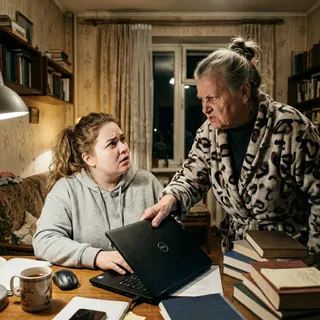







Share how the story made you feel
0Comments appear after a quick automatic check. Please no links, ads or personal data.
Next to your name we show your country, determined from your IP address; the address itself is never shown, and only a hashed fingerprint of it is kept to stop spam.