
 Let’s Keep It Real
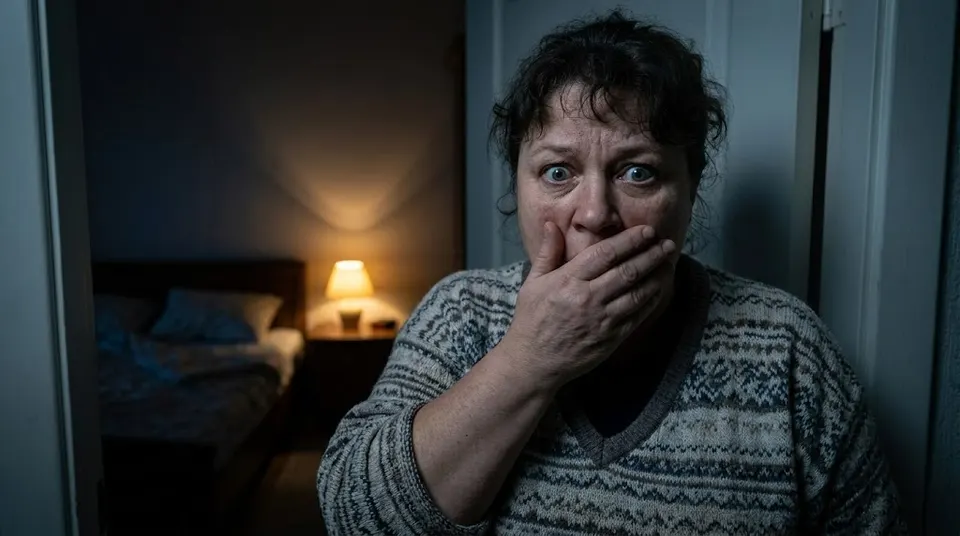
When I found five condoms in my husband’s car, I decided to teach him a lesson he wouldn’t forget. I stuffed them with hot chili pepper. What happened next left everyone around us stunned.
After forty-five years of marriage, my husband somehow ended up in the ER in a situation so embarrassing even the nurses were trying not to stare. His secret girlfriend was yelling in the parking lot loud enough for half the county to hear. I’m sixty-seven years old, and my lawful husband, Kenneth Morrison, learned the hard way that crossing me comes at a price.
I’m not someone who enjoys airing private business in public. My mother raised me better than that. But some stories ought to be told out loud. Maybe somewhere there’s another woman standing in her kitchen, holding herself together by a thread, wondering when the hurt will finally let up.
I’ve lived for almost forty years in our old brick house on Peach Lane. Around here, if somebody gets sick, the neighbors still show up with casseroles and pound cake. And everybody on the block knows exactly whose hydrangeas won first prize at the garden club last season.
Mine, by the way. Third year in a row. Right after our small wedding, Ken and I moved here and made a life. Back then he was a handsome man—tall, broad-shouldered, silver at the temples, with one of those easy smiles that made people trust him right away.
Women at church used to fuss over him like he was some kind of local celebrity. This is where we raised our only son, Mike. We watched him grow up, get established, and move off to build his tech career in the city.
Now it’s just me and our old orange cat, Biscuit. And until recently, the man I truly believed would be beside me to the end. The day everything changed started out like any other.
It was one of those brutal summer days when the air above the pavement shimmers. The cicadas were going full tilt in the trees. The old ceiling fan in the kitchen pushed warm air around without doing a bit of good.
I was making strong sweet tea the way my mother taught me, the kind that could stand up to a spoon. That’s when Ken casually announced he had a few errands to run. Nothing unusual in that.
Every Saturday he rolled his pride and joy out of the garage—a cherry-red classic car, a restored ’69 model he babied more than some men baby grandchildren. His Saturdays were built around little rituals: a stop by the auto swap meet, a haircut from his barber Joe, and a round of neighborhood gossip with the other retired men.
“Ellie, don’t wait lunch on me,” he called, jingling his keys. He was the only one who ever called me that. Once upon a time, I thought it was tenderness.
“Might swing by Dan’s too—he’s selling off some old fishing gear,” he added on his way out. “Sure, go ahead,” I said, drying my hands on my apron. I mentioned that my book club ladies were coming by around four.
He gave me a distracted kiss on the temple, then the screen door squeaked shut behind him. Saturdays used to be our day. For years we’d eat lunch together out back and watch the birds fight over the feeder.
We used to laugh at the chickadees shoving each other around like tiny old men at a hardware store. But if I’m honest, the warning signs had been piling up for months. Late meetings. New cologne. Phone calls taken outside because “the reception’s better out there.”
I just didn’t want to put the pieces together. When you’ve lived with a man for nearly half a century, trust becomes muscle memory. You put the kettle on in the morning. You check the back door at night. You stop questioning the familiar.
I had just put the sugar jar away when I remembered his blood pressure pills. His doctor had been very clear: miss a day and his numbers could spike. And Ken, for all his opinions, was worse than a child when it came to taking medication.
I grabbed the orange pill bottle from the shelf and hurried out toward the garage. I thought I might catch him before he pulled out. But the garage, to my surprise, was empty.
I stood there in the heat, the air like an open oven, and was about to call him when I noticed something by the workbench. His fishing rods were still there.
If he was really headed to Dan’s to talk tackle, why leave the rods behind? Then I remembered him complaining a few days earlier that the glove compartment in the car kept sticking. He said his spare house key and some important papers were in there.
He’d grumbled that if he needed anything in a hurry, the latch wouldn’t open. I happened to have my own key for that compartment on my ring. I figured I’d do him a favor—check the latch, maybe oil it while he was gone.
That’s how a marriage is built, or so I used to think. Small practical acts of care. Ken usually parked the car under the wide carport across the street at our neighbor Doris Avery’s place. Our own driveway got too much direct sun, and he was protective of the paint.
Doris never minded. She’d been batting her eyelashes at my husband for forty years and thought I didn’t notice. The car gleamed in the sunlight like a polished cherry.
I ran my hand over the warm hood. Smooth as glass—exactly how Ken liked it. I opened the passenger door, and the trapped heat rolled over me like a heavy blanket.
The leather seat was hot enough to sting my palms. I leaned in and pulled the glove compartment handle. The lock clicked open easily, as smooth as could be.
So the latch wasn’t sticking at all. That was the first warning bell. The second one practically fell into my hand.
It was a small square packet of shiny foil. Then another. Then five more slid out onto the seat.
Five unopened condoms lay there on the cream-colored leather like evidence in a courtroom. A hard ringing started in my ears.
The whole world shifted in that instant. Doris’s voice from behind her screen door sounded far away. The hiss of a sprinkler and the sound of children down the street faded like I was underwater.
Ken and I had not used condoms since before our son was born. After a difficult delivery, the doctor had advised us not to risk another pregnancy. Ken had taken care of that issue permanently years ago.
And now here they were. The answer to every question I hadn’t wanted to ask. To make matters even plainer, there was a bright smear of lipstick on the passenger-side headrest.
I have never worn lipstick that color in my life. I stood there under someone else’s carport, gripping those foil packets in my damp hand, feeling like the biggest fool in the county.
Forty-five years with Kenneth Morrison. That’s a lot of Christmas trees decorated with the same tired box of ornaments. A lot of Sunday pot roasts bubbling in the Dutch oven. A lot of years believing you know a man.
I slipped the packets into my dress pocket, locked the car back up, and walked home on legs that barely felt attached to me. Doris called out from her porch, asking what I’d been looking for in Ken’s car.
I told her my tomatoes were finally coming in and asked if she wanted to see them later. She started to say something else, but I cut her off with a smile so wide my face hurt. Then I went inside and shut the door behind me.
Once I got back into my kitchen, my knees gave out right there by the door. I sat down hard on the wooden stool and tried to steady myself. The cool tile under my bare feet was the only thing that still felt real.
The old ceiling fan clicked lazily overhead with every turn. From where I sat, I could see our whole life spread out around me. The refrigerator was covered with Mike’s school pictures and postcards from trips we took years ago.
The heavy china cabinet held my mother’s good dishes, the ones we only brought out at Christmas and Easter. Above the stove hung a wooden plaque my sister Susan gave us for our twenty-fifth anniversary. It said, “Bless This Home.”
That felt like a bad joke now. In the living room, Ken was everywhere. His favorite recliner still had the deep worn-in shape of him.
On the coffee table sat a neat stack of hunting and fishing magazines. His little trophies for bass and crappie lined the mantel like toy soldiers. I’d dusted them for decades.
I ironed his church shirts. I knew exactly which foods gave him heartburn. And all the while he had been carrying on a second life out of the glove compartment of an old car.
The microwave clock blinked 11:32. His made-up errands would probably keep him gone another hour, maybe two. Especially if he’d gone straight to her, whoever she was.
For one ugly second I pictured her. Younger than me, of course. Lighter, freer, less burdened. Maybe someone from his social club. Maybe somebody from church. Maybe somebody who laughed with him about his foolish wife at home.
I stopped that line of thinking before it could run wild. Women like me were raised to pull ourselves together by doing something useful. So I took out a clean pitcher and made a fresh pot of tea.
I brewed it strong, added plenty of sugar, and let my hands do what they’d done a thousand times before. As the tea cooled, a plan began to take shape.
Not the whole plan. Just the beginning. I picked up the phone and called Rita Wallace, our neighborhood news service disguised as a woman. Rita could spread information faster than the internet if properly motivated.
“Rita, it’s Eleanor. I’ve got an idea, and I need your help,” I said. “Our anniversary is coming up, and I want to surprise Ken.” Rita squealed like I’d handed her front-row tickets to a scandal.
She asked how many years we were celebrating. “Forty-five,” I said, and the number tasted bitter in my mouth. We agreed to quietly gather close friends and family at the community center the following Saturday.
After I hung up, I sat there rolling one of those foil packets between my fingers. The silver caught the light from the window and seemed to mock me. I had been a good wife. A faithful one.
I sat beside him through layoffs when he spent six months stomping around the house in a black mood. I nursed both his bad knees and one very private male health scare. I brought my dying mother into our home when she had nowhere else to go.
I listened to him complain about the medical equipment in the guest room while she was fading. I had earned better than this. Much better.
The screen door on the porch squeaked suddenly. I barely had time to shove the foil back into my pocket before Ken walked in carrying a bag from the hardware store. He wore his usual breezy smile.
“Ellie, why are you so flushed? AC acting up again?” he asked. I looked at the man I had built a life with. Then I smiled the way women my age know how to smile when they are hiding something important.
“No, Ken,” I said evenly. “Everything’s working just fine.”
That night I didn’t sleep. I lay beside him and listened to his steady breathing while the ceiling fan clicked overhead like a metronome. Through the open window came the smell of dust and hot leaves cooling in the dark.
Somewhere down the street a dog barked. Everything sounded normal. But between us on that mattress lay a cold gap as wide as a lifetime. Funny thing is, we bought that expensive bed because of his back.
Ordinary objects have a cruel memory. They hold on to everything you wish you could forget. In the morning I moved through the kitchen on autopilot—fried eggs, brewed coffee.
Ken always took his coffee black with one spoonful of sugar. I slid his plate in front of him and didn’t touch my own. I just watched him unfold the sports section the way he always did.
He was talking about a football game from the night before, worked up over a late penalty call. I nodded in the right places. My voice stayed steady. My hands didn’t shake.
You’d never have guessed I’d found proof of his affair the day before. “You going to your club again today?” I asked lightly, setting his mug on the coaster.
“Yep,” he mumbled, patting his stomach. “Need to stay in shape. The other guys are starting to give me grief.” I thought to myself that I knew exactly what he was staying in shape for.
“What time should I expect you back?” I asked. “Don’t wait lunch on me,” he said. “We’ll probably grab a bite somewhere after.” Then he winked at me like we shared some private joke.
I smiled back the way seasoned women do when they’ve already made up their minds. Once the door shut behind him, I sat down by the window and watched the birds brawl at the feeder.
They’re tiny things, but they fight like they mean it. I’ve always admired that. Even when the other bird is bigger, they don’t back down.
Neither would I. I reached for the phone and called my sister Susan in Florida. If there was one person in the world I could tell the truth to, it was her.
“Sue, I need you not to sugarcoat this,” I said. “Did you ever think Ken was cheating on me?”
There was a long silence on the line. Then she sighed. “Ellie, I’m sorry, but yes. I did.”
She reminded me of our silver anniversary party at that nice restaurant years ago. Ken had disappeared for nearly an hour and come back with his tie crooked. She’d wanted to pull me aside that night and say something.
“But you looked so happy,” she said. “I couldn’t bring myself to ruin it.”
And just like that, an old memory clicked into place. That night he’d claimed his blood pressure had spiked and he needed to lie down in the hotel room. I’d been worried sick about him mixing medication with wine.
I had been so naive. “What are you going to do now?” Susan asked. “I’m not fully sure yet,” I said honestly. “But whatever happens next, it’s going to happen on my terms.”
After I hung up, I did something I’d always considered beneath me. I took the keys to my old sedan and drove out to follow my husband.
I bought the worst gas-station coffee in town and parked across from his upscale golf club. Then I waited, sipping bitterness from a paper cup and watching cars like a low-budget private investigator.
At 9:30 sharp, our cherry-red classic rolled through the gates. Ken got out, slung his golf bag over his shoulder, and headed inside.
I figured I’d see him on the course within ten minutes. Instead, fifteen minutes later, he came back out. No clubs. No buddies. Just a quick, purposeful walk.
He got into the car and drove off—not toward the greens, but out of town. I followed at a safe distance, my heart pounding hard enough to hear.
We left the suburbs and turned into a gated development full of big houses and bigger fences. Ken pulled into the circular drive of a large, expensive-looking home with a fountain out front and landscaping straight out of a magazine.
He sat in the car for a second, checked himself in the mirror, squared his shoulders, and walked to the front door with the spring in his step of a man who believes he is expected.
The door opened before he even knocked. From where I sat, I couldn’t see who was standing there.
All I saw was his face light up. He looked as happy as a boy on Christmas morning. Then he disappeared into the cool quiet of that house.
I sat in my stuffy car gripping the steering wheel until my knuckles went white. The air conditioner hissed uselessly. My throat felt tight with nausea.
But along with the hurt came something else—cold, hard, and clear. Not hysteria. Not panic. Just calculation.
I took out my phone and photographed the house number, the gate, the address marker by the brick pillar. Then I saved the location in my maps app.
“That’s my first piece of proof,” I said out loud to nobody. Then I turned the car around and drove home.
On the way back I passed a billboard for a divorce attorney. Big bold letters: HAS YOUR HUSBAND CHEATED? WE’LL HELP YOU PROTECT WHAT’S YOURS. A stern man in a suit pointed at traffic like an old Uncle Sam poster.
I gave a dry little laugh. At that moment, property was the least of my concerns. What I wanted was the truth. And justice.
Not the kind measured in percentages and court fees. Something else. Something cleaner. When I got home, I poured myself a little cherry cordial from the bottle we usually saved for holidays.
I took the glass out to the backyard and stood by the bird feeder. The chickadees were at it again, feathers flying over sunflower seeds. I raised my glass and made myself a quiet promise.
“No more softness,” I said. By evening, I heard Ken’s car pull up at the gate.
The door slammed. His key scraped in the lock. I sat on the porch in my wicker rocker and looked out at the yard like I didn’t have a thing on my mind.
He came in smiling, set a shopping bag on the table, and draped an arm around my shoulders. His hand felt warm, familiar, and entirely foreign all at once.
“Ellie, why so serious?” he asked. “This heat getting to you?” “Just a long day,” I said calmly.
He didn’t hear a thing in my tone, and that was just as well. By then, the outline of my plan was already there. Not a screaming match. Not a scene at somebody’s front gate.
I’m not built that way. What I had in mind was quieter. More precise. The work of a woman who had been underestimated for too long.
The next day was Sunday, and as always, we went to church. We took our usual spot on the third pew from the right. We listened to the sermon, and I watched him from the corner of my eye.
He stood there nodding along, certain his comfortable little world was still intact. It wasn’t. It had already cracked straight down the middle.
That morning, Pastor Allen happened to be preaching on loyalty and betrayal. He said the faithful would be blessed, and those who chased pleasure at the expense of others would answer for it in time.
Ken nodded solemnly, as if he were taking notes. He smelled of new cologne and something faintly sweet underneath it, like he’d tried to cover another woman’s perfume.
When I slipped a bill into the offering plate, he made a point of doing the same with a crisp larger one, loud enough for Mrs. Wilcox behind us to notice. I kept my eyes on the stained-glass window and thought about how justice is often quieter than people expect.
After the service came the usual handshakes and small talk in the church courtyard. Rita chattered on about how nicely the anniversary surprise was coming together. She listed who had been invited and who was bringing what.
Mrs. Wilcox tilted her head and asked if I was feeling all right because I looked pale. I smiled the way choir women smile. “Just my blood pressure acting up a little,” I said.
She offered to bring over one of her homemade mint coolers later if I needed it. It was a funny thing to hear outside church, but kind in its own way. In hard times, little kindnesses matter.
On the drive home, Ken turned on the oldies station. Some singer was wailing about heartbreak, which felt a little too on the nose. Then he broke the silence.
“Hey, Ellie, what do you say we finally take that cruise?”
“Maybe one of those Caribbean ones,” he said in a suspiciously cheerful voice. “While we can still get around, we ought to enjoy ourselves, right?”
That stung. I had suggested a cruise myself the previous spring and quietly started setting money aside for it. Ken had waved the idea off as boring. And now suddenly he was offering it like a generous husband.
I turned and looked out the passenger window. Young families pushed strollers along the sidewalk. Teenagers zipped by on scooters. Couples walked hand in hand. I found myself wondering how many of them were living in two realities at once.
“I’ll think about it,” I said evenly. Back home, he settled into his recliner in front of the television as if nothing in the world mattered more than sports highlights.
I brought him a mug of tea and stood by the kitchen window. That was when I realized I could not live another day not knowing her name. I needed a real person, not a shadow.
I told Ken I was going over to Rita’s to talk about flowers for the party. Instead, I got in my car and drove straight back to the gated neighborhood.
It was quiet there on a Sunday, almost unnaturally so. A landscaper was mowing a lawn on the next property. The security guard in the gatehouse was scrolling on his phone. Water from the fountain in front of the house made a soft steady sound.
I parked a little way off and pretended to text. I waited an hour and a half before the front door finally opened.
A woman came out who was younger than me, yes, but not young. Maybe late fifties. Stylish. Well-kept. She wore expensive white linen pants and a silk blouse. Her hair was cut in a perfect bob, and a string of pearls rested at her throat.
She moved with the easy confidence of someone who never checks the total at the register. She got into a polished sedan parked nearest the flower bed and drove toward downtown. I followed at a distance.
She stopped at an upscale shopping center in the city. A valet took her keys. She walked inside like she owned the place. I tucked my plain handbag under my arm, smoothed my dress, and followed.
The place was all marble floors and cold air-conditioning and storefronts full of clothes that cost more than my monthly Social Security check. She went into a high-end boutique I knew only from magazine ads.
Inside, she browsed with a practiced eye and held up a deep blue dress against herself. A sales associate hurried over with the kind of polished smile you only get in expensive stores.
“Mrs. Preston, it’s so lovely to see you again,” the girl said. “How is Dr. Preston doing?” “Buried in patients as usual,” the woman replied with a sigh.
She said she was looking for a dress for a charity event at their private clinic. “If I’m going to ask people for donations, I might as well look the part,” she joked. They both laughed.
I stood nearby pretending to study handbags while cold dread spread through me. Now I knew her name: Elizabeth Preston. And I knew she was married to a successful doctor.
So this wasn’t some foolish fling with a lonely widow or a younger woman looking for attention. This was a polished, established woman with a full life of her own.
I followed her through the shopping center for a while longer, though “followed” makes it sound braver than it felt. Really, I trailed behind her with my stomach in knots and my nerves shot.
She made a few expensive purchases and accepted the shopping bags without a blink. Then she sat down at a café on the upper level and ordered a glass of white wine.
She checked her gold watch and waited. I already knew who for. But when I saw Ken walking toward her anyway, my heart still lurched.
He bent and kissed her on the cheek just a little too long for daylight and public seating. I ducked behind a large potted palm like a fool in a sitcom. I couldn’t hear what they were saying, but I didn’t need to.
Their hands found each other across the table. He brushed a loose strand of hair from her face with a tenderness that made me feel physically ill. She laughed softly, the kind of laugh a woman gives when she feels chosen.
A security guard glanced at me suspiciously from across the atrium. I gave up my hiding place and walked out as fast as I could without running.
Outside, the heat hit me like a wall. I made it to my car on autopilot. My hands shook, but I held the wheel tight.
By the time I turned onto our street, Ken’s cherry-red car was already back under Doris’s carport, gleaming innocently in the sun like it had never gone anywhere at all.
Through the open kitchen window I could see his shadow moving around inside our house. He was making tea and slicing bread as calmly as if he’d spent the day at Home Depot.
I stood on my own front step and understood that I was no longer the same woman who had left that morning. I took a breath and went in.
He turned with that same easy smile. “Ellie, where’ve you been so long? Still at Rita’s?” “Yes,” I said, setting my bag down in the hall. “We worked out the flowers for the hall.”
“That’s my girl,” he said warmly. “So what’s for supper?” I opened the refrigerator and stared at the shelves until my voice came out steady.
“Fried potatoes with mushrooms and a salad,” I said. “Will that do?” “Of course it will,” he said, settling into his chair. I could hear the newspaper crackle in his hands.
I pulled my hair back into a tight bun and set my heavy cast-iron skillet on the stove. The ordinary sounds of cooking helped hold me together.
I didn’t ask him where he’d spent the afternoon. He didn’t ask whether I’d really been at Rita’s. We both wore the silence like a pressed suit—tidy on the outside, rotten in the seams.
Later, changing in the bedroom, I caught sight of myself in the mirror. My eyes looked startlingly clear. My mouth was set in a thin straight line. I looked tired, yes. But not broken.
I leaned against the doorframe and listened to the house. Biscuit was purring somewhere near Ken’s chair. The wall clock in the kitchen ticked steadily on.
I no longer had to guess who she was. I had her name, her address, her status, her face. All that remained was to decide what to do with the truth.
But the ending to this story would not be written by Ken. I got into bed, turned off the lamp, and for the first time since finding the condoms, I didn’t cry.
Inside me there was only a ringing emptiness and a clear sense of direction. The next morning, when Ken tossed off his usual “don’t wait up,” I would be using a different phone. A new one. One he didn’t know about.
And that, I thought, was when the real accounting would begin. Monday morning he got up early and whistled in the shower like a man with a clear conscience.
He knotted a nice tie in front of the mirror and announced his plans. “Ellie, I’ve got a board meeting at the senior center today,” he said. “Probably dinner after with the guys.”
I told him I understood. “Want me to pack you something for later?” I asked. “No need,” he said, leaning down to kiss my forehead. Then he gave me his usual line: “Don’t wait dinner on me.”
The second the lock clicked behind him, I moved. I grabbed my purse, my keys, and headed out.
I didn’t go to any store near our neighborhood where somebody might recognize me. I drove out to a big-box home improvement center off the bypass. There I bought a cheap prepaid flip phone and paid cash.
I threw the packaging away in the trash can outside, sat in my hot car, assembled the phone, and dialed a number I’d copied from an old address book. It was listed under “K. Burns.”
Kendra Burns was a private investigator who ran a small agency downtown. Years ago, I had worked with her mother at the elementary school. When she answered, her voice was brisk and professional.
“Kendra, this is Eleanor Morrison,” I said. “I used to work with your mother, Linda.” Her tone softened immediately. She said she remembered me well.
“Your pecan bars at faculty meetings were legendary,” she said. Then she asked how she could help. I took a breath and gave her the short version.
“I need proof that my husband is having an ongoing affair,” I said. “Photos. Dates. Places. Clear enough that there’s no room for denial.” I added that I needed it done quietly and without tipping him off.
After a short pause, Kendra told me to come to her office at two o’clock. It was above a twenty-four-hour dental clinic downtown. “We’ll discuss the details and the fee in person,” she said.
I had nearly three hours to kill before the appointment. I called Rita from a side street instead of pulling into her driveway. “How are things coming with the party?” I asked brightly.
“Oh, Eleanor, it’s all coming together beautifully,” Rita whispered loudly, as if fences had ears. “The community center director gave us the best time slot.” She said the blue tablecloths and string lights were already lined up.
She also told me the guest list kept growing. “Everybody is so excited,” she said. “Ken is going to be thrilled.” “Just keep your mouth shut,” I told her. “It has to stay a surprise.”
She swore she wouldn’t say a word. After that call, I stopped at a pharmacy on the other side of town.
I bought a few perfectly legal over-the-counter products for digestive upset. Nothing dangerous. Just the kind of things that can make a person miserable and inconveniently urgent for a while. Powder packets, herbal tea, a small bottle of drops.
At the register I gave the young pharmacist a rueful smile and said my husband’s stomach had been touchy lately. She nodded sympathetically and bagged everything up.
Back home, I hid the purchases deep in the linen closet behind the guest towels and holiday pillowcases. I promised myself I would be careful. No poisons. No prescription drugs. No real danger.
This was not about sending anyone to the hospital. It was about staging a moment. A very specific one. And I intended to do it with care.
Until two o’clock, I sat in the living room and sorted through old family photo albums. My fingers knew those thick pages better than my mind did.
There was our wedding—me in a simple white dress, Ken with dark hair and a hopeful face. There he was holding baby Mike with the expression of a man who had just realized infants don’t come with instructions. There were backyard cookouts, rainy football games, birthdays, Christmas mornings.
I chose a dozen of the best photos. They would be perfect for a sentimental anniversary slideshow. Let everyone see the picture of family life we had presented for years.
At two o’clock sharp, I climbed the narrow stairs above the dental office.
Kendra’s office was small, windowless, and all business: two cheap chairs, a battered desk, and a good laptop. She was a fit woman with short hair and sharp eyes, holding a black folder.
She got straight to the point. I laid out everything I had learned so far—the condoms, the lipstick, the address in the gated neighborhood, the shopping center, the café, the name Preston.
Kendra took notes quickly and asked practical questions: car make, color, timing, clothing, routines. “How much?” I asked finally.
“Three thousand dollars,” she said plainly. “Half up front, half on delivery if I get what you need.” She estimated a few days for the work.
I opened my purse and took out fifteen hundred dollars in cash. It came from the emergency envelope I kept tucked in my dresser drawer—my mother’s habit, passed down to me. Always have something set aside for a hard day.
“This enough to start?” I asked. “Yes,” she said, taking the money and locking it away. “And frankly, a doctor’s wife will be easier to track than most people. Wealthy people leave a trail.”
She told me there were three Dr. Prestons in the county who fit the initials she’d already found—one pediatrician, one pathologist, and one well-known plastic surgeon. “My money’s on the plastic surgeon,” she said dryly.
She promised to confirm the husband’s identity, clinic, home address, and schedule. Then she asked, “What exactly do you plan to do with the information?”
I knew the answer, but I wasn’t ready to say it aloud. “I want the truth first,” I said. “Then I’ll decide.”
Kendra nodded. “We’ll document meetings, movements, and communications where possible,” she said. “No illegal hacking. But people are careless, especially when they think they’re clever.”
“Are you sure you want to take this all the way?” she asked. “I’m sure I want facts,” I said. “What I do with them comes after.”
On the way home, I stopped at a copy shop that stayed open late and asked about large-format printing on glossy stock. I didn’t print anything yet. I just learned the prices and hours.
I wanted to come back later, after dark, when no one I knew might see me. Then I hid the new phone in a zippered pocket inside my purse and left my regular cell phone out in plain sight at home.
Let Ken see what he expected to see. Let him feel safe. That evening he came home earlier than usual, jangling his keys and in suspiciously good spirits.
He announced that his meeting had been canceled because the chairman had come down with a terrible stomach bug. He chuckled at that in a way I filed away for later.
“Ellie, let me take you out tonight,” he said suddenly. “There’s that Italian place downtown on Main. They do a great pasta.” “Why not?” I said with a small smile. “We’re not getting any younger.”
He was delighted by how easily I agreed. He opened the car door for me like a gentleman and drove us into town.
The restaurant was crowded and softly lit, with live music in the corner. The waiter recognized Ken immediately and asked if we’d like the same wine “Mr. Morrison usually orders.”
The pasta really was excellent. I even let myself have a full glass of dry red wine. Across the table we talked about garbage pickup, the weather forecast, and whether Doris’s cherry tree would produce this year.
All the while, another conversation ran beneath the surface without a word being spoken. That night Ken slept deeply, snoring in the same steady rhythm he had for forty years.
I lay awake with my eyes open, counting what had been done and what still remained. In the morning he tossed off his usual line again: “Don’t wait dinner on me.”
After he left, the house felt hollow and loud with silence. I went into the kitchen, switched on the kettle, and felt Biscuit rub against my ankles.
That was when the hidden phone in my purse vibrated. A text from Kendra lit up the little screen: “Your packet is ready. You can pick it up.”
I sat down hard on the stool and wrapped both hands around an empty mug just for something to hold. Inside me, everything went very still.
No more suspicions. No more guesswork. Soon I would have dates, photos, records—facts. I threw a shawl over my shoulders, grabbed my bag, and headed out.
As I left, the old house gave a quiet creak from somewhere deep in the floorboards. It sounded like a clock just before the strike.
Kendra met me in her office without much preamble. A thick folder sat on her desk, along with a sealed envelope with my name printed neatly on the front: ELEANOR MORRISON — PERSONAL.
“Everything you asked for is in here,” she said, sliding it toward me. She motioned for me to sit. I did, folding my damp hands in my lap so she wouldn’t see them shake.
Kendra opened the folder and spread the photographs across the desk. In the first one, Ken and Elizabeth Preston were embracing by the wrought-iron gate of her house.
In the next, they were coming out of a discreet apartment building downtown. He was carrying her shopping bags and jacket. She looked relaxed, pleased, perfectly at ease.
Then came a dim restaurant booth with two half-empty glasses of white wine and their hands laced together on the table. Then grainy shots of our car parked near a city park at night, two silhouettes leaning into each other in the front seat.
“They meet regularly,” Kendra said in her matter-of-fact voice. “Three or four times a week. Usually at her house while her husband is operating. Sometimes lunch. Twice, a hotel.”
She tapped a printed chart. “Dates, times, locations—all here.” I asked quietly whether there was more.
“Yes,” she said. “Financial records and email.”
It turned out Ken had been using a secondary email account for personal arrangements. Nothing illegally obtained—just carelessness on his part and records tied to shared devices and payments. In those messages were plans for the next month.
Among them were two paid airline tickets to Cyprus. One-way.
I sat there looking at my life reduced to black print on white paper. Kendra turned another page and showed me a summary of bank activity.
For the past eighteen months, Ken had been moving small amounts of money into a separate account. Small enough not to draw attention in the household budget. Together, it added up to roughly $18,000.
“I understand,” I said, and my voice sounded flat even to me. Kendra handed me a flash drive. “Everything is backed up here,” she said. “Photos, logs, copies of records.”
Then she passed me the paper file in a heavy envelope. “You could take this straight to a divorce attorney,” she said. “Or do whatever you think is best.”
She looked at me with something close to pity and asked if I was all right. “I will be,” I said, standing slowly.
I thanked her the way you thank a professional who has done exactly what you hired her to do. “Your mother would be proud of you,” I told her. And I meant it.
On the way home, I stopped at an office supply store and bought poster board, a glue stick, and the thickest red markers they had. Then I went to the copy shop and ordered enlargements of the most damning photos.
I stood there watching the printer spit out my pain on glossy paper. There was Ken lowering his head toward another woman’s shoulder. There he was slipping out of a hotel, looking over his shoulder. There he was smiling at her with a happiness I had not seen directed at me in years.
I rolled the prints carefully and slid them into a plastic tube. At home, I spread everything out on the dining room table—the same table where we had served Easter ham and Thanksgiving pies.
There I made my poster. Under each photo I wrote short, hard labels in red marker. “Her house.” “Hotel.” “Private email.” “Cyprus — one-way.”
I did it without tears. Just facts. When I finished, I called Rita from the landline to confirm the final details of the party.
“Everything’s ready,” she whispered excitedly. “The hall is ours from three to eight. The lights are up. Pastor Allen said he’d stop by and say a few words about lasting marriage.”
She added that Mike was flying in secretly too. “It’s going to be such a wonderful surprise for your husband,” she said. “Oh, I know,” I answered, gripping the receiver tighter.
“And remember—this stays quiet.” Rita swore again she wouldn’t breathe a word. There was one last detail left: the cake.
I drove clear across town to a bakery where nobody knew me. I ordered a large three-tier anniversary cake covered in white frosting and cascading sugar flowers.
The sort of cake people order for milestone celebrations. But the topper was not a smiling older couple. It was a single upright woman with her chin lifted and her back straight.
The young woman behind the counter looked up from the order form. “Is this for some kind of special occasion?” she asked.
“A very special one,” I said. “It’s for the beginning of my new life.”
That evening Ken came home much earlier than usual. He was holding his stomach and looked miserable. He said he’d been hit with sudden intestinal trouble.
“Must’ve eaten something bad at lunch,” he groaned, sinking onto the couch. I nodded sympathetically and suggested there might be a stomach bug going around.
I told him to drink tea and lie down. “You’d better take it easy Thursday too,” I added. He did exactly that.
All Thursday and half of Friday, Ken shuffled between the recliner and the bathroom looking pale, angry, and helpless. He reminded me of a spoiled little boy who’d lost control of the day.
And I, as any attentive wife might, brought him broth and crackers and tucked a blanket over his legs. I even offered to call a doctor if he needed one.
I knew exactly what I was doing, of course. And I knew exactly what I was not doing. I kept it mild. No dangerous amounts. No real medical risk.
This was never about harming him. It was about timing. About making sure the truth arrived with a little extra force.
Between my careful nursing and his repeated trips down the hall, I finished scanning old family photos for the anniversary slideshow. Our wedding. Mike’s first day of school. Backyard cookouts. Rainy football games. The old couch. My blue china cups.
Let everyone see the picture of the life we had supposedly lived. Let the crack in it be heard by the whole room. Friday evening, Ken came into the kitchen looking washed out and sheepish.
“Ellie, I’m sorry if I’m not much use tomorrow,” he said. “This thing has really knocked me flat.” “That’s all right,” I said calmly, looking him straight in the eye. “The main thing is that you show up.”
I explained again where the community center was and told him someone would meet him at the door. Then I reminded him to take his blood pressure pills in the morning.
He nodded obediently, as he had a thousand times before. And looking at him, I realized the worst part wasn’t even the affair.
The worst part was how easily he slipped back into the role of husband every evening. Like pulling on a pair of old slippers. He could lie all day and still ask what was for dinner with a straight face.
The night before the anniversary, I slept deeply for the first time in days. I was too tired to dream. Saturday morning the house greeted me with its usual creaks and the smell of strong tea.
I set Ken’s favorite mug in front of him with a slice of lemon on the saucer. Beside it, casually, I placed a glass of dissolved stomach powder.
He came into the kitchen pale but shaved and dressed, which told me he intended to keep up appearances. “How long is this thing supposed to last?” he asked, lowering himself into the chair.
“Two hours, maybe three,” I said. “Rita’s handling most of it.” He drank the tea in quick swallows, then finished the stomach mixture and glanced nervously at the clock.
I watched him button his belt and tie his shoes in his dress slacks and light polo shirt. Funny how a whole life can fit into those little morning motions. Funny how a man can leave home for the last time and not even know it.
By two o’clock, the community center hall was glowing. Blue tablecloths covered the long tables. String lights hung from the ceiling. Platters of food sat under plastic wrap waiting for guests.
In the corner, the big cake waited in its box. My poster board was hidden under a dark cloth and propped where everyone would see it. Rita buzzed around the room like a woman running for office.
Mike arrived early and stood in the doorway scanning the crowd until he found me. I smiled at him from across the room, though my heart was beating so hard it felt lodged in my throat.
I picked up my phone and called Ken. “Can you come a little early?” I asked in a flustered voice. “The light in the men’s room burned out, and nobody here can reach it.”
“You’re the only one who knows how to fix these things,” I added. He groaned dramatically into the phone, but I could hear the pride under it.
“Fine,” he said. “Give me fifteen minutes.” I set the phone down and closed my eyes for one long breath.
Then I laid my hand on the rough dark cloth covering the poster. The room was filling with cheerful voices. Guests laughed, chatted, adjusted chairs.
At last the heavy front door opened with a long creak. There stood Ken in his light polo shirt, pale and rumpled, one hand still pressed to his stomach.
“Ellie, where’s this stupid light fixture?” he called irritably. At that moment the rest of us were still hidden behind columns and folding screens.
The hall was quiet except for the rustle of tablecloths. Somebody stifled a laugh. The string lights flicked on. Then Rita clanged a spoon against a glass and shouted, “Surprise!”
The room erupted in cheers and applause.
The hired keyboard player struck up a little fanfare in the corner. Above the stage hung a bright banner in gold letters: HAPPY 45TH ANNIVERSARY, ELEANOR & KENNETH.
Ken froze where he stood. He forced out a smile so awkward it looked painful. Then his eyes found me, and for one split second I saw it there—panic.
At that exact moment, our son Mike stepped out of the crowd. “Dad, surprise,” he said warmly, and gave him a quick hard hug. Ken nodded stiffly.
Rita kept bustling around, arranging people for photos, handing out sparklers and napkins. Near the stage, Pastor Allen cleared his throat and stepped up to say a few words.
“Friends,” he began solemnly, waiting for the room to settle. “It is a rare blessing to witness a marriage that has endured for forty-five years.”
He spoke about faithfulness, patience, and mutual care—the three pillars, he said, of a good home. As he talked, he looked over his glasses at the two of us standing there side by side.
Inside me, everything was flat and cold and steady. His words sounded far away, like church bells from another town. Beside me, Ken shifted from foot to foot.
A bead of sweat appeared at his temple. He leaned toward me and whispered through clenched teeth, “Ellie, where’s the restroom?”
“Down the hall, left at the end,” I said, with the faintest smile. “Don’t worry. You’ll make it.” He gave a quick tight nod and slipped between the tables trying not to draw attention.
Pastor Allen kept talking about the blessings of loyalty while a few sentimental guests dabbed at their eyes. Rita and the catering girls fussed with the satin ribbon around the cake.
The heavy door to the hallway swung shut behind Ken. For the next twenty minutes I moved calmly through the room, checking glasses, straightening candles, reminding people to have their phones ready.
People began to glance around and ask where the guest of honor had gone. I smiled and said men often get overwhelmed at these things.
Finally Mike came over and asked quietly, “Mom, is he okay?” “He’ll be back,” I said with complete confidence. And he was.
A few minutes later Ken reappeared. His damp gray hair clung to his forehead. His face had gone the color of wet cement. The smile on it looked pasted there.
I handed him a tall glass of ginger ale and said loudly that it would settle his stomach. He took it with shaking hands and drank deeply.
“You all right?” I asked, looking straight into his eyes. “I’m fine now,” he said, trying to square his shoulders.
Just then Rita clinked her spoon against the glass again. “Everybody gather around the stage,” she called. “It’s time to cut the cake.”
She waved me over. “Eleanor, come on—we’re waiting on you.” The huge cake was rolled to the center of the room with all the ceremony of a state occasion.
It was three tall tiers of white frosting and sugar flowers. Ken squinted at the topper, confused. There stood the little figurine I had ordered: one woman alone, upright and proud.
“What is this supposed to mean?” he muttered sharply. “Just wait,” I said. “You’ll understand.”
We took our places beside the cake. Some of the guests were already gearing up to shout “Kiss! Kiss!” the way people do at anniversary parties.
Others held up their phones for the perfect shot. I raised my hand and the room gradually quieted. “Just a moment, please,” I said, loud enough to carry without a microphone.
“Before we cut this beautiful cake, I’d like to say a few words.” The noise in the room ebbed away. I looked around at the faces—friends, neighbors, church people, family. No strangers.
Pastor Allen gave me an encouraging nod. “A good home rests on truth,” I began. “On respect. On trust. On keeping your promises. And on not hiding things from your spouse. Isn’t that right, Ken?”
Automatically, he nodded. The way he had nodded to me for years. “For forty-five years, Kenneth Morrison and I built a life together,” I said.
“We had a small wedding, a son we loved, hard times, illnesses, lean years, and good ones. We built a home. We planted a garden. We raised a family. And all that time, I believed I knew the man I was walking through life with.”
Someone in the crowd coughed awkwardly. A low murmur moved through the room. Ken swallowed hard and put a hand back on his stomach.
“Then I learned there had been another life running alongside ours,” I said clearly. “A hidden one.”
With that, I pulled the dark cloth off the poster board in one sharp motion. The room went still.
There they were in large glossy photographs: at the gate of her house, in the hotel lobby, at the café with their hands clasped. Under each photo, my red labels: HER HOUSE. HOTEL. PRIVATE EMAIL. CYPRUS — ONE WAY.
The whole room inhaled at once. It sounded like one giant startled body. Mike stared at his father with wide, wounded eyes.
“Dad?” he said hoarsely. “Tell me that isn’t true.” Ken opened his mouth, closed it, opened it again. No sound came out.
Sweat ran down his temples. He shifted as if to bolt for the door. And then, deep in the silence, came a sound from somewhere in his unhappy digestive system.
Short. Loud. Unmistakable. The nearest table rattled. “Eleanor,” he whispered in horror. “What did you do?”
“About as much as you did to me,” I said quietly. He looked wildly toward the hallway, but it was too far and there were too many people.
The keyboard player hit a wrong note and stopped. Pastor Allen took his hand off the lectern. Rita dropped her spoon, and it clattered across the floor.
Ken took one desperate step. Then came a second, longer, far more conclusive sound. At that point, everyone in the room understood that he was not going to make it to the restroom.
A wave of shocked movement passed through the crowd. People recoiled. Somebody gasped. The music died completely, leaving only a terrible silence.
I’ll spare you the uglier details of how the evening ended. Some things are better left behind closed doors, even when a man is paying for his choices in public.
The director of the community center rushed in, wrinkling his nose and looking appalled. I apologized politely and promised we would cover professional cleaning. I called it an unfortunate stress-related incident and nodded to the catering girls.
I thanked them for their excellent work and told them we could manage the rest ourselves. My voice sounded as calm as if I were emceeing a school banquet.
“Folks, I think it’s best if we call it a day,” I announced. “Thank you all for coming.” Guests began to file out quickly, whispering, avoiding eye contact, clutching purses and paper plates.
Some squeezed my hand in sympathy. Some couldn’t bring themselves to look at me at all. But everyone left fast.
Only Mike stayed behind with me in the rapidly emptying hall. He sat down heavily in a chair and put his hand on my shoulder like he thought I might collapse.
“Mom,” he said quietly, “why didn’t you tell me?” “Because this was mine to handle,” I answered. “Some things a grown woman has to finish for herself.”
He hesitated, then asked the obvious question. “Did you give him something?” “A little,” I said honestly. “Nothing dangerous. Just enough to make the timing memorable.”
Mike let out a breath and gave a short disbelieving laugh. “Remind me never to get on your bad side,” he said. “You’re a good man,” I told him, touching his cheek. “You’re not your father.”
The hallway door creaked open again. Out came Ken, pale, shaking, and reduced to something pitiful. There was a stain on his light dress pants that no detergent on earth was going to fix.
He stopped several feet away, unable to meet my eyes. “Eleanor,” he said hoarsely, “we need to talk. Privately.”
“You’ve gone too far,” he added weakly. “I know I’m at fault, but this—this was cruel.” “Cruel,” I repeated. “That’s an interesting word.”
“Cruel is keeping a second set of keys to another woman’s house in your glove compartment.” He drew in a breath as if to argue, but his voice failed him.
Mike stood up and moved between us. “I’m calling you a cab,” he said to his father in a tone so cold I barely recognized it. “You’re not riding home with Mom.”
Ken nodded like a scolded boy. After a moment, he asked in a small voice, “Where am I supposed to go?”
“Ask Elizabeth,” I said. “She has a very large house. Or try the hotel. You seem to know your way around both.”
At that, his shoulders sagged. Mike was already giving the address to a dispatcher. I looked at the man I had lived beside for nearly half a century and felt a strange mix of pity and fresh air.
Freedom smells like a draft through an open window. “By tomorrow evening, you need to be out of my house,” I said clearly. “Take your documents, leave your keys on the table, and we’re done.”
“Eleanor,” he said, finally lifting his head. There was something almost childlike in his eyes. “Could I at least…” He glanced helplessly toward the restroom.
“Go ahead,” I said coolly. “And don’t forget your blood pressure pills. They’re in the bathroom cabinet. Orange bottle. Same as always.”
He shut his eyes for one second, whether from shame or from the realization that I still remembered his medication schedule better than he did, I can’t say.
Outside, a cab honked. Mike held out Ken’s jacket with two fingers. “I’ll walk you to the car,” he said.
Ken took it with trembling hands. Before he turned away, he looked at me one last time. “Ellie,” he said softly, “I’m sorry.”
“That’s not really my department anymore,” I said. “Maybe look for forgiveness wherever those one-way tickets to Cyprus were taking you.”
The two of them walked down the long empty hallway of the community center. The air still smelled of buttercream frosting and the first hint of rain.
A few seconds later, the heavy front door slammed. Then came the muffled sound of a car door closing outside. I stood by the untouched cake and pulled the dark cloth back over the poster board.
I covered it the way you close a book after finishing the hardest chapter. Behind me, a light switch clicked, and half the hall went dark.
The director was already reaching for the second bank of switches. Inside me, everything felt heavy and clean at the same time, like the air before a thunderstorm.
Then my secret phone lit up with a text from an unknown number. “We received the photos you sent. We need to talk. Urgently.”
I looked at it for a moment, then typed back: “There is nothing to discuss. The photos show exactly what happened. Do what you think is right.”
Then I added: “I’m turning this number off now.” I sent the message, removed the SIM card, snapped it in half, and dropped the pieces into an empty sugar bowl on the table.
The hall fell very quiet. The kind of quiet that comes after a loud party, when the balloons are still hanging but nobody has to smile anymore.
A full year has passed since that day. The day we didn’t really cut a cake so much as cut through the lie our marriage had become.
Over the year that followed, things settled in the plainest and fairest way possible. Two days after the party, Ken packed his things, left his keys on the hall table, and moved out.
At first he stayed in Elizabeth Preston’s large house. Later, mutual acquaintances said he ended up in a cramped rental apartment near the senior center. Apparently things between them fell apart quickly.
I never asked for details. I assume Dr. Preston saw the same photographs I sent. How they reached him is not something I feel obliged to explain.
Everybody has their own road to the truth. Ours was divorce. We finalized it about six months later.
It was surprisingly quiet. No dramatic courtroom fight. Maybe Ken was ashamed. Maybe he was afraid more details would come out if he pushed too hard.
The brick house stayed with me, as it should have. So did half of his retirement savings. I kept the dishes, his old recliner, and the garden I had spent years tending with my own hands.
When I signed the last paper in my attorney’s office, I didn’t cry. I just let out a long breath, like someone who had finally reached the top of a steep hill.
Mike started calling more often after that. Sometimes he even came for weekend visits between work trips. He installed useful apps on my phone and laughed at my foolish four-digit password.
He’s even talked about moving back to our part of the state and starting his own business. I listen to his plans now with a feeling I hadn’t had in a long time: simple happiness for someone else’s future.
Not because we are some suffocating “we” again. Just because he is my son, and I am glad to be here for him. Last summer my sister Susan came to stay for a month.
Together we pulled down the old heavy curtains and repainted my bedroom a soft blue. I had wanted that color for years, but Ken always insisted on beige.
We moved the big bed closer to the window so the morning sun would fall right across my pillow. On warm evenings we sat on the porch with little glasses of homemade cordial.
Sometimes I laughed so hard I cried. Susan told me something wise one night. “You’re not just grieving a man,” she said. “You’re grieving the picture of family you built in your own mind.”
Sisters have a way of naming things plainly. The neighbors, of course, had opinions.
Some turned away stiffly when they saw me. Others brought casseroles in solidarity. Rita now shows up every Sunday with a pot of soup so I don’t have to cook if I don’t feel like it.
Mrs. Wilcox came over one evening with the mint cooler she’d promised and stayed to talk. As it turned out, she had lived through something similar in her first marriage—just with less poster board and fewer witnesses.
Pastor Allen gently suggested I take a break from the church choir. Too many people, he said, were uncomfortable with the public nature of what I’d done.
I thanked him for his honesty and quietly found another church across town. Smaller. Kinder. Less interested in appearances.
There, nobody expected me to lower my eyes and apologize for surviving. They talked about grace instead of image. That made all the difference.
The money Ken had quietly siphoned off didn’t disappear entirely either. With Kendra’s help and my attorney’s, I recovered part of it through the settlement. The rest I let go.
With some of the money that had once been meant for his escape to Cyprus, I finally took a trip I had always wanted. I went to see a canyon out West.
I stood at the edge of that vast drop and thought about how large the world is. How beautiful. And how small one person’s betrayal becomes when you stop letting it define the horizon.
You can trip over a stone on the path and fall. Or you can step over it and keep walking. I even took a helicopter tour, something I never would have done before.
I laughed out loud from fear and delight when the pilot banked over the water. By the time I came home, I felt lighter than I had in years.
Not like a different woman. Just more fully myself. I am still Eleanor. I still make my tea strong enough to stand a spoon in.
Biscuit still yowls for breakfast like he’s being neglected. Three mornings a week I walk in the park with a group of local women, our trekking poles clicking against the path.
We talk about drug prices, grandchildren, and which nail salon is worth the money. On Wednesdays I go to a watercolor class.
I’m not especially good at painting, but I love the process. I like watching color spread across wet paper. And there’s something comforting in the fact that if the paint runs the wrong way, you can dry it, layer over it, or leave it alone.
That, I’ve learned, is freedom too. One afternoon I even agreed to have coffee with Gene, a pleasant widower from my walking group.
We sat in a café for three hours talking about books, fishing, and little towns nearby. He walked me home and lingered at the gate, and we chatted like teenagers who weren’t quite ready to say goodnight.
I didn’t feel embarrassed. I felt warm. Alive. On our fourth outing, he took my hand.
His palm was large and rough and warm. We walked side by side under the trees without needing to fill every silence. I don’t know whether it will become anything serious.
At my age, “serious” and “right” are not always the same thing. But I do know this: I am in no hurry.
Sometimes I still catch myself in old habits. My eyes go to the empty hook by the door where his jacket used to hang. I take out two mugs before remembering I only need one.
When that happens, I say out loud, “Eleanor, this is your house.” Then I put the extra mug away and make one serving of oatmeal.
That isn’t loneliness. It’s space. My own space. Once, someone told me to my face that I had been too harsh with Ken at the community center.
I answered simply: I put a period where he had tried to turn me into a footnote. He didn’t get to decide how I would spend the rest of my life.
He didn’t get to lie to me and to the people who sat at our table and celebrated in our home. Justice is not blind rage. Justice is calling things by their proper names.
This morning the sun lay warm across my blue throw blanket. Birds fussed in the old tree by the porch. Somewhere down the street, someone pushed a squeaky stroller.
The kettle began to hum before I even reached for the switch. I stepped out onto the porch and sat on the old wooden bench. The one that is mine now.
And I realized something very simple. I am no longer trying to “get through” what happened. I am living.
Not to prove anything. Not to make a point. Just because the days keep coming, and each one can be lived honestly, without lies, without scraps from someone else’s table.
I don’t know what my life will look like a year from now. Maybe Gene and I will end up in a little cabin somewhere, planting cherry trees. Maybe I’ll stay right here on my own, painting crooked bridges in watercolor.
Neither possibility is a tragedy. This is my life now. Fully mine. I finished my tea and set the mug in the clean sink.
As I crossed the hall, the old loose floorboard knocked under my foot. Ken and I used to joke that it was like our marriage—held together by one honest word.
And I thought: that’s true. Everything in this world can hold, if the word underneath it is honest enough. I took my knitted shawl from the chair and wrapped it around my shoulders.
Then I went out into the garden to trim the hydrangeas. This year their blooms are especially full and white. I don’t know whether I’ll win first prize again at the garden club.
And if I don’t, that’s all right too. I stood there looking at those big white blossoms and understood that the hardest part is behind me now.












Share how the story made you feel
0Comments appear after a quick automatic check. Please no links, ads or personal data.
Next to your name we show your country, determined from your IP address; the address itself is never shown, and only a hashed fingerprint of it is kept to stop spam.