
 Let’s Keep It Real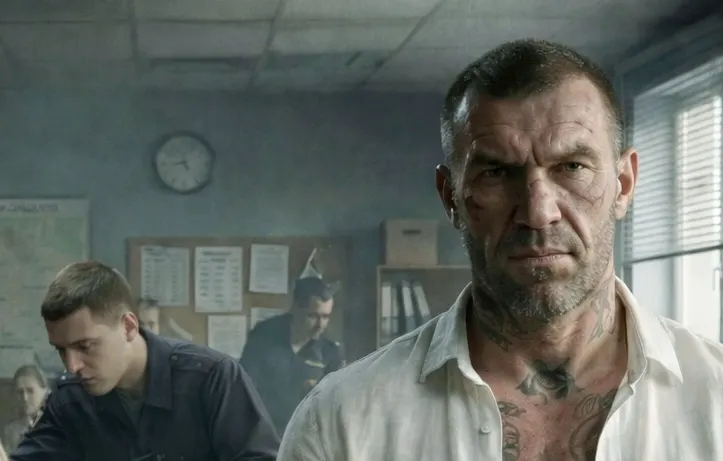
When the young police lieutenant took a drag on his cigarette, blew smoke in my face, and said my twenty-year-old daughter was sweet and that I ought to get on my knees if I wanted to take her home alive, I didn’t hit him, didn’t yell, and didn’t even clench my fists. I simply turned around and walked out. He laughed behind me because he figured he’d just broken another scared old man. That was the biggest mistake of his life, because I didn’t leave out of fear. I left to give one order, and after that order, that kid in uniform had exactly twenty-four hours of freedom left.
My name is Sergei, though in this town people know me as the Queen, and around here I decide who gets to live in peace and who doesn’t. I’m going to tell you a story that may change the way you look at men in uniform—a story about a pack of young, arrogant cops who decided they could put their hands on anyone they pleased and ran straight into the one man they never should have touched. The evening began with a phone call.
I was sitting in my house on the edge of town, in my upstairs office, going through paperwork that had nothing to do with my official business. Outside, it was raining. The streetlights blurred into muddy halos, and the world beyond the window looked as if someone had wiped a wet rag across an unfinished painting. The phone rang at 11:12 p.m.
I remember the time because after that call, my life split into before and after. My screen showed Alina, my daughter, my only child, the one person I had spent twenty years building an empire for so that not one shadow from my life would fall across hers. Alina is twenty.
She studies international relations at a university in the capital. She also models part-time for one of the best agencies in the country, and in two months she was supposed to do her first runway show in Milan. She had come home for the weekend to see her father, and that morning, when I opened the door and saw her standing there with a suitcase and that smile of hers, I felt happier than I had in years.
I picked up the phone and didn’t hear her voice first. I heard the sound that made everything go dark for a second. She was crying.
Not the way people cry from hurt feelings or exhaustion. The way a person cries when something inside has been broken clean through. Through the sobbing I caught only fragments: police, pulled over, station. Office. They won’t let me leave.
Then the line went dead, and I knew someone had yanked the phone out of her hand, because the last thing I heard was a man laughing and saying, “Who you calling, sweetheart?” “My dad.”
I stood up from my desk, and in that moment I was perfectly calm. People who have known me a long time will tell you the most dangerous version of me isn’t angry, isn’t loud, and doesn’t make threats. The dangerous version is the calm one, when something cold and precise switches on inside me, something that doesn’t know pity and doesn’t know doubt and works like a surgeon’s blade.
I called my driver, Mikhail, who has been driving me for thirty years and has been with me through things best left untold. Four minutes later, the black SUV was at the front steps, and we were on our way to the city police station. On the drive, I made one call. Just one.
I dialed Zhora, my closest aide, the man who knows every rat in this town and every hole those rats crawl into. I said only three words. “The cops took Alina.”
There was silence on the other end, because Zhora understood exactly what those three words meant. He asked which precinct, and said that in twenty minutes he’d know everything—who was on duty, who was in charge, how many there were, and what kind of men they were. By the time I got to the station, the rain had gotten heavier.
The building was the usual kind: a gray box from the nineties, peeling stucco, bars on the first-floor windows, dim light behind dirty glass. Two patrol cars were parked out front, along with one civilian vehicle, a black sedan with tinted windows. I went in through the main entrance and immediately saw the desk sergeant behind the glass.


Share how the story made you feel
0Comments appear after a quick automatic check. Please no links, ads or personal data.
Next to your name we show your country, determined from your IP address; the address itself is never shown, and only a hashed fingerprint of it is kept to stop spam.