
 Let’s Keep It Real

I'm 33, and drunk, I proposed to the 55-year-old cook from our cafeteria. He agreed. I sobered up in the morning, but we were already at the registry office. And then the CEO summoned me to his office with the words: "Do you even know who you married?"
Nelli Lvovna Klimova was known at the "Titan" holding company as a woman who achieved everything on her own. By the age of thirty-three, she held the position of Marketing Director at one of the largest enterprises in our region, managing three dozen employees. She drove her own Lexus and lived in a spacious apartment in a new residential complex with a view of the river, from where a panorama of her hometown's lights opened up in the evenings.
But as soon as she crossed the threshold of her parents' house in a village in the neighboring district, all her achievements lost their meaning before the single question from her mother, Natalya Ivanovna, asked with an unchanging melancholy in her voice:
— Well, sweetie, when is it going to happen?
In the village, where every old woman knew by heart whose cow had calved, whose daughter-in-law had argued with her mother-in-law again, and whose daughter was still unmarried, Nelli's single status had long turned into a family tragedy, discussed on every bench by the well. Natalya Ivanovna perceived her daughter's loneliness as a personal insult inflicted by her neighbors, who, upon meeting, would invariably inquire about Nelli's successes with such thick sympathy in their voices that one wanted to turn around and leave, never to return to that house again.
— Verka just married off her youngest, — her mother would say on the phone every Sunday, drawing out her words so that her daughter could feel the full depth of her maternal disappointment. — She's three years younger than you, and look, she found someone. Not some director, just a simple mechanic, but now she has a family.
Nelli remained silent on the phone, distractedly tapping her fingers on the table and calculating how many more minutes this conversation would last before she could claim urgent business. She understood that all her success, all these years of working 14 hours a day, business trips, negotiations, and won tenders were worth absolutely nothing in the eyes of her own family, because, in her mother's opinion, she had not achieved the main thing.
That July evening, Nelli walked out of an expensive café in the city center, barely holding back the urge to scream at the top of her lungs from accumulated rage and humiliation. A summer downpour had just passed, leaving behind a humid stuffiness and asphalt gleaming in the lamplight. She stood under the establishment's awning, trying to calm the trembling in her hands after another blind date, which Aunt Vera had arranged with the best intentions, sincerely wishing her niece happiness, but understanding that happiness in a very peculiar way.
Yaroslav Khomyakov, a forty-year-old head of the supply department at an automobile plant, a heavy-set man with a receding hairline and a self-satisfied smile, turned out to be exactly the type of suitor from whom one wanted to leave immediately. Forgetting about the paid bill and her purse on the back of the chair, as soon as the waiter brought the leather-bound menu, Yaroslav leaned back, folded his hands on his stomach, and began to scrutinize Nelli so openly and appraisingly that she felt like a commodity at a Sunday market.
— Thirty-three, then… — he drew out the words, lazily flipping through the wine list with his thick fingers. — My mother says: after thirty, women are not the same, their blood isn't the same, their health isn't the same. But you're holding up well, good for you!
Nelli silently squeezed a napkin under the table, feeling her nails dig into the starched fabric.
— You'll have to quit your job, of course, that's not even up for discussion, — he continued in the tone of a man accustomed to managing subordinates. — My mother had a stroke, you understand, she needs care, and hiring strangers costs a fortune! You'll manage, you have hands and feet.
— And what else is included in your plans for our possible union? — Nelli asked evenly, almost casually, although inside she was already seething with that special rage she usually reserved for negligent contractors.
— I need a son! — Yaroslav bent a finger, listing the points of his plan. — Preferably in the first year, while age permits. The family line must continue, you understand, the Khomyakov name must not be broken.
Nelli stood up so abruptly that her water glass tipped over onto the snow-white tablecloth, spreading into an ugly puddle. She took three thousand from her purse and threw them onto the wet fabric.
— A word of advice for the future, Yaroslav Evgenievich! — she said, looking down at him from the height of her heels. — Hire a caregiver for your mother and contact a reproductive clinic. They'll make you a son with all the modern technologies, and he'll be professionally cared for. As for me, I think I'll go, I still have a quarterly report to finish.
Outside, her phone vibrated in her pocket — her mother's name flashed on the screen. Nelli rejected the call without a second thought and walked to her car, not watching where she was going and not noticing the puddles.
The "Pinta" beer restaurant in the city center greeted her with the buzz of dozens of voices, the clinking of glasses, and the thick smell of fried sausages. Nelli chose a table in the farthest corner, away from the noisy companies, ordered an unfiltered beer and a plate of cheese sticks, and then another beer and another, carefully not counting the empty bottles. Around her, groups of people were laughing, couples were holding hands, and she sat alone amidst this celebration of life, staring at the beer foam and thinking that maybe her mother was right after all, and she had really missed something important while chasing her career.
— Nelli Lvovna?
She lifted her heavy head and didn't immediately recognize the man who had stopped at her table with a mug in his hands. Tikhon Ignatievich Bazhenov, the cook from the "Titan" holding company's cafeteria. 55 years old, graying temples, a calm gaze from gray eyes, and hands with the ingrained marks of years of kitchen work, calluses from knives, and small scars from burns.
— May I sit? — he nodded at the empty chair opposite her.
— Sit down, Tikhon Ignatievich, — Nelli waved her hand with drunken generosity. — Want to hear how a marketing director complains about her miserable life?
He sat down, pushed the empty bottles aside, and silently slid a glass of water toward her, which he had thoughtfully brought with him. Nelli didn't remember later how long she spoke — maybe half an hour, maybe a full hour. She told him about her mother and her calls, about the endless series of humiliating dates, about Yaroslav with his plans for her life and the role of a caregiver, about the whispers of neighbors in her home village. About how all her achievements weren't worth a damn without a stamp in her passport.
Tikhon listened in silence, not interrupting or offering unsolicited advice, only occasionally refilling her water. There was more understanding in his silence than in all the words of her friends.
— Are you married, Tikhon Ignatievich? — she suddenly asked when the words ran out.
— A widower. My wife passed away eight years ago.
— And you haven't looked for anyone else? Haven't tried to sort out your personal life?
He shook his head, and something flickered in his eyes — either old pain or resignation. Then she said the words she hadn't expected from herself:
— Tikhon Ignatievich, let's get married. You and me. Tomorrow, at the registry office.
He looked at her across the table for a long time, and she saw the corners of his lips tremble.
— Why would you want that, Nelli Lvovna? — he asked quietly, without mockery. — Why do you need an old cook from a factory cafeteria?
— I don't know, — she answered honestly, feeling her tongue get tied. — But you are the only man this whole cursed evening who didn't try to evaluate me, weigh me, and estimate my market value.
The pause seemed to last an eternity.
— Alright, — he finally said. — I agree.
Nelli vaguely remembered him paying her bill, leading her out of the restaurant, holding her by the elbow, and putting her in a taxi. She fell asleep in the car, leaning on his shoulder, and the last thing she remembered was a feeling of warmth and peace.
In the morning, Nelli woke up in her own apartment with a splitting headache, finding a note on her bedside table written in neat, old-fashioned handwriting: "Registry office, 2:00 PM. 5 Akademika Koroleva Street. I'll be waiting. Tikhon."
For a good fifteen minutes, she sat on the bed, holding her head in her hands, trying to convince herself to call, apologize, and cancel this madness. To blame it all on alcohol. But then the oily gaze of Yaroslav flashed before her eyes, and her mother's voice echoed in her ears: "Well, when?" And Nelli got up.
Tikhon was waiting at the entrance. Dressed in an old but neatly ironed white shirt and black shoes polished to a mirror shine, he looked older than his years next to her designer suit. But he smiled at her so simply and openly that her doubts receded. The registration procedure was quick — the request to shorten the waiting period was approved without any questions when Tikhon stated the reason: "Bride's urgent business trip."
— I need to go to the market for groceries, — he said after the ceremony, putting away the marriage certificate. — You should go to work, Nelli Lvovna, don't be late. I'll be waiting for you in the evening at this address, we'll celebrate there.
He handed her a folded piece of paper and left.
The whispering started in the elevator. Two girls from accounting were discussing the news of the day:
— Have you heard? Klimova got married. To the cook from our cafeteria, can you imagine?
— No way, it can't be! Is she that desperate? Or maybe she's pregnant, that's why she's in a hurry…
Nelli kept her back straight and pretended to be deaf. The summons to the CEO's office came two hours later. The secretary, Lenochka, delivered the invitation with a face as if Nelli was being called to a firing squad.
Matvey Tikhonovich Bazhenov, the young CEO of the "Titan" holding company, met her standing by the window, his hands behind his back.
— Sit down, — he threw a copy of her marriage certificate on the table. — What is this, Nelli Lvovna?
— That is my personal life, Matvey Tikhonovich, — Nelli began, clasping her hands under the table. — I don't think it…
— Your personal life, — he interrupted sharply, — has just become my personal headache.
He turned on the projector. A shareholder chart appeared on the wall. Next to the name Matvey Tikhonovich Bazhenov was the number 20%. And above it, in the largest rectangle with 30%, was Tikhon Ignatievich Bazhenov.
— This cook of yours, — Matvey spat the word out like a slap, — is my father, Nelli Lvovna. The majority shareholder of the holding company where you work. Congratulations, you've just become my stepmother.
Nelli didn't remember how she got to the address on the piece of paper. She expected to see a mansion, but the navigator led her to an ordinary nine-story panel building in a residential area. The apartment was modest: clean, but with no hint of wealth.
Tikhon opened the door in an apron stained with tomato paste.
— Come in, Nelli Lvovna, the solyanka is almost ready.
— Are you mocking me?! — her voice broke into a scream. — You own a third of the company, and I find out from your son?!
He didn't answer, just went to the kitchen. Nelli stood in the hallway, looking at a photo of a beautiful woman on the wall — obviously, his late wife.
— Eat first, — his voice came from the kitchen. — You can't think clearly on an empty stomach.
The solyanka smelled so intoxicating that Nelli gave in. She went to the kitchen and sat down at the small table.
— My great-grandfather owned a tavern, — Tikhon began after she had finished eating. — Raya and I, — he nodded at the photo, — started with a small café at the market. Then things took off: restaurants, a chain. When she was dying, she didn't ask for delicacies, but for my solyanka. The very same one I used to cook when we lived in a Khrushchev-era apartment.
He poured some tea.
— After her death, money lost its meaning. I handed over the management to Matvey and asked to work in the cafeteria myself. The people there are real, not afraid to tell you the truth to your face. Who would approach the company president with bad news? Everyone just bows.
— But why did you agree yesterday?
— Because you, Nelli Lvovna, proposed to a cook. Not to a shareholder. To a man who wears old shoes. I propose this: at work, you are the director, I am the cook. At home, I cook, you do the dishes. Deal?
Nelli looked at this strange man and for the first time felt like she wasn't a prize in someone else's game.
— Deal, Tikhon Ignatievich.
The first few days passed in silence, but a week later Matvey appeared in Nelli's office.
— Congratulations! As of today, you are the Deputy CEO. Salary of 550,000, company car. A gift from the family.
— I didn't ask for this promotion.
— Of course not. But having a shareholder's wife in the marketing department is awkward.
— I want to rise based on merit, not a stamp in my passport.
— The higher you climb, Nelli Lvovna, the stronger the wind blows.
Nelli wanted to refuse, but she received a message from Tikhon: "Use this chance to show everyone you deserve it." And she stayed.
The chance came soon. The holding was negotiating with "Stroy Invest," and its president, Stanislav Maksimovich Ryabushinsky, a merchant of the old school, demanded lunch right in the office.
— No restaurant can handle it, — Matvey panicked.
— We have a cook, — Nelli said. — Tikhon Ignatievich can handle it.
Tikhon, upon hearing the guest's name, perked up:
— Ryabushinsky? I taught him at the vocational school 30 years ago! I'll cook, but introduce me as a regular cook.
The lunch was a brilliant success. When the gubadiya was served, Ryabushinsky teared up and demanded to see the cook. Seeing Tikhon, he rushed to hug him:
— Tikhon Ignatievich! I thought you were retired, and here you are frying cutlets!
— I'm making solyanka, Stasik. Cutlets are on Tuesdays.
The contract was signed that same evening. Matvey looked at his father no longer with suspicion, but with reverence.
But the triumph was short-lived. Roksana Rudolfovna Mironenko, Matvey's fiancée, appeared.
— 30 million, — she threw a check on Nelli's desk. — Get a divorce and disappear.
— Is that not enough for you? — Nelli smirked. — What's insulting is that you thought I married him for money.
Roksana tore up the check and threatened revenge. At a charity event, she publicly introduced Nelli as a "village Cinderella."
— I am indeed from a village and I achieved everything myself, — Nelli calmly retorted. — Modern women should be discussing business, not bedrooms.
At that moment, Tikhon appeared in an elegant suit:
— Roksana Rudolfovna! Insulting my wife is insulting me personally.
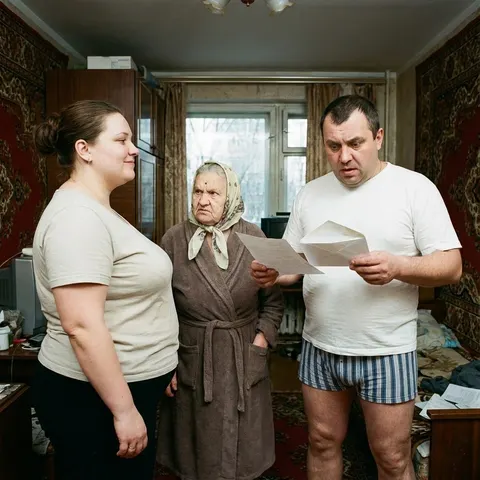
The trip to Nelli's home village was surprisingly warm. Tikhon charmed his mother-in-law with his cooking, and when he showed the documents for an account in Nelli's name, Natalya Ivanovna burst into tears: "Take care of him, sweetie!".
The climax came at the anniversary of Tikhon's wife's death. Roksana's parents demanded that Nelli sign a strict prenuptial agreement.
— Either she signs, or we pull our investments! — Roksana's father shouted.
Tikhon stood up.
— There will be no agreements. My wife has the right to inherit according to the law. And this, — he placed an envelope in front of his son, — is a deed of gift for 10% of my shares to Matvey. Nelli suggested this to me. So that you would be a co-owner, not an employee.
Matvey, realizing the Mironenko family's plot (to gain control and remove his father), broke off the engagement:
— I'm not marrying a calculator. Get out of my house!
After the guests left, Matvey apologized to Nelli. Soon, Tikhon's daughter, Nastya, arrived and welcomed her father's new wife with delight.
The family was reunited. In the old pelmeni restaurant where Tikhon once disciplined his son, they finally reconciled.
— You spanked me here for stealing, — Matvey recalled.
— I couldn't sleep all night, — Tikhon confessed. — Forgive me for being harsh.
— Dad kept all your certificates of achievement, — Nastya added.
A month later, the late wife's sister tried to force Nelli to waive her inheritance in exchange for money.
— I'll take the money, — Nelli said, — but give it to Matvey and Nastya. It's their mother's inheritance.
Matvey's old grandfather, upon hearing this, gave Nelli the family's alexandrite jewelry.
Soon it turned out that Nelli was pregnant.
— I'm fifty-six, — Tikhon cried. — I'm afraid I won't live to see the child grow up.
— We'll manage, — Nelli comforted him.
A girl, Vasilisa, was born. Matvey and Nastya adored their little sister. One day at the zoo, the happy family ran into Roksana — lonely, having lost everything after her father's arrest. Nelli didn't gloat.
She leaned against her husband's shoulder.
— Thank you for choosing me back then, drunk, in the bar.
— Thank you for choosing me, — Tikhon replied.











Share how the story made you feel
0Comments appear after a quick automatic check. Please no links, ads or personal data.
Next to your name we show your country, determined from your IP address; the address itself is never shown, and only a hashed fingerprint of it is kept to stop spam.