
 Let’s Keep It Real
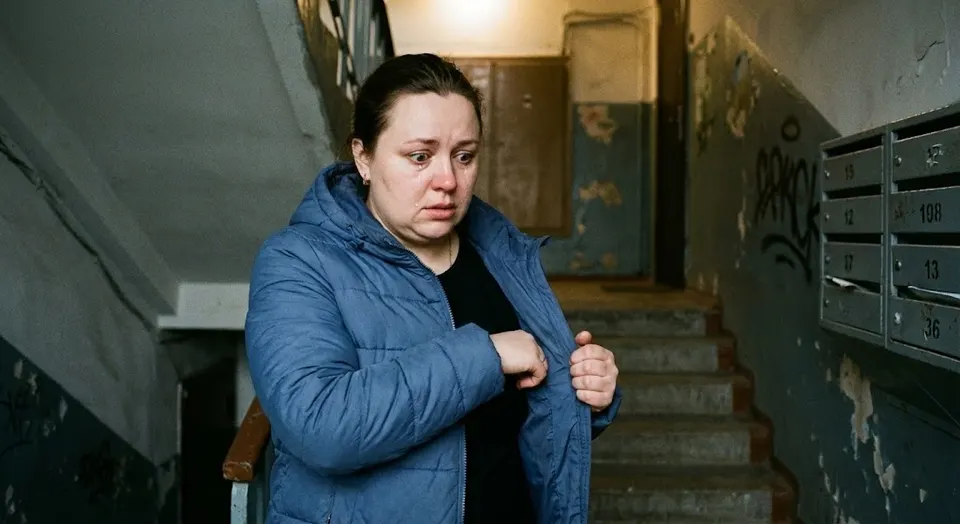
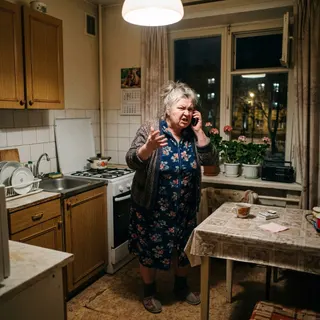
— I told you—Olivier salad! — Vladimir stood on the threshold, red-faced, and reeked of beer. — Normal wives cook, but where have you been wandering?
— I was at work, — Marina held onto the doorframe, her legs were giving way. — It was a rush job, I haven't slept for a day…
— I don't care! — he grabbed her by the shoulder and turned her towards the stairs. — Other women are proper women, but you're one in name only!
Marina backed away onto the landing. Vladimir stepped after her, his eyes darting around.
— Volodya, wait, I'll be quick…
— Get out, — he pushed her in the chest, not hard, but she stumbled and sat down on the steps. — And don't show your face here again.
The door slammed shut. The lock clicked, then the chain. Marina sat on the cold concrete in her housecoat, unable to process what had just happened. A moment ago she was walking up the stairs, thinking how good it would be to finally lie down, and suddenly—this.
From behind the door came the sound of the TV. Vladimir had turned on "The Irony of Fate". She went down one flight of stairs. Her legs were aching—eight hours on her feet, carrying trays of bread loaves, while others had a pre-holiday day off.
The stairwell smelled of cats and was cold. The door opened again. Vladimir threw something dark down. — Here, at least put something on, you disgrace.
Marina picked up the jacket—an old, child's one, the one she wore in the fifth grade. She had kept it in the mezzanine closet, for no good reason. She pulled it on over her housecoat. The sleeves were bursting at the seams, and it wouldn't close over her chest.
She stuck her hands in the pockets—maybe there was at least a hryvnia lying around. The lining of the right pocket was torn, and her fingers felt something flat inside. She pulled it out—a small booklet, yellowed, worn. A bank passbook. In her name.
Marina stared at the cover for a long time, then she remembered. Her father had left when she was ten. Her mother was yelling in the kitchen, throwing cups. He was standing in the hallway with a bag, zipping up his jacket.
Marina clung to his sleeve, and he knelt down, quickly slipping something into her pocket. — This is yours. Don't show it to anyone, — he whispered. — When you grow up, you'll understand. Then he left. She never saw him again.
Her mother used to say: he abandoned us, found another woman, to hell with him. Marina believed her. But she never threw the jacket away, even though she had long outgrown it. She stood up. There was nowhere to go. Her friend lived far away and was celebrating with her family. No money. Her phone was left in the apartment.
But the bank—a 24-hour branch—was two blocks away. The one on duty, for urgent matters. Marina knew where it was; she passed it every day on her way to the bread factory. She went out into the street barefoot.
The frost bit at her feet, and she walked quickly, almost running. Music blared from the courtyards, someone was laughing on a balcony. Marina clutched the little book in her fist and thought of nothing, just putting one foot in front of the other.
It was warm and empty in the branch. The clerk on duty—a woman of about twenty-five, with her hair in a sleek ponytail—looked up and froze. — Are you unwell? Should I call an ambulance?
— No, — Marina placed the passbook on the counter. — I need to check the account. The clerk took the document, opened it, turned it over. — This is an old format. Haven't used it in a while? — Twenty years. — Do you have your passport? — No.
The clerk sighed, looked at Marina's bare feet, at the housecoat under her jacket. — State your date of birth. Marina did. The clerk tapped on the keys, frowning. Then she froze, staring at the screen.
— The name matches, — she said slowly. — But I can't give you any money without a passport. Only information. — Just tell me what's there. The clerk paused. — The account is active. It has been receiving monthly deposits from Kryvyi Rih. The last deposit was a month ago. — How much?
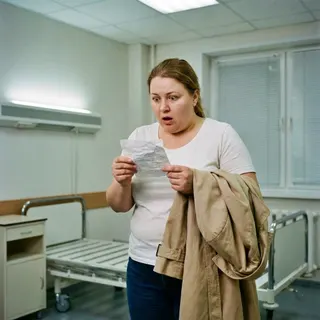
— With interest, the account has… — the clerk looked at the screen again, and her voice dropped, — more than twelve million. Marina didn't understand at first. She asked again. The clerk repeated it—clearly, syllable by syllable.
— There's also a message from the sender. Do you want to know what it is? Marina nodded. The clerk turned the monitor. On the screen was an address—in their city, a district of old five-story buildings—and two lines: “Forgive me. Come if you can”.
The clerk called a taxi herself, gave Marina her cardigan to cover the housecoat. The driver didn't ask any questions, just glanced in the rearview mirror. The address was familiar—the neighborhood where Marina had lived as a child. Five-story buildings, shabby entrances, a playground with rusty swings.
She went up to the third floor and stood in front of the door for a long time, hesitating to ring the bell. Then she rang it. A man opened—tall, gray-haired, in work clothes. He looked at her, and his face twitched. — Marinka, — he breathed out. She remained silent. — Come in, — he stepped back, his voice hoarse.
The apartment was tiny—a studio, clean, smelling of paint. Tools lay on the table, and a homemade shelving unit stood in the corner. Her father led her to the kitchen, sat down opposite her. — You found the passbook, — he said, not asking. — I found it.
He folded his hands on the table—large, with old calluses. Marina remembered those hands: they used to put her on his shoulders when they went to the park. — I didn't dare show up, — he said in a low voice. — I thought you hated me. Your mother was right—I was drinking back then, losing control. I was a bad person.
— Why didn't you come back later? — I was afraid. You grew up without me, what would you need me for? I just saved money, thinking—at least the money would be useful. I worked rotational shifts, lived in trailers, saved everything I could. Marina looked at him and didn't know what she was feeling. Anger? Pity? Relief?
— Mother said you had another family. — There was no one else. Only you. He raised his eyes, and Marina saw they were wet. — You can hate me, Marinka. I deserve it. She was silent. Then she stood up, walked over, and placed a hand on his shoulder. — I don't hate you.
He covered her hand with his and squeezed it hard, as if afraid to let go. Marina only returned home on the morning of January first. She spent the night in a hotel—her father gave her money, walked her there, and said, “Come whenever you want.”
She bought clothes, proper shoes. Then she went to Vladimir's. He didn't open the door right away. He stood on the threshold, disheveled, swollen, in sweatpants. — Ah, it's you, — he scratched his belly. — Well, come in. Mop the floors, and we'll call it even, forget about it.
Marina handed him an envelope. — What's this? — he took it, opened it. Divorce papers, the keys. His face turned gray, then red. — Are you out of your mind? You think anyone will take you? Look at yourself—who needs you, you downtrodden doll!
Marina turned towards the stairs. Vladimir grabbed her arm. — Wait, where are you going?! Twenty years together, I fed you, I clothed you! — I fed myself. — You can't even buy bread on your salary! You'll perish in a ditch without me!
Marina freed her arm. — Goodbye, Vladimir. She went down to the first floor. Vladimir chased after her, shouting: — You think someone's waiting for you there? Nobody needs you, you hear? Nobody!
Marina went out into the courtyard. Vladimir ran out after her, barefoot. He saw the taxi, the new jacket on her, the bag. He stopped. — Where did you get the money? — he asked more quietly. — Do you have someone? — No. — Then where from?
Marina got into the car. Vladimir ran up, yanked on the door, but it had already closed. — Marina, wait! I wasn't serious! Come back, I won't do it again! The car started moving. Vladimir ran after it, then stopped in the middle of the courtyard—pathetic, bewildered. Marina looked in the rearview mirror, and he got smaller and smaller until he disappeared completely.
Three days later, Marina met her father again. He showed her his work—shelves, small cabinets, stools. He made everything himself, by hand. — Are you going to keep working? — he asked. — I don't know. I want to start my own business. A bakery, maybe. — Do you know how to bake? — Twenty years at the bread factory, Dad. I know how.
The word slipped out on its own. Her father froze, then smiled—cautiously, as if he didn't believe he had the right. — Can I help with anything? — You can. They worked in silence—renovating the space Marina had rented in an old building. Her father put up shelves, she painted the walls. They spoke little, but understood each other without words.
One evening, as they were washing their hands after work, there was a knock on the door. Marina opened it. Vladimir was standing on the threshold. He was sober, clean-shaven, in a clean jacket. He kept his hands in his pockets. — I need to talk to you. — There's nothing to talk about.
— Marin, I know you have money. Someone told me… doesn't matter who. I desperately need it. I have debts, you see? Serious ones. Lend me some, I'll pay it all back, honest word. Marina looked at him—at this man she had lived with for twenty years. She saw right through him: every wrinkle, every habit of lying.
— No. — What do you mean, no?! — his voice cracked. — We were together for so many years! I'm not a stranger to you! — That's exactly why the answer is no. Her father emerged from the back of the room. Wiping his hands with a rag, he stood silently next to Marina. Vladimir looked at him, then back at Marina.
— So that's how it is, huh? Found your daddy, and now you don't need me? — You were never needed, — Marina said calmly. — I just didn't realize it. — You'll regret this, — Vladimir stepped closer, poking her in the chest. — You think money will save you? You're a nobody! You've been a nobody your whole life, and you'll stay one!
Her father moved forward, but Marina stopped him with her hand. — Get out of here, Vladimir. — Let me in, I just want to see what you're spending the money on! My money, by the way, I supported you! — I supported myself. You just ate and yelled.
Vladimir swung his arm, but her father caught his hand. He squeezed it tight, and Vladimir winced. — Let go! — Leave, — her father said quietly. — While you still can. Vladimir wrenched his hand free, stepping back to the doorway. — To hell with you both! Rot in here together! He turned and left. Marina closed the door, leaning her back against it.
— You okay? — her father asked. — I'm fine. He looked at her intently, then nodded. — Let's go finish the shelf. They went back to work. Marina was painting, her father was holding a board. They were silent. Then she said: — Thank you. — For what? — For not leaving for good back then.
Her father put the board down, wiped his hands. — I'm the one who should be thanking you. For not chasing me away. Marina smiled. For the first time in many days—a real smile. The bakery opened in March. It was small, with just four tables and a display case. Marina baked at night—bread, buns, pies. Her father helped in the mornings, delivering orders to the neighbors.
People came. At first out of curiosity, then for the taste. Marina didn't skimp on ingredients, kneading the dough by hand, just as she had been taught at the bread factory. One morning, a woman with a child came in—young, thin, in a worn-out jacket. She took a long time choosing, then came to the counter.
— Could I have two cabbage pies. Only… I don't have any money right now. I'll bring it tomorrow, I promise. Marina took two pies, wrapped them up, and handed them to her. — Take them. And you don't need to bring money tomorrow. The woman froze. — But I can't just… — You can. Just come again when you have the chance.
The woman clutched the bag to her chest, her eyes glistening. — Thank you. You have no idea how much this means right now. When she left, her father came up to Marina. — You did the right thing. — I remember what it's like. In the evening, after the bakery had closed, Marina sat by the window with a cup of tea. Her father was fixing a stool nearby. Outside, the snow was melting, and puddles glistened on the asphalt.
— What are you thinking about? — he asked. — About how strangely everything turned out. — What's strange about it? — If Vladimir hadn't kicked me out that night, I wouldn't have found the passbook. I wouldn't have found out about you. I would have just kept living with him, thinking that's how it was supposed to be.
Her father put down his tool. — Sometimes bad things happen at the right time. — Yes. They were silent for a moment. Then Marina took the old child's jacket out of a drawer—the very one, with the torn lining. She placed it on the table. — Why do you keep it? — her father asked.
— To remember. That everything can change in one night. And that sometimes the most valuable thing is hidden where you least expect it. Her father nodded. He took the jacket, ran his hand over the worn fabric. — Back then, I thought—what if she throws it away, doesn't find it. Every month I sent money and feared it was for nothing. — It wasn't for nothing. — I see that now.
Marina looked at him—at his gray hair, his tired eyes, the hands that had worked for her for twenty years. And she realized: she was not alone. She had never been alone. Outside, the streetlights came on. The city was getting ready for the evening.
Marina finished her tea, stood up, and started clearing the table. Her father helped. They worked in silence, comfortably, as if they had been together their whole lives. And in that silence, there was more than in all the words she had heard from Vladimir in twenty years.



Share how the story made you feel
0Comments appear after a quick automatic check. Please no links, ads or personal data.
Next to your name we show your country, determined from your IP address; the address itself is never shown, and only a hashed fingerprint of it is kept to stop spam.