
 Let’s Keep It Real
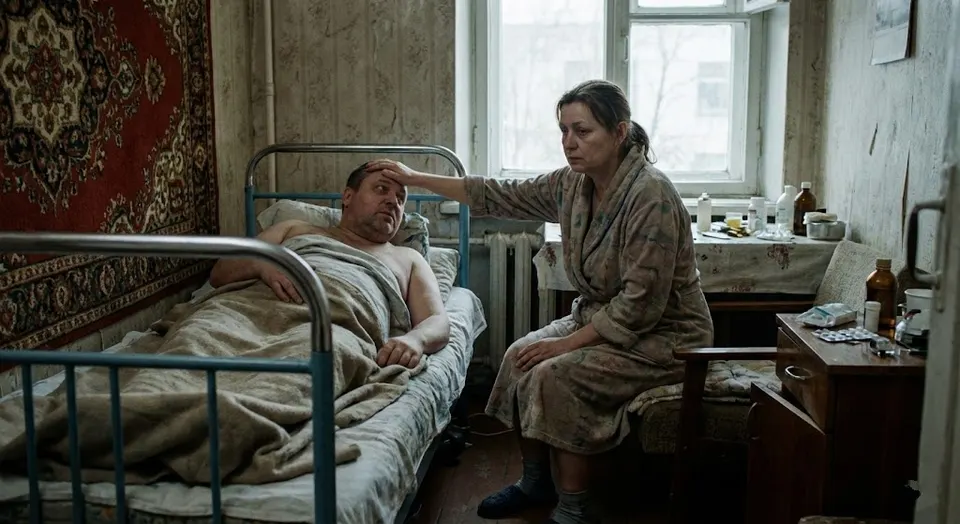
Two years. Seven hundred and thirty days, each like the one before. The morning begins not with an alarm clock, but with a quiet moan from the bedroom.
My day is scheduled down to the minute. Wash, feed, change clothes, give medicine, turn him over to prevent bedsores. I am Anna Andreeva, and for the last two years, my profession has been a wife-caretaker.
I used to be a marketer; I had projects, deadlines, ambitions. Now my main project is my husband Dima, confined to bed after a terrible accident. Today was an especially difficult day.
Dima's blood pressure was fluctuating, he was being moody, refusing to eat, and then complaining of hunger. By evening, I felt completely drained. I sat in the armchair by his bed, staring blankly at the wall while he watched some series on his laptop.
— Ann, I'm thirsty, — his voice was weak and demanding at the same time.
I silently got up and shuffled to the kitchen. My legs were aching, my back was sore. While pouring water into a glass, I heard a quiet thud from the room. He must have dropped something again. When I returned, I saw his phone lying on the floor right by the leg of the bed. Far away. Even I would have struggled to reach it by bending over.
— Dima, you dropped your phone, I'll get it.
— Don't bother. I'm done with it, — he waved his hand. — Give me the water.
I handed him the glass with a straw and helped him drink. I placed the glass on the nightstand and went back to the kitchen to put away the carafe. It took no more than a minute. When I returned to the bedroom to collect the dirty dishes, I froze in the doorway.
The phone was lying on the nightstand, next to the glass. Neat and tidy. I slowly shifted my gaze from the phone to my husband. He was calmly watching his series as if nothing had happened.
— Dima… — I tried to keep my voice from trembling. — How did you pick up the phone?
He tore his eyes away from the screen, and a flash of irritation crossed his face.
— What?
— The phone. It was on the floor. I saw it myself. How did you get it?
Dima sighed heavily, feigning immense fatigue.
— God, Ann, you're completely worn out. It didn't fall on the floor, it fell on the blanket. I managed to grab it with my hand, I could barely reach. You're starting to see things that aren't there.
— But it was on the parquet floor, right by the leg. I wouldn't have been able to reach it without getting out of bed.
— Then you must have imagined it! — he raised his voice. — You're exhausted. You're always imagining things. You should lie down for an hour. You look terrible. You're going to make my blood pressure spike again.
He turned back to the screen, making it clear the conversation was over. And I stood there, thunderstruck. I couldn't have imagined it. I clearly saw the dark rectangle on the light parquet floor. And I knew for a fact he couldn't have grabbed it from the blanket, because the phone was a meter and a half away from him.
I silently gathered the dishes and left the room. In the kitchen, I pressed my forehead against the cold windowpane. Did I imagine it? Or am I really going crazy from exhaustion and hopelessness? But somewhere deep inside, under a thick layer of pity and duty, a cold, unpleasant feeling stirred. The first tiny seed of doubt was sown in my soul.
The next day, Olga called, my only friend who hadn't disappeared after Dima's accident. Everyone else had somehow quietly disappeared, unable to bear the atmosphere of our home, saturated with the smell of medicine and despair.
— Hey, Ann, how are you guys?
— Hey, same as usual, — I sank onto a chair in the hallway so Dima wouldn't hear. — He's better today, his blood pressure is normal, he even ate with an appetite.
— I'm not asking about him, I'm asking about you, — her voice on the phone was firm. — How are you? Judging by your tone, you're on your last legs again.
I sighed; there was no point in lying to Olga.
— I'm tired, Olga, just dead tired. Sometimes it feels like this will never end. A weird thing happened yesterday, too.
And I told her about the phone, how it was on the floor and then on the nightstand a minute later, about Dima's irritated reaction and his accusation that I was just tired. I expected Olga to calm me down as usual, to say I was just overthinking things. But she was silent for a few seconds, and then she said something I didn't expect at all.
— Ann, listen to me carefully. I'm not accusing him of anything, of course, but two years… Are you sure everything is exactly as he says?
I was stunned.
— What do you mean?
— Exactly what I said. You're driving yourself into an early grave, you look like a shadow, and he's not getting any better, not at all, not one millimeter. Maybe the doctors said something? Is there any hope at all?
— The doctors say it's a severe case, a spinal cord injury, the chances are minimal, you know that.
— I know, — Olga snapped. — And I also know that you believe his every word. What if he's just gotten used to it? Used to you running around after him, to your whole life revolving around his bed? Maybe he's just manipulating you, huh?
Her words cut deep.
— Olga, what are you saying? He's disabled, he's helpless. How can you even suggest that?
— And you're a slave? — her voice turned harsh. — Do you remember the last time you bought yourself anything other than groceries? When was the last time you went to the movies? You can't even get a proper haircut because you can't leave him for long. Ann, I love you, and it hurts me to see what you've become. Just think about it, don't dismiss it right away. Pay attention to the little things, and the phone — that's not a little thing anymore.
I was silent, not knowing what to say. A part of me wanted to scream at her, to hang up, to protect my poor husband from these horrible suspicions. But another part, the one that had frozen in the bedroom doorway yesterday, whispered icily: "What if she's right?"
— I have to go, — I said numbly. — It's time for Dima's injection.
— Okay, but promise me you'll think about what I said, — Olga insisted.
— I'll think about it. Bye.
I ended the call. My heart was pounding. Her words were cruel, unfair, but they hit their mark. I sat down on the floor right in the hallway and buried my head in my hands. What if this isn't my paranoia? What if I'm living in a lie? A terrible, monstrous lie that I help build every single day.
After talking to Olga, I started paying attention. I turned into a spy in my own home. I memorized how the book lay on the table, the angle of the remote on the bedside table, how the blanket was folded. I felt like a complete idiot, but I couldn't stop.
Dima didn't seem to notice anything, only complaining more often about pain and demanding attention. For a couple of days, everything was as usual. I was beginning to think that Olga had needlessly sown those seeds of doubt in me, and the incident with the phone was truly a figment of my tired imagination.
But then I saw the scratch.
I was washing the floors in the bedroom. Dima was lying with his eyes closed, listening to an audiobook on his headphones. I moved the light curtain aside to wipe under the window and froze. On the light parquet floor, right by the windowsill, was a fresh white line. Not deep, but distinct, as if someone had dragged a chair leg. But the only chair in the room was at the desk in the opposite corner. Dima couldn't possibly have reached the window from his bed. And yesterday, when I was vacuuming, that scratch definitely wasn't there.
I straightened up, my heart beating faster. No one had visited us yesterday; we were alone all day. I hadn't been near that window. Which means…
I went to the bed and pulled one earbud from his ear.
— Dima.
He opened his eyes, annoyed.
— What now? I asked you not to disturb me.
— Look, — I pointed to the window. — Where did this scratch on the floor come from? Did someone move the chair?
He squinted, looked in the direction I was pointing, then at me. His face instantly turned to stone.
— Are you crazy? Playing detective now? What scratch?
— Right there, by the window, a fresh one. It wasn't there yesterday.
— And what do you want to hear from me? — his voice began to rise. — That I did it? Maybe you moved it when you were adjusting your curtains? And forgot. Stop interrogating me!
— I didn't move the chair, Dima, — I couldn't hold back either. — We were the only ones home.
And then he exploded.
— Why are you bugging me with your scratch? Have you gone mad from boredom? Or do you just enjoy torturing me, huh? Reminding me again that I'm a helpless cripple? You think I ran over there on my feet, moved the chair to look outside, and then jumped back into bed? Are you out of your mind?
He was yelling, his face red, his hands clenched into fists. He didn't look like a miserable patient, but like an enraged predator caught in a lie. And that rage frightened me more than the yelling. It was too real, too disproportionate to my innocent question.
I took a step back, feeling a chill run through me.
— I'm sorry, — I whispered. — I didn't mean to.
— Get out, — he snarled, — leave me alone.
I slipped out of the room, closing the door behind me. His furious reaction was the last straw. This wasn't the resentment of a disabled person; it was the fear of being exposed. And at that moment, I knew. I had to find out the truth. At any cost.
That same evening, after Dima fell asleep, I sat down at my laptop and ordered a small, almost unnoticeable camera with remote access from an online store. The camera arrived two days later. A small black cube that could easily be hidden anywhere.
I didn't sleep all night, going over the plan in my head. It was simple and cruel. I felt like a traitor, but there was no turning back. In the morning, I entered the bedroom with the most miserable expression I could muster.
— Dima, darling, good morning.
— Morning, — he grumbled, still upset after our argument.
I sat on the edge of the bed.
— Dima, my mom just called. She's not doing well at all. Her heart is acting up. She's asking me to come.
His expression changed instantly. The resentment vanished, replaced by anxiety. Fake, as I now understood.
— How bad is it? What happened? What about me?
— I don't know, she could barely speak. She's crying, says her blood pressure is over two hundred. I have to go, Dima. It's my mom. Her town is only a three-hour drive away. I'll be gone for a couple of days, no more.
— A couple of days? — panic crept into his voice. — Annie, how will I manage here alone? What if something happens? Who will help me? Maybe you shouldn't go?
I looked into his frightened eyes and felt sick. What a good actor he was.
— I have to, Dima, don't worry. I'll prepare everything. I'll put food in the fridge. You'll just need to heat it in the microwave. I'll lay out your medicine by the hour. And I've asked Stas to drop by.
At the mention of Stas, his best friend, Dima relaxed a little. Stas visited us often, helping his friend, as he said. He would bring groceries, sometimes sit with Dima so I could run to the pharmacy or just get some fresh air.
— Stas is coming? Well, okay. If Stas will be here, then of course, go to your mom. She needs you more right now.
I started to demonstratively pack a bag, throwing in the first things I could find. My hands were shaking. Then I went to the kitchen to cook. I chopped salads, made cutlets, cooked soup. Everything as usual, everything for my beloved, helpless husband.
When Dima dozed off after lunch, it was time. I took the camera and went into the bedroom. In the corner of the room, we had a bookshelf with books I hadn't had time to read in ages. I quickly tucked the tiny cube between volumes of classical literature, aiming the lens at the bed and most of the room. The camera was almost invisible.
I connected it to our Wi-Fi and checked the image on my phone. The picture was clear: Dima, sleeping in bed.
Before I left, I went to him.
— Well, I'm off. I'll call you when I get there. Stas will drop by in the evening. You just rest, relax, don't worry about me.
He took my hand with his weak hand, as I had always thought it was.
— Come back soon, Annie. I'll miss you so much.
— Me too, — I forced out, struggling to contain my disgust.
I kissed his forehead and left the apartment. But I didn't go to the station. I drove to the outskirts of the city and rented a room in the cheapest hotel I could find. I sat on the creaky bed, took out my laptop, opened the video streaming program, and stared at the image of our bedroom. My trap had snapped shut. All that was left was to wait for the beast.
The first hour was torture. I sat glued to the screen, and nothing happened. Dima woke up, turned on the TV, looked at his phone. I saw him dial my number, but I rejected the call and sent a text: "On the bus, bad reception, will call later." He put the phone down and continued watching some show.
Another hour passed. And another. I started to feel like a complete idiot. I started to think I had made it all up, that my paranoia was destroying our family, and here I was, sitting in this shabby hotel while my poor, sick husband suffered alone at home. Guilt began to suffocate me. Maybe I should call him, say the bus broke down, and I'm coming back?
I was just about to reach for my phone when something on the laptop screen changed. Dima turned off the TV. He lay there for a few minutes, staring at the ceiling. And then… Then he did something that made my breath catch in my throat.
He sat up in bed. Just sat up, without my help, without effort. Then, slowly, as if savoring the moment, he threw back the blanket and lowered his feet to the floor. He sat like that for a minute, and then he stood up. Stood on his own two feet.
I clapped a hand over my mouth to keep from screaming. He was standing in the middle of the room where he had spent two years lying down. He stretched, limbering up his stiff shoulders and back, and did a few bends. His movements were confident, strong. This was not a man learning to walk again. This was a healthy man.
My husband, my helpless invalid, walked confidently out of the bedroom. I heard the refrigerator door slam in the kitchen. A minute later, he returned with a bottle of beer in his hand. He plopped back down on the bed, opened it, and took a big gulp.
At that moment, his phone rang. Dima answered, and I turned on the sound in the app. The voice on the other end was painfully familiar. It was Stas.
— So, are you free? — Stas asked cheerfully.
— You bet! — Dima laughed. His laugh, which I hadn't heard in two years, grated on my ears. — My warden is gone! She ran off to her mommy's place.
— For long?
— Said for a couple of days.
— Finally! Damn it, freedom! I've already stretched a bit, had a beer. Listen, come on over. We'll hang out like normal people. Grab some more beer and some chips.
— You got it! Hey, aren't you afraid to be so out in the open?
— What's there to be afraid of? She won't be back until tomorrow evening for sure. We'll have time to clean up. I'm so tired of lying down, Stas, you have no idea. My back is killing me.
— What about the wheelchair? Maybe you should at least get in the chair for appearance's sake?
Dima laughed again, and that laugh made my vision go dark.
— To hell with the chair! I've already forgotten how to sit in it. It's all good, we'll manage. The main thing is to hold out until the insurance payout. There's not much longer to go, and then we can go to the ends of the earth.
I stared at the screen, at the laughing face of the man to whom I had given two years of my life. The shock passed. In its place came a cold, calm, all-consuming rage. The world didn't collapse. It simply took on its true, ugly shape.
I slowly closed the laptop. There were no tears. There was only one desire — to go home and look them in the eyes.
The drive from the hotel to our home felt like an eternity. I drove on autopilot, not noticing traffic lights or other cars. My mind was a complete, ringing void. All emotions had burned out, leaving only the cold ashes of resolve.
I parked in the next courtyard over so as not to scare them off prematurely. The lights were on in our apartment windows, and I could hear the muffled sounds of music and laughter. My home, my quiet sanctuary of sorrow, had turned into a place for a merry party.
I went up to our floor, trying to walk as quietly as possible. The key turned in the lock almost silently. I pushed the door open and stepped into the hallway. The music was louder now, and it smelled of fried chicken and beer. I took off my shoes and tiptoed into the living room.
The scene I saw will be forever etched in my memory. At our dining table, which for the last two years had served as a storage area for medicines, sat Dima and Stas. The table was covered with bottles and plates of food. They were arguing animatedly about something and laughing. The very moment I walked in, Dima was getting up from the table to get another beer from the kitchen. He was standing with his back to me, perfectly healthy and upright.
Stas was the first to see me. His smile vanished from his face. His eyes widened in horror. He nudged Dima.
— Uh-oh… Ann!
Dima turned around slowly. When he saw me standing in the doorway, his face turned white as a sheet. The bottle he was holding slipped from his hand and fell to the carpet with a dull thud.
— Ann? — his voice was barely a whisper. — You… you're supposed to be at your mom's?
A deafening silence fell over the room. The music seemed to get a hundred times louder, emphasizing the absurdity and horror of the situation. I looked at my husband, standing on his own two feet, and at his friend, frozen with his mouth open.
I took a step forward.
— Mom's feeling better! — my voice sounded surprisingly calm, even icy. I glanced over the table, at their terrified faces. — I see everyone here is healthy too. Legs are walking, hands are holding beer. A miraculous recovery, Dima, right before my very eyes!
Dima swallowed hard. He took a step back and literally collapsed onto a chair, as if his legs could no longer support him. But it was too late; the masquerade was over.
— Ann, I… uh… I can explain everything! — he stammered.
— Can you? — I slowly walked to the table and picked up a beer bottle. — Well, go on, explain. I'm all ears. I'm especially interested in how you learned to walk in the three hours I was gone. Is this some new breakthrough method?
Stas jumped up.
— Ann, calm down, let's talk.
— Sit down! — I ordered, not looking at him.
And to my surprise, he sat. I looked my husband straight in the eye. All my pain, all my exhaustion, all my humiliation from the past two years were concentrated in that gaze. The calm before the storm. And I knew this storm would sweep them both away.
Dima opened and closed his mouth like a fish out of water. He tried to say something, but the words stuck in his throat. Stas was the first to recover. He had always been more cunning.
— Ann, you've got it all wrong, — he began in a wheedling voice. — This is… this is an experimental treatment, a progressive one. Dima just started to get better a few days ago. We didn't want to tell you, so as not to jinx it. We wanted to surprise you.
I let out a bitter laugh.
— A surprise? What a wonderful surprise! Especially the beer and chips. Is that part of the therapy, I presume?
— It's a temporary improvement, — Dima chimed in, grasping at this pathetic straw. — You see, the doctors said this can happen: I can get up, and then I might be bedridden again for years. I'm in shock myself.
He looked at me with pleading eyes, still hoping his lie would work, that I would believe him again, feel sorry for his miserable self again. But there was no pity left in me.
I silently took my phone out of my pocket, found the right file, and played it at full volume. The image of our bedroom appeared on the small screen. And there was Dima, getting out of bed, stretching. And then his own cheerful voice came through the phone's speaker: "My warden is gone! Finally, damn it, freedom! To hell with the chair! I've already forgotten how to sit in it. The main thing is to hold out until the insurance payout, and then we can go to the ends of the earth."
Dima's face contorted. He stared at the phone as if it were a venomous snake.
— Where did you get that? Ann, listen, it's not what you think. I'll explain everything! — he jumped up, trying to approach me. — It was for us, for the insurance. We would have gotten the money and lived like normal people.
And that's when I snapped. All the pain I had bottled up for two years erupted in a deafening scream.
— For us? You turned two years of my life into a nightmare! I gave up my job, my friends, myself. I washed your back while you lay there laughing at me. You and your little friend. Did you think I was some stupid little fool who would put up with anything?
I hurled the beer bottle against the wall with all my might. It shattered with a deafening crash. Stas flinched.
— Ann, don't lose your cool, let's talk.
— Shut up, you scoundrel! — I turned to him, and he recoiled from the fury in my eyes. — You knew everything. You came here, looked me in the eye, hypocritically asked if I needed help, and all the while you were his accomplice. We'll have a different conversation with you. At the police station.
— What police station? — Dima squeaked in fear. — Annie, don't, I'm begging you. Let's sort this out ourselves. I'll give you everything. I don't want anything from you anymore.
I spoke quietly, but every word was filled with steel:
— A copy of this recording has already been sent to a lawyer and to the insurance company's email address, and right now I'm calling the police to report fraud on a grand scale.
I took out my phone and started dialing the number. Dima lunged at me, tried to snatch the phone, but I pushed him away. He didn't expect resistance and staggered. There was animal fear in his eyes.
— Ann, don't do this, you'll ruin my life!
— You ruined mine, — I replied, putting the phone to my ear, — and I'm just setting things right.
Three months passed. Autumn had set in, painting the city in gold and crimson. I was sitting in a cozy café downtown, drinking a hot latte and watching people hurry about their business. I was wearing a new, elegant coat and low-heeled shoes. I felt as if I had woken up from a long, painful dream.
The café door chimed, and Olga walked in. She smiled when she saw me.
— Hey, look at you, you look absolutely stunning. New haircut?
— Hey, yeah, I decided it was time for a change, — I smiled back.
She sat down opposite me and placed her order.
— So, how are our actors from the Bolshoi and Maly theaters? Any news?
I took a sip of my coffee.
— There is. Both are under investigation. Grand-scale fraud, conspiracy. The insurance company filed its lawsuit, and I filed mine. The lawyer says it's a sure thing, the evidence is rock-solid. They'll most likely go to jail. Stas is trying to pin it all on Dima. Dima on him. A pathetic sight. I got the divorce last week.
— Congratulations on the divorce, not the jail time! Although… — Olga smiled slyly. — How are you holding up?
I looked out the window. My soul felt surprisingly calm. There was no anger, no hatred, just a slight sadness for those two years that had been erased from my life.
— You know, at first, I kept replaying it in my head. Trying to understand how I could have been so blind. I blamed myself. But then I realized: I'm not to blame. I just loved and trusted. And they took advantage of that. It's their filth, not mine.
— Absolutely right, — Olga nodded. — Are you back at work?
— Yes, for a month now. They took me back at my old firm, even with a promotion. My boss said he needs loyal people like me, — I smirked. — The irony.
We sat in silence for a bit, each lost in our own thoughts. A light autumn rain was drizzling outside the window. But it no longer seemed gray and dreary to me. It was just washing away the old dirt.
— For two years, I thought I was saving him, — I said quietly, looking at Olga. — That it was my cross to bear, my duty. That I was strong and could endure anything. But it turned out, I was the one who needed saving. From him, from this lie, from a life that didn't belong to me.
Olga reached her hand across the table and covered mine.
— You made it through, Ann. You are very strong.
I squeezed her fingers in return and, for the first time in a long while, smiled a genuine, sincere smile.
— For the first time in two years, I can breathe freely. I'm planning my future. I'm thinking about what I want, not what someone else wants. And that, Olga, is an incredible feeling.
— What is it?









Share how the story made you feel
0Comments appear after a quick automatic check. Please no links, ads or personal data.
Next to your name we show your country, determined from your IP address; the address itself is never shown, and only a hashed fingerprint of it is kept to stop spam.