
 Let’s Keep It Real
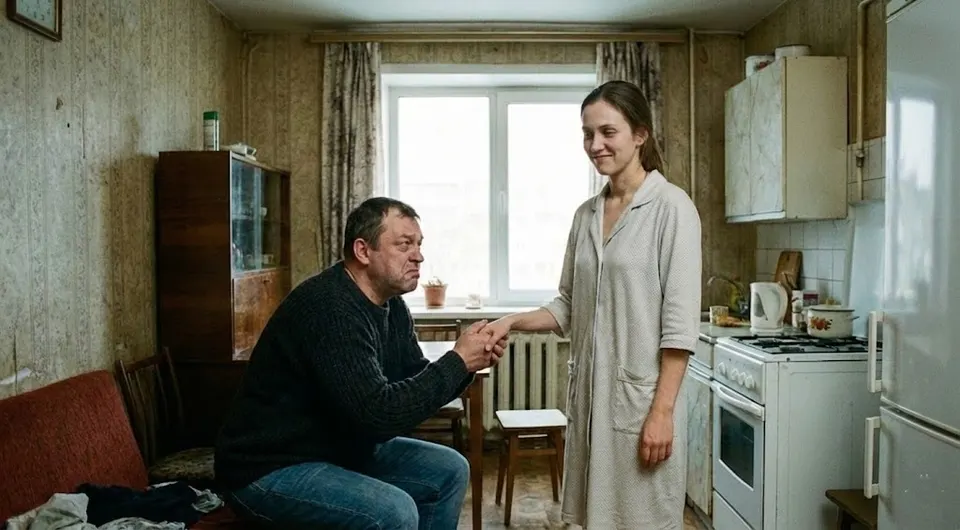
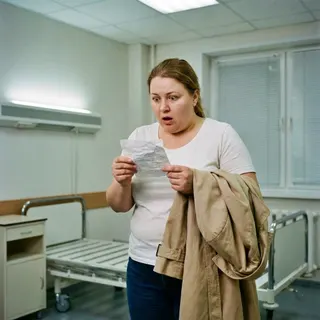
The car keys hit the kitchen table with a clatter that sounded funereal to me. Denis followed, but there was not a shadow of joy on his face from the purchase he had been buzzing my ears about for the last six months. No euphoria. Only gray, drained fatigue and poorly concealed panic.
He pulled off his jacket and threw it on a chair.
— Well, congratulations, — I tried to smile. — Happy, BMW owner?
He didn't answer, just walked to the table, pushed the keys aside, and placed several sheets of paper held together by a paperclip in front of me. The payment schedule. I glanced at the numbers, and my mouth went dry. The monthly installment amount was almost equal to my entire salary.
— We'll manage, — I said uncertainly. — We'll come up with something, cut expenses.
— Cut? — he sneered viciously, without a drop of amusement. — I've already cut, Alina, everything I could, and now it's your turn.
He pulled another crumpled receipt out of his pocket, this time from the supermarket, and poked his finger at it.
— What is this?
— A receipt? I can see it's not a ticket to the Bolshoi Theatre.
His voice began to gain strength.
— Look here. Cheese, parmesan. Eight hundred hryvnias. Are you out of your mind? Eight hundred hryvnias for a piece of smelly cheese? And what is this? Coffee beans. We ran out of instant.
— Denis, it's just cheese. I wanted to make pasta the way you like it.
— The way I like? — he laughed, throwing his head back. — Do you know what I like right now? I like having at least something left in my account at the end of the month. I climbed into a debt pit for status, for this damn car, so that we would be respected, so that people wouldn't look at me like a nonentity. And you, you are squandering money on your whims.
His face turned purple. I looked at him and didn't recognize him. Where had my loving, calm husband gone? Before me stood a stranger, an embittered man with burning eyes.
— These aren't whims, it's ordinary food, — I whispered.
— Ordinary food? That's it, Alina, your ordinary food is over. From this second, everything changes for us. Separate budgets. I will pay for my dream, — he nodded at the keys, — and my half of the utilities. You pay for yours, understood?
I was silent, trying to process what I had heard. Separate budgets? We had been married for five years, everything had always been shared.
— You're silent, didn't you understand? I repeat for the particularly gifted. From today on, you pay for yourself: for food, for cosmetics, for your tights, and for your smelly cheese. We will only chip in for the apartment and utilities. Fifty-fifty. The rest is each person's personal money. And God forbid I see that you took even a penny from my card.
He loomed over me, looking point-blank.
— Did you understand me?
Humiliation burned my cheeks. He spoke as if I were not his wife, but an annoying roommate.
— Yes, — I squeezed out.
— That's excellent, — he exhaled, seeming pleased with himself. — And yes, to be fair, we split receipts in half, even for bread. Is that clear?
I nodded slowly, staring into the void. At that moment, I realized that his dream of a BMW had just cost us our marriage. He didn't know it yet, but I already felt it.
A week later, we went to Auchan for groceries. I walked between the aisles with a cart, and Denis followed on my heels like a prison warden. In his hand was a phone with a calculator open. Every item I put in the cart, he took, scanned the price tag, and punched something into the phone. It was unbearable.
— Maybe we should get olive oil? Ours ran out, — I suggested, reaching for a bottle of Filippo Berio.
He immediately intercepted my hand. Not roughly, but authoritatively.
— Seriously? For 600 hryvnias? Have you completely lost your mind? — he hissed so only I could hear.
He silently took my hand, led me to the shelf with the cheapest products, and pointed to a plastic bottle with a cloudy yellow liquid and a screaming label "Red Price".
— Here, 150, no worse. If you want that one for 600, you pay the difference of 450 hryvnias out of your own pocket. Agreed?
He was smiling, but his eyes were cold and mean. I nodded silently and put the cheap oil in the cart. The next point of humiliation was the meat department. I reached for a pack of chilled chicken fillet.
— Uh-uh, no, — Denis stopped me. — Look at the price. 400 hryvnias per kilogram. But here, — he pointed to a tray with bluish chicken legs, — 200. Twice the savings. We're taking them.
— But you don't like legs, it's a hassle with the bones.
— It's okay, you'll deal with it, but it's cheap. Or are you ready to pay an extra 200 hryvnias from your pocket for the fillet?
He said this phrase louder than necessary. A woman nearby, choosing minced meat, glanced at us with curiosity. I wanted to fall through the ground.
The apotheosis happened at the checkout. The cashier rang up all the items. The total amount lit up on the display — 2695 hryvnias. Denis immediately snatched the receipt from her, took out his phone, and demonstratively divided the amount by two.
— So, you owe 1347 hryvnias 50 kopecks, — he announced loudly, turning to me.
The line behind us froze. Everyone was looking at us. At him — with surprise, at me — with poorly concealed pity.
— Denis, let me transfer it to you at home, — I whispered, blushing to the roots of my hair.
— No way, why at home? We do everything fairly, here and now. Transfer it, I'm waiting.
He stood with his arms crossed over his chest, looking at me point-blank. The cashier sighed. People in the line began to whisper. With trembling hands, I took out my phone, opened the banking app, entered his number and the amount down to the last penny, and pressed "Transfer".
— Done, — I said quietly, not raising my eyes, — sent.
He waited for the SMS notification on his phone, grunted with satisfaction, and then paid for the entire purchase with his card with a regal air.
We drove home in silence the whole way. I looked out the window at the passing city lights and felt something freezing inside me. It wasn't resentment, it was something else: cold and hard as steel. Determination. He himself had given me a weapon, and I was going to learn how to use it.
In the evening, when Denis went to a friend's to celebrate the wheels of his precious car, I sat in the kitchen staring blankly at a cup of cold tea. The humiliation in the store still burned on my cheeks. I dialed Katya, my best friend.
— Hi, Katya, can you talk?
— Alinka, hi, of course. What's with the voice? Did something happen?
And I burst. I told her everything. About the BMW on credit, about the payment schedule, about the separate budget, about the parmesan, and about today's trip to Auchan with the calculator. I spoke incoherently, choking on tears and anger. Katya was silent, and I could only hear her heavy breathing in the receiver.
When I finished, she was silent for a couple more seconds, and then said in such an icy voice as I had never heard from her:
— He is sick, Alina, simply a mentally sick person. Greed has eaten his brain. You understand that this is not normal?
— I... I don't know what to do, Katya. I'm so ashamed.
— Ashamed? — she flared up. — He should be ashamed. He is destroying you, trampling you underfoot in front of everyone. You must leave him right now. Pack your things and come to me. You can live with me as long as needed. Then we'll come up with something.
Her words were like a tub of cold water. Leave? Just like that? Drop everything? Run away? I imagined the scene. Me standing on her doorstep with a bag in my hands, tear-stained, pathetic, crushed.
— No.
— No, Katya, — I replied firmly, wiping tears with the back of my hand.
— What do you mean no? You're going to tolerate this? It will only get worse. Today he makes you pay for chicken legs, and tomorrow what, he'll calculate how much toilet paper you used?
— I won't tolerate it, but I won't run away like a beaten dog either. I'll do it differently.
— How? — there was bewilderment in her voice.
— He wants a separate budget? He'll get it. He wants financial independence? Fine. I will become financially independent. So much so that he couldn't even dream of it.
I surprised myself with how confident and cold my voice sounded. The tears dried up, replaced by a ringing, clear rage. It didn't burn, but concentrated, made thoughts sharp as a blade.
— Alina, what are you planning?
— I don't know exactly yet, but I won't be lost.
We talked a little more, and I promised to keep her posted.
Hanging up, I opened my old laptop. My fingers started running across the keyboard on their own. I worked as an editor in a small publishing house; the salary was modest but stable. But I knew I could do more. I always could, there just hadn't been a need for it before. I went to freelance sites I hadn't visited for about six years. I updated my portfolio, found several exchanges for copywriters and editors. Everywhere they needed people ready to work evenings, nights, weekends. People who really needed money.
I sent out a dozen applications for different projects: editing a thesis, writing articles for a commercial blog, proofreading a voluminous novel. When the first email with a test assignment arrived an hour later, my heart beat faster. It was a chance. A chance not just to survive, but to win this humiliating war that my own husband had declared on me. This was my secret escape plan. Escape not from the apartment, but from dependence.
My double life began. By day, I was the editor Alina Tikhonova, receiving a modest salary. But at night, when Denis fell asleep in front of the TV or went to play on his console, I turned into an invisible person earning money on the Internet. I took on everything. Proofread student papers, wrote faceless texts about plastic windows, edited menus for restaurants. I slept 4–5 hours. Coffee became my best friend. But I felt almost no fatigue. I was fueled by adrenaline and the growing figure on my personal bank card, which Denis, of course, knew nothing about. Every earned hryvnia was a small brick in the wall I was building between myself and him.
One evening I almost got caught. I was so engrossed in proofreading an urgent article that I didn't hear him return from a corporate party earlier than usual. The door to the room opened, and he looked inside. I barely managed to minimize the working document.
— Not sleeping? — his tongue was slightly slurring.
— Just sitting here, — my heart sank somewhere into my heels.
He came up from behind and looked over my shoulder, breathing heavy wine fumes.
— What kind of side job is this? I hope it's free? — he asked suspiciously.
I went cold. An empty Word document was open on the screen.
— Helping a colleague, she's swamped with her diploma. Just friendly, — I lied, trying to keep my voice from trembling. It was the first lie that came to mind.
— Just friendly, — he chuckled, moving away to the bed. — Watch it. Because if you're slaving away here for money at night, be kind enough to give half to the family budget. For utilities. We have everything fair. Don't forget.
He collapsed onto the bed and started snoring almost immediately. And I sat without moving, listening to my heart beating wildly. Fear mixed with a strange, bitter satisfaction. He couldn't even imagine how far I was from "friendly" help.
The next day I transferred all the earned money to a new account in another bank, and hid that bank's app in the furthest folder on my phone. This game was becoming more dangerous, but also more exciting. I learned to lie while looking him in the eye. When he asked why I was so tired, I complained about a pile-up at my main job. When he grumbled that I was always sitting at the laptop, I said I was reading a book or watching a TV series.
He noticed nothing. Consumed by his car, his savings, and his imaginary righteousness, he stopped seeing me as a person. I became a function for him: a neighbor who contributes her share for the apartment and cooks dinner from cheap chicken legs. And this blindness of his became my main advantage. He himself gave me the perfect cover for my secret war.
Two months later, a decent sum had accumulated in my secret account. I completed a big project, edited a whole novel for a graphomaniac author, and he paid generously for urgency. Looking at the numbers in the banking app, for the first time in a long time, I felt not just confidence, but power.
During my lunch break, I went to the shopping center. Not aimlessly, but with a specific task. I went into an expensive boutique, which I always passed with a wistful sigh, and bought it. A coffee-colored cashmere coat I had dreamed of for the last three years. It cost almost two of my official salaries. Paying with my secret card, I felt a dizzying rush of freedom. It wasn't just a coat, it was my trophy.
In the evening, I put it on and started waiting for Denis. I wasn't scared, I was curious. He entered the apartment, pulling off his boots on the go, and froze in the hallway doorway when he saw me. His gaze slowly slid from my face to the new item. His eyes narrowed.
— What is this? — he asked quietly, but steel rang in that silence.
— A coat, — I answered calmly, looking at my reflection in the mirror.
— I'm not blind. Where from? — he stepped towards me.
— Bought it.
— Bought it?! — his voice broke into a scream. — Are you out of your mind? With what money did you buy it? What did you save on? On food? Or did you beg your parents again? Disgracing me!
He grabbed me by the shoulder, but I didn't even flinch. I slowly turned to him, looked him straight in the eyes. Coldly, without a shadow of fear. And smiled.
— Calm down, Denis, I didn't beg anything from anyone and didn't save. I just sold something unnecessary.
— Unnecessary? What? — he wouldn't let up.
I held the pause, enjoying his confusion and anger.
— I sold Grandma's earrings. The ones you always called tacky "gypsy style" and told me never to wear.
It was pure improvisation, but brilliant. The earrings were indeed in the jewelry box, and he really did hate them. His jaw dropped, he looked at me, unable to find words.
— I took them to an appraiser, — I continued in an icy tone, enjoying every second. — It turned out to be antique gold with real garnets. They gave me so much for them that it was enough for the coat, and there was still some left. By the way, it turned out they are worth more than the down payment for your tub.
The last phrase was a blow to the gut. He recoiled as if I had hit him. His face contorted, he wanted to shout something, object, accuse, but he couldn't. I struck at his sorest point — his ego, his financial pride. I beat him on his own field. He turned around silently, went into the room, and slammed the door with all his might.
And I remained standing in the hallway in my new coat. And for the first time in many months, I felt neither humiliation nor fear, but the intoxicating taste of victory. The taste of revenge. And it was sweeter than the most expensive parmesan.
Another month passed. One afternoon, in the middle of the workday, a call came from Denis. I was surprised; he almost never called me at work.
— Alina, I'm coming home, — he said in a strange, hollow voice.
— Did something happen? Why so early?
— I'll talk at home.
He hung up. My heart skipped a beat unpleasantly. I asked my boss for time off and went home. Denis was already there. He was sitting in the kitchen at the table, in the same clothes he had left in the morning, staring at one point, white as a sheet. The keys to the BMW lay on the table in front of him.
— Denis, what happened? — I asked, approaching cautiously.
He slowly raised his empty eyes to me.
— It's over. The end.
— What is "the end"? Speak normally.
— Our showroom is losing the dealership. The contract with the Germans wasn't renewed. Today they gathered everyone and announced it. Half the department is being laid off. Effective immediately. Me too.
He pronounced the words with difficulty, as if they were getting stuck in his throat. I was silent. Not a drop of pity stirred inside me, only cold detached curiosity. I wonder what he is thinking about first?
As if hearing my question, he dropped his head into his hands and groaned:
— What will I do, Alina? How will I pay for the car? I have a payment in a week. Pay with what? That's it, they will take it away.
Just as I thought. Not "how will we live," but "how will I pay for the car." His world collapsed because his favorite toy, his status symbol, was under threat.
He looked up at me, full of despair and hope. He expected support from me, expected me to say: "It's okay, honey, we'll manage, we'll break through, I'll help." He looked at me, his wife, and sought salvation in my eyes. But I looked at him like a stranger and saw before me not a beloved man in trouble, but simply a loser, a greedy petty egoist who had driven himself into a corner.
— Alina! — he started again, but I interrupted him. I didn't want him calling me by an affectionate name. Not now.
— What should we do? — he repeated like an echo.
I took a step back, crossing my arms over my chest.
— We? — I asked again in an icy tone. Into the word "we," I put all my contempt.
He flinched.
— What does "we" mean? — he didn't understand.
— It's your car, Denis, and your loan. You wanted this yourself, you explained to me yourself that everyone has their own expenses. What does "we" have to do with it?
I said this calmly, almost indifferently. He looked at me, and in his eyes, despair gave way to complete bewilderment. He seemed to begin to understand something.
— But we are a family, — he stammered.
— Family? Really? But I'm more concerned about another question. — I paused, looking him straight in the eyes. — How do you intend to pay your half for the apartment rent now?
It was a kill shot. He opened his mouth, closed it. He couldn't find an answer. In his eyes, I saw real primal fear. He had just realized that his world had collapsed completely, and no one was going to save him.
Two months passed. Two long, torturous months for Denis. The car, of course, was taken by the bank for non-payment. It was a terrible blow to his self-esteem. He watched the tow truck take away his black, shiny dream, and I noticed tears in his eyes. Job searches yielded no results. His inflated ego didn't allow him to consider vacancies with a salary lower than he had, and no one would hire him at the previous level. He went to interviews, returned angry and empty, and sank deeper into apathy every day. The small savings he had ran out quickly.
I lived my life: worked, took orders, dutifully transferred my half for utilities to his card, and bought groceries with my part of the money. We hardly spoke. I saw how haggard he looked, how he lost weight. Sometimes at night, I heard him tossing and turning on the sofa in the living room — he didn't come into our bedroom anymore.
That day I was packing a large suitcase. I took a vacation from my main job and was going to fly away. For a long time.
Denis entered the room. He looked terrible: unshaven, with sunken eyes, in an old T-shirt. He stood at the door for a long time, shifting from foot to foot, not daring to speak.
— Are you going somewhere? — he finally asked quietly.
— Yes, — I answered shortly, not looking up from my task.
He was silent, gathering his courage. Then he came closer.
— Alina... — he began guiltily.
I froze but didn't turn around.
— I have absolutely no money, none at all. I... I haven't eaten since yesterday, — he squeezed out. Every word came to him with great difficulty. This was the bottom, his personal bottom of humiliation. — Give me at least a thousand, please. For food. I'll pay it back, honestly, as soon as I find a job, I'll pay everything back immediately.
I slowly straightened up and turned to him. Looked carefully into his face. He didn't raise his eyes, looking somewhere at the floor. Not a drop of his former arrogance and self-confidence remained in him, only a pathetic, crushed man. And I felt nothing: neither gloating nor pity. Emptiness. A slight cruel smirk appeared on my lips.
— You are asking me for money? — I asked with feigned surprise.
He raised a hunted look at me.
— Denis! Did you forget? — I spoke slowly, enunciating every word. — We have a separate budget, you established it yourself, remember?
He was silent, not believing his ears.
— How did you put it then? — I pretended to recall. — Oh yes, we even split receipts for bread in half. I always paid my half dutifully. My half is right here in my wallet, but where is yours?
I saw the meaning of my words reaching him, his face changing, the horror of realization reflecting on it. He looked at me like I was a monster. He took a step back, then another, shook his head.
— Alina, don't, please... — he whispered.
But I could no longer stop.
He slowly, as if in slow motion, sank to the floor. Just slid down the wall. Clasped his head in his hands and sobbed. Not just cried, but sobbed aloud, in a manly way, terrifyingly, with hysterical gasps, shaking all over. He sobbed from hunger, from powerlessness, from humiliation that was a thousand times worse than everything he had forced me to endure.
I looked at his shaking figure on the floor without any sympathy. Tears! How cheap! Once I cried from his words too, only quietly, into the pillow so he wouldn't hear. And he sobs so that he would be pitied. But not a drop of pity remained in me. He burned it to the ground himself.
I calmly walked over to the suitcase and clicked the last lock. The sound was deafeningly loud in the silence, interrupted only by his sobs. I rolled the suitcase into the hallway, put on my shoes.
He raised his tear-stained, swollen face to me.
— Where are you going? — he wheezed.
— I'm flying to Thailand! — I answered in an even, almost cheerful voice. — For a month. Alone. I earned it, imagine that? While you were calculating pennies for buckwheat and priding yourself on your used tub, I was working. At night, Denis, when you slept, so that I would have my own money. You wanted this yourself, right? Independence. Here it is.
He looked at me, and something akin to madness splashed in his eyes. He couldn't believe that all this was happening in reality.
— And yes, about the rent. — I paused so that my next blow would be as precise as possible. — You made a slight mistake in calculations there. I never paid half. I always paid for this apartment fully.
He frowned uncomprehendingly.
— This apartment is my property, Denis. I inherited it from my grandmother even before our marriage. So this is my house, and my rules apply in my house. And my separate budget.
I saw the last hope dying in his eyes. He understood everything.
— You have a week to pack your things and get out of here. — My voice became hard as steel. — If in a week you are still here, your things will be on the stairwell. Is that clear?
He nodded silently, lowering his head. Crushed, destroyed.
I stuck my hand into the pocket of my new coat and took out the keys. His BMW keys, which the bank had sent by mail along with the confiscation notice. A useless piece of metal. I walked over and threw them on the floor next to him. They clinked against the parquet.
— Here, take them. You can sell them as a keychain, maybe it will be enough for food for the first time.






Share how the story made you feel
0Comments appear after a quick automatic check. Please no links, ads or personal data.
Next to your name we show your country, determined from your IP address; the address itself is never shown, and only a hashed fingerprint of it is kept to stop spam.