
 Let’s Keep It Real
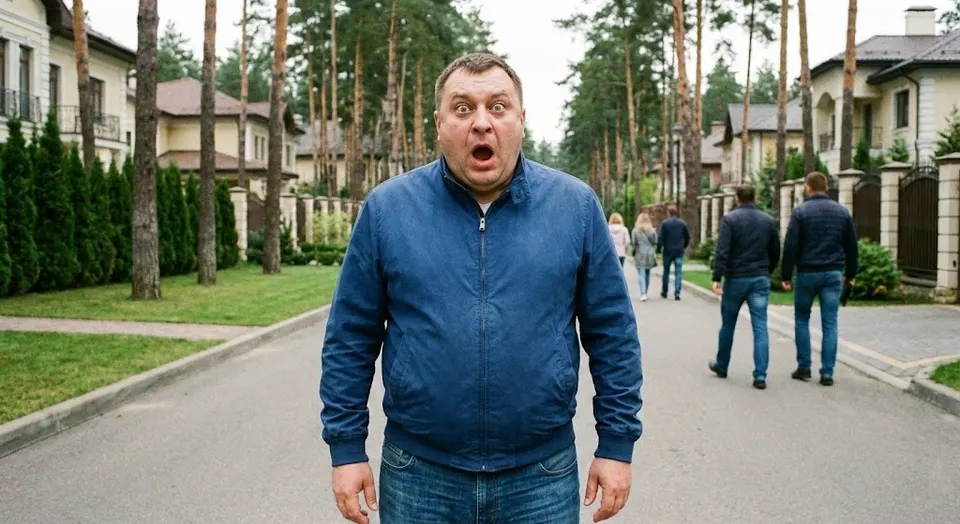
Olga set two heavy bags of groceries on the floor and leaned her back against the front door, catching her breath. Climbing to the fifth floor without an elevator was always difficult, especially with such a load. She kicked off her shoes, wincing from the aching pain in her feet, and reached for the bags to unpack the groceries, but then Igor walked out of the room.
He stood in the doorway, arms crossed over his chest, looking at her as if she had just committed a crime. In his hand was his phone, the screen glowing with a notification from a banking app.
"Four thousand?" he said in an even, cold voice. "Four thousand on some rags?"
Olga slowly straightened up, feeling the habitual fatigue after a workday beginning to mix with irritation.
"Here we go again. Again with these showdowns over every penny spent. Igor, they aren't rags," she replied quietly, pulling off her light raincoat. "I needed a blouse for work. The one I was wearing was completely worn out."
"For work?" He sneered, and there was not a drop of warmth in that sneer. "Who looks at you in your library? Pensioners who come to read newspapers? What difference does it make to them what you're wearing?"
Olga pressed her lips together, trying not to show how much it hurt to hear that. Igor never used to speak about her work with such disdain. He used to be different: attentive, caring. But that was three months ago, before the day he was appointed head of sales.
"I still need to look tidy," she said, bending down to the bags. "Igor, let's not talk about this right now. I'm tired, I need to cook dinner."
"Tired?" He stepped closer, his voice rising. "And you think I don't get tired? I slave away from morning till night, carry the whole department, solve problems, and here you are spending my money on some blouses."
"Your money?" Olga straightened up, feeling something snap inside. "Igor, I work too. Maybe I earn less, but I contribute my share to the family budget."
"Your share?" He laughed, but the laugh was mean and hurtful. "Your pathetic twenty-five thousand? That doesn't even cover utilities. I pay for this apartment, I pay for your food, for your clothes. You live on my money, Olya. And it would be good to remember that."
She looked at him silently, at this man she had lived with for ten years. Where had the Igor gone who brought her flowers for no reason on his way home from work? Who cooked breakfasts on Sundays and said her work in the library was important because she helped people find their way to knowledge? When did he turn into this smug, cold stranger?
"I don't ask you for a report on every penny," Olga said, trying to keep her voice steady. "Why do you demand it from me?"
"Because it's my apartment!" Igor raised his voice, and Olga flinched. "I bought it. With my money. Before we got married. You live here by my grace, understand?"
In the kitchen, water dripped from a faulty tap: rhythmic, persistent, drip-drip-drip. Usually, this sound annoyed Olga, but now she hardly heard it over the pounding of her own heart. Her hands were shaking, and she clasped her fingers together so it wouldn't be so noticeable.
"I don't understand what's happening to you," she whispered. "You've become completely different after this promotion. It's like it went to your head."
"Nothing went to my head," Igor snapped. "I just finally realized what I'm worth. And you? You stayed at the same level. A librarian with a student's salary."
Olga felt tears rising to her throat but forced herself not to cry. Not now. Not in front of him. She bent down to the bags and started taking out the groceries: a carton of milk, bread, vegetables for a salad.
"What is this?" Igor pointed to a small bundle in her hands.
"Cheese," Olga answered. "Dorblu. You love it."
"How much?"
"How much what?"
"How much did this cheese cost?"
"Six hundred. Igor, it's your favorite kind, I wanted to do something nice for you."
He snatched the bundle from her hands and threw it back into the bag. Olga recoiled, pressing her palm to her chest.
"Six hundred for a piece of mold?" he hissed through his teeth. "Have you completely lost it? Spending money right and left as if it grows on trees."
"I just wanted..."
"What did you want? Huh? What can you possibly want?" Igor stepped right up to her, looming over her. Olga instinctively backed away toward the wall. "You are nothing. Without me, you are nobody. A pathetic librarian in a shabby blouse. And if it weren't for me, you'd still be living in some communal apartment, counting pennies until payday."
"Igor, stop it. Don't you dare order me around."
"This is my house!" he barked, and Olga saw the veins swell on his neck. "My rules. If you don't like it — get out."
A heavy, ringing silence hung in the air. Somewhere outside a car drove by, a dog barked. The kettle hissed quietly on the stove: Olga had put it on to heat when she entered the apartment, and now the water was boiling.
"Why are you silent?" Igor sneered. "Nowhere to go, huh? That's exactly it. So sit quietly, don't act up, and be grateful that you have a roof over your head."
He turned and walked back into the room, but stopped at the threshold and turned around:
"And return that blouse to the store. Tomorrow. I don't need a wife who can't count money."
Olga stood by the wall, feeling tears slowly rolling down her cheeks. She didn't even immediately realize she was crying, she just suddenly felt the salty taste on her lips. The kettle on the stove began to whistle louder, demanding, hysterical. She slowly walked over and turned off the gas. Steam enveloped her face, moist and hot.
How tired she was. Tired of these endless reproaches, of this contempt in his voice, of the feeling of her own worthlessness that Igor pounded into her day after day. For three months she endured, hoped it would pass, that he would come to his senses, that her former husband would return. But he didn't return.
Olga wiped her tears with the back of her hand and began silently putting groceries on the refrigerator shelves. Her hands moved automatically, while one thought spun in her head: "Is he right? Am I really worth nothing?"
In the evening, they ate dinner in silence. Igor sat buried in his phone, occasionally throwing out remarks about what idiots his subordinates were and how hard it was to work with incompetent people. Olga nodded without listening. She cut a tomato for the salad and thought about how they used to talk at dinner. Shared news, plans, dreams. Now there was an abyss between them, and Olga didn't know how to bridge it.
"I'll be late tomorrow," Igor said, not looking up from the screen. "Meeting with clients. Might be back late."
"Okay," Olga replied quietly.
"And yes, the bonus is delayed this week. So tighten your belt. No blouses, cheese, or other nonsense."
Olga put down the knife and wiped her hands with a towel.
"Igor, I really needed that blouse. The old one was completely gone."
"God," he leaned back in his chair and looked at her with an expression as if she had just said something incredibly stupid. "Well, wash it better. Or buy something at the market for three hundred. Why do you need expensive things? Who needs you there in your library?"
Something inside Olga trembled and snapped. Maybe it was patience. Maybe remnants of love. Or maybe just a sense of self-dignity she had been trying to preserve all these months.
"I am not some beggar who needs to wear hand-me-down rags," she said, her voice shaking with suppressed emotions. "I work, I earn money, and I have the right to buy myself normal clothes."
Igor slowly lowered his phone to the table. Something dangerous flashed in his eyes.
"You have the right?" he asked quietly, too quietly. "You have the right?"
"Yes." Olga stood up from the table, feeling something hot and uncontrollable boiling up inside. "I have the right not to listen to your reproaches every single day. I have the right not to feel like a freeloader in my own home."
"In my home?" Igor barked, jumping up too. "This is my home. And if you don't like it here, if you're so proud and independent, get out of here. Right now."
Olga was stunned. She had imagined many times how another argument would end, but like this...
"You... You're serious?" she whispered.
"Absolutely." Igor stepped toward her, a malicious sneer playing on his face. "Pack your rags and get out. Let's see how you sing without my money, without my apartment. You won't last a week; you'll come crawling back on your knees."
"Igor, it's late, it's past nine."
"So what? I don't care. Get out. Immediately."
He was serious. Olga saw it in his face, in his tensed jaw muscles, in the cold glint in his eyes. Three months ago, she wouldn't have believed he was capable of this. But now a stranger stood before her, and this stranger was kicking her out of the house late in the evening.
Olga walked into the bedroom on legs that felt like cotton. She took an old gym bag out of the closet and began mechanically folding things: jeans, sweaters, underwear. Her hands were shaking so much she couldn't zip up her toiletry bag.
Igor stood in the doorway watching, arms crossed over his chest.
"And leave the card," he tossed out. "The joint one."
Olga took the bank card out of her wallet and put it on the dresser. She had another one, her salary card, but there was very little left on it until the next paycheck — two more weeks, and she had spent almost all of her last one on groceries and that blouse.
"Leave the phone too," Igor added. "I pay for it..."
"What?" Olga turned around. "Igor, how will I be without a phone?"
"Buy yourself one with your own hard-earned money. Since you're so independent."
She silently placed the phone next to the card. The most necessary things were already in the bag. Olga put on her raincoat and picked up the bag.
"Igor," she said, stopping in the doorway, "do you really think I'll crawl back?"
He sneered.
"I know it. In three days, max. When you realize you have nowhere to live and nothing to live on."
Olga nodded, although everything inside her went cold.
"Then see you in three days," she said quietly and walked out the door.
Igor saw her to the landing, as if afraid she would change her mind. When the door slammed shut behind her with a clang, Olga heard the key turn in the lock. Once. Twice.
She stood on the dark landing with the bag in her hands, not knowing where to go. The elevator still wasn't working. The flights of stairs went down into the gloom, lit only by dim bulbs. Somewhere a floor below, a door slammed, voices were heard. Olga slowly walked down, step by step. With every step, the cold grew inside her — not from the autumn night, but from the realization of what had happened.
She had been kicked out. Just like that. No money, no phone, late in the evening.
When she walked out of the entrance, a sharp wind hit her face. Olga shivered, wrapping her raincoat tighter. Streetlights shone dimly overhead, a siren wailed somewhere in the distance. The city lived its nightlife, indifferent to her problems.
Olga took a crumpled 500-ruble note from her pocket — all she had left. Enough for a taxi to Marina's. Marina, her friend since university days, lived on the other side of town. Olga hoped she was home and could shelter her at least for this night.
She caught a taxi at the nearest intersection, climbed into the back seat, and gave the address. The driver, an elderly man with a gray mustache, glanced at her tear-stained face in the rearview mirror but asked nothing. Maybe he had seen it all in his years of work.
As the car wound through the night streets, Olga looked out the window and thought. She thought about how she and Igor met ten years ago at a book fair. He worked as a manager in a small company then, was modest, attentive, knew how to listen. They walked in the evenings, talked about everything in the world, made plans. Married a year later. Lived modestly but harmoniously. Olga worked in the library, Igor slowly but surely climbed the career ladder.
And then came this promotion. Head of Sales. Decent salary increase. New suits, expensive watches, trendy haircut. And with it — a kind of arrogance, contempt for those who didn't reach his level. Including his own wife.
Olga wiped her tears. Crying was useless. She had to think about what to do next.
Marina opened the door in a robe, with a towel on her head — apparently, she had just gotten out of the shower. Seeing Olga with a bag and a tear-stained face, she gasped and immediately pulled her friend into the apartment.
"God, Olya, what happened?" She hugged her shoulders and led her into the room. "You're shaking all over. Hang on, hang on, I'll put the kettle on."
Olga sank onto the sofa and only now felt how exhausted she was. Not just physically — tired in her soul. Marina quickly returned with a bottle of water and a blanket, wrapped Olga up, and sat down next to her.
"Tell me," she said simply.
And Olga told her. About the last three months, the constant reproaches, today's scandal, how Igor kicked her out without money or a phone. She spoke and cried, and Marina silently stroked her back, shaking her head.
"What a bastard," she said quietly when Olga fell silent. "Sorry, Olya, but your Igor is a complete bastard. How could he do that to you?"
"He said I'm nobody without him." Olga wiped her eyes. "That I'll crawl back in three days."
"And what are you going to do?"
Olga looked at her, and something firm flashed in her eyes.
"I won't crawl back. Not in three days, not in three months. Never."
Marina squeezed her hand tightly.
"That's right. You can live with me as long as you need. There's a free room, I adapted it for a workshop, but there's a pull-out sofa there. We'll figure it out somehow..."
Olga nodded gratefully. They sat in the kitchen for a long time, drinking strong sweet tea. Marina told some funny stories from her beauty salon, trying to distract her friend, but Olga listened with half an ear. Thoughts swirled in her head, one more anxious than the other. Where to find a job? How to live on her small salary? Maybe Igor is right, and she really amounts to nothing?
At night, Olga tossed and turned on the pull-out sofa for a long time, staring into the darkness. Rain drummed outside the window, dripping somewhere from the cornice. Marina's room was small and cozy: mannequins with wigs stood everywhere, bottles of hair dye and professional scissors lay on the shelves. It smelled of hairspray and some chemicals, but Olga didn't care. The main thing was having a roof over her head.
She thought about Igor. Wonder what he's doing now? Sleeping peacefully, confident he taught her a lesson? Or does he regret what happened at least a little bit?
Then her thoughts flowed further, into the past. Olga remembered her grandmother, Ekaterina Fedorovna, a tall, stately woman with gray hair braided into a tight bun. Grandmother died five years ago when Olga was thirty. They were very close; Olga often visited her in the summer in a small house on the outskirts of the city, listening to her stories and wise advice.
Ekaterina Fedorovna lived a hard life. Her husband, Olga's grandfather, died early when grandma was only forty. She was left alone with two children in her arms, without a profession, without money. But she didn't break. She went to work at a factory, slaved away in three shifts, raised the children, educated them. Then she also babysat her granddaughter when Olga's parents were busy.
"Remember, girl," grandma used to say when Olga was still a teenager. They were sitting on the porch of the house, cleaning berries for jam. "A woman must always have something of her own. Her own business, her own money, her own corner. So she doesn't depend on anyone. Men — they come and go. But you — you are forever."
Back then, Olga nodded without really thinking about it. She was about sixteen, and such conversations seemed boring and adult. But now, lying in the dark on someone else's sofa, she remembered these words and felt something click in her chest.
Something of her own. Grandmother left her an inheritance. Small, but still. A bank deposit, saved penny by penny over a lifetime, and a plot of land somewhere in the suburbs, which was once allocated to her grandfather for many years of work at the factory. Olga had almost forgotten about it. Igor knew, of course, but never brought up the subject. The inheritance was registered to Olga personally, before marriage, and by law was considered her personal property.
Olga sat up abruptly on the sofa. Her heart beat faster. Documents. Where were the documents for the deposit and the plot? She remembered putting them in a separate folder, kept in the closet, on the very top shelf, under a stack of old photo albums. Igor never looked there.
In the morning, as soon as it got light, Olga got up quietly so as not to wake Marina. Dressed, went out of the apartment. It was fresh outside, smelling of rain and wet leaves. Olga walked to the nearest bookstore, which opened early, and bought a cheap phone with a prepaid card. She spent almost all the remaining money, but the phone was necessary.
Returning to Marina's, she found her friend in the kitchen having breakfast.
"Marina, I need to go home," Olga said. "While Igor is at work. To pick up some documents."
"Do you want me to go with you?" Marina put down her sandwich. "What if he's there?"
"No, he's definitely at work. He has an important meeting from ten in the morning, he mentioned it yesterday. I'll be quick, there and back."
Marina gave her the keys to her old car; she wasn't going anywhere today. Olga drove to the familiar building, went up to the fifth floor. Her heart was pounding as if she were doing something illegal, although it was her apartment, her things.
At the door, she froze. What if Igor was home after all? What if he skipped the meeting? But no, no sounds came from inside. Olga took the keys from her bag — Igor hadn't taken her set yesterday, apparently didn't think of it in the heat of the moment.
The door opened easily. The apartment greeted her with silence and the smell of stale air. Dirty dishes were in the sink in the kitchen: apparently, Igor had breakfast and didn't clean up after himself.
Olga went into the bedroom, opened the closet. Everything was in place. Her hands reached for the top shelf, felt the edge of the folder under the photo albums. Pulled it out. Opened it.
The documents were there: a savings book in the name of Ekaterina Fedorovna with a note about re-registration to Olga, a certificate of ownership for a land plot of eight acres in the village of Svetloe, fifty kilometers from the city. Olga quickly flipped through the papers. Everything was in order, everything properly registered. She shoved the folder into her bag, looked around. Should she take anything else? Photos? But why? That life was over.
Olga left the apartment quietly, as she had entered, and closed the door behind her. On the way back to Marina's, she stopped at the bank. The line moved slowly; Olga was nervous, fingering the strap of her bag. Finally, she was called to the window. The teller, a young woman with bright makeup, accepted the documents and dug into the computer.
"The deposit does indeed exist," she said. "In the name of Ekaterina Fedorovna Chernova, re-registered to Olga Sergeyevna Chernova. The amount with interest is..." She looked at the screen. "823,000."
Olga's breath caught. 823,000. She hadn't thought there could be that much. Grandmother saved a little bit all her life, and with interest over the years, a decent sum had accumulated.
"Do you want to close the deposit?" asked the teller.
Olga nodded. No, she wouldn't waste this money. These were grandmother's savings, her last gift. But now they could become the start of a new life.
Half an hour later, Olga walked out of the bank with a new card and a feeling that solid ground had appeared under her feet. Not riches, of course, but not poverty either. Something to start with.
She spent the next two days searching. First, she found a realtor's phone number on the internet who specialized in selling land plots in the suburbs. Called, arranged a meeting. The realtor, a woman of about fifty, businesslike, in a strict suit, arrived and inspected the plot.
"The location is good," she said, walking around the weed-overgrown allotment. "Forest nearby, river not far. Electricity is connected. True, it's all neglected. But plots sell well here. I think we'll sell it quickly for one and a half million."
"I need it urgently," Olga looked her in the eyes. "Very urgently. A week maximum."
The realtor thought for a moment.
"In a week... Well, if we drop the price a bit, buyers will be found. One million three hundred, and we close the deal in three days. Do you agree?"
Olga agreed. There was nothing to lose.
The realtor turned out to be a woman of her word. Two days later she called: there is a buyer, a young family, they want to build. A day later, Olga sat at the notary's office, signing documents. The money was transferred to her account the same day.
Now she had more than two million. A sum that seemed unrealistic just a week ago.
That evening, Olga sat with Marina in the kitchen, and they discussed what to do next.
"You can rent an apartment," Marina suggested. "With this money, you can find a decent one-bedroom, and there will still be enough left to live on."
"I thought about it," Olga slowly stirred her tea. "But renting... It's throwing money away. Paying someone and having nothing yourself."
"So what do you propose?"
"Buy something of my own," Olga looked up. "Small, modest, but my own. So no one can kick me out. So it would be mine."
Marina nodded.
"A sound thought. Only in the city, for this amount, you'll only buy a room. Or some studio on the outskirts."
"What about outside the city?" Olga took out her phone, started scrolling through ads. "Look, here's a cottage for sale. Fifty square meters, six acres of land. Exactly two million. Yasnaya Polyana village, half an hour by commuter train from the city."
Marina moved closer, looked at the photos. A small one-story house with an attic, covered with siding. A neat fence, a front garden with apple trees. A porch with carved railings.
"Beautiful," she admitted. "But you'll be alone there. Aren't you scared?"
"No," Olga said firmly. "Not scared. I'm tired of being afraid."
The next morning they went to see the house. The owner, an elderly woman with a kind face, met them at the gate.
"Come in, come in," she invited. "The house is good, sturdy. My husband and I built it thirty years ago. Lived, raised children. But now my husband has died, children have moved away, it's hard for me alone here. So I decided to sell, move to my daughter in the city."
She led them through the house. Two rooms on the first floor, a kitchen, a bathroom. Upstairs, in the attic, another room — bright, with a skylight. Furniture old but sturdy. A stove in the living room, a gas boiler for heating. Everything works, everything is in order.
Olga went out onto the porch, looked around. Quiet. Only birds singing in the garden and a dog barking somewhere far away could be heard. The air was fresh, smelling of grass and apples. So unlike their stuffy apartment in the city center, where traffic always roared outside the window and drunk neighbors shouted.
"I'll take it," Olga said, turning to the owner.
She smiled.
"And rightly so. A good place for a new life."
The deal was processed quickly, in three days. Olga transferred money, signed papers, received keys. And there she stood by her house. Her own! With keys in her hands, and she couldn't believe it was all true.
Marina helped her move her things. There weren't many: one bag and a couple of boxes of books. Together they washed windows, wiped dust, made the bed with fresh linens. By evening, the house already looked lived-in.
"Well, mistress of the house," Marina hugged Olga by the shoulders, "satisfied?"
Olga nodded. Yes, she was satisfied. For the first time in many months, she felt calm. Protected. She had her own house, her own money, her own life. Igor failed to break her. On the contrary, he pushed her to finally believe in herself.
In the evening, when Marina left, Olga sat on the porch, wrapped in a blanket, and drank tea. Twilight descended over the village, lights came on in the windows of neighboring houses. Somewhere very close a stream murmured. Quiet, calm, good.
Olga took out her phone, dialed the number of the lawyer Marina had recommended. The phone was picked up after the third ring.
"Hello, Viktor Petrovich? Good evening. My name is Olga Chernova. I need a consultation on divorce."
The lawyer's voice was calm, professional. He listened to her story, asked a few questions. Yes, he has time to meet tomorrow. Yes, he will take the case. No, it won't be difficult: property is divided by law, the apartment belongs to the husband, the house belongs to her, there should be no claims.
"We'll prepare a statement of claim, file it in court," said Viktor Petrovich. "Given your situation, the divorce will go quickly. In two or three months you'll be free..."
Hanging up the phone, Olga leaned back on the bench and closed her eyes. Free. Soon she will be free from Igor, from his reproaches, from humiliations. She will start a new life in her own house, on her own terms.
She remembered her grandmother. Remembered her hands: big, overworked, always warm. Remembered how grandma taught her to bake pies, how she told her about her life, about the difficulties she had to overcome.
"A woman must be strong," she said. "Not evil, not callous. But strong. To withstand whatever happens."
"Thank you, Granny," Olga whispered quietly into the void. "For everything. For the lesson. For support. Even after death, you saved me."
The wind brought the smell of smoke — one of the neighbors was heating a stove. Olga got up, went into the house, bolted the door. Her house. Her life. No one will ever tell her again that she is worth nothing.
During this time, Igor... Igor sat in his leather armchair, purchased immediately after his promotion, and looked at his phone. The screen glowed in the twilight of the empty apartment; it was already eleven at night. The first day had passed since he kicked Olga out.
He waited. Waited for a call, a message, a knock on the door. Imagined how she would knock — timidly, quietly, how she would stand on the threshold with her head down and ask for forgiveness.
"Igor, forgive me, I was wrong. Can I come back?"
"I won't do it again."
But the phone was silent. Igor chuckled, leaned back in the chair.
"Too early still. She's stubborn, he knew that. Probably spent the night at one of her friends', now thinking how to save face and still return. It's fine, a day or two, and she'll show up. Where can she go?"
He got up, paced the apartment. Unusually quiet. Usually, Olga did something in the evenings: rattled dishes in the kitchen, turned on the TV, rustled book pages. And now, dead silence. Even somewhat uncomfortable.
Igor opened the fridge. Empty. Or rather, almost empty: only leftovers from yesterday's dinner in a container and an opened bottle of mineral water. He grimaced. He would have to stop by the store after work tomorrow. Or have dinner at a cafe. Anyway, Olga would return soon, would cook again.
On the second day, Igor woke up to the alarm clock and discovered with irritation that there were no clean shirts in the closet. All the dirty ones lay in the laundry basket. Usually, Olga did laundry on weekends, ironed, neatly hung them in the closet. Had to wear yesterday's. At work, a colleague grimaced, smelling the stale odor, but said nothing. Igor was in a bad mood all day. Snapped at subordinates, was rude to the secretary.
In the evening, returning home, he stopped at the store, bought semi-finished products. Heated dumplings in the microwave, ate straight from the pot, standing by the stove. Tasteless. Olga cooked better.
The phone was still silent. On the third day, Igor started to get truly nervous. He checked his phone every half hour. Maybe he missed a call? Maybe she texted, and he didn't notice? But no, nothing. Complete silence.
In the evening he couldn't stand it, dialed Olga's number. Long beeps, then voicemail. He hung up without leaving a message. Tried again an hour later. The same thing. The phone was either off, or Olga just wasn't picking up.
Igor walked around the apartment, looked into the bedroom. Olga's closet was almost empty; she took only the most necessary things. Cosmetics on the bathroom shelf vanished. Her slippers by the door were also gone. He returned to the living room, flopped into the chair. An unpleasant feeling began to spawn somewhere in his chest: not exactly anxiety, not exactly... Fear?
No, what fear? She'll return. She will definitely return. Just decided to teach him a lesson, show some character. Well, let her. He has enough patience to wait out this childish grudge.
The fourth day turned out to be particularly difficult. A serious screw-up happened at work: one of the managers lost a major client, and Igor had to explain himself to the management. He was reprimanded, hinted that such blunders could cost him his position. Igor left the boss's office pale, with clenched jaws.
Before, coming home after such a day, he would have vented to Olga. Told her everything, she would have brewed tea, sympathized, calmed him down. And now he walked into an empty apartment, and the silence met him like a slap in the face. Igor took out his phone, dialed Olga's number again. Voicemail. He threw the phone on the sofa, swore. Where the hell is she? Why doesn't she call?
The fifth day began with a call from his mother.
"Igoryok, how are things?" His mother's cheerful voice sounded too loud for the morning hangover Igor had earned the night before, trying to drown out anxiety with alcohol. "I baked some pies here, wanted to share the recipe with Olya. Give me her phone number, I wrote it down somewhere and lost it."
"Mom, she... She left," Igor rubbed the bridge of his nose. "To a friend's. For a few days."
"Ah, well okay. Give her my regards when she returns. And tell her to call me."
Hanging up, Igor realized he had lied to his mother. Why? Why didn't he tell the truth? That he kicked Olga out, that she hasn't shown up for five days? Because it was shameful. Because his mother would have given him a dressing-down. Because he himself began to doubt whether he acted correctly.
By the end of the week, Igor almost didn't sleep. The apartment turned into chaos. Dirty dishes in the sink, dust on the furniture, unwashed floor. He went to work like a zombie, performed duties mechanically. Colleagues began to look askance, exchanging glances behind his back.
Seventh day. Igor woke up with a clear thought: stop waiting. Need to act. He got dressed, drank coffee straight from the cezve (all cups were dirty), and took out his phone. Started calling mutual acquaintances.
"Hello, Lena? It's Igor. Listen, did Olya happen to call you? No? I see. No, everything is fine, just wanted to check."
"Hi, Serega. Did you happen to see Olga this week? Didn't see her. No, nothing serious, just lost connection."
No one knew anything. Or pretended not to know. Igor felt the spring of anxiety tightening inside him. Finally, he remembered Marina, Olga's best friend. Dialed her number. Marina answered after the fifth ring, voice cold, wary.
"Listening."
"Marina, hi, it's Igor. Do you know where Olya is?"
"I know."
"And where is she?"
"Why do you need to know?"
Igor clenched his teeth. Marina's tone was openly hostile.
"Marina, she is my wife. I have the right to know where she is..."
"Wife?" A chuckle sounded in Marina's voice. "Funny to hear that from a man who kicked her out onto the street in the middle of the night without money or a phone."
"I just wanted to teach her a lesson."
"Congratulations, you taught her. Now she's free. Goodbye."
"Wait!" Igor raised his voice. "Marina, I need her address. Tell me where she is."
"No way. And don't call again."
She hung up. Igor threw the phone on the bed, paced the room. Anger boiled inside, mixing with fear and some new, unfamiliar feeling. Was it remorse? No, couldn't be. He was right. She was guilty, she spent his money, behaved disrespectfully. He had the right to teach her a lesson.
But why did he feel so lousy then?
Igor remembered their first meeting at the book fair. Olga stood by the counter with secondhand books, leafing through an old book by Tsvetaeva. He approached, asked if she liked poetry. She looked up at him — gray, intelligent, kind eyes — and smiled. And he fell in love with that smile.
Remembered their wedding. Modest, in a narrow circle. Olga was in a simple white dress, without a veil, with a bouquet of wildflowers. She laughed when he awkwardly put the ring on her finger and whispered: "It's okay, don't worry, we'll manage."
Remembered how she sat by his bed when he had the flu three years ago. Changed compresses, cooked chicken broth, read aloud to him so he wouldn't get bored. Didn't sleep at night, afraid his temperature would rise.
When did he become like this? When did he turn into the person who humiliates his own wife, considers her a nonentity?
Igor walked to the window, looked at the street. People were walking below: couples, families with children. Ordinary Saturday life. And his apartment was empty, cold, dead.
Pride. That's what hurt the most right now. Not love, not longing for Olga (although, maybe those too, somewhere deep down). But primarily — wounded pride. He was sure he controlled the situation. That Olga depended on him, needed him, couldn't live without him for a day. And she went and disappeared. She's been gone from his life for a week, and she seems not to care. It was unbearable.
Igor returned to the phone, started scrolling through contacts. Who else might know? Her colleagues at the library? No, he didn't know them. Distant relatives? Olga had almost no one left, her parents died long ago.
Stop. The bank. They have a joint card, he can go into the app, check the latest transactions. Maybe there will be something there that leads to a trail. He opened the banking app, found the section with transactions on their joint card. But there was nothing there: the last transaction was dated a week ago, the day Olga bought that blouse.
So, she didn't use the card. Living on some money of her own. But where did she get it? Igor remembered that Olga had her own card, a salary one. He never took an interest in it, considered that money insignificant. But maybe she's living on it? Twenty-five thousand a month — not much, of course, but enough for a rented room somewhere on the outskirts.
He imagined her in some wretched communal apartment, huddling on a cot, counting every penny. And for some reason, this picture made him feel even more disgusted. Not out of pity for Olga, but because his, Igor's, wife was living in such conditions. What will people think if they find out? That he is so cruel that he drove his wife into poverty?
No, this won't do. Need to find her. Talk. Maybe even... Apologize? No, what apologies, he's not guilty. But tone can be softened, offer to return, promise not to make scenes over money anymore.
Igor remembered his buddy Kostya, who worked at the bank. Maybe he can help? Find out where Olga is now, what address she has in the database. He dialed Kostya's number. He answered cheerfully, apparently in a good mood.
"Oh, Igoryok! Haven't called in a while. How are things?"
"Kostya, listen, I need your help." Igor lowered his voice, although there was no one in the apartment but him. "Can you run a check on a person's address through the bank base?"
"What person?"
"My wife."
"Olya? And what happened?"
"Just stuff, not living together right now. I need to find her, talk. Can you help?"
Kostya was silent.
"Igor, that's illegal, you realize? I'll get fired for disclosing personal data, maybe even taken to court."
"Kostya, come on, please. I'm not interested in just anyone, but my wife. Just to know the address."
"You better call her yourself..."
"She's not picking up!" Igor couldn't restrain himself, raised his voice. "Kostya, I'm asking you as a friend. One time. I'll never ask again."
Another pause. Then a heavy sigh.
"Fine. But only one time. And so no one finds out, understood?"
"Of course. Thanks, Kostya, I owe you."
"Give me the data."
Igor dictated Olga's full name, date of birth, passport number — he remembered all this by heart. Kostya said he would check tomorrow, Monday, at work, and call back.
Igor spent the rest of the weekend in agonizing waiting. Couldn't find a place for himself, constantly grabbing the phone, checking if Kostya had called. Finally, on Monday around noon, the phone rang.
"Igor? I ran it. There is a new address registered to your wife."
Igor's heart beat faster.
"Which one?"
"Yasnaya Polyana village, Sadovaya street, house 17."
"That's somewhere in the suburbs, fifty kilometers from the city."
Igor wrote down the address, thanked Kostya, and hung up. A village? She moved to some village? Why? He opened maps on his phone, punched in the address. Indeed, in the suburbs, not that far. Can drive there in an hour.
Igor looked at his watch. Half past twelve. If he leaves now, he'll be there by two. They'll talk, clear everything up. Maybe she's already ready to return, just waiting for him to make the first move himself.
He dressed, grabbed the car keys, ran out of the apartment. On the way, he rehearsed what he would say. Something like: "Olya, stop being silly. Come home, let's forget everything." Or: "Olya, I understand you're offended, but we are adults, we can discuss everything." Or even: "Olya, it's hard for me without you, let's try to fix the relationship." Yes, the last option is not bad. Not exactly an apology, but not an order either. A compromise.
Igor started the car, drove onto the highway. Suburbs, fields, small forests flashed outside the window. The further he drove, the more nervous he became. His heart pounded somewhere in his throat, palms sweaty, he constantly wiped them on his jeans. What if she doesn't accept him? What if she chases him away?
No, impossible. They lived together for ten years, that's no trifle. Ten years is history, it's a bond. She can't just take and cross him out of her life.
The navigator announced he was approaching the destination. Igor turned onto a narrow road leading into the village. Houses on both sides were private, neat, with front gardens and fences. Quiet, calm, provincial. Sadovaya Street. Igor slowed down, peering at the numbers on the gates. Here's 13, 15, 17.
He stopped the car, got out. And froze.
In front of him stood a beautiful country cottage with an attic. Not some communal apartment, not a wretched rented flat. But a real house. Well-kept plot, freshly painted fence, apple trees in the garden. Pots with flowers stood on the porch.
Igor slowly approached the gate, not believing his eyes. How? Where did Olga get such a house? Did she win the lottery? Or... Or did she find herself a rich lover?
This thought burned like boiling water. Igor clenched his fists, felt a chill of rage run down his spine. So that's what it is. That's why she left him so easily. She had a backup plan, some rich guy who promised her a house, money, a beautiful life.
He reached for the gate, intending to yank it open and burst into the yard, to start a confrontation, when the gate opened by itself.
Olga stood on the threshold. She was completely different. Not the hunted, tired woman he kicked out a week ago. Hair styled, light makeup, new jeans and sweater. But most importantly – the eyes. Calm, cold, confident.
Next to her stood a man of about fifty in a strict suit, with a briefcase in his hands. Igor opened his mouth to say something, but Olga beat him to it.
"Hello, Igor." Her voice was even, without emotion. "I knew you would find me. That's why I invited my lawyer. Meet Viktor Petrovich Solovyov."
Igor stood at the gate, shifting his gaze from Olga to the man in the suit and back. A lawyer? Why does she need a lawyer?
"Olya, what are you talking about?" he began, but cut himself off seeing Viktor Petrovich open the briefcase and take out a folder with documents.
"Igor Valentinovich Morozov?" the lawyer asked in a businesslike manner.
"Yes, I am." Igor still couldn't recover from the shock. "Olya, what is happening? What is this house? Where did you get the money?"
"That's none of your business," Olga replied calmly, and there was not a drop of that softness in her voice to which he had become accustomed over ten years. "But since you arrived, Viktor Petrovich will hand you the documents personally. It's even better — won't have to send by courier."
The lawyer handed Igor the folder. He mechanically took it, opened it. A statement of claim for divorce. His eyes scanned the lines. Request to dissolve the marriage... Division of property... Moral compensation for damages caused...
"You! You are filing for divorce?" Igor raised his head, stared at Olga. "Seriously?"
"Absolutely." She crossed her arms over her chest. "Viktor Petrovich, please tell him about the timeline."
The lawyer nodded, took out a second paper.
"Mr. Morozov, according to the Family Code article, property acquired before marriage or received as a gift or by way of inheritance is the personal property of the spouse. This house," he pointed to the cottage behind Olga's back, "was purchased by your spouse with funds received from the sale of a land plot inherited from her grandmother, as well as with funds from a personal deposit registered in her name before the marriage. Consequently, you cannot make any claims to this property."
Igor listened, and the world around him seemed to sway. A plot? A deposit? He knew Olga had some inheritance from her grandmother but never attached importance to it. Trifles, he thought, pennies. And she, it turns out...
"How much?" he asked hoarsely. "How much money was there?"
"Enough to buy this house and live for several years without working," Olga raised her chin slightly. "But I will continue to work. I like my job in the library. Remember? That very job about which you said nobody looks at me there."
Igor felt his cheeks burning with shame and anger simultaneously. He looked back at the house, at the well-kept garden, at the brand new fence. All this — hers. She herself, without him, in a week arranged a life better than what they had together.
"Olya, listen," he stepped closer to the gate, but the lawyer inconspicuously positioned himself so that he was between him and Olga. "Let's talk. Talk normally. Without lawyers, without papers. We lived together for ten years."
"Yes, we lived," Olga nodded. "And nine of them were good. But the last year, especially the last three months, turned into hell. You changed, Igor. Or maybe you just showed your true face."
"I didn't... Olya, I was just nervous at work, the pressure was great."
"Pressure at work does not give the right to humiliate a person," she interrupted, and her voice became firmer. "You told me I was worth nothing. That without you I am nobody. That I live on your money and should be grateful for every penny. You kicked me out of the house at night, blocked the card, took the phone. And you were sure I would come crawling back, right?..."
Igor was silent. The words stuck somewhere in his throat.
"So," continued Olga, "I didn't come back. And I won't come back. I realized something important this week. My grandmother told me all my life: a woman must have something of her own. Not depend on anyone. I didn't listen, thought that love and marriage are forever, that they are a support. But you showed me how quickly a support can turn into a cage."
"I didn't want..." Igor started, but she raised her hand, stopping him.
"It doesn't matter what you wanted. What matters is what you did. And I drew conclusions."
Viktor Petrovich coughed, attracting attention.
"Mr. Morozov, the claim also states a demand for moral compensation. Given the circumstances of the case — eviction from home without means of subsistence, psychological pressure — my client has every ground to demand compensation for moral damage. But," he paused, "Olga Sergeyevna is ready to waive this demand on the condition that you do not hinder the divorce and sign all documents voluntarily."
Igor looked at both of them and felt everything inside tightening into a tight knot. This was humiliation. Real, burning humiliation. He stood at the gates of his wife's house, his ex-wife's house, like a petitioner, like a beggar. She looked down at him, coldly and aloof, as if he were a stranger.
"Did you find someone else?" he blurted out. "Someone rich, right? Who bought you this house?"
Olga sneered, and in that sneer was so much contempt that Igor cringed.
"No, Igor! I didn't look for anyone else. I found myself. Turns out, that's enough."
"It can't be that you yourself..." he waved his hand toward the house. "In a week. It's impossible."
"It is possible when there is a goal and when you don't waste energy proving your worth to someone." Olga stepped closer to the gate, looked him straight in the eyes. "You know what I realized? You haven't loved me for the last few months. Maybe you don't love me now. You loved power over me. Loved the feeling that I depend on you, that I would be lost without you. You liked feeling like a big man against the background of a small pathetic wife."
"That's not true!" Igor stepped forward, but the lawyer blocked the path again.
"Mr. Morozov, I ask you to keep your distance," his voice was polite but firm.
"It is true," Olga didn't look away. "And when I left, what hurt you wasn't that you lost a woman you loved. It hurt that you lost control. That someone dared not to obey your will. That's why you rushed here not to make up, not to apologize. But to check how bad I am without you. Wanted to see me in poverty, right? To make sure you were right."
Igor was silent. Because she was right. Absolutely right, down to the last word.
"But you were wrong," continued Olga quieter. "I'm not doing badly without you. I'm doing good. For the first time in a long while, I'm good. I wake up and am not afraid I'll do something wrong. Not afraid I'll be reproached for every spent penny. I don't feel like a burden. I live in my own house, on my own money, by my own rules. And it is wonderful."
She fell silent, and silence hung. Somewhere in the garden a bird sang, the wind rustled the foliage. Igor stood, head down, and for the first time in many months, maybe years, felt small. Not an important department head, not a breadwinner, not the master of the situation. But just a small, pathetic person who lost something valuable and only now realized it.
"I can change," he squeezed out. "Olya, give me a chance. I realized I was wrong. I... I miss you."
"You miss a servant," she replied without anger, simply stating a fact. "The one who cooked, washed, cleaned, and didn't object when she was humiliated. But that woman is no more, Igor. She died a week ago when you kicked her out the door. And the one standing before you now is a completely different person."
Viktor Petrovich spoke again, filling the pause:
"Mr. Morozov, the statement of claim will be filed in court in the coming days. You will receive a summons at your place of registration. I recommend not delaying the process and not creating obstacles. The apartment in which you reside was purchased by you before marriage and will remain yours. Olga Sergeyevna does not claim it. There are no property claims from her side. The divorce will be clean and quick, if, of course, you do not create obstacles."
Igor nodded mechanically. His head was empty. He came here with the thought that he would bring Olga back. Maybe lightly scold her for running away, maybe magnanimously forgive. And everything turned out the opposite.
"I... I'll go," he mumbled, backing toward the car.
"Wait." Olga stepped to the gate, opened it, pulled a bunch of keys out of her jeans pocket. "Here. Keys to the apartment. I don't need them anymore."
Igor took the keys. The metal was warm from her body. He looked at Olga for the last time: at her calm face, steady gaze, proud posture. Wanted to say something, but found no words. Turned around and walked to the car.
Got behind the wheel, started the engine. In the rearview mirror, he saw Olga and the lawyer standing by the gate, watching him go. Then Olga turned and walked toward the house. Just walked, not looking back.
Igor drove onto the road, and only when the village disappeared around the bend did he stop the car on the roadside. Squeezed the steering wheel with both hands, buried his forehead in the plastic. Breathed heavily, in jerks.
What had he done? How could he bring it to this? Olga was a good wife. Kind, patient, loving. And he? He trampled on that. For what? For pride? Because he got a promotion and decided he was better than everyone else? He remembered telling her she was nobody without him. And now she proved the opposite. She not only survived without him, she blossomed. And he remained alone in an empty apartment, with his stupid position and inflated self-importance.
Igor took out his phone, wanted to dial her number. But stopped. What would he say? Forgive me? Too late for apologies. Come back? She won't return, and he knew it. He lowered the phone, looked out the window. Fields, small forests, rare houses floated by behind the glass. An ordinary autumn day. For everyone else — ordinary. But for him — the day he lost more than he thought.
A week later, Igor received a summons to court. He came, listened to the formalities in silence. Olga sat on the other side of the hall, next to the lawyer. She didn't even look in his direction. The judge asked questions, they answered. All quick, dry, strictly business.
"Do the parties have mutual claims?" asked the judge.
"No," answered Olga.
"No," echoed Igor.
"Good. Given the absence of common children and property disputes, as well as mutual consent to the dissolution of marriage, the court decides to satisfy the claim. The marriage between Igor Valentinovich Morozov and Olga Sergeyevna Chernova is considered dissolved as of today."
The strike of the gavel. It's all over.
Olga stood up, gathered documents, exchanged a few words with the lawyer, and headed for the exit. Igor wanted to call out to her but didn't dare. Just watched her leave the hall: straight back, confident walk.
He remained sitting for a few more minutes after the hall emptied. Then he also got up, went outside. Walked to the car and thought about how he would return to an empty apartment now. Would eat microwave meals again, sleep in a dirty bed, stumble with his gaze upon empty shelves where Olga's books used to stand.
And she will return to her house. Will heat the stove, brew tea, sit on the porch with a book. Or invite a friend over. Or simply sit in silence and rejoice that she is finally free.
Igor sat in the car, looked at his reflection in the mirror. Tired face, shadows under the eyes, a bitter fold near the mouth. When did he manage to age so much? He started the motor and drove home.
On the way, he thought about how life is a strange thing. You think you control it, that everything is going according to your plan. And then it turns out you were just walking on the edge of a cliff and didn't notice it. Until you fell.
The apartment met him with the same dead silence. Igor threw the keys on the nightstand, walked into the living room, sank into his leather chair. The very one he bought after the promotion, proud and smug. Now it seemed just a chair. Expensive, but meaningless.
He took out his phone, opened the gallery. There were old photos: him with Olga at the book fair where they met. She is laughing, clutching a stack of books to her chest. Their wedding: she in a simple dress, he in a suit, both happy. A trip to the sea three years ago: Olga stands on the shore, wind ruffles her hair, she squints from the sun and smiles.
When did he stop seeing that smile? When did he stop appreciating what he had?
Igor closed the gallery, put the phone on his knees. Sat in the darkening room and thought about how he lost not just a wife. He lost a person who loved him not for money, not for a position, not for status. Simply loved him. The way he was. And he didn't appreciate it. Took it for granted. And paid the price.
Somewhere outside the window, streetlights came on. The apartment was dark and quiet. Igor sat in the chair and for the first time in many months allowed himself to cry. Not from anger, not from resentment. From shame and the bitter realization that some things cannot be returned, no matter how hard you try.
And at this time, Olga sat on the porch of her house, wrapped in a blanket. A cup of herbal tea steamed in her hands, an open book lay on the bench nearby. The first stars were lighting up in the sky, and inside the house, a light burned — warm, cozy, homey.
She looked at the stars and smiled quietly. Smiled at the new life, new opportunities, new self. The one who wasn't afraid to be strong. The one who knew her worth. The one whom grandmother Ekaterina Fedorovna once taught this.
"Thank you, Granny," Olga whispered into the night silence. "For everything. For wisdom, for strength, for believing in me more than I did myself."
The wind brought the smell of apples from the garden. Somewhere far away a dog barked, someone among the neighbors called children home. The ordinary evening life of a small village. Calm, measured, kind.


Share how the story made you feel
0Comments appear after a quick automatic check. Please no links, ads or personal data.
Next to your name we show your country, determined from your IP address; the address itself is never shown, and only a hashed fingerprint of it is kept to stop spam.