
 Let’s Keep It Real
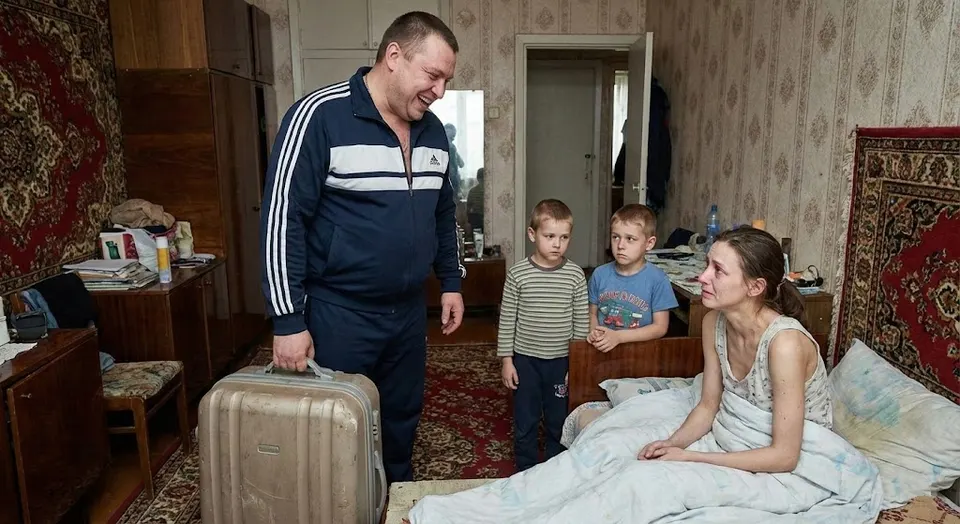
Larisa Cherdantseva was lying on the couch, wrapped in a warm blanket, and looking out the window at the autumn sky.
It was gray, heavy, as if it sensed what was supposed to happen that evening. Her body had long stopped obeying her: leukemia was eating her from the inside, draining her strength drop by drop, bit by bit.
The doctors spoke cautiously, vaguely, but she understood: time was measured in weeks, maybe a month. No more. She was 37 years old. Just recently, she could still cook dinner, do laundry, clean the apartment, and go to work.
Now, even getting up from the couch required an effort that consumed the last crumbs of her energy. Every movement sent a shooting pain through her bones, and every breath was a struggle. But Larisa tried not to show her sons how sick she was.
She would smile when they entered the room, asking about school, friends, and homework. She wanted them to remember her alive, not dying. Matvey, the eldest, already understood everything.
He was 15, and his eyes had become adult-like far too early. He no longer asked when his mom would get better. He just silently helped around the house, looked after his younger brother, did his homework, and tried not to cry in front of his mother.
Larisa saw how he was changing, how his character was hardening, how he was taking on responsibilities he shouldn't have at his age. Yelisey, the younger one, a ten-year-old boy with a lively personality and an open smile, still tried to pretend everything would be alright. He would bring his mom drawings from school, tell her funny stories, hug her, and whisper that she would definitely get well.
Larisa would stroke his head and nod, even though she knew it wasn't true.
— Mom, would you like some tea? — Yelisey peeked into the room, his face hopeful. — I can make it. Matvey taught me how.
— Thank you, sweetie. A little later, — Larisa answered quietly, smiling at her son. — Go do your homework. It'll be evening soon.
Yelisey nodded and left.
Larisa could hear him whispering with his brother in the kitchen. They tried to speak quietly so she wouldn't hear, but the apartment walls were thin. She could make out snippets of phrases: "When is Dad coming?", "I don't know, maybe he'll bring medicine?", "I don't think so."
Matvey stood by the window, leaning on the sill. He was silent, but Larisa could feel his tension. He had always been a serious child, thoughtful and deep. In recent months, he seemed to be turning to stone before her eyes, becoming more and more withdrawn. Larisa knew why. Grigory.
Her husband had stopped being a husband long ago. He appeared home less and less, turning away more often when she tried to speak to him. Before, he at least pretended to be concerned about her health. He would ask how she felt, offer to call a doctor, buy vitamins. Now, even that was gone. Grigory Cherdantsev, a 42-year-old man with an indifferent face and empty eyes, had become a ghost in his own family.
He would come home late, eat dinner in silence, if he ate at all, and go to sleep in another room. Sometimes he didn't even come home for the night, and in the morning, he would toss out a brief "I was held up at work" and disappear again. Larisa sensed it: he was already gone. He just hadn't slammed the door yet. She knew there was another woman. She felt it in his detachment, the smell of another woman's perfume on his shirts, the way he avoided her gaze.
But she remained silent. Not because she was afraid of a fight. She simply didn't have the strength. All her energy went into just breathing, just living one more day.
That evening, Grigory returned home earlier than usual. He walked in without a greeting, threw his jacket on a chair in the hallway, and went straight to the bedroom. Larisa heard him opening the closet, taking out a bag, and starting to pack his things. Metal hangers clinked, drawers were pulled out and pushed back in. Every sound was loud in the evening silence of the apartment.
Her heart clenched, but she forced herself to get up. Holding onto the back of the couch, then the wall, she slowly made her way to the bedroom and stopped in the doorway. Her legs were trembling, her head was spinning, but she held on.
— What are you doing? — Her voice trembled, but she tried to speak calmly.
Grigory didn't turn around. He continued packing shirts, pants, socks. His movements were sharp, nervous.
— What I should have done a long time ago, — he muttered, not looking at her.
— Grigory, look at me, — Larisa pleaded.
He turned around. There was no guilt or regret on his face. Only irritation, fatigue, and a kind of relief. As if he had finally decided to do something he had been putting off for too long.
— I'm leaving, Larisa. To another woman, — he said evenly, as if he were announcing a job change or a move to another neighborhood.
The words hung in the air. Larisa knew this moment would come, but hearing them out loud was more painful than she had imagined. Much more painful.
— What about the children? — She barely managed to force out the question, grabbing onto the doorframe.
Grigory smirked. His face twisted into a grimace that couldn't be called a smile. It was something malicious, cynical.
— Put them in an orphanage. I don't give a damn about them, — he tossed out, zipping up the bag. — I'm not going to carry this burden. You wanted them, you deal with them.
Larisa felt her legs give way. She gripped the doorframe with both hands to keep from falling. Her vision blurred.
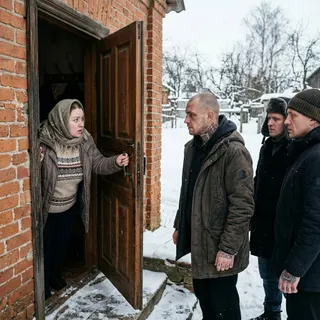
Footsteps came from the hallway. Matvey and Yelisey were standing a few feet from the bedroom, having heard every word. They froze like statues. Matvey looked at his father as if seeing him for the first time. His face turned pale, his lips tightened. Yelisey stood beside him, his eyes wide in disbelief. Tears streamed down his cheeks, but he didn't make a sound. He just stood there, watching his father pack his things.
— Grigory, — Larisa whispered, feeling tears welling up in her eyes, — they are your children. Your own blood.
— They were, — he cut in coldly, picking up the bag and slinging the strap over his shoulder. — Now they're your problem. Though, judging by the way you look, not for long. A month, two — and it will all resolve itself.
Larisa gasped. She hadn't expected such cruelty. He had always been an egoist, she knew that. But to this extent... To say such things to his dying wife, the mother of his children...
Grigory headed for the door. Matvey took a step forward, blocking his path. Father and son looked into each other's eyes. Grigory was taller, broader in the shoulders, but Matvey didn't back down. His teenage frame seemed fragile next to his father, but there was steel in his gaze.
— I will never forgive you for this, — the teenager said slowly, distinctly. There was no shouting in his voice, no hysterics. Only an icy certainty. These were not the words of a hurt child. It was an oath. A sentence.
Grigory laughed. Loudly, harshly, unpleasantly. The laugh sounded fake, strained.
— As if I care. Forgive all you want, — he shoved his son aside with his shoulder, forcing him to step back. — I don't care what you think. Live however you want. I'm not interested anymore. I have a new life now.
He walked to the front door, threw it open, and turned around one last time.
— Goodbye, — he tossed out with a smirk and stepped out onto the landing.
The door slammed shut behind him with such force that Larisa squeezed her eyes shut. The echo of the sound reverberated through the stairwell, bounced off the walls, and then silence fell. A terrible, oppressive, deafening silence.
Larisa could no longer stand. Her legs wouldn't hold her, her hands were shaking. Matvey and Yelisey rushed to her, supporting her from both sides, hugging her, holding her close. She wrapped her arms around them, gathering her last ounce of strength, and began to cry. Quietly, soundlessly, so as not to frighten the children even more. But the tears flowed on their own — hot, salty, endless.
— Mom, don't cry, — Yelisey whispered, burying his face in her shoulder. — Please, don't cry. We'll be together. We'll manage. Right, Matvey?
Matvey was silent, but his embrace was tight, almost desperate. Larisa could feel his whole body trembling as he held back tears. He didn't want to cry. He wanted to be strong. For her. For his brother.
— My darlings, — Larisa whispered, stroking their heads. — My boys. My precious ones. I love you so much. So very much.
They sat on the floor in the hallway, the three of them huddled together. Outside, it grew dark. Somewhere below, the building's front door slammed. It was Grigory, leaving the house, leaving them alone with their pain, fear, and uncertainty. He had left for his new life without a backward glance. Without a single moment of regret to hug his children one last time. Without a single word of comfort to his fading wife.
The following weeks were a nightmare from which it was impossible to wake. Larisa barely left her bed. The disease progressed rapidly. Doctors came, shook their heads, and prescribed new, stronger painkillers.
Their neighbor, Maria Pavlovna, a kind woman of about 55 with a gentle voice and warm hands, came every day. She brought food, helped with the cleaning, changed the bedsheets, and talked to Larisa about simple things, trying to distract her from thoughts of death. Her husband, Yevgeny Petrovich, a quiet, reasonable man with kind eyes, brought groceries and fixed things around the house without asking questions. He understood that the boys needed a man's hand and support. He talked to Matvey, explaining things about life, giving him advice. Matvey listened attentively, gratefully.
Matvey took on everything he could. He woke up early, at six in the morning, made breakfast for himself and his brother, got Yelisey ready for school, and checked his backpack. Then he went to his own classes. After school, he would rush home, not lingering with friends or playing in the yard. He would burst into the apartment, run to his mother, check how she was feeling, and if she needed anything. He helped Maria Pavlovna cook dinner, cleaned, and did the laundry. In the evening, he did his homework by the light of a desk lamp while his mother drifted off to sleep under the effect of her medication.
Yelisey tried to be helpful, but he was still too young to understand the full gravity of the situation. He would just sit by his mother's bedside for hours, holding her hand and telling her about school, friends, and his lessons. About how they played soccer in gym class, how the teacher praised his essay, how he got an A in math. Larisa would listen, smile weakly, and stroke his hand. These moments were the brightest for her.
Larisa was fading before their eyes. Her skin became translucent, thin as paper. She barely ate, only drinking small sips of water. Every breath was a struggle. The doctors came more often but did less and less. They understood: this was the end.
One evening, as Matvey and Yelisey sat beside her bed doing their homework, Larisa called out to them. Her voice was very weak, barely audible.
— Boys, — she whispered, — come here.
They put down their notebooks and sat on the edge of the bed, taking her hands. Her hands were cold, almost weightless.
— Matvey, Yelisey, — she continued, gathering her last bit of strength, — listen to me carefully. Very carefully.
The boys nodded, trying not to cry. They knew why she had called them.
— I know it will be hard for you. Very hard. But you are strong. You will manage. — She squeezed their hands weakly, but firmly. — Promise me. Promise me that you will always be together. Always. That you won't abandon each other. That you will take care of each other.
— We promise, Mom, — Matvey whispered, his voice breaking.
— We promise, — Yelisey echoed, large teardrops rolling down his face.
— And one more thing. — Larisa looked at them, studying their faces, memorizing every feature. — Don't become like your father. Ever. Don't run from difficulties. Don't abandon those who trust you. Don't betray love. Be human beings. Real, honest, good people.
— We will, Mom, — Matvey said firmly, wiping his tears with the back of his hand. — We will never be like him. I swear to you.
Larisa smiled. Faintly, barely noticeable, but sincere.
— I am proud of you, — she whispered. — So proud. You are the best thing that ever happened in my life.
Three days later, she died. Quietly, in her sleep, while Matvey sat beside her, reading her favorite book, "Scarlet Sails," aloud. He reached the middle of a chapter, looked up, and saw that her chest was no longer rising. He felt the hand he was holding turn cold, lifeless. He understood. He didn't scream, didn't cry right away. He just sat there, holding her hand, in silence. Then, quietly, very quietly, he said:
— Goodbye, Mom. Rest in peace.
Yelisey came home from school an hour later and saw his brother sitting by their mother's bed. Matvey was sitting motionless, staring at a single point. His mother lay quietly, peacefully, as if sleeping.
— Matvey? – Yelisey called out, entering the room.
Matvey looked up at him. Yelisey understood everything at once. He didn't want to understand, but he did. The boy rushed to the bed, fell to his knees, and grabbed his mother's hand.
— Mom! Mom, wake up! Please! – he cried, choking on his tears, shaking her hand.
Matvey got off the bed, wrapped his arms around his brother from behind, and held him tightly.
— She's gone, Yelisey. She's not sick anymore. She's not in pain anymore. She's in a better place now.
— No! No! – Yelisey shouted, struggling. – She can't. She can't leave us. She didn't want to!
— She didn't want to, — Matvey said softly, and tears finally streamed down his face. — But she couldn't stay. The illness was stronger.
They cried together, holding each other in the small room that smelled of medicine and wilting flowers on the windowsill. They cried for a long time, until they were exhausted. Maria Pavlovna found them like that – two boys, clinging to each other at the bedside of their deceased mother.
The funeral was modest, almost poor. Maria Pavlovna and Yevgeny Petrovich took care of everything – the paperwork, ordering the coffin, organizing the wake, supporting the boys. They didn't let them worry about the details, about what to do and how. They just did everything themselves, silently, efficiently.
A few people came to the cemetery. A few neighbors who knew Larisa. A few colleagues from her work, where she had been an accountant before her illness. Her sister from another city, who had arrived late the night before. That was all. Grigory didn't come. Matvey looked around several times during the ceremony, as if expecting to see his father, but he wasn't there. And he never would be. Ever.
When the coffin was lowered into the ground, Matvey stepped forward to the edge of the grave, took a handful of earth, clenched it in his fist, and said quietly but firmly:
— Forgive us, Mom. We couldn't save you. But we will keep our promises. All of them.
He threw the dirt into the grave. Yelisey followed, also taking some earth, and whispered through his tears:
— We love you. We will always love you.
After the funeral, when everyone had left, Maria Pavlovna and Yevgeny Petrovich took the boys to their home. They lived in the next apartment on the same floor, a slightly larger three-room instead of a two-room. They had no children of their own, and they treated Matvey and Yelisey as if they were their own flesh and blood, a gift from fate.
— Boys, — Maria Pavlovna said, seating them at the kitchen table and pouring them hot tea, — Yevgeny Petrovich and I have decided. You will live with us. We will formalize the guardianship. No orphanage. Do you hear me? None. You will stay here, in your home, next to us. We will help you.
Matvey and Yelisey exchanged glances. Relief mingled with pain. They were staying. They wouldn't lose their home. But their mother was gone. And she would never be back.
— Thank you, — Matvey said hoarsely, clutching the mug of tea with both hands. — Thank you for everything. We… we will never forget this. Never.
Yevgeny Petrovich came over and placed a large, warm hand on his shoulder.
— You're a strong lad, Matvey. Smart, resilient. And you, Yelisey, you're a good boy too. You'll get through this. We'll get through this together. And we'll help you however we can.
That night, Matvey lay on the sofa in the room they had been given – Yevgeny Petrovich's former study, small but cozy – and stared at the ceiling. Yelisey was asleep on the other sofa nearby, sobbing in his sleep and muttering something. Matvey listened to him and thought. He thought about his father. About how he had left, abandoning them to their fate. About how he had laughed as he slammed the door. About how he didn't even come to say goodbye to the wife who had borne him two sons and loved him, despite everything.
Something hard, cold, and unbending grew in Matvey's chest. Not anger. Not hatred. Resolve. An iron, unshakeable resolve. He made a silent vow to himself. He would become the kind of man his mother would be proud of. He would never abandon his brother. He would work, study, and achieve success. He would never become like Grigory Cherdantsev. Never. Under any circumstances. Even if he had to go through hell.
Five years had passed since that terrible day when Grigory slammed the door and walked out of his sons' lives. Five long, difficult years that changed everyone.
Matvey had turned twenty. He had grown into a tall, strong young man with a serious gaze and confident movements. After high school, he enrolled in medical university. He studied diligently, greedily absorbing knowledge. At the same time, he worked wherever he could: mopping floors in the hospital, working as an orderly, taking night shifts in the emergency room. Money was always needed: to help Maria Pavlovna and Yevgeny Petrovich, who were already spending their last savings on them, to pay for textbooks, to buy clothes for his younger brother.
Yelisey, a fifteen-year-old teenager, was in the ninth grade. He was a straight-A student and dreamed of becoming a lawyer. He often told Matvey: "I will defend those who were abandoned, like us. I will help people fight for their rights." Matvey was proud of his brother. They lived in their mother's apartment, with Maria Pavlovna and Yevgeny Petrovich living next door, helping them with everything. The brothers shared everything, supporting each other through tough times.
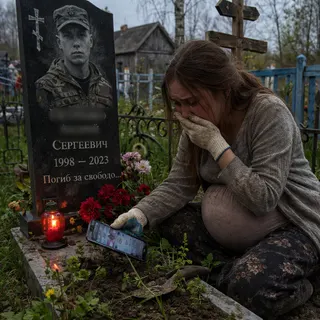
Once a month, the brothers went to their mother's grave. They brought flowers, tidied the grave, and stood in silence, remembering her voice, her hands, her smile. And each time, Matvey would repeat his vow to himself: "Mom, we won't let you down. We will become people you would be proud of."
Life was not easy, but they managed. Maria Pavlovna had become almost a mother to them, and Yevgeny Petrovich a father. They asked for nothing in return, simply loving the boys as their own. Matvey understood what a blessing it was to have such people in their lives. He knew that many children left without parents were far less fortunate.
And somewhere in another part of the city lived Grigory Cherdantsev. His life had taken a very different path. The first year after leaving his family seemed like paradise to him. He moved in with Viktoria, a beautiful young woman of 26 who worked as an administrator at a private clinic. She was vibrant, cheerful, and didn't ask too many questions. Grigory felt free. No sick wives, no crying children, no responsibility. Just him, Viktoria, restaurants, entertainment, and a carefree life.
He spent money left and right. Gifts for Viktoria, expensive clothes for himself, alcohol in the evenings. It seemed to him that life had finally worked out. He forgot about Larisa, about her death, about his sons. Or rather, he tried to forget, pushing the thoughts away whenever they surfaced. Grigory slept soundly and peacefully. He went to work at ten, after Viktoria had already left. He was in no hurry; his job was stable, his salary came regularly, and his superiors didn't demand overtime. He would have breakfast at a café near his home, read the news on his phone, and drink coffee. Then he would go to work, put in his required hours, doing the bare minimum.
In the evening, he would meet Viktoria, and they would go out to have fun. Restaurants, movies, clubs, bars – all this became their usual pastime. Viktoria was pleased; he spent money on her generously, without regret. He bought her perfumes, jewelry, dresses, and bags. She would laugh, kiss him, and say, "You're the best, Grisha." Grigory felt young, free, needed, desired. On weekends, they would travel out of town, rent hotel rooms, take walks, and take pictures. Once, they flew to the seaside for a week, spending almost all his savings, but he didn't regret it. No hospitals, tears, reproaches, or sick wives. No responsibility, children's cries, or sleepless nights. Only pleasure, ease, and carelessness. It seemed to him that it would always be like this. That he had finally found his happiness.
But fate does not forgive betrayal. A year and a half after he left his family, the company where he worked as an engineer announced layoffs. Grigory was fired. He wasn't an indispensable employee, not the best. He was simply let go, given a severance package, and sent on his way.
At first, Viktoria said that everything would be fine, that he would find a new job. But months passed, and Grigory couldn't find anything suitable. The offers were either low-paying, far from home, or generally dubious. He turned them down, hoping for something better. The money dwindled, and Viktoria began to change. She became colder, more irritable. She stopped cooking dinners and stayed late at work more often. And then, one fine evening, she announced:
— Grigory, I've met someone else. He's successful, well-off. I'm sorry, but I'm leaving.
She packed her things and left. Quickly, without a scene, without tears. She simply turned around and walked out the door.
Grigory was left alone in the rented apartment that he could no longer afford. He fell into a depression. He stopped looking for work, stopped taking care of himself. He drank cheap wine, sat at home, and watched TV. The money ran out completely. He had to move into a room in a communal apartment on the outskirts of the city – dirty, small, with alcoholic neighbors.
Another two years passed. Grigory finally found a job as a loader in a warehouse. Hard physical labor for little money. He accepted; he had no choice. He worked from morning till night, carrying boxes, crates, and sacks. His back ached, his hands were sore, but he endured.
At the warehouse, he met Yelena Terekhova. She was 35 and worked there as an accountant. A woman with a tough character, demanding and practical. She had no illusions about life or men. She was looking for someone who would provide, work, and not drink. Grigory fit the bill. Six months later, they were married.
Grigory agreed quickly. He needed stability, a roof over his head, some semblance of a family. Yelena didn't drag it out either. They got married and moved into her one-room apartment. Yelena immediately showed her character. She was bossy, demanding, and controlled every penny. Grigory worked, gave her his entire salary, and received a small amount for pocket money. He resigned himself to it. He had nowhere else to go.
A year later, Yelena gave birth to a daughter, Kamila. Three years after that, a son, Pavel. Grigory loved his children, but raising them was difficult. Yelena raised them strictly, with no tolerance for tantrums, demanding obedience. Grigory tried to be softer, but Yelena would pull him back: "Don't spoil them. They'll grow up entitled."
There was never enough money. Yelena demanded more and more. Grigory had to take a second job – as a night watchman at a construction site. He worked as a loader during the day, came home for a couple of hours in the evening, and then left for his shift until morning. He slept four hours a night, ate in a hurry, and looked worse and worse. Yelena showed him no pity. She would say, "You have to provide for the family. It's your duty." Grigory would nod, stay silent, and keep working.
One evening, when he was already 50, Yelena announced:
— I'm filing for child support. I need a guarantee that you'll support the children if we get a divorce.
— But we're not getting a divorce, — Grigory objected.
— Not yet. But who knows what tomorrow will bring? I have to protect my children.
She filed the papers. The court ordered child support. Yelena took the money but demanded even more for additional expenses: clothes, toys, after-school clubs. Grigory began to break. He was tired, angry, and would snap at his wife. Yelena responded coldly, harshly, forgiving nothing. Their relationship turned into a constant war.
When Kamila turned 10 and Pavel 7, Yelena filed for divorce.
— I don't need you anymore, — she said calmly, putting documents into a folder. — You're not fulfilling your duties as a husband. You'll pay the maximum amount of child support.
Grigory tried to protest, but the court sided with Yelena. He was left alone, obligated to pay child support for two children. Almost all his money was gone. He continued to live in the communal apartment, working two jobs, barely making ends meet.
He went to a notary and asked if he had any claim to his first deceased wife Larisa's apartment. But the notary told him that Larisa had inherited the apartment from her deceased mother before their marriage, and before her own death, she had willed the apartment to her sons in equal shares. There was no mention of Grigory in the will. He left with nothing, realizing that life was making him pay in full for his actions.
Sometimes, lying on the bed in his room while his neighbors screamed and fought through the wall, Grigory would remember his first family: Larisa, her kind face, her quiet voice. He would remember Matvey and Yelisey, little boys who looked at him with hope and love. "Somewhere out there are my two sons," he would think. "I wonder how they are? They must be grown up now. They probably hate me. And they're right to." He never tried to approach them. He was afraid. Ashamed. And for what? He could give them nothing. No money, no support, no love. He was an empty, drained, broken man.
One night, while on duty as a watchman, he saw his reflection in a dark window. A gaunt, gray-haired, stooped man with a lifeless gaze. He was 55, but he looked 75. "What have I done with my life?" he thought. "What have I done to them?" But there was no answer. Only silence, the cold autumn night, and an emptiness inside.
Meanwhile, Matvey was finishing his surgical residency. His mentor was Dr. Rusakov, a highly experienced surgeon, demanding but fair. He had immediately recognized Matvey's talent, his golden hands, his sharp mind. He took him on complex surgeries, explained the intricacies, and shared his experience.
— You will be an excellent surgeon, — Rusakov would say. — You have the most important things — patience and a sense of responsibility. You can't be taught that.
Matvey worked day and night. He studied medical literature, watched recordings of surgeries, and practiced his skills on simulators. He knew: surgery was his calling. Saving lives, restoring people's health — that was something worth living for.
Yelisey enrolled in law school. He chose to specialize in family law. He wanted to help women abandoned by their husbands, children left without support, and everyone who faced injustice.
— I will fight for people like you and me, — he told Matvey. — For those who have been betrayed. So they won't be left defenseless.
The brothers continued to live in their mother's apartment, next to Maria Pavlovna and Yevgeny Petrovich. They visited them every day, helped around the house, and bought groceries and medicine.
— You are family to us, — Matvey would say, hugging Maria Pavlovna. — We will never leave you.
Every month, they still went to their mother's grave. They stood by the grave, told her the news, and shared their successes. Matvey talked about his work, Yelisey about his studies. They felt that she could hear them, that she was proud of them. Life was getting better. It was hard, slow, but steady. The brothers moved forward, overcoming obstacles, never giving up, never breaking. They remembered the promises made to their mother and kept their word firmly.
And Grigory sank deeper into poverty and loneliness. No one visited him. His children with Yelena were growing up but rarely saw their father. Yelena wouldn't allow it. She said he was a failure. "I don't want you to take after him." Kamila and Pavel grew up thinking of their father as a man who couldn't achieve anything in life. They didn't respect him, didn't love him. To them, he was just a source of child support, an obligation that couldn't be shaken off. Grigory felt it. And he remained silent. What could he say? Justify himself? Explain? Words were meaningless. Actions were what mattered. And his actions spoke for themselves. Fate was slowly but surely preparing a lesson for him. A lesson he would learn very soon. A lesson that would change everything.
Fifteen years had passed since Larisa's death. Matvey had turned 30. He had become a surgeon spoken of with respect at the hospital. Young, talented, with nerves of steel and golden hands. Dr. Rusakov was proud of his student and often told his colleagues, "This young man will go far. He has it all – intelligence, patience, compassion." Matvey had recently moved to a large city hospital where the most complex surgeries were performed. He was invited to join the team of leading surgeons. It was a recognition of his skill. He worked a lot, sometimes spending hours in the operating room without a break. He saved lives, fought against death, and won more often than he lost.
Yelisey, at 25, was already a practicing lawyer. He specialized in family law, helping women defend themselves against abusive husbands, fighting for children's rights, and seeking justice in child support disputes. His name was becoming known. Clients came to him through recommendations, thanked him, and cried with relief when he won their cases.
The brothers lived next to each other, in adjacent apartments in the same building. Matvey in their mother's apartment, and Yelisey in the apartment of their guardians, who had left it to the brothers in their will. They met almost every day, supporting each other, sharing their problems and joys. They remembered the promises made to their mother and lived in a way that would make her proud.
Maria Pavlovna had passed away three years ago. Quietly, in her sleep. Yevgeny Petrovich followed six months later; he couldn't live without his wife. Matvey and Yelisey buried them side by side, erected a beautiful monument, and brought flowers every month. They would forever remember the kindness of these people, their care, their love.
Life went on. Work, daily routines, rare weekends. Matvey sometimes thought about his personal life, but he never had enough time for a relationship. Surgery demanded complete dedication. He didn't regret it. He had chosen his path consciously.
And then one day, on a cold October evening when Matvey was on duty in the emergency room, a patient was brought in. An ambulance screeched to a halt, and paramedics jumped out, wheeling out a gurney.
— Male, 57, hit by a car in a crosswalk! — a paramedic shouted, pushing the gurney towards the doors. — Multiple fractures, internal bleeding, traumatic brain injury. Blood pressure is dropping!
Matvey rushed to meet them, quickly examining the patient. The man was unconscious, his face covered in blood, his breathing weak and intermittent. He needed emergency surgery. Every minute counted.
— Get an operating room ready. Immediately! — Matvey commanded. — STAT labs, blood for transfusion, X-ray.
The gurney was wheeled further. Matvey walked alongside, monitoring the patient's condition. In the ER, he was handed a medical chart, hastily filled out by the paramedics. He opened it on the move, his eyes scanning the lines.
Patient's name — Grigory Cherdantsev.
Matvey stopped dead in his tracks. The blood drained from his face. He read the name again. And again. It couldn't be. It was a coincidence. Just a coincidence. But something inside him told him: this is no coincidence. It's him. His father.
Dr. Rusakov, who was also on duty that day, noticed Matvey frozen in the middle of the hallway. He walked over and glanced at the chart.
— What's wrong? — he asked quietly.
Matvey was silent. He couldn't speak. His throat was tight. Rusakov took the chart from his hands and read the name. He looked at Matvey intently.
— You know him? — he asked cautiously.
Matvey nodded. Barely perceptibly.
— He's my father, — he managed to force out.
Rusakov sighed. He knew Matvey's story. Knew about his mother, the betrayal, about how Matvey and his brother had grown up without parents. He understood what must be going through his student's mind right now.
— Then tell me, will you operate, or should I assign the case to another surgeon? — Rusakov asked.
Matvey stood in silence. His mind was a mess. Images from the past flashed before his eyes. His father, leaving home with a bag. His laugh. The slam of the door. His mother, dying on the couch. Her cold hand. His younger brother's tears. Years of poverty, hard work, struggle.
He could refuse. He could say, "Give it to someone else." No one would judge him. It would be a justified refusal. Logical. Understandable.
But Matvey remembered his mother's face. Her last words: "Be human beings. Real human beings." He remembered the Hippocratic Oath he had taken as a medical student. He was a doctor. He saves lives. He doesn't choose who to save and who not to. He doesn't judge, doesn't seek revenge. He just does his job.
Matvey lifted his head and looked Rusakov in the eye.
— I'll operate, — he said firmly. — I will give him life. Just as he once gave me mine. And we will be even.
Rusakov nodded with respect.
— Alright. Let's go then. There's no time.
The surgery lasted six hours. Matvey worked with focus, precision, without a single extraneous thought. He forgot that this was his father. Right now, this was just a patient who needed to be saved. He stopped the bleeding, stitched up torn vessels, set the fractures, removed the hematoma in his skull. His hands moved confidently, without a tremor. Rusakov assisted, observed, occasionally offering advice. He saw how Matvey was handling it and understood: the young man had grown into a true professional. Personal emotions were left outside the operating room door. Here, only medicine reigned.
When the last suture was in place, Matvey straightened up, took off his gloves, and wiped the sweat from his forehead. He was exhausted. But the surgery was successful. The patient was alive. Stable.
— He'll live. Excellent work, — Rusakov said, clapping him on the shoulder. — You saved him.
Matvey nodded silently. The emotions came flooding back. A wave crashed over him. He left the operating room, removed his mask, and leaned against the wall. He had saved his father. The man who had abandoned him and his brother. Who had said, "Put them in an orphanage." Who hadn't come to his mother's funeral. He had saved his life. Why? For what? Because he had taken an oath. Because he was a doctor. Because he was not like Grigory. He doesn't abandon people, even if they abandoned him.
Grigory regained consciousness a day later. Slowly, gradually. He opened his eyes, saw the white ceiling, and felt pain all over his body. He tried to move but couldn't. His body wouldn't obey. A doctor in a white coat was sitting beside him. Young, with a serious face. Grigory didn't recognize him at first. Then his gaze fell on the name tag on his chest: "Cherdantsev, Matvey Grigoryevich. Surgeon."
Cherdantsev. Matvey. His heart stopped. His son. This was his son. A grown, accomplished doctor. A surgeon. He had grown up. Become someone. Without him.
— Matvey? — Grigory rasped. His voice was weak, foreign. — You… you saved me?
Matvey sat motionless, looking at his father. His face was calm, unreadable.
— Yes, — he replied evenly. — But that doesn't make us family.
Grigory felt tears welling up in his eyes. He hadn't cried in years. He thought he'd forgotten how. But now he couldn't hold them back.
— I was a fool, — he whispered. — I ruined my whole life. Mine, yours. Forgive me. Please, forgive me. Son.
Matvey was silent. He looked at his father and saw a pathetic, broken man. Gray-haired, thin, with wrinkles etched by suffering. This wasn't the smug Grigory who had slammed the door and left, laughing. This was a shadow of that man.
— No, — Matvey said quietly, but firmly. — I will not forgive you.
Grigory sobbed.
— But I'm begging you… I'm alone. I have nowhere to go. Stay with me. You and Yelisey. You're my children.
Matvey stood up. He looked down at his father.
— You gave me life, — he said. — I saved yours. Now we are even. Forgiveness is not an obligation. It's a choice. And my choice is no.
— Matvey, please… — Grigory reached out, trying to grab his son's coat.
Matvey took a step back.
— You walked away many times, — he continued. — From us, from responsibility, from pain. Now it's your turn to be left alone. To feel what it's like to be abandoned.
He turned and walked out of the room. The door closed behind him with a soft click. Grigory was left lying alone, staring at the ceiling. Tears streamed down his face, but he didn't wipe them away. He just lay there and cried. Silently, bitterly.
Matvey walked down the hospital corridor feeling an emptiness inside. Not relief. Not satisfaction. Just emptiness. He had done what he had to do. Saved a life. But refused forgiveness. It was right. It was logical. But why did his heart feel so heavy?
He took out his phone and dialed his brother's number.
— Yelisey, — he said when his brother answered. — I need to talk to you.
That evening, the brothers met at Matvey's apartment. He told him everything. Yelisey listened in silence, his face pale. When Matvey finished, the younger brother was silent for a long time.
— You saved him, — Yelisey finally said. — Why?
— Because I'm a doctor, — Matvey replied. — And because I'm not him. I can't leave a person to die, even if that person is him.
Yelisey nodded.
— And forgiveness?
— No, — Matvey said firmly. — Never. He doesn't deserve it. Mom died alone. We grew up without him. He chose his path. Let him walk it to the end.
Yelisey went to the window and looked out at the night city.
— You know, I always thought that if I ever met him, I would hit him, — he said quietly. — Or yell at him. Or tell him how much I hate him. But now... now I just don't care. He's a nobody to me. An empty space.
— Exactly, — Matvey agreed. — An empty space. And let him stay that way.
The brothers stood by the window, silently gazing at the city lights. They had been through so much. They had lost their mother, grown up without a father, survived thanks to strangers, and forged their own paths in their studies and careers. They had become who they wanted to be. Strong. Honest. Worthy. And somewhere, in a hospital room, lay Grigory Cherdantsev, realizing he had gotten what he deserved. His son had saved his life but denied him forgiveness. And that was fair. Cruel, but fair. Fate was preparing one last lesson for him. The most bitter one.
Grigory spent three weeks in the hospital. His condition stabilized, his fractures began to heal, but the consequences of the trauma were severe. The doctors said a full recovery would take months, maybe years. He would be able to walk, but with difficulty. Physical labor was unlikely. Disability was inevitable.
Matvey visited him only as part of his medical duties. He would come in, check his condition, give instructions to the nurses, and leave. No personal conversations. No emotions. Only professionalism. Every time, Grigory tried to talk to him. He would ask him to stay, to talk, to listen. Matvey would respond curtly, "I have other patients to see," and leave. He wasn't being cruel. Just detached. As if the man lying before him wasn't his father, but just another patient.
One morning, Grigory asked a nurse to call Matvey. He said he wanted to have a serious talk. The nurse relayed the request. Matvey came during his lunch break and sat on the chair by the bed.
— I'm listening, — he said evenly.
Grigory lay there, staring at the ceiling. It was hard to speak — not physically, but emotionally. The words got stuck in his throat.
— Matvey, — he began hoarsely, — I know I have no right to ask you for anything. But I want you to know. All these years, I've been keeping an eye on you and your brother. From a distance. I found out how you were living, what you had achieved.
Matvey frowned.
— Keeping an eye? — he asked with disbelief.
— Yes, — Grigory nodded. — I asked the old neighbors. Sometimes I saw you from afar at the cemetery when you came to visit your mother. I knew you became a doctor. That Yelisey is a lawyer. I… I was proud of you.
— Proud? — Matvey's voice turned colder than ice. — You have no right to be proud of us. You have nothing to do with our success. We became who we are in spite of you, not because of you.
Grigory closed his eyes. His son's words cut like a scalpel.
— I know, — he whispered. — I know everything. I'm not asking for forgiveness. I just want… I want to see you both. You and Yelisey. To talk. Just once.
— Why? — Matvey asked. — What will that conversation change?
— Nothing, — Grigory admitted. — But I need to tell you. To tell you how sorry I am. How much I regret what I did. How I've spent all these years in a hell of my own making.
Matvey stood up.
— Your regrets are your problem, — he said harshly. — You made a choice fifteen years ago. You chose freedom, an easy life, another woman. You chose to abandon your dying wife and two children. Now live with that choice. Alone.
— Matvey, please… — Grigory tried to sit up in bed, but a sharp pain shot through his body. He groaned and fell back onto the pillow.
Matvey stood motionless, looking at his father. Something stirred within him — pity, compassion. But he suppressed those feelings. No. He had no right to feel sorry for this man. No one felt sorry for his mother. No one felt sorry for him and his brother.
— When you're discharged in a week, you'll get a certificate. Go and apply for disability, — Matvey said matter-of-factly. — You'll be able to receive a pension. It will be enough for a modest life. That's all I can do for you as a doctor. The rest is not within my competence.
He turned and headed for the door.
— I'm alone, — Grigory whispered after him. — I have nowhere to go. Help me. Son.
Matvey stopped at the door but didn't turn around.
— You left us alone when we were children, — he said quietly. — We had nowhere to go either. But we managed. Now it's your turn to manage. You're a grown man. You'll figure it out.
He walked out, closing the door behind him.
Grigory was left lying there, staring into space. Tears streamed down his face again. He cried silently, bitterly, hopelessly.
A week later, Grigory was discharged. They gave him all the necessary documents, a disability certificate, and prescriptions for medication. A hospital social worker helped him find a place in a home for the disabled, but Grigory refused. He didn't want to go there. He wanted to live on his own. He returned to his room in the communal apartment. The neighbors looked at him with curiosity but offered no help. Grigory somehow made it to his bed and collapsed onto it. His body ached, his head was spinning. He understood: living alone would be very difficult. His disability pension was minuscule. It was barely enough for food and medicine. He could no longer work.
Grigory tried to contact Yelena to ask for help. She responded coldly: "You should have thought about that earlier. Been a good husband." Kamila and Pavel didn't visit him. Yelena had convinced them that their father was a loser and a weakling, from whom there was nothing to gain. They grew up with this idea and wanted nothing to do with him.
Grigory was completely alone. No one came, no one called. The neighbors in the communal apartment weren't interested in him. He lay in bed for days on end, staring at the ceiling and thinking about his life. How did it all go so wrong? When did he make the fatal mistake? Was it when he left Larisa? Or earlier? Maybe when he stopped loving his family and started looking for the easy way out? There were no answers. Only emptiness, pain, and the realization that he had brought this upon himself.
One evening, he made up his mind. He took out his old phone and found information about Yelisey online. He found out where he worked – a law firm in the city center. Grigory knew that going there would be humiliating. But he had no choice. He needed help.
He managed to take a bus to the center. Limping, leaning on a cane, he climbed to the third floor of the old building where the firm was located. He opened the door and entered the reception area. The secretary, a young woman, looked at him with bewilderment.
— Hello. Who are you here to see? — she asked politely.
— Yelisey Cherdantsev, — Grigory said. — Tell him… Tell him his father is here.
The woman raised her eyebrows in surprise but nodded.
— Please wait a moment.
She went into an office. Grigory sat down on a chair in the reception area, breathing heavily. His legs ached, his back hurt. A minute later, Yelisey came out. He had grown up, become a tall, well-built young man with a firm gaze and confident movements. He was wearing a smart suit and tie. He looked successful, established. Yelisey stopped in the doorway of his office. He looked at his father without emotion.
— Why are you here? — he asked curtly.
Grigory stood up, leaning on his cane.
— Yelisey, son… — he began.
— I am not your son, — Yelisey cut him off. — Answer the question. Why are you here?
Grigory swallowed hard.
— I need help. Financial help. I'm disabled, I can't work. Maybe you could help me? Financially… Pay some amount per month, whatever you can afford.
Yelisey listened in silence. Then he smirked. Coldly, without joy.
— You want me to help you? — he asked again. — Seriously? I understand this sounds…
— …Strange, — Grigory mumbled. — But I have nowhere else to turn.
Yelisey nodded.
— Yes, I know. And I can tell you this: you have no right to receive alimony from me. Because you didn't pay alimony when you abandoned us and left fifteen years ago.
Grigory turned pale.
— But I'm disabled. I have nothing to live on.
— And did my brother and I have anything to live on when you left? — Yelisey asked harshly. — We were ten and fifteen. We were left with a dying mother, without money, without support. You abandoned us. Now reap what you sow.
— Yelisey, I'm begging you… — Grigory took a step forward, extending his hand.
Yelisey stepped back.
— You know what's funny? — he continued. — You didn't come to apologize. Not to say you're sorry. You came to ask for help. You've always only thought about yourself. And you still do.
Grigory opened his mouth to object, but no words came. Yelisey was right. He hadn't come to make peace. He had come to ask.
— Leave, — Yelisey said quietly, but firmly. — And don't show up again. Not to me, not to Matvey. We don't want to see you. You are an empty space to us. Understood?
— But I'm your father, — Grigory whispered.
— Biologically, yes, — Yelisey agreed. — But in essence? In essence, you are nothing. A father is someone who raises, loves, protects. You did none of that. You just gave us life. Matvey paid you back in kind — he saved your life. Now we're even. And you owe us nothing more. And we owe you nothing either.
Grigory stood there, swaying on his feet. His strength had left him. He turned and slowly walked towards the exit, limping, leaning on his cane. Yelisey watched him go, not moving from his spot. At the door, Grigory stopped and turned around.
— You grew up to be good men, — he said quietly. — Better than me. Much better. Your mother would have been proud.
Yelisey didn't answer. He just remained silent. Grigory nodded and left, closing the door behind him.
Yelisey returned to his office, sat down at his desk, and buried his face in his hands. Everything inside him was churning. Anger, pain, pity, relief. It all mixed into one big knot. He thought a meeting with his father would leave him indifferent. But it didn't. It hurt. It hurt a lot.
In the evening, he called Matvey and told him about the visit.
— He asked for help, — Yelisey said. — Not forgiveness. Help.
Matvey listened in silence.
— And what did you say? — he finally asked.
— I refused.
— Let him live with it.
The brothers fell silent. Each lost in his own thoughts. About their mother. About the past. About how they had gone through hell and survived. And their father? Their father got what he deserved. Justice had been served. Cruel, but just.
Grigory walked down the street, limping, leaning on his cane. It was cold. A light autumn rain began to fall. He was in no hurry. He had nowhere to go. No one was waiting for him at home. No one was waiting for him anywhere. He sat down on a bench in a small park, placing his cane beside him. He watched the passersby: families with children, couples in love, elderly people holding hands. None of them were alone. They all had someone. But he was alone. Completely alone. And that was the price of his choice. The price of betrayal. The price of selfishness.
He closed his eyes and began to cry quietly. Right there, on the bench, in the light rain. No one paid him any attention. Just a lonely, sick man crying. There are many like him. The city is indifferent to the sorrows of others.
And somewhere in another part of the city, Matvey and Yelisey met, hugged, and went to have dinner together. They were together. Always. Just as they had promised their mother. And that gave them the strength to live on.
Another two years passed. Matvey turned 32. He had become one of the leading surgeons in the city. His name was known not only in the hospital but beyond its walls. Patients came to him from other regions, trusting him with the most complex operations. He had saved hundreds of lives, given people back their hope, health, and future.
He had recently married a general practitioner named Anna, a kind, intelligent woman who understood his work and supported him in everything. They met at the hospital and grew close gradually, without rushing. Anna knew about his past, about his mother, about his father. She never pressured him, never demanded to meet Grigory, never spoke of forgiveness. She was just there for him, loving him for who he was. They had a daughter. They named her Larisa — in honor of Matvey and Yelisey's mother. He held the tiny girl in his arms and felt a warmth spread through his body. This was happiness. Real, simple, human happiness. Something he had been deprived of in his childhood. Now he had given it to his daughter. And he always would.
Yelisey, at 27, had become a well-known lawyer. His firm had grown; he had taken on several partners and opened branches in other cities. He specialized in protecting the rights of women and children in family disputes, helping to achieve justice where it seemed impossible. He won difficult cases, restoring people's faith in the law. He too had found his love — Darya, a psychologist who worked with children from troubled families. They married in the spring, a modest ceremony with a small circle of friends. Darya resembled Yelisey's mother: quiet, wise, with a kind heart. He told her everything about his childhood, and she cried, hugging him, saying, "You went through so much pain, but you remained a good person. I'm proud of you."
The brothers still met every day, had dinner together, discussed work, plans, and life. Their wives became friends, and their children — little Larisa and Yelisey's newborn son, whom they named Yevgeny in honor of Yevgeny Petrovich — grew up together, like a brother and sister.
Every month, the brothers still went to the cemetery. Now with their wives. They brought flowers to three graves: their mother Larisa's, Maria Pavlovna's, and Yevgeny Petrovich's. They stood in silence, remembering, giving thanks. Matvey always said aloud, "Mom, we kept our promise. We are together. We became good men. We are happy."
Their lives had turned out well. They had built what their father had once destroyed: family, love, support, warmth. They had created what they had been deprived of — a home where they were awaited, where they were loved.
And Grigory Cherdantsev was living out his days in poverty and loneliness. He was 59. He lived in the same room in the communal apartment on the edge of the city. His disability pension was minuscule. He ate cheap grains, pasta, discounted sausages, and sometimes bought bread and tea. There often wasn't enough money for medicine, and disability didn't cover all the necessary medications. He had to choose: buy pills or eat.
He moved with difficulty, leaning on a cane. The consequences of the accident were ever-present: pain in his back, joints, and head. Doctors said he needed regular rehabilitation, massage, and physiotherapy. But where would he get the money? He couldn't even afford to visit the clinic regularly.
The neighbors in the communal apartment didn't speak to him. He was a stranger, a quiet, sullen man. No one asked how he was, if he needed help. Everyone was busy with their own problems.
His children with Yelena grew up and forgot about him completely. They didn't visit, didn't call, weren't interested. Yelena had convinced them that he was a loser, a weakling, a burden. They grew up with this thought and accepted it as a given. Grigory tried to contact them several times. He wrote letters, called. Kamila would answer briefly, dryly: "I don't have time, Dad. I'm busy." Pavel didn't pick up the phone at all. Yelena once told him bluntly: "Don't bother the children. You're a nobody to them. Get used to it."
He got used to it. He resigned himself. He understood that no one would come, no one would help, no one would comfort him. He was alone. And so it would be until the end.
Sometimes, sitting on the bed in his squalid room, Grigory would remember Larisa — young, beautiful, with kind eyes. How she laughed, how she cooked his favorite dish, how she hugged him. How she was dying on the couch while he packed his suitcase and walked away without looking back. He remembered Matvey, the serious boy who looked at him with hope. Who said, "I will never forgive you for this." And he kept his word. He remembered Yelisey, the cheerful, open little boy who cried when his father left. Who grew up and said, "You are an empty space to us."
He remembered Viktoria, who left him for a rich man. Yelena, who used him and threw him away. Kamila and Pavel, who didn't consider him their father.
They all left. They all abandoned him. Just as he had once abandoned Larisa and his sons.
Was it fair? Yes. Was it painful? Unbearably so.
One day, he decided to try one more time. The last time. He managed to get to the hospital where Matvey worked. He wanted to see his son, to talk, to ask. Ask for what? Money? Forgiveness? Just attention? He didn't know. He just wanted to see him.
He sat on a bench near the hospital entrance, waiting. He watched the people coming and going. Doctors, nurses, patients, visitors. Life was bustling. People were in a hurry, busy with their own affairs.
And then he saw Matvey. His son was leaving the hospital. A beautiful young woman was walking beside him. She was holding a little girl in her arms. Matvey was smiling, his arm around his wife's shoulders, kissing his daughter's nose. They looked happy. A real family.
Grigory stood up, took a step forward, wanting to call out. But he stopped. Matvey didn't see him. They walked past, got into a car, and drove away.
Grigory stood there, watching them go. He understood: they didn't need him. Not at all. They had their own lives, their own families, their own happiness. There was no place for him there. There never was, and there never would be.
He turned and slowly walked away, leaning on his cane. Passersby went around him, paying no mind. Just a sick man. There are many like him.
Another year passed. Grigory grew very weak. His pension wasn't even enough for food. He lost weight, became gaunt, and aged even more. He moved with great difficulty, spending most of his time in bed. An elderly woman who was his neighbor in the communal apartment sometimes brought him soup and bread. Out of pity, nothing more. She would say, "Eat. Or you'll die." Grigory would thank her silently. He ate greedily. He was almost always hungry.
Another year passed. One day, Grigory was walking down the street, not paying attention to where he was going. He reached a small park near the hospital and sat on a bench. Nothing had changed. He was still alone. Still unwanted. He sat, watching the passersby. Families, couples, children. They were all hurrying somewhere, to someone. They all had a purpose, people waiting for them. But no one was waiting for him. Anywhere.
After a while, Matvey walked by. He was walking fast, talking on the phone, smiling. He didn't notice his father on the bench. Or maybe he did, but didn't let on. Grigory watched him go. Matvey was tall, strong, confident. Successful. Happy. He had become who he wanted to be. He had built his life himself. Without a father. In spite of his father.
Matvey turned a corner and disappeared from view. Grigory remained seated. He understood: his son would never stop for him again. Never ask how he was doing. Never extend a helping hand. Was it fair? Yes. Was it painful? Unbearably so.
But it was his choice. Fifteen years ago, he had chosen freedom over responsibility. The easy path over the right one. Himself over his family. Now he had the result of that choice. Loneliness. Poverty. Oblivion.
Fate makes everyone pay their dues. No exceptions.
Grigory closed his eyes. He remembered how Matvey, a 15-year-old boy, had told him back then: "I will never forgive you for this." And he hadn't forgiven him. He kept his word. And Grigory was left alone. Just as he had once left his sons.


Share how the story made you feel
0Comments appear after a quick automatic check. Please no links, ads or personal data.
Next to your name we show your country, determined from your IP address; the address itself is never shown, and only a hashed fingerprint of it is kept to stop spam.