
 Let’s Keep It Real
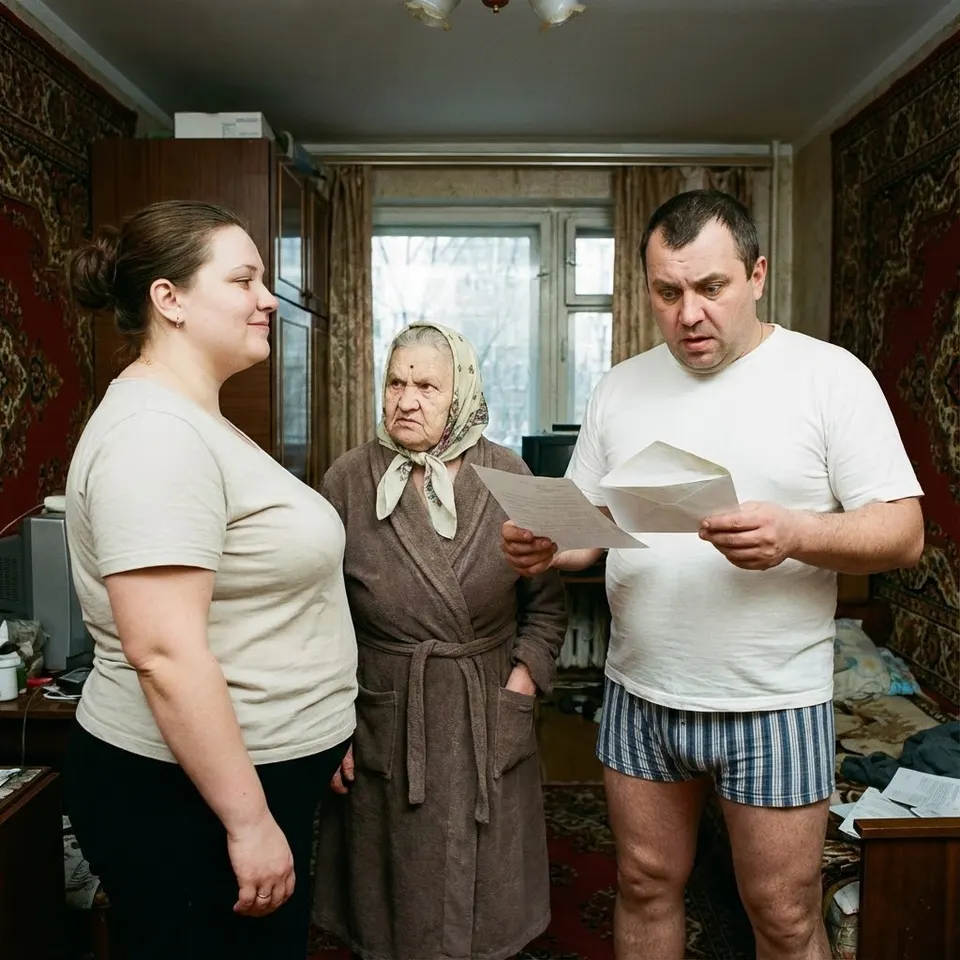
New Year's Eve promised to be magical, but beneath the clinking glasses and festive lights, a carefully planned retribution was hiding. While everyone was preparing to make a wish to the chiming of the clock, a young woman was preparing completely different surprises for her family.
— Happy New Year, mother-in-law! Here is your gift.
"Eviction Notice." These words sounded like a bolt from the blue.
— And for you, darling, the divorce papers.
Kira saw her husband's apartment for the first time two weeks after the wedding. Before that, they rented a studio on the outskirts because Artem said it was impossible to live with his mother. Despotic, always dissatisfied with everything... Kira nodded, believed him, and was glad that at least in this they were lucky. They could start with a clean slate, without parental supervision.
But at the end of the first month of living together, the money ran out. Artem worked as a manager in a construction company. His income was unstable: sometimes thirty thousand, sometimes fifty, depending on which projects were completed. Kira worked as an accountant in a small firm for forty-five. The studio rent ate up twenty-eight. And when it was time to pay for the second time, Artem sighed:
— Maybe we should move in with my mom after all? Well, at least for a while, until we save up for something of our own.
Kira gritted her teeth. She knew that "for a while" never works out in such stories. But there was no choice. Continuing to save for rent meant getting into debt.
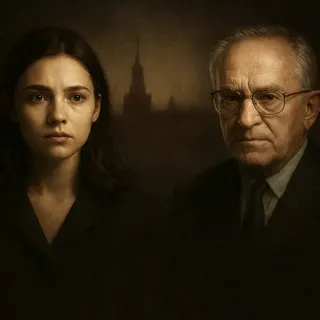
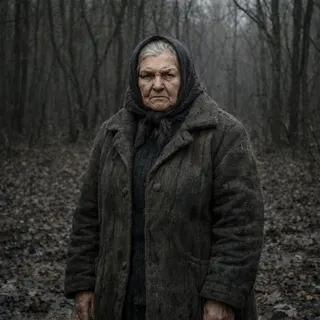
The apartment turned out to be a three-room flat in an old brick building not far from the center. Bright rooms, high ceilings, parquet flooring. Her mother-in-law, Zhanna Borisovna, met her at the door with a strained smile. Tall, bony, with short-cropped, steel-colored hair. A massive chain around her neck, three rings with stones on her fingers. She was dressed in a house suit that, as Kira later realized, cost more than her monthly salary.
— Well, hello, lovebirds! — said Zhanna Borisovna. — Come in, make yourselves at home. Artem, do you remember your room? Go on in there.
Kira had expected something worse, but the first week went by relatively peacefully. Zhanna Borisovna worked at the tax office, came home late, had dinner, and went to her bedroom. In the mornings, they hardly crossed paths. Artem left early, Kira a little later, and her mother-in-law was the last to get up.
The problems began in the second week when Kira decided to make dinner. She bought groceries for one and a half thousand, made a roast, a salad, and baked a charlotte. Zhanna Borisovna came in, looked at the table, and pursed her lips.
— You're quite the homemaker, — she said. — Just next time, warn me what you're going to cook. I bought a chicken, and now I don't know what to do with it.
Kira smiled uncertainly:
— I just wanted to do something nice for you.
— Doing something nice is good, but I'm used to managing my own kitchen. Forgive me, dear, but every hostess has her own rules.
After dinner, Zhanna Borisovna demonstratively washed all the dishes herself, loudly arranging the plates and sighing. Kira sat in her room, feeling a knot of resentment tightening inside her.
— Don't pay any attention, — said Artem, lying on the sofa with his phone. — She's always like that, she'll get used to it.
But Zhanna Borisovna didn't get used to it. She started finding fault with everything: the way Kira hung the towels in the bathroom; the fact that the girl supposedly spent too long in the shower; that the light in their room was on late at night — electricity is expensive these days, you know. The shoes in the hallway, the shampoo that smelled too strong.
Artem would brush it off:
— Mom, that's enough. Kira lives here, she's not a guest.
— Exactly, she lives here, — retorted Zhanna Borisovna, — and she could at least say thank you. Or do you think it's normal to just move into someone else's apartment like that?
— What do you mean, someone else's? I'm registered here too.
— Registered, — his mother nodded coldly, — but I am the owner. And I'm not reminding you of this for no reason.
Kira tried to stay out of these squabbles. She cooked quietly in the kitchen, cleaned up quickly, wiping everything sparkling clean behind her. But it wasn't enough. Zhanna Borisovna seemed to look for reasons to be dissatisfied. One day, she threw a tantrum because Kira had washed her own laundry with the towels.
— That's not how we do things in our family. Laundry is washed separately.
— Okay, — Kira answered quietly. — I won't do it again.
— Good. One needs to understand who is the boss of the house from the very beginning.
Artem remained silent. And then the story with the money began. One morning at breakfast, Zhanna Borisovna announced that since there were now three people living in the apartment, the utility bills had increased, and it would be fair if the young couple chipped in.
— How much? — Kira asked.
— Ten thousand from each of you.
Kira was stunned. The utility bills for a three-room apartment, even in winter, didn't exceed eight thousand.
— Where did twenty come from? Mom, that's too much, — Artem began.
Zhanna Borisovna interrupted him:
— I also included the internet, television, intercom, plus the building's maintenance fund, plus water, electricity. If you don't like it, rent your own place.
They paid. After that, Kira was left with twenty thousand. A week later, her mother-in-law asked for another five. Supposedly, a plumber had to be called because the faucet in the bathroom was leaking.
— It's because of you, — she said meaningfully, — you turn it too tight.
Kira paid again, although they ended up fixing the faucet themselves, and Artem spent three hundred hryvnias on parts. Zhanna Borisovna loved to shift expenses. She would buy groceries and then calculate aloud in the kitchen how much of what was eaten, hinting that it would be nice to be compensated. Kira started buying food separately and hiding it in her room. But that didn't suit her mother-in-law either.
— Why are you scurrying around with your bags like a mouse? Are we strangers here?
— I just don't want to be a burden, — Kira replied, a lump forming in her throat.
— Yeah, right. But the refrigerator is mine, the stove is mine, the dishes are mine, and you're here like a tenant.
Artem said nothing. He would come home from work exhausted, lie down on the sofa, and turn on a TV series. Kira tried to talk to him, but he would brush her off:
— Later, Kir, I'm tired.
She endured. She thought, just a little longer, a couple more months, and they would save up enough to rent a place. But in November, Artem's salary was delayed. Then again.
— The project fell through, — he said.
Kira believed him, although it was impossible to check. All the money went to utilities, food, and gas. Her forty-five thousand disappeared in two weeks. And Zhanna Borisovna continued to pressure her. She started complaining about her health and hinting that it would be nice if the young couple bought her medicine. Kira bought it. Her mother-in-law asked her to bring groceries from the market:
— I don't have time, and you're just sitting at home on the weekend.
Kira brought them. One day, Zhanna Borisovna demanded she pay for a taxi to the clinic because "my back hurts, I can't be jostled on the bus."
— Mom, you have a car, — said Artem.
— It's at the mechanic's, — the mother-in-law snapped.
The car was parked in the yard. By mid-December, Kira realized she couldn't take it anymore. She started looking for options. She rented a room on the far outskirts for twelve thousand a month. She decided to move out alone, let Artem stay with his mother if it was so convenient for him. But when she hinted at this to him, he suddenly got scared.
— Kira, are you serious? We're a family.
— What kind of family, Artem? You don't even stand up for me.
— I try, but she's my mother, I can't kick her out.
— But you can kick me out?
He remained silent. And in that silence, Kira understood the main thing: he would choose his mother. Always. Because it was easier.
That same evening, she went for a walk and accidentally met a neighbor from her floor, an elderly woman named Klara Mikhailovna. They got to talking. The neighbor sighed:
— I feel sorry for you, girl. Zhanna is quite a piece of work. She drove out Artem's first daughter-in-law, and the second one too. You, it turns out, are the third.
Kira was dumbfounded:
— What second one?
Klara Mikhailovna chuckled:
— Didn't he tell you? Of course, why would he... Artem was married twice before. The first time at twenty-three. They lasted half a year. The second wife left after a year. Both fled from Zhanna. She pressured them so much that the girls couldn't take it. And Artem never once stood up for them. He's a mama's boy, dear. You should leave too. Before it's too late.
Kira returned home and lay down on the bed. Artem was asleep. She stared at the ceiling and thought. Why was she enduring this? For what? The next day, she took a day off and went to her grandmother's. She lived in the suburbs, in a small private house. Her grandmother was strict but fair. Kira told her everything.
Her grandmother listened in silence, then stood up and took an old folder from the sideboard.
— Your grandfather left me this house. But I want you to have it. I've been meaning to transfer it for a long time, but never got around to it. Now is the time.
— Grandma, what are you saying? — Kira didn't understand.
— I'm saying this house is yours. I'm gifting it to you. We'll go to the notary today. We'll get everything in order. And then you can decide what to do with it. Sell it and start a new life. Or move in here. Or rent it out. But you'll have a foundation. So that no one can ever dare to kick you out of their apartments again.
Kira started to cry. She hugged her grandmother and couldn't let go. They went to the notary that same day. The gift deed registration took a week. They needed to get the grandmother's consent at the notary, order a technical plan, and submit the documents to the State Register. The house was old but sturdy. The plot was six hundred square meters. Its market value was about three million. For Kira, this was an astronomical amount of money.
But she wasn't going to sell it. She decided to rent the house out. She found a married couple who were looking for a place away from the city. They agreed on twenty-five thousand a month. It was a gift from fate. In parallel, Kira started saving. She stopped giving Zhanna Borisovna a single kopek. When her mother-in-law asked for money for medicine again, Kira answered coldly:
— I don't have any.
— What do you mean you don't? You work.
— I do. But my money is my business.
Zhanna Borisovna turned purple:
— Oh, so that's how you're talking now! Artem, do you hear this?
Artem was silent, buried in his phone. Kira went to her room and locked the door. That evening, she made a final decision: to leave. But not just like that. She wanted them to remember.
The preparation took three weeks. Kira rented a tiny studio for fifteen thousand. She found a place through acquaintances. She packed her things in parts, carrying them out of the apartment little by little so as not to arouse suspicion. She found a lawyer and consulted about the divorce. She learned that if there was no jointly acquired property and no children, the court would grant a divorce one month after filing the application, and she would receive the divorce certificate another month after that.
And Kira also found out something interesting. One day, while rummaging through the apartment documents (Zhanna Borisovna kept them in an old chest of drawers in the living room), she discovered that the apartment was registered in Artem's name. The privatization had taken place ten years ago, and he was listed as the sole owner. Zhanna Borisovna was registered there, but had no ownership rights. Kira photographed the documents and showed them to Artem that evening.
— Did you know?
He nodded guiltily:
— I knew. But Mom always said it was her apartment, and I didn't argue. You know, it just felt awkward.
— Awkward, — Kira repeated in an icy tone. — And was it convenient for me to tolerate her rudeness?
— Kir, come on, let's not.
At the end of December, Artem suddenly announced that he had quit his job. Just like that. He said he was tired, wanted to take a break, and would find something better after the New Year.
— What do you mean, you quit? — Kira couldn't believe it. — We have no money.
— Well, that's why we moved in with Mom. She'll help.
Kira understood. He wasn't even going to try. He would just shift everything onto his mother and her, if he could. That's when she decided to act.
On December thirtieth, Kira woke up at six in the morning. She packed her last things, put them in a bag, and called a taxi for midnight, right after the clock struck twelve. She spent the whole day in a daze. Zhanna Borisovna was bustling in the kitchen, making Olivier salad and slicing sausage. Artem was lying on the sofa, watching some show. Kira sat in her room, sorting through documents. Two envelopes. The first contained the divorce application, which she would file at the registry office on January second. The second contained a printout of the extract from the Unified State Register of Real Estate for the apartment, confirming that Artem was the owner. Which meant that he was the one who could evict Zhanna Borisovna, if he wanted to.
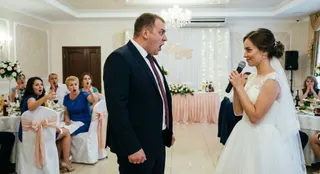
At eleven in the evening, they sat down at the table. Zhanna Borisovna was pouring champagne, Artem was picking at his salad, Kira was silent. The clock showed five minutes to twelve. Zhanna Borisovna turned on the TV, the broadcast began.
Kira took out the envelopes. The clock began to chime. The first strike. Kira stood up.
— Happy New Year, Zhanna Borisovna!
Her mother-in-law turned, raising an eyebrow in surprise:
— And to you too, dear!
— Here is my gift for both of you! — Kira placed both envelopes on the table. — Divorce papers. And an extract from the State Register. So that you, Zhanna Borisovna, know whose apartment this really is.
Zhanna Borisovna snatched the first envelope, tore it open, and scanned it. Her face fell.
— What? Are you out of your mind?
Artem unfolded the second sheet — the extract from the USRRE. He read it. His face turned pale.
— What is this?
— It's a document confirming that the apartment is yours. Which means you can evict your mother from it. I just wanted you to know, just in case.
Zhanna Borisovna jumped up:
— Artem, say something to her!
But Artem was silent. He looked at the extract, and there was confusion in his eyes.
— Kira, wait! Let's talk! — he began, but she was already putting on her jacket.
— There's nothing to talk about. The taxi is waiting.
— You can't just leave like this! — screamed Zhanna Borisovna. — You're on my territory. I won't let you!
Kira turned around and looked her in the eyes:
— On your territory, Zhanna Borisovna? Read the documents. You are only registered here. If Artem wants, he can have you evicted through the court. So, maybe you should have been a little nicer to your daughters-in-law? Happy New Year!
She walked out the door without looking back. The elevator arrived quickly. A taxi was waiting for her downstairs. The driver helped load her bags. Kira got into the back seat and only then exhaled.
— Where are we going? — asked the driver.
She gave the address.
— A new studio. A new life.
On the way, she received a message from Artem: "Kira, do you really want a divorce? Let's talk about everything. I'm ready to change." She didn't reply. She just blocked his number.
Two months later, the divorce was finalized. Kira filed the application at the registry office by mutual consent. Artem eventually signed. Another month later, she received the divorce certificate and met a friend at a cafe that same day. They had coffee, and her friend asked:
— So how are you? Any regrets?
Kira shook her head:
— Not for a second.
— And what about them? Have you heard anything?
— Klara Mikhailovna told me, — Kira replied. — After that New Year's Eve, Zhanna Borisovna threw a tantrum at Artem. She demanded that he bring me back. And when she realized I was already gone, she turned on him. Said it was all his fault, that he didn't keep me. And then it suddenly turned out that the apartment was his. She was in shock. She thought she was the owner, but it turned out to be her son. Now she walks on tiptoes, afraid he'll actually evict her.
— And him?
— He's doing nothing. Sits at home, looking for a job. Or pretending to. Zhanna Borisovna now fusses over him. Cooks, cleans, doesn't say an extra word. Afraid of losing the roof over her head.
Her friend snorted:
— Justice has prevailed.
— Yes, but it's no credit to me. They drove themselves into this corner.
Kira ran into Artem by chance six months after the divorce in a shopping mall. He was walking with bags, looking haggard, in an old jacket. He saw her and was flustered. Kira stopped.
— Hi.
— Hi. — He lowered his eyes. — How are you?
— Good. And you?
— I'm okay. Found a job. In logistics. The pay isn't great, though. — A pause. Artem shifted from foot to foot. — Kir, I wanted to say... I'm sorry. Really. I understand everything now. Too late, of course, but I understand.
Kira looked at him and suddenly realized she felt nothing. No anger, no pity. Just emptiness.
— It's okay, these things happen. Good luck.
She walked on without looking back.
In the summer, Kira met someone new. A programmer who was renting an apartment nearby. They bumped into each other at a coffee shop where they both liked to get their morning cappuccino. They got to talking, called each other, met again, and then again. No vows, no promises. Just two adults who were interested in each other.
One day he asked:
— Were you married?
— I was. Not for long.
— Want to talk about it?
She shook her head:
— Not really. It's in the past.
He nodded:
— Got it.
And he didn't insist. She liked that.
Her grandmother died at the end of October. Peacefully, in her sleep. Kira came for the funeral and cried so hard she couldn't stop. It was her grandmother who had given her freedom. It was she who believed that her granddaughter deserved more. After the funeral, Kira returned to the city and, for the first time in many months, felt tired. Tired of being strong, tired of proving herself, tired of starting over.
But then she remembered that New Year's Eve. The look on Zhanna Borisovna's face when she opened the envelope. The look on Artem's face when he realized she wasn't joking. And how she walked out of that apartment without looking back.
Kira took out her phone and texted her friend: "Let's meet tonight. I want to have a drink to the fact that I finally did it."
Her friend replied immediately: "Of course, I'm proud of you."
Kira smiled and thought: yes, she was proud of herself too.
Another six months later, she sold her grandmother's house. Three million. It was enough for a down payment on a one-room apartment in a new building. Her own. Completely her own. Friends came to the housewarming party. The programmer came too — with a bouquet and a bottle of wine. They sat on the floor, as there was hardly any furniture yet. They laughed, drank, and made plans.
In the early morning, after the guests had left, Kira lay down on her new sofa. Tomorrow she would hang the curtains. The day after, she would buy a table. Small steps, but forward. And before falling asleep, she remembered how Zhanna Borisovna had shouted after her: "You'll regret this! You'll come back on your knees!"
Kira smirked in the darkness.




Share how the story made you feel
0Comments appear after a quick automatic check. Please no links, ads or personal data.
Next to your name we show your country, determined from your IP address; the address itself is never shown, and only a hashed fingerprint of it is kept to stop spam.