
 Let’s Keep It Real
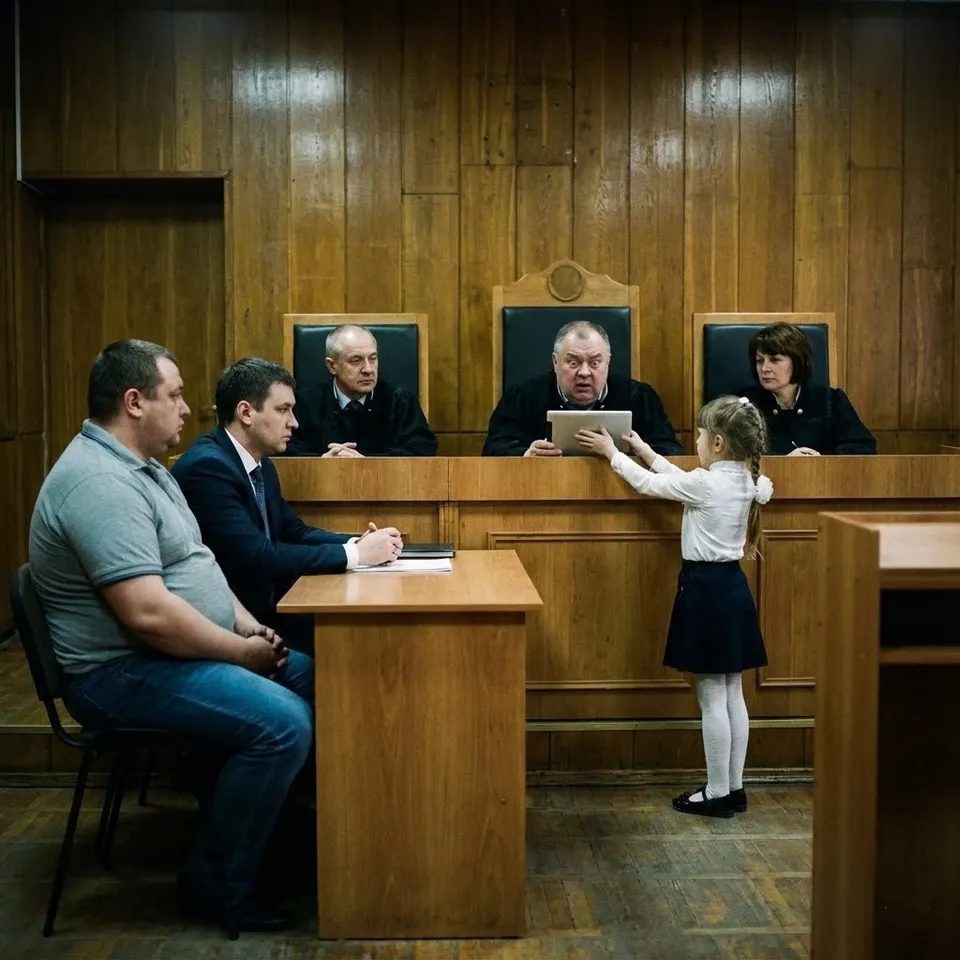
My wife filed for divorce, and my seven-year-old daughter asked the judge, "May I show you something that Dad doesn’t know about, Your Honor?" The judge nodded. When the video started, the entire courtroom fell silent. This story is based on true events.
On the day of the trial, my wife Marina filed for divorce, accusing me of being a worthless husband and a worthless father. She demanded all our property, down to the last trivial item, and also wanted sole custody of our daughter, with me forbidden not just from raising her, but from even approaching the child. But right there in the district courtroom, a quiet child’s voice turned everything that seemed already decided upside down. It was Sofya, our seven-year-old daughter. She stood up, looked up at the judge, and asked in a thin but very confident voice if she could show something that I, her father, didn't even suspect. The judge nodded, and Sofya came forward, holding her old, worn-out tablet, which I had once bought for her on sale. She held it up, pressed the screen, and when the video started playing, such a silence fell over the room that you could hear someone cough in the distance.
But before that moment of revelation, there was a long journey, because it all began long before that morning in court. That morning, which I would later remember as the boundary between my old life and the new one, everything seemed to be going as usual. I, Dmitry, was busy in the kitchen in the morning, wearing my home t-shirt and old sweatpants. It was still dark, with only a hint of gray in the east. Oatmeal was simmering quietly on the stove, and water was hissing in the kettle. Steam rose from the kettle, mixing with the smell of fried eggs and fresh bread, while from the small pantry came the steady hum of the washing machine finishing its second cycle. I moved quickly but almost silently. Over so many years, I had learned to walk around my house like a shadow, so as not to disturb Marina's precious sleep, who lately had been coming home late and waking up with difficulty, like someone exhausted by everyone around her.
Around six in the morning, she came down the stairs from the second floor, impeccably put together as always, in a smart pantsuit, with her hair neatly styled and a leather bag in her hand, which seemed to hold not just her laptop but her entire new world. As soon as she appeared in the kitchen doorway, I immediately placed a cup of strong black coffee and a plate with a neatly arranged breakfast in front of her. I did it more out of habit than in the hope of hearing a "thank you." Marina sat down, took the mug without even glancing in my direction, took a sip, grimaced, and dryly said that the coffee was somewhat bitter today. All the while, her gaze never left her phone screen, where messages and icons were scrolling. I quietly apologized, said I must have overdone it with the coffee spoon, and fell silent. She didn't reply, just pushed the plate away slightly, ate a few lazy spoonfuls, and went back to her phone. I stood to the side, like a waiter who had been forgotten after his shift. I waited, hoping she might say something, ask for something, clarify something, but there was nothing. A thick, cold silence hung between us, seeming to absorb even the steam above her mug.
I couldn't even really remember the last time we had breakfast like normal people, with jokes, with her usual laugh that I used to love so much. It must have been a couple of years since her business trips, meetings, and conferences started stretching late into the night, and Marina began to live in a different rhythm, a different world, where there was no place for me. She looked at me less and less, and at her phone screen more and more.
Marina, without looking up, asked if Sofya was awake. I replied that our daughter was already in the shower and would be down soon. And indeed, a few minutes later, light, quick footsteps were heard on the stairs. Sofya, our seven-year-old girl, burst into the kitchen, wearing the neat uniform of the private gymnasium Marina had gotten her into through some connections. Her shirt was buttoned, her bows were tied perfectly, and her eyes were shining. Her lively smile contrasted sharply with the heavy atmosphere in the kitchen. She wished us a good morning, kissed Marina on the cheek, then me. Marina put down her phone, forced a smile for her daughter—a completely different smile than the one she sometimes threw my way—and gently told Sofya to eat every last crumb and that she herself would take her to school today. The girl gasped with joy at the thought of going with her mom. I felt a tiny bit of relief: at least in front of the child, Marina was still trying to play the role of a caring mother. And these short family breakfasts were the only more-or-less shared time we had.
When Sofya finished her porridge, Marina immediately stood up, took her keys and bag, quickly kissed her daughter on the top of her head, and, as usual, walked past me as if I didn't exist. No thank you, no simple "goodbye." The front door slammed, and the sound of her car driving away from the house gradually faded, leaving a heavy emptiness behind. The house seemed to exhale and freeze.
I was left alone, listening to the silence, and then mechanically went about my chores. I spent the rest of the morning in my usual routine: clearing the table, washing the dishes, hanging up the laundry, starting another load, and walking through the rooms, straightening pillows, toys, and papers. I did everything with almost painful meticulousness. Deep down, I had a foolish hope that if everything in the house was perfect, if dinner was always delicious, the shirts were ironed, the child was well-cared for and happy, if I was gentle and patient, Marina would one day return to being the woman she used to be. She would laugh again and hug me for no reason. But that former Marina seemed to be gone for good, leaving behind a person who looked right through me as if through a dirty window.
By noon, I went to pick up Sofya from the gymnasium. This was my favorite part of the day. I always walked to the school gates a little early to stand aside and watch her run out, search for me with her eyes, and wave happily. This time was no different. She ran up, jumped beside me, chattering nonstop, telling me how she had painted an unusually beautiful tree in art class, how a friend had shared a cookie with her, and how the teacher had written a whole line of praise in her diary, having said that Sofya answered all the questions today. I praised my daughter, called her a clever girl, and gently tapped her on the nose. She laughed. We walked home, and she kept talking and talking, and I hung on every word, as if afraid that one day this opportunity would simply be taken from me.
When we returned, I helped her take off her shoes in the hallway. She was already eager to go to her room to change when a motorcycle braked sharply at the gate. My name was called out loudly. I looked out and saw a courier in uniform with a large bag over his shoulder. He reconfirmed my last name, asked if I was Dmitry, and handed me a thick brown envelope with the logo of some law firm on it. No familiar advertising slogans, just a name and a small symbol. My heart sank unpleasantly. Sofya, who was standing behind me, asked who it was. Trying to keep my voice steady, I replied that it was probably some advertisement or junk mail, and asked her to go up to her room, change, and then we would have lunch together. She ran upstairs, and I remained in the hallway, staring at the envelope, which felt unexpectedly heavy.
I went into the living room, sat on the sofa, and placed the envelope on my lap. My fingers were trembling noticeably as I tore open the edge. Inside was a hefty stack of documents, neatly stapled together. I took the top sheet, glanced at the first line, and for a second, I stopped breathing. There, in black and white, it said that this was a petition for divorce. The world seemed to sway, and a ringing started in my ears. I read it again, as if hoping I had made a mistake, but no. In the "plaintiff" field was Marina, and in the "defendant" field was me. What followed was standard legal jargon about how the husband had allegedly completely failed in his marital duties.
A tight knot formed in my stomach. I had given so much of myself to this house, this family. At Marina's request, I had left my job when her career took off. It was she who had insisted that one of us focus on the home and child. I took care of Sofya, helped with homework, extracurriculars, cleaning, meals—all the little things that create that very comfort she would later boast about to her colleagues. And now, reading each new paragraph of this petition felt like a physical blow. In the document, Marina wasn't just asking for a divorce. She was demanding that our daughter be left solely with her and that I be stripped of any right to participate in her upbringing. She cited that I was supposedly emotionally unstable, prone to outbursts, and incapable of providing the child with a normal environment. Furthermore, she claimed that all the property, including the house, was bought with her money, that I had not contributed financially, and therefore everything should go to her alone. My legs gave way, and I sank to the cold floor. The papers scattered across the carpet. And only then did the full reality hit me: why she had been so cold in recent months. It wasn't just an exhausted personality; it was a carefully calculated plan.
At that moment, the door slammed. Marina had returned earlier than usual. She stopped in the living room doorway, looked at me sitting on the floor amidst the scattered papers. Her face showed no surprise, no shame, only a calm, icy assessment of the situation. I managed to force out a question, what all this meant, what these papers were, why she was doing this. My voice trembled as if I had a cold. She took off her heels, placed them neatly aside, and slowly walked over, bending slightly to glance at the title page. She shrugged indifferently and said that it meant exactly what it said: she didn't want to live with me anymore, that I had supposedly failed as both a husband and a father. I asked again, almost whispering, in disbelief, reminding her that for all these years I had carried the weight of the house and Sofya, given up my own job at her request, managed the entire household. She smirked and asked if I called spending her money "care." She said that Sofya needed a different father, a normal, successful one, not a useless kitchen crybaby who only knows how to cook and get wet under the tap. I snapped, started shouting, repeating that the house, our things, our daughter were not her personal trophies. That she had no right to take them from me. My voice broke into hysterics. Marina crouched down slightly, so our eyes were on the same level. And for the first time, I saw in her gaze not just irritation, but genuine hatred. Quietly, almost in a whisper that sounded scarier than a scream, she said that she could, and that's exactly what she was going to do. She added that her lawyer had already prepared all the necessary evidence and that I would get nothing. I would leave this house without a penny, like a stranger who had overstayed his welcome. She straightened up, adjusted her jacket, glanced quickly at the stairs to see if Sofya could hear us, and finally, coldly warned me to prepare for the fact that even our own daughter would testify in court about what a bad father I was, because, according to her lawyer, it was necessary for the case.
When she went to the bedroom, I felt as if I were nailed to the floor. I realized that Marina didn't just want a divorce. She wanted to destroy me as a man and as a father, to erase me from our daughter's life.
That night, I barely slept a wink. Marina locked herself in our shared room, and I went into the nursery and sat there until dawn on a chair by Sofya's bed. I listened to her steady breathing, watched her messy bangs, the soft toys around her, while tears streamed down my face, which I didn't even try to wipe away. The same thought kept circling in my head: how could Marina possibly dare to tell the court that Sofya would speak against me? What had they managed to put into her head? How could a child who had always been drawn to me be so easily torn away?
In the morning, Marina acted as if the previous evening had never happened. She woke Sofya, picked out her clothes, helped braid her hair, and drove her to the gymnasium herself. She didn't exchange a single word with me the entire time. When our daughter asked why my eyes were so red, Marina calmly, almost affectionately, replied that Daddy just wasn't feeling very well, that he was tired. As if she were talking about a slight cold, not the fact that she had just stabbed me in the back.
As soon as they left, I was filled not only with pain but with a panicked fear. I understood that if I did nothing, I would be erased from Sofya's life by an official court decision. I opened my laptop and started searching the internet for family law attorneys. It quickly became clear that consultations cost a decent amount of money. Everywhere they asked for retainers, fees, payment for each meeting, and I had almost nothing. For years, Marina had given me a neat sum for groceries and child expenses. There was no way to save anything. The only real safety net we had was a joint account, a family reserve for a rainy day. I took out my phone, opened the banking app, entered the password. My heart was pounding in my chest as the page loaded, but instead of the expected amount, I saw a word that made my legs weak. It said zero. The account was empty. I refreshed the page several times, hoping for a glitch, but the zero didn't disappear, like a black stain on a white sheet. That account was supposed to hold the savings from Marina's many years of work; there should have been several million. I opened the transaction history and saw how, over the last few months, she had been regularly withdrawing large sums and transferring them to some other account I had never even heard of. The last transfer was made just a few days before the envelope with the lawsuit arrived. Marina wasn't just leaving; she had left, having first deprived me of any chance to defend myself.
I sat in front of the screen, staring at that foreign, icy word about the empty account. And only after some time did it dawn on me that besides this, we had almost no cash in the house. I jumped up as if I'd been jolted. I went to the kitchen, opened the drawer under the countertop where we used to keep money for large purchases, for unexpected expenses. There was only a lone checkbook and a couple of old receipts. No folded bills, no neat stack that I had considered our family reserve for so many years. Almost without thinking, I went to the wardrobe in the bedroom, checked the box from under my winter boots where I kept a little cash I had saved from time-to-time by helping a neighbor with his small tire-fitting business. But that was empty too. The box was neatly folded and put away, as if it had been deliberately placed back after the most important thing was taken. I sat on the edge of the bed, my hands dropping between my knees, and for the first time in a long while, I felt not just hurt, but a raw, cold fear. Fear not of being left alone, but of truly being left without a penny and without a single legal tool to protect myself and my right to my child.
I dialed Marina's number. My finger trembled on the screen. It rang for a long time, then the call dropped. I dialed again, and again. At some point, the phone gave a short, dry signal, and a message came through, short as a punch, in which she wrote that all questions were now to be handled through her lawyer, that personal calls would be considered pressure and an attempt to interfere. Below was the neatly listed number and email of a person named Chernov. Another name that would later be seared into my memory. I put the phone on the nightstand, walked into the living room, and just sat on the floor, leaning my back against the sofa like a child. And I sat in that position for some time, until the thoughts in my head, instead of chaotically racing as usual, suddenly began to order themselves. I understood a simple thing that I had refused to admit before: Marina had been preparing for this not for a day or a week. She had long been constructing a legal and financial picture to make me look like a helpless freeloader on paper, and her the sole breadwinner and reasonable party who had everything under control. I could sit and cry all I wanted, but that wouldn't change anything. I got up, wiped my face with my sleeve, sat back down at the laptop, and started searching not just for articles about divorce, but specifically for family law attorneys in the city. I read one ad after another, where cheerful faces in expensive suits promised to win any case. But almost everywhere, the first line was about fees, retainers, hourly consultation rates. Sums that seemed insurmountable to me in my current situation. The same thought pounded in my head: without a lawyer, they would tear me apart; with a lawyer, I had no way to pay him.
I remembered Andrey, an old acquaintance from my previous job, the one I used to sit with at the same desk in the office until Marina convinced me it would be better for the family if I left and focused on the house and child. Andrey was always known for being able to connect with the right people, while still remaining a decent human being. I dialed his number, preparing to hear an irritated "I'm at work," but he answered almost immediately. I tried to speak calmly, but my voice still trembled as I briefly described what was happening, said I urgently needed a good family lawyer, and had almost no money. There was a pause on the other end, and then Andrey said in his usual, slightly hoarse voice that he had a lawyer friend, not the most brilliant according to advertisements, but very stubborn and, most importantly now, honest. He warned me that he didn't work for free, but sometimes made exceptions if he saw someone was being genuinely screwed over. He dictated the address of a small office not far from the center, the last name—Kharlamov—and added that if this man took on a case, he fought to the end, even when everyone else gave up. I thanked him, promised to explain the drama of my life in more detail sometime, and a minute later I was standing in the hallway with my jacket in my hands. Then I remembered I had to pick up Sofya soon, checked the time, figured I had enough time to at least go and meet him, and then I'd head to the gymnasium.
Kharlamov's office was on the ground floor of an old, now-renovated brick building, but it still had those same creaky steps and a heavy door you had to push with your shoulder. Inside, it wasn't like the glossy offices pictured on websites. Instead of glass partitions and expensive furniture, there were simple desks and a tall shelf with folders and books. A few modest diplomas hung on the wall in simple frames, and in the corner stood an old but well-dusted leather sofa, on which many people had clearly weathered difficult moments in their lives. A short man in his fifties with graying temples and attentive eyes sat at a desk by the window. He looked up when I entered and asked if I had an appointment. I honestly admitted that I hadn't had time to call, that the situation was urgent. He glanced at the clock, sighed, and, to my surprise, offered me a seat, saying that his client was running late and he had a little time. I sat down opposite him, placed that same thick envelope with the copy of the lawsuit on the table, which still felt like it was burning my hands, and managed only to squeeze out that it seemed they were planning to take not only my home but also my daughter from me.
Kharlamov opened the envelope with a business-like but not cold motion and began to read. I watched his eyes move across the lines, how his eyebrows occasionally raised slightly. At one point, he let out a quiet chuckle, set one sheet aside, and flipped to the next. When he reached the appendix, which discussed my emotional state, he paused, scanned the names of the signatories, the stamps, the dates, and slowly shook his head. Then he neatly folded the papers back and, looking at me over the desk, asked if I wanted to hear the truth or if I needed comfort. I gave a tired smile and said that my wife had already provided me with comfort, so I'd take the truth. He leaned back in his chair, folding his hands on his stomach, and calmly, without excessive emotion, stated that my situation was, to put it mildly, difficult. That Marina had indeed been preparing in advance, which was evident from the dates on the certificates and the way the lawsuit was drafted, that she had a good, experienced lawyer who knew how to emphasize the right points. And they also had a psychologist's report in which I was described, carefully but insistently, as a person with an unstable psyche, prone to outbursts, with difficulties in controlling my emotions. At the bottom was the signature of a certain Valery Vorontsov, a Ph.D. and a specialist with impressive credentials. He asked if I knew this person. The name meant nothing to me. I shook my head, said I had never heard of him. Kharlamov thoughtfully tapped his pen on the desk and said that essentially, my wife had constructed a picture in which I appeared as a kind of domestic failure who lives off her, earns nothing, and is also unstable and, according to their version, could harm the child at any moment. And she, on the contrary, is a successful, stable, well-off mother, capable of giving her daughter the very best. Plus, the money in the accounts had long been withdrawn, and the house was legally structured in such a way that it was listed as being purchased with her personal funds, which meant that dividing it would be difficult. He immediately clarified that, by law, jointly acquired property is everything purchased during the marriage, even if it is registered in one person's name. But if the lawsuit included proof that the house was supposedly bought with money received as a gift from her parents, and if this line of argument had been prepared in advance, we would have to fight hard to have it recognized as joint property. Kharlamov said right away that the court wasn't obligated to listen to fairy tales about how I hadn't contributed anything, but we would need to prove the opposite: pull up payments, find witnesses, people who knew the conditions we lived in.
As he spoke, I felt a growing sense of helplessness inside me. I saw how neatly and methodically Marina had been erasing me from our shared life long before the first shout. But at some point, Kharlamov suddenly stopped dissecting the papers and looked at me not as just another client, but as a person. He asked if it was true that I had taken care of the house and child all these years at her request, if it was true that I had left a stable job precisely because she had decided so. I nodded, told him how we had discussed the decision, how she had assured me that with her income, one working person would be enough for us, and I could fully dedicate myself to Sofya. He listened without interrupting, then sighed quietly and said that perhaps this very thing had become my most vulnerable point. "You need to understand the main thing right now," he said, "they are really trying to make you a nobody. Legally, financially, and as a father. And if you just cry at night, they will crush you. Honestly." I let out a choked laugh and said that's exactly why I had come, because I couldn't take on this machine alone. He nodded and, after a moment of silence, said he was willing to take the case, but he had to warn me right away: the road would be long, unpleasant, and often humiliating. I would have to listen to a lot of filth about myself, and officially, on the record. And the chances of everything ending nicely and quickly were, to put it mildly, not high. But to be honest, they still existed.
I hesitated, then finally exhaled what had been burning me since I crossed his threshold: I said that I had almost no money, that the joint account was empty, that even the small nest egg I had saved had disappeared, most likely also with Marina's involvement. Kharlamov listened in silence, then said he understood, that in such cases one side often ends up with everything, and the other with only their eyes to cry with. But he couldn't work for free either; he had a family, an office, expenses. He proposed a compromise that at that moment seemed like a life raft to me: he said we could sign an agreement where I would pay him a symbolic amount now, as much as I could scrape together, and the rest would not be a fixed fee but a percentage of what we managed to defend or recover at the end of the case. If we were completely unlucky, if we lost everything, he said he would accept it as his own risk. I felt the stone in my chest thaw a little, though just before it had felt like solid concrete. I said I would do everything possible to gather at least a little. He waved his hand, asked me not to turn him into a benefactor, and emphasized that this was not charity, but standard legal practice when a lawyer believes in a case.
After that, we spent a long time piecing together the initial picture of what had happened. He asked questions about how long Marina had been different, about my relationship with our daughter, whether there had ever been conflicts with neighbors or teachers, if there were witnesses to how I interact with the child. Sometimes he would return to the same episodes, asking for details, telling me not to smooth over the rough edges or portray myself as a saint, because everything would come out in court anyway.
When it was time to pick up Sofya from the gymnasium, I stood up and thanked him for at least not saying it was hopeless. We shook hands. And for the first time in the last 24 hours, I had a feeling that I wasn't completely alone against this cold, well-oiled machine.
Outside, the air was damp and cool, a gray city day stretched over the city. I walked to the bus stop with the feeling that I had nothing in my hands but a thin folder from Kharlamov and a faint hope. But even that, compared to the rock bottom of the morning, felt almost like a luxury. Ahead of me was the gymnasium, Sofya, and this strange new life where every little detail could unexpectedly become either evidence against me or a saving hook to hold onto.
Continuing to live under the same roof with a person who had coldly and calculatingly laid out my destruction in advance turned out to be such a quiet hell that even words seem too soft to describe it. Marina didn't move out; she simply relocated to the guest room. And our house, which once felt warm, a little cramped, but ours, turned into a frozen battlefield where I had to coexist with my enemy every day, see her every morning, and yet pretend to live a normal life for Sofya's sake.
In front of our daughter, Marina played the perfect mother, as if she had been doing nothing else her whole life. She suddenly started coming home from work earlier, no longer late at night as before, but in the evening, bringing expensive gifts, suggesting spontaneous weekend trips, visits to shopping malls, and parks. She always smiled a little too widely. One evening, she entered the living room with a huge box in her hands, shimmering with pictures of princesses, called Sofya over, sat her on her lap, and solemnly announced, "Look, darling, this is your new tablet." She hugged her, like a picture in an advertisement, adding that this one was much better than the old one, with a better camera, and she had already installed games so the child wouldn't have to bother. Sofya's eyes lit up, she clapped her hands with genuine excitement, said thank you to Marina, and snuggled up to her. And at that moment, I was sitting off to the side on the sofa, folding freshly dried laundry, another pile of children's t-shirts and socks, and felt a tight lump rise in my throat. I understood all too well what Marina was doing: she wasn't just spoiling the child; she was buying her affection, her trust, her little heart. Marina turned on the new tablet, deliberately turned to me with that same mocking look you see on a person confident of their victory, and said to Sofya, "See, princess, when you live with me, you can get a new toy every week. Not just someone who only knows how to sweep the floor and cook soup." At that moment, my hands over the laundry felt as if they had turned to ice. I wanted to snap, to scream, to snatch that box from her hands, to wipe that smirk off her face, but I knew that any strong reaction from me would immediately become another piece of evidence of what their papers described me as: irritable, unstable, dangerous. I slowly swallowed, lowered my gaze, and continued to silently fold the shirts. And her venom spread through the room while Sofya enthusiastically tapped her finger on the new bright screen.
From that evening on, the torture became daily. If I cooked dinner, Marina would come into the kitchen, try a spoonful, and say indifferently in front of Sofya, "Too salty again. Oh well, tomorrow we'll order something normal, something tasty." If I sat down with Sofya to do homework, she would literally stand between us, gently push me aside, and say to our daughter, "Let me help, Daddy explains things so confusingly, you might, God forbid, get a bad grade." Gradually, I began to feel like a semi-transparent, almost invisible guest in this house, someone who was needed to keep things running but in whose existence no one was truly interested. I caught myself asking idiotic questions: am I really that bad at cooking, am I really so incapable of explaining homework to a child? Marina knew exactly where to strike. She was turning me into a worthless person, and Sofya was caught in the middle, as if between two walls. On one hand, she still reached out to me, hugged me, sought protection, but on the other, she couldn't resist the gifts and attention from her mother. Sometimes she would literally hang on my neck, looking at me with that old, warm gaze, and other times, after another day with Marina, she would become a bit distant, especially when her mother would linger in the hallway after work, bend down to her, and whisper something in her ear for a long time, covering the little face with her hand.
One night, long after midnight when sleep wouldn't come, I went up to the nursery just to look at Sofya, to make sure she was there, nearby, that she hadn't been taken from me yet. I quietly opened the door. The room was semi-dark, a nightlight in the shape of an animal cast a soft yellow circle of light. Sofya was asleep, spread out across the bed. On the table by the window lay her new, shiny tablet, neatly placed on its stand. And when I bent down to adjust her blanket, I noticed that her hand was clutching something under the pillow. Not a soft toy, but a hard, flat object. I carefully lifted the edge of the pillow and froze. There lay her old, cheap tablet with the cracked screen. The very one I had scolded her for more than once, reminding her to take care of her things. I stood frozen for a second, staring at this strange scene: a new, expensive item on the table, and an old, time-worn tablet under the pillow like a secret talisman. I didn't understand why she was hiding it when there was so much new and bright nearby. I decided it was just a child's attachment to a familiar object, to its smell, its feel. I sighed mentally, carefully lowered the pillow back, and quietly left. At that time, I didn't yet know that this worn-out tablet would become the very secret that would turn our story around. But I already felt questions coiling in my mind, questions for which there were no answers yet.
A few days passed, and one of them became the very outburst after which the illusion of any normal life finally crumbled. That day, as always, I arrived early at the gymnasium gates. On the way home, I was already thinking about how Sofya and I would knead dough together for her favorite chocolate cake; I had promised her, and she was excited. But the bell rang, the children started coming out, and she was nowhere to be seen. One class period passed, then another. I stood at the gate as if rooted to the spot, an icy lump slowly creeping from my stomach to my throat. Finally, I couldn't take it anymore, I called the gymnasium's office, and a calm voice informed me that they had seen the girl's mother, that Marina had picked Sofya up early, and everything was fine. The words "everything was fine" hit me like an electric shock. Marina hadn't told me anything, not a word. I immediately started calling her, once, twice, three times. The phone was silent. Time stretched on thickly, like cold jelly. A little while passed, then more, the clock hands crept far past the usual time. I paced the living room from the window to the door, from the door to the table, my heart pounding somewhere in my throat. The most terrible scenarios flashed through my mind. Only late in the evening did I hear the sound of a car in the driveway. The door slammed, and Sofya burst into the hallway, laughing, with a bag full of bright trinkets, balloons, and some souvenirs from an amusement park. Marina followed with a smug, almost triumphant smile, as if returning from a successful performance.
I couldn't hold it in any longer; my voice broke as I asked where they had been and by what right she took Sofya without saying a word, explaining that I had been going out of my mind with worry. Marina just shrugged slightly and replied in an icy tone that she was, after all, the mother and had every right to pick up her own child without reporting to a man who, in her words, sits at home all day and does practically nothing. Sofya exclaimed joyfully that her mom had taken her to the "Fantasy" amusement park, that it was the coolest thing ever. I tried to speak more quietly to Marina, saying she could have at least given me a heads-up. She curled her lip contemptuously and asked, why, so I could spoil their whole day with my hysterics? And it was at that exact moment that I felt another blow, sharp and heavy: a foreign male scent entered the room with them, a rich, heavy cologne that I had never smelled on her before. It wasn't my scent, not even something familiar. I involuntarily twitched my nostrils, looked at her sweater, at the collar, as if trying to see the trace of a touch. Marina noticed my gaze, froze for a second, then gave a knowing smirk. She waited until Sofya ran off to her room with her bags, then walked up to me, almost touching, lowered her voice to a venomous whisper, and asked if I really thought she would spend her whole life with a house-husband who bustles around the kitchen like a cafeteria cook. She said that there are real men in the world, successful ones who know how to earn money and live large, and that next to one of them, she feels alive, but next to me, she doesn't. She added that compared to him, I was a nobody and my name meant nothing. Nearly choking, I asked who this man was. She waved it away, said it was none of my business, that he was an intelligent, respected professional, not someone who spends his days fussing with a rag and pots and pans.
That evening, when the house finally went dark, I sat on the edge of the sofa and felt everything inside me cracking. But the worst part wasn't even that; it was the realization that Marina hadn't just betrayed me as a husband, she was building a new life and a new image for others, one where there would be no place for me.
Later, deep in the night, as I was sorting through my thoughts as usual, Sofya quietly entered the room. Her eyes glistened in the semi-darkness. She cautiously asked why I was crying, though I hadn't even noticed the tears had started again. I hurriedly wiped my face with my palm, tried to smile, and said everything was fine, just a headache. She looked at me for a long time, with a sort of adult-like gaze, and quietly said that Mommy says I'm sick, not on the outside, but on the inside, and that's why I'm always sad and sometimes snap, and that if she moved in with Mommy, it would be easier for me, I could rest and get better. At that moment, something inside me finally broke completely. I felt tears welling up again, but this time not from my own pain, but from how cleverly Marina had twisted her cruelty into an illusion of care for me. I hugged Sofya tightly, held her close as if trying to protect her from all this sticky venom, and told her that I wasn't sick, that I was a living person who just loved her too much, that yes, sometimes it was hard for me, and I might get angry, but it wasn't a sickness, just exhaustion and fear. I promised I would try to control myself, not to shout, even when things were really bad. She listened, but in her eyes, that very doubt had already taken root, the kind that is so easy to sow and so hard to uproot. And seeing that slight fog of mistrust, I understood that the battle was no longer just for papers in court and not just for the right to see my daughter, but for her memory of me, for who she would consider her father to be when she grew up.
After that conversation with Sofya, when she almost verbatim repeated her mother's words about my "sickness inside," I realized that the fight was now moving not just into legal documents but into her mind, and that made it especially terrifying. During the day, I could somehow keep my head above water, juggling the kitchen, laundry, homework, trips to the gymnasium, and meetings with my lawyer. But at night, the same image would play on a loop in my head: Sofya standing before the judge, repeating memorized phrases that had nothing to do with our life together, but with someone's carefully constructed lie. At my next meeting with Kharlamov, I told him not only about the lawsuit and the empty account but also about how Marina was methodically destroying my image in our daughter's eyes every day, how she called me weak and worthless in front of Sofya, how she poisoned even the most ordinary situations with venom. I told him about the new tablet, the amusement park, and the fact that they didn't even warn me they were taking the child. He listened, his brow slightly furrowed, and at one point said that this was, unfortunately, a classic scheme, and if I reacted to every dirty trick with shouting, I would end up confirming the very image they were painting on paper. He advised me to write everything down, whether in a notebook or a journal, to record dates, situations, who said what in front of the child, so that later I could at least reconstruct the overall picture from memory and show the court that these were not isolated outbursts but systematic harassment.
I bought a thick grid-lined notebook, the kind high school students usually buy, and like an obedient student, I began to keep my war diary. In the evenings, when Sofya was asleep, I would sit at the kitchen table, open the notebook, and write: how Marina pushed my plate away in front of the child, saying it was nauseating to look at me, let alone eat my food; how on another day she casually remarked that if Sofya were lazy, she would grow up to be as useless as her father; how for the third Saturday in a row, she deliberately scheduled some urgent events during my time with our daughter—to the mall, to the park, or somewhere else—and then pretended to be surprised: "But we talked about it, you must have just forgotten."
On one of those days, something happened that finally showed how far Marina was willing to go. By then, we had an agreement, not official but still a human one, that on certain days after her classes at the gymnasium, Sofya would spend time with me. We would do homework, go for a walk, and in the evening, she would return home. That day, I was mentally prepared for a normal, calm evening. I had bought groceries in advance, planning to bake that very chocolate cake I had promised her. I arrived at the gymnasium a little before the bell, as usual, waited for the children to start coming out, but my daughter was nowhere to be seen. I stood at the gates, looking at the familiar faces of her classmates, at the parents picking up their children one by one, but Sofya didn't appear. Minute by minute, they stuck to my heart. Finally, I went to the office again; they knew me by sight there. The secretary, without looking up, said she had seen the girl's mother, that Marina had picked her up right after school, and that as far as she knew, everything was fine. The phrase "everything was fine" sounded particularly mocking at that moment. I left the gymnasium feeling like I was sinking into some viscous pit. I tried to call Marina. She, as usual, didn't answer, then the phone rejected my calls several times before stopping altogether. Time dragged on like cold syrup. The house was empty, the clock on the wall ticked louder than usual. I paced from room to room, listening for every sound in the yard. Only late in the evening did I hear a car pull up to our gate. Sofya burst into the house, laughing, with bags in her hands, rustling packets of sweets, and bright paper bracelets on her wrist. Marina followed with a smug, even triumphant expression, as if she had just returned from a successful performance. I couldn't hold back any longer and asked where they had been, why no one had informed me, as it was my day with my daughter. Marina's response was cold and polished: she said that she was, after all, the mother, and was not obliged to ask my permission for every trip, that she wanted to give her child a treat, not watch me play the victim again. I tried to stay calm, reminded her of our agreement, that these were not just whims, but almost the only official time I had with my daughter. She smirked and said loudly, in front of Sofya, that if it came to that, the court would soon officially determine who had the right to the child and who didn't, and that I should probably get used to the fact that many things would happen without my involvement. I saw Sofya freeze between us with the bags in her hands, her gaze darting from me to her mother. At that moment, I gathered the last of my strength, lowered my voice, and said that I didn't want to argue in front of our daughter, that we would continue this conversation separately. But for myself, I noted her every turn of phrase, every sentence, to transfer it to that very notebook in the evening.
At my next meeting with Kharlamov, I brought not only the packet of documents but also the notebook. He flipped through a few pages, frowned, and said that this not only helped me from going mad with a sense of helplessness but could also serve as indirect confirmation of systematic pressure. He then stressed that if Marina continued to ignore verbal agreements, we would have to officially ask the court to establish a visitation schedule so that each of her "treats" would look not like a mother's sweet gesture, but a violation. It was then that he first mentioned that with such a mass of mutual accusations, the court would likely order a psychological evaluation, and I needed to be prepared for it.
His words later sounded like a prophecy because, sometime after, an order arrived stating that our dispute over the child's residence and my participation in her upbringing was being referred for an additional psychological evaluation. It was assigned to a supposedly independent specialist with impressive credentials. A few days later, Marina, returning from work, carelessly tossed a paper on the table and said that, well, we've been assigned a very respected doctor who will figure out which of us is in our right mind and which is not. At the bottom was a last name, already familiar from the report in the lawsuit—the same Valery Vorontsov, Ph.D., a specialist in family psychology. I held that paper in my hands for a long time, as if it could burn me. The name seemed like an empty sound, a mere line of text, but somewhere inside, a feeling was stirring that things were not so simple here. Kharlamov, upon seeing the name, just narrowed his eyes slightly, said he had heard of this man, that he had a less than stellar reputation in professional circles, that he was too friendly with the courts and guardianship authorities, but he didn't outright slander him. He only warned me that I would need to remain calm during these meetings, no matter how they provoked me, because any outburst, any sharp word could be presented as confirmation of their version.
I remember my first visit to Vorontsov in detail. His office was in an office building near the center, with a neat plaque on the door listing his name and accomplishments. Inside, everything resembled a typical family counselor's office from television: soft lighting, comfortable armchairs, books on the shelves, and in the corner, a box with wooden blocks, balls, and some animal figurines to make a child feel at ease. Vorontsov himself turned out to be a man in his early forties, wearing glasses, with a neatly trimmed beard. He smiled gently, spoke quietly, almost in a whisper, as if afraid of scaring away an invisible bird. He listened to us, nodded, and asked to first sit with our daughter, and then to speak with each parent separately. Sofya sat on the edge of her chair, clutching her old, worn-out tablet, the very one she seemed to carry with her everywhere, even to places where it seemed she wouldn't need it. I was tired of arguing and fighting over this attachment, so I just asked her to turn off the sound. Vorontsov, noticing the tablet, smiled benevolently and said it was normal for a child to hold onto familiar things, that it created a sense of security, and asked me to wait in the hallway for a while, keeping Marina inside. The door closed softly, and I was left alone on a chair against the wall, listening to muffled voices and seeing only the tiny shadow of the plaque on the door being crossed by strips of light from the windows.
When I was first invited in, Sofya was already sitting to the side, playing with some figurines, the tablet on her lap with the screen off. Vorontsov smiled, offered me a seat, and asked how I saw the situation. I tried to speak calmly, explaining that I wasn't shirking responsibility, that I understood Marina was tired, that we had arguments, but I had always been there for our daughter, had never raised a hand to her, never yelled without reason, and if I did lose my temper, it was only in moments of extreme tension, and I always apologized to the child afterward. Vorontsov nodded, asked clarifying questions, gently returned to painful episodes, asking me to describe how I felt when Marina said she was going to leave me with nothing. At some point, I caught myself starting to open up too much, speaking not to him but as if into a void, simply because it had been a long time since I had someone who would listen without mockery or a cold gaze. But the longer the conversation went on, the more clearly I began to feel a cold calculation beneath his soft, enveloping manner. He too easily picked up on the very formulations that were advantageous to Marina, too often returned to the topic of my emotional instability, asked me to talk about instances when I raised my voice, when I couldn't hold back tears, and paid special attention to how I felt useless next to my successful wife. And every time I tried to steer the conversation toward how Marina was manipulating our daughter, he would gently but persistently guide the topic away, saying that it was important to focus on my internal state right now.
After a few such meetings, Sofya started coming out of the office quiet and thoughtful. I would ask what she and the doctor talked about, and she would shrug, saying he asked strange questions, asked her to remember our fights, asked how often I shouted, how she felt during those times. One evening, as we were sitting in the kitchen drinking tea with cookies, she suddenly said quietly that the doctor had told her that sometimes a person can be dangerous even if they don't realize it themselves, and that if he gets very angry, the first priority should be the safety of the mother and child. I froze with the mug in my hand and asked if he had said that about me. Sofya hesitated, her eyes darted around, she tried to turn it into a joke, but I could see that the seed had already been planted. Marina, who returned later than usual that evening, walked past me in silence, and then I heard her whisper in the hallway, but loudly enough for me to hear, telling our daughter that the doctor was smart, that he explained everything correctly, and that sometimes adults don't admit their illness until they see it on paper. And I realized that Vorontsov and Marina were working together, creating a picture where I was not just inconvenient, but pathological, where I needed to be not just pushed aside, but isolated for the sake of safety.
Sometime later, Vorontsov scheduled a so-called joint session, where Marina, Sofya, and I were all to be present. He said he wanted to see how we interacted together, how we resolved disputes. I had spoken with Kharlamov beforehand, and he had asked me for the hundredth time to keep my composure, not to allow myself to shout, not to give in to provocations, reminding me that any outburst could be described as typical behavior. When we arrived at the office, Sofya was again clutching her old tablet. Marina sat closer to Vorontsov, as if they were old acquaintances. I took another chair, a little farther away, trying to breathe deeply. At first, everything was almost neutral. Vorontsov asked general questions, asking us to describe how we spend time with our daughter, what we consider important in her upbringing. Marina spoke in a calm, confident voice, listing clubs, classes, prospects, emphasizing how much she worked to give the child the best school, the best opportunities, and then subtly transitioned to how I supposedly couldn't control my emotions, that I could be too intense, that Sofya sometimes cried after interacting with me and said she was scared. Listening to this, I felt a wave rising inside me, but I tried with all my might to hold on. I said that our conflicts were with Marina, not with the child, that I never allowed myself to shout at Sofya the way I sometimes did at my wife, that if my voice was raised, it was followed by explanations and hugs. Vorontsov nodded, but whenever I talked about Marina's manipulations, he would only ask clarifying questions about my feelings, as if nothing else existed. At one point, he asked Sofya to describe how she feels when we argue. She sat huddled, clutching her old tablet to her chest, and spoke softly, looking at the floor, saying it was hard for her when we shouted, that she was afraid one of us would leave and not come back. And although I knew it was true, I saw how Vorontsov was catching the exact words that fit into his preconceived conclusion. All the while, Marina would periodically cast triumphant glances at me. At one point, she suddenly, almost theatrically, sobbed and said she was very worried about our daughter because, and I quote, she didn't know what Dmitry might do in a state of passion, and that's why she had sought help, to protect the child.
Up to that point, I had somehow managed to hold on, clenching my fists on my knees so tightly my knuckles turned white. But her words, spoken in a calm voice, without a single fact, without examples, as if they were self-evident, suddenly became the last straw. I felt something snap inside my chest, break loose. My voice grew hoarse, I stood up, and, unable to restrain myself, I began to speak louder than I should have. I said she was lying, that I had never in my life laid a hand on her or our daughter, that for years she had taken advantage of the fact that I had given up my career for the family, and now she was painting me as dangerous because it was more convenient for taking both the house and the child. The words flew out of me, one after another. I was no longer paying attention to my tone, only saw Marina's eyes narrow and a cold, almost satisfied spark flash in Vorontsov's eyes. And only at the very last moment, when my voice was on the verge of breaking, did I catch a glimpse of a small black rectangle on a shelf in the corner, carefully placed on a stack of books, its lens pointed directly at us.
The moment I saw that small black rectangle on the shelf, neatly placed among the books and folders, everything inside me just stopped. My brain seemed to push all emotions aside and suddenly, coldly and clearly, asked: and who said this is just some decoration or an old recorder? At that very second, Vorontsov gently, almost affectionately, asked me to sit down, saying he understood my feelings, that we were gathered here precisely to let them out, that the most important thing now was the child's safety and peace for all participants. Marina sat down, theatrically dabbing her dry eyes with a tissue. Sofya shrank in her chair, clutching her old tablet even tighter. And I, looking at this scene, understood that I had just given them exactly what they had been so persistently trying to extract from me—a beautiful, emotional outburst set against their pre-constructed narrative of my instability.
When the session ended, Vorontsov, as if nothing had happened, politely shook our hands and said he would prepare a report for the court, that he might need one more meeting, but overall, the picture was clear to him. Marina nodded, thanking him with that respectful tone she usually reserved for people on whom her promotion depended. I, on the other hand, walked out into the hallway feeling like I had been washed ashore after a storm. My head was buzzing, my palms were clammy, and a mix of shame, anger, and despair was still churning in my chest. On the way home, I barely spoke, just drove mechanically, feeling Sofya occasionally cast quick glances at me, as if checking to see if I would start shouting again.
In the evening, when Marina had gone out somewhere, citing business, and Sofya was in her room with a book, I picked up the phone and called Kharlamov. My voice was trembling, but I was no longer talking about my hurt feelings, but about what I had seen in Vorontsov's office. I described the black rectangle on the shelf in detail, its position, how I had lost my temper, how I had shouted, how at one point I saw Vorontsov slightly close his eyes, as if listening not only to the words but to how they sounded. There was a short pause on the other end of the line, then Kharlamov quietly said that the conversation was most likely recorded. And not just for the psychologist's internal work; in normal practice, recordings are permissible with the consent of the parties, but with these people, it seemed, one couldn't count on normalcy. He asked me to remember if I had signed anything giving consent for audio or video recording. I wracked my brain, went over all the forms I had signed at Vorontsov's, and realized that they were only standard consents for the processing of personal data and bureaucratic lines about conducting consultations. Not a word about filming. Kharlamov swore under his breath, then said it was bad, but not hopeless. The worst thing would be if this excerpt with my outburst was taken out of context and presented in court as proof of my condition, without showing everything else, where I talk about my love for my daughter, about how I held on while being methodically humiliated. He advised me not to do anything rash right now: don't call Vorontsov, don't make a scene, don't demand the recording be deleted. Because then they would rewrite everything a hundred times and prepare themselves. He said that if the recording surfaced in court, we would question the basis on which it was made, whether there was consent, whether professional secrecy and ethics were violated, and that sometimes a perfect external image crumbles precisely because of the overconfidence of those who consider themselves untouchable. And right now, I needed to focus not on what had already been done, but on what could still be done to stay afloat.
The following days turned into a viscous, heavy corridor of waiting. On one hand, there was the usual domestic routine: I continued to cook soups, do laundry, iron, take Sofya to her classes and pick her up. We did homework, read, sometimes played board games, and in those moments, I almost managed to forget about everything that was hanging over us. But as soon as Marina appeared in the doorway, the air in the house would change, becoming thick, as if before a storm. She continued to ostentatiously bring expensive gifts, to throw sarcastic remarks, sometimes openly, sometimes politely wrapped in concern. And at night, I would again sit at the kitchen table, open my notebook, and write down who said what and under what circumstances, so that at least the paper would not let me doubt my own memory later.
The summons for the first full court hearing in our case arrived in the middle of one such gray week. An envelope with an official stamp, neat lines indicating the date, time, and courtroom. Kharlamov, having received a copy, met with me and explained in detail how everything would proceed, what to expect. He said that the first hearing was not the end, that the judge would listen to both sides, review the materials, that we would likely be asked to briefly state our positions, and then they would start examining the evidence. He paid special attention to the fact that I must not, under any circumstances, give in to provocations, no matter what Marina or her lawyer Chernov said, no matter how disgusting their tone was. Any outburst from me in the courtroom would be a gift to them and a shot at us.
On the day of the hearing, I woke up long before the alarm, though I had been sleeping in fits and starts anyway. I got ready almost automatically, chose the only decent suit left in my closet, and struggled to tie my tie, my fingers disobeying me. Sofya seemed particularly serious that morning. She came up to me, hugged me, and asked when we would be back. I answered honestly that I didn't know, that court proceedings are unpredictable, but I would try to be home by evening. She nodded, looking at me as if memorizing my face. And I suddenly noticed that her old tablet was again by her side, just as it was that evening when I found it under her pillow. Unable to resist, I asked why she needed it when she had the new, powerful, shiny one. Sofya hesitated, said she was used to this one, that it was lucky, and added that sometimes old things protect better than new ones. I just nodded then, deciding it was a child's fantasy, and hurried to the door.
I entered the district court with Kharlamov. The building greeted us with that peculiar smell—a mixture of old paint, paper, and nerves. People were already sitting in the corridors, some in stern suits, some in casual clothes, some whispering with lawyers, some staring silently at the floor as if trying to fall through the tiles. We went up to the right floor and found the courtroom where the hearing was to take place. Marina was already there, in an impeccable suit, with a neat hairstyle. Next to her stood Chernov, tall, confident, with an expensive watch. He cast a quick glance at us, a look that held no doubt about the outcome, and nodded more to Kharlamov than to me, like a colleague who knows in advance that he will leave the field a winner.
The hearing began almost on time. The judge, a woman with a tired but attentive gaze, checked the parties' attendance, confirmed the details, and reminded us that the case concerned divorce, division of property, and determination of the child's residence, as well as my participation in her upbringing. Marina, in a confident voice, reiterated that she insisted on the daughter living with her, that I, according to her, was incapable of providing either a stable income or emotional security, that she had expert opinions and other evidence confirming my "peculiarities." Chernov occasionally interjected with legal terminology, emphasizing how meticulously his client had approached protecting the child's interests.
When it was my turn to speak, the courtroom grew a little quieter. I stood up, feeling my legs weaken, took a deep breath, and without pathos or fancy phrases, explained as best I could that for all these years I had been the primary caregiver for our daughter, the one who got her ready for the gymnasium every morning, sat with her over homework, drove her to extracurriculars, that leaving my job was not my whim but a joint decision and primarily Marina's wish, that there had never been violence in our home, that yes, there were arguments between spouses, but the child always remained the one thing for whose sake I tried to hold on. I asked the court to pay attention not only to income and careers but to the real, daily life that Sofya and I led. The judge listened attentively, asked a few clarifying questions, then announced that she was moving on to review the written materials, including the psychologist's report. And that's when Chernov stood up. He adjusted his folder and announced that in addition to the expert's report, they had another piece of evidence that would more vividly demonstrate the nature of my emotional state. He requested permission to show a video recording. The judge paused for a moment, then stated that if the recording was obtained lawfully and both parties did not object, it could be admitted and viewed. Kharlamov immediately stood up, clarifying that we had not been notified of any filming, and asked for an explanation of what the recording was, where it came from, and who made it. Chernov, with a carefully constructed innocent smile, reported that it was a fragment of a joint consultation with the psychologist who, according to him, had recorded the session as part of his professional practice to more accurately analyze the participants' behavior, and that a part of this recording, in their view, vividly illustrated how unstable and aggressive I could be. The judge asked if there had been consent from the parties. To which Chernov launched into a speech about signed documents and standard procedures, without ever, however, directly naming a single clause. Kharlamov insisted that without explicit proof of consent, such a recording could not be considered unequivocally lawful. But the judge, after a pause, still allowed it to be shown, noting that the assessment of its admissibility and weight as evidence would be given later, after discussion.
When the lights in the courtroom were dimmed and the screen turned on, my heart was pounding somewhere in my throat. I already knew what I was going to see, and yet, when the image appeared and the courtroom's acoustics projected my own, broken voice into the space, it was physically painful. On the screen was that very moment when Marina, with a dramatic but dry intonation, was talking about how she was afraid I might do something in a state of passion. The shot was framed so that it captured her mournful face, Vorontsov's focused, slightly concerned profile, and me, at one point jumping up from my chair, my hands raised, my voice rising, my words blending into a single stream of pain and accusations. Moreover, they had left at most a couple of minutes of the recording before my outburst, where I was speaking calmly and evenly. And everything that came before, all her barbs, all the hints, the entire years-long icy backdrop that had driven me to this scream, was neatly cut out. Sofya was barely in the frame, her figure only flashing a couple of times on the edge like a shadow. But my outburst was shown in all its glory, from the right perspective, at the right angle. The judge sat with an impassive face, but I could see some of the attendees, those waiting for their turn, exchanging glances; someone smirked, someone shook their head. When the recording was paused at a particularly unflattering moment, where my face, contorted with pain, was trying to explain that I had been betrayed, Chernov gently but loudly remarked that this, and I quote, was a "typical example of that very passion" his client had spoken of and which the specialist mentioned in his report. Kharlamov stood up, requested that my statement about the recording being made without separate, clearly expressed consent be added to the record, pointed out that we had not been provided with the full recording but only a fragment advantageous to one side, and stressed that the court could not accept a clipped excerpt as an objective reflection of personality. But I understood that words are just words, and the visual image imprinted on everyone in the courtroom would not be erased. It felt as if two halves of me were locked in a mortal struggle. One screamed that it was a trap, that I had been led to this outburst from the very beginning. The other whispered that it still didn't justify how I looked on screen.
After the lights came back on, the judge made a note, said the recording would be evaluated in conjunction with other materials, scheduled the next stage of the hearings, and announced a recess. We walked out into the corridor, and there, under the dim lamps, I felt exposed before the whole world. Marina walked past, turning her head slightly so that only I could see her satisfied smile. Chernov stood a little way off, talking to some colleagues, but from his smug posture, I understood that they considered this day their victory. Sofya was not present at the hearing, and that was the only relief because I wasn't sure I could have borne it if my daughter had seen me like that on screen.
When Kharlamov and I went down to the street, I inhaled the cold air so greedily, as if trying to wash away everything I had just seen from inside me. He walked silently beside me for a while, then said that, as he had suspected, Vorontsov had played his part, that the recording was a blow to us, no doubt, but not a fatal one if we could manage to show the court the whole picture, not just this artificially inflated episode. He asked me not to give up, because that was exactly what they were expecting of me now. He repeated that the dirtiest tricks often backfire on those who devise them, especially if there is even one small crack in their perfect legend. All I could do was hope that such a crack existed and that sooner or later, it would become visible to more than just me.
After that hearing, where everyone in the courtroom was shown a carefully edited clip of my outburst, life seemed to split into two parallel lines. On the outside, everything continued as before: I still got up early, cooked porridge, took Sofya to and from school, did laundry, cooked, and wrote down every phrase and every jab in my notebook. But inside, I walked around with the feeling that I had already been officially declared a kind of walking threat, they just hadn't issued the paperwork yet. Marina behaved like people who believe the worst is behind them. She was calm, businesslike, even a little softer than before. And it was this new softness that was most frightening, because I saw in it not reconciliation, but confidence in her own victory.
During another meeting with Kharlamov, as we sat in his small office overlooking a shabby courtyard, I asked him directly if I had any chance at all, or if everything was heading towards me being squeezed out of my daughter's life under a plausible pretext. He silently leafed through a folder for a while, then slowly said that we were indeed in a difficult position because Marina had money, connections, pre-prepared certificates, and now this recording. But that didn't mean everything was predetermined. He reminded me that, by law, the court is obliged to look at the totality of the evidence, not just one emotional episode, and added that sometimes it is precisely those who feel invincible who make fatal mistakes, especially when they start to believe they can get away with anything.
We filed a petition with the guardianship and custody authorities, asking them to pay attention to how Marina was restricting my contact with our daughter and that Vorontsov's report, to put it mildly, raised questions. Kharlamov helped draft a complaint to the professional association of psychologists, detailing that the recording was made without our explicit consent, that important fragments were edited out, and that the conclusions were one-sided. To be honest, I didn't have high hopes for these documents. Too often in our system, such complaints are put in a drawer or reviewed formally. But Kharlamov insisted that even if it didn't change much now, later, if something else came up, it would all fit together into a single mosaic, and then every little detail could play a role.
Meanwhile, the court, without waiting for a final decision, issued an interim order temporarily granting Marina custody of Sofya, while I was left with visitation rights for a certain number of hours per week according to a pre-approved schedule. On paper, it sounded dry and almost reasonable, but in reality, it meant that the child's entire life now officially revolved around her mother, and I was becoming something of an add-on, to be dealt with as they saw fit. Marina immediately presented this as her complete victory. In front of Sofya, she said that the court had almost understood everything, and the rest was just a formality. The fact that I was granted visitation she portrayed as a gesture of generosity, claiming she wasn't against Sofya occasionally seeing her poor, sick dad out of pity.
The first few visits under this schedule were probably the hardest of my entire life. I would arrive at the designated place, usually our favorite park near the house, early, with a thermos of tea, pastries, or some small thing that made Sofya happy. I waited like a schoolboy, counting the minutes in my head. Marina would bring her, keeping her distance but not leaving completely, standing aside, sometimes pretending to be on the phone, but I could feel her gaze on me like a targeted beam. At first, Sofya would run to me just like she used to, hugging me, telling me about school, her friends, her new tablet. But somewhere in the middle of the visit, an invisible switch would seem to flip, and she would suddenly remember phrases that had obviously been drilled into her. She would start saying that her mom worried about her when she was with me, that Dr. Vorontsov had explained that I sometimes lose control, and that if I started shouting, she must tell her mom or him.
One such evening, as we sat on a park bench drinking tea from the thermos while it slowly grew dark around us and the streetlights were just beginning to turn on, Sofya unexpectedly fell silent. She stared at her shoes for a long time, then quietly asked if it was true that I could do something terrible even if I didn't want to. That was the moment when I could have snapped, started cursing Marina, accusing Vorontsov, shouting that they were lying. But I caught myself and realized that was the trap. I took a deep breath, tried to speak evenly and simply said that I am a human being who sometimes gets angry, sometimes gets tired, sometimes shouts, but I have never in my life laid a hand on her and never will, that if she had ever seen a real danger in me, she wouldn't run to hug me and wouldn't fall asleep next to me as she used to. I added that adults can be unfair too, that a doctor can be wrong, especially if he is only told one side of the story beforehand. But I didn't say that it was her mother who had orchestrated all this, I didn't ask her to take my side. I only said one thing: that she has the right to love both of us and shouldn't have to choose whom to love more. Sofya listened, pressing her hands to the thermos to keep her fingers from getting cold, then suddenly looked up and asked if it was true that if she told the court she wanted to live with me, her mom would be put in jail or have everything taken away from her. I nearly choked, realizing that someone had been very carefully painting scary pictures in her mind to tie her tongue. And again, I held a pause and said that no one was going to jail her mother just because she told the truth, that courts are generally not like they are in scary fairy tales, that her words were important, but they weren't a machine gun you could shoot someone with, and that the most important thing was to say what she really felt, not what someone expected of her. She nodded, but I could see that several worlds were warring inside her: one where Dad is a reliable but tired person; another where Mom is strong but very scary when she's angry; and a third where a doctor with a soft voice whispers that there are invisible illnesses that Dad doesn't even know he has.
That same night, after Marina picked Sofya up and drove away as usual, leaving me in a house that had long since smelled not of family but of some temporary lodging, I sat in the kitchen, staring out the window at the black garden, and thought that perhaps the only thing I could still do for my daughter was not to break her between two fires, not to drag her into our war. Even if it cost me half a life without her. I didn't know that at that very time, around those same weeks, in another apartment, in another kitchen with windows overlooking a different yard, my daughter would slowly begin to do something that would change everything. That she, a child, would decide to act not according to someone else's script, but her own, and in a way that no adult had thought of.
Much later, after everything came to light and we had rewatched that video many times, she told me how it began. Marina had taken her for the weekend, and Dr. Vorontsov happened to be nearby. The three of them were sitting in the new kitchen, in the rented apartment where Marina planned to settle after evicting me from the house. My daughter was playing nearby, pretending not to listen, while the adults, as often happens, relaxed, thinking the child was occupied, and began talking as if no one else was in the room. They were discussing the upcoming hearing, crafting the phrases Sofya would have to say, which specific words to use about fear, about shouting, about being unsafe. They discussed how to present my leaving work not as our mutual agreement but as my personal failure. Marina laughed, saying that judges love stories about gentle mothers and mentally unstable fathers. Vorontsov replied that he had already drafted the report to sound as convincing as possible, mentioned some of his connections, and even casually dropped that a couple of grateful clients from the authorities would cover for him if needed. Sofya was sitting on the carpet with her dolls, but every word pierced her ears like a needle. She later admitted that at first, she simply couldn't believe that her mom and this kind doctor were talking about her dad as someone who could be broken for the sake of a pretty document and a comfortable new life. Then she got scared. And then, a very simple, almost childlike thought came to her: if adults build everything on words, then what's needed is not just words, but something that can be shown, so no one can wriggle out of it, can get away scot-free. And then she remembered her old tablet, the one I had bought her on a big sale and that Marina had long since written off as junk after giving her the new, bright one with a powerful camera. According to her, the old tablet was right there in the cabinet under the TV. She quietly went over while the adults were absorbed in conversation, took it out, held it to her chest as if she just wanted to sit with a toy, and walked back to the carpet. Amid the clatter of dishes and conversation, she turned it on, muted the sound, and, as a classmate had once taught her, found the camera recording icon, but chose the rear-facing one, not the front. She placed the tablet screen-down on the edge of the table, as if she had just tossed an old, unwanted thing, and went back to her dolls, pretending to be engrossed in play. And all the while, she silently prayed that the battery would last and that the adults wouldn't realize there was an extra witness to their cozy conspiracy.
I only found out later what exactly was captured on camera and audio that day. And honestly, even for an adult, it's not easy to watch a replay of yourself, a living person with all your weaknesses and hopes, being discussed as an object that needs to be skillfully molded to fit a legal formula. But at the moment the recording was being made, I was still living my parallel life: going to meetings with Kharlamov, discussing the next hearing with him. We were preparing a list of witnesses, neighbors who could confirm how I had cared for Sofya since she was little, communicating with her homeroom teacher, considering whether to ask the court to summon her to testify about how the child appeared at school after weekends with her mother versus days spent with me. Strangely enough, I had almost stopped crying; it felt as if there were no tears left, only a dry, dense exhaustion inside and a stubbornness that wouldn't let me give up completely.
The court case dragged on, as they tend to do here. Hearings were postponed, more papers were added, the guardianship authorities requested additional clarification. What was the drama of my life was, for the system, just one of many similar processes, another dispute over a child and an apartment among dozens of others. But one day, Kharlamov and I received a notice with the date of the hearing where the court intended to hear the final arguments and announce its decision. I left his office with that sheet of paper in my hands, stood on the street for a moment, breathing in the cool city air, and caught myself mentally preparing for the worst, playing out a scenario where Sofya is left with Marina, and I am given rare, conditional visits, where I will be monitored, controlled, possibly forced to attend some anger management courses. I thought about what I would do if that happened, where I would live, how I would earn a living to at least support my daughter from a distance and not turn into that broken man they were so insistently trying to make me out to be on paper.
During those days, I wrote several long letters to Sofya, on ordinary lined paper, which I hid in a desk drawer, not knowing whether to give them to her now or when she grew up. I wrote about how we used to bake those chocolate cakes together, how we learned to ride a bike, how she went to the gymnasium for the first time, holding my hand. I wrote that whatever the court decided, I would remain her father, and no document, no report, no recording could change that. I didn't write anything bad about her mother, deliberately, understanding that the child had already endured too much filth from adults, and for that very reason, I had no right to add my own.
I didn't know that at the same time, while I was folding those sheets into the drawer, Sofya, in another apartment, was checking the battery of her old tablet, peeking at how to open the right folder, rehearsing in front of the mirror how she would enter the courtroom, how she would raise her hand to be heard. I didn't know because no sane father would have guessed that it would be the child who would turn out to be the only adult in this story, the one who would not be afraid to stand up to two strong people, confident in their impunity. And that the decisive blow to their flawless scheme would be delivered not by a lawyer, not by a judge, not by an official from guardianship, but by a seven-year-old girl with an old, battered tablet in her hands.
The day the decision was to be announced arrived suddenly, though weeks had passed on the calendar. On the appointed morning, I was once again standing in front of the mirror, tying the same and only decent tie, which I now associated only with court, not celebrations. Sofya was supposed to stay with Marina that day, at least according to the interim schedule. And I deliberately didn't ask for her to be brought to the courtroom; I didn't want the child to witness her father being officially broken or saved. We had said goodbye in the hallway the day before. She hugged me tightly and said she believed in me. And I, looking into her eyes, could only think about how not to show how little I myself believed in anything anymore, except for her hugs.
The district court on that day seemed particularly gray and heavy, as if the walls sensed that a final point was about to be put not just in a case, but in someone's life. I walked up the familiar steps, met Kharlamov's gaze in the corridor. He nodded, said he was ready to fight to the end, but warned me to be mentally prepared for any outcome. He repeated that even a bad decision is not forever, that it can be appealed, that the fight can continue. I listened, but inside I only felt a steady hum, like before a big injection when you know it's going to hurt, but it's too late to run.
In the courtroom, we each sat on our respective sides. Marina appeared a little later, as always impeccable, with a neat handbag and a restrained smile. Chernov confidently settled in next to her, casually crossing his legs as if he had come not to a court hearing but a business meeting. The judge entered, announced the start, checked attendance, and stated that she was ready to announce the decision in the case, reminding everyone that she had considered the parties' testimonies, expert reports, the opinion of the guardianship authority, and the materials presented in the form of a recording. I could already feel everything inside me clenching into a tight, hard knot, because I understood all too well which materials had made the strongest impression on everyone.
She began to read in a dry, official voice, which held neither malice nor sympathy, only a familiarity with such texts. First came the general descriptive part. I barely heard the words; they merged into a dull noise, but suddenly my attention sharpened when it came to the key phrases. The court established that the marriage was to be dissolved. That was expected. The court finds the plaintiff's arguments about her greater financial stability and stable lifestyle to be well-founded. I was prepared for that too. The court recognizes that the defendant has peculiarities in his emotional responses that require professional attention. I felt that sentence like a punch to the gut. But the real pain came when she said that, based on the materials presented, the court was inclined to determine the child's place of residence with the mother, and to establish a separate visitation schedule with the father. At that moment, somewhere deep inside me, something finally gave up. I stood like a condemned man who had already heard the most important part, and the rest sounded like echoes.
It was at that very moment, as the judge's voice was moving towards the concluding part, that the courtroom door creaked softly but distinctly. Someone entered. Someone tried to motion them to stop, but a thin, yet surprisingly firm child's voice, which I recognized without a doubt, rang out. The judge automatically cut her sentence short and looked up. Standing in the doorway was Sofya in her neat school uniform, her hair in braids. Next to her, my cousin Olga, whom I had asked to stay with the child at home if Marina couldn't, but certainly had not asked to bring her here, fidgeted nervously. My daughter was holding her old, battered tablet, clutching it to her chest like a shield, and looking directly at the judge, not at me, not at her mother. A second later, a murmur rose in the courtroom. One of the judge's assistants asked Olga to take the child out, citing that the hearing was almost over. Marina jumped up, her face turning so pale it was as if someone had drained the blood from her. She hissed through her teeth what her daughter was doing here and that this was an unauthorized act. But Sofya, to my astonishment, went neither to her nor to me, but took a few steps forward, bypassing a row of benches, and said in a thin but firm voice that she wanted to say something important, that it concerned her because it was about who she would live with. The judge looked at her for a couple of long seconds, then, to everyone's surprise, asked everyone to calm down, told Olga to remain in the courtroom, and approached the matter no longer as a machine, but as a person. She asked Sofya if she was ready to speak, if she understood where she was. Sofya nodded, said she knew it was a court, that they were deciding who she would live with, and that she had heard many words about how she was supposedly scared of me, how I shout and might do something terrible, and about what a great mom she has and how she needs to be protected from me. Then she took a breath, looked directly at the judge, and uttered a phrase that cut through the air like a knife: she said that people sometimes lie not only to each other but also to the court, and that adults think children don't see or hear anything, but that's not true.
Marina was already standing, her fingers digging into the back of the bench, her eyes darting between the judge and her daughter. Chernov frowned, trying with a gesture, a look, to somehow stop what was happening. But Sofya, at that moment, was clearly living in her own decision. The judge, after a slight hesitation, asked what exactly she wanted to say, and if it wouldn't be better to stick to what was already stated in the psychologist's report and the conversation with the guardianship representatives. To which my daughter replied with unexpected firmness that what was written there was not all true, because the doctor only heard what her mother told him, not what happened when they thought she wasn't listening. And that she had something that the adults didn't want to show. Here she raised her old tablet, blushing slightly, as if only now realizing how serious all this was, and said that it contained a recording of a conversation between her mom and the doctor, where they were discussing how to make her dad look sick and dangerous so the court would believe only them.
Someone in the courtroom gasped loudly. The judge sharply raised her hand, demanding silence, and asked Sofya if she understood what she was saying and if she was sure that this device really contained a recording relevant to the case. My daughter nodded, gave me a quick look, a mixture of fear and determination, and then looked back at the judge. And I saw in her eyes that same adult seriousness I never wanted to see in a child. Marina tried to regain control of the situation, speaking loudly, almost shouting, that this was manipulation, that I had obviously turned the child against her, that the girl didn't understand what she was saying, that the old tablet hadn't worked in a long time, and that this circus needed to be stopped immediately. Chernov chimed in, stating that such unauthorized actions could not be permitted, that evidence is collected and presented in the prescribed legal manner, not at the initiative of a minor. Kharlamov, on the contrary, asked the court to listen to the child, at least regarding why she believed the psychologist's report and her mother's stories did not reflect reality. He spoke calmly, emphasizing that this was about the fate of a living child, not a blank piece of paper.
The judge looked at all of us in silence for a while, then sighed wearily, but her voice was firm. She said that the child had already participated in conversations with the psychologist and guardianship authorities, meaning the court had acknowledged that her age allowed her to express her opinion. And since she was now insisting that she had significant information, it was impossible to ignore it, otherwise everyone would be left with the feeling that the court had chosen to turn a blind eye to possible deception. After that, she asked the clerk to arrange for the tablet to be connected to the screen, and invited Sofya to the table to hand over the device through her. She explained to her daughter that everyone would be watching and listening, and asked if she was ready for that. Sofya nodded, clutching the tablet to her chest so tightly that her knuckles turned white.
When the old, scratched tablet was connected to the cable, many in the courtroom exchanged glances; someone whispered that the toy probably wouldn't even turn on. But to my astonishment, the screen came to life, albeit slowly and dimly. Sofya, standing next to the clerk, confidently opened the video folder; there were several short clips and one long one. She pointed to it and said that this was the one where her mom and the doctor were talking in the kitchen, that she had filmed it at night because she was afraid the battery wouldn't last until the end. The judge asked everyone to be silent. The clerk pressed the play icon, and a tense, ringing pause hung in the courtroom.
The screen showed a slightly tilted image; you could see the edge of a table, the backs of chairs, part of the kitchen. Marina's voice was clear, despite the rustling and distant sounds of a television. She was speaking in that very tone I hated most, confident, slightly mocking, discussing the upcoming hearing with Vorontsov, saying they needed to prep the girl again so she wouldn't waver in court, so she would repeat the words about fear and shouting they had already rehearsed. She laughed that judges love stories about poor, scared children being saved from a mentally unstable parent. Then the conversation smoothly shifted to the financial part. She calmly, without a hint of shame, discussed how good it was that they had managed to withdraw the money from the account in advance and register the house in a way that it would be considered her personal property. Vorontsov agreed, saying that with such a set of facts, I wouldn't stand a chance, that in his report, he would carefully highlight my "peculiarities" so the court would have no doubts. The longer the recording went on, the quieter the courtroom became. Even those who had initially been watching with curiosity now sat motionless. On the video, Vorontsov quite clearly spoke about how, and I quote, "if everything goes smoothly, we can continue to help clients like this," mentioning some of his reliable contacts in other courts, noting that for good money, you could essentially write the same report, just changing the names. At one point, Marina, laughing, said that the hardest part of all this was tolerating me under the same roof until the final decision, that sometimes she herself shook with the desire to throw me out on the street right now, but she had to maintain some semblance of calm in front of the child.
I sat and listened as two people, whom the system was ready to recognize as my accusers and experts, discussed me like a project, like a task that needed to be solved in such a way that I would be left without money, without a home, and if possible, without my daughter. They discussed it cynically, calmly, with glasses in their hands, occasionally clinking them. The edge of a bottle flashed on the screen, a part of Vorontsov's face reflected in the glass, his smug smirk. At one point, he even uttered a phrase that sent a barely audible whisper through the courtroom: he said that such house-husbands usually break quickly, you just have to show them that no one takes them seriously. And then he added that if I lost my temper in his office, it would be a gift, because the judge would definitely appreciate a recording of an emotional outburst correctly.
When the video ended, a silence fell over the courtroom, the likes of which I had never heard before. Even the clock seemed to stop ticking. The judge sat slightly leaned forward, her lips pressed into a thin line, her eyes cold and very attentive. She asked the clerk to rewind the recording to several fragments and play again the moments where they talked about coaching Sofya, about withdrawing the money, about the pre-planned outburst in the office. Each time, Marina's anxious breathing became louder. Finally, she snapped, jumped up, and shouted that it was all taken out of context, that she was drunk, that she had just blurted out something she shouldn't have, that the child had no right to eavesdrop on her, let alone film her. Chernov tried to support her, starting to talk about the inadmissibility of such a recording, about the violation of the right to privacy. But his words hung limply in the air, because the entire courtroom had just heard how he and the respected specialist were discussing how to circumvent the law and deceive the court under the guise of caring for a child.
Kharlamov stood up, requested that the recording be admitted into evidence, and emphasized that the original file, not some edited excerpt, was on the very device the girl had brought. That the child was acting not on my behalf or at my instruction, but out of fear of being forced to lie. The judge looked at Sofya and asked if this was true, if I had not convinced her to film something or bring it to court. Trembling, but firmly, my daughter replied that I didn't even know about the recording, that she was afraid that if she only told the truth with words, they wouldn't believe her, but this way, it wouldn't be just her story, but something that could be seen and heard. Then she looked at me, her lips trembled, and I saw a single tear roll down her cheek. And only then did it fully hit me how much this child had been forced to grow up through this ordeal.
The judge announced a short recess, ordered everyone to leave the courtroom, but asked Sofya and Aunt Olga to remain. When we went out into the corridor, Marina lunged at my cousin with such fury that she had to be pulled away. She screamed that she was a traitor, that she had allowed the girl to stage this spectacle. Chernov was hissing something in her ear, clearly trying to regain some semblance of control, but his face, so recently smug, was now pale and tense. Vorontsov was not in the courtroom; he was not present for the ruling, and I suddenly became almost physically curious as to how he would react when he found out his professional secret was no longer a secret. But that wasn't the main thing. The main thing was happening now behind a closed door, where the judge was listening to the child without our presence. And I stood in the corridor, leaning against the wall, and for the first time in many months, I felt not only fear, but also that fragile sensation that the thick glass they had kept me behind had finally cracked.
The recess seemed to last an eternity, though in reality, not much time had passed. The people in the corridor first whispered, then fell silent. Some went out for a smoke, some made calls, some glanced at me out of the corner of their eye, as if at a man whose carefully constructed cage had just shattered before his eyes. Marina paced between the benches, sometimes lashing out at Aunt Olga, sometimes defiantly pretending she didn't care, but the more she tried to keep her back straight, the more clearly you could see her fingers trembling. At one point, she went to the far end of the corridor and dialed a number. I couldn't hear the words, but from the fragments of phrases, I understood she was likely calling Vorontsov, telling him about the recording, about Sofya, about the judge, her voice growing more and more frantic, then she cut the call short, snapped her phone shut, and simply slid down the wall to the floor, holding her head in her hands.
When we were called back into the courtroom, the air seemed different, heavy, but no longer hopeless. I took my seat. Marina returned to her side, pale but composed. Chernov was clearly trying to regain his usual confidence, adjusting his tie, whispering to her, but his eyes betrayed that their entire beautiful construct was cracking in his mind. The judge took her place, asked everyone to be seated, and said that, given the new materials that had emerged, she needed to clarify some points before moving to the final formulation of the decision. Her voice was just as dry, but in that dryness, one could now hear not the usual indifferent weariness, but the cold focus of a person who has suddenly seen a rotten frame beneath a layer of plaster.
She first addressed Marina, asking if she admitted that the voices on the recording were hers and Vorontsov's. Marina tried to evade, talking about how the recording could have been edited, that the child might have confused something. But the judge interrupted, reminding her that Sofya had brought the very tablet on which the original file was stored, that she had no time for editing, that the recording contained not only voices but also precise details that matched what Marina herself had described earlier. This included the apartment, the upcoming hearing, and the sums withdrawn from the account. Finally, getting tangled in her own explanations, Marina snapped and shouted that it was a private conversation, that she had the right to complain to a doctor about a difficult family situation, that she was just worried about the child's safety. But the more she tried to justify herself, the clearer it became that the meaning of what was said on the recording was not concern, but cynical planning.
Then the judge asked why Vorontsov's report made no mention of the child being coached to recite memorized phrases, why his text only emphasized one version of events, while he did not find it necessary to point out the obvious conflict of interest, given that, as the recording suggested, he had a close, including informal, relationship with Marina. And that was a direct violation of professional ethics, especially for someone invited to court as an independent expert. She asked several pointed questions about the mentioned contacts, about the phrase that one could write the same report, just changing the names. And although Vorontsov himself was not in the courtroom, his presence was felt like a cold spot on the wall that no one could cover with a colorful picture anymore.
The judge then separately returned to the issue of property, asking Marina how it happened that large sums were withdrawn and transferred to other accounts shortly before the lawsuit was filed, why this was not reflected in her explanations, why the lawsuit emphasized that the house was supposedly purchased with her personal funds, when in fact, on the recording, she discusses with Vorontsov how to circumvent the principle of jointly acquired property. Marina floundered between answers, sometimes referring to her parents, sometimes to some gifted money, sometimes to financial consultants. But the thread of her defensive speech kept getting tangled, and it was visible even without a law degree. At that moment, I no longer felt any gloating, only a strange mixture of relief and bitterness. Because while it's satisfying to see a carefully constructed lie crumble, it was painful to realize that all this time, a child had been living in this city, in this house, under the same roof with a person who so calmly discussed her future life as part of a deal.
When my turn came, the judge briefly reminded me that she still had questions about my emotional instability, because the fact of my outburst in the psychologist's office had not been nullified. But now, considering what had been heard, this episode could not be viewed in isolation from the provocation orchestrated by Marina and Vorontsov. She asked if I was aware that my shouting still traumatized the child, even if it was caused by injustice. I didn't make excuses; I said honestly that yes, I understood that I was at fault before Sofya for every raised voice, that I was ashamed of how I looked on that recording. But now the court had seen what they hadn't seen then, had seen how I was led to that point. And if before my words looked like the complaints of an offended husband, now they had context.
The representative from the guardianship authority, who was present at the hearing, also asked to speak after watching the recording. She said that their previous conclusions were largely based on Vorontsov's report and Marina's testimony, that many details now required revision, and that in her personal opinion, the child was living in an environment where she was being actively used as a tool of pressure, where several adults were influencing her to push a certain narrative. And this was no longer protecting the child's interests, but a gross violation of them. It was clear that she, too, was uncomfortable admitting that such a scheme had been attempted right under her nose, but for a while, that's exactly what had been happening; everyone was just being shown a carefully trimmed frame.
After all these clarifications, the judge announced that, given the new circumstances, the initial text of the decision, which she had already begun to read, was subject to change. She asked everyone to be seated and to listen carefully. At that moment, my legs literally gave way, and my heart began to pound so hard I could hear it in my ears. I didn't even try to make any predictions; I just fixed my gaze on the wooden back of the bench and listened.
She said that the marriage was still to be dissolved because the relationship between the spouses had effectively ended, and it would be unreasonable and unsafe to return them to a joint life in this situation. This was expected and even somewhat of a relief, because I no longer wanted to return to that house as it had become. Then her voice became sterner. She said that the court finds Vorontsov's report as a specialist in family psychology to be biased and contrary to the principles of expert independence, and therefore it is excluded from the key evidence and will be forwarded to the professional community and law enforcement agencies for review. Separately, she ordered that the recording of the conversation between Marina and Vorontsov be sent to the relevant authorities for evaluation for possible fraud and attempt to falsify evidence. As for the child's place of residence, the court, she said, taking into account the revealed circumstances and the fact that Sofya demonstrated a high level of awareness and trust in her father, as well as the fact that she spent most of her daily life with me, has decided the following: temporarily, until a separate decision from the guardianship authorities and considering the opinion of other specialists, the child's place of residence is to be with me, her father. The mother is to retain the right to regular contact with her daughter, but on a strict schedule and under the supervision of the guardianship authorities, including the possibility of a third party's presence during the initial months to ensure that no pressure is exerted on the child.
I heard these words and couldn't believe them at first; I wanted to ask if I had understood correctly. But next to me, Kharlamov let out a quiet sob, and I saw him lower his head slightly, as if he too had let go of something he hadn't been completely sure of until the end.
The judge partially postponed the property issue, saying that the house and large funds required a separate analysis of all transactions, but it was already clear from the totality of the materials that the court did not approve of the unilateral withdrawal of funds in circumvention of the interests of the other spouse and the child. Therefore, any transactions made shortly before the lawsuit was filed are subject to review, and some of them may be challenged as being made with an abuse of rights. The decision contained a phrase that I would later reread many times: "The court considers it unacceptable to use legal constructs and professional resources to deprive one parent not only of property but also of the opportunity to participate in the child's fate in the absence of real facts of a threat to the child."
When she finished, the courtroom remained silent for a while longer. Then the judge stood up and declared the hearing closed. People began to stand, whisper, and leave. Marina sat motionless, as if nailed to the bench, her eyes staring into space. Chernov was saying something quickly to her, gesticulating, but she seemed not to hear him. Aunt Olga got up, came over to me, hugged me quietly, and exhaled that Sofya was amazing, that she had insisted on coming to court herself. I nodded, feeling my legs turn to jelly from the tension. And then I saw my daughter, standing by the door with her old tablet tucked under her arm, looking at me with such a mixed expression of relief, fear, and some incredible maturity that it took my breath away.
We walked out onto the street, not holding hands, but just side by side, as if we were both trying to get used to the new air. Before leaving, Kharlamov said that this wasn't the end of all procedures, that there would be a hassle with the property, investigations, possibly new hearings on other matters, that Marina and Vorontsov would likely have to answer for what had surfaced, and that I would have to learn to live without this constant war. But the main thing had already happened: the court saw who was really trying to manipulate whom, and Sofya had essentially saved not only me but the process itself from turning into a spectacle for which everything had already been decided in advance. We shook hands. He once again asked me not to forget my own responsibility, that now I would have to be not just a victim, but a real, stable adult for my daughter. And he went on his way, just as short, calm, with a briefcase that held the lives of many people.
What followed was a long, uneven road. Sofya and I moved into a small but bright apartment closer to the center. I didn't manage to keep the house entirely; some of the property was sold, some was divided. But in this new apartment, there were no old screams, no heavy footsteps on the stairs, no scent of foreign perfume that had seeped into the walls. For a long time, I circled my resentment like an old tree stump, sometimes trying to uproot it, sometimes walking around it. I first took on part-time work, then slowly began to do what I had always done best—cook. A neighbor downstairs let me use her tiny commercial kitchen, and after a while, I had a small but honest business preparing homemade meals to order. Not a restaurant, not a trendy place, but my own work, where I finally stopped feeling like a freeloader.
I saw Marina a few more times during meetings with Sofya. The first of these took place with the participation of guardianship staff. She was full of anger, full of attempts to get revenge. Then, when it became clear that the old scheme wouldn't return, her anger began to gradually turn into cold exhaustion. I don't know what was hardest for her: the loss of money, the reputational problems, or the fact that her own child didn't play along with her game to the end.
I only heard about Vorontsov from Kharlamov, that an investigation had been started against him, that several of his reports in other cases had also been brought to light, that in the professional community, his name had begun to sound not like an example to follow, but a warning. I didn't rejoice, I didn't gloat, I just noted: it's often said about people like him that sooner or later, they fall victim to the very blow they didn't expect.
Sofya grew up, and the more time passed, the more clearly I saw how that day in court with the tablet in her hands had become not only a feat for her but also a heavy burden that no child should have had to bear. Sometimes she would wake up at night, come to the kitchen, and sit opposite me. We would drink tea in silence. Once, when things had more or less settled down, she quietly asked if I was angry with her for taking away my illusion that her mom had loved me even a little. I searched for the right words for a long time, then said that if anyone was to blame, it was the adults who made a child witness things she shouldn't have seen. In this story, she was the only person who dared to speak the truth out loud, even when everyone around had grown accustomed to a convenient lie.
One day, as we were walking through the park where we once sat with a thermos, fearing the future, Sofya suddenly stopped, looked up at me, and asked if it was true that if it hadn't been for that old tablet, everything could have turned out differently. I smiled, stroked her hair, and said that yes, it could have. But it wasn't just about the device. It was about a seven-year-old girl who wasn't afraid to use what she had so that the adults would finally stop pretending that everything they were doing was according to the law. And I added that we could throw the tablet away anytime, but that determination with which she entered the courtroom—I hoped she would never throw that away, but instead channel it not into war, but into her own life.





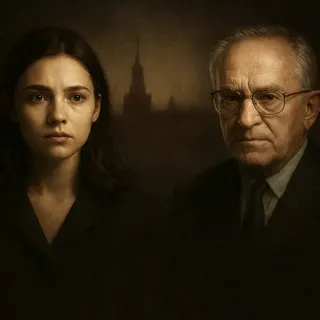


Share how the story made you feel
0Comments appear after a quick automatic check. Please no links, ads or personal data.
Next to your name we show your country, determined from your IP address; the address itself is never shown, and only a hashed fingerprint of it is kept to stop spam.