
 Let’s Keep It Real
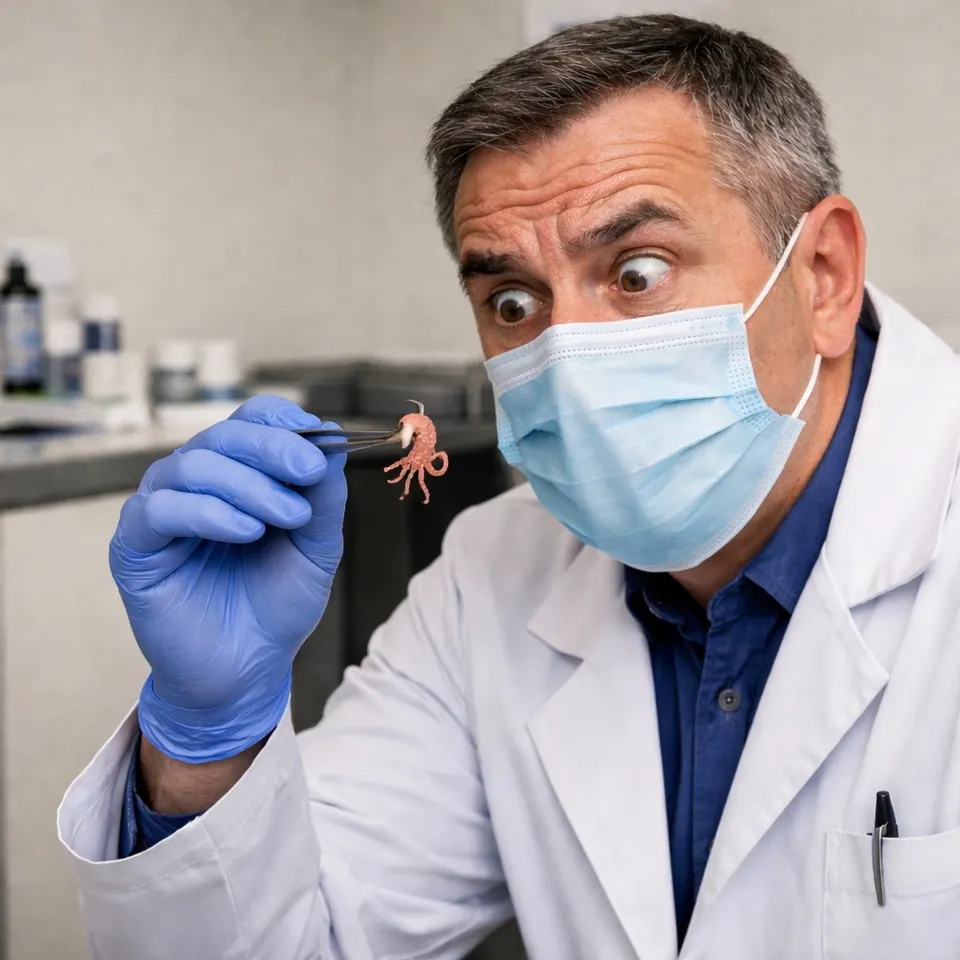
“Something is crawling inside my head,” the eleven-year-old boy pleaded, but the adults dismissed it as a bid for attention. It wasn't until a young doctor saw the movement on a high-def monitor that the medical team realized the horrific truth.
3:30 AM. In a modest, drafty two-bedroom house on the edge of a quiet Ohio suburb, the silence was broken only by the hum of the old refrigerator in the kitchen. Toby woke up with a jolt, a searing pain lancing through his right ear like a hot needle. He bit his lip to keep from crying out; he knew if he woke Linda, it would only lead to another lecture about "making things up."
The eleven-year-old sat up cautiously, trying not to let the old mattress springs creak. The pain pulsed in time with his heartbeat, and deep inside his ear, something shifted. He had lived with this sensation for five years—nearly half his life.
But tonight was different. Toby pressed his palm against his ear and felt a distinct vibration under his skin. Desperate, he began to scratch at the outer canal, trying to reach the intruder that had been tormenting him from within.
His skin quickly turned raw, but he couldn't stop. The movement inside intensified, as if something were trying to burrow deeper to escape him. A warm, sticky fluid began to trickle down his neck.
Toby pulled his hand away and saw dark stains on his fingers, mixed with a thick, translucent discharge. It had a faint, sickly-sweet metallic smell. He wiped his hand on his pajama pants and whispered to himself, "Not again."
He slipped out of bed and padded down the hallway to the bathroom. The linoleum was cold under his bare feet. He flipped the switch, and the flickering fluorescent light cast a harsh glow over the dated wallpaper and peeling paint.
Toby leaned over the sink and stared at his reflection. His right ear was bright red and swollen, his face pale, with dark circles under his eyes from years of interrupted sleep. He tilted his head, trying to see into the canal, but the light wasn't right. Then, the movement started again—followed by a faint, high-pitched clicking sound.
The sound was so quiet he wasn't sure if it was real or just the blood rushing in his head. He turned on the cold water and tried to rinse the ear, tilting his head over the basin. The water splashed his shirt, but nothing changed inside.
If anything, the intruder seemed to protest the water, thrashing with renewed vigor.
“What are you?” Toby whispered to the mirror. He had learned to talk to himself; there was no one else in the house who would listen without judgment.
Suddenly, heavy footsteps sounded in the hall. Linda was awake. Toby froze. The door swung open, and his stepmother stood there in a faded fleece robe, her face tight with irritation.
“Toby? What on earth are you doing up at this hour?” she demanded.
“My ear... it hurts, Linda,” he said softly, instinctively covering the side of his head.
“Again with this?” Linda stepped forward and pulled his hand away. Seeing the raw skin, she snapped. “You’ve been scratching at it again! How many times have I told you to leave it alone?”
“But something’s moving! I can hear it!”
“There is nothing there!” she barked, grabbing him by the shoulder. “It’s all in your head, Toby. I have enough on my plate working double shifts without you seeking attention every night.”
She pulled him toward the light to inspect the damage. Seeing the dark discharge, her expression shifted from anger to pure annoyance.
“Look at this mess! You’ve probably given yourself a massive infection now,” she said, grabbing a washcloth and roughly wiping his face. “Now I have to take time off work to drag you to the clinic again.”
“I’m sorry, I didn't mean to...”
“Save it,” she snapped. “I’ve taken you to three different doctors, and they all say the same thing: your ears are fine. This is behavioral, Toby. It’s a cry for attention, and I’m done with the drama.”
He stayed silent, leaning against the cold tile. He had learned long ago that arguing with Linda was a losing battle. She worked as a floor supervisor at a local parts plant, and she brought the stress of the factory home with her every day.
“We’re going to the pediatrician tomorrow,” she said, tossing the towel into the hamper. “And if she tells me you’re fine again, you’re grounded until Christmas. I’m tired of the games.”
She killed the light and marched back to her room, slamming the door. Toby sat in the dark, listening to the clicking in his head. It was louder now, a rhythmic scratching that seemed to vibrate against his very skull.
He went back to his room and lay on top of the covers. Sleep was impossible. The movement was frantic now. He turned on his left side, pressing the bad ear into the pillow, but it only made the scratching sound more intimate. Outside, a streetlamp cast long, skeletal shadows of the oak trees across his ceiling.
In the distance, a siren wailed. Toby closed his eyes and tried to remember his mother—her voice, the way she used to hum when he was a toddler. But those memories were being crowded out by the cold reality of clinics, the skeptical looks from nurses, and the dismissive sighs of doctors.
“Maybe I am crazy,” he thought, feeling a sharp pinch deep inside the canal.
The next morning, Linda woke him with a sharp shake. The sun was barely up, but she was already dressed in her work slacks and a sensible blouse.
“Get up. Let’s get this over with,” she said, checking her watch. “And don't you dare start with the 'crawling' story. Just tell the doctor you scratched it because it was itchy.”
Toby dressed in silence—jeans and a polo shirt that was getting a bit tight in the shoulders. He didn't argue.
Breakfast was a somber affair. Linda put a bowl of generic cereal in front of him and stood by the counter, nursing a mug of black coffee.
“If the doctor asks about home, you tell her everything is fine,” Linda warned. “I don't need some social worker breathing down my neck because you’re acting out.”
The drive to the suburban medical center was quiet. The autumn morning was gray and drizzly, the kind of weather that made everything feel dampened. The waiting room was packed with toddlers with runny noses and tired-looking parents.
“We need to see Dr. Miller. Toby has an ear issue,” Linda told the receptionist.
“Do you have an appointment? We’re booked solid today,” the woman replied without looking up from her screen.
“It’s an emergency. He was bleeding last night,” Linda insisted, her voice rising just enough to be noticed.
After forty minutes, they were ushered into an exam room. Dr. Miller, a woman in her sixties with a kind but weary face, entered with Toby’s chart.
“What’s going on with our guy today?” she asked, sitting on her stool.
“His ear. He’s been digging at it again,” Linda said, pointing to Toby.
Dr. Miller put on her glasses and looked at Toby’s ear with a small flashlight. “Well, there’s definitely some inflammation and some superficial lacerations. Toby, can you tell me what it feels like?”
Toby glanced at Linda, then whispered, “It feels like something is living in there. It moves and makes noise.”
“He’s got a vivid imagination,” Linda cut in quickly. “He does this when he’s stressed at school.”
The doctor looked deeper and shook her head. “I don't see any foreign objects. It’s likely a bit of impacted wax or a mild case of swimmer's ear causing a 'full' sensation. I’ll refer you to an ENT just to be safe, but try to keep him from scratching.”
The ENT, Dr. Henderson, was a man who looked like he had seen a thousand ears that day. He was efficient and clinical.
“Lean back, Toby,” he said, reaching for his tools.
He spent five minutes peering into the ear with a microscope. “There’s a significant wax plug deep in the canal. That’s probably what’s causing the 'movement' sensation—it shifts when he moves his jaw. We’ll flush it out.”
The procedure was uncomfortable. The warm water pressure made Toby’s head swim, and he felt nauseous. He gripped the edges of the chair. But as the water drained, the movement inside didn't stop—it became frantic, as if the occupant were drowning.
“There we go,” Dr. Henderson said, showing a small tray with a dark brown clump. “That should do it. You’re all clear.”
“But I still feel it,” Toby said, his voice trembling.
“That’s just residual irritation. It’ll fade in a day or two. Use these drops,” the doctor said, already writing the next prescription.
But the relief never came. A week later, the symptoms were worse. Desperate to prove he was "fine," Linda took him to a high-end private clinic in the city, paying the steep co-pay out of her savings.
Dr. Sarah Vance was a specialist with a pristine office and the latest tech. She listened to Toby without interrupting.
“It’s been five years,” Toby told her. “It clicks. It scratches. It hurts at night.”
Dr. Vance performed a thorough exam with a digital otoscope, projecting the image onto a large screen. The canal looked clean, the eardrum intact.
“Physically, everything looks perfect,” she said, turning to Linda. “Tell me, has Toby had any major life changes? Any trauma?”
“His father passed away a few years ago,” Linda said. “And he lost his mother when he was a baby.”
“I see. Often, in children who have experienced loss, psychological stress can manifest as physical sensations. It’s called psychosomatic disorder. The 'movement' he feels is real to him, but it’s being generated by his brain, not his ear.”
“So he’s not lying, but there’s nothing there?” Linda asked, looking for a definitive answer.
“Exactly. I’d recommend a child psychologist who specializes in grief and sensory processing.”
Linda sighed, frustrated by the $200 bill for a "it's all in his head" diagnosis. The final stop was a regional hospital for a consultation with a senior specialist, Dr. Sterling.
Dr. Sterling was an old-school physician who barely looked at Toby. He skimmed the previous reports and nodded. “The colleagues are correct. No pathology. It’s a behavioral tic. Some kids bite their nails; Toby scratches his ear and imagines sounds. It’s a coping mechanism.”
“But Dr. Sterling, I can hear it right now,” Toby pleaded.
“Son, the mind is a powerful thing. It can make you feel things that aren't there. You need to be brave and focus on your schoolwork.”
The hospital psychologist, a young woman named Anna, saw Toby next. She tried to be gentle.
“How do you feel about Linda?” she asked.
“She’s okay. She’s busy,” Toby replied, staring at his shoes.
“Does she ever hurt you?”
Toby hesitated. “Only when I don't listen about my ear.”
The report came back: *Signs of anxiety and adjustment disorder. Recommend therapy and mild sedatives for sleep.*
On the drive home, Linda was silent. Toby watched the rain hit the windshield. The clicking in his ear was now a constant, rhythmic tapping. He realized then that no one was coming to save him. The doctors had spoken, and their word was law. He was alone with the thing inside him.
The first bell rang at 8:30 AM, but Toby was already at his desk in the back of the room. He preferred to be early to avoid the chaos of the hallways. Lincoln Middle School was a typical suburban building—brick, linoleum, and the faint smell of floor wax and old sandwiches.
Math class was a struggle. Mrs. Gable was explaining fractions on the whiteboard, but Toby couldn't focus. The movement in his right ear was so aggressive it felt like something was trying to claw through his eardrum. He winced, his head jerking involuntarily.
“Toby, is there a problem with problem number five?” Mrs. Gable asked, peering over her glasses.
Toby realized the whole class was looking at him. “No, sorry,” he mumbled.
“Then please pay attention. This will be on the quiz,” she said sternly.
Behind him, he heard a snicker. Kyle, a boy who lived for other people’s discomfort, leaned forward. “Hey, Twitchy. You got a bee in your brain or something?”
Toby ignored him, but his head jerked again. The clicking was now a sharp, metallic sound, audible only to him, but so loud it made his teeth ache.
At recess, it got worse. A group of boys cornered him near the swing set.
“Hey, Toby, my mom says you’re seeing a shrink,” Kyle taunted. “Is it true? Are you crazy?”
“Leave me alone,” Toby said, clutching his backpack.
“Why do you keep shaking your head like a wet dog? You got bugs in there?” Kyle reached out and flicked Toby’s ear. The pain was so sudden and intense that Toby let out a strangled cry and fell to his knees.
The other kids laughed. “Look at him! He’s losing it!”
Toby scrambled up and ran toward the building, his vision blurring with tears. He hid in a bathroom stall, pressing his head against the cold metal partition. The thing inside was thrashing now, reacting to his elevated heart rate.
English class was next. Mrs. Gable, who also taught Language Arts, was a perceptive woman. She noticed Toby’s red eyes and the way he kept his hand pressed against the side of his head.
“Toby, can you stay for a moment after class?” she asked as the bell rang.
When the room cleared, she sat on the edge of her desk. “Toby, I’ve noticed you’ve been struggling. And the other kids... they can be cruel. Is your ear still bothering you?”
Toby looked at her, debating whether to lie. But something in her expression made him crack. “It’s not just bothering me, Mrs. Gable. Something is *in* there. It’s alive. But the doctors say I’m making it up because I’m sad about my mom.”
Mrs. Gable frowned. She leaned in, looking at his ear. Even without a scope, she could see the dark, oily discharge staining his collar.
“Toby, that doesn't look like 'imagination' to me. Does your stepmother know it’s draining like this?”
“She says I’m scratching it on purpose,” he whispered.
Mrs. Gable felt a chill. She had been a teacher for twenty years, and she knew the difference between a child seeking attention and a child in genuine distress. “Listen to me. If it gets worse, or if you feel dizzy, you come straight to me. Okay?”
The next day, the bullying escalated. Kyle had started a rumor that Toby had "brain worms" that were contagious. No one would sit near him in the cafeteria. Even the kids who used to be his friends looked away when he passed.
“Hey, Brain-Worm Toby! Don't let them crawl out on my lunch!” Kyle yelled across the room.
Toby sat alone, picking at a bag of chips. A quiet boy named Sam sat down a few seats away. Sam was the kind of kid who stayed under the radar.
“Is it really moving?” Sam asked quietly.
Toby looked up, surprised. “Yeah. All the time.”
“My uncle is a vet,” Sam said. “He once found a moth in a dog’s ear. It took him forever to find it because it was hiding behind a fold. Maybe yours is hiding.”
It was the first time anyone had offered a logical explanation that didn't involve Toby being "crazy." It gave him a flicker of hope.
But that hope was short-lived. When he got home, Linda was waiting in the kitchen, her face a mask of fury. She had a printout of his grades and a message from the school office.
“Another call from Mrs. Gable,” Linda said, her voice dangerously low. “She says you’re 'distressed' and 'disrupting the class' with your head-shaking. She even suggested I take you to a specialist—again!”
“I can't help it, Linda! It hurts!”
“Enough!” she screamed, slamming her hand on the table. “I am working myself to the bone to keep this house, and you are making me look like a negligent parent! The doctors said you are fine! Do you understand? FINE!”
She grabbed him by the arm and dragged him toward the bathroom. “Let’s see what you’ve done now.”
She forced his head under the light. The discharge was thicker now, almost black. Linda’s eyes widened for a second, but then her denial took over. “You’ve been putting something in there, haven't you? To make it look infected? To get out of school?”
“No! I swear!”
“Liar!” she yelled. She reached into the hall closet and pulled out a heavy leather belt. “Maybe this will help you remember how to act like a normal human being.”
The next few minutes were a blur of pain and shame. Toby didn't fight back; he just curled into a ball on the floor. Every strike of the belt seemed to vibrate through his skull, making the thing in his ear scream in a frequency only he could hear.
“Tomorrow, you go to school, you sit still, and you don't say a word about your ear,” Linda panted, tossing the belt aside. “If I get one more call, you’ll be spending your nights in the basement.”
Toby lay on the floor long after she left. His back burned, but his ear... his ear felt like it was on fire. He crawled to his room and collapsed. In the silence of the night, the clicking changed. It became a rhythmic, wet sound, like something chewing.
A few days later, while Linda was at work, Toby was looking for a pair of clean socks in the back of the hall closet. He pushed aside a stack of old blankets and found a locked metal box. He knew where Linda kept the spare key—in the kitchen junk drawer.
He didn't know why he did it. Maybe he was looking for a way to understand why his life was so broken. He opened the box and found a stack of old photos and legal documents.
There was a photo of a woman who looked just like him, holding a baby. On the back, it said: *Sarah and Toby, 2013.* His mother.
Underneath the photos was a manila envelope. Inside was a letter, written on plain paper, the handwriting frantic. It was from his father, addressed to Linda.
*“Linda, I know what you were doing at the lab. I know about the 'bio-implants.' If anything happens to me, you have to keep Toby safe. If the project affected him, you can't let them find out. They’ll treat him like a specimen. Keep him hidden, keep him quiet. If he starts showing symptoms, don't go to the regular doctors—they won't understand what they're looking at...”*
The letter ended abruptly. Toby’s heart hammered against his ribs. *Lab? Bio-implants? Project?*
He heard the garage door opening. He shoved everything back into the box, locked it, and sprinted to his room. His head was spinning. His father hadn't died in a simple accident—he was afraid. And Linda wasn't just being mean; she was hiding something terrifying.
Monday morning was a nightmare. Toby felt like his head was being split open from the inside. He sat in Math class, his vision tunneling. The clicking was so loud now it sounded like a jackhammer.
“Toby? Toby, are you with us?” Mrs. Gable asked.
Toby tried to stand, but the world tilted. He grabbed the edge of his desk, his knuckles white. Suddenly, a sharp, agonizing pop echoed in his skull. He screamed—a raw, guttural sound that silenced the room.
“Toby!” Mrs. Gable ran toward him.
He collapsed into his chair, clutching his head. A thick, dark fluid began to pour from his ear, staining his polo shirt and dripping onto the floor. It wasn't just blood; it was a viscous, black substance that smelled like old copper and chemicals.
“Oh my God,” Kyle whispered, his face turning ashen. “Look at his ear.”
Mrs. Gable reached him and gasped. Something was moving in the fluid. Something small, pale, and pulsing.
“Call 911! Now!” she shouted to the class. She grabbed a stack of paper towels, trying to stanch the flow, but Toby had already slumped over, unconscious.
The paramedics arrived in minutes. The lead tech, a man named Mike, took one look at Toby and turned pale. “What is that smell?”
“I don't know, it just started,” Mrs. Gable said, her hands shaking.
In the ambulance, Mike tried to clean the ear to see the source of the bleeding. He stopped mid-motion, his flashlight trembling. “Dispatch, we need a level one trauma alert at Mercy General. And tell them to get a specialist on standby. We have... we have an unidentified biological anomaly.”
At the hospital, Toby was rushed into a private exam room. The resident on duty was Dr. Max Bennett, a young, sharp physician who had just finished a fellowship in rare tropical diseases. He wasn't the type to dismiss a patient.
“Let’s see what we’ve got,” Max said, adjusting his headlamp.
He peered into Toby’s ear. He saw the inflammation, the blood, and then—he saw it. Deep in the canal, nestled against the bone, was a translucent, fleshy structure. It wasn't a tumor. It had a complex network of tiny blue veins and, most horrifyingly, it pulsed with a deliberate, rhythmic beat.
“Get the digital scope,” Max ordered, his voice tight. “And call the Chief of Surgery. Now.”
The image appeared on the high-definition monitor. The entire medical team in the room went silent. The object was roughly the size of a kidney bean. As the light hit it, the tissue contracted. Two small, dark spots—primitive eyes—shifted to look directly at the camera lens.
“It’s alive,” a nurse whispered, crossing herself.
“It’s not just alive,” Max said, his mind racing back to a classified medical journal he’d read about experimental biotech. “It’s integrated. It’s fused with his nervous system.”
Suddenly, the door burst open. Linda was there, looking disheveled and panicked. “I’m his guardian! I’m taking him home! This is a private matter!”
“Ma’am, your son is in critical condition,” Max said, stepping in her way. “He has a parasitic growth that is threatening his brain.”
“It’s not a growth! He’s just sick!” Linda screamed. “Give him to me!”
Max noticed the way she was looking at the monitor—not with horror, but with a strange, guilty recognition. He signaled to the security guard at the door.
“Wait,” Max said, looking at the chart. “Linda Kraft? You worked for Apex Biotech in the early 2010s, didn't you? The 'Neural-Link' project?”
Linda froze. Her face went from pale to ghostly white. “I don't know what you’re talking about.”
“I think you do. And I think the police are going to be very interested in that box you have at home,” Max said, taking a gamble based on Toby’s father’s name in the records.
Linda tried to bolt, but security caught her in the hallway. Within an hour, the hospital was swarming with federal agents. The "Neural-Link" had been a rogue experiment—a biological computer designed to grow inside a host to monitor brain activity. Toby’s father had tried to stop it, and Toby had been the unintended "storage unit" for the prototype when the lab was shut down.
The surgery took six grueling hours. Max and a team of neurosurgeons worked with microscopic precision to detangle the bio-implant from Toby’s auditory nerve. It was a miracle he hadn't lost his hearing—or his mind—years ago.
When Toby finally woke up, the room was quiet. For the first time in five years, the clicking was gone. The scratching was gone. There was only the soft hum of the hospital monitors.
Dr. Max Bennett was sitting by his bed. “Hey, Toby. How do you feel?”
Toby touched the heavy bandage on his head. He listened. He heard the air conditioner. He heard a bird outside the window. He heard his own breath.
“It’s quiet,” Toby whispered, tears streaming down his face. “It’s finally quiet.”
“I know, buddy. I know.”
Linda was arrested and eventually sentenced to twenty years for child endangerment and her role in the illegal experiments. The "Neural-Link" project was dismantled, and the survivors of the lab's experiments were finally given the specialized care they needed.
Toby didn't go back to that drafty house. Dr. Max Bennett, who had been moved by the boy’s resilience, worked with social services to become Toby’s foster father, eventually adopting him a year later.
Today, Toby is a straight-A student with a passion for science. He still has a small scar behind his ear, a reminder of the years he spent in the dark. But he’s no longer "Twitchy Toby." He’s a boy who was finally heard.

















Share how the story made you feel
0Comments appear after a quick automatic check. Please no links, ads or personal data.
Next to your name we show your country, determined from your IP address; the address itself is never shown, and only a hashed fingerprint of it is kept to stop spam.