
 Let’s Keep It Real
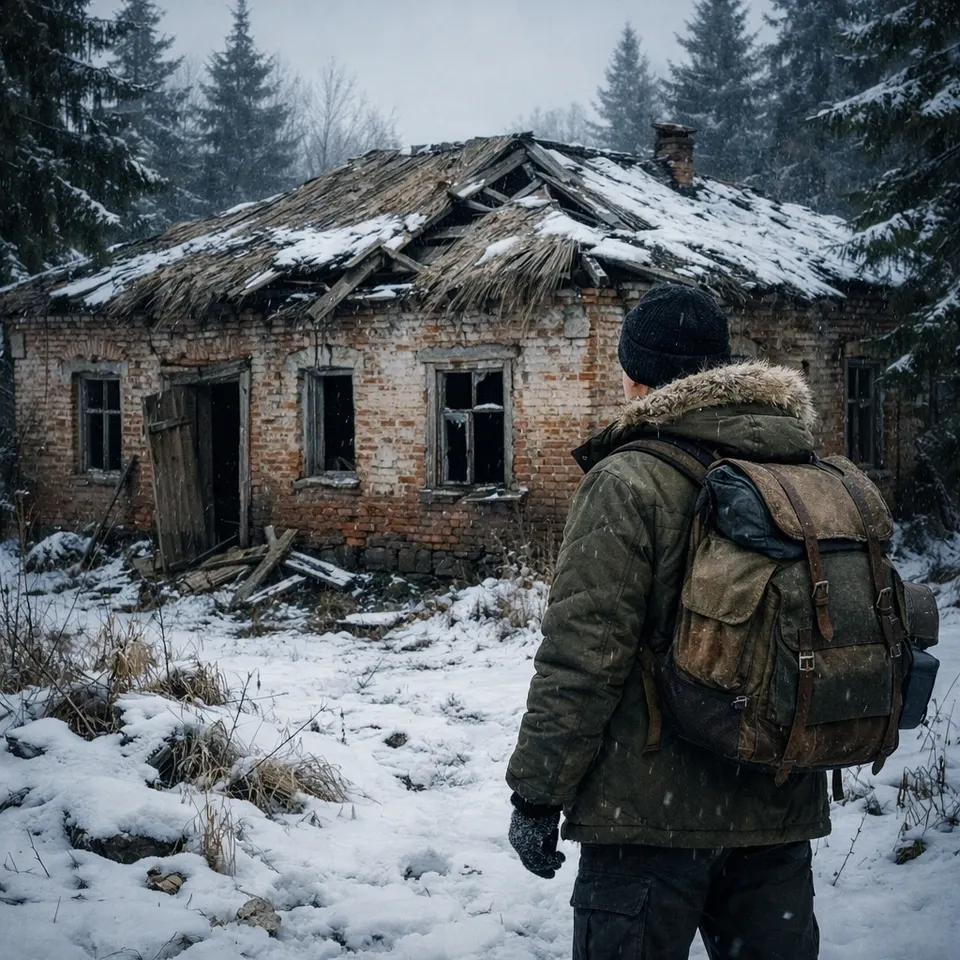
When David was only fourteen, his life changed forever on a cold, damp November evening. His stepfather, a large man with a short fuse, grabbed him by the collar of his shirt in a fit of drunken rage and shoved him out onto the porch.
A worn-out backpack followed him into the dark, containing nothing but a few pairs of socks, a hoodie, and a notebook. "Don't bother coming back!" his stepfather yelled, slamming the heavy door so hard the frame rattled. David stood there, shivering as the autumn wind cut through his thin shirt, waiting for the one person who could fix this.
But his mother didn't come to the door. She didn't try to stop her husband, and she didn't even look out the window. The kitchen light simply flickered off, leaving the yard in total silence. In that moment, sitting on a cold bench at a nearby bus stop, David realized the truth: he was on his own. No one was coming to save him. The first few weeks were a blur of survival and a deep, quiet resolve.
With no money and no place to go, David slept in Greyhound stations or tucked away in the corners of 24-hour laundromats. He avoided the police, terrified of being sent into the foster care system—a machine he didn't trust. He learned to be invisible and took any job that paid cash under the table.
By day, he hauled crates at the local produce market, his hands raw from the cold. In the afternoons, he washed windshields at busy intersections, and at night, he collected aluminum cans from park bins. Every dollar was a lifeline. He lived on cheap bread and peanut butter, saving every cent he could. The hardest part wasn't the hunger; it was the feeling that if he disappeared tomorrow, the world wouldn't even blink.
Three years passed. David was seventeen now, leaner and taller, with a gaze that had grown steady and sharp. He wasn't just surviving anymore; he was working with a purpose. He kept his savings in a small metal lockbox, hidden away, watching the balance grow slowly but surely.
Deep down, he held onto a single goal: he wanted a place of his own. A place with a lock he controlled, where no one could ever throw him out again. One morning, while scanning the "For Sale" section of a local rural newspaper, he saw a listing that seemed like a typo. A small property in a remote town called Pine Ridge was listed for five dollars.
He read it three times, certain it was a mistake or a scam. But his gut told him to call. An elderly man named Mr. Miller answered. He explained that the house had belonged to his late brother and had been sitting vacant for years. It was a total wreck, but the land was good. Mr. Miller, now in his eighties, lived three states away and couldn't maintain it anymore.
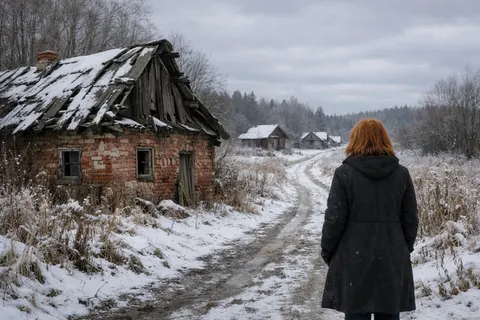
He didn't want to see the old family plot turned into a dumping ground. He wanted someone who would actually live there and fix it up. A week later, David took a bus out to Pine Ridge. What he saw would have made most people turn around and walk away. The small cabin was in a state of absolute decay.
The roof had partially caved in, the windows were shattered, and the front door was hanging by a single rusted hinge. The yard was a jungle of weeds and scrap metal. It wasn't a house; it was a ruin. Mr. Miller, who had driven down to finalize the deed, looked at the boy and sighed. He told David he wouldn't be offended if he backed out right then and there.
But David didn't move. He looked at the rotting cedar siding and saw a fortress. He reached into his pocket, pulled out a five-dollar bill, and handed it to the old man. He looked Mr. Miller in the eye and promised he would make it right. There was a grit in the boy's voice that made the old man nod in respect.
Mr. Miller shook David's hand, handed him a heavy ring of rusted keys, and told him he had a good feeling about him. That first night, David slept on the floor on a pile of old blankets he’d brought in his pack. He looked up through the hole in the roof at the stars and felt a strange sense of peace. For the first time in years, he was home.
The next few months were a test of endurance. David kept his construction job in the city, commuting back and forth on an old bike he’d repaired. Every paycheck went toward nails, plywood, and roofing felt. He became a master of "making do," scouring salvage yards and taking leftover materials from job sites with his boss's permission.
He spent his weekends clearing brush and hauling away trash. He taught himself how to frame a roof and how to lay a stone hearth by reading old manuals at the local library. He mixed mortar in a plastic tub and salvaged bricks from an old chimney that had collapsed nearby. The neighbors in Pine Ridge watched him from a distance at first, skeptical of the "city kid" trying to save a lost cause.
But as the weeks turned into months, their skepticism turned into respect. They saw him working until midnight by the light of a battery-powered lantern. One afternoon, a neighbor named Mrs. Gable walked over with a tray of lasagna. It was the first home-cooked meal David had eaten in years. Soon after, a guy named Bill from down the road brought his tractor over to help pull out some old stumps.
The local carpenter, Mr. Henderson, started dropping by in the evenings to show David how to properly hang a door or trim a window. Slowly, the house began to breathe again. David worked until his muscles ached, but every board he nailed down felt like he was healing a piece of his own past. He wasn't just fixing a building; he was rebuilding his life.
By the end of the year, the "ruin" was unrecognizable. The roof was tight, the windows were new, and a fresh coat of paint made the little house glow against the trees. Inside, David had built a sturdy table, a bed frame, and a set of shelves from reclaimed oak. The wood stove he’d restored kept the place warm, smelling of cedar and pine. He had become a man—strong, capable, and settled.
He had integrated into the community, no longer an outsider but a neighbor. He helped the older folks with their chores and taught the local kids how to use a hammer safely. He had found his place in the world, and he had done it entirely on his own terms.
With the house finished, David turned his attention to the land. He planted a vegetable garden and a small orchard of apple and peach trees. He built a workshop out back, where he started a small business making custom furniture. His reputation for quality work spread quickly through the county.
Two years later, a local news station heard about the "Five Dollar House" and came out to do a segment. David was humble on camera, simply stating that when you have nothing, you learn the value of everything. He spoke about the kindness of his neighbors and the importance of having a place to call your own. The story went viral, touching people across the country.
Letters began to arrive at the Pine Ridge post office—hundreds of them. People shared their own stories of struggle and thanked him for the inspiration. David made it a point to write back to as many as he could, especially the kids who felt lost. But the most unexpected visitor arrived on a Tuesday afternoon in July.
A dusty sedan pulled up to his gate. A woman got out and stood there, clutching her purse, looking at the beautiful home David had built. David recognized her immediately. It was his mother. They stood in silence for a long time, the fence between them. She looked older, tired, and deeply regretful.
She told him she had seen the news story. She didn't ask for money or a place to stay; she simply asked for his forgiveness. She admitted she had been weak and that she had regretted that night every day since. She didn't make excuses. She just stood there, waiting for his reaction. David looked at her, and for the first time, he didn't feel anger. He just felt a quiet, distant pity.
He realized that holding onto the grudge was like carrying a bag of heavy stones. He didn't need them anymore. He told her he forgave her, not because what she did was okay, but because he was done being a victim of it. He invited her in for coffee, showing her the house he had built with his own two hands. They talked for hours, finally closing a chapter that had been open for far too long.
David learned that his stepfather was long gone, and his mother was living a quiet life on her own. He didn't invite her to move in, but he did promise to stay in touch. He had his own life now. Today, David is twenty-five. He’s a respected member of the community and a successful business owner.
He married Sarah, the local elementary school teacher, and they have a young daughter named Maya. David’s workshop has grown into a small company that employs several local veterans. But his proudest achievement is the "Pine Ridge Foundation," a non-profit he started to provide temporary housing and job training for at-risk youth.
He uses his own story to show them that their past doesn't have to define their future. He teaches them how to build, how to save, and how to stand on their own feet. In his living room, framed next to a photo of his family, is the original $5 deed and a picture of the ruin he bought years ago.
He tells Maya that those two pictures are a reminder: you can build something beautiful out of anything if you're willing to put in the work. He knows that the true value of his home isn't the market price or the land it sits on. It's the peace he feels when he locks the door at night.
Every evening, David sits on his porch with Sarah, watching the sun set over the mountains. He thinks about the fourteen-year-old boy at the bus stop and wishes he could tell him that it’s all going to be okay. He’s grateful for the struggle, because it gave him the strength to build a life that no one can ever take away.














Share how the story made you feel
0Comments appear after a quick automatic check. Please no links, ads or personal data.
Next to your name we show your country, determined from your IP address; the address itself is never shown, and only a hashed fingerprint of it is kept to stop spam.