
 Let’s Keep It Real
“Just explaining consequences. Same as you’ve been doing to us all month.”
Melnikov left, slamming the door. And in the car, preparations began for the next day. Everyone understood: this would be the last stand for dignity and for the right to remain human.
That night nobody slept. Men sat in small groups and talked quietly. They remembered home, family, the lives they had once had, as if saying goodbye. Anna sat between Crutch and Professor Vorontsov in silence.
Then the professor said, “You know, I spent thirty years studying history and only now do I understand the main thing. History is not dates and events. It is people who remain human under inhuman conditions. We are making history right now, and nobody may ever know it.”
Crutch gave a dry little smile. “They’ll know. Maybe years from now. Maybe decades. But they’ll know.”
The morning of day thirty began with a jolt as the train braked hard at the final station. Outside were gray transfer barracks, guard towers with machine guns, and barbed wire stretching to the horizon. The north was welcoming another shipment of prisoners.
The cars were opened one by one: first the first, then the second. There were shouts from the guards, barking dogs, women crying. Car seven was left for last. Deliberately.
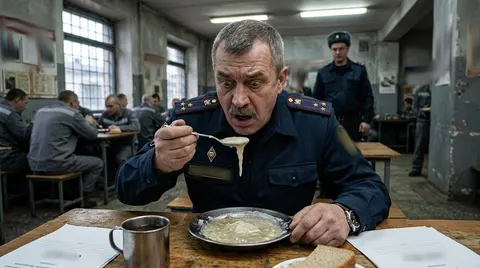
When the door opened, a whole group was already waiting on the platform. Melnikov in dress uniform. A dozen armed guards. The transfer-point chief, a heavyset major with a red face. And several men in civilian clothes. The commission.
“Car seven! Out one at a time, hands on your head!” Crutch stepped out first, limping but holding himself straight. The others followed.
Anna was held back on purpose. She was to come out last. “Comrade Chief,” Melnikov said to the major. “This car engaged in group mutiny, refusal to obey administration, and threats against an officer.”
“I request exemplary punishment.” The major gave a reluctant nod. But then Colonel Karelin stepped forward. “Allow me to introduce myself. Colonel Karelin, former divisional chief of staff, holder of a combat decoration.”
One of the civilians looked up sharply. “Karelin? The same Karelin who commanded at the southern operation?” “Yes. We met years ago at a staff conference. You were then attached to front headquarters.”
The civilian turned out to be a senior security officer from the capital’s commission. He stepped closer. “My God. Nikolai Petrovich. How did you end up here?”
“Long story. But what matters now is this: Captain Melnikov spent thirty days violating transport regulations. He deliberately placed a woman in a men’s car out of personal revenge and repeatedly provoked conflict.”
“There are two hundred witnesses.” Melnikov went white. “That’s slander. The prisoner was transferred for violating regulations.” “What violation?” the commission asked.
“She resisted administration.” “Where is the report? Where are the administrative witnesses?” Melnikov said nothing.
And Karelin continued: “More than that. Captain Melnikov attempted to use his position to coerce prisoner Mikhailova into a sexual relationship. There are witnesses to his visits in the jail.” Then something unexpected happened: an older sergeant stepped out from the line of guards—the same one who had brought water.

Share how the story made you feel
0Comments appear after a quick automatic check. Please no links, ads or personal data.
Next to your name we show your country, determined from your IP address; the address itself is never shown, and only a hashed fingerprint of it is kept to stop spam.