
 Let’s Keep It Real
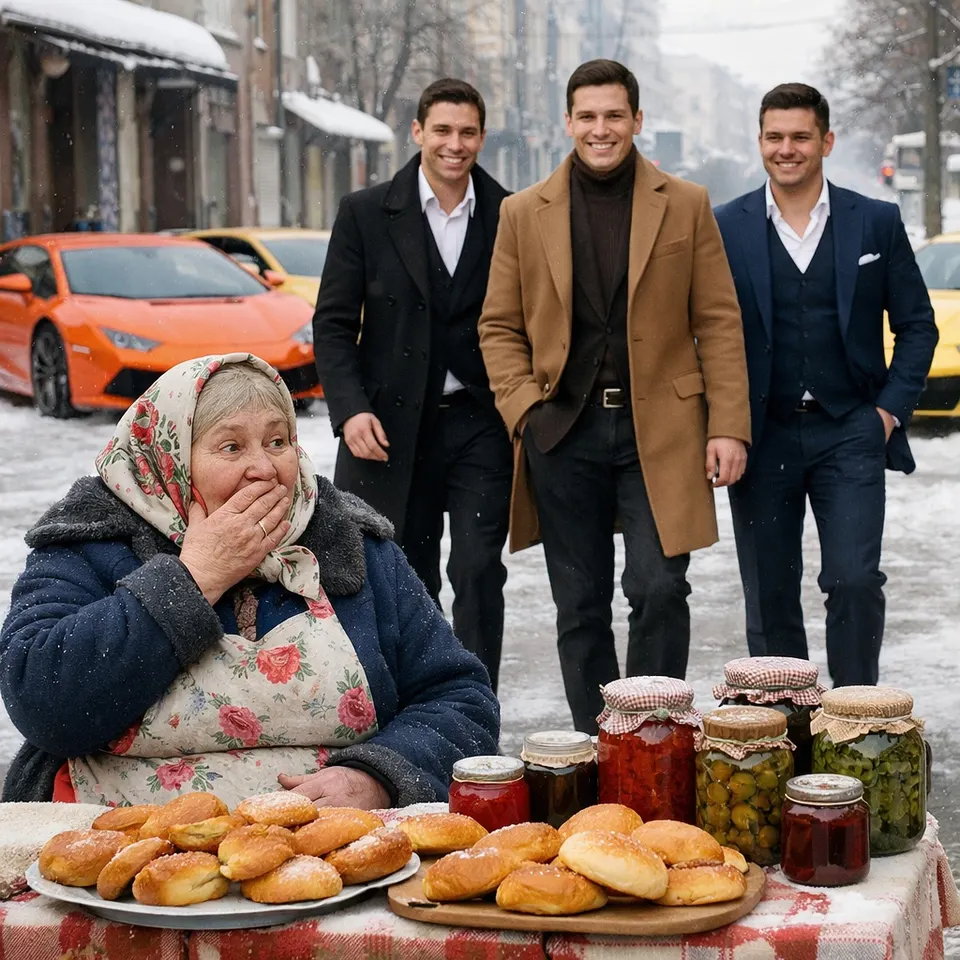
Eleanor Miller was just a local cook running a small roadside stand, but a simple act of sharing her dinner with three runaway boys would change her life forever. Steam rose from her flat-top grill, carrying the scent of toasted sourdough and savory soup into the evening air. Eleanor’s "Comfort Kitchen" wasn't fancy, but it was the cleanest spot in the county.
The worn metal counter sat under a sun-bleached awning, the rhythmic sizzle of the grill providing a soundtrack to the passing traffic. Jars of homemade pickles and sauces were lined up with military precision. Life in this small Pennsylvania town moved fast—trucks rumbled by, commuters hurried home, and the distant sound of a train whistle echoed through the valley. Eleanor’s hands told the story of forty years of hard work, marked by faint grease burns and skin toughened by thousands of shifts.
The elderly woman adjusted her apron and handed a hot to-go box to a regular. The man, a local mechanic, thanked her and left a five-dollar tip in the jar. Eleanor offered a small, tired smile in return.
She wasn't one for big displays of emotion; life had taught her to keep her head down and keep moving. As the sun began to dip, she checked her register. It had been a slow day. Road construction a mile up had diverted most of the traffic, and a new franchise burger joint in town was eating into her margins. Money was tight, and the bills were piling up on her kitchen table at home.
Despite the stress, Eleanor didn't quit. As twilight settled over the parking lot, three small boys appeared out of the shadows. They didn't run or shout like typical kids; they walked in a tight, silent line, huddled close together as if the world might swallow them whole if they separated.
They looked like carbon copies of one another: dark eyes, sharp features, and messy black hair. They were triplets, covered in a layer of road dust. Their clothes were two sizes too big, and their sneakers were held together by grit and prayer.
There were no parents in sight, no backpacks—just three hungry kids. Eleanor watched them with a steady, experienced gaze. She didn't offer pity; she offered a seat. The boys hovered near the edge of the gravel, clearly hesitant to approach the counter.
The boy in the middle finally found his voice. He stepped forward and politely asked if she had any "mistakes"—food that was going to be thrown out anyway. Eleanor paused, her spatula mid-air. She’d seen runaways before, but these boys were different.
They didn't have the hardened edge of street kids; they looked deeply ashamed to be asking. She asked where their mother was, keeping her voice soft so it wouldn't sound like an interrogation. The boys looked at each other, a silent communication passing between them. The middle boy whispered that they didn't have a mom anymore.
He added that it was just the three of them now. Eleanor swallowed hard, looking at her remaining supplies. She looked at the meager cash in her drawer, then back at the thin, tired faces. The boy on the right looked at his shoes, while the one on the left bit his lip to keep from shaking.
With a heavy sigh, Eleanor made a choice. It wasn't about being a hero; it was just the right thing to do. She waved them over and told them to grab a stool, joking that the grill didn't bite. They approached the counter like they were walking into a trap.
She prepared three hearty plates of grilled cheese and tomato soup. It wasn't a feast, but it was hot, fresh, and made with care. For a hungry child, a warm meal is more than calories—it’s a sign that someone sees them. The triplets sat shoulder-to-shoulder on the vinyl stools.
They started eating with a desperate hunger, but soon slowed down as the warmth hit their stomachs. Eleanor watched them, a lump forming in her throat. Maybe they reminded her of her own son, or maybe she was just tired of seeing the world be so cruel to the innocent.
It was painful to see children cling to a sandwich like it was their last lifeline. Clearing her throat, she asked for their names. The boys shared another look. The first said he was Matt, the middle was Gabe, and the third quietly said his name was Dan.
Eleanor committed the names to memory. She asked where they were staying, and the boys looked down at the floor. Gabe admitted they slept wherever they could find a spot out of the wind.
Eleanor’s grip tightened on the counter. She looked out at the street—people were driving home to their warm beds, oblivious to the three small lives sitting at her diner. A young couple walked by laughing, and a businessman in a suit gave the dirty kids a look of pure disgust. Eleanor felt a flash of cold anger.
Suddenly, a harsh voice cut through the air. It was Rick Vance, a local developer who acted like he owned the zip code. He leaned against his expensive truck and sneered, asking Eleanor if she was running a soup kitchen for "stray dogs" now. Vance was always looking for a reason to shut her down so he could buy the lot. He told her she was wasting her time and ruining the neighborhood's "aesthetic."
The boys flinched at his tone, Gabe clutching his plate. Eleanor stood tall, despite the ache in her back. She told Vance that she wasn't complaining, and the boys were just having dinner. Vance laughed, calling them "little vagrants" who would probably rob her blind the moment she turned her back.
He threatened to call the health inspector and the zoning board to shut her "shack" down for good. Eleanor looked him right in the eye. She told him she wasn't afraid of an inspection because there was no filth in her kitchen—only in his heart. Vance scoffed and walked away, but his threat hung in the air like a storm cloud.
Eleanor turned back to her young guests. Matt was looking at her with wide eyes, confused as to why a stranger would risk her livelihood for them. Gabe was quiet, and Dan looked like he wanted to fight the world. She told them to finish their food.
She promised them she wouldn't let them just disappear into the night. In that moment, a bond was formed that the universe wouldn't forget. The town kept moving, the trucks kept rolling, but for Eleanor, everything had changed the moment those boys sat down. Matt, Gabe, and Dan picked up every crumb, treating the meal like a sacred ritual. They didn't ask for seconds, not because they were full, but because they were too polite to impose.
Eleanor handed Gabe a napkin and told him to clean his face, her voice taking on a firm, grandmotherly tone. Gabe nodded and whispered a "thank you" that was barely audible. As she cleared the plates, she noticed their hands—small, but already marked by the harshness of the road: scraped knuckles and dirt under the nails.
She asked where they were headed. Matt whispered that they were going to find a spot under the old bridge. Eleanor’s heart sank. That bridge was a dangerous place, damp and filled with shadows that swallowed people whole.
She asked why they didn't go to the local shelter. Dan looked at her with pure distrust. He said the system would split them up—that was the rule for triplets in foster care. They’d be sent to different counties, different lives.
Eleanor frowned. Gabe explained that if they were separated, they’d never find each other again. He said being alone was scarier than being hungry. Eleanor sat in silence, thinking about the cold bureaucracy of the world.
She looked at her empty register and then at the boys, feeling a deep resentment toward a system that would break a family to "save" it. She made a decision right then: she wouldn't let them be torn apart. She promised them she’d help them stay together. The boys' eyes lit up with a flicker of genuine hope.
Lowering her voice, she asked about their past. Matt shrugged, and Dan looked away. Gabe hesitated but then reached into his shirt. He spoke of a long car ride at night and a "black hole" in his memory where his old life used to be.
Eleanor felt a chill. This wasn't just a case of runaways; there was a tragedy here. She didn't push for details. She simply told them they could come back for breakfast the next morning, but she had one condition.
The boys tensed up, expecting a catch. Dan asked what the price was. Eleanor looked them in the eye and told them: "No stealing. Not from me, not from anyone." She explained that hunger was no excuse for losing your character.
Matt nodded quickly, promising they were honest. Dan grumbled that people blamed them for everything just because they were poor. Eleanor assured them that at her counter, a person’s word was the only currency that mattered.
As Gabe stood up to leave, his collar shifted. A thin, tarnished chain caught the light. Eleanor’s eyes narrowed. It was a small metal pendant with a very specific design: three interconnected stars. She froze. She had seen that logo before, and it wasn't on a cheap trinket.
It was a high-end family crest, something you’d see on a corporate letterhead or a luxury estate. She asked Gabe where he got it. He clutched it to his chest, saying it had been his since he was a baby.
His brothers stepped closer, guarding him. Matt pulled out an identical chain, and Dan did the same. Three identical pendants. Eleanor’s mind raced. She remembered a news story from years ago—a wealthy family from the city, a tragic accident, and three missing heirs. The reward had been huge, but the trail had gone cold.
Dan noticed her expression and asked what was wrong. She kept her voice steady, saying it was just a nice necklace. But Gabe admitted the pendant reminded him of a woman’s voice singing, and Matt mentioned the smell of expensive soap. Dan remembered a set of massive iron gates.
The pieces were falling into place, and they didn't fit the life of a bridge-dweller. Eleanor looked around nervously. The street looked the same, but the world felt dangerous now. If these boys were who she thought they were, someone might have a reason for them to stay "lost." She leaned in and whispered.
She told them to forget the bridge. She insisted they stay in the small shed behind her diner for the night, where she could keep an eye on them. The boys looked at her with a mix of fear and relief. Gabe asked who would want to hurt them.
Eleanor gripped her spatula like a shield. She told them she didn't know yet, but she was going to find out. That night, her little diner became a fortress. The boys huddled together in the back, finally sleeping in a place that didn't smell like damp concrete. Eleanor stayed up late, watching the shadows and thinking about the three stars.
The next morning, the air was thick with the smell of bacon and coffee, but Eleanor felt like she was being watched. The triplets were already up, helping her prep. They worked like a well-oiled machine, cleaning tables and hauling trash without being asked. Eleanor watched them with a mix of pride and dread.
Passersby stared at the boys with suspicion. Some looked with pity, others with judgment. Around noon, Rick Vance appeared across the street. He didn't come over; he just leaned against a lamp post, watching them with a cold, calculating stare. Eleanor felt a shiver of pure intuition—Vance knew something about those pendants.
She told the boys to stay inside the diner. But Gabe’s instincts were sharp; he saw Vance and instinctively tucked his pendant under his shirt. The day dragged on until 2:30 PM, when the heat was at its peak.
A white city van pulled up, followed by a local police cruiser. Eleanor’s heart hammered against her ribs. She told the boys to stay behind her. Three people in official vests stepped out, carrying clipboards and tablets. Rick Vance walked up behind them, a smug grin on his face.
A woman with a badge introduced herself as being from Child Protective Services. She said they’d received a report of "unsupervised minors" and "sanitary concerns" at the diner. She mentioned "child labor" as well. Eleanor turned red, arguing that she was just feeding hungry kids. The official said they had to "evaluate the situation."
Eleanor admitted she’d given them a place to sleep to keep them off the street. The official looked at the boys and asked for their names. Matt tried to speak, but Dan stepped forward, giving their names with a defiant edge. The official entered the data into her tablet.
She asked about their parents. Eleanor said she didn't know, but mentioned the pendants. The official’s face went pale. She asked to see them. Gabe reluctantly showed his. The official whispered something to her colleague, and the atmosphere shifted from routine to high-alert.
Eleanor realized they were going to take the boys. She begged them not to split them up. The official said it wasn't her call—it was "protocol." Dan looked like he was ready to run, and Matt grabbed Eleanor’s hand. She promised them she wouldn't let them go easily.
Rick Vance laughed from the sidelines, telling the police that Eleanor was "interfering with an investigation." The officer told Eleanor to step back. The official explained that the boys were listed in a national database as "missing persons" from a decade-old cold case. They needed to be taken into state custody for "identification and protection."
Vance was beaming like he’d won the lottery. Eleanor realized he’d probably been the one to call it in, hoping for a finder's fee or just to get her out of the way. The officials moved toward the boys. They didn't use force, but their presence was absolute.
The boys clung to Eleanor. Matt asked if she was abandoning them. She felt her heart break as she promised she’d find them. The official said Eleanor could come to the station to give a statement, but she couldn't stop the process. The boys were loaded into the van.
As the doors closed, Eleanor saw Vance through the window, looking satisfied. She realized then that this wasn't just about "protection." Someone had pulled a lever, and the boys were gone. The street returned to its usual noise, but Eleanor’s diner felt like a tomb.
The boys were gone, and Eleanor spent the next few weeks fighting a wall of red tape. Every office she visited gave her the same answer: "You aren't a relative. You have no standing." She was a stranger who had given them a sandwich, and in the eyes of the law, that meant nothing.
She went back to work, but the joy was gone. She kept three extra napkins on the counter every day, a silent prayer for their return. She even kept Gabe’s favorite stool empty. The neighbors gossiped for a while, then moved on. Some called her a saint; others called her a fool.
Rick Vance eventually got his way. He used his connections to hike her property taxes and bury her in "code violations" until she couldn't keep the diner open. He bought the lot for pennies on the dollar. Eleanor ended up working as a line cook in a local hospital cafeteria, her "Comfort Kitchen" demolished to make way for a parking lot.
Years turned into decades. Eleanor’s hair turned silver, and her back bowed under the weight of time. She lived in a small apartment, surrounded by memories. She never stopped thinking about Matt, Gabe, and Dan. She wondered if they’d been split up, or if they’d ever found their way home.
She kept a small box under her bed with a few items: a drawing Matt had made on a napkin, a button from Gabe’s coat, and a newspaper clipping about the "Missing Triplets" case that had eventually faded from the headlines. She was a woman who had lost everything, but she held onto the one thing no one could take: the fact that she had been kind when it mattered.
One Tuesday afternoon, Eleanor was sitting on a park bench near her old diner’s location. The town had changed—more glass, more steel, more noise. Suddenly, the air was split by the roar of high-performance engines. Three identical, jet-black luxury SUVs pulled up to the curb, moving with a precision that stopped traffic.
The townspeople stared. You didn't see vehicles like that in this part of the state. Eleanor watched with mild curiosity, her old heart fluttering. The engines cut out, and a heavy silence fell over the street. Three men stepped out of the cars simultaneously.
They were tall, dressed in tailored suits that cost more than Eleanor’s old diner. They moved with a quiet, powerful confidence. Eleanor felt a strange jolt in her chest. She looked at their faces—sharp features, dark eyes, and that unmistakable black hair. She felt like she was seeing ghosts.
The men walked toward her. They didn't look at the new buildings or the crowd; they only looked at the old woman on the bench. Eleanor gripped her cane, her breath catching. The man in the center stopped a few feet away. He looked at her with an expression of profound, tearful respect.
He whispered her name: "Eleanor." She looked up, and for a second, the years stripped away. She saw the dusty boy who had asked for a "mistake" sandwich. She realized she wasn't looking at strangers; she was looking at Matt, Gabe, and Dan. Her eyes filled with tears as she realized they had found their way back.
But her heart, used to disappointment, was wary. The street had become a stage, with people filming on their phones. Matt, Gabe, and Dan stood around her like a phalanx of protectors. Eleanor asked, her voice trembling, who they were now. Matt knelt before her and said they were the boys who never forgot her.
They explained that after they were taken, their pendants had indeed proven their identity. They were the heirs to a massive tech fortune. Their parents’ "accident" had been orchestrated by a corrupt business partner, and they had been hidden away to keep them from their inheritance. They had spent years in the system, but they had stayed together, fueled by the memory of the woman who had stood up for them.
Suddenly, a familiar, grating voice broke the moment. It was Rick Vance, older and graying, but still wearing the same arrogant sneer. He’d seen the commotion and came over to see if there was a buck to be made. He started blathering about how he "always knew" Eleanor was special and tried to shake the men's hands.
Matt gave him a look so cold it could have frozen the pavement. He told Vance they remembered exactly who he was. Vance’s smile faltered. Gabe stepped forward and mentioned the "zoning issues" and the "tax liens" that had destroyed Eleanor’s business. He revealed that they had spent the last year quietly buying up every property Vance owned.
Vance turned pale. Dan added that they’d also uncovered the paper trail of his "donations" to the local officials who had helped him steal Eleanor’s land. The crowd gasped. Vance tried to sputter an excuse, but Matt told him his time in this town was over. They had turned over the evidence to the state attorney general that morning.
Eleanor watched as the man who had bullied her for years shrunk into nothing. She didn't feel spite; she just felt a profound sense of peace. Gabe leaned in and told her she’d never have to worry about a bill or a "code violation" again. They were here to take her home.
Matt took her hand and told her they had one more thing to tell her. They had found out what happened to her son, Steve. Eleanor’s heart stopped. Gabe explained that when they were in the city, before they were "found," they had met a man in a shelter who had shared his last bit of bread with them. That man was Steve.
He had been sick, but he had told them about his mother, Eleanor, who ran a diner and had a heart of gold. He had told them that if they ever got out, they should find her and tell her he loved her. Steve had passed away shortly after, but he hadn't died alone—he’d died with the three boys he’d helped save. Eleanor wept, but they were tears of closure.
The boys had used their resources to bring Steve’s remains back to the town cemetery, giving him the proper memorial he deserved. Eleanor felt the last of her old wounds finally begin to heal. Matt, Gabe, and Dan weren't just heirs to a fortune; they were the legacy of her own son’s kindness, coming back to her when she needed it most.
A few days later, Eleanor’s "Comfort Kitchen" was rebuilt. It wasn't a shack anymore; it was a beautiful, modern diner on the same lot, with a sign that read "Eleanor’s Legacy." She didn't have to work, but she chose to, serving the best grilled cheese in the state to anyone who looked like they needed a break.
Rick Vance and his cronies were indicted, and the town began to breathe again. Eleanor lived in a beautiful house nearby, with a garden full of roses. Matt, Gabe, and Dan visited every weekend, bringing their own families. They were no longer the "stray dogs" of the street; they were the pillars of the community.
Eleanor often sat on her new porch, looking at the three stars on the diner’s logo. She realized that life is a circle. She had fed three hungry boys, her son had fed three hungry boys, and in the end, those boys had fed her soul. She had learned that no act of kindness, no matter how small, is ever truly lost.
Matt would often sit with her and ask what her secret was. She’d just smile and say, "Just keep the grill hot and the heart open." She had become the grandmother to a whole new generation, teaching them that character is the only thing that lasts. The triplets had kept their promise: they were never split up again.
As the sun set over the Pennsylvania hills, Eleanor felt a deep sense of gratitude. She had lost a son, but she had gained three. She had lost a business, but she had gained a legacy. She watched her "grandsons" laugh in the yard, and she knew that everything was exactly as it should be.
The story of the triplets and the cook became a local legend, a reminder that in a world that can be cold and indifferent, a single sandwich can start a revolution of grace. Eleanor Miller passed away peacefully years later, surrounded by the men she had saved. Her last words were a whisper to Gabe: "Make sure everyone gets a seat at the table."



Share how the story made you feel
0Comments appear after a quick automatic check. Please no links, ads or personal data.
Next to your name we show your country, determined from your IP address; the address itself is never shown, and only a hashed fingerprint of it is kept to stop spam.