
 Let’s Keep It Real
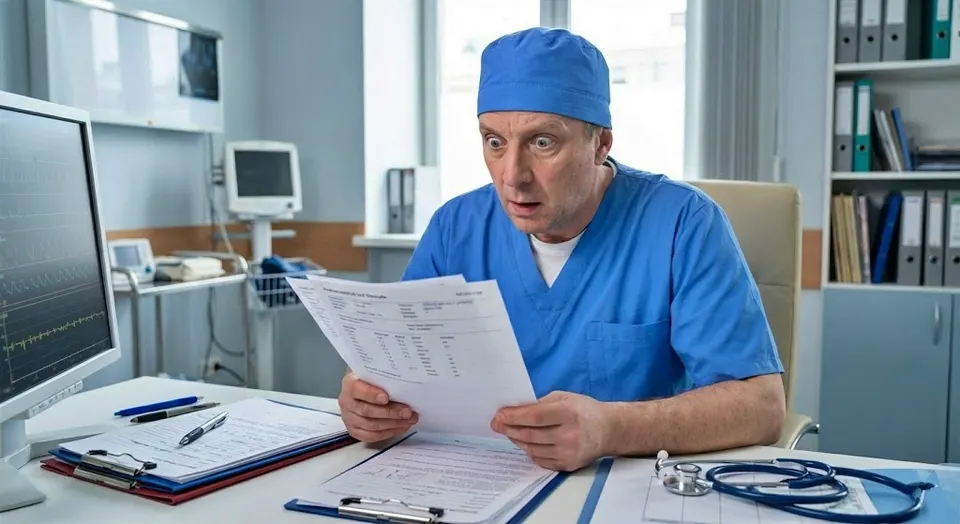
Pavel Romanov left the operating room at half-past six in the evening, pulled the mask from his face, and allowed himself to exhale. Another life saved, another successful day to add to his reputation.
At thirty-three, he was already considered one of the best surgeons in the capital—a specialist to whom patients came from all over the country and even from abroad. His golden hands, as his colleagues said, could literally pull a person back from the brink of death. But now, Pavel felt only fatigue and a strange anxiety that had been haunting him all day.
"Belov's surgery is tomorrow," he reminded himself as he headed down to the staff exit.
Igor Belov, the forty-five-year-old owner of a jewelry store chain, a man with money and connections, had made an appointment with him three months ago. It was a planned operation, nothing complicated: removal of gallstones. A routine matter; Pavel had performed hundreds of such surgeries. But why, then, did this vague feeling not let go?
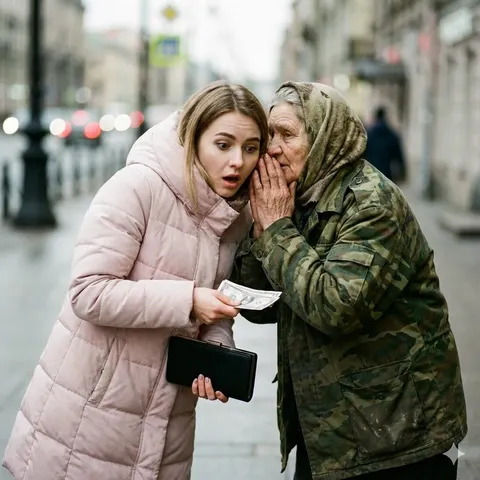
He stepped outside, where the October dusk was already gathering, and saw her. A Gypsy woman was standing right by the exit, leaning against the hospital wall, and in her arms slept an infant wrapped in a bright blanket. The woman was young, no more than thirty, with long black hair that cascaded over her shoulders and large, dark eyes that were now looking directly at Pavel. She wore a colorful, ankle-length skirt and a dark shawl, despite the warm weather for October.
— Doctor Romanov, — she called out softly, and her voice sent a chill down Pavel's spine.
He stopped, though he usually tried to avoid street fortune-tellers.
— Yes, I'm listening, — he replied reservedly.
The Gypsy woman stepped toward him, and the infant in her arms stirred slightly without waking.
— I am Zara. I need to talk to you about tomorrow's operation. About the rich man you're going to cut open.
Pavel felt his muscles tense.
— How do you know about my patients? That's confidential medical information.
— I know many things, Doctor. And you'd better listen to me before it's too late. Igor Belov is not who he claims to be.
— I'm sorry, but I don't believe in fortune-telling, — Pavel began, but Zara interrupted him, leaning closer.
— Check the rich man's tests again before the anesthesia. Check them with witnesses, in front of all the assistants. What you will see will change everything.
Pavel wanted to object, but something in her eyes made him fall silent. There was no madness or deceit in those eyes, only a kind of heavy certainty, as if she were a messenger of death.
— Why should I believe you? — he asked more quietly.
— Because this infant in my arms is his daughter. The one he doesn't know about. And because if you don't check the tests, he won't be the only one who dies tomorrow.
Pavel stood and watched as the Gypsy woman turned and walked away, rocking the sleeping child. Her bright skirt flashed around the corner, and she dissolved into the evening shadows like a ghost. The doctor took out his phone, intending to call hospital security, but changed his mind. What would he say? That some Gypsy woman was telling him about a patient? They would laugh at him. And yet, as he walked back to his car, he couldn't get her words out of his head: "Check the tests again."
"But why? All of Belov's tests were fine, otherwise the surgery wouldn't have been scheduled," he thought.
Pavel opened the door of his black BMW and got behind the wheel, but didn't start the engine right away. He sat in the darkness of the car and pondered. Igor Belov. He had only seen him twice: at the initial consultation and at the pre-operative examination. A tall, heavyset man with well-groomed hands and a scornful smirk, who spoke to the medical staff as if they were his servants. At his side was always his wife Victoria—a twenty-nine-year-old beauty with expressive eyes and full lips, who remained silent while her husband spoke. A typical scene with wealthy people in a private clinic. Nothing special.
But now this encounter with the Gypsy woman cast a shadow over the coming day. Pavel started the car and drove home. On the way, he caught himself several times wanting to turn around and go back to the hospital to really check Belov's documents again. But each time, he pushed the thought away. He was a doctor, not a detective. His job was to operate, not to uncover secrets in his patients' lives.
An empty apartment awaited him at home: since his divorce a year ago, Pavel hadn't started a new relationship, immersing himself entirely in his work. He heated up dinner, ate without an appetite, and went to bed early, but sleep wouldn't come. Zara's words spun in his head: "He won't be the only one who dies tomorrow." What was that supposed to mean? A threat? A warning? Or just the ramblings of a mentally unwell woman? But why, then, did he believe her?
The morning began with a message from Alina Sokolova, his assistant and the best operating room nurse in the clinic. The twenty-five-year-old red-haired girl with freckles and perpetually smiling green eyes wrote: "Doctor, Belov is already in his room. He's in a fighting mood, his wife is with him. Another man came, says he's his brother."
Pavel frowned. Belov hadn't mentioned a brother, though it wasn't his business. He got dressed, drank a strong coffee, and drove to the clinic. The whole way, thoughts of yesterday's meeting gave him no peace.
"Alright," he finally decided. "I'll check the tests in front of the assistants. Just to calm myself down. Zara is probably wrong, but at least I'll know for sure."
At the clinic, he was met by Alina, already changed into her green surgical scrubs.
— Good morning, Pavel Viktorovich. Belov is in room 315, the anesthesiologist has already spoken with him. The surgery is in an hour.
— Good. Alina, do you happen to know if Belov has any children?
Alina thought for a moment:
— His chart says no children. Why?
— Just asking, — Pavel answered evasively and went to his office.
He picked up Igor Belov's medical chart and began to study it carefully. 45 years old, blood type A-positive, no chronic diseases, no allergies. Everything was standard. Blood tests, urine tests, EKG—all within the normal range. An ultrasound showed gallstones about one and a half centimeters in size, a classic case for a laparoscopic cholecystectomy. No red flags. Pavel closed the chart and leaned back in his chair.
— This is some kind of nonsense, — he muttered.
But something still bothered him. At half-past ten, Pavel entered the pre-op room, where Belov was already being prepared for surgery. Igor lay on a gurney in a hospital gown, with Victoria standing beside him in an expensive pantsuit, holding his hand. She looked worried but tried to hide it behind a forced smile.
— Doctor Romanov! — Belov addressed him in a loud voice. — I hope you're in good shape? I don't want to be cut open by a surgeon with a hangover.
He laughed at his own joke, but Victoria nervously squeezed his fingers.
— Rest assured, Igor Andreevich. Everything will go well, — Pavel replied evenly.
He came closer and looked at Victoria. Up close, she was even more beautiful: dark hair gathered in an elegant bun, chiseled features. But her brown eyes held such sorrow that Pavel couldn't help but hold her gaze.
— Don't worry, everything will be fine, — he said, this time to her.
Victoria nodded, but tears glistened on her eyelashes.
— Thank you, doctor. I trust you.
At that moment, a man of about forty entered the pre-op room, wearing an expensive suit, with a shaved head and a heavy gaze.
— Igor, how are you? — he asked, approaching the gurney.
— Everything's fine, Vitya. The doctor says it's a simple operation. I'll be home in three days, — Belov answered.
Pavel looked at the newcomer:
— Are you the patient's brother?
— Yes, Viktor Belov. I'd like to stay with my brother until the surgery, if possible.
— Unfortunately, that's not possible. But you can wait in the lobby, — Pavel said politely but firmly.
Viktor was about to argue, but Igor waved his hand:
— Go on, Vitya. Everything will be fine.
Viktor nodded, cast a strange look at Victoria, and left. Pavel noted to himself that there was clearly some tension between Belov's wife and brother.
Ten minutes later, Belov was wheeled into the operating room. Pavel went into the scrub room and began to prepare. He washed his hands thoroughly according to protocol, put on a sterile gown, gloves, cap, and mask. Alina and two other nurses, Katya and Olga, both young and professional, were also getting ready. The anesthesiologist, Sergey Petrovich, an experienced doctor in his fifties, had already taken his place at the head of the operating table.
Pavel entered the operating room, where Belov lay on the table, already drowsy from premedication.
— Everything is ready, Pavel Viktorovich, — Alina reported.
Pavel approached the instrument table and suddenly remembered Zara's words: "Check the rich man's tests again before the anesthesia. In front of all the assistants." He froze in place. His heart was beating faster than usual.
— Sergey Petrovich, — he addressed the anesthesiologist. — Let's check the patient's data one more time before administering the anesthesia.
The anesthesiologist looked at him in surprise over his mask:
— We've already checked everything twice. Is something wrong?
— I just want to be sure. It's procedure, — Pavel said, trying to keep his voice calm. — Alina, bring Belov's chart and the latest blood tests. Let's verify the data.
Alina exchanged a glance with Sergey Petrovich, but nodded and left. A minute later, she returned with a folder. Pavel opened the chart right there in the operating room, in front of everyone.
— Igor Andreevich Belov, 45 years old. Blood type A-positive, — he began to read aloud.
Sergey Petrovich nodded:
— Correct, everything matches.
Pavel flipped further. The blood test, done three days ago.
— Everything is normal.
But then his eyes fell on a note from the lab technician at the bottom of the page, written in small handwriting: "Repeat analysis from 10/22. See insert."
October 22nd—that was yesterday. Pavel frowned.
— Alina, it says here there was a repeat analysis. Where is it?
— What repeat analysis? — Alina was confused. — There's only one analysis in the chart.
— There's a note from the lab tech. Bring all the documents from the lab for Belov. Right now.
There was such a demanding tone in Pavel's voice that the girl flinched and ran out of the operating room. Sergey Petrovich shifted nervously from foot to foot.
— Pavel, we're wasting time. The patient is ready for anesthesia.
— Wait, — Pavel threw back curtly.
The tension in the operating room was so thick you could cut it with a knife. The nurses stood silently, not understanding what was happening. Two minutes later, which felt like an eternity, Alina returned, holding a piece of paper.
— Here, I found it. It was some additional blood draw that the patient himself ordered last night. The results were only ready this morning, and they were filed in the archival folder, not the main chart.
Pavel took the paper and began to read. What he saw made his blood run cold. Blood type—AB-negative. Rh factor—negative. Another line: genetic DNA analysis, unscheduled, result positive for a marker of a rare genetic disease, requires consultation with a geneticist.
Pavel slowly raised his eyes.
— Sergey Petrovich, we have a problem. A very serious one.
— What happened? — the anesthesiologist came over and looked at the paper. After reading it, he turned pale. — This... This is a completely different analysis. The blood type doesn't match the chart.
— Exactly, — Pavel said quietly. — And that means either there's a mistake in the chart, or these tests aren't his. Or.
He didn't finish, but everyone in the operating room froze.
— "Or" what? — Alina whispered.
— Or this isn't the man who's lying on our table at all, — Pavel finished.
The silence was deafening. Belov lay on the operating table, submerged in a medicated sleep, unaware of the turmoil unfolding around him. Sergey Petrovich was the first to compose himself.
— Pavel, that's impossible. Are we operating on the wrong person? How could that happen?
— I don't know, — Pavel looked at the paper again. — But it says here that the test was done last night, at the patient's own request. Alina, call the lab. Find out who exactly gave this sample, at what time, who collected it.
Alina ran to the phone. Katya and Olga stood like statues, unsure of what to do. Pavel approached Belov and looked closely at his face. The sleeping man looked calm, even peaceful. But now it seemed to Pavel that there was something... off about his face. As if it were a mask.
A minute later, Alina returned, pale as a sheet.
— Pavel Viktorovich, the lab said that last night, around eight, a man came in and said he was Igor Belov. He showed a passport, asked for an urgent genetic analysis. The lab technician didn't notice anything suspicious, took the blood, the analysis was done overnight, and the results were put in the folder this morning. But she says... — Alina faltered.
— Say it, — Pavel ordered harshly.
— She says the man looked like our patient, but... somehow different. She couldn't explain it, but it seemed strange to her that he came to give a sample on the eve of his surgery when all the tests were already done.
Pavel felt a cold shiver run down his spine. Zara was right.
— We are canceling the operation. Immediately. Sergey Petrovich, do not administer the anesthesia. Wake the patient up.
— But Pavel... — the anesthesiologist began.
— That's an order, — Pavel interrupted him. — We have no clarity on who this man is. We cannot operate until we find out the truth. Alina, contact the chief physician. Katya, call security. Olga, ask the patient's wife and brother to come here. Let them explain what's going on.
The next half hour was chaos. The chief physician of the clinic, Anatoly Borisovich, rushed to the operating room and at first couldn't believe what was happening. They began to bring Belov out of his medicated sleep; he slowly came to, looking around with groggy eyes. Victoria and Viktor were brought into the operating room. The woman was pale and frightened, the man stared from under his brow and remained silent.
— What's happening? — Victoria asked in a trembling voice, looking at her husband who was lying on the operating table, still disoriented. — Why haven't you started the surgery?
Pavel approached her, holding the paper with the analysis results.
— Mrs. Belova, answer me honestly. Did your husband come to the clinic last night to give an additional blood sample?
Victoria blinked in confusion:
— No. We were home all evening. Igor was nervous before the operation, we watched a movie, he took a sedative and went to bed early. He didn't go anywhere. Are you sure?
— Absolutely.
— So what happened?
Pavel turned to Viktor:
— And where were you last night?
Viktor tensed up:
— What business is it of yours? I don't have to report to you.
— Security, — Pavel called, and two security officers entered the operating room. — Don't let this man leave the clinic until we figure this out.
— Are you out of your mind! — Viktor exploded. — By what right?
— By the right of a doctor who is responsible for a patient's life, — Pavel answered coldly. — We have a blood test, taken yesterday by a man who identified himself as Igor Belov. But the blood type in this test does not match the one in your brother's medical chart. Moreover, the new test shows markers for a serious genetic disease. So either your brother's chart has someone else's data, or he wasn't the one who gave blood yesterday. In any case, we cannot proceed with the operation until we find out the truth.
Victoria gasped and clutched her heart. Viktor stood with his fists clenched, his face slowly turning red. On the operating table, Belov finally came to his senses and sat up, holding his head.
— What? What's going on? Why am I not under anesthesia?
— Igor Andreevich, — Pavel approached him, — tell me, did you come to the clinic last night to give a blood sample for analysis?
— No. I was at home. Why would I come? All the tests were already done.
— Exactly, — Pavel looked at him intently. — But then someone impersonated you. Presented your passport and gave blood in your name. And that blood showed a completely different type and the presence of a genetic disease.
Belov slowly got off the table, staggering. Victoria rushed to him, but he pushed her away with a sharp gesture.
— Wait. Let me think.
He paced around the operating room, then abruptly turned to his brother:
— It was you.
Viktor stepped back as if he'd been struck:
— What are you talking about?
— Don't lie to me. — Belov's voice was strangely calm. — You were the one who gave blood yesterday, pretending to be me.
— Why?
A heavy pause hung in the air. Viktor looked at his brother, and his eyes held a multitude of emotions—anger, fear, hatred, despair—that Pavel involuntarily clenched his fists, ready for any reaction. Finally, Viktor gave a bitter, crooked smile.
— Do you really want to know? In front of everyone? In front of these doctors, in front of your precious little wife?
— Speak, — Igor said quietly.
— Fine. — Viktor stepped forward, and his voice became louder, harsher. — Yes, it was me who gave blood under your name yesterday. I stole your passport, went to the lab, and gave my blood, saying I was you.
— Want to know why?
— Why?
— Because you are not my brother, Igor. You never were.
The operating room became so quiet that only the hum of the ventilation could be heard. Victoria pressed her hand to her mouth. Belov stood motionless, his face turning to stone.
— What are you talking about? — he finally managed to say.
— The truth, which I learned three days ago, — Viktor continued, and now there was pain in his voice. — Our mother, before she died last month, called me to her side and told me. Do you remember how we grew up? How everyone said we looked alike, but I was always in the shadows, you were the favorite, you got all the best things. I blamed it on you being older. But it turns out, the reason was different. You are not our father's son. Mother gave birth to you from a lover, a wealthy businessman who left her when he found out about the pregnancy. Father found out about it when you were already five, but he accepted you, raised you as his own. And then I was born, the real son. And you know what? He still loved you more. Because you were more handsome, smarter, more successful. And I just stayed in the shadows. My whole life.
Belov swayed as if he'd been struck again. Victoria rushed to him, hugged him, but he stood like a wooden doll.
— You're lying, — he whispered. — Mother couldn't have...
— Mother confessed, Igor, before she died. She said her conscience tormented her her whole life. And she asked me not to tell you, not to ruin your life. But I couldn't stay silent. Because my whole life I was your shadow, my whole life I wore your hand-me-downs, used what you got bored with. Even our family business—you made yourself the head, even though the inheritance was supposed to be split equally. You took everything. And you know what? I decided to check. I decided to do a DNA test, yours and mine, under one name, to see if mother told the truth. I stole your passport yesterday while you were sleeping after your pill. I gave my blood, pretending to be you. And the result confirmed it: we don't even have the same blood type. We're not real brothers, Igor. You're a bastard.
The last word sounded like a slap in the face. Belov lunged forward, but Pavel and the security guards intercepted him.
— You... You son of a bitch! — Belov yelled, trying to break free. — You wanted to frame me! You wanted them to discover during the operation that the tests didn't match, so I'd be accused of fraud! So I'd lose my reputation!
— I wanted you to understand what it feels like to be a nobody, — Viktor answered coldly. — I wanted you to feel like an imposter, like I've felt my whole life. But you know what's the funniest part? — He suddenly laughed, and this laughter was more terrifying than a scream. — I thought that if the results showed you had some disease, you'd be scared that your precious reputation would suffer. But it turned out that I'm the one with a genetic disease. A rare mutation that could kill me at any moment. The irony of fate, isn't it?
A deathly silence fell over the operating room. Pavel unclenched the fingers that had been gripping the test result sheet and looked at Viktor. There was so much pain and fury in this man's eyes that it was frightening.
Sergey Petrovich quietly said, "Good Lord."
Anatoly Borisovich, the chief physician, wiped his sweaty forehead and muttered, "This is a nightmare. Pavel, what do we do?"
Pavel looked first at Igor Belov, who stood pale, held by Victoria, then at Viktor, who was glaring at everyone defiantly, then at the analysis sheet in his hands.
— Viktor Belov, — he said, and his voice was firm. — You stole a passport, impersonated another person, and submitted a sample under a false name. That is a crime. But right now, something else is more important.
He held up the sheet.
— You have a gene mutation that can lead to sudden cardiac arrest. Did you know about this?
— No, — Viktor smirked. — I only got the results from the lab this morning. They called the phone number I provided when I gave the sample. They said I needed an urgent consultation with a geneticist. What a surprise.
— You need treatment. Immediately.
— What's the point? — Viktor shrugged. — I've been a shadow my whole life. Let me be the main hero in death at least.
— Don't talk nonsense, — Pavel said sharply. — I will not let you die in my clinic because you don't want to get treated. Alina, call a cardiologist and a geneticist. This man needs a full examination.
Viktor was about to object, but Pavel cut him off:
— And another thing. What you did was wrong and illegal. But if you hadn't done it, we wouldn't have found out about your illness. You may have saved your own life. So sit down, fill out the paperwork, and prepare for an examination. This is not a request, it's a doctor's order.
Viktor looked at him with a long gaze, then suddenly nodded and sank into the chair that Katya had offered him. His hands were shaking. Igor Belov pushed Victoria away and walked over to his brother. He stood before him, looked at him for a long time, then said quietly:
— Vitya, you're an idiot.
Viktor raised his head:
— What?
— An idiot, — Igor repeated, and there was no anger in his voice, only exhaustion. — You just had to ask. Just come up to me and ask why I act this way, why I was always the one in charge.
— Do you know what I would have answered?
— What? — Viktor rasped.
— I would have said that I've felt obligated my whole life. Obligated to be the best, successful, strong, because our father accepted me even though I wasn't his son. I found out when I was sixteen. I overheard my parents talking. And since then, every step I took was an attempt to prove that I was worthy of his love. You think it was easy for me? You think I didn't see you looking at me with envy? I saw it. And you know what I wanted to do? To hug you and say that you are my real brother, even if we have different blood. But I couldn't. Because I was afraid you would turn away if you knew the truth. I was afraid of losing the only person I considered family.
Viktor sat and looked at his brother with wide-open eyes. Tears streamed down his cheeks, but he didn't wipe them away.
— Igor! — he whispered.
— You're an idiot, Vitya! — Igor said again, and now his voice trembled. — You could have died from this disease, and I wouldn't have even known. And you know what? That would have been the greatest loss of my life. Because you're the only person I truly love. Not my wife, not my business partners, not my friends. You. My younger brother.
Viktor covered his face with his hands and sobbed like a child. Igor knelt before him and hugged him, awkwardly, tightly. Victoria stood to the side, tears also streaming down her face. The nurses turned away so as not to watch the scene.
Pavel felt a sting in his own nose. He left the operating room and leaned against the corridor wall, closing his eyes.
— God, — he muttered, — what a day.
He stood like that for a few minutes, collecting himself, when he heard footsteps. He opened his eyes and saw Victoria in front of him. She was wiping her tears with a handkerchief and looking at him with gratitude.
— Doctor Romanov. Thank you. If it weren't for you, we would never have known about Viktor's illness. And Igor and Viktor would have continued to live in this hostility.
Pavel smiled tiredly:
— Don't thank me. Thank the Gypsy woman.
— What Gypsy woman?
Pavel remembered Zara and realized he now had to tell the whole story. He briefly recounted to Victoria how a young Gypsy woman with an infant had stopped him the previous evening and told him to check Belov's tests. Victoria listened with wide eyes.
— A Gypsy woman? With an infant? And she said the child was Igor's daughter?
— Yes. Though now it sounds absurd, considering...
— No, — Victoria interrupted him, and her face turned pale. — Not absurd. Listen, doctor. I have to tell you something. It's... it's about Igor. And me. And our marriage.
Pavel felt that the day was bringing him ever new surprises.
— I'm listening.
Victoria glanced around, checking that no one was nearby, and began to speak softly:
— Igor can't have children. We found out two years ago when we started planning for a baby. The doctors said he has a congenital condition, practically zero chance of conception. It was a blow to him; he had always dreamed of a big family. And me? I accepted it. We decided we would live together and maybe adopt a child later. But six months ago, Igor suddenly started acting strangely. He would go somewhere in the evenings, not answer his calls. I thought he had a mistress, I almost filed for divorce. And then he confessed. He said that a year ago, even before we found out about his infertility, he had a brief affair with a woman. A Gypsy woman who told fortunes near his office. He says it was a moment of madness: he was drunk after a deal, she was beautiful, and... well, you understand. One night. He forgot about her. But six months ago, this woman found him and said she had given birth to his child. A girl. And that he needed to acknowledge her.
Pavel listened without interrupting, and a picture began to form in his mind.
— And what did your husband do?
— He didn't believe her, — Victoria clenched the handkerchief in her fist. — He said she was a fraud, that doctors had confirmed his infertility, so the child couldn't be his. He sent her away. But the woman didn't give up. She came to his work, wrote letters, even came to our house once. Igor threatened to call the police if she didn't leave us alone. The last time he saw her was a month ago. She brought the infant, asked him to at least look at his daughter. He refused. And she hasn't appeared since.
— Until yesterday, — Pavel said quietly.
— Apparently so. — Victoria looked at him pleadingly. — Doctor, do you think this child is really Igor's? But how is that possible if he...?
— Medicine is not an exact science, — Pavel replied. — A diagnosis of infertility is not always absolute. There are cases where the probability of conception is minimal, but not zero. Perhaps that affair happened at that rare moment when it became possible. Or the diagnosis was wrong from the start. To know for sure, a DNA test is needed.
Victoria nodded, wiping away new tears:
— I'm afraid to know the truth. Because if this child is Igor's, what should I do then?
Pavel placed a hand on her shoulder.
— That is your choice, and yours alone. But I will say one thing: the child is not to blame for what happened. And this Gypsy woman, apparently, is not a fraud. Otherwise, why would she have warned me? She saved Viktor's life by making me check the tests. Maybe it's worth listening to her?
Victoria thought for a moment, then slowly nodded:
— You're right. I need to talk to her. And Igor too. But how can we find her?
— I'll try, — Pavel said. — I have a few ideas.
They returned to the operating room, where Igor and Viktor were still sitting side by side, talking quietly. The brothers had clearly begun the path to reconciliation, and that was a good thing. Anatoly Borisovich approached Pavel:
— The cardiologist and geneticist are on their way. We will conduct a full examination of Viktor. As for Igor, the operation is postponed indefinitely until we sort out all these circumstances.
Pavel nodded:
— Agreed. I need to step out for a bit. If there are any questions, call me.
He changed into his regular clothes and left the clinic. It was already noon, the sun breaking through the clouds. Pavel took out his phone and called his old friend Maxim, who worked in the migration service.
— Max, hello. I need your help. I need to find a Gypsy woman. Her name is Zara, she's about thirty, with an infant. Most likely without registration, but maybe there's some data.
Maxim laughed:
— Pasha, are you crazy? Do you know how many Gypsy women named Zara there are in the capital? Give me some clues.
Pavel thought for a moment.
— She knew about my patient, about the operation. So she's somehow connected to him or was watching him. My patient is Igor Belov, owner of a chain of jewelry stores. They had an affair a year ago, maybe she worked or told fortunes near his office. The office is on Tsentralnaya Street. The jewelry stores are 'Belov & Co'.
— I know them. Alright, I'll ask around. If she was working there, the local patrols should know. Wait for my call.
Pavel thanked him and hung up. Then he looked at the sky and suddenly laughed—from exhaustion, from the absurdity of the situation, from everything. He, a respected surgeon, was chasing after a Gypsy woman to uncover his patient's family drama. It would have been funny if it weren't so serious.
Two hours later, Maxim called back:
— Found her. Zara Petrova, 28 years old, a citizen, but from a Romani camp. She has a registration, registered in the region, in the village of Ivanovskoye. She worked as a fortune-teller near various office buildings in the center, including your Belov's. She has a daughter, Maria, 6 months old, father not listed on the birth certificate. Nothing criminal on her record, she's clean. I'll send you the address to your email.
— Thanks, Max. I owe you one.
— You owe me a bottle of good cognac and the story of why you need a Gypsy woman, — Maxim laughed.
Pavel promised and hung up. The address arrived a minute later. The village of Ivanovskoye was thirty kilometers from the capital. Pavel looked at his watch—it was already three in the afternoon. If he left now, he would be back by evening.
He returned to the clinic, went to Anatoly Borisovich, and explained the situation. The chief physician nodded:
— Go. We'll manage here. The Belov brothers aren't going anywhere: Viktor is under examination, Igor is waiting for the results. Victoria is sitting with them. Everything is under control.
Pavel took Alina aside and said quietly:
— If anything happens, call me immediately.
The girl nodded, curiosity burning in her green eyes, but she didn't ask any questions.
Pavel got in his car and drove to the region. The village of Ivanovskoye turned out to be small, with private houses and narrow streets. Pavel found the right address—an old wooden house with a crooked fence and an overgrown garden. Laundry was drying on a line in the yard, and an elderly Gypsy woman in bright clothes was sitting on the porch, smoking a pipe. Seeing Pavel, she stood up and squinted at him unfriendly.
— Who are you?
— My name is Pavel Romanov, I'm a doctor. I'm looking for Zara Petrova.
— What do you want with her? — The old woman didn't move from her spot, blocking the entrance.
— She came to my hospital yesterday. She warned me about something important. I want to thank her and talk to her.
The old woman looked at him with a long, appraising gaze, then shouted into the house:
— Zara! The doctor is here.
A minute later, the same young Gypsy woman appeared in the doorway. She was dressed more simply than yesterday: a long skirt and a simple blouse, her hair braided. In her arms, she held the infant, who was peacefully dozing. Seeing Pavel, Zara stopped, then slowly came out onto the porch.
— Doctor Romanov. I didn't expect to see you here.
— I had to find you, — Pavel said. — What you told me yesterday turned out to be true. Thanks to you, we discovered the mix-up with the tests and saved a man's life.
Zara nodded as if she already knew.
— I saw it. The cards don't lie.
— The cards?
— Pavel didn't understand.
— Tarot, — the old woman explained, taking a drag from her pipe. — Zara sees the future. Not always clearly, but she sees it.
Pavel wasn't inclined to believe in mysticism, but after today, he was ready to believe in anything.
— Zara, — he said, — I need to talk to you. About Igor Belov. And about your daughter.
Zara's face hardened.
— Did he send you? To get me to leave him alone?
— No. He doesn't even know I'm here. I came on my own. Because I believe you both need to find out the truth. For the child's sake.
Zara looked at the infant in her arms, then at Pavel.
— Come in.
Inside, the house was simple but clean. Old furniture, carpets on the walls, icons in the corner. It smelled of something spicy, probably cooking in the kitchen. Zara sat Pavel at the table and sat opposite him, rocking her daughter. The old woman went into another room, leaving them alone.
— Tell me everything from the beginning, — Pavel requested. — How did you meet Belov, what happened?
Zara sighed and began her story. Her voice was quiet but firm.
— It was a year ago, in October. I was telling fortunes near the office center on Tsentralnaya, earning a living. Igor came out of the building late one evening, he was drunk, upset. He came up to me, asked for a reading. I laid out the cards and saw trouble there: a death in the family, loneliness, the inability to continue his line. I told him this, and he laughed. Said I was right, that the doctors had just given him a diagnosis of infertility. That his dream of having children was shattered. He was so unhappy that I felt sorry for him. We started talking. I invited him to my place, a rented room back then, not far from the center. I made him coffee, calmed him down.
— And then?
She fell silent, lowering her eyes.
— Then one thing led to another. It was one night. In the morning, he left, left money on the table, as if I were a prostitute. I didn't look for him, didn't demand anything. I thought I would just forget. But two months later, I realized I was pregnant.
Pavel listened without interrupting.
Zara continued:
— I didn't want to have an abortion. It goes against our traditions. I decided to give birth and raise my daughter myself. But when Masha was born, I realized I couldn't stay silent. Igor Belov is my child's father, and he must know about it. I went to him, showed him the girl. He sent me away. Said I was lying, that it wasn't his child because he couldn't have children. I tried to explain that miracles happen, that doctors could be wrong, but he wouldn't listen. He threatened me with the police. And I left.
— But you didn't give up, — Pavel noted.
— No. Because the cards showed me that Igor was in danger. That he would die if someone didn't intervene. I read the cards every day, trying to understand what was threatening him. And three days ago, I saw it clearly: surgery, hospital, blood, a substitution. I realized I had to warn the person who would be operating on him. I found the information, learned it would be you, Doctor Romanov. I came to the hospital, waited for you. And when you came out, I knew I had to speak.
Pavel shook his head, amazed.
— But how could you have known about the tests? About someone switching them?
— I didn't know the details. I only saw images—a lie, someone else's blood, danger. You needed to check, and you did. The rest is to your credit.
Pavel thought for a moment, then asked:
— Zara, do you want Belov to acknowledge his daughter?
— I want Masha to know her father, — she answered simply. — I'm not asking for money, not asking for his love. I just want him to look at her, to acknowledge that she is his blood. It's important for the girl when she grows up.
— And if he refuses?
— Then I will leave and not bother him anymore. But I want him to see her at least once. Really see her, not just send her away like last time.
Pavel looked at the sleeping infant. Masha was a beautiful baby, with dark hair and chubby cheeks.
— Alright, — he said. — I will talk to Belov. I will ask him to meet with you. But I can't promise anything.
Zara nodded:
— Thank you, doctor. That's all I ask.
Pavel returned to the capital in the evening. The clinic was quiet, most patients were asleep. He went up to the floor where the Belov brothers' rooms were. Igor was lying in his room, looking out the window. Victoria sat beside him, holding his hand. When Pavel entered, they both turned to him.
— Doctor, — Igor sat up in bed. — Where have you been? We were told you went somewhere.
— I went to see Zara, — Pavel answered honestly. — The Gypsy woman who warned me.
Victoria flinched. Igor clenched his jaw:
— Why?
— Because she saved your brother's life. And because we need to find out the truth about her child.
— What truth? — Igor got out of bed, walked up to Pavel. — I told you, I can't have children. That child is not mine.
— Igor Andreevich, — Pavel said patiently, — a diagnosis of infertility is not absolute. There is a chance, however small, that conception occurred. The only way to know for sure is to do a DNA test.
— I'm not doing that.
— Why? — Pavel asked sharply, a hint of steel in his voice. — Because you're afraid to know the truth? Or because you don't want to take responsibility for your actions?
Igor froze, staring at him. Victoria said quietly:
— Igor, the doctor is right. We need to know.
— Vika, do you understand what this means? — Belov turned to her. — If this child is mine, then I cheated on you. Will you forgive me?
Victoria stood up, walked over to her husband, and took his face in her hands.
— You cheated on me before we found out about your problem. That was a long time ago, and I don't hold it against you. But if you have a daughter, she is not to blame for what happened. And we can't turn our backs on her.
Igor looked at his wife, and tears welled up in his eyes.
— You... you're willing to accept this child?
— I don't know, — Victoria answered honestly. — I need time to think. But denying the girl's existence is wrong. You must meet with Zara. You must see Masha. And then we'll decide together what to do.
Igor hugged his wife and buried his face in her shoulder. Pavel quietly left the room, leaving them alone.
The next day, Pavel arranged the meeting. Zara arrived at the clinic in the morning, holding Masha in her arms. Igor, Victoria, and Viktor were waiting for them in one of the meeting rooms. Pavel decided to be present at the meeting in case medical intervention or at least moral support was needed.
Zara entered the room calmly, with her head held high. She wore a simple dress and a shawl over her shoulders, no gypsy attire. She looked like an ordinary young mother. Igor sat at the head of the table, with Victoria beside him and Viktor opposite. Seeing Zara, Belov stood up.
A long silence. Then Igor said quietly:
— Hello, Zara.
— Hello, Igor, — she replied just as quietly. — Thank you for agreeing to meet.
— Doctor Romanov convinced me. And Vika.
Zara nodded to Victoria, who was looking at her with cautious curiosity. Then Zara came closer and turned the infant so everyone could see her face. Masha was awake, looking at everyone with big dark eyes and smiling a toothless smile.
— This is Masha. She is six months old. She loves music, laughs when I sing to her. She's not crawling yet, but she's trying. She is healthy, cheerful, and very curious.
Igor looked at the girl, and his face slowly changed. He took a step forward, then another.
— May I? May I hold her? — he croaked.
Zara looked at Victoria, as if asking for permission. Victoria nodded, though her lips trembled. Zara handed Masha to Igor. He awkwardly took the infant, held her to his chest. Masha looked at him, then reached out with a tiny hand and grabbed his nose. Igor laughed—the first genuine laugh in many days.
— She's... she's so small. And strong.
Viktor, who had been silently watching the scene, suddenly said:
— She looks like you, Igor. Same eyes.
Igor looked at his brother, then back at Masha.
— Really?
— Really.
Victoria came over, stood next to her husband, and also looked at the girl. Her face was tense, but there was no anger in her eyes.
— She's beautiful, — she said quietly.
— Doctor Romanov, you said a DNA test can be done, — Igor addressed him.
— Yes. It's a simple procedure: a mouth swab is taken from the child and the alleged father. The results are ready in a few days.
— Let's do it, — Victoria said decisively. — We need certainty.
Igor nodded, not taking his eyes off Masha.
— Yes. Let's do it.
Pavel called the lab, and half an hour later a lab technician arrived with a collection kit. The procedure took a few minutes. Masha fussed when her swab was taken but quickly calmed down in her mother's arms. Igor gave his sample silently, with concentration. When everything was finished, the technician packed the samples and left.
— The results will be back in three days, — Pavel said. — I'll call as soon as they're ready.
Zara nodded:
— Thank you, doctor.
She was about to leave, but Igor stopped her:
— Zara, wait.
She turned around. Igor walked up to her and, for the first time, looked her directly in the eyes.
— Forgive me. For sending you away. For not believing you. I was a coward.
Zara paused, then said quietly:
— You were scared. It's understandable. But now you have a chance to fix everything. If the test shows that Masha is my daughter...
— I will acknowledge her, — Igor interrupted. — I will help you. I will be her father, as much as I can be.
— That's all I want, — Zara replied.
The next three days dragged on agonizingly slowly. Igor was scheduled for a new surgery date—in two weeks, once all the turmoil had settled. Viktor was undergoing treatment; geneticists had found a therapy for him that reduced the risk of complications from his disease. The brothers had fully reconciled and now spent a lot of time together, talking about the past, making plans for the future.
Victoria held up well, but Pavel could see how difficult the whole situation was for her. One day, she came to his office and asked for advice:
— Doctor, tell me honestly. As a man. If the test shows that Masha is Igor's daughter, how should I behave? I love my husband, I don't want to lose him. But to accept a child from another woman into our lives? It's so difficult!
Pavel paused, choosing his words.
— Victoria, I can't tell you what to do. That is your decision, and yours alone. But I saw how you looked at Masha. There was no hatred in your eyes, only pain. And pain means you are still capable of feeling. And that's a good thing. Because if you were indifferent, there would be no question, you would simply leave. But you are asking, you are doubting, you are looking for a solution. That means there is love inside you. And not just for Igor, but for this little girl, even if you haven't realized it yet.
Victoria began to cry, and Pavel gave her time. Then she wiped her tears and smiled.
— Thank you. You're right. I shouldn't look at the past, but at the future. And Masha is an innocent child. She deserves love.
— Exactly, — Pavel agreed. — And you know, there is so little love in our world. If you have the opportunity to give it to someone, why not do it?
Victoria left feeling calmer. And Pavel remained in his office, thinking about how strangely this story had unfolded. A routine operation had turned into a detective story, a family drama, a story of forgiveness and love. And all thanks to a Gypsy woman who believed in Tarot cards and was not afraid to approach a strange doctor with a warning.
On the fourth day, the DNA test results arrived. Pavel opened the envelope in the presence of Igor, Victoria, and Zara. Everyone sat in his office, tense, silent. Pavel read the result and slowly raised his eyes. The probability of paternity—99.9%.
— Igor Andreevich, Masha is your daughter.
Silence fell. Then Igor covered his face with his hands and began to weep. Victoria hugged him, crying as well. Zara sat with a stone face, but tears streamed down her cheeks. Pavel quietly left the office, leaving them alone.
He walked down the corridor, went outside, and took a deep breath of the cool air. November was beginning, leaves were falling from the trees, the wind carried the smell of rain. Pavel smiled. It had all ended well. Not perfectly, but well. Igor had acknowledged his daughter, Victoria had found the strength to accept the situation, Zara had gotten what she wanted. And Viktor? Viktor had truly found a brother and a chance for recovery.
Half an hour later, all three of them came out of the clinic. Igor was carrying Masha, who was laughing and pulling at his ear. Victoria walked beside him, holding Igor's elbow. Zara walked slightly behind, a calm smile on her face. They stopped by Igor's car, and a long conversation began. Pavel couldn't hear what they were saying, but he saw the gestures, saw how Igor was explaining something, how Victoria was nodding, how Zara was saying something in response. Finally, they shook hands, and Zara and Masha got into a taxi and drove away. Igor and Victoria stood for a little longer, hugging, then they also left.
Pavel thought that this was probably an agreement on how they would build their relationship going forward. How Igor would see his daughter, help Zara, and be part of Masha's life. It certainly wouldn't be easy, but the main thing was that they had found the strength to start.
Two weeks later, Igor Belov went in for his surgery. This time, everything went according to plan. Pavel brilliantly performed the laparoscopic cholecystectomy, removed the stones, and everything healed without complications. Igor was discharged after three days and immediately went to visit Zara and Masha. Victoria went with him.
Pavel learned about this from Alina, who happened to see them at a shopping mall.
— All three adults and the baby, they were choosing baby clothes and laughing. Can you imagine, doctor? — Alina said admiringly. — The wife, the husband, and his... well, ex-lover, I guess. Shopping together. It's like a movie.
Pavel smirked:
— Life is sometimes more interesting than the movies.
Viktor was also on the mend. The therapy was working, his condition stabilized, and the doctors' prognoses were optimistic. He had fully reconciled with Igor; they even started doing business together, now as equal, real partners. One day, Viktor came to Pavel and said:
— Doctor, I want to thank you. You saved my life twice: once by discovering the disease, and a second time by giving me back my brother.
Pavel shook his hand:
— Thank Zara. She's the one who started this chain of events.
— I'm grateful to her too. By the way, did you know that Igor offered her a job?
— What kind?
— As a consultant in his stores. It turns out Zara has an amazing intuition for choosing jewelry. She can feel which piece will suit a client before the client even knows it themselves. Igor says sales have gone up by twenty percent since she started. Plus, the salary is good, so Zara can now rent a decent apartment and provide for Masha.
Pavel smiled:
— I'm glad to hear that.
— And one more thing, — Viktor added, — Vika and Zara have become friends. Strange, isn't it? But they really get along well. Vika even became Masha's godmother.
Pavel shook his head, amazed:
— The world is full of wonders.
Six months passed. Pavel continued to work at the clinic, operating, saving lives. But that October story remained forever in his memory as something special. One spring day, when warmth finally came to the capital and streams flowed through the streets, Alina entered his office.
— Doctor, there's a visitor downstairs. Says she's here to see you. Not a patient, just... well, you'll see.
Pavel went down to the lobby and saw Zara. She was wearing a light dress, her hair was down, and in her arms, she held a now bigger Masha, who was happily babbling something unintelligible. Next to her stood a little girl of about five in a bright dress, probably a niece or younger sister.
— Doctor Romanov, — Zara smiled, and that smile lit up everything around. — It's so good to see you.
— Zara, — Pavel hugged her like a friend. — What brings you here?
— Masha and I came to the hospital for a routine check-up with the pediatrician. And I thought I should stop by and see you.
— To thank me again?
— There's no need. — Pavel stroked Masha's head, and the girl laughed. — How are you all doing?
— Wonderfully. Igor sees Masha every week. Vika often comes over too, we're like friends now. And recently, Igor invited me to go on vacation with them to Turkey this summer. Can you imagine? A big, happy family.
Pavel smiled:
— I'm glad. Very glad.
Zara suddenly became serious.
— You know, doctor, I never told you, but the cards showed me something else back then. About you.
— About me? — Pavel was surprised.
— Yes. They showed that you were lonely. That you had closed yourself off from the world after being hurt. But soon, someone will enter your life who will open your heart again. It will happen unexpectedly, when you are least ready for it. But it will be real.
Pavel smirked:
— Zara, I don't believe in fortune-telling.
— I know. But the cards don't lie. Remember that.
She waved to him, took the little girl's hand, and left. Pavel watched her go and thought that this time, too, he wouldn't believe it. But somewhere deep inside, a glimmer of hope flickered. Maybe Zara had really seen something. Maybe something good was waiting for him ahead.
He returned to his office, sat at his desk, and looked at the calendar. He had a big conference next week and needed to prepare his presentation. Life went on. But now it seemed brighter, fuller. Because he knew that even in the most difficult situations, even when it seems all is lost, a way out can be found. One can forgive, one can start over, one can love. And that was the main lesson of that October story with the Gypsy, the surgeon, and the infant.
A few months later, Pavel did indeed meet a woman. It happened completely unexpectedly. She was admitted to the hospital after an accident, she was his patient. Rib fractures, a concussion—nothing critical, but she stayed with them for three weeks. Her name was Elena, she was thirty, worked as an architect, and was so vibrant, witty, and charming that Pavel, against his will, started visiting her in her room more often than required. They talked about everything: work, life, dreams. And when Elena was discharged, Pavel found that he didn't want to let her go. He suggested they meet outside the hospital. She agreed.
Thus began their story. Slow, cautious—both had been hurt by the past and were afraid to open up. But day by day, meeting by meeting, the walls came down. Pavel realized he was falling in love. And it was a strange, frightening, but incredibly beautiful feeling. Elena reciprocated his feelings, and it was a miracle.
One evening, as they were walking along the embankment, Pavel told her the story about Zara, about Belov, about the operation that changed so many lives. Elena listened with wide-open eyes, and then she laughed:
— You know, it sounds like a melodrama. But I like it. I like that you're not just a doctor who cuts and stitches. You know how to see people. To feel them. And that makes you special.
Pavel hugged her and thought that Zara had been right. The cards didn't lie. The one who opened his heart had come into his life. And he was grateful to fate, grateful for that October meeting, grateful to the Gypsy woman with the infant who had set in motion a chain of events that changed everything.
And Igor and Victoria? They stayed together. Moreover, a year after all the events, Victoria became pregnant. Doctors couldn't explain how it happened, given Igor's diagnosis, but miracles happen. Perhaps the treatment Igor underwent before the operation helped somehow. Perhaps fate simply decided that these people deserved happiness. They had a son, named him Artem. And now Masha had a little brother, even though they lived in different families.
Zara continued to work for Igor, raising her daughter, and her life became stable and happy. She no longer told fortunes on the streets, but she would sometimes lay out the cards for close friends. She said it helped people find answers to questions they were afraid to ask themselves.
Viktor found a girlfriend, a quiet, modest accountant named Natasha, who loved him for who he was: with his illness, his complexes, with all his flaws. They married a year later, and Viktor said that for the first time in his life, he felt truly happy. No longer in his brother's shadow, but on his own, with his own family, with his own life.
And that October story became a legend in the clinic. Young doctors retold it to newcomers as an example that in medicine, it's not just technique that matters, but also attention to detail, intuition, the ability to listen—even if it's a Gypsy woman on the street talking. Alina loved to tell this story to student interns who came for training:
— This is how you should work, guys. Don't just treat the body, but see the whole person. With all their secrets, fears, hopes. Then you won't just be doctors, you'll be true healers.
And every time she told it, she would look at Pavel, who would smile modestly and turn away.
Three years had passed since those events. Pavel and Elena got married, bought an apartment, got a cat, and dreamed of children. Igor and Victoria were raising Artem and maintained a warm relationship with Zara and her family. Masha and Artem grew up like brother and sister, although they lived in different houses. They celebrated holidays together, went on vacations, were friends. And when Artem grew up, he asked his parents:
— Mom, Dad, why doesn't Masha live with us?
Victoria sat down next to her son and gently explained:
— Because Masha has her own mom, Zara, and her own home. But your dad is also Masha's dad, and we are all one big family. Just a little unusual.
Artem thought and nodded:
— I see. So I have a sister. That's cool.
That's how children accepted what seemed complicated to adults. Simply and naturally.
Viktor became the father of a daughter, whom they named Sofia. He doted on her and often told Igor:
— You know, brother, I'm glad everything happened the way it did. Yes, it was painful, it was scary. But if it weren't for that day in the operating room, I would have remained a bitter, envious person. But now I'm happy. Truly.
Igor would hug him and say:
— Me too. I'm glad too.
Zara continued to work at Igor's company and became one of its most valuable employees. Her intuition in choosing jewelry was legendary; clients specifically requested her for consultations. Zara's husband, Denis, turned out to be a wonderful man—kind, patient, loving. He adored Masha and eagerly awaited the birth of their son. When the boy was born, they named him Daniil. And Zara's life was filled with a happiness she couldn't have dreamed of in the days when she stood on the street with her Tarot cards, trying to earn a living.
Alina married a young anesthesiologist, a colleague from the clinic. The wedding was fun, lively, and Pavel was an honored guest. Alina told everyone:
— I learned the most important thing from Doctor Romanov: to see the person in the patient. And that made me not only a better medic, but a better person.
Katya and Olga, the nurses who had witnessed the drama in the operating room, also continued to work at the clinic. They often reminisced about that day and told newcomers:
— If you had seen what was going on in there! It was better than any TV series. But most importantly, we saw that medicine is not just a science, but also the art of understanding people.
Life went on. The years flew by quickly. Masha started school, became an excellent student, and developed a passion for drawing. Artem took up football and dreamed of becoming a professional player. Sofia grew into a quiet, thoughtful girl who loved books. Maria and Viktor, Pavel and Elena's children, were lively, cheerful toddlers who filled the house with laughter.
And then one day, ten years after those events, Pavel received an invitation to speak at a major medical conference with a presentation on "Medical Ethics and the Human Factor in Surgery." He accepted and prepared a speech based on the story of Zara, Belov, and that October operation. He changed the names, of course, but kept the essence.
Several hundred doctors from all over the country gathered at the conference. Pavel walked onto the stage, looked at the sea of faces, and began to speak. He talked about how important it is not only to follow protocols but also to listen to intuition. About how important it is to see the person behind the diagnosis, the story behind the medical condition. About how salvation sometimes comes from the most unexpected places: from a Gypsy on the street, from a random check, from the willingness to stop and think.
The hall listened with bated breath. When Pavel finished, there was a moment of silence, and then applause broke out—timid at first, then growing louder, until the entire hall was on its feet, giving him a standing ovation.
After the conference, dozens of people approached him: young doctors, experienced professors, students. Everyone wanted to shake his hand, thank him, ask questions. And among them was a young woman, very young, about twenty. She timidly approached Pavel and said quietly:
— Doctor Romanov, thank you for your story. I'm a third-year medical student, and sometimes I feel like I can't handle it, that medicine is too complex, too cruel. But your story showed me that there is a place in it not only for science but also for humanity. And that inspired me. I want to be a doctor like you.
Pavel smiled and placed a hand on her shoulder:
— You will be. If you remember the most important thing: we don't treat diseases, we treat people. And that makes our profession the most important in the world.
The girl nodded, wiping away tears, and left. Pavel watched her go and thought that the circle was now complete. He himself had once been a young, uncertain student. And now he was passing on his experience to the next generation. And that was right.
That evening, Pavel returned home. Elena met him at the door, the children hugged him, the cat purred at his feet.
— How did it go? – asked Elena.
— Well. Very well. I told that story, and people listened. Maybe it will help someone to become better.
— It definitely will. — Elena kissed him. — You're amazing.
They had dinner as a family, told each other about their day, laughed at the children's jokes. Then they put the little ones to bed, and Pavel and Elena went out onto the balcony, poured some wine, and stood looking at the night city.
— You know, — Pavel said, — sometimes I think about what would have happened if I hadn't listened to Zara. If I had ignored her words and just started the operation without checking anything.
— And what would have happened?
— I don't know. Maybe nothing terrible. Maybe everything would have been fine. But most likely, Viktor would have died from his illness without ever knowing about it. Igor and Viktor would have remained enemies. Masha would have grown up without a father. Victoria would have lived in ignorance. Everything would have been different.
— But you listened. And you changed their lives.
— Yes. And my own too. Because that story taught me to believe in the unbelievable. And then I met you, and that was my greatest miracle.
Elena hugged him, and they stood like that in silence, enjoying the quiet and each other's closeness.
And somewhere in the same city, in her own home, Zara was putting Masha and Daniil to bed and thinking about how strangely fate had arranged things. One meeting, one night ten years ago, had changed the lives of so many people. And all for the better. She smiled, kissed her children on the forehead, and went out to her husband, who was waiting for her in the kitchen with tea.
— You were lost in thought, — Denis remarked.
— Yes. I was remembering an old story.
— Which one?
— About how I saved the life of a man I didn't even know. And how that led to me meeting you.
Denis hugged her:
— Then that was the best story of your life.
— Not just mine. In the lives of many people.
They finished their tea, turned off the light, and went to bed. And the city continued to live its life, with its joys and sorrows, meetings and partings, miracles and routines. And somewhere in this city, in different parts, people connected by one story were sleeping: Pavel and Elena, Igor and Victoria, Viktor and Natasha, Zara and Denis. And the children: Masha, Artem, Sofia, Maria, Viktor Jr., Daniil. They were all part of one big, complex, but beautiful story of forgiveness, love, and miracles. A story that began when a Gypsy woman with an infant in her arms stopped a doctor and whispered to him: "Check the rich man's tests again before the anesthesia." And he did. And everything changed.
Maybe. But this particular dog needs help. And I can't just walk by.
He put the dog in the back seat, covered it with his jacket, and drove home. On the way, he called Elena.
— Lena, I'm bringing home a new housemate.
— A dog?
— A stray.
— You don't mind?
Elena laughed:
— Pavel, you're incorrigible. Of course, I don't mind. Bring her over.
When he arrived, Elena was already waiting at the door with a towel and a bowl of warm water. Together they washed the dog, fed it, and laid it on a soft mat by the radiator. The dog fell asleep instantly, snoring softly.
— You know, — Elena said, hugging her husband, — you haven't changed a bit. Ever since I've known you, you've always helped everyone in need. And I absolutely love that about you.
Pavel kissed the top of her head.
— It's all Zara's fault. She taught me to believe in miracles. And that every act, no matter how small, can change someone's life.
— A wise woman.
— Yes, very wise.
They stood in the kitchen, drinking tea and watching the sleeping dog. Outside, snow was falling, covering the city in a white blanket. Somewhere in this city lived Zara with her husband and daughter, somewhere little Artem was laughing in Victoria's arms, somewhere Viktor was hugging his Natasha and dreaming of the future. All these people were connected by one story, one chance encounter in a hospital parking lot, one surgeon's decision to check the tests one more time. And it was beautiful.
Some time later, Pavel received a letter. A regular paper letter in an envelope with no return address. Inside was a sheet of paper covered in beautiful female handwriting:
“Dear Doctor Romanov!
I am writing to you to thank you once again. Masha is growing into a wonderful girl. She is smart, kind, and curious. Igor is a wonderful father, although he doesn't see her every day. Victoria also loves her as her own. And I am happy. I married a good man who accepted Masha and takes care of us. We are expecting another child soon, a boy. Life is beautiful, doctor. And it's all thanks to you. You are not just a doctor. You are a man with a big heart. The cards showed me that you would find your happiness. And I know that you have found it. Cherish your love. And remember: miracles happen when we are ready to believe in them.
With respect and gratitude, Zara.”
Pavel folded the letter and put it in his desk drawer. Then he smiled and looked at the photograph on his desk: he and Elena on their wedding day, happy, in love.
— Miracles happen, — he whispered and returned to his work.
But the story didn't end there. Because life is not a book that can be closed with a final period. Life flows on, bringing new events, new encounters, new challenges. And each of the heroes of this story continued on their path.
Pavel became one of the most respected surgeons not only in the capital but in the country. He was invited to conferences, asked to conduct master classes, and students dreamed of being his interns. But he never forgot that October story, which taught him the most important thing: it's not just about healing, but about seeing the person behind the illness, the story behind the diagnosis.
Elena gave birth to their two children: first a daughter, then a son. They named their daughter Maria—in honor of Masha, who became a symbol of this story. And their son—Viktor, in honor of the man whose pain and jealousy almost led to tragedy but ultimately helped everyone find the truth.
Igor and Victoria raised Artem and maintained a warm relationship with Zara and her family. Masha and Artem grew up like brother and sister, even though they lived in different homes. They celebrated holidays together, went on vacations, and were friends. And when Artem got older, he asked his parents:
— Mom, Dad, why doesn't Masha live with us?
Victoria sat down next to her son and explained gently:
— Because Masha has her own mom, Zara, and her own home. But your dad is also Masha's dad, and we are all one big family. Just a little unconventional.
Artem thought for a moment and nodded:
— I get it. So I have a sister. That's cool.
This is how children accepted what seemed complicated to adults. Simply and naturally.
Viktor became the father of a daughter, whom they named Sofia. He doted on her and often told Igor:
— You know, brother, I'm glad everything happened the way it did. Yes, it was painful, it was scary. But if it weren't for that day in the operating room, I would have remained a bitter, envious person. But now I'm happy. Truly happy.
Igor would hug him and say:
— Me too. I'm glad too.
Zara continued to work at Igor's company and became one of its most valuable employees. Her intuition in choosing jewelry was legendary; clients specifically requested her for consultations. Zara's husband, Denis, turned out to be a wonderful man—kind, patient, and loving. He adored Masha and eagerly awaited the birth of their son. When the boy was born, they named him Daniil. And Zara's life was filled with a happiness she couldn't have dreamed of in the days when she stood on the street with her Tarot cards, trying to earn a living.
Alina married a young anesthesiologist, a colleague from the clinic. The wedding was fun and lively, and Pavel was an honored guest. Alina told everyone:
— I learned the most important thing from Doctor Romanov: to see the person in the patient. And that made me not only a better medic but a better person.
Katya and Olga, the nurses who had witnessed the drama in the operating room, also continued to work at the clinic. They often reminisced about that day and told newcomers:
— If you had seen what was going on in there! It was better than any TV series. But most importantly, we saw that medicine is not just a science, but also the art of understanding people.
Life went on. The years flew by. Masha started school, became an excellent student, and developed a passion for drawing. Artem took up football and dreamed of becoming a professional player. Sofia grew into a quiet, thoughtful girl who loved books. Maria and Viktor, Pavel and Elena's children, were lively, cheerful toddlers who filled the house with laughter.
And then one day, ten years after those events, Pavel received an invitation to speak at a major medical conference on "Medical Ethics and the Human Factor in Surgery." He accepted and prepared a speech based on the story of Zara, Belov, and that October operation. He changed the names, of course, but kept the essence.
Several hundred doctors from all over the country gathered at the conference. Pavel walked onto the stage, looked at the sea of faces, and began to speak. He talked about how important it is not only to follow protocols but also to listen to intuition. About how important it is to see the person behind the diagnosis, the story behind the medical condition. About how salvation sometimes comes from the most unexpected places: from a Gypsy on the street, from a random check, from the willingness to stop and think.
The hall listened with bated breath. When Pavel finished, there was a moment of silence, and then applause broke out—timid at first, then growing louder, until the entire hall was on its feet, giving him a standing ovation.
After the conference, dozens of people approached him: young doctors, experienced professors, students. Everyone wanted to shake his hand, thank him, ask questions. And among them was a young woman, very young, about twenty. She timidly approached Pavel and said quietly:
— Doctor Romanov, thank you for your story. I'm a third-year medical student, and sometimes I feel like I can't handle it, that medicine is too complex, too cruel. But your story showed me that there is a place in it not only for science but also for humanity. And that inspired me. I want to be a doctor like you.
Pavel smiled and placed a hand on her shoulder:
— You will be. If you remember the most important thing: we don't treat diseases, we treat people. And that makes our profession the most important in the world.
The girl nodded, wiping away tears, and left. Pavel watched her go and thought that the circle was now complete. He himself had once been a young, uncertain student. And now he was passing on his experience to the next generation. And that was right.
That evening, Pavel returned home. Elena met him at the door, the children hugged him, the cat purred at his feet.
— How did it go? – Elena asked.
— Good. Very good. I told that story, and people listened. Maybe it will help someone become better.
— It definitely will. — Elena kissed him. — You're so wonderful.
They had dinner as a family, told each other about their day, and laughed at the children's jokes. Then they put the little ones to bed, and Pavel and Elena went out onto the balcony, poured some wine, and stood looking at the night city.
— You know, — Pavel said, — sometimes I think about what would have happened if I hadn't listened to Zara. If I had ignored her words and just started the operation without checking anything.
— And what would have happened?
— I don't know. Maybe nothing terrible. Maybe everything would have been fine. But most likely, Viktor would have died from his illness without ever knowing about it. Igor and Viktor would have remained enemies. Masha would have grown up without a father. Victoria would have lived in ignorance. Everything would have been different.
— But you listened. And you changed their lives.
— Yes. And my own too. Because that story taught me to believe in the unbelievable. And then I met you, and that was my greatest miracle.
Elena hugged him, and they stood like that in silence, enjoying the quiet and each other's closeness.
And somewhere in the same city, in her own home, Zara was putting Masha and Daniil to bed and thinking about how strangely fate had arranged things. One meeting, one night ten years ago, had changed the lives of so many people. And all for the better. She smiled, kissed her children on the forehead, and went out to her husband, who was waiting for her in the kitchen with tea.
— You were lost in thought, — Denis remarked.
— Yes. I was remembering an old story.
— Which one?
— About how I saved the life of a man I didn't even know. And how that led to me meeting you.
Denis hugged her:
— Then that was the best story of your life.
— Not just mine. In the lives of many people.



Share how the story made you feel
0Comments appear after a quick automatic check. Please no links, ads or personal data.
Next to your name we show your country, determined from your IP address; the address itself is never shown, and only a hashed fingerprint of it is kept to stop spam.