
 Let’s Keep It Real
A dry branch snapped under his boot with a crack so loud it flushed a thrush from a nearby hemlock. Mike Sullivan stopped, wiped the sweat from his forehead under his faded ball cap, and listened to the woods. It was late August 1992, and the heat was stifling. Even here, in the thick timber on the edge of Oak Creek, the air was heavy and still, smelling of pine needles and sun-baked bark. Mike was thirty-two, and he’d spent the last ten years mostly on his own. His job with the Forestry Service suited him perfectly: no unnecessary crowds, no prying questions about why he hadn't settled down or started a family. Oak Creek was a small town of barely eight hundred people; everyone knew everyone else’s business far too well.
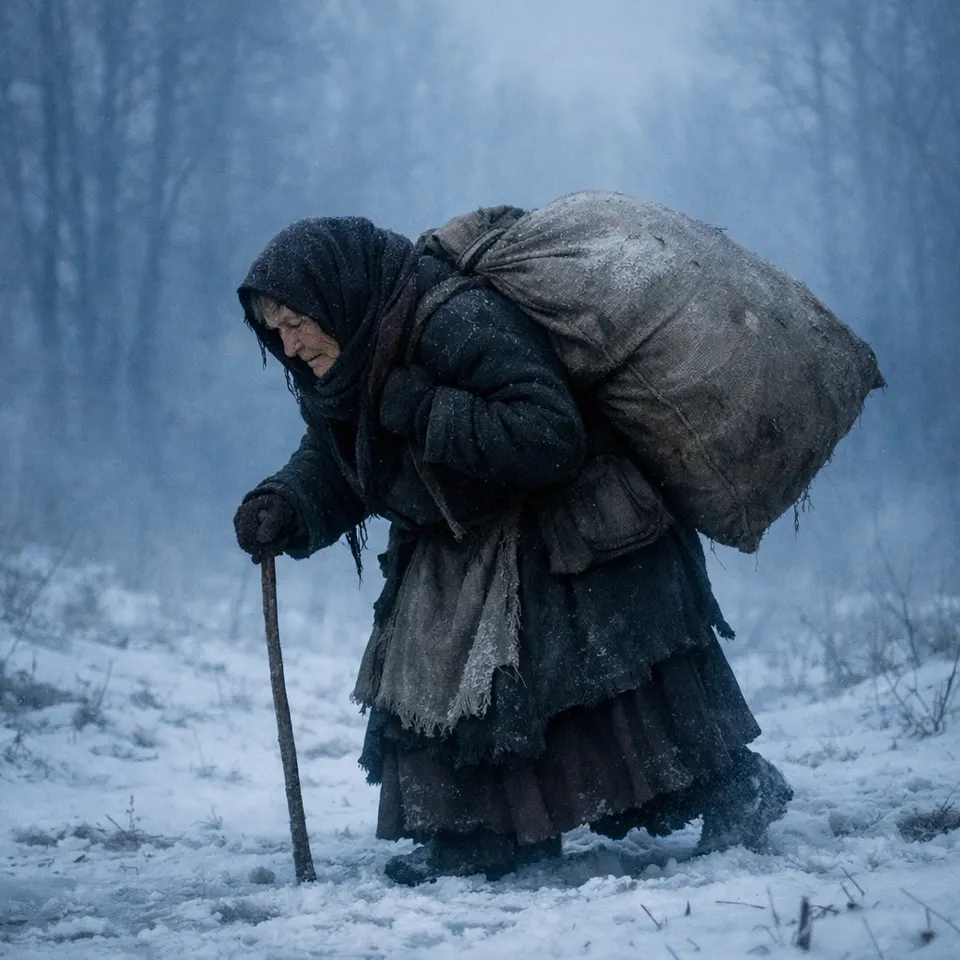
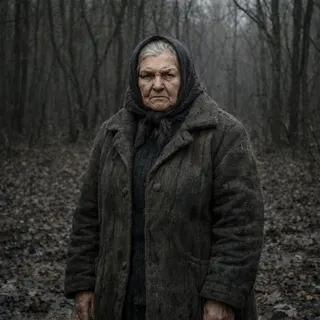
That was why his cabin on the very edge of the ridge felt like the only right place to be. He’d been patrolling his sector for three hours, checking trail markers, when he heard a strange rustling. Something was moving ahead, breaking brush, but it was too slow and rhythmic for a deer or a bear. Mike frowned and moved toward the sound, pushing through a thicket of wild blackberries. In a small clearing bathed in slanted afternoon light, an elderly woman in a simple dark headscarf was dragging a heavy canvas bag—large, gray, and cinched tight with thick nylon rope.
She moved in small, agonizing increments, stopping every few feet to catch her breath. Her thin hands shook with the effort. "Ma'am? You okay out here?" Mike called out, stepping into the clearing. "You out foraging for mushrooms?" The woman startled and turned. Her face was a map of kind wrinkles, but she was a stranger. Mike knew every senior in Oak Creek and the surrounding valley, but he’d never seen her before.
"Oh, Mike, you gave me a fright!" she said, resting a hand over her heart. "I’m not looking for mushrooms. I’m trying to get down to Oak Creek. Am I on the right track?" Mike looked at the bag. It was packed so tight the fabric was strained white in places. The shape was odd—long, with a distinct widening in the middle. "Definitely not mushrooms. You’re on the right path," he nodded. "About a mile and a half straight down this trail and you’ll hit the back gardens of the main street."
"What have you got in there?" the ranger asked. "Just something that needs to go home," she replied evasively, gripping the rope again. She pulled with all her might, moving the bag maybe twenty inches before she doubled over, coughing. Mike watched her for a moment, then sighed and stepped forward. "Let me take that," he offered, pulling off his cap. "You won't make it by dark at this rate." "You’d help me?" Her eyes sparked with genuine gratitude. "Thank you, son. I wasn't sure I could manage the rest."
Mike grabbed the rope at the other end, braced himself for the weight, and paused. Through the heavy canvas, his fingers felt something hard, smooth, with sharp, carved angles. It wasn't clothes, it wasn't groceries, and it certainly wasn't firewood. The shape felt like a sculpture—vertical, with protrusions near the top. "What is this?" Mike asked bluntly as he hoisted the bag. It had to weigh at least sixty or seventy pounds.
As they started down the trail, the woman finally introduced herself. "Eleanor Vance," she said, slightly out of breath. "I’ve come from quite a ways off. I’m bringing an old treasure back to your town." Mike nearly tripped and glanced back at her, but she walked with a calm resolve, as if she’d said the most ordinary thing in the world. "A treasure? To Oak Creek?" he repeated with a dry chuckle. "You’re serious?"
"Dead serious, Mike," Eleanor nodded. "My grandmother, Sarah, told me long ago—back before the Great Depression—that our family was meant to return this to the valley when the time was right. And the time is now." They walked in silence for a few minutes. Mike wondered if she was a bit confused, but her speech was clear and her gaze was steady. It was just the story that was strange. He decided to push a little: "So, you've been hiding this all these years?"
"Hidden away, son. Nearly sixty years," Eleanor confirmed. "First from the bank foreclosures, then just kept safe in the cellar. It sat in a crate under the stairs. But it’s time for it to be out in the light again. I felt it in my bones." Mike grunted. The scent of pine mixed with the smell of warm earth as they navigated the soft needles of the trail. He knew these woods like the back of his hand, every turn and every tree, and now this woman was bringing some "treasure" into his quiet world.
"Eleanor," he said, keeping his voice gentle. "Oak Creek isn't exactly a religious hub. We’ve got eight hundred people, and most of them only see the inside of a church for weddings and funerals. Why bring it here?" Eleanor looked at him as if she could see right through his uniform. Her eyes were a pale, peaceful gray. "Things change, Mike," she said softly. "You’ll see. Everything changes." Mike wanted to argue, but he didn't have the heart to bicker with an old woman.
They kept going, shifting the bag between them when the rope started to bite into their palms. Through the canopy, the sky was opening up—a sign they were reaching the edge of the woods. "Where exactly are you planning to leave this?" Mike asked as the first fences of the town appeared. "I don't know yet," Eleanor admitted. "I figured I’d ask around. It needs a good spot. Somewhere open." Mike thought for a second.
In the center of town, there was a vacant lot. About five years ago, the county had planned to build a new community center there, even poured a partial foundation, but the budget dried up. Now it was just overgrown with weeds and tall grass. "There’s a spot," he said tentatively. "Right downtown. Nobody’s using it, and it’s a big lot." They reached the first houses, and Mike’s curiosity finally won out. He stopped, lowered the bag, and rubbed his sore fingers. "Can I see it?" he asked. "I’d like to know what I’ve been hauling."
Eleanor hesitated for a heartbeat, then slowly nodded. "I’ll show you, Mike. Just... take a breath." She knelt down, her thin fingers working the knots in the rope. Mike stood over her, arms crossed. The air seemed to grow still, the birds went quiet, and even the wind died down in the pines. Eleanor pulled back the heavy canvas, and Mike froze.
A statue of the Virgin Mary looked up at him. It was about three feet tall, and he couldn't look away. The wood was dark—walnut, maybe—and polished to a deep luster by generations of hands. Her face was serene but firm, her hands clasped in prayer. The carving was exquisite, the kind of craftsmanship you don't see anymore. But it wasn't just the beauty of the piece. Mike felt it the second the bag opened: a sensation like a physical wave passing through him, hot and cold at the same time.
Goosebumps broke out on his arms, and his heart gave a heavy thud. His fingers twitched, and he shoved them into his pockets. It was ridiculous; he wasn't a religious man, didn't believe in signs or wonders. He’d grown up in a secular world, taught that faith was something for the history books, yet here he was, shaking like a leaf in front of a piece of wood. "Beautiful, isn't she?" Eleanor asked quietly, smoothing the edge of the canvas.
"It’s... old," Mike managed to say, trying to sound indifferent. "Probably worth a lot of money." He turned away, pretending to scan the horizon. The backyards were only fifty yards away—sagging fences, plastic greenhouses, tomato patches. It was a normal summer day. Nothing special. "So, where’s this lot?" he asked, sharper than he intended. Eleanor didn't answer right away.
She tied the rope back around the bag, carefully, as if she were tucking in a child. Then she stood up, adjusted her scarf, and nodded. "Lead the way, Mike. I’m right behind you." They cut through the back alleys. Mike walked fast, not looking back, though the bag was heavy on his side. His hands were still trembling, and he was angry at himself for it, chalking it up to low blood sugar or the heat. It was just a statue. Nothing more.
The center of Oak Creek was empty. The hardware store was closed for lunch, the town hall was quiet, and only a couple of older ladies were sitting on a bench near the post office, gossiping. They watched Mike and the stranger with curious eyes but didn't say a word. The lot was right behind the old theater, fenced off by a leaning wooden perimeter. The gate had rotted off its hinges long ago. Mike nudged a piece of the fence with his boot, and it groaned in protest.
"Here," he said, dropping the bag. "This was supposed to be the community center. They laid the foundation, ran out of cash, and now it’s just a field." The lot was waist-high in weeds, with concrete footings poking out of the dirt like gray teeth. It was an eyesore, but it was central. Eleanor walked the perimeter slowly, looking at the ground as if searching for something specific. "This is the place," she finally said, stopping right in the center. "We’ll leave her here."
Mike helped her drag the bag to the spot. Eleanor untied the rope again, this time completely, and pulled the statue free. It stood upright now, surrounded by weeds, rising above the messy grass. The sun hit the dark wood, making it glow. Eleanor knelt right there in the dirt, folded her hands, and closed her eyes. Mike stood back, shifting his weight. He felt awkward watching her—an old woman praying in a junk lot.
It felt sad and out of place. Three minutes passed in total silence. Then Eleanor crossed herself, stood up, and brushed the dirt from her skirt. "There," she breathed with a sigh of relief. "My job is done. The rest is up to you, Mike." Mike blinked. "Up to me?" he asked, raising an eyebrow. "Ma'am, I’m just the guy who helped you carry it. I’m not involved."
"You helped," she agreed, looking at him with that same piercing gaze. "But that’s only the beginning." Mike scoffed; it was hard to take her seriously. He rubbed the back of his neck, trying to find a way to be polite without encouraging her. "Look," he said. "If this thing is actually an antique, you should probably take it to a museum or a gallery in the city. It’ll just rot out here in the rain."
Eleanor smiled. She wasn't offended or angry; she just looked at him as if he’d said something sweet and naive. "It won't rot," she said softly. "And that’s not your concern." She stepped closer, so close Mike could smell peppermint and old fabric. She looked him dead in the eye, and Mike found he couldn't look away. "Mike," Eleanor said slowly. "I can see your heart."
"You’re going to do great things here. You don't even know how much you’re capable of." Mike wanted to make a joke, to brush it off, but the words caught in his throat. Eleanor held his gaze for five more seconds, then nodded as if she’d received an answer to a question he hadn't heard. She turned and started walking toward the street. "Wait, Eleanor!" Mike called out, taking a step after her. "Where are you going? Can I give you a ride?"
"No need, Mike," she called back without turning. "I know my way. Just keep an eye on the Lady for me."
She disappeared around the corner of the post office, and Mike was left alone. Alone with a statue, a field of weeds, and a feeling he couldn't shake. He stood in the middle of the lot, looking at the Virgin Mary, and felt the goosebumps return. It was stupid. Completely stupid. A piece of wood can't change a person, can't make your heart race. It was just a story, the kind of thing people tell to feel important.
But his hands were still shaking. Mike turned and walked away quickly, hands shoved deep in his pockets. The sun was setting, the air was cooling, and in the distance, someone was splitting wood—the steady thud of an axe echoing through the valley. At home, he splashed cold water on his face, made a pot of coffee, and sat by the window. A normal evening, a normal house, a normal life. But the feeling wouldn't go away.
It sat right under his ribs, heavy and strange. He remembered the weight of the bag, the smooth wood under his fingers, and that wave of energy when the canvas fell away. He remembered Eleanor’s eyes and her promise that he would do "great things." He rubbed his face, trying to clear his head. Tomorrow it would be over. He’d go back to the woods, back to his patrol, back to the quiet.
No statues, no mysterious old women. But when he finally lay down and closed his eyes, he could still see the dark face of the statue, looking right through him to a place he was too afraid to look himself. The next week passed in a blur of routine. Mike patrolled the forest, marked timber for thinning, and fixed a fence near the ranger station—the kind of work that didn't require much thinking. He tried not to think about the statue, though he passed the lot a few times.
It was still there, sitting in the weeds, silent and still. He’d almost convinced himself that the "feeling" was just heat exhaustion. His brain playing tricks. On Saturday, Mike stopped by the general store for bread and coffee. It was the only shop in Oak Creek—cramped, smelling of floor wax and old wood. The clerk, Martha, a woman in her fifties with bright red hair, was leaning over the counter talking to a neighbor.
"I’m telling you, they couldn't budge it!" Martha said, ringing up a sale. "Billy and his brother went over there last night. They figured they’d haul that statue off to a pawn shop for beer money." Mike froze by the canned goods, listening. "And?" the neighbor asked. "Nothing," Martha snorted. "Couldn't move it an inch. Billy said it felt like it was bolted into the bedrock. They pushed, they pulled—nothing. They got spooked and ran off."
"Maybe they were just drunk?" the neighbor suggested. "Billy was sober as a judge, I saw him," Martha countered. "Mike Sullivan and some old lady carried it in, but two grown men can't lift it? It’s weird, isn't it?" Mike walked up to the counter and set his items down. Martha went quiet, but her eyes were dancing with curiosity.
"You hear that, Mike?" she asked, scanning his bread. "About your statue." "It’s not mine," Mike muttered, pulling out his wallet. "Some lady brought it into town." "Sure," Martha nodded, counting out his change. "But the whole town’s going over there now. People are saying that lot feels... different." Mike took his change, tucked the bread under his arm, and left without another word.
Outside, the air smelled of dust and summer gardens. He started toward his truck, but his feet turned toward the center of town. Curiosity was a powerful thing. When he reached the lot, he stopped dead. The grass around the statue had been neatly trimmed. Someone had come by with a weed-whacker or a scythe, cleared out the brush, and tidied the space. The statue stood on clear ground now, the sunlight hitting it perfectly.
Mike walked the perimeter, wondering who had done it and, more importantly, why. Over the next few days, he watched the lot from a distance, and every time he looked, something had changed. On Tuesday, someone brought an old wooden garden bench and placed it a few feet away. On Wednesday, there were flowers—simple daisies and marigolds in plastic cups. On Thursday, someone had laid down a gravel path from the sidewalk to the statue.
The place was transforming, but Mike never saw who was doing the work. It was as if a ghost were coming by at night to fix up the lot piece by piece. On Friday, heading home from the station, Mike saw his neighbor, Mrs. Gable, sitting on the bench. She was sitting quietly, hands folded in her lap, just looking at the statue. Her fingers were moving over a set of old prayer beads.
"Mrs. Gable," Mike called out, walking over. "What are you doing here?" The old woman startled, then smiled. "Oh, Mike," she said, adjusting her sweater. "Just sitting. It’s peaceful here." "Peaceful?" Mike asked, stopping by the bench. "What do you mean?" "I don't know how to put it," she said, searching for the words. "It just feels good. My heart feels a little lighter when I sit here for a while."
Mike looked at the statue, then at his neighbor. Mrs. Gable was a woman who’d worked the local mill her whole life, never complained, and only believed in things she could touch. It was strange to hear her talk about "lightness of heart." "Did you trim the grass?" he asked. "No," she shook her head. "I brought the flowers. Mr. Henderson mowed the grass. He’s the one who brought the bench, too."
"He said it was just sitting in his garage, and he wanted to put it to use." "And the gravel?"
"Don't know, Mike. It was just here when I came by this morning." The old woman stood up, brushed off her skirt, and gave the statue a respectful nod. "Well, I better get home. Dinner won't cook itself." She walked away slowly, and Mike was left alone again. He stood in the middle of the lot, listening to the wind in the weeds, feeling like he was standing in the center of something he didn't understand.
In the following days, he noticed more: people were coming. Not in crowds, not making noise, but one or two at a time. They came to sit, to be quiet, to look. The older folks would bow their heads. The teenagers would stop their bikes and look, their voices dropping to a whisper as they passed. Kids played tag nearby, but they didn't scream or fight like they usually did. They seemed focused, calm.
Mike watched all of this and didn't know what to think. The rational part of his brain said people were just bored. Oak Creek was a small town with no theater and no mall; a new statue was a big event. But that explanation didn't sit right, especially when he found himself going there every day. At first, he just checked on it after work. Then he started staying for a few minutes. Then he started sitting on the bench.
One evening, as the sun dipped below the ridge and the air smelled of cooling earth and cut grass, Mike sat on the bench and just let himself be. No analyzing, no searching for answers. Just sitting. The statue stood across from him, dark and steady. The Virgin Mary’s face looked out toward the horizon, past the town, past everything. Mike looked at that face and, out of nowhere, he remembered his mother.
She’d died when he was ten—cancer, fast and cruel. He barely remembered her face, just flashes of her. The way she sang while she worked, the smell of her laundry detergent and lavender, the way she’d stroke his hair when he had a fever. She’d been a woman of quiet faith. She never made a scene of it, but she’d had him baptized, and she’d pray softly at night when she thought he was asleep. Mike hadn't cried when she died.
He hadn't cried at the funeral or afterward. He’d just closed up, becoming a quiet, obedient boy who didn't cause trouble. His father had started drinking a few years later and died of a heart attack when Mike was in his twenties. Mike hadn't thought about his mother in years. There was no point; you can't bring back the dead. But now, looking at the statue, he remembered, and for the first time, it didn't hurt.
It felt warm. Like she was still around somewhere, still watching over him. Mike sat there until the sun was gone and the stars started to peek through. In the distance, a dog barked, a door slammed, a mother called her kids home—the normal sounds of a town ending its day. He stood up, straightened his jacket, and started home. But at the edge of the lot, he turned back.
The statue stood in the twilight, barely visible, yet he could see it clearly. It almost seemed to hold its own light. Mike blinked, rubbed his eyes—the light was gone. Just a trick of the shadows, of course. Autumn arrived suddenly, painting the maples gold and covering the ground in a crisp layer of leaves. A month had passed since the statue appeared, and the lot was unrecognizable.
Now people were driving in from the next county—on bikes, in old trucks, some even walking. Mike watched with a mix of confusion and acceptance. People were looking for something: peace, hope, or just a moment of silence. Who was he to judge? One morning, he was passing the lot on his way back from a patrol. The air smelled of rain and damp leaves, and the sky was a heavy, flat gray.
A woman he didn't recognize was sitting on the bench. She looked to be in her mid-thirties, thin, wearing a worn raincoat. Beside her was a boy, maybe seven or eight, leaning on a pair of crutches. Mike slowed his pace. The woman looked up, and he saw her face: exhausted, hollowed out, with deep shadows under her eyes. The boy was staring at the statue, captivated. "Morning," Mike said, stepping closer. "You folks from around here?"
"From the city," the woman replied softly. "I’m Susan. This is my son, Leo." She spoke in a whisper, as if she were in a library. Mike nodded to the boy. Leo gave a shy smile but didn't say anything. His legs were encased in heavy metal braces—steel bars that locked his knees and ankles in place. The crutches looked brand new, the rubber tips not yet scuffed.
"You take the bus up?" Mike asked, just to be polite. "Yes," Susan nodded, clutching her purse. "Two hours. My cousin lives in the next valley and told me about this place. She said it was special, and I... I just had to try." She trailed off, looking back at the statue. Mike noticed her knuckles were white where she gripped her bag.
"Doctors say Leo might never walk without the braces," she continued, her voice trembling. "Birth defect. We’ve seen every specialist, tried every therapy, but they just tell us to manage our expectations." Mike looked at the boy. Leo was sitting on the edge of the bench, swinging his crutches like a pendulum. His face was calm, but his eyes had a weight to them—that quiet resignation you see in kids who’ve known too much pain.
"I see," Mike said, feeling helpless. "Well, I won't bother you. If you need anything, I’m usually around." He started to walk away, but Susan reached out and caught his sleeve. "Wait," she pleaded. "Is it okay if I stay here for a while? To pray?" "Of course," Mike said, gently pulling his arm back. "It’s a public spot. Stay as long as you need."
The woman nodded gratefully, pulled a scarf over her head, and slowly knelt on the cold ground. She folded her hands, closed her eyes, and began to whisper. Mike walked to the far edge of the lot, sat on a stump, and pretended to check his gear. He didn't know what else to do. It felt wrong to leave her alone, but it felt intrusive to stay. It was too personal.
Susan prayed for a long time. Her lips moved constantly, her words a silent melody. Tears ran down her face, but she didn't wipe them away; she just pressed her hands to her chest. An hour passed. Then two. Mike sat there, breaking dry twigs into tiny pieces. The wind rustled the leaves, a crow called from a nearby roof, and the distant sounds of the town drifted over them. Leo sat on the bench, patient and still. He watched his mother, then the statue, then his mother again.
Then, the boy started to whisper something to himself. Mike stopped breaking twigs and froze. The boy stood up. He just stood up, without his crutches, without any support. The crutches clattered onto the bench. For a second, Leo stood perfectly still, as if testing the ground. Then he took a step. A cautious, wobbly step, but his own. Then another. Then a third.
Susan turned at the sound of the grass rustling and gasped, her hand flying to her mouth. "Leo?" she breathed, her voice barely a ghost. The boy smiled. A wide, bright smile—the kind of smile a child has when they’ve finally mastered something impossible. And then he ran. He didn't just walk; he ran across the grass, circling the statue, laughing and stumbling, falling to his knees and popping right back up. Susan cried out—not in pain, but with a wild, uncontrollable joy. She lunged for him, pulling him into a hug so tight he laughed and tried to squirm away. "Mom, let go! I’m running!" he shouted. "Look! I’m running!"
Mike stood by the fence, unable to move. A chill ran down his spine, through his arms and legs, as if he’d been plunged into ice water. His heart was hammering against his ribs. It was impossible. He’d seen the braces. He’d seen the crutches. He’d seen the way the boy struggled to even sit. And now, that same boy was sprinting through the grass, laughing. Susan was on her knees, sobbing, kissing her son’s face and hands.
Leo just kept trying to get away so he could run some more. "Thank you!" Susan whispered, looking at the statue through her tears. "Thank you, thank you!" Mike took a step forward, then another. His legs felt like lead. He walked to the bench and looked at the abandoned crutches, at the metal braces that had been unstrapped and left behind. "How?" he asked hoarsely, to no one in particular. "How is this possible?"
Susan looked up at him, her eyes red and swollen but shining with a light he’d never seen. "A miracle!" she whispered. "It’s a miracle!" Mike sat on the bench because his legs wouldn't hold him anymore. He watched Leo run, watched him try to jump, watched him fall and get up laughing. He watched the mother hold him, afraid to let go. And the statue just stood there.
Dark, calm, and still. The Virgin Mary’s face looked out past them, as if to say, "I am here. I have always been here. You just didn't see." Mike sat there and realized his life had changed forever. He couldn't brush this off. He couldn't call it a coincidence. Because he had seen it with his own eyes. He had seen the impossible. And now, everything was different. The news hit Oak Creek like a lightning strike. By evening, families were streaming toward the lot.
Women were weeping, men were standing in silent awe, and the elderly were kneeling in the dirt. Mike stood back, leaning against the fence, watching it all like a dream. He tried to find a logical explanation. Maybe the boy had a psychosomatic condition? He’d read about that—a mental block rather than a physical one. Or maybe the doctors were just wrong. Or maybe he didn't need the braces in the first place. But the explanations didn't fit.
He’d seen the boy struggle. He’d seen the heavy steel. And he’d seen him run. No logic could touch that. The next week was a whirlwind. People came from three states away. The lot became a pilgrimage site. People brought icons, candles, and flowers. Mike stopped going every day; it was too crowded, too loud. He needed quiet to process what was happening in his own head.
On Saturday night, there was a knock at his cabin door. Mike opened it to find three men. George Miller, the head of the local zoning board, stood in front—a heavy-set man with a red face and sharp eyes. Beside him were two younger guys in work jackets, both looking tense. "Sullivan, we need to talk," George said, skipping the pleasantries. "Can we come in?" Mike stepped aside, letting them in. They smelled of tobacco and cheap beer.
"Have a seat," Mike offered, gesturing to the kitchen table. "We’ll stand," George grunted, shoving his hands in his pockets. "Look, Mike, you’re a sensible guy. You work for the Service. You’re respected. That’s why we’re here. This statue business," George continued, scowling, "it’s getting out of hand. People are losing their minds—praying in the dirt, lighting fires, talking about miracles. It’s a circus. We need to shut it down before someone gets hurt."
"Shut what down, exactly?" Mike asked calmly, though his pulse was quickening. "The statue needs to go," one of the younger guys said, fidgeting with a lighter. "Bury it, move it to a museum, I don't care. We just need the town to get back to normal." Mike looked at the three of them, then slowly shook his head. "The statue isn't hurting anyone," he said quietly. "People are coming there because they want to. Nobody’s forcing them."
George stepped forward, looming over Mike. "Sullivan," he said slowly, as if talking to a child. "You really believe this stuff? You’re a government employee. You’re supposed to be rational. Now you’re acting like some holy roller?" Mike felt something snap inside him. He stood up straight, looking George right in the eye. "I saw that boy walk," he said firmly. "He couldn't walk. The doctors said he never would. And after his mother prayed at that statue, he ran. Explain that to me, George. Give me the logic."
"It’s a scam," the younger guy spat. "Or a mistake. Things happen." "I was there," Mike repeated stubbornly. "I saw the braces. I saw the crutches. And I saw him run without a hint of a lie." George’s face turned a deep shade of purple. His fists clenched, and for a second, Mike thought he might swing. But the official just took a ragged breath. "Fine," he hissed. "If you won't help, we’ll handle it ourselves. We’ll find a way to clear that lot. Don't say I didn't warn you."
He turned and stormed out, his cronies following close behind. Mike was left in the silence of his cabin. Outside, the wind was picking up, a gate was creaking—the usual night sounds. Но inside, he was reeling. He sat at the table, head in his hands, trying to calm down. His hands were shaking, but not from fear. From anger. He wasn't a fighter; he’d spent his life avoiding conflict. But now he was standing up for a wooden statue against the town’s power players.
It was absurd. But then he remembered Susan’s face. The joy in Leo’s eyes. And he knew he couldn't back down. He didn't want to. He didn't sleep that night. He lay in bed, staring at the ceiling, thinking about Eleanor’s words—that he would do "great things." At the time, he’d laughed. Now, it felt like a weight he had to carry. He didn't know how, but he knew he had to do something.
The morning brought a cold fog. Mike washed his face with cold water, drank a cup of black coffee, and headed to the lot. A crowd of about twenty people was already there: seniors praying, women clearing away dead leaves, kids playing near the bench. Mike walked over to Mrs. Gable, who was watering some potted mums. "Mrs. Gable," he said softly. "The zoning board came to see me last night. They want to remove the statue."
The old woman straightened up, clutching her watering can. "Remove it? Why?" she asked, her brow furrowing. "They say it’s a public nuisance," Mike shrugged. "They’re going to try to force it out." Mrs. Gable set the can down and looked at the statue, then back at Mike. "So what do we do?" she asked simply. "We protect it," Mike said, surprised by how sure he sounded. "We’ll set up a watch. Twenty-four hours. We won't let them take it."
"Good," she nodded. "I’ll take the first shift. And I’ll bring my husband." Word spread, and within an hour, Mike had a list of fifteen volunteers. Mr. Henderson brought a folding cot and a thermos of coffee; someone else brought a heavy wool blanket and a flashlight. By evening, the lot looked like a small campsite. People sat around a small fire for warmth, talking in low voices. Mike stood by, watching the flames, feeling a strange shift in himself.
He wasn't the lonely ranger hiding in the woods anymore. He was a protector. He was a leader. And it felt right. The snow came in mid-December—quiet and sudden, covering Oak Creek in a white blanket overnight. Mike woke to a world that felt clean and new. The statue in the lot was dusted with snow, but it stood out clearly—a dark silhouette against the white. There were fewer people now, but they still came every day.
They cleared the snow, brought evergreen boughs, and lit candles in glass jars. On Saturday, while Mike was splitting wood behind his cabin, a car pulled up. An old Chevy, rusted and worn. A woman in her late fifties stepped out, wrapped in a heavy coat and a wool scarf. Mike didn't recognize her at first. It was his Aunt Sarah, his mother’s sister, whom he hadn't seen in a decade.
"Mike!" she called out, trudging through the snow. "Is that you?" Mike stuck his axe into the chopping block and walked over. "Aunt Sarah?" he asked, opening the gate. "What are you doing all the way out here?" "I came from the city," she said, hugging him tight. "I heard about your statue. I wanted to see it for myself. And I wanted to talk to you."
He brought her inside, stoked the fire, and put the kettle on. The cabin filled with the smell of woodsmoke and peppermint tea. Sarah pulled an old leather envelope from her bag—worn and stained with age. They sat at the table, and Mike could feel the weight of whatever she was about to say. Aunt Sarah had come for a reason. "You’ve changed, Mike," she said, studying him. "You look like a man who’s found his footing."
"Just getting by," Mike shrugged, pouring the tea. "It’s more than that," she shook her head. "I heard you’re the one looking after that statue. Protecting it. People are talking." "Who told you?" Mike asked. "Word travels fast in these hills," she smiled. "A friend told me about the miracles. And I started thinking about our family history." Mike went quiet. Sarah reached into the envelope and pulled out a photograph.
It was black and white, faded and torn at the corner. It showed a man in his forties, wearing a simple clerical collar. His face was stern but kind, his eyes looking straight at the camera. Mike took the photo and held it to the light. His heart skipped a beat. "That’s your great-grandfather, Mike," Sarah said softly. "Reverend Peter Sullivan. He was a circuit rider in these mountains back in the thirties."
The words felt heavy and cold. Mike stared at the photo. "A preacher? I never knew," he whispered. "Nobody ever told me." "They were afraid," Sarah nodded, wiping her eyes. "Your parents, my mother—they all lived through a time when being too vocal about your faith could get you in trouble with the local bosses or the bank. So they kept quiet. They told people he died of a heart attack." Mike set the photo down, his hand trembling.
He looked at the man in the photo and saw his own face: the same eyes, the same jawline. It was like looking in a mirror from another century. "Tell me," he asked. "Tell me everything." Sarah took a sip of her tea, warming her hands. "Peter served the small parishes around here," she began. "During the Depression, the local mining company tried to shut down the community chapel to build a warehouse. But he wouldn't let them."
"He said it was a place for the people, and he stood his ground." She paused, looking out the window. "They framed him for something—theft, I think. He spent his last years in a state prison and died there. The chapel was torn down anyway." Mike closed his eyes. His great-grandfather had been a man of faith who lost everything for what he believed in. And Mike had never known. "Your mother cared so much," Sarah added. "She always wanted me to tell you when you were older."
"She said, 'Tell Mike one day. Let him know who he comes from.'" Mike looked at the photo again. Peter Sullivan looked back at him with a calm resolve. "Maybe it’s meant to be, Mike," Sarah said, covering his hand with hers. "Maybe you’re meant to finish what he started." Mike didn't say anything. He just felt the pieces of his life finally clicking into place. He’d spent his life not knowing why he felt so out of place, so restless.
Now he knew. His great-grandfather had stood for something, and Mike was being called to do the same. He wasn't just protecting a statue; he was protecting a legacy. "Thank you," Mike said hoarsely, squeezing his aunt’s hand. "Thank you for telling me." Sarah smiled through her tears. "He was a good man, Mike. Honest and brave. And you’re just like him." She left an hour later, leaving the photo with him. Mike sat at the table for a long time, just looking at it.
Spring came with a vengeance, washing away the snow with three days of warm rain and turning the roads to mud. March 1993 brought the smell of wet earth and the first buds on the trees. The lot was now a destination for people from all over the state. Mike had built a sturdy wooden donation box and placed it near the statue. People left what they could: dollars, coins, sometimes even groceries for the volunteers. The money grew slowly, but it grew.
The local carpenter, Mr. Henderson, did the math one day and said they had enough for a foundation. It was a start. But the real change was inside Mike. The Bible his aunt had left him sat on his table every night. It was old and worn, with a faded cover and yellowed pages. Mike would sit by his kerosene lamp—the power went out often in the spring storms—and read. He moved slowly, absorbing the words, finding notes his great-grandfather had scribbled in the margins.
"Today I doubted my path. Am I the right man for this? Too much fear, too little light." That note was next to the Gospel of Matthew. Mike traced the faded pencil marks, feeling a deep connection. Peter Sullivan had doubted himself, just like Mike did. He’d been afraid. But he’d kept going. Mike closed the book and sat in the dark. Outside, the crickets were starting up, and the wind was whispering through the trees. It was a night like any other, but for him, it was the night he decided.
He was going to build a chapel. He didn't know how, didn't know where to start, but he knew it was the only thing that made sense. It was what he was meant to do. The next morning, he washed his face, put on his only decent suit—the one he’d bought for his father’s funeral—and took the bus to the city. The ride took three hours, the bus rattling over the mountain passes. Mike sat by the window, rehearsing what he would say.
In the city, he found the diocesan office near the old cathedral. It was a red-brick building, heavy and dignified. Mike pushed open the door and stepped inside. The air smelled of incense, old paper, and beeswax. He followed a hallway to a small office where an elderly priest sat behind a desk piled high with books. The man had a kind face and a thick white beard. "Hello," Mike said, standing in the doorway. "I’m looking for some guidance."
The priest looked up and smiled. "Come in, son. I’m Father Thomas. How can I help you?" Mike sat down, his hands tucked under the table to hide their shaking. "I’m from Oak Creek," he began. "We have a statue there. Of the Virgin Mary. People are coming to pray, and there’s been... well, there’s been a miracle. A boy who couldn't walk, he just stood up and ran." Father Thomas listened intently, his hands folded on the desk.
"I found out my great-grandfather was a preacher," Mike continued. "He died for his faith. I didn't know until recently. But now I feel like I have to do something. I want to build a chapel. I want to serve." He stopped, waiting for the priest to laugh or tell him he was crazy. Father Thomas didn't laugh. He just nodded slowly. "That is a serious path, Mike," he said. "It requires study, sacrifice, and a lot of patience. Are you ready for that?"
"I don't know," Mike admitted. "I’m just starting to figure out what I believe. I have more questions than answers. Но I know this is where I’m supposed to be." Father Thomas smiled warmly. "Questions are the beginning of faith," he said, standing up. "If you weren't questioning, I’d be worried. Faith is built like a house, one brick at a time. Shall we start?" Mike felt a wave of relief wash over him. He nodded, unable to speak.
Father Thomas went to a shelf, pulled down several thick books, and set them on the desk. "The Catechism, the Gospels, some church history. Start with these," he said. "Read them, study them, and come see me every Saturday. We’ll talk, we’ll pray, and in six months, we’ll see where you are." Mike took the books, feeling their weight. They smelled of ink and old paper. "Thank you," he managed to say. "I won't let you down."
"Don't promise me," Father Thomas smiled, walking him to the door. "Promise yourself. And the Lord." Mike walked out into the city as the sun was setting. The streets were loud and busy, but he felt a strange peace. He headed to the bus station, clutching the books to his chest. The ride home was long, but Mike didn't mind. He watched the stars come out over the mountains and thought about his great-grandfather. He was on his way.
The first nail was driven in July 1994, under a blazing sun. Mike held the board, Mr. Henderson swung the hammer—three clean, rhythmic strikes. The sound echoed across the lot, and the small group of volunteers went quiet, listening. It wasn't just a sound; it was a beginning. Mike had changed in the last year and a half: his face was leaner, his eyes more focused. He’d been studying every night, traveling to see Father Thomas every weekend, and praying every morning at the statue.
By day he worked for the Forestry Service, and by evening he was at the lot, talking to the pilgrims, answering questions, or just listening to people who needed to be heard. He was the heart of the project. The building committee had formed in May—fifteen locals, from retirees to young families. They’d met in Mrs. Gable’s kitchen, drinking tea and looking at sketches. The money in the box wasn't much, but it was enough to start. "It’s a shoestring budget," Mr. Henderson said, scratching his head. "How are we going to pull this off?"
"We’ll bring what we have," Mrs. Gable said firmly. "If you have lumber, bring lumber. If you have nails, bring nails. If you have five dollars, bring five dollars." "And if you have hands, bring hands," Mike added. "We’ll build it ourselves. As a community." And they did. Mr. Henderson, who was seventy, became the lead carpenter. He’d spent his life building barns and sheds, and his hands knew wood better than anything. "I’ve built a lot of barns," he told Mike. "I’d like to build one house for the Lord before I’m done."
They worked from dawn to dusk. Men stripped to their undershirts, women brought lemonade and sandwiches, and kids ran back and forth with tools. The smell of fresh-cut pine and sawdust filled the air. It was hard, grueling work, but nobody complained. Mike was in the middle of it all—digging, sawing, hauling. His hands were calloused, his back ached, but he felt more alive than he ever had. This was his chapel. His path.
One afternoon in late August, George Miller, the zoning board head, showed up at the fence. He was holding a heavy bag of concrete. Mike saw him, wiped the sweat from his brow, and walked over. George set the bag down and gave a stiff nod. "Found this in my garage," he said, looking away. "Figured you could use it more than I could." Mike looked at the bag, then at George. "Thank you, George," he said simply.
The official paused, then looked Mike in the eye. "I still don't buy into the miracles, Sullivan," he said quietly. "But I buy into what you’re doing here. You’ve brought this town together in a way I never could. This chapel... it’s good for the people." He turned and walked away before Mike could respond. Mike watched him go, feeling a surge of hope. Even the skeptics were starting to see.
By autumn, the walls were up—sturdy, smelling of resin and sun. The chapel was taking shape: first a frame, then the siding, then the window frames. Mr. Henderson carved a simple cross over the doorway. During the winter, the work slowed, but they didn't stop. They cleared the snow and kept the interior dry. Mike kept studying, kept traveling to the city, kept preparing. Father Thomas said he was a natural, that he had a true calling.
Spring of 1995 brought the roof. It was the hardest part—raising the small steeple and the cross. Mr. Henderson spent hours over the blueprints, muttering to himself. "Never built a steeple before," he admitted to Mike one night by the fire. "A barn roof is one thing. This has to be perfect." "You’ll get it," Mike said. "I know you will." And he did. By summer, the steeple was up, topped with a wrought-iron cross from the local smith. It caught the sun and could be seen from the ridge.
In late 1995, Mike passed his final exams. Father Thomas hugged him and told him his ordination would be in six months. There was still work to do, but the goal was in sight. 1996 started with a sense of completion. The interior was painted white, the pews were installed, and the altar was set. Mrs. Gable and the other women had sewn the altar cloths, and the kids had helped paint the trim. Finally, the day came to move the statue inside.
Mike remembered every second of it. How he and Mr. Henderson carefully lifted the Virgin Mary, how they carried her over the threshold, and how they placed her in the center of the chapel. She wasn't in a weed-filled lot anymore; she was in a home. A home they had built for her. News of the chapel spread fast. People started coming by the hundreds. An elderly priest from the next county agreed to come on Sundays to lead the service until Mike was ready. Mike assisted him, learning the rhythm of the liturgy.
The chapel smelled of pine, incense, and fresh hope. Every morning, the seniors would come to light a candle; every evening, the young families would stop by. The chapel had become the heart of Oak Creek. Mike stood in the doorway, looking at the life he’d helped create, and realized that it all started with one woman and a heavy bag. It led to this. To a community. To a purpose. The road had been long, but it was the only one worth taking.
The bell rang over Oak Creek for the first time in the spring of 1996, and the sound carried for miles. The chapel was dedicated, and in the years since, the town had changed in ways no one expected. Instead of eight hundred people, there were now over twelve hundred. People were moving back from the cities, looking for the peace and community they’d heard about. Mike stood on the steps and looked out over the town he’d known his whole life.
The main street had been repaved, the shops were thriving, and the school had a fresh coat of paint and new windows. Even the old theater had been restored. It all started with the chapel. People came for the statue, but they stayed for the spirit of the place. Mike, now thirty-six, had changed too. His face was lined, his beard touched with gray, but his eyes were bright. He served the chapel every day, counseling, listening, and leading.
In April, word came that the Bishop was coming to visit—to see the chapel, talk to the people, and finalize Mike’s ordination. Mike was nervous, though he tried to stay calm. He spent the morning polishing the wood and checking the candles. "Don't worry, Mike," Father Thomas told him. "The Lord sees your work. If you’ve done it with a good heart, they’ll see it too." The Bishop arrived on Saturday morning in a black sedan.
He was a tall, silver-haired man with a kind but firm presence. Mike greeted him with a respectful nod. "Welcome, Excellency," he said. The Bishop looked him over, then looked at the chapel. "Show me," he said simply. They walked through the building. The Bishop was silent, taking in the craftsmanship and the care. He stopped before the statue, stayed there for a long time, then crossed himself. "Tell me the story," he requested.
Mike told him. He kept it brief. The woman in the woods, the miracle with Leo, his great-grandfather’s legacy, and the way the town built the chapel with their own hands. The Bishop listened, nodding occasionally. Afterward, they walked through the town. They talked to Mrs. Gable, to Mr. Henderson, even to George Miller. George told him, "I’m not a church-goer, sir. Но Mike Sullivan has done more for this town than any politician. This chapel brought us back to life."
The Bishop listened to everyone. That evening, he called Mike into the chapel. They sat on the front pew, the light of the candles flickering against the white walls. "Mike Sullivan," the Bishop said. "I’ve seen what you’ve built here. I’ve talked to the people. And I’ve made my decision." Mike held his breath, his heart racing. "You will be the permanent pastor of this chapel," the Bishop announced. "Your ordination will be in one month. You’ve earned this."
Mike felt a lump in his throat. "Thank you, Excellency," he whispered. "I’ll do my best." The Bishop smiled. "I know you will. You already have." That night, the chapel was packed. People stood in the aisles and out the door. They sang, they prayed, and they listened to the Word. Mike assisted as he always did, but it felt different now. He knew that soon, this would be his flock. He looked toward the back of the room and saw her.
Eleanor Vance was standing near the door, in her dark scarf and worn coat. Her hands were folded, her eyes closed in prayer. She looked older, frailer, but her face was as peaceful as ever. Mike froze, the incense burner in his hand. Four years had passed since that day in the woods. Four years that had completely rewritten his life, and here she was. The woman who started it all. Eleanor opened her eyes and looked at him.
Their eyes met across the crowded room, through the candlelight and the song. She gave him a small, knowing smile, as if to say, "I told you so. You were meant for this." Mike smiled back, his eyes stinging with tears. He gave her a small nod of gratitude. She nodded back, crossed herself, and went back to her prayers. When the service ended, the crowd dispersed slowly. Mike looked for Eleanor, but she was gone.
She’d slipped away as quietly as she’d arrived. He walked out onto the steps and took a deep breath of the spring air. The moon was rising over the ridge, lighting up the steeple. The iron cross glowed in the dark. The journey was over, he thought. But the service was just beginning. He was ready. The bell of Oak Creek rang every morning at six, a sound that could be heard in the next valley.
By 2011, the town had grown to over three thousand people. The small wooden chapel had been replaced by a beautiful stone church with stained glass and a high bell tower, built by the hands and donations of thousands of pilgrims. Father Mike, as he was now known, stood on the steps of the church. He was fifty-one now, his hair and beard mostly gray, but his spirit was strong. Twenty years of service had only deepened his resolve.
A young assistant, David, came out of the parish hall. "Father, there’s a woman here to see you. She says you’re old friends." Mike turned, his heart giving a familiar thump. He knew who it was. In the small reception room sat Eleanor Vance. She was very old now, bent with age, but her eyes were as bright as ever. She stood up slowly, leaning on a cane, and smiled. "Hello, Mike," she said softly. "Or should I say Father Mike?"
He walked over and took her hand—thin, cold, and trembling. "Hello, Eleanor," he said, his voice thick with emotion. "It’s been a long time." "Twenty years," she nodded, sitting back down. "I’ve come by now and then, but you were always busy. I just watched from the back. I’m so proud of you." They sat in silence for a few minutes, listening to the sounds of the thriving town outside. "You did it, Mike," she said. "You did exactly what you were meant to do."
"You started it," he replied. "I just followed the path." She shook her head. "No, son. I just brought a statue. You gave it a home. You gave these people hope. You gave this town a soul." Mike looked out the window at the stone church and the community around it. "Sometimes it feels like a dream," he admitted. "Like I’ll wake up and be back in that ranger station." "It’s no dream," Eleanor smiled. "It’s your life. Your legacy."
She stood up, and Mike helped her to the door. "Can I see the Lady one last time?" she asked. They walked into the church. It smelled of beeswax and old wood. Eleanor stopped before the statue of the Virgin Mary, the same walnut carving she’d dragged through the woods twenty years ago. "You’re home now," she whispered, crossing herself. "Thank you, Lord." Mike stood beside her in silence. Eleanor turned to him one last time. "Goodbye, Mike," she said. "God bless you."


Share how the story made you feel
0Comments appear after a quick automatic check. Please no links, ads or personal data.
Next to your name we show your country, determined from your IP address; the address itself is never shown, and only a hashed fingerprint of it is kept to stop spam.