
 Let’s Keep It Real

The scar on her face was a perfect match for the one his daughter had—the daughter he thought he’d lost forever. That morning, a heavy mist rolled off the river, swallowing the local salvage yard in a gray, impenetrable blanket. Ten-year-old Lily Miller pulled her worn denim jacket tighter; her breath hitched in the damp air as she navigated the maze of rusted steel and shattered glass.
Scavenging had become a necessity. Copper wiring, aluminum cans, or the occasional spare part she could sell to the yard owner for twenty bucks—it was usually enough to help Grandma Martha keep the lights on for another week. Lily’s sharp eyes scanned the rows of wrecks with practiced efficiency.
She had developed a knack for finding value where others saw junk. Living on the edge of poverty with her grandmother had made her pragmatic beyond her years. Her gaze snagged on a late-model black sedan, partially hidden behind a stack of crushed compacts. It looked entirely out of place among the decaying relics of the Rust Belt.
“Maybe there’s something left inside,” she whispered, approaching with caution.
The car’s sleek lines screamed luxury, even under a thick layer of industrial dust. As she rounded the back toward the trunk, a muffled thud made her freeze. She held her breath, listening intently.
There it was again—a faint, rhythmic tapping coming from inside the trunk. Her heart hammered against her ribs. Lily pressed her ear to the cold metal.
The sound was unmistakable. Someone was trapped inside, and their movements were growing weaker.
“Hey!” she called out, her voice cracking.
“Is... is someone there?” a faint, raspy voice replied.
Lily didn't panic; she looked for a tool. She spotted a rusted tire iron nearby and, with a strength born of adrenaline, jammed it into the trunk’s latch. She threw her weight against it until the lock gave way with a sharp metallic crack. Inside, bound with zip ties and heavy-duty tape, lay a man in a tailored suit. He was pale, his face drawn with exhaustion. His eyes widened in disbelief at the sight of the small girl standing over him.
“Help me...” he managed to croak through parched lips.
Without a word, Lily began working on the ties, her small fingers struggling with the thick plastic.
“What happened to you?” she asked, trying to keep her hands steady.
“Kidnapped,” the man wheezed, his eyes darting toward the fog. “A business partner... please, we have to move.”
As Lily freed his hands, the man tried to sit up, though his strength was clearly spent.
“What’s your name, kid?” he asked weakly.
“Lily,” she answered, helping him peel the tape off his ankles.
The man’s gaze finally locked onto her face, and he went rigid. He stared at her with an intensity that made Lily pull back. His eyes were fixed on a small, crescent-shaped scar just below her right temple.
“What is it?” Lily asked, suddenly self-conscious.
He shook his head slightly, as if dismissing an impossible thought.
“Nothing. I’m Edward. Edward Harrison.”
Lily recognized the name. She’d seen it on the news—something about a major tech firm in the city. Before she could say more, the sound of heavy footsteps and shouting voices echoed through the yard.
“You need to go,” Edward whispered urgently. “It’s not safe. Get out of here, now.”
Lily hesitated, unwilling to leave him injured.
“Please,” he pleaded, “I’ll be okay. You’ve done enough. Go!”
With one last worried look, Lily vanished into the fog just as a pair of local truckers rounded the corner, drawn by the noise. Edward slumped back, relief washing over him as the men rushed to his side.
“Good Lord, buddy, what happened to you?” one of them shouted, hauling him out.
“Call the police,” Edward managed to say before the world went black.
Hours later, in the sterile brightness of a hospital room, Edward woke to the steady hum of monitors. Detective Mike Brennan was leaning over him, looking concerned.
“Mr. Harrison, glad to see you’re back with us,” the detective said, pulling up a chair. “Can you tell me what happened?”
Edward’s mind was a blur of fragmented memories.
“They took me from the parking garage at Harrison Tech. I remember a warehouse, voices arguing about a buyout... they said I wouldn't be a problem anymore.” He struggled to focus. “They wanted me to sign over control of the company. When I refused...”
He trailed off. The memory of the threats and the endless hours in the dark trunk were still too fresh.
“Any idea who was behind it?” Detective Brennan asked, taking notes.
Edward didn't hesitate. “I have my suspicions. My CFO, Robert Sterling. We’ve been at odds over a merger with Global Tech. He stands to make millions if it goes through, and I was blocking it.”
“We’ll look into him,” Brennan assured him. “The truckers said they found you in an abandoned car at the salvage yard. How did you get out of the trunk?”
A small face flashed in Edward’s mind. A young girl with determined eyes and that unmistakable crescent scar. A face that haunted him.
“A kid,” he said softly. “A little girl found me and broke the lock. Then she disappeared.”
“A girl at the junkyard?” Brennan looked skeptical. “Did you get a name?”
“Lily,” Edward replied, the name catching in his throat.
His daughter’s name had been Emma. But the resemblance... it was impossible.
“We’ll try to track her down for a statement,” Brennan said, standing to leave. “In the meantime, get some rest. I’ve got officers outside the door.”
Left alone, Edward couldn't shake the image of the girl’s face. The same heart-shaped chin, the same stubborn set of the jaw, and most strikingly, that identical crescent scar Emma had gotten from a playground fall when she was five. But Emma was gone. Lost two years ago in that horrific flash flood when their car was swept off a bridge into the river.
Her body had never been recovered, despite a week of searching. The official report said she’d been carried downstream. And yet, the girl at the salvage yard, Lily, was a mirror image of her, right down to the scar.
It couldn't be a coincidence. The age was right—Emma would be ten now.
As exhaustion pulled him back toward sleep, Edward made a silent promise. As soon as he was discharged, he would find that girl. He had to know who she was and where she came from.
If there was even a one-in-a-million chance that Emma had survived... the thought was both terrifying and exhilarating. For two years, he had been a ghost of himself, going through the motions of business while his soul remained frozen in grief. Harrison Tech had been his only focus—a distraction from the empty mansion that no longer felt like home.
Now, for the first time since the accident, Edward felt something stir inside him. Hope. It was dangerous and fragile, but it was there.
Outside the hospital window, the city skyline glittered through the clearing mist. Somewhere out there was a girl named Lily with Emma’s face and Emma’s scar, who had saved his life and then vanished like a ghost.
Edward’s fingers tightened around the call button. He needed to get out of this bed. He had to find her before the trail went cold, before he lost his daughter—if it really was her—for a second time.
“Nurse,” he called out as a woman in scrubs appeared. “I need to speak with my attorney immediately.”
Three days after his rescue, Edward Harrison stood in the doorway of a pristine bedroom, his fingers tracing the polished wood of the frame. Emma’s room remained exactly as she had left it that rainy night two years ago. Shelves lined with stuffed animals, science fair ribbons pinned to a corkboard, and star-patterned bedding kept neat by Mrs. Winters, the housekeeper who came twice a week to keep the dust at bay.
Edward’s footsteps were muffled by the plush carpet as he crossed to the dresser, where Emma’s last school photo sat in a silver frame. His daughter smiled back at him, gap-toothed and confident, her hair held back by a glittery clip. The crescent scar was visible near her temple—a permanent reminder of a tumble at the park.
“I saw you today,” he whispered to the photo. “Or someone who could be your twin.”
Behind him in the hallway, Martin Chen, his personal attorney and closest friend, waited patiently. He had driven Edward home against the doctors' advice.
“You should be resting, Ed,” Martin said gently. “The police are on it. Robert’s access to the company has been suspended, and his accounts are being flagged.”
Edward turned away from the photo.
“I didn't ask you here to talk about Robert or the company.”
He led Martin into his home office, where files were already spread across the mahogany desk. Accident reports, search and rescue logs, newspaper clippings—the paper trail of the tragedy that had consumed his life.
“What is all this?” Martin asked, picking up the official accident report.
“Everything from the night Emma disappeared,” Edward replied, pulling out a chair. “I need you to look at this with fresh eyes.”
Martin’s expression softened with concern. “Ed, we went through this. The current was too strong. Divers searched for weeks. The forensics concluded she was likely carried out to the bay.”
“I know what they said,” Edward interrupted. “But what if they were wrong? What if she somehow made it to the bank?”
“Ed...” Martin’s voice was firm but kind. “This is about the girl who helped you, isn't it? The one at the salvage yard.”
Edward pulled out his phone and opened the gallery. “This is Emma two years ago,” he said, showing Martin the school portrait. Then he swiped to a second image. It was a grainy still from a security camera near the salvage yard that he’d had his tech team pull. “And this is from a convenience store three blocks from the yard. Taken four days ago.”
Martin studied the image, his professional composure wavering. “The resemblance is striking,” he admitted. “But Ed, you know how grief works. We see what we want to see.”
“It’s not just the face,” Edward insisted. “It’s the scar. Identical placement, identical shape. What are the odds of that being a coincidence?”
Martin sat down, rubbing his temples. “Even if... and that is a massive ‘if’... what are you suggesting? That Emma has been living as someone else for two years? That someone found her and didn't report it? That’s a felony.”
“Or maybe someone found her and couldn't identify her?” Edward countered. “The girl, Lily, she was with an older woman. What if Emma had amnesia after the crash? What if this woman found her and took her in, never knowing who she really was?”
Martin’s silence spoke volumes. He was humoring a friend he believed was suffering from a trauma-induced obsession.
Edward opened a wall safe behind a landscape painting and pulled out a small velvet box. Inside was a broken silver star pendant—Emma’s favorite necklace, recovered from the wreckage of the car.
“I’m going back to that yard,” Edward said with quiet resolve. “Every day if I have to, until I find her again.”
“And then what?” Martin asked. “You can’t just accuse someone of kidnapping your missing daughter without proof. You need to let the police handle this.”
Edward’s laugh was hollow. “The same police who stopped looking after three weeks? Who told me to move on? No. I need to see her face-to-face. I need to know.”
Dawn found Edward parked near the entrance of Miller’s Auto Salvage. Beside him sat a small cooler with bottled water and sandwiches. The morning mist was just beginning to lift when the yard owner arrived to open the gates.
“Morning,” Edward called out, approaching with practiced ease. “Mind if I look around? I’m looking for some specific parts for a restoration project.”
The grizzled owner sized up Edward’s expensive coat and his steady gaze. “Fifty bucks for a scouting pass. Find what you need, we’ll talk price later.”
Edward handed over a hundred-dollar bill. “Keep the change. I might be back a few times this week.”
The man pocketed the cash without comment, gesturing toward the labyrinth of discarded vehicles. Edward waited until the man retreated to his office before beginning his real search.
For three hours, he wandered the maze of paths between crushed sedans and stacked engine blocks, seeing no sign of Lily. Eventually, he left the food and water near the spot where the black sedan had been. He attached a simple note: “Thank you for saving my life. I’d like to help you, too, if you’ll let me. I’ll be back tomorrow. —Edward.”
He returned the next day. The food was gone, but there was no sign of the girl. He left more supplies and another note. On the third day, he found a small paper crane folded from his previous note sitting on top of the cooler. Progress.
By the fifth day, his patience was rewarded. As he approached the meeting spot, a small figure darted between two stacked cars, watching him from a distance.
“Lily,” he called out softly. “I just want to talk.”
The girl remained half-hidden, cautious as a stray cat, but she didn't run.
“You’ve been leaving the food,” she said, her voice clear despite her obvious wariness.
Edward nodded, keeping his distance. “I wanted to thank you properly.”
“Are you feeling better?” she asked, edging forward slightly.
In the clear morning light, the resemblance to Emma was even more staggering. The same thoughtful eyes, the same determined chin, the same crescent scar.
“Much better, thanks to you,” he replied, keeping his voice steady. “You disappeared before I could say thank you. I want to make it up to you.”
Lily shrugged, a flash of shyness crossing her face. “I didn't do it for money.”
“I know,” Edward smiled. “That makes it even more special. Most adults would have walked away. You didn't.”
His trained eye noted the details he’d missed in the fog and darkness of their first meeting. Her clothes were clean but worn thin. Her shoes were at least a size too small, the laces double-knotted to keep them on. Despite the obvious poverty, there was a dignity in the way she carried herself.
“My grandma says we shouldn't expect rewards for doing the right thing,” Lily said, lifting her chin slightly.
“Your grandma sounds like a wise woman,” Edward replied. “I’d like to meet her sometime.”
The wariness returned to Lily’s expression. “Why?”
“To thank her for raising such a brave girl,” he said truthfully, then added, “And maybe to see if there’s a way I can help you both, the way you helped me.”
Lily took another step forward, studying his face. “Are you really Edward Harrison?”
“The one from the news,” he nodded. “Harrison Tech is my company.”
“Grandma Martha says rich people only help poor people when they want something in return,” Lily said bluntly.
The remark hit Edward like a physical blow. It was exactly the kind of straightforward observation Emma would have made.
“Sometimes that’s true,” he admitted, “but sometimes people just want to do what’s right. Like you did.”
Their conversation was interrupted by a distant call. “Lily! Where are you, honey? We need to get moving.”
Lily looked back over her shoulder. “That’s Grandma. I have to go.”
“Will you be back tomorrow?” Edward asked, trying not to sound desperate. “I promise, I just want to talk.”
Lily hesitated, then gave a quick nod. “I come here most mornings to find things to sell before school.”
“I’ll be here,” Edward promised. “And Lily... thank you again. You saved my life.”
She gave him a quick smile before vanishing into the maze of old cars, leaving Edward standing alone. His heart was racing with a mix of hope and terror. The girl was real, the resemblance was undeniable. And now he had a name—Grandma Martha—and the knowledge that they were struggling enough that a ten-year-old was picking through scrap yards before school.
Walking back to his car, Edward pulled out his phone. “Martin, I found her. And it’s her, Martin. I’d bet my life on it. I need you to do something for me. I need everything you can find on a woman named Martha who’s raising a granddaughter named Lily, living somewhere near the industrial district.”
The local farmer's market was buzzing with weekend shoppers, but Edward’s focus remained pinned on the small figure weaving through the produce stalls. Following Lily had been Martin’s idea—not to scare her, but to learn more about her circumstances before making any official moves. Now, watching her carefully inspect bruised apples sold at a discount, Edward felt a surge of emotion: part pity, part guilt.
Lily wore a backpack that looked too heavy for her narrow shoulders as she selected the least damaged fruit, counting out coins from a small cloth pouch. Her careful consideration of every cent spoke volumes about her life.
As she finished her shopping and headed toward the exit, Edward made his move, timing it so the encounter seemed accidental.
“Lily!” he called out, feigning surprise. “I thought that was you.”
The girl turned, recognition flickering on her face. “Mr. Harrison,” she said, clutching her small bag of groceries.
“Please, call me Ed,” he smiled. “I didn't expect to see you here.”
Lily shifted uncomfortably. “I was just getting a few things for Grandma Martha.”
Edward gestured toward a small café at the edge of the market. “I was just about to grab some lunch. Would you like to join me? My treat, of course.”
Weariness showed in her features, but hunger seemed to win out. “I have to call Grandma first. She worries.”
“Of course,” Edward nodded, impressed by her caution.
He watched as Lily used a payphone near the market office, her tone careful as she explained she’d met the man from the salvage yard and he’d offered to buy her lunch. After some discussion, she nodded. “Okay, Grandma. I will. Two o'clock, I promise.”
“Everything okay?” Edward asked when she returned.
“She says it’s fine, but I have to be home by three,” Lily replied, her eyes still assessing him with a wisdom beyond her years.
Over sandwiches and milkshakes, Edward kept the conversation light, asking about school and her interests. Lily gradually relaxed, revealing a bright intelligence that made his heart ache with recognition. She loved science, just like Emma. Her favorite subject was astronomy, just like Emma.
“The stars make me feel calm,” Lily explained, stirring her milkshake thoughtfully. “Like no matter what problems we have down here, they just keep shining.”
“My daughter felt the same way,” Edward said softly.
Lily looked up sharply. “You have a daughter?”
Edward hesitated, then reached for his wallet. “I had a daughter, Emma. She would be about your age now.”
He slid a photo across the table—the same school portrait from the bedroom. Lily studied the photo, her expression unreadable.
“What happened to her?”
“There was an accident,” Edward replied, carefully avoiding terms that might frighten her. “Two years ago, during that big storm, our car went off a bridge. I survived, but Emma was never found.”
“I’m sorry,” Lily said, sliding the photo back to him. “That must be really hard.”
“It is,” Edward agreed, noting how she avoided looking too closely at the image. “But lately, I’ve had reason to hope that miracles are possible.”
Lily toyed with her straw wrapper. “Why are you telling me this?”
“Because when I first saw you at that yard, I thought I was seeing a ghost,” Edward admitted. “You look remarkably like Emma. You even have the same scar.”
Lily’s hand went unconsciously to the crescent mark near her temple. “Lots of people have scars.”
“Of course,” Edward nodded, backing off slightly. Her wariness was startling. He changed the subject, asking about her grandmother.
Lily’s expression brightened as she described Martha Miller—a 72-year-old retired schoolteacher who had been raising Lily “for as long as I can remember.” The discrepancy didn't escape Edward, but he didn't push.
“Where do you and your grandma live?” he asked casually.
Lily’s guard went back up instantly. “Over by the River District,” she said evasively. “We have to move sometimes.”
“That must be tough,” Edward said, keeping his tone neutral.
Lily shrugged with a practiced indifference. “Grandma says home is where we are together, not a place.”
The sentiment struck Edward deeply. It was exactly what he had lost sight of after Emma disappeared—the understanding that a house, no matter how grand, isn't a home without the people you love.
“Your grandma sounds like a remarkable woman,” he said sincerely. “I’d really like to meet her.”
Lily studied him for a long moment, as if making a difficult decision. “Maybe you can,” she finally said. “She needs help with her medicine, but she’s too proud to ask.”
“Would she accept help from me, do you think?” Edward asked.
Lily twisted a paper napkin. “Maybe, if you don't make it feel like charity. Grandma has a lot of pride.”
“I completely understand,” Edward assured her. “Perhaps I could offer a fair trade. There must be something I could do that would let her keep her dignity.”
By the time they finished lunch, Lily had agreed to introduce him to Martha that afternoon. As they walked toward the modest apartment complex near the river, the caution instilled by Edward’s lawyer fought with his desperate hope. What if it was all a coincidence? What if Martha really was Lily’s biological grandmother? What if his certainty was nothing more than a grieving father’s delusion?
The apartment was in a run-down brick building, but the hallway was clean. Lily led him to a small unit on the second floor. It was sparse but meticulously kept.
“Grandma!” Lily called out. “I brought him. The man I told you about.”
Martha Miller stepped into the small living room, and Edward’s first impression was one of quiet strength. Despite her circumstances, the older woman stood with a straight back, her gray hair pulled into a neat bun. Dressed in clean, though mended, clothes, she assessed Edward with a sharp, discerning gaze.
“Mr. Harrison,” she said, extending a hand. “Lily tells me you’ve been leaving food for her. I don't know whether to thank you or scold you for encouraging her to talk to strangers.”
Edward shook her hand, noting the firm grip. “I understand your caution, Mrs. Miller. I’d feel the same way. But I owe Lily my life, and I’d like to repay that debt if you’ll let me.”
Martha gestured toward a pair of mismatched chairs. “Let’s sit and discuss exactly what you have in mind.”
Over the next hour, Edward laid out his proposal. Not charity, but an agreement. A better apartment in a safer neighborhood, paid tuition for Lily at a good private school, and help with Martha’s medical expenses in exchange for Martha’s commitment to ensuring Lily’s education. He was careful to frame it as an investment in Lily’s future rather than a handout.
“Why?” Martha asked bluntly when he finished. “Why is a man with your resources taking such an interest in a girl from this neighborhood and an old woman?”
The question hung in the air. Edward had prepared for this, but facing Martha’s piercing gaze, the rehearsed answers felt hollow.
“The truth is...” he began slowly. “She reminds me very much of my daughter, who disappeared two years ago. The resemblance is uncanny.”
Martha’s expression didn't flicker. But something changed in her eyes. A flicker of something—caution, perhaps, or recognition.
“Many children share similar features,” she said guardedly.
“Yes,” Edward agreed. “But not identical scars in identical places.”
Martha’s hands tightened in her lap. “What exactly are you suggesting, Mr. Harrison?”
“I’m not suggesting anything yet,” Edward replied honestly. “I’m simply asking for the chance to help you both while I try to understand why a child who looks exactly like my lost daughter appeared just when I needed saving. Maybe it’s a coincidence. Maybe it’s something more.”
Martha studied him for a long moment before speaking. “We’ve been offered help before, Mr. Harrison. It usually comes with strings I’m not willing to pull.”
“The only string is Lily’s education,” Edward assured her. “Everything else—where you live, how you live, your independence—remains entirely your choice. And if we take the deal and you want to leave later, the first month’s rent and deposit will be in your name. You’ll be free to stay or go as you please. I’m not trying to trap you, Mrs. Miller. I’m trying to honor what Lily did for me.”
Martha glanced at her granddaughter, who had been watching the exchange with quiet intensity.
“What do you think, honey? You’re the one who found this man. Do you trust him?”
Lily considered the question seriously. “He seems different. Not like the other people who come around here. He listens when I talk, and he looks sad even when he’s smiling.”
The simple observation caught Edward off guard. It was exactly the kind of perceptive comment Emma would have made.
Martha nodded slowly. “Mr. Harrison, we accept your offer on a trial basis—one month. If at any point I feel Lily’s well-being is at risk, we walk away. Is that understood?”
“Completely,” Edward agreed, relief washing over him. “I took the liberty of looking at an apartment this morning. If it meets your approval, you could move in as early as this weekend.”
Two days later, Edward watched as Martha and Lily explored a modest two-bedroom apartment in a well-maintained building near a top-rated elementary school. It wasn't luxury—that would have offended Martha’s pride—but it was clean, safe, and furnished with the basics.
“This bedroom will be yours, Lily,” Edward said, opening a door to reveal a simple room with a twin bed, a desk, and an empty bookshelf. “We can get whatever else you need tomorrow.”
Lily walked in cautiously, her fingers brushing the surface of the desk as if she couldn't believe it was real. “My own room,” she whispered, turning to her grandmother. “Grandma, look, it’s a real bed!”
Martha stood in the doorway, emotion momentarily breaking through her stoic expression. “It’s very nice, Lily.”
As Lily explored the rest of the apartment, Martha pulled Edward aside. “I need to make one thing clear, Mr. Harrison. Whatever you think about Lily’s identity, she is my granddaughter in every way that matters. I have raised her, loved her, and protected her. That bond is not up for negotiation.”
“I understand,” Edward replied solemnly. “And I respect that completely.”
As he left them to settle in, promising to return the next day with groceries and school enrollment papers, Edward felt a conflicted mix of hope and uncertainty. He had found them, gained their trust, and secured their immediate future. But the questions remained: Was Lily really Emma? And if so, how had she come to live as Martha Miller’s granddaughter?
Three weeks transformed the small apartment in ways Edward hadn't anticipated. Curtains now framed the windows, a colorful rug warmed the living room, and carefully tended plants occupied the sills. But the most remarkable change was in Lily and Martha themselves. Lily had put on weight, her previously hollow cheeks now rounded, her eyes brighter. With proper nutrition and regular meals, she was blossoming.
Enrolled in the nearby elementary school, she quickly impressed her teachers with her intelligence and eagerness to learn, despite the gaps in her education from years of transient living. Martha, too, seemed transformed, the constant tension in her posture slowly easing as their precarious existence stabilized. While still fiercely independent, she accepted Edward’s help with an increasing grace, particularly regarding Lily’s education and health care.
Today, Edward arrived at their apartment with a backpack full of astronomy books—Lily’s passion—and a bag of pastries from a local bakery. Martha answered his knock, wearing an apron over neatly pressed clothes.
“Good morning, Mr. Harrison,” she greeted him, stepping aside to let him in. Over the weeks, their relationship had evolved into a tentative mutual respect, though Martha maintained a cautious formality that Edward had yet to bridge.
“Mrs. Miller,” he nodded, handing her the bag. “Croissants from the café. I thought they might be a nice breakfast treat.”
“How thoughtful,” Martha said, accepting the offering. “Lily will be thrilled; she’s just finishing up a science project.”
Edward followed Martha to the small dining table where Lily sat surrounded by construction paper, scissors, and glue, constructing a model of the solar system. She looked up at his entrance, her face breaking into an unguarded smile that made his heart squeeze.
“Ed, look what I’m making for the science fair!” she exclaimed, holding up a partially completed model. “Mrs. Parker says I might win a ribbon if I get all the distances between the planets to scale.”
“It looks fantastic,” Edward said, setting the backpack on an empty chair. “And I brought something that might help. Some astronomy books. I thought you might like them.”
Lily’s eyes widened as she pulled out the volumes, particularly a large atlas of the night sky with detailed constellation maps. “These are amazing,” she breathed, running her fingers over the glossy pages. “Thank you!”
Martha watched the interaction with a complex expression. Part gratitude, part weariness. “Lily, why don't you go wash up while I set the table for breakfast? You can show Ed your project afterward.”
Once Lily was out of the room, Martha turned to Edward. “You’re very generous with her,” she observed. “The tutoring, the books, the doctor visits. I worry about what happens when your curiosity is satisfied.”
Edward met her gaze directly. “It’s not about curiosity, Mrs. Miller. Regardless of who Lily is, she deserves every chance to thrive. That doesn't change.”
Martha nodded slowly, seemingly satisfied with his answer. “She’s having those dreams again,” she said quietly. “About water filling a car... people calling for help.”
Edward’s breath hitched. “She’s always had them. Ever since I found her,” Martha admitted. “But they’ve been more frequent since we met you. Last night, she woke up calling for someone named ‘Dad’ before she was fully awake.”
Before Edward could respond, Lily returned, and Martha smoothly changed the subject, serving breakfast and asking about the science project. Edward participated in the conversation mechanically, his mind racing with the implications of what Martha had revealed.
After breakfast, his phone buzzed with a message from Detective Brennan. “Need to speak with you. New developments in your case. Office at 2:00 PM.”
“I’m afraid I have to cut our visit short,” Edward apologized. “A work matter that can’t wait. But I’ll be back for dinner as planned, if that’s still okay.”
Martha nodded. “We’ll be expecting you at six. Lily’s been looking forward to showing you her first math test results.”
Outside in his car, Edward called Martin. “I need you to meet me at the police station. Brennan has new info on the kidnapping.”
Hours later, Edward sat across from Detective Brennan in a stark interview room. Martin was beside him as both attorney and friend. Brennan pushed a folder across the table.
“We found the warehouse where they held you,” Brennan began without preamble. “Industrial district. Forensics found evidence tying you to the location, including fibers from the suit you were wearing when you were found.”
Edward opened the folder to see photos of a grimy concrete floor, walls with peeling paint, and a metal chair with straps still attached. Fragmented memories surfaced: the smell of machine oil, voices arguing in the next room, the sound of rain on a metal roof.
“Any suspects?” Martin asked.
Brennan’s expression tightened. “We found fingerprints belonging to a James Mercer, a former security contractor for Harrison Tech. He’s disappeared, but his last known location was a budget motel where we found this.”
He pushed another photo forward. It showed a button from a custom-tailored suit, engraved with the logo of an exclusive tailor in the city.
“That’s Robert’s tailor,” Edward said immediately. “He gets all his suits made there. Every button has that engraving.”
“We thought so,” Brennan nodded. “Financial records show Mercer received a wire transfer for fifty thousand dollars from an offshore account three days before your kidnapping. We’re still tracing it, but preliminary data suggests it’s linked to Sterling.”
“Is it enough for an arrest?” Edward asked, hope beginning to rise.
“Not yet,” Brennan admitted. “We need more concrete evidence linking Sterling directly to the kidnapping. The button and the wire transfer are circumstantial. We’re working on flipping Mercer once we find him.”
As they left the station, Martin turned to Edward. “This is good news. They’re building a solid case. It’s only a matter of time.”
Edward nodded absently, his thoughts already returning to Martha’s revelation about Lily’s dreams. “I need to make a stop before dinner with Lily and Martha,” he said. “Can you drive me to the bridge?”
Martin gave him a sharp look. “The accident site? Ed, are you sure that’s a good idea?”
“I need to see it again,” Edward insisted. “Please, Martin.”
An hour later, they stood at the overlook near the bridge. The memory of that night came back with visceral force. The fury of the storm, the road washing out beneath their tires. The sickening moment of freefall before the impact with the swollen river. Edward had managed to claw his way out of the sinking car, but Emma’s seatbelt had jammed. His last memory before losing consciousness was her terrified face as water filled the cabin.
“The current would have carried her downstream,” Edward said, pointing to the churning water below. “If she somehow got free and reached the bank, she could have been found miles downriver. Maybe near where Martha said she found Lily.”
Martin shook his head. “It’s still a long shot, Ed. The water was freezing, the current deadly. And if Martha found her, why didn't she report it?”
“Maybe she tried,” Edward suggested. “Or maybe she was afraid of losing her. An older woman living on the edge finds an injured child... she might have feared the authorities would take her away.”
“You’re building a story based on hope, not evidence,” Martin warned. “I’m worried about what happens when... when you find out Lily isn't Emma.”
“I’ve considered that,” Edward replied. “And if she isn't, I’ll still make sure they’re both taken care of. But I have to know, Martin. I can’t rest until I know.”
Back in the city, Edward arrived at the apartment at exactly six, carrying flowers for Martha and a small telescope for Lily—a reward for what he suspected would be an excellent math test result.
The evening passed pleasantly. Lily proudly displayed her 'A' on the test and chatted excitedly about her science project. After dinner, while Lily was doing her homework in her room, Edward helped Martha with the dishes, working up the courage for the conversation he needed to have.
“Mrs. Miller,” he began cautiously. “I’ve been thinking about what you told me this morning, about Lily’s dreams.”
Martha’s hands stilled in the soapy water. “What about them?”
“My daughter Emma disappeared two years ago when our car went off a bridge during a storm,” Edward said quietly. “She was trapped by her seatbelt as water filled the car. Those dreams Lily is having—they’re exactly what happened to Emma that night.”
Martha slowly dried her hands on a kitchen towel, her expression unreadable. “What are you suggesting?”
“I think you know,” Edward replied gently. “The timing matches, the physical resemblance is extraordinary. The scar is identical. And now these dreams. Martha, is there any chance Lily is actually Emma?”
The silence stretched between them, heavy with unspoken possibilities.
“I found her by the river,” Martha finally said, her voice barely above a whisper. “Soaked to the bone, half-frozen, unconscious. I thought she’d be dead by morning.”
Edward’s heart hammered in his chest. “When?”
“Two years ago, during the big storm. She had no ID. When she woke up, she didn't remember anything—not her name, her family, nothing. I tried to take her to the clinic, but they wanted paperwork I didn't have. They said she’d be put in the system.”
“So you kept her,” Edward said, no judgment in his voice.
Martha nodded. “I named her Lily, after my own daughter who passed away years ago. I told her she was my granddaughter, and eventually, she accepted it as truth. I never meant to steal anyone’s child, Mr. Harrison. I truly believed she was lost to whoever loved her before.”
“I believe you,” Edward assured her, struggling with his emotions. “You saved her life. You cared for her when I couldn't. I can never repay that debt.”
Martha gripped the edge of the counter. “What happens now?”
“That depends,” Edward said carefully. “If Lily is Emma, I would never separate you. You’re as much her family now as I am. But I need to know the truth. For her sake as much as mine.”
“How can we be sure?” Martha asked.
“She doesn't remember her life before the accident. Memory can be a tricky thing,” Edward suggested. “But there are other ways. A DNA test would be definitive.”
“And if she is your daughter?” Martha’s voice trembled slightly. “Will you take her away from me?”
“No,” Edward promised firmly. “Whatever happens, we’ll find a way forward together. For Lily’s sake.”
Their conversation was interrupted by a soft sound from the hallway. They turned to see Lily standing in the doorway, her expression confused and frightened.
“Grandma,” she said tentatively. “What’s going on? Why are you crying?”
Martha quickly wiped her eyes. “Nothing to worry about, honey. Ed and I were just having an important talk.”
Lily looked from one to the other, skeptical. “About me? I heard my name.”
Edward and Martha exchanged a look, silently deciding how much to reveal. Before either could speak, Lily’s eyes suddenly widened, staring at something behind them. On the refrigerator hung a calendar with a date circled—September 18th, marked as “Science Fair.” Below it was a small photo of Lily and Martha taken at a park last weekend.
But Lily wasn't looking at any of that. She was staring at a small magnet holding up a grocery list—a souvenir from the City Observation Deck with a nighttime skyline.
“I was there,” she whispered, moving slowly toward it. “At night, with all the lights. Someone was holding my hand. Someone tall.” She turned to Edward, her face a mask of bewilderment. “Why do I remember that?”
Edward felt his heart stop. The visit to the Observation Deck had been their last family outing before the accident—a celebration for Emma’s eighth birthday just two weeks before the bridge collapse.
“You remember the Observation Deck?” he asked cautiously, trying to keep his voice neutral despite the hope surging through him.
Lily frowned, touching the magnet with a hesitant finger. “I think so. It was night. Everything was sparkling. I could see the boats on the river.” Her brow furrowed with the effort of remembering. “Someone bought me a chocolate-dipped cone...”
“What else do you remember, Lily?” Martha asked softly, moving closer.
The girl shook her head, frustrated. “It’s like trying to remember a dream. The pieces don't fit together.” She looked at Edward. “Why are you looking at me like that?”
Edward realized he was staring and quickly softened his expression. “I’m sorry. It’s just that I took my daughter, Emma, to the Observation Deck for her eighth birthday. We had chocolate-dipped cones while we watched the boats.”
Lily’s eyes widened. “Is that why you think I might be her? Because I remember the lights?”
The directness of the question caught both adults off guard. Martha recovered first, pulling out a chair for Lily at the kitchen table. “Why don't we all sit down? I think it’s time for an honest talk.”
With remarkable composure, Martha explained how she had found Lily on the riverbank two years ago—cold, injured, and with no memory of who she was or how she’d gotten there.
“I tried to find out who you belonged to,” Martha told her, holding the girl’s hands. “But you couldn't remember your name or where you lived. And I was afraid that if I turned you over to the state, they’d put you in a foster home. I couldn't bear the thought of losing you after my own daughter passed. Your mother, as I told you, is gone.”
“So you’re not really my grandma?” Lily asked, her voice small.
Martha’s eyes filled with tears. “In every way that matters, I am. Love makes a family, not just blood. But no, I’m not your biological grandmother.”
Lily turned to Edward, her expression a mix of confusion and dawning realization. “And you think I’m your daughter? The one who got lost in the river?”
“I believe it’s possible,” Edward said gently. “The timing matches. You look exactly like she did, right down to the crescent scar near your temple. And now you’re remembering things Emma experienced.”
“But I’m Lily,” she insisted, a note of panic in her voice. “That’s who I am.”
“You’re still you,” Martha assured her quickly. “Whatever your name was before, whatever memories you recover, nothing changes who you are inside.”
Edward nodded in agreement. “Your identity isn't erased when you learn about your past. It just becomes more complete.”
Lily sat in silence for a long moment, processing the revelation. “If I’m your daughter...”
“...what happens to Grandma Martha? I’m not leaving her.”
The fierce loyalty in her statement brought a fresh wave of emotion to Martha’s face. Edward reached across the table, including both of them in his response.
“If you are Emma, nothing changes about your relationship with Martha,” he promised. “She saved your life. She cared for you when I couldn't. She’s your family now, just as much as I am.”
“We’ll find a way to be a family together,” Martha added, squeezing Lily’s hand. “All of us.”
Lily considered this, her young mind working through the implications. “Can we... can we find out for sure if I’m really Emma?”
“There are tests we can do,” Edward explained. “A simple DNA test would tell us for certain. But only if you want to know. It has to be your decision, Lily.”
She nodded slowly. “I think I want to know. But...” She hesitated, looking anxiously at Martha. “What if I start remembering my old life and forget everything with Grandma Martha? I don't want to forget her.”
Martha pulled her into a hug. “Oh, my dear, memory doesn't work like that. Remembering your past won't erase the years we’ve had together. I promise.”
“Can we go to your house?” Lily suddenly asked Edward. “Maybe if I see it, I’ll remember more things.”
Edward exchanged a look with Martha, who gave a small nod of approval. “Of course. We can go tomorrow after school, if that works for both of you.”
Later that evening, after Lily had finally fallen asleep, Edward and Martha sat in the small living room, talking in low voices.
“She’s taking it remarkably well,” Edward observed. “Better than many adults would.”
“Children are resilient,” Martha replied. “And Lily—or Emma—has always had an old soul. Sometimes I forget she’s only ten.”
Edward nodded, remembering how people had said similar things about Emma. “Martha, I want to be completely upfront with you about what comes next. Legally speaking...”
Martha stiffened visibly. “Are you planning to sue me?”
“Absolutely not,” Edward assured her quickly. “You saved her life. Everything you did was in her best interest. What I meant was, if the DNA test confirms she’s Emma, we’ll need to legally ‘resurrect’ her. She’s currently listed as presumed deceased. There will be paperwork, maybe court appearances. I want you to know that throughout this process, I will ensure your relationship with her is legally protected.”
Martha’s shoulders relaxed slightly. “I appreciate that. I’ve lived in fear for two years that someone would take her away. I truly did try to find her family, you know. In those first few weeks, I checked missing children reports at the library, but there were so many... and not knowing her real name or where she was from...”
“You did what you thought was right,” Edward said sincerely. “And you gave her a stable, loving home despite incredibly difficult circumstances. I could never blame you for that.”
The next day, Edward’s car pulled up the long driveway of a large, modern home overlooking the lake. Through the rearview mirror, he watched Lily’s eyes widen as the house came into view—glass and cedar nestled among tall evergreens with the shimmering lake behind it.
“You live here?” she breathed, her face pressed against the window.
“It’s just a house,” Edward said, suddenly self-conscious of the property’s obvious luxury. “A bit too big for one person, honestly.”
Martha said nothing, but her expression as they entered the soaring foyer spoke volumes. The vast gulf between Edward’s world and the one she and Lily had inhabited was stark. Mrs. Winters, the housekeeper, greeted them warmly, clearly briefed by Edward beforehand. She showed no surprise at the guests, instead offering refreshments with practiced hospitality.
“Would you like a tour?”
Edward asked, addressing Lily but including Martha in his gaze.
Lily nodded, her expression a mix of curiosity and apprehension. As they moved through the main living areas—the great room with its wall of windows facing the lake, the chef’s kitchen where Edward admitted he rarely cooked, the media room with its massive screen—Lily showed interest but no recognition. It wasn't until they reached the second floor that her demeanor changed.
As they approached a door at the end of the hallway, Lily suddenly stopped. Her hand went to her temple, where the crescent scar marked her skin.
“What is it?” Martha asked, concerned.
“I don't know,” Lily whispered. “Something about this hallway feels familiar.”
Edward’s pulse quickened. “This was Emma’s room,” he said, gesturing to the door. “Would you like to see it?”
Lily nodded, and Edward pushed the door open to reveal a bedroom preserved exactly as Emma had left it. Sky-blue walls decorated with glow-in-the-dark stars, bookshelves filled with astronomy books and science kits, a telescope by the window pointed toward the lake.
Lily walked in slowly. Her eyes scanned the room as if searching for something. Martha and Edward remained in the doorway, watching as she approached the bookshelf and ran her fingers over the spines. She stopped at a well-worn copy of *The Little Prince*, pulling it from the shelf and opening the flyleaf.
“To my stargazer, Emma,” she read aloud. “May you always find your way by the stars. Love, Dad.” She looked at Edward. “You wrote this.”
It wasn't a question, and Edward found he couldn't speak through the lump in his throat. He simply nodded. Lily replaced the book carefully and moved to the bed, where a collection of stuffed animals was arranged against the pillows. Without hesitation, she reached for a scruffy teddy bear wearing a tiny NASA t-shirt.
“Cosmo,” she said softly, looking at the bear. Then, with a suddenness that made both adults start, she turned to Edward. “You gave this to me when I had my tonsils out. You said he’d been to space and back, so he knew all about being brave.”
Edward’s legs nearly gave way. It was true. He’d made up an elaborate story about 'Cosmo,' the astronaut bear, when a five-year-old Emma had been terrified of her tonsillectomy.
“That’s right,” he managed to say, his voice barely a whisper. “You remember that?”
Lily hugged the bear to her chest, looking bewildered. “I don't know how I remember. It just popped into my head when I touched him.”
Martha moved to her side, placing a steadying hand on her shoulder. “Are you okay, honey? This must be overwhelming.”
Lily nodded, but her expression remained troubled. “It’s scary. Like there are two different people in my head—Lily and Emma. But they’re both me.” She looked at Edward. “What do I call you now, if I’m your daughter?”
“Whatever you’re comfortable with,” Edward assured her quickly. “There’s no rush to figure everything out at once.”
Lily’s attention was caught by a small desk in the corner where a closed photo album lay. She approached it and opened the cover, revealing pages of carefully preserved photos.
“Emma as a baby, a toddler at the beach, a young girl on her first day of school...”
“Mom,” she whispered suddenly, touching a photo of a beautiful, dark-haired woman holding a younger Emma on her lap. “Where is she?”
The innocent question sent a jolt of pain through Edward. “She’s no longer with us,” he said gently. “She got very sick when you were five. That’s why it was just the two of us when... when the accident happened.”
Lily traced the woman’s face in the photo. “I remember her perfume,” she said distantly. “Like flowers and vanilla.”
Martha wiped a tear from her eye, watching as the child she had raised began to reclaim fragments of a past life. “She’s remembering, Ed,” she said quietly. “She really is your Emma.”
Edward nodded, not trusting his voice. The evidence was becoming undeniable—not just the physical resemblance, but these specific, personal memories that no one could have coached her to recall.
Lily continued to flip through the pages of the album, occasionally stopping at a photo that triggered a memory: birthdays, family vacations, ordinary moments that had been lost to her for two years. Suddenly, she stopped at a photo of herself at an amusement park, wearing a silver star pendant, standing in front of a Ferris wheel.
“My necklace,” she said, touching the image. “The star necklace you gave me for my seventh birthday. We were at the county fair. The Ferris wheel got stuck, and I was scared, but you told me a story until it started moving again.” She looked at Edward, the question clear in her eyes: what happened to it?
Edward walked to a painting on the wall—a landscape of the mountains at sunset. He slid it aside to reveal a wall safe, which he opened with a familiar sequence of numbers. From inside, he pulled out a small velvet box and brought it to Lily.
“It was found in the car after the accident,” he explained, opening the box to reveal the silver star pendant. Its chain was broken. “The clasp must have given way in the water.”
Lily stared at the necklace, her fingers hovering over it but not quite touching, as if afraid it might dissolve into mist. “I remember wearing it,” she said softly. “All the time. I never took it off.” She looked at Martha. “Did I have it when you found me?”
Martha shook her head. “No, honey. You had nothing but the clothes you were wearing. And they were soaked through.”
A heavy silence filled the room as the reality of what had happened, and what had almost been lost, sank in. Edward carefully closed the box and set it on the desk next to the photo album.
“There’s no rush,” he said gently. “Your memories are coming back naturally. We’ll take things at whatever pace you’re comfortable with.”
Lily nodded, but her expression turned anxious again. “If I’m Emma...” she said slowly. “Does that mean Lily wasn't real? That my whole life with Grandma Martha was a pretend?”
“Not at all,” Edward said firmly, kneeling so he was at eye level with her. “The past two years with Martha were completely real. The love between you is real. The experiences you shared are real. Learning you had a life before that doesn't invalidate anything that came after.”
“Ed is right,” Martha added, joining them. “You are who you are today because of all your experiences—both the ones you remember and the ones you don't. Emma or Lily, you’re still the same wonderful girl I’ve loved since the moment I found you.”
The medical center lab was a sterile maze of white corridors and glass doors. Lily (or Emma—the name she was gradually accepting as part of her identity) gripped Martha’s hand as they followed a technician into a small exam room. Edward walked beside them, his presence both comforting and unnerving.
“The DNA test is very simple,” Dr. Kaplan explained, addressing Lily directly rather than talking over her head. “I’m just going to take a swab from the inside of your cheek, and then I’ll do the same for Mr. Harrison. It doesn't hurt at all.”
Lily nodded bravely, though her grip on Martha’s hand tightened. “And this will tell us for sure if I’m really Emma?”
“Yes,” the doctor confirmed. “The results will be conclusive. We should have them within forty-eight hours.”
As they left the hospital, Lily was quiet, staring out the car window at the familiar city landscape. Martha was the first to notice her withdrawal.
“You okay, honey? You were very brave today.”
Lily shrugged, still looking out the window. “What if the test says I’m not Emma? What happens then?”
The question hung in the air, touching on the possibility none of them had fully discussed. Edward caught Martha’s eye in the rearview mirror for a brief second before responding.
“If you’re not Emma,” he said carefully, “then nothing changes about our arrangement. You and Martha still have the apartment, your school enrollment, everything we’ve set up. My commitment to helping you both isn't dependent on you being my daughter.”
“But you won't want to spend time with us anymore,” Lily said with a child’s bluntness. “You’ll be sad and you’ll go away.”
Edward pulled the car over, turning to face her. “Lily, listen to me. Yes, I’ll be disappointed. I won't pretend I won't be. But over these last few weeks, I’ve come to care about you and Martha regardless of whether you’re biologically related to me. You saved my life. You brought light back into my world when it had gone dark. That doesn't change, no matter what the test results say.”
Lily studied his face, seemingly measuring the truth of his words. Finally, she nodded, apparently satisfied. “Okay. But I think I am Emma. I keep remembering more things about the house and you.”
Back at the apartment, Martha prepared lunch while Edward received an unexpected call from Detective Brennan.
“We got him,” Brennan said without preamble. “Mercer flipped on Sterling. Gave us everything—the planning, the execution, even recordings of their conversations discussing the kidnapping. Sterling was arrested an hour ago at the Harrison Tech offices.”
Edward took the news with a surprising calm. “What happens now?”
“He’s being processed. Arraignment is tomorrow morning. With Mercer’s testimony and the evidence we’ve gathered, we’re looking at multiple felony charges: conspiracy, kidnapping, attempted murder. He’s looking at twenty years, minimum.”
“Thank you, Detective,” Edward said sincerely. “For everything.”
As he ended the call, he shared the news with Martha, intentionally keeping his voice low so Lily wouldn't overhear from her bedroom.
“That’s wonderful news,” Martha said, relief evident in her voice. “You must feel much safer knowing he’s behind bars.”
“I do,” Edward admitted. “Though, strangely, it feels almost secondary now.” He glanced toward Lily’s room. “Finding her—whether she’s Emma or not—has put everything else into perspective. The company, the money, even seeing Robert brought to justice... none of it matters compared to this.”
Martha smiled, a knowing look on her lined face. “That’s what parenthood is. Nothing else ever quite compares to the importance of your child.”
That evening, Martin arrived at the apartment with a thick folder of legal documents. While Lily did her homework in her room, the three adults gathered around the dining table to discuss the next steps.
“Assuming the DNA test confirms what we all now believe,” Martin began, “we’ll need to petition the court to legally ‘resurrect’ Emma Harrison. It’s a complex process, but I’ve laid the groundwork.” He slid several documents toward Edward.
“What does this mean for Martha?” Edward asked, the question that had been foremost in his mind.
Martin turned to Martha with professional courtesy. “Mrs. Miller, you’ve been raising Lily (Emma) for the past two years under extraordinary circumstances. While technically this could be interpreted as...”
“...as kidnapping,” Martha finished for him, her voice steady despite the fear visible in her eyes.
“No,” Edward said firmly. “Martha found an injured child with no ID and no memory. She sought medical care, checked missing person reports, and provided a home when the system might have failed her. There was no criminal intent.”
Martin nodded. “That’s exactly how we’ll present it, and I believe any reasonable judge will agree. The goal here is to establish a legal guardianship that recognizes both of your roles.” He pulled out another document. “This is a draft for a co-guardianship agreement. Edward will have primary physical custody as Emma’s biological parent, but Martha will have established visitation rights and remain a legal guardian.”
Martha studied the document, emotion playing across her face. “This is more generous than I expected.”
“It’s what’s best for her,” Edward said simply. “She loves you, Martha. Separating her from you would only cause her pain. Besides,” he added with a small smile, “my house is certainly big enough for both of you, if you’d consider moving in. The commute from here to Emma’s school is getting complicated.”
Martha looked up sharply. “Move into your house? Are you serious?”
“Completely. The east wing has a separate entrance and its own small kitchen. You’d have privacy and independence, but you’d be close enough that Emma wouldn't have to choose between homes.”
Before Martha could respond, Edward’s phone rang. It was Detective Brennan again.
“Harrison,” he answered, listening intently to the detective’s urgent tone. His expression darkened. “When? Are you sure? Yes, I understand. We’ll be careful.”
He ended the call, his face grim. “Robert Sterling is out on bail. His company lawyers pulled some strings with a sympathetic judge. He’s out with an order to surrender his passport and wear an ankle monitor.”
“But he’s still a threat,” Martin said, reading Edward’s expression.
“Brennan thinks so. He’s arranging for police protection, but it won't be in place until morning.” Edward glanced toward Lily’s room. “I don't want to scare her, but we need to be careful.”
Martha stood up immediately. “I’ll pack her things. We should stay at your house tonight. I assume you have security systems in place.”
Edward nodded, grateful for her practical response. “State-of-the-art. I’ll call Mrs. Winters to have rooms ready for both of you.”
Within the hour, they had explained to Lily in carefully chosen words—emphasizing caution without causing panic—that they would be staying at Edward’s house for a few days. The girl took it with surprising calm, excited by the prospect of spending more time in the room she was increasingly remembering as her own.
As they drove through the darkening city streets, Edward’s thoughts turned to Robert Sterling. They had been friends once, before money and power had corrupted their relationship. The betrayal still stung, but strangely, Edward found it hard to summon the rage he’d felt immediately after the kidnapping. His perspective had shifted so fundamentally since finding Lily.
At the house, Mrs. Winters had prepared the guest rooms for Martha and turned down the bed in Emma’s room for Lily. Once settled, they gathered in the kitchen where the housekeeper had left a simple dinner warming in the oven. Midway through the meal, the security system chimed, indicating the front gate had been activated.
Edward tensed, checking his phone to see the security camera feed. Relief washed over him at the sight of Detective Brennan’s unmarked police car.
“It’s the detective,” he assured Martha and Lily, standing to disarm the alarm. “He probably wants to update us on the security arrangements.”
Brennan entered looking exhausted, nodding a greeting to Martha and Lily before pulling Edward aside. “Sterling’s ankle monitor went offline 20 minutes ago,” he said without preamble. “He cut it. I’ve got units searching, but I wanted to warn you personally.”
Edward glanced toward the kitchen where Lily sat finishing her dinner, unaware of the potential danger. “Should we leave? Go somewhere he wouldn't think to look?”
Brennan shook his head. “This place is a fortress compared to most. I’ve got two officers at your gate and another patrol car circling the perimeter. Just stay inside. Keep the security system armed and call immediately if you notice anything suspicious.”
After Brennan left, Edward joined Martha in helping Lily get ready for bed. The girl seemed to intuitively understand the gravity of the situation despite their careful phrasing, and she was subdued as Martha helped her into pajamas that had been stored in the dresser for two years.
“Will you play the piano?” Lily suddenly asked Edward as he was about to leave the room. “I remembered something today. You used to play a special song when I couldn't sleep.”
Edward stopped in the doorway, emotion tightening his throat. “You remember that?”
Lily nodded, climbing into the bed that had waited so long for her return. “It was quiet and slow. And you made it up just for me. You called it ‘Emma’s Starlight.’”
Martha watched from the bedside as Edward struggled to compose himself. “I haven't played in two years,” he admitted. “Not since...”
“Please,” Lily asked, her eyes wide and hopeful.
Unable to refuse, Edward led them into the living room where the grand piano sat against the wall of windows overlooking the lake. Moonlight streamed through the glass, illuminating the instrument that had been silent since the night Emma disappeared. Hesitantly, he lifted the lid and sat on the bench, his fingers hovering over the keys. For a moment, he feared he’d forgotten how to play, that that part of himself had been lost along with his daughter.
Then, slowly, his hands found the familiar pattern, and the gentle melody of the lullaby he’d composed for Emma’s fifth birthday filled the room. Lily closed her eyes, a peaceful expression settling over her features as the music washed over her. Martha watched them both, tears silently tracking down her lined cheeks.
As the final notes faded, Lily opened her eyes. “I remember now,” she said softly. “You played that every night before bed. And then you’d say, ‘Sweet dreams, my little stargazer.’”
Edward nodded, unable to speak. It had been their nightly ritual, one he’d never shared with anyone outside the family.
Later, after Lily had fallen asleep in her childhood bed, Edward and Martha sat in the kitchen—both too wired to sleep despite the emotional exhaustion of the day.
“She’s remembering more and more,” Martha observed, holding a cup of tea. “Soon, she’ll have all of Emma’s memories back.”
“Does that bother you?” Edward asked gently.
Martha considered the question. “Less than I thought it would,” she admitted. “Seeing her face light up with recognition—it’s like watching her become more whole. I can’t begrudge her that. Even if it means she’s remembering a life that didn't include me.”
“She’ll always include you now,” Edward assured her. “You’re as much a part of her story as I am.”
Their conversation was interrupted by the sharp chime of the security alarm. Edward was on his feet in an instant, checking his phone to see which zone had been breached. The perimeter sensor by the lake was flashing red.
“Stay here,” he instructed Martha, already moving toward the alarm panel. “I’m going to check the cameras.”
Before he could reach the security hub, the power cut out, plunging the house into darkness. The emergency lights kicked in a few moments later, casting an eerie glow in the hallways.
“He cut the power,” Edward realized aloud. “The backup generator should kick in soon, but the security system will only be on emergency mode.”
Martha stood up, her expression determined rather than frightened. “I’ll get Lily. We should stay together.”
As she hurried to Emma’s bedroom, Edward reached for his phone to call Brennan, only to find he had no signal. The landline was also dead.
“Cell jammer,” he muttered, a cold certainty settling over him. Robert had planned this carefully, using his technical knowledge of Harrison Tech’s security systems against his former partner.
Martha returned with a sleepy Lily, who was clutching Cosmo the bear tightly. “The guards at the gate?” Martha asked.
Edward shook his head. “I can’t reach them. We have to assume they’ve been neutralized somehow. We need to...”
The sound of breaking glass from the sunroom interrupted him. Someone was in the house.
Without hesitation, Edward ushered Martha and Lily toward his home office—the only room with reinforced walls and a door that could be locked with a manual deadbolt rather than an electronic one.
“In here,” he whispered, pushing them inside. “Lock the door behind me. Don't open it for anyone but me or the police.”
“Where are you going?” Martha demanded, clutching Lily protectively.
“To stop Robert before he gets to this part of the house,” Edward said grimly. “Lock the door, Martha. Keep her safe.”
As the heavy door clicked shut, Edward moved silently through the darkened corridors of his home. He had no weapon, but he had the advantage of knowing every inch of the layout. Robert, despite having visited many times, was less familiar with the floor plan, especially in the dark. A sound of movement came from the great room—a scrape of furniture, a creak of a floorboard. Edward took a position in the shadows of the dining room, waiting for the footsteps to approach.
“I know you’re here, Ed,” Robert’s voice called out, unnervingly calm. “You’ve made quite a mess of things, you know. The Global Tech sale was almost finalized. We’d all have been rich beyond imagining.”
“We were already rich, Robert,” Edward replied, intentionally projecting his voice to draw his former partner away from the office where Lily and Martha were hiding. “What happened to you? We built Harrison Tech to change the world, not to sell it to the highest bidder.”
Robert’s laugh echoed through the dark house. “Always the idealist. That’s why you could never see the big picture. Some of us want more than just ‘enough.’”
The footsteps changed direction, moving toward Edward’s voice. He slipped quietly around the massive dining table, keeping it between himself and the approaching threat.
“So you tried to have me killed?”
Edward asked, making his way toward the kitchen. “For money?”
“Not killed,” Robert corrected, his voice closer now. “No, just persuaded. Mercer was supposed to scare you into signing the papers. Things got out of hand.”
“Out of hand?” Edward repeated incredulously, raising his voice as he continued to circle the dining table. “You left me to die in the trunk of an abandoned car.”
In the dim emergency lighting, he caught a glimpse of Robert’s silhouette—his once trusted friend and business partner, now a desperate man backed into a corner by his own actions. The transformation was jarring.
“You weren't supposed to be hurt,” Robert insisted, his voice strained. “Just convinced that the company’s future was at stake. A bigger future.”
“And now your future includes a prison cell,” Edward countered, moving toward the kitchen. He knew the landline there had a separate power source from the main house; if he could reach it, he might be able to call for help.
Robert’s laugh had a bitter edge. “You think I’m going to prison? No, Ed. I’m leaving the country tonight, arrangements have been made. But first, I need those recordings Mercer claims he gave to the police.”
“I don't have them,” Edward said truthfully, nearing the kitchen doorway. “The police do.”
“I don't believe you,” Robert snapped, his composure cracking. “You always kept backups of everything. You have copies. I need them, and I need you to call the DA and recant your statement.”
The absurdity of the demand would have been laughable under other circumstances. “That’s not going to happen, Robert. It’s over. The best thing you can do now is turn yourself in. Your sentence will be lighter if you cooperate.”
“Always so righteous,” Robert sneered, moving suddenly around the table toward Edward’s voice. “Always thinking you know what’s best for everyone.”
Edward ducked into the kitchen, fumbling in the dark for the landline. His fingers closed around the receiver just as Robert stepped into the room.
“Put it down, Ed,” Robert commanded, his voice deadly quiet. “I didn't want it to come to this, but you’re not leaving me any choice.”
The dim emergency light revealed what Edward had feared. Robert was holding a handgun, and it was pointed directly at his former friend.
“Think about what you’re doing,” Edward said calmly, setting the receiver down. “The kidnapping was bad enough, don't add to the charges.”
“There won't be any charges if there isn't a witness,” Robert replied, gesturing with the gun for Edward to move away from the phone. “I’ve lost everything because of your stubbornness. My reputation, my future, my freedom. I have nothing left to lose.”
Edward slowly raised his hands, his mind racing for a way to de-escalate the situation. “That’s not true, Robert. You still have a choice. This doesn't have to end in more violence.”
As Robert opened his mouth to respond, the unmistakable sound of a child’s voice came from the hallway. “Ed? Are you okay?” Lily’s voice, high and frightened, cut through the tense standoff.
Both men froze, Robert’s expression shifting from resolve to confusion. “Who is that? I thought you lived alone.”
Before Edward could respond, Lily appeared in the kitchen doorway, her small figure silhouetted against the emergency lighting. She was clutching Cosmo the bear in one hand, her wide eyes taking in the scene before her: Edward with his hands raised, Robert pointing a gun.
“Lily, go back to Martha!” Edward commanded, fear for her safety overriding everything else. “Now!”
But Lily remained in the doorway, her gaze fixed not on Edward, but on Robert. “I remember you,” she said suddenly, her voice small but clear. “You came to our house for my birthday. You brought me the telescope.”
Robert’s hand wavered slightly. “What? I don't know what you’re talking about, kid.”
“Emma,” Edward corrected automatically, his protective instincts on high alert. “Her name is Emma. My daughter.”
“Your daughter is dead,” Robert sneered, though a note of uncertainty had crept into his voice. “She drowned two years ago, everyone knows that.”
Lily—or Emma, as she was now fully reclaiming her identity—stepped further into the kitchen, seemingly oblivious to the danger. “You made the cake shaped like the solar system,” she continued, her gaze locked on Robert’s face. “And you told me the story about when you and my dad were in college together. You said he always wanted to save the world, and you always wanted to own it.”
Robert’s expression shifted from confusion to disbelief. The resemblance was unmistakable, especially in the set of the jaw and the distinctive scar near her temple. “It’s impossible,” he whispered, the gun lowering slightly. “You can’t be Emma.”
“But I am,” she replied with simple, childhood certainty. “I got out of the car when it went in the river. The water carried me away. I forgot who I was until I found Dad at the salvage yard.”
The story, condensed into those few sentences, sounded like the miracle Edward realized it truly was. Martha appeared behind Emma, her face a mask of fear. “Come away, child,” she urged, reaching for the girl’s arm. “Come back with me now.”
“It’s okay, Grandma Martha,” Emma said calmly. “He won't hurt us. He’s my dad’s friend. He’s just scared.”
The innocent assessment struck something in Robert. His arm dropped completely, the fight visibly draining out of him. He stared at the child with an expression of dawning horror, as if only now fully realizing the magnitude of his actions and their potential consequences. “Emma,” he whispered, his voice breaking. “It really is you.”
Before she could respond, the wail of police sirens cut through the night, approaching rapidly. A moment later, flashing lights illuminated the windows overlooking the lake as patrol cars surrounded the house.
“Looks like Mrs. Winters made it out and called the cops,” Edward said, relief washing over him. “It’s over, Robert.”
Robert didn't seem to hear; his focus was still on Emma. “I never wanted anyone to get hurt,” he said, almost to himself. “I just wanted what I thought I deserved.”
“And now you’ll face the consequences,” Edward replied, not unkindly. “Put the gun down before the police come in. Don't make this any worse than it already is.”
For a tense moment, it looked as if Robert might resist. Then, with a defeated gesture, he placed the weapon on the kitchen island and sank into a chair, his head in his hands.
Within minutes, the house was swarming with police. Detective Brennan personally handcuffed Robert while officers checked the rest of the property.
“Are you all okay?”
Brennan asked, his concerned gaze sweeping over Edward, Martha, and the child who had been Lily and was now reclaiming her identity as Emma.
“We’re fine,” Edward assured him, keeping a protective hand on Emma’s shoulder. “Better than fine, actually.” He looked down at his daughter with a wonder that hadn't diminished. “We’re whole again.”
As Robert was led away, he stopped in front of Edward. “I’m truly sorry,” he said quietly. “For everything.”
Edward nodded but offered no absolution. Some betrayals were too deep for easy forgiveness. Instead, he turned his focus back to Emma and Martha—the family that had been forged through loss and found again through what could only be described as fate.
Two weeks later, they gathered in the chambers of Judge Eleanor Simon, a compassionate woman with three decades of experience in family court. The DNA results had confirmed what their hearts already knew. Lily was indeed Emma Harrison, returned from a watery grave through what the judge called an extraordinary set of circumstances and human resilience.
The legal proceedings to ‘resurrect’ Emma had been fast-tracked, thanks to Martin’s connections and the compelling nature of their case. Martha’s role in Emma’s survival was recognized not as a kidnapping, but as an act of humanitarian rescue. And now, they were finalizing the guardianship that would legally bind their unusual family together.
“This is one of the most remarkable cases I’ve encountered in my career,” Judge Simon said, signing the final document with a flourish. “Emma Harrison is legally restored to life, with co-guardianship granted to her biological father, Edward Harrison, and her legal guardian, Martha Miller.”
Emma, wearing a blue dress that matched her eyes, sat between Edward and Martha. Her small hand held onto each of them. The past month had brought dramatic changes to her life. Yet, she had adapted with a resilience unique to children. More memories were returning daily—some joyful, some painful, all part of reclaiming her full identity.
“Does this mean Grandma Martha is really my grandma now?” she asked as they walked out of the courthouse.
“In every way that matters,” Edward assured her. “Legally, emotionally, permanently.”
Martha, who had moved into the east wing of the lake house as Edward had suggested, smiled through her tears. “Family is more than blood, honey. It’s about love and commitment.”
The transformation of Edward’s house into a real home had been remarkable. Martha’s touch had softened the modern architecture with warmth and comfort. Emma’s room, once a shrine to the past, was now a vibrant space for a living, growing child, though Cosmo the astronaut bear still held a place of honor on her bed.
Deeper still was the transformation within Edward himself. The driven, solitary businessman had been replaced by a father whose priorities had shifted entirely. He had stepped back from the day-to-day management of Harrison Tech, appointing a new executive team while he focused on what he now understood was his most important job—being Emma’s father.
Robert Sterling pleaded guilty to all charges, accepting a fifteen-year sentence in exchange for avoiding a trial. Edward visited him once in prison—not to offer forgiveness, but to close the chapter of his life that had ended. The conversation was brief and somber; both men acknowledged that the friendship they’d once shared was beyond repair.
As spring bloomed in the valley, Edward finalized his most ambitious project to date: The Emma Harrison Foundation, dedicated to supporting children in the foster care system and providing resources for families in crisis. Martha had agreed to serve as its director, bringing her experience as a former teacher and someone who had cared for a child outside the system.
“You have a gift for helping vulnerable kids,” Edward told her as they reviewed the plans for the foundation’s first community center. “You saved Emma when the system might have failed her. Think of how many more you can help now with the right resources.”
One evening in early May, after Emma had gone to bed, Edward found Martha sitting on the terrace overlooking the lake, watching the stars begin to appear in the twilight sky.
“She asked me something interesting today,” Martha said as he joined her. “She wanted to know if she could call herself Emma-Lily Harrison-Miller. She said she wanted to keep both her names and both her families.”
Edward smiled, moved by his daughter’s wisdom. “What did you tell her?”
“That I thought it was a wonderful idea,” Martha replied, her eyes glistening with unshed tears.
“That names are important because they tell our stories, and hers is remarkable enough to need two names and two parents,” Edward added softly.
Martha nodded, accepting the compliment for what it was—an acknowledgment of her vital role in Emma’s life, both past and present.
The following weekend brought another milestone. Emma’s eleventh birthday—her first celebration with her full family. The backyard overlooking the lake was decorated with twinkling lights and astronomy-themed decorations, a nod to her enduring love for the stars. As friends from her new school arrived, Emma proudly introduced Martha as “my grandma who saved my life” and Edward as “my dad who never stopped looking for me.” The simple descriptions brought tears to the eyes of the adults who understood the extraordinary journey behind those words.
Late in the evening, after the guests had gone, Emma asked to walk down to the dock that extended into the lake. Edward and Martha accompanied her, watching as she looked thoughtfully at the water reflecting the stars.
“I’m not afraid of the water anymore,” she announced suddenly. “I remember it all now. The car going in, my seatbelt getting stuck, the water coming up... I was so scared. But then the window broke and the current pulled me out.”
Edward and Martha exchanged a worried look, hearing this full memory for the first time.
“It was cold and dark and I couldn't see anything,” Emma continued matter-of-factly. “But I kept swimming up toward the light, like you taught me, Dad. And then the river carried me so far, but Grandma Martha found me.” She turned to look at them both, her expression serene despite the traumatic memory. “I think the universe made a perfect circle to bring us all together.”
From her pocket, she pulled out the silver star necklace, now repaired and fitted with a new chain. “Can I wear it again?” she asked her father.
Without a word, Edward fastened the necklace around her neck, the star pendant catching the moonlight. “Welcome home, my little stargazer,” he whispered, his voice thick with emotion.
Martha placed a steady hand on Emma’s shoulder, completing their circle. “Happy birthday, dear. Your light never dimmed, even when we couldn't see it.”
In the months that followed, their unconventional family settled into a rhythm that felt as natural as if they’d always been together. Martha’s wisdom complemented Edward’s enthusiasm, creating a balanced foundation for Emma’s continued growth.
The Emma Harrison Foundation opened its first Family Resource Center in the fall, providing support for dozens of families in crisis. Martha thrived in her new role; her direct experience helped shape policies that prioritized keeping families together whenever possible. Edward returned to his music, playing the piano regularly again. “Emma’s Starlight” remained a special favorite, but he composed new pieces as well, including “Martha’s Wisdom”—a gentle, resilient melody that honored the woman who had become an unexpected but cherished part of their family.
On the anniversary of Emma’s rescue from the salvage yard, they returned to the yard together. The owner, surprised by their visit, accepted their donation toward renovating the small office where he spent his days.
“This place will always be special to us,” Edward explained. “It’s where our family started to find each other again.”
As they were leaving, Emma stopped near the spot where she had once found a stranger locked in the trunk of a car. A stranger who turned out to be the father she’d forgotten.
“Do you ever think about how many things had to happen exactly right for us to find each other?” she asked thoughtfully. “If I hadn't been looking for scrap on that exact day, in that exact spot...”
“I think about it every day,” Edward admitted, placing a hand on her shoulder.
“Some might call it a coincidence,” Martha added. “But I prefer to think of it as something more meaningful. As a reminder that even in our darkest moments, hope persists.”
“Like the stars,” Emma said, touching her necklace. “Even when you can’t see them, they’re still up there shining.”
As they walked back to the car, holding hands—their unlikely family bound by choice as much as circumstance—the morning mist began to clear. Sunlight broke through the clouds, illuminating the path ahead. Three lives, once shattered by tragedy, now restored and reimagined into something new and precious.


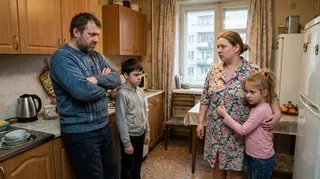




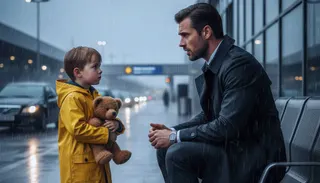
Share how the story made you feel
0Comments appear after a quick automatic check. Please no links, ads or personal data.
Next to your name we show your country, determined from your IP address; the address itself is never shown, and only a hashed fingerprint of it is kept to stop spam.