
 Let’s Keep It Real
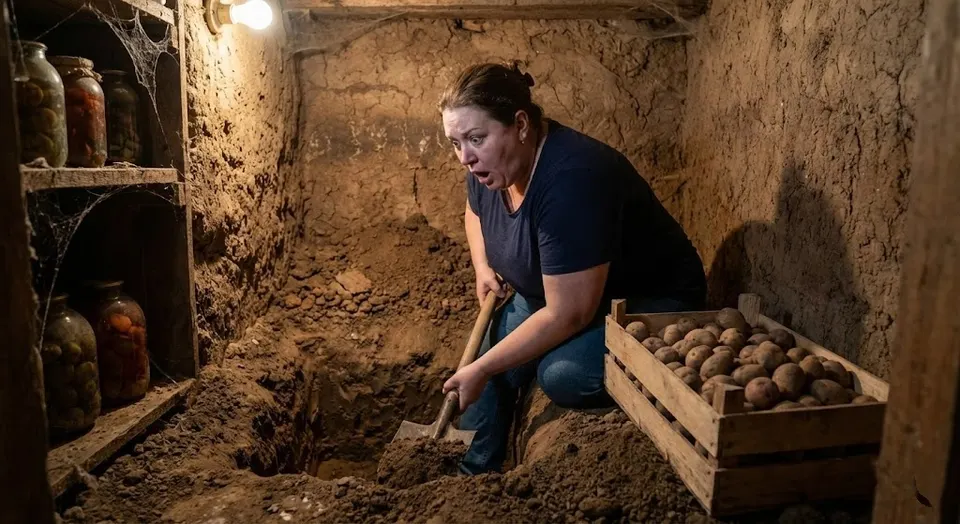
My husband brought his mother, who had stage four cancer, left her with me, and went on a business trip for a whole year. I took care of her alone, spending sleepless nights, changing diapers, measuring out morphine by the clock. Before she died, my mother-in-law squeezed my hand painfully and whispered, "Daughter, go to the village. There, in the summer kitchen, under the potato box, dig."
A week after the funeral, I went. The shovel hit iron at a depth of half a meter. I cleared the earth with my hands, and goosebumps ran down my spine when I saw what she had been hiding there for thirty years.
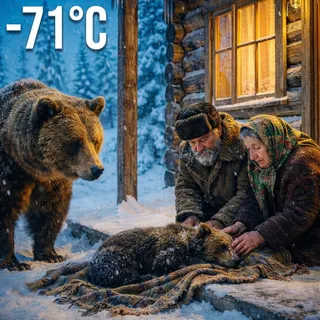
In a January blizzard of 1986, Anastasia Prokhorovna was returning from the district hospital in Podgorodnoye, where she had gone for a pension certificate, when she heard a faint squeak by the service entrance. At first, she thought it was a kitten, but the sound was different—somehow heart-wrenching and so human that she stopped dead in her tracks.
She cleared the snowdrift with her mittens and froze. In a cardboard box that once held canned goods lay a baby, wrapped in a flannel blanket, blue from the cold, with an unhealed umbilical cord that hadn't even fallen off yet.
"Savely, look!" she whispered to her husband as she burst into their cottage in the village of Volosskoye, clutching the bundle to her chest as if she was afraid someone would take it away. "Look what I found!"
Savely Titov, a man of few words and strong build, with hands accustomed to the axe and plow, put aside his kindling and stared at his wife with the expression of a man who had just witnessed a miracle in the middle of an ordinary winter evening.
"He's alive… Breathing… Barely, but breathing. Three days old, at most. Lord, have mercy!"
Savely crossed himself, although he hadn't been to church since his Komsomol youth.
"Who would do such a thing?"
"I don't know. And what difference does it make now?"
They warmed the baby by the stove all night, fed him diluted goat's milk from a dropper, and took turns holding him, afraid to fall asleep. By morning, the boy had turned pink and was crying at full strength, demanding and angry, clearly annoyed at being made to wait so long.
The Titovs, who had spent ten years unsuccessfully seeking treatment for infertility from every doctor in the region and even from an old herbalist in a neighboring village, exchanged a look and understood each other without a word. The official adoption process through the district department and the court took three months because the Soviet bureaucracy demanded certificates, work references, and housing inspection reports. They named the boy Valery, in honor of Chkalov, whose portrait hung in the village council office right above the chairman's desk. And Anastasia secretly hoped that the hero pilot's name would pass on some of its strength and nobility to the child.
"Not a word to anyone!" she told her husband as they brought their son home in a shared ride, wrapped in three blankets. "He's ours, our own flesh and blood, and that's how it will always be."
"What about the documents?" Savely asked, lowering his voice, although no one could hear them in the back of the truck.
"I'll hide them. Just in case!"
Savely nodded and never brought up the subject again. And Anastasia put the adoption papers, the court decision, and the new birth certificate into a tin candy box and buried it in the cellar of the summer kitchen. Under the potato box.
Valera grew up, and with each passing year, Anastasia's motherly heart clenched tighter with an anxiety she couldn't even explain to herself. The boy was handsome, smart, and picked everything up instantly, but there was something unsettling about him. A certain cunning in his eyes, an ability to lie so smoothly that even adults believed him, and a complete lack of remorse when the lie was exposed. At twelve, he stole money from a neighbor's box and blamed it all on her grandson, looking his mother in the eye with such sincere offense that she almost believed him. At fifteen, he tricked her out of her pension for a school trip that never existed. At twenty, he stopped visiting the village unless he needed something, and when he did come, he didn't even bring a loaf of bread.
"It's in his blood," Anastasia would sigh, looking out the window at the empty road where her son hadn't appeared for three months. "It seems blood will out, and no amount of love can change that."
Savely died in 2003, peacefully in his sleep, before seeing the worst of his son's nature, leaving his wife with a secret she now had no one to share.
Five years ago, when a state project to build a bypass road around Dnipro reached their district, people from the administration came to see Anastasia Prokhorovna in a black official car. Her plot of land, almost a hectare of fertile soil by the highway inherited from her parents, was valued at three million hryvnias. She signed the documents with fingers stiff with excitement, unable to believe the zeros on the paper were real.
That same evening, her son called.
"Mom, I heard they're buying up land out there?" His voice immediately turned honeyed, as it only did when he needed something. "What did they give you?"
"Just peanuts, son," she replied, surprised at how easily she lied to her child, her not-so-flesh-and-blood. "About one hundred and fifty thousand. I've set it aside for medicine, for my funeral…"
"One hundred and fifty thousand?" The disappointment in his voice was almost palpable. "Oh, well then. I thought maybe it was something more serious, I could help you invest it…"
"No, son, nothing serious."
Anastasia hung up and sat for a long time in the darkening kitchen, listening to the drip of the faulty faucet that no one was around to fix. She remembered everything: how her son had lied about a promotion at work, how he had borrowed her pension and never returned it, how he would arrive empty-handed and leave with full bags, how he once let it slip while drunk that he had lost twenty thousand at the slot machines.
"He can't be trusted with money," she decided then. "He'll blow it in a week. But my daughter-in-law, that quiet girl Vika with the sad eyes he brought for inspection two years ago, she might need it when Valerka shows his true colors."
She put the bank statement in the same tin box with the adoption papers and buried it deeper, pressing it down with the potato box on top.
Viktoria married Valery three years ago. A modest wedding at the civil registry office of the Industrialny District, a reception at the 'Dnieper Wave' cafe for twenty people, most of whom were her relatives, as only the groom's mother came from his side. They took out a mortgage for a one-bedroom apartment in a panel building on Titov Street (an ironic coincidence with her husband's surname) in both their names, but Viktoria made the down payment of two hundred thousand hryvnias from her premarital savings. At the time, it seemed right. They were a family, after all, everything was shared, he was her husband and would be forever.
She worked as an economist at a small construction firm, earning twenty thousand, and believed that Valery, a mid-level manager at a machine-building plant, honestly brought home his thirty thousand. She tried not to think about where the money went, why he would ask her for a loan until his next paycheck at the end of the month. A crisis in the industry, delays, reduced bonuses—he explained, she believed. She didn't notice him staying late at work until midnight, his phone being strangely dead on weekends, or the nervous laugh with which he answered calls in the next room.
On that October day, when the leaves on the poplars had long turned yellow and covered the sidewalk in a wet carpet, a car stopped by the entrance. Viktoria looked out the window and saw her husband helping a woman out of the car, a woman she didn't recognize at first—the illness had so changed her mother-in-law's once-strong frame. Anastasia Prokhorovna, who just six months ago had been commanding and upright, had become a shadow of her former self. Stage four lung cancer had drained everything from her, leaving only skin stretched over protruding bones.
"Vika, help me!" Valery shouted from below, a strange bustle in his voice.
In the apartment, he sat his mother on the sofa, adjusted the pillows with exaggerated care, and blurted out, looking somewhere past his wife:
"They're sending me to Vietnam. For a year. A joint project, assembling machinery. This is a big chance, Vika. Salary in foreign currency, travel allowances."
"For a year?" She couldn't believe what she was hearing. "And your mother? You know cancer medication costs a fortune. Where will we get the money?"
"But they'll be paying me in dollars there!"
"But how will I manage alone?"
"You'll manage." He was already putting on his jacket, zipping it up with feverish speed. "Here's a card, the PIN is our wedding date. I'll transfer money every month."
His farewell hug was hurried, and Viktoria caught a whiff of a strange scent—a sharp, floral perfume, nothing like her own.
"He's already gone, daughter…" her mother-in-law rasped from the sofa as the door closed behind Valery. "Gone for a long time."
Three months turned into three centuries. Viktoria would get up at five in the morning to wash her mother-in-law, change her diaper (a week's supply cost six hundred hryvnias), and feed her puréed porridge with a spoon, coaxing her to swallow at least a little. Only then could she rush to work, with dark circles under her eyes that no amount of concealer could hide. Her boss called her in twice, hinting that lateness and errors in reports could lead to dismissal. But what could she say? That her mother-in-law was dying in the next room?
At night, Viktoria would wake up every two hours to give painkillers, turn the sick woman to another side to prevent bedsores, and help her through a coughing fit.
The money on her husband's card appeared in the paltry amount of fifteen thousand—allegedly, the rest was eaten up by non-resident taxes and insurance.
"Vika, how are you?" he would ask on Sundays, appearing on the screen tanned and clearly well-rested. "Are you managing?"
"Yes," she would reply, looking at her reflection in the dark window: a gaunt face, a messy ponytail instead of a hairstyle, a dead look in her eyes. "I'm managing."
She had eighty thousand in savings—five were left. Then a twenty-thousand debt to a friend, then a credit card with a fifty-thousand limit.
That December night, after another terrible attack her mother-in-law had, when Viktoria barely managed to help her and then spent half an hour cleaning the room, she couldn't sleep. She picked up her phone to check the balance: would there be enough for medicine until the next transfer? She opened the banking app—they had never separated their accounts after the wedding—and her world collapsed.
Transaction geolocation: Bukovel, the Carpathians. A restaurant bill for five thousand hryvnias. A hotel at twelve thousand per night. An equipment store—forty thousand. The last transaction was an hour ago, while she was on her knees scrubbing the floor.
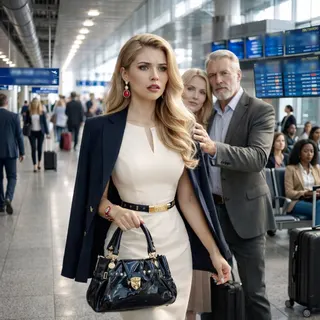
Her fingers moved on their own, opening the cloud storage he had once given her the password for, for their wedding photos. A folder named "Vacation 2024". Snowy mountains, a pool with a view of the peaks, a luxurious room with snow-white robes on the bed. And a woman with bleached blonde hair, in an expensive ski suit, holding a glass of sparkling wine. Lilia Sukhanova—"just an old friend, a classmate," whom he sometimes met at reunions.
In the next picture, Valery was hugging her against a backdrop of snow-covered fir trees. Both were laughing so carefreely. For him, there was no dying mother, no exhausted wife, no debts.
Viktoria looked at her hands—chapped from endless washing, with broken nails, ingrained with the smell of disinfectant. The very hands that cared for his mother every day while he bought his mistress handbags for forty thousand.
The phone slipped from her fingers and fell to the floor. A hoarse cough came from the other room, and Viktoria slowly got up, feeling tears stream down her cheeks. Not from grief, but from rage—thick and hot, rising from somewhere deep inside her. The woman who had stood in the hallway three months ago, submissive and believing her husband's every word, was dead. In her place, in the dark kitchen of a panel building, stood a completely different woman. With a face wet from tears, but with dry, clear eyes. And what tied her to this house was only her duty to the dying woman behind the wall, but no longer her love for a traitor.
Anastasia Prokhorovna was fading with each passing day. Viktoria, carrying the truth of her husband's betrayal, kept silent, not letting it escape. She didn't want to darken the last days of the dying woman, who was already suffering enough.
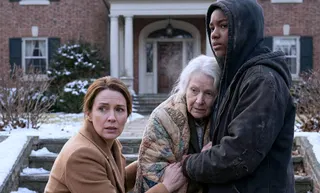
The blizzard outside had been howling for three days, piling up huge snowdrifts. The radiators were barely warm due to a heating main failure somewhere in the district, and Viktoria wrapped her mother-in-law in two blankets, tucking the edges in on all sides, while she sat beside her in a down jacket, not letting go of her icy hand with its protruding veins.
"Daughter…"
Anastasia rasped that night, her breathing becoming shallow and whistling, like the sound of punctured bellows. "Come closer. Sit here, on the edge."
Viktoria leaned in, and her mother-in-law's bony fingers gripped her wrist with a strength one wouldn't expect from a dying person. Her nails dug into the skin painfully, and her eyes, clouded by morphine, suddenly blazed with a piercing clarity that people sometimes have just before the end.
"I know," the old woman whispered, pulling her daughter-in-law closer. "I know about this fake Vietnam trip. I know about his woman. Valerka… he's not mine, daughter. He didn't turn out like this because of me. He's a foundling. I found him in '86, on the hospital steps, in a blizzard."
"Anastasia Prokhorovna, what are you saying?.."
"Be quiet and listen, there's no time." Her mother-in-law pulled her even closer, so that Viktoria could feel her weak, ragged breath on her cheek. "When you bury me, go to the homestead. There's a cellar in the summer kitchen, you know where. Dig under the potato box. There's a tin box, a candy box. I left everything for you, do you hear? It's all yours. You became a daughter to me, Vika. a real daughter. But he… He's a stranger. A stranger by blood and by soul."
"Mom…" The word escaped on its own, for the first time in three years of marriage.
Anastasia smiled. For the first time in all these terrible months of illness, the wrinkles on her face smoothed out for a moment.
"That's better." She fell back onto the pillow, and her grip loosened. "I'm tired, daughter. I want to sleep. Just sit with me a little longer."
Her mother-in-law's hand slipped from Viktoria's wrist and fell onto the blanket. Her breathing stopped so quietly, so imperceptibly, that it wasn't immediately clear: she was gone.
Viktoria sat motionless, holding the icy hand in her warm ones, and listened to the blizzard howling outside, sweeping away the traces of her old life, carrying everything that came before this night into the white haze.
With trembling fingers, she dialed her husband's number, but the calls went to voicemail—the subscriber was unavailable. Again. And again. On the sixth try, a message came through the messenger: "In a meeting, can't talk. What happened?"
Viktoria typed, struggling to hit the letters: "Mom died." Two blue checkmarks—read. And then silence. A long, endless silence in response.
He called three hours later, after Viktoria had already called for an ambulance to confirm the death and was sitting in the kitchen, staring blankly at the wall. His voice was full of feigned grief that made her jaw clench.
"How? When? I just talked to her yesterday! Oh God, Mommy!"
"You haven't called her in two months, Valera," she was surprised by how steady and cold her own voice sounded. "I checked her phone every day."
"Vika, you're in shock, you're confused, that's understandable." He instantly switched to a sympathetic, condescending tone, the kind one uses with capricious children. "Listen, I know how hard this is for you, but I can't come. The contract is in its final stage, you understand? If I leave now, the plant will lose millions, and I'll be fired without severance pay."
"You're not coming to your own mother's funeral?"
"Vika, please understand!" Irritation crept into his voice, which he tried to disguise as fatigue. "Just hold on a little longer. I'll make it all up to you, I swear. I'll pay back every penny."
About twenty people gathered at the funeral in the cramped hall of the city crematorium. Three neighbors from the village who had arrived on an early bus, a couple of Anastasia's distant relatives from Kryvyi Rih, and a few of Viktoria's colleagues who came to support her and help carry the wreaths.
On a stool next to the deceased's photograph, adorned with a black ribbon, stood a tablet with a video call. Valery, in a black shirt against a white hotel wall, had tears streaming down his cheeks so naturally that Viktoria couldn't help but admire his acting talent.
"Mommy!" he sobbed into the screen, pressing a hand to his chest. "I'm so sorry I couldn't make it… I was trying so hard to earn money for your treatment, I wanted so much to cure you!"
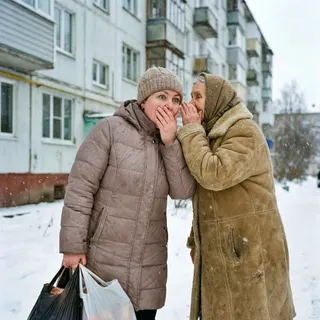
"Poor Valera!" the neighbors whispered, wiping their eyes with handkerchiefs. "Working so far away, trying so hard for his family, he couldn't even say goodbye to his mother. What a cruel fate…"
"A good son!" a relative nodded. "Nastya was proud of him, she always said: 'My Valerka is a good boy'."
Viktoria stood by the coffin in a black dress, accepting condolences, nodding at words of comfort, and felt everything inside her clench with disgust at this virtual performance, these tears that hid the ski slopes of Bukovel and the embrace of a bleached blonde.
She organized everything herself. The contract with the crematorium—forty thousand (the last of her credit). The memorial lunch at a cafe near her home—another fifteen thousand (borrowed again from a friend who was starting to sigh at her calls). Then the nine-day, the forty-day memorials… All this time she moved like an automaton, unable to shed a single tear in public, because all her tears had been cried over the three months at the dying woman's bedside.
"Leave the ashes in the columbarium in the city, it will be easier to visit," Valery wrote after the funeral.
Viktoria didn't reply, just gave a bitter smile reading the message. She knew: Anastasia wanted to return to the homestead, to the land where she had lived her whole life, to the place where her last secret was buried under a potato box.
The bus rattled along the broken winter road to Podgorodnoye, bouncing on every pothole, then she hitched a ride in a farmer's van to the village of Volosskoye. The old Titov house stood at the very edge, by an overgrown ravine. A crooked fence, a yard overgrown with dry weeds, shutters on the windows nailed shut in a cross. Viktoria struggled to open the rusted lock on the gate, which wouldn't budge until she thought to drip some oil on it from a bottle she found in the shed.
Inside, the house greeted her with the smell of an uninhabited space, mouse droppings on the floor, and cobwebs in the corners, even covering the portrait of the young Titovs on the wall. She placed the urn with the ashes on the dresser next to the photograph, lit a church candle in front of an old icon of the Mother of God in the corner, and spent the night on the sagging sofa, fully clothed, covered with all the blankets she could find in the closet, which smelled of mothballs and old age. She didn't sleep—just stared into the darkness and listened to the house creak in the gusts of wind, something rustling in the attic, the candle crackling by the icon, casting flickering shadows on the walls.
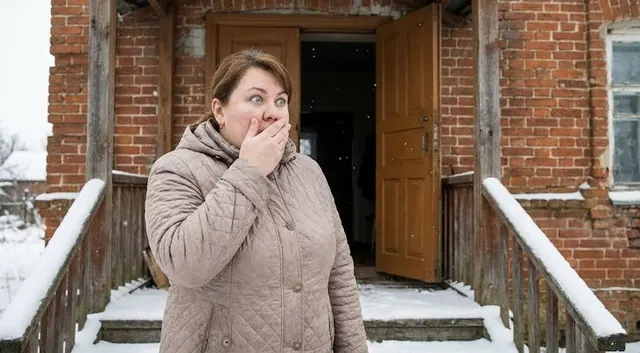
At dawn, as the sky turned grey over the snow-covered steppe, she took a shovel from the shed and went to the summer kitchen—a separate building in the backyard where Anastasia used to make jam and pickle vegetables for the winter. The door barely gave way, warped and swollen from the dampness; Viktoria had to lean her shoulder into it to open it. Inside—a potbelly stove with a broken door, blackened pots on a shelf, jars of dried-out jam covered in dust.
In the corner was the entrance to the cellar, a heavy wooden lid on rusty hinges that she had to lift with both hands. She descended the rickety ladder, shining her flashlight on the damp walls. Shelves with empty jars, boxes of sprouted potatoes, dampness, and a cold that chilled to the bone. The largest box stood in the corner, half-buried in earth and covered with old straw. Viktoria pushed it aside, picked up the shovel, and began to dig, biting into the compacted clay. Half a meter down, metal clinked against metal. She threw the shovel aside and began to clear the damp earth with her hands, not caring about her manicure, oblivious to the pain and cold, until she pulled out a tin box with a faded inscription, wrapped in several layers of plastic and carefully tied with twine.
On the steps of the summer kitchen, in the frosty air, under the grey January sky, Viktoria tore the plastic with fingers stiff from the cold and struggled to open the rusty lid. Inside lay a savings account statement and a yellow envelope sealed with wax. She unfolded the statement and nearly dropped it in the snow. The account balance was 2,980,000 hryvnias, and the last transaction—a deposit from a state program—was dated five years ago.
In the envelope were two documents: a court decision from 1986 on the adoption of a minor and a birth certificate where the Titovs were listed as the parents of the foundling. And a letter—two pages from a school notebook, written in Anastasia's uneven but legible handwriting:
"My daughter, Vika. If you're reading this, it means I'm already gone. Valerka is not my biological son. We found him in '86, picked him up like a kitten in the cold. We thought we could raise him to be a good man. It didn't work out. I guess blood will out. This money is for you. For everything you did for me. For everything he will do to you. I know him like the back of my hand. If he comes to his senses and becomes a better person, share it with him. If not, it's all rightfully yours. You, my daughter, are dearer to me than my own flesh and blood. Forgive me for raising such a son. Your mother, Nastya."
Viktoria cried, sitting on the icy steps of the abandoned summer kitchen, for the first time in these terrible weeks, but these were tears of gratitude, not grief.
That evening, after she had returned to the house and lit the stove, her phone vibrated. A message from her husband with a photo: he was in a restaurant, a plate of trout in front of him, and in the background, a huge window with a view of snow-covered mountains. "Partners are treating me after successful negotiations. Miss you."
Viktoria zoomed in on the picture and in the reflection of a wine glass, she could make out painted lips and drop earrings. Lilia was sitting opposite him, and her blurred reflection was smiling. She typed a reply, weighing every word, considering every comma:
"I'm in the village, sorting through Mom's things. I found a metal box under the floorboards. Inside are documents in your name, something about an inheritance. A notary from the district says your signature is needed, otherwise, everything will be frozen. Come quickly."
The phone rang a minute later—she hadn't even had time to put it down.
"What box?" Valery's voice was shrill with excitement, with no trace of his feigned grief left. "What inheritance? Mom had nothing but this collapsing shack!"
"I don't know, Valera." Viktoria feigned the exhaustion of a grieving widow. "Some papers, official seals. The notary says it's a couple of million. Maybe the land that was taken for the road, some kind of compensation… Just come, I don't understand any of this."
"A couple of million…" He paused, and she could almost hear the gears turning in his head. "Alright. I'll… I'll try to get away for a couple of days. I'll say it's a family emergency. Just don't show anything to anyone! Do you hear me? No notaries without me! Wait for me."
Two days later, a taxi from Dnipro stopped at the crooked gate, splashing dirty snow from under its wheels, and Valery got out in an expensive down jacket, with a trendy haircut and a tan that could not have been acquired in Vietnamese offices but sat perfectly on a face fresh from the Carpathian sun. He hadn't been at his mother's funeral, hadn't seen her coffin go into the crematorium furnace, but the first thing he asked upon crossing the threshold of his childhood home was:
"Where's the box? Where are the inheritance documents?"
Viktoria sat at the table in the cold kitchen, barely heated by the old stove; a cup of long-cold tea stood before her. She silently pushed a folder of papers toward him. He snatched it greedily, opened it. The triumphant smile on his tanned face turned to confusion, then to anger.
Inside was a stack of receipts and bills: medications not covered by the program, for one hundred and fifty thousand; adult diapers for three months for twenty thousand; caregiver services for twelve thousand; calls for private medical help; the funeral and cremation for forty thousand; memorial meals for the ninth and fortieth days for fifteen. In total—almost half a million hryvnias. As well as IOU notes from friends and a credit card statement with growing interest.
"What kind of circus is this?" He threw the folder on the table, and the papers scattered across the floor. "Where's the inheritance?"
"These are the expenses for your mother's treatment and funeral." Viktoria looked at him calmly, not averting her eyes. "I spent all my savings, down to the last penny, and went into debt. You're her son, you're obligated to reimburse at least half."
"You're insane!" He turned purple, veins bulging on his neck. "I don't have that kind of money! It's all tied up in the project, I explained that!"
"You had enough for a forty-thousand jacket." She nodded at his down coat, gleaming in the dim light from the window. "And for a hotel in Bukovel at twelve thousand a night. Transactions don't disappear from the banking app, Valera. I saw everything."
He turned pale under his tan, and his gaze darted around the room—trapped, looking for a way out of the pit he had dug for himself. But a second later, he pulled himself together, straightened his shoulders, and changed his tone to a conciliatory, almost affectionate one.
"Alright, alright. We'll sort this out, we'll definitely sort it out. But right now, something else is more important: where's Mom's money? You mentioned an inheritance, some millions."
Viktoria looked at her husband, at his shifting eyes, the greedy curve of his lips, the fingers nervously drumming on the table in impatience, and she understood with absolute clarity: he had no intention of paying a single penny for the treatment and funeral of the woman who had called him son for thirty years. He was only interested in one thing now—how to grab whatever was left for himself.
Viktoria silently took copies of the documents from her bag (the originals were in a bank safe deposit box in Dnipro; she had taken care of that in advance, before his arrival, knowing her husband was capable of any treachery). The court's adoption decision and the birth certificate lay on the table in front of Valery. She watched as he suspiciously picked up the papers, as he began to read, his lips moving over the more complex phrases, and his face changed: first confusion, then disbelief, then a horror that twisted his features.
"This… what is this?" His voice broke into a squeal. "Is this a fake?"
"It's a court decision from 1986." Viktoria spoke evenly, without emotion, looking him straight in the eye. "You were found on the steps of the hospital in Podgorodnoye, in a January blizzard, three days old, with an unhealed umbilical cord. Mom Nastya and Dad Savely adopted you and kept it a secret their whole lives. You are not their biological son. You're a foundling."
"You're lying!" He jumped up, knocking over the stool, which clattered across the floor and hit the leg of the table. "She loved me! She would have told me, she definitely would have told me!"
"She loved you more than a biological son, which is exactly why she kept silent her whole life." Viktoria didn't raise her voice, though everything inside her was trembling with tension. "And how did you repay that love? You left her to die in a stranger's care while you were off with your mistress at resorts and gambling away money?"
Valery stood in the middle of the room, gasping for air, and she could see his world crumbling. He had been a son, an heir, a master, the center of the universe, and now he was—nobody. A foundling, a castaway, a man with no roots, thrown out into the cold in a cardboard box. He sank heavily onto the stool, clutching his head in his hands. For a few minutes, there was silence in the room, broken only by the crackling of wood in the stove and the howling of the wind outside.
"Fine," he finally forced out, raising his head and staring at her with red-rimmed eyes. "Let's say it's true. Now what? What do you want from me?"
Viktoria took out the next folder and placed it in front of him.
"I consulted with a lawyer, a good one from Dnipro. According to the law, an adopted child has the same rights as a biological one. You are the heir of the first priority. But along with the inheritance, you also inherit the deceased's debts, down to the last penny."
She laid out a list, printed and signed: a loan for a roof repair for eighty thousand (unpaid), three years of utility arrears, her expenses for the treatment, which she, as a family member, was entitled to claim—almost half a million.
Valery stared at the figures with growing anger, his jaw muscles working.
"And what are you proposing?" he hissed through his teeth.
She placed a divorce petition and a property settlement agreement in front of him. All that was needed was his signature in three places.
"We're getting a divorce. You waive any property claims against me and this house. I take on all the debts. You walk away free, with no obligations."
He studied the papers, and she saw the calculation in his eyes. On one hand—a collapsing house in the middle of a dying village, debts, the shame of being adopted. On the other—freedom and the chance to quietly go to Lilia, start over, forget this nightmare.
"You take on all the debts?" he clarified, and a poorly concealed hope sounded in his voice. "And no claims later? No alimony, no lawsuits?"
"We have no children together. The apartment in Dnipro is mine, bought with my premarital money, that's easy to prove. You have no legal claim to anything there. Sign, and you're free as the wind."
He almost snatched the pen from her hand, and his signature hit the paper—quick, sprawling. He didn't even reread the document to the end, didn't notice the third point in fine print.
"Done." He was already putting on his jacket, zipping it up. "I'm leaving. You can keep this junk, I don't need it."
"Wait," Viktoria said to his back, her voice as calm as a doctor delivering a diagnosis. "There's something else important."
She took out printouts of his bank card statements for the last three months, neatly highlighted with a colored marker. Red marked spending on restaurants and hotels in the Carpathians, yellow for purchases in expensive stores, and green for cash withdrawals. The amounts were so large that Viktoria's vision had blurred when she first saw them.
"The total amount spent over three months is one million hryvnias," she stated. "Credit cards you opened in your name at three different banks."
Valery froze with the jacket in his hands, and his face turned a grey, earthy color, like a corpse.
"How did you?.."
"Did you forget we have a joint bank account? We never separated it after the wedding. And the photo 'cloud' is also shared, you gave me the password yourself."
"These are family debts!" He rushed towards her, panic in his eyes. "You owe half too, by law!"
"Reread the third point of the divorce agreement you just signed without looking." Viktoria didn't back down an inch, though he loomed over her. "'Each party is responsible for debts incurred in their name or for their personal interests.' A forty-thousand handbag for a mistress is not a family need. Hotel rooms for the two of you are not a family need. Online games are certainly not family needs. These are all your personal debts. And now they are yours alone, entirely and completely."
He stood in the middle of the room with his arms hanging limp, and the papers he had signed without looking, in his eagerness to get rid of a burden, had turned into a noose around his neck. He had lost his wife, his home, his inheritance, and was left with a million in debt.
Two weeks after the divorce, Lilia called Viktoria. In a trembling, breaking voice, she asked for a meeting, and they met in a cheap coffee shop near the train station, far from the city center where they might be seen by acquaintances. Lilia looked nothing like she did in the photos from Bukovel: gaunt, without makeup, in a cheap jacket from the market, with dark circles under her eyes.
"The pregnancy I used to scare him—it was a lie," she confessed immediately, twisting a napkin until it tore to shreds. "I made it up so he would leave you and marry me. I thought he had money… He spent so lavishly, gave gifts, booked luxury suites. It turned out he's a gambler, a debtor. Everything was on credit, all borrowed. Now some people are looking for him, and they've already come to my house, threatened me."
She offered a deal: recordings of Valery's phone calls with some "fixer" who was helping him plan a lawsuit against Viktoria, and the password to his laptop, which contained documents for a shell company he used to embezzle money from the plant. The price was one hundred thousand hryvnias—for a ticket and to get by for a while in another city. Viktoria transferred the money and received a flash drive the size of a fingernail, on which she found audio recordings, screenshots of transfers to gambling sites for fifty thousand every night, and scans of documents for the shell company "Dnipro Tech Supply." Embezzlement on a particularly large scale. And also a file with a draft of a forged will, supposedly made by Anastasia Prokhorovna, which he planned to use through an acquaintance notary. The document was dated November 15th—the day his mother-in-law lay in a coma after an overdose of painkillers and couldn't even open her eyes, let alone sign a document.
Viktoria saved everything onto three different flash drives. One for herself, the second in a bank safe deposit box, and the third she gave to a friend with instructions in case something happened to her.
The doorbell rang a month later—insistent, angry, demanding. Through the peephole, Viktoria saw Valery and some guy in a leather jacket with a folder under his arm, clearly not a lawyer, more like a "fixer" from the nineties. She opened the door but kept the chain on.
"Let me in!" Valery's voice was shrill with poorly concealed rage. "We need to have a serious talk."
"Say what you need to say here, I'm listening."
"This is my lawyer." He nodded at the guy in the leather jacket. "We're suing. You tricked me into signing away the inheritance, taking advantage of my state. You're an unworthy heir because you drove my mother to her death with poor care, you didn't provide proper treatment."
Viktoria removed the chain.
"Come in, since you're here."
In the kitchen, she sat them down opposite her at the old table, placed her laptop and a stack of folders in front of her, and demonstratively turned on the voice recorder on her phone so they could see.
"Before you start with your threats, take a look at this," she said calmly.
The first folder. Printouts of transactions from Valery's cards. History of bets on gambling sites. Screenshots of conversations with Lilia.
"This is proof that my ex-husband spent three months squandering money in casinos and on his mistress while I was caring for his dying mother."
The second folder. Documents of the shell company "Dnipro Tech Supply." Payment orders, scans of fake contracts.
"And this is proof of embezzlement of funds from the plant through a shell company. Article 190, Part 4 of the Criminal Code of Ukraine, up to twelve years with confiscation of property."
The third folder. The draft of the forged will and a medical certificate on her mother-in-law's condition on that date, certified with a hospital seal.
"And finally, a fabricated draft will with the signature of a woman who was in a coma that day and physically could not hold a pen. Article 358, forgery of documents."
The "fixer" in the leather jacket turned pale, jumped up, and started backing towards the door.
"Listen, man, you didn't tell me about this stuff… I'm not getting involved in this, this is not my level."
He almost ran out of the apartment, slamming the door loudly. Valery was left alone, slumped in his chair.
"What do you want?" he asked hoarsely, without looking up.
"From you—nothing." Viktoria looked at him without hatred, only with infinite weariness. "Just disappear from my life forever. If I hear about any more lawsuits or threats, all of this will go to the police and the plant on the same day."
He stood up to leave, hunched over like an old man. At the door, Viktoria stopped him:
"Oh, one more thing. Lilia. The pregnancy she was blackmailing you with all these months—it was a fake. There was no baby, there never was. She told me everything herself. Voluntarily and in detail. For a hundred thousand. She sold you out, lock, stock, and barrel: recordings, passwords, conversations. She's probably somewhere in Lviv by now, starting a new life. Without you."
He turned around, and his face contorted in pain. The woman for whom he had left his family, for whom he had gone into debt and ruined his entire life, had betrayed him for a wad of cash—just as he himself had betrayed his dying mother.
"Leave," Viktoria said and closed the door in his face. She heard him slump heavily onto the steps in the stairwell, heard him muttering something, then—uneven steps down the stairs and the slam of the entrance door.
A month later, she received a call from a lawyer at a law firm in the center of Dnipro. Roman Borysovych Holubev—he introduced himself and requested a meeting regarding the Titova inheritance case. In his office, Viktoria learned something she had never expected. Five years ago, Anastasia Prokhorovna had made two wills with him, and the second one concerned a three-bedroom apartment on Yavornytskyi Avenue in the very center of the city, which she had inherited from her parents—engineers who had received it as company housing back in Soviet times. Its market value was about four million hryvnias. The will stipulated that the apartment would pass to Viktoria Yevhenivna in the event of Valeriy Saveliyovych's death or his refusal of the inheritance. Anastasia Prokhorovna knew her son and foresaw that he would refuse the "burden" himself.
Viktoria sat in the lawyer's chair and cried. Her mother-in-law had known everything, had foreseen everything, had left not only money and documents, but also a roof over her head—a bright apartment with high ceilings and a view of the central avenue.
Valery found out about the apartment, hired an acquaintance, a former police officer, to "look up" his ex-wife in the databases, and one night he broke down the door—drunk, with crazed eyes, and a knife in his hand.
"This apartment is mine! The money is mine! You stole my life!"
Viktoria managed to grab the pepper spray from her nightstand (she hadn't been without it since receiving the warning from Lilia) and sprayed it in his face just as a police squad, called by neighbors who heard the crash and screams, burst into the apartment. They subdued him, put him in handcuffs, and he screamed something about his rights and "that witch" as they dragged him down the stairs.
Viktoria handed over all the collected evidence to the investigator, and the cases were combined into one proceeding. The court sentenced Valeriy Saveliyovych Titov to six years in a general-regime colony on a combination of charges: fraud on a particularly large scale, forgery of documents, and attempted assault.
On the ground floor of the apartment on the avenue, in a space that was once a shop, Viktoria opened a small coffee shop with books—a cozy place with wooden tables, soft armchairs, and shelves along the walls where you could take any book and read for as long as you liked, even all day.
On the wall hung a black-and-white photograph in a simple wooden frame: a young Anastasia Prokhorovna with her husband Savely, laughing, happy, against the backdrop of their village, in some distant, sunny spring. And under the photograph, a brass plaque: "Nastya's House"—in memory of the woman who loved more than she received in return.
The coffee shop became popular. Students from the nearby university came to study for exams, pensioners from the surrounding houses came to read newspapers over a cup of tea, and young mothers with strollers came to take a break from their household chores. Viktoria herself stood behind the counter, making coffee, arranging fresh pastries, and sometimes, in the quiet evening hours, she would tell regular customers the story of the woman in the photograph.
One spring day, when the chestnut trees were blooming outside and the sun filled the room with golden light, a man slightly older than her, wearing glasses and with a book under his arm, came into the coffee shop. He ordered an Americano and sat by the window with a volume of Kobzar. Viktoria caught his eye over the pages and, for the first time in a long time, smiled back.


Share how the story made you feel
0Comments appear after a quick automatic check. Please no links, ads or personal data.
Next to your name we show your country, determined from your IP address; the address itself is never shown, and only a hashed fingerprint of it is kept to stop spam.