
 Let’s Keep It Real
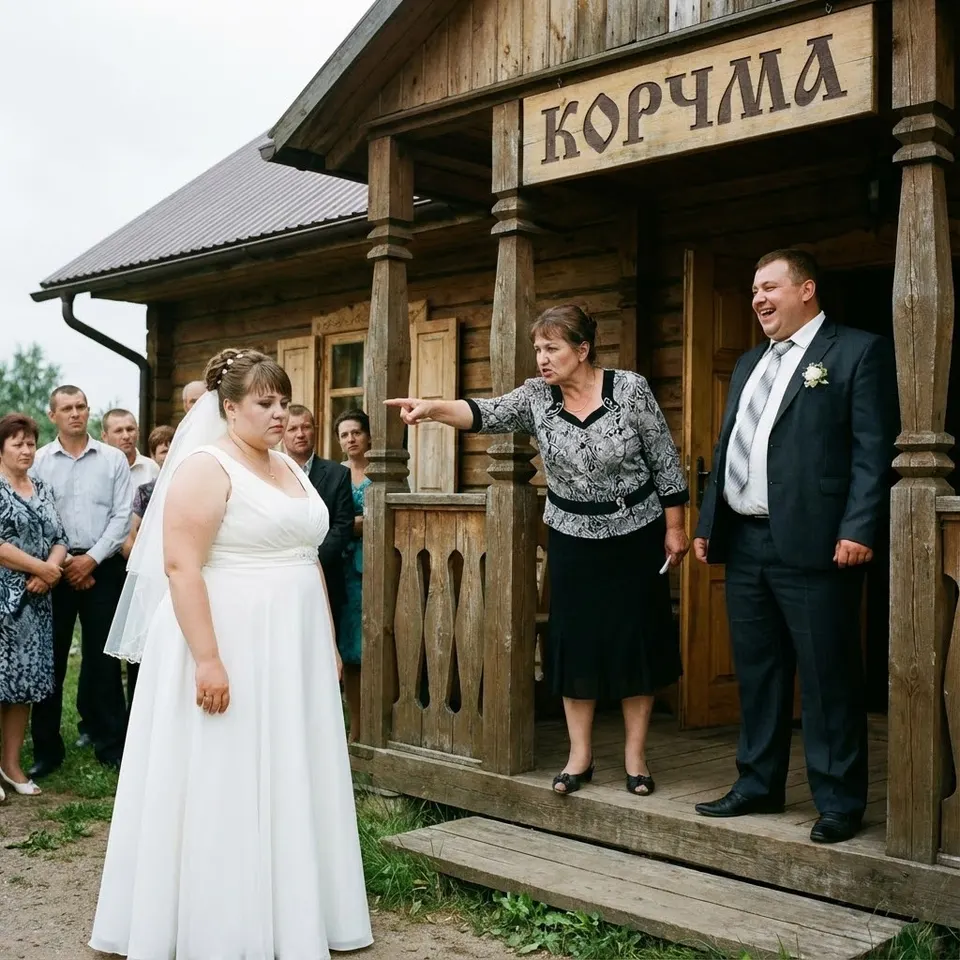
For four hours, I fought for the life of a five-year-old boy, was late to my own wedding, and twenty people from the groom's family blocked my way. "Get out, our son has already married someone else!" But when they found out whose child I had saved, everything changed. At five in the morning, the phone shattered the silence of the residents' lounge, and Taisiya Vishnevskaya jumped up from the sagging sofa, not yet understanding where she was or why her head was buzzing after three hours of fragmented sleep. Outside, there was an impenetrable Dnipro darkness, and in the hallway, gurneys were already rattling, and hurried footsteps could be heard. Someone was shouting "faster, faster" in that special voice used only in emergencies.
She threw on her coat, ran out to the emergency room, and saw the head of the department, Maxim Yuryevich Abramenko, standing at the reception desk with a look on his face that usually accompanies news of a disaster. "Five-year-old, ruptured spleen, car accident on the highway last night," he said quickly, swallowing the ends of his words. "Everyone's on calls, Taisiya Sergeyevna, can you handle it?" She nodded without a second's hesitation, although somewhere in the back of her mind, a thought flashed: the wedding, the banquet hall, her mother, to whom she had promised to be a perfect bride, Regina Valeryevna with her eternal disapproval. "I can," she replied. "But today you..." Maxim Yuryevich hesitated. "I'll make it," she cut him off, already heading towards the operating room.
In the hallway of the surgical department, a large, well-dressed man was pacing, but with the completely lost look of someone whose world had just collapsed. On the gurney lay a boy, so pale from blood loss that he seemed sculpted from wax. Taisiya studied the vitals the nurses handed her as she walked, and a knot of anxiety tightened in her stomach: another ten minutes of delay, and there would be no one left to save. The surgery lasted four hours. Four hours during which nothing existed but the surgical field, the child's delicate blood vessels, and the monotonous beeping of the equipment.
Her back ached so much she wanted to double over, her neck was drenched in sweat, and by the third hour, her fingers began to tremble treacherously from the strain. But she didn't allow herself to think about anything but the small body on the table, the torn vessels that needed to be stitched millimeter by millimeter with the precise accuracy she had been taught for years. When the anesthesiologist said, "pressure has stabilized," Taisiya exhaled so deeply it was as if she hadn't been breathing all those hours herself. "Well done!" Maxim Yuryevich clapped her on the shoulder in the hallway as she pulled off her gloves and mask. "You saved the boy. Now run to your wedding."
Nurse Irina Shevchenko caught up with her at the residents' lounge and thrust a phone into her hands. The screen was filled with missed calls from unknown numbers, undoubtedly from the groom's relatives who had already gathered at the banquet hall and were waiting for the bride. "At least twenty people called," Irina said sympathetically. "But today you... I know, thank you," Taisiya didn't call back; explaining over the phone was pointless, and there was no time. She changed right there in the lounge, fastening the buttons of her wedding dress with fingers stiff from exhaustion, fumbling with the tiny hooks on the back. The dress was simple, without crinolines or embroidery; she had chosen it specifically so she could put it on herself, without help, and now she was grateful for that foresight.
There wasn't a minute left for makeup. She pulled her hair into a ponytail, wiped her face with wet wipes, trying to somehow pull herself together after four hours in surgery, and ran to the parking lot to her old car, which, thankfully, started on the first try. On the way across the city, from Polya Avenue to the center, she mentally rehearsed her explanation for Regina Valeryevna, her future mother-in-law. Even in the best of times, this woman looked at her as an annoying misunderstanding, a random obstacle in the life of her precious son. Arkady will understand, Taisiya convinced herself, maneuvering through traffic, changing lanes, he himself said he was proud of my work, he'll take my side.
We had discussed it so many times. She believed it so strongly that when she saw the crowd of people at the entrance to the hotel on Voskresenskaya Street, her first thought was that they were there to greet her. It was only when Regina Valeryevna stepped forward with her arms crossed over her chest, followed by the rest of the relatives—Arkady's older brother Stanislav, his aunt Izolda Mitrofanovna, and about fifteen other people, all in festive attire, all with the same hostile expressions—that Taisiya realized this wasn't a greeting. It was a wall. "We spent a fortune on guests, and where have you been?" Regina Valeryevna's voice rang with barely suppressed fury. "You think you're the smartest one here, don't you? Everyone's waiting like fools, and she's off gallivanting somewhere."
"There was an emergency surgery," Taisiya tried to speak calmly, though everything inside her was trembling. "A five-year-old child, a ruptured spleen, they brought him in at five in the morning." "I don't give a damn about your surgeries," Regina Valeryevna didn't even let her finish. "You always have an excuse. It's either a shift, or a surgery, or your useless dissertation. You picked a fine time." "A doctor should also understand," Stanislav interrupted, stepping forward with the air of a man accustomed to his word being law. "That a wedding day is a wedding day. To leave my brother in front of all the guests—that's a disgrace for the whole of Dnipro."
"How is he supposed to look people in the eye now? A careerist like her is no wife for a normal man," added Izolda Mitrofanovna with the special kind of pleasure some people take in saying cruel things, savoring every word. "I said it from the beginning, she's not a match for our Arkasha, not a match." Taisiya felt her face burn, felt dozens of eyes on her, and in each one, she read a verdict, delivered in advance, with no right to appeal. Years of patience, of mockery about her night shifts, hints that decent women don't work 20 hours a day, constant comparisons to the domestic Inna Kovalenko, who could cook dinner, take care of her mother, and never talk back—it was all for nothing. She had hoped that her dignified behavior and professionalism would eventually earn their respect, but she was wrong.
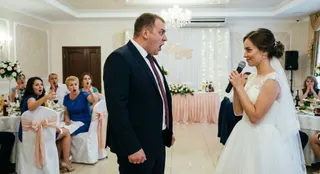
"Where is Arkady?" she heard her own voice as if from a distance. "I want to see him, let him say it himself." Regina Valeryevna let out a derisive, piercing laugh, and that laugh hurt more than any words. "My son has already exchanged rings with Inna, with a girl who knows what family and respect are, who wouldn't abandon her husband for some strangers in a hospital." Music, the host's toasts, congratulations, and applause could be heard from the banquet hall. A celebration was underway there, guests were having fun, and her groom was standing next to another woman.
Taisiya stood motionless, unable to move. The world around her lost its shape and became blurry, as if she were looking at everything through frosted glass. "They've already submitted the application, they'll be officially married in a month," Stanislav looked at her with unconcealed contempt, his hands in his jacket pockets. "Now get out of here before we call security. No need to make a scene." She remembered how Arkady had proposed to her in a restaurant on the Dnipro embankment, how he had gotten down on one knee, how his voice had trembled, how he had said he would protect her and not let his mother interfere in their lives.
He said he understood her work and was proud of her, that she was the only woman he had ever truly loved. For three years, she had believed his every word, made plans, dreamed of a future together. And now, after a four-hour absence, he was standing with a ring before another woman, before that very Inna whom his mother always held up as an example. Was Inna a backup plan from the beginning? Was he forced into it? Or was he just too weak to stand up to his mother, as always?
Or had he long been looking for an excuse to get rid of her, her night shifts, her constant busyness? These questions ate at her from the inside, but Taisiya didn't cry. She remained silent, because she knew: if she uttered a single word, her voice would break. And then, behind her, she heard the roar of a powerful engine. Everyone turned. A black Rolls-Royce in the parking lot of a Dnipro hotel was an event in itself. Such cars were rarely seen here, perhaps only in the news about visits from capital officials.
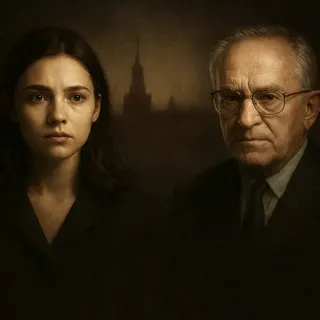
A middle-aged man in a dark suit got out of the car. The same man she had glimpsed pacing anxiously in the surgical wing hours ago while she fought for his son's life. She hadn't paid him any mind then; the child's life was more important than observing relatives in the hallway. He approached Taisiya and bowed his head deeply, the kind of bow given when thanks are for something more than a service, when words seem inadequate to express what you want to say. "Gordey Alexandrovich Bondar," he introduced himself quietly, his voice hoarse like a father who hadn't slept all night.
"You saved my son's life today. I came to thank you." The Boyko family relatives froze, exchanging confused glances. In Dnipro, everyone knew "Bondar Bud." Half of the city's new residential complexes were built by his company, his name appeared in business news, and his portraits hung on billboards with the caption "Building the future of Ukraine." Taisiya saw how Regina Valeryevna's face changed, how fear replaced anger, how her lips, which had just been uttering insults, trembled.
"Tasenka," her mother-in-law's voice suddenly became honeyed, sickeningly sweet. "Our dear daughter-in-law, wait!" Bondar cast a cold gaze over the crowd, lingering on each face, memorizing them. "I wanted to thank the doctor in front of her loved ones," he spoke quietly, but with a firmness that tolerated no objections. "Instead, I find this. The harassment of a woman who, four hours ago, pulled my child back from the brink of death." "We were just..." Regina Valeryevna began, but he cut her off.
"I heard what you said. Every word." He turned to Taisiya. "You don't have to stay here. If you like, I can take you anywhere." Taisiya looked at the banquet hall, from which music and laughter emanated, at the wall of people who, a minute ago, were demanding she leave and were now looking fawningly at Regina Valeryevna with her fake smile. This hypocrisy, the instant switch from "Get out of here" to "Our dear daughter-in-law," was worse than any insult because it showed the true price of their respect.
"Tasenka, sweetie!" Regina Valeryevna shouted after her as she silently walked towards the black car. Taisiya didn't answer or turn back. She walked, looking straight ahead, understanding one thing: some doors close by themselves, and you shouldn't stand before them, begging to be let in. The coffee shop in the Sobornaya Square area was quiet and almost empty. A few customers sat at distant tables, talking quietly. Outside the window, chestnut trees rustled, and this whole peaceful world seemed unreal after what had happened an hour ago. Bondar ordered two coffees, waited for the waitress to leave, and placed an envelope on the table.
"Three hundred and fifty thousand," he said simply, without any dramatic pauses. "It's less than a son's life, but it's something. Please accept it as a token of my gratitude." Taisiya shook her head, not touching the envelope. "I can't accept this. I'm a doctor; it's my job to save people. If you turn it into a marketplace, if I start taking money for every surgery on top of my salary, my conscience becomes a commodity. And what kind of doctor am I without a conscience?" He took the envelope back without offense, just a nod of respect that was clearer in his eyes than any words.
"I wanted to thank you at the wedding, in front of your loved ones, your family," Gordey Alexandrovich said quietly, stirring his coffee. "I found out at the hospital that you had a celebration today. I thought I would come, say a few words in front of the guests, let everyone know what kind of person this woman is. And instead I found..." he trailed off, just waving his hand. "They thought I was just a regular doctor from a regional hospital, with no one to help me or stand up for me," Taisiya smirked bitterly. "Someone you can put in her place and replace at any moment with a more convenient candidate." Bondar remained silent, not trying to comfort her with platitudes like "everything will be fine" or "you'll meet your person."
And that silence was better than any words; it gave her space, allowed her to breathe. "Can I help with anything?" he finally asked when she had finished her coffee. "Take me to my mom's in the Amur-Nyzhnodniprovskyi district," Taisiya requested. "Before the Boyko family relatives cause a scene there. They're capable of it." He nodded and took out his phone to call his driver. Taisiya looked out the window at the old buildings, at people hurrying about their business, at students with backpacks, at a young couple walking hand in hand. For the first time on this endless day, she felt she could breathe.
The man opposite her demanded nothing, accused her of nothing, expected no thanks for his help, and didn't try to exploit her vulnerability. He just sat beside her, simply ready to help. And that was enough. As the driver drove through the streets towards the left bank, past the bridge and old five-story buildings, past the private houses, Taisiya dialed her mother's number. The voice of Varvara Rodionovna, full of anxiety and poorly concealed fear, sounded so close in the receiver that she wanted to burst into tears right there, in the back seat of a stranger's car, burying her face in her hands.
"Sweetheart, where are you? Why didn't you pick up the phone? I didn't know what to think. Did you make it to the restaurant?" "Mom," Taisiya swallowed the lump in her throat, trying to keep her voice from trembling. "There was an emergency surgery early this morning, a child was brought in with a ruptured spleen, I couldn't not go. The groom's family, well, they have some complaints. I'll be there soon, I'll tell you everything." Varvara Rodionovna was silent for a second. And Taisiya heard her mother sigh heavily on the other end of the line, the way people sigh when they've already understood everything but don't want to ask questions over the phone.
"Alright. I can take care of myself, I'm not a child. And you, don't let anyone walk all over you, you hear? No one. A fish seeks deeper water, a person seeks a better place." The car stopped at the gate of an old private house on the outskirts of Amur, the very house where Taisiya grew up. Where the floorboards creaked underfoot, and in winter, you had to stoke the furnace in the mornings. Where a photo of her father in his youth still hung on the living room wall, before his illness, before a heart attack took him right on his factory shift, 10 years ago.
Her mother met her on the porch, in an old housecoat, with a kitchen towel in her hands. A former nurse, a widow, a woman who raised her daughter alone after her husband's death, working around the clock at the district clinic. When she saw her daughter's disheveled wedding dress and messy hair, she didn't ask any questions, just silently opened the door, letting her into the warmth and safety of her childhood home. Varvara Rodionovna poured tea into a large mug, an old one that belonged to her grandmother, placed a plate of sweet buns she had baked that morning in preparation for the celebration that never happened on the table, wanting to treat the in-laws, and sat opposite her, folding her work-worn hands on the oilcloth.
"Tell me. Everything as it is." And Taisiya told her. About the emergency call at five in the morning, when she was barely awake. About the four hours over the operating table, when her hands trembled with tension and her back ached so much she wanted to double over. About the crowd at the entrance to the hotel on Voskresenskaya, about Regina Valeryevna with her "get out of here" and "careerist." About the ceremony with Inna, about the ring on another woman's finger, about how quickly her mother-in-law's tone changed when Bondar got out of the black car and said his name. Varvara Rodionovna listened without interrupting, only growing paler with each word, but her back remained straight, as always, and her hands did not tremble.
This woman had survived her husband's death and hadn't broken; she was not so easily bent. "A good person shows their true colors in difficult times," she finally said, when Taisiya fell silent and stared into her cold tea. "And a weakling hides. Your Arkasha hid behind his mother's skirt. Not all that glitters is gold, daughter. I told you from the start to take a closer look at him, but you were in love and wouldn't listen." The sound of car doors slamming and a hubbub of voices came from outside. Several people, by the sounds of it, all talking at once, interrupting each other, as people do when they are nervous and can't agree on who should speak first.
Varvara Rodionovna stood up, smoothed her housecoat, and headed for the exit with the face of someone going into battle. "Stay here. I'll handle this myself." Through a tiny gap in the curtain, Taisiya saw her mother go out onto the porch and stand there, arms crossed, as Regina Valeryevna stopped at the gate with a strained smile on her pale face, and behind her loomed Stanislav's SUV. And some other relatives were shuffling by the fence, hesitant to enter the yard. The mother-in-law was babbling something about apologies, a misunderstanding, about how she had always considered Taisiya a daughter, practically a member of the family, and valued her very, very much.
And it was all a terrible misunderstanding. "This morning, you told my daughter to 'get out of here'," Varvara Rodionovna's voice was calm, measured. "And now she's like a daughter to you. Your memory works in interesting ways, doesn't it?" "This is a family matter," Stanislav intervened, stepping forward with the air of a man used to resolving issues. "Taisiya is our daughter-in-law, we have the right to speak with her directly." "If there was no wedding, then there is no daughter-in-law," Varvara Rodionovna cut him off, without even raising her voice. "And if your Arkasha has already exchanged rings with another woman in front of everyone, then all the more so. When did you ever value my daughter?"
"Was it when you were chasing her from the parking lot in front of the guests, or when you found out whose child she saved?" Bondar's driver, standing by the car on the street in his expensive suit, politely but firmly asked the visitors to leave and not to disturb the homeowners. And Regina Valeryevna, seeing a man who was clearly not a simpleton next to a black car at this modest house with a crooked fence, turned even paler, realizing her plan had failed. They left in silence, without looking back, without even saying goodbye. "That's it, case closed," said Varvara Rodionovna, returning to the house and firmly closing the door behind her.
"Live peacefully, daughter. These people are no longer your family and never were." Taisiya hugged her mother, burying her face in her shoulder, inhaling the familiar childhood scent of home, of laundry detergent, and whispered, "Forgive me, Mom. Forgive me for how this turned out. You prepared so much, baked those buns." "What is there to forgive?" Varvara Rodionovna stroked her head, just as she did in childhood when Taisiya came home from school upset. "You saved a child, you didn't run off to a dance. Live with a clear conscience, that's all that matters. And we'll eat the buns ourselves."
The days dragged on slowly in the old house on the left bank, where time flowed differently than in the city center, where the morning began with a neighbor's rooster crowing, and the evening with quiet conversations in the kitchen under a yellow lamp. Taisiya took a week of sick leave and spent time with her mother. She made her breakfast, reminded her about the blood pressure pills she always forgot to take, and listened to her stories about her father, how he worked as a shift foreman at the factory. How he brought her wildflowers every Friday, even managing to find a sprig of mimosa somewhere in winter, how he passed away ten years ago when he collapsed right at his machine and the ambulance couldn't get there in time. The neighbors already knew about the canceled wedding.
Rumors in the private sector spread faster than any internet, crawling over fences along with morning greetings and evening chats at the gate. Some came with sympathetic looks, asking cautiously what had happened. Others just watched over the fence with poorly concealed curiosity, discussing it among themselves later. Varvara Rodionovna answered everyone the same way, with directness: "My daughter acted like a human being, she saved a child who had minutes to live, and the rest is none of your business, go on your way." Taisiya's phone was ringing off the hook. Unknown numbers, Regina Valeryevna's number, Stanislav's number, numbers of some distant relatives of the Boyko family whom she didn't even remember by name.
She rejected one after another, until finally, Arkady's name appeared on the screen. She hesitated for a second, looking at the glowing letters, and then answered. "Tasya," his voice was hoarse, rushed, with a note of desperation she had never heard from him before. "Please, listen to me, my mother threw a fit, the ceremony was just to calm her down, it doesn't mean anything. The application at the registry office can be withdrawn at any time, I don't want to lose you." "If it doesn't mean anything," she interrupted, surprised at the calmness of her own voice. "Why did you put a ring on another woman's finger in front of a hundred guests?"
"I was forced. Mother said she wouldn't survive the shame in front of the relatives, she clutched her heart." "Where were you while I was operating on a child for 4 hours, Arkady?" He fell silent for a second, and in that pause, Taisiya heard everything she needed to know: he was at home. Nervous, not knowing what to do. His mother was screaming, Inna arrived. "You should have come to the hospital and waited outside the operating room. Just to be there, just to show that you cared. But you chose to stay home and put a ring on another woman. I don't blame your mother, Arkady. I blame you."
"Tasya, give me a second chance. I'll change, I promise." "The chance ended when you chose the easy way out." She hung up and felt a strange sense of relief. Not joy, not triumph. Just an emptiness where it used to hurt, where hope and love for a man who turned out to be nothing like she thought he was used to live. One evening, as the sun was setting behind the roofs of the neighboring houses and the air smelled of lilac from the front garden, Gordey Alexandrovich came without his driver, in a regular SUV, without any frills, in a simple shirt with rolled-up sleeves, carrying a bag of groceries from the supermarket: meat, vegetables, fruits, he even remembered a box of good tea.
Varvara Rodionovna looked at him with the appraising gaze of an experienced woman who had seen it all in her life and who couldn't be fooled by expensive gifts. "I wanted to get to know you properly," he explained, placing the bag on the kitchen table. "To see if any help is needed around the house. The fence is crooked, I can send people to fix it." "And what are your intentions?" Varvara Rodionovna asked directly, without beating around the bush, looking him straight in the eye. "Don't try to sweet-talk me. I'm a simple woman, I like it when everything is honest." "I'm not trying to buy you off with money," he replied just as directly, not looking away.
"I just think that in a difficult moment, someone from the outside can help. Without pressure, without conditions. Your daughter saved my son's life, and I found her being driven away from her own wedding. That's not right." Varvara Rodionovna fell silent, studying his hands. Large, calloused, clearly from physical labor. Not some soft-handed person, even if he had money. "You're not showing off, not being flashy," she said finally, softening a little. "As long as you live like a decent human being and love your child, alright. We'll see what kind of person you are." Later, when her mother went to the kitchen to make dinner and started clattering with pots and pans, Gordey Alexandrovich told Taisiya quietly, so Varvara Rodionovna wouldn't hear.
"I'm ready to wait as a friend, for as long as it takes. If you don't want to see me, I won't come again." "Just say the word, don't just disappear," she replied after a pause, looking out the window at the evening sky. "I just need time. A lot of time." At the door, as he was leaving, Varvara Rodionovna stopped her daughter in the kitchen and said quietly, so the guest wouldn't hear: "Don't rush, don't lose your head. Money doesn't make the man. Take a good look first, or you'll get burned again." A week later, Taisiya returned to work at the regional hospital, put on her white coat, walked through the familiar corridors, breathed in the hospital air, and felt like she was in her place.
But on the very first day, the head of the department, Maxim Yuryevich, called her into his office with the kind of face that usually delivers unpleasant news that one would rather not hear. "A complaint has been filed," he said, not looking up from the papers on his desk, shuffling through them with obvious displeasure. "The Boyko family. They claim that you abandoned your post on your wedding day, causing moral damage to the hospital and using your official position to establish connections with wealthy patients. Nonsense, of course, but it's official." Taisiya froze, feeling a wave of indignation rise within her. The accusation of abusing her position hit the hardest.
She had saved a child, risking her own happiness, hadn't slept all night, operated at the limit of her strength, and now she was being accused of greed, of supposedly seeking a wealthy patron. "The hospital has already pulled the documents," Maxim Yuryevich continued, finally looking at her with sympathy. "The surgical log, the boy's medical history, the surveillance camera recordings. Everything confirms your version, there's nothing to nitpick. But a complaint is a complaint, there will be an internal investigation, nothing can be done." The commission meeting was attended by the head doctor in thick glasses, representatives from the trade union committee, the hospital's lawyer with a folder of documents, and Stanislav Ilyich Boyko from the groom's family.
He sat in the corner, avoiding Taisiya's gaze, mumbling something incoherent about family honor and couldn't provide any evidence of negligence, no documents, no witnesses, other than his own words. Taisiya calmly recounted the chronology of events from the call at five in the morning until the moment she left the operating room and mentioned that the patient's father, Gordey Alexandrovich Bondar, could confirm her words as a witness. At the mention of this name, Stanislav lowered his head and did not say another word for the rest of the meeting. The commission's decision was unanimous: Dr. Vishnevskaya's actions were fully in line with her professional duty, the complaint was deemed unfounded and not subject to satisfaction.
Leaving the head doctor's office, Taisiya felt her legs tremble, not from joy, but from accumulated fatigue and nervous tension. It was an unnecessary battle she had been forced to fight, a war she had not started. Gordey Alexandrovich was waiting at the hospital entrance, leaning against his car. "All sorted out?" he asked briefly, seeing her face. "Sorted out, the complaint was dismissed." "Good, let's go eat. You need real food, not the hospital cafeteria with their last-century cutlets." She laughed, for the first time in weeks, genuinely, from the heart. "You are a very practical man, Gordey Alexandrovich, everything is simple with you, let's go eat, and that's that."
Two weeks later, as life began to return to its usual routine of shifts and surgeries, Arkady ambushed her at the hospital's staff entrance. Thinner, haggard, with dark circles under his eyes, in a wrinkled jacket he would never have worn in public before because his mother wouldn't approve. "My mother's heart gave out," he began hurriedly, stepping towards her. "She's in cardiology on Rybinskaya Street, crying all the time. Inna went to Ternopil to her relatives, she couldn't take it all. We withdrew the application from the registry office, canceled everything." "I choose you, Tasya. Now I choose you."
Taisiya looked at him, at the man she once loved, with whom she had planned to spend her whole life, and felt nothing but a strange emptiness, no anger, no pain, not even pity. "You're not choosing me, Arkady, and I'm not a backup option. You're choosing peace because everything fell apart. When your mother pressured you, you chose your mother. When you just needed to come to the hospital and be there, you stayed home. Now that Inna is gone and your mother is sick, you're coming back. This isn't a choice, it's desperation." "Give me a chance to change, to become stronger, I'll learn." She shook her head, looking at him without anger, without reproach, simply stating a fact.
"There are things that can be changed, Arkady. But there are moments that, once missed, can never be brought back. That moment was on the morning of our wedding day." "Are you seeing someone?" he asked with desperation in his voice. She didn't lie, nor did she explain. It was no longer his business. "It doesn't matter anymore." Taisiya turned and walked towards the hospital gates, not looking back, feeling his gaze on her back, and with every step, she felt lighter. Two weeks after that conversation at the hospital gates, Varvara Rodionovna was taken by ambulance with a hypertensive crisis.
Her blood pressure shot up so high she could barely speak, and Taisiya spent the night by her bedside in the internal medicine department, holding her hand and listening to every breath. She didn't call anyone, not wanting to bother them, but in the morning, Gordey Alexandrovich appeared in the ward with a thermos of homemade chicken broth and a bag of fruit. A nurse from the department had apparently mentioned it to him during a chance meeting in the hallway. "How did you find out?" Taisiya asked, getting up from the hospital chair where she had spent the entire night. "It doesn't matter, how is she?" "They've stabilized her blood pressure, but it was a big scare..."
He didn't ask unnecessary questions, didn't offer advice or recommendations, just placed the thermos on the bedside table and said to Varvara Rodionovna, who was looking at him with surprise, "Get well soon. Taisiya misses you without you." Varvara Rodionovna smirked with just the corners of her lips. "Seems like a decent man, not a chatterbox." When he left, her mother looked at her daughter with a long gaze and said something Taisiya would remember for a long time. "A person is known by their deeds, daughter, not their words. This one acts." After her mother's discharge, Gordey Alexandrovich invited them both to lunch at his house in the Sosnovy Bor cottage community to celebrate his son's full recovery, who was already running around the yard and didn't even remember the hospital.
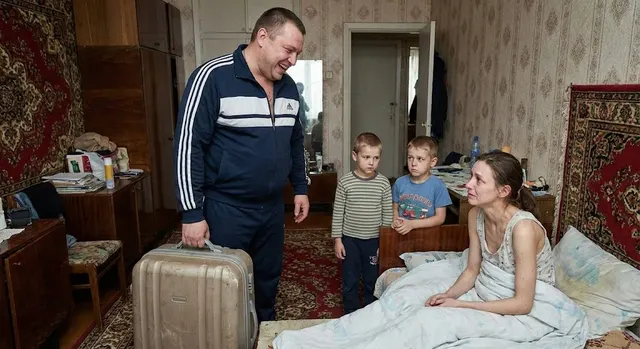
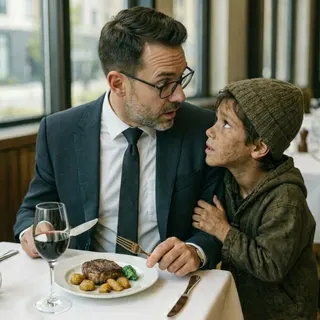
The cottage turned out to be large, but without the ostentatious luxury Taisiya had expected to see from the owner of a construction company. A solid brick house on fifteen acres with pine trees, a wooden terrace, and a swing in the yard. The five-year-old boy ran out to meet them with a joyful shout of "The doctor is here!" and hugged Taisiya's legs so tightly she nearly lost her balance. "Mitya, let the woman through!" Bondar said, but there was a softness in his voice that Taisiya hadn't noticed before. The lunch was simple but delicious. A housekeeper had cooked, but Gordey Alexandrovich set the table himself, arranging the plates with the same concentration he probably used when signing million-dollar contracts.
At the table, he spoke briefly about himself, without unnecessary details, but honestly. His wife had died of cancer three years ago, he was raising his son alone, there were times when he wanted to drop everything and leave, go wherever his eyes would take him, but his child kept him afloat. "I know what that's like," Varvara Rodionovna said quietly, "raising a child alone. My husband passed away ten years ago, Tasya was still in university." After lunch, her mother deliberately went to see the garden with the boy, who was pulling her by the hand towards his strawberry patches, leaving Taisiya and Gordey Alexandrovich alone on the terrace. They were silent for a few minutes, looking at the pine trees, and this silence wasn't heavy, but rather calm, as it is between people who don't need to fill pauses with empty words.
On the way back in the car, Varvara Rodionovna asked, "So, what do you think of him?" "I feel calm with him," Taisiya replied after a pause. "Calm is good. But don't rush into anything, daughter. You've been burned once already." One evening, Bondar arrived with a bag of medicine for Varvara Rodionovna. She had mentioned in his presence that the pharmacy was out of her needed blood pressure pills, and he had remembered the name and dosage. Her mother accepted the medicine but immediately sat him down at the kitchen table with the air of a judge seating a defendant. "What do you want from my daughter?" she asked directly, without beating around the bush. "Are you planning to marry her or just have some fun?"
Gordey Alexandrovich did not look away. "If Taisiya allows it, I would like to be with her. If she's not ready, I will wait. I'll remain a friend, I won't push." "She doesn't need a rich man," Varvara Rodionovna spoke harshly, but without hostility. "She needs someone who won't run away in a difficult moment." "I keep my word," he replied simply. Her mother sighed, looked at her daughter standing in the kitchen doorway, then back at him. "Alright, we'll see. But I'm warning you, my daughter won't trust anyone easily again." A month later, Regina Valeryevna called to request a meeting. Her voice on the phone was quiet, without its former metallic ring, and Taisiya, after some thought, agreed.
They met in a coffee shop near the hospital, a public place, during the daytime, in case her former mother-in-law decided to make a scene. But Regina Valeryevna entered as a different woman, aged, stooped, with a sickly puffiness on her face from her heart problems. There was none of her former arrogance left, only the fatigue of someone who had understood something too late. "I was wrong that day," she said, not looking up from her cup. "Those words should have been said long ago." "Why did you treat me that way?" Taisiya asked calmly. "I was afraid of what the relatives would say, of losing status. I thought, my son is marrying some doctor, not a decent girl from a good family..."
She paused. "When I found out about the surgery, about the Bondar boy, I realized what a stupid thing I had done. If it weren't for you, the child might not have survived. And I was chasing you from the parking lot. How is Arkady?" "Not well," he requested a transfer to Kharkiv. "He blames me for everything. Inna never came back from Ternopil." Regina Valeryevna looked up, and there were tears in her eyes. "I'm not asking for everything to go back to how it was. I'm just asking for forgiveness." Taisiya looked at this woman, who had recently seemed like an unbreakable wall to her, and felt no satisfaction from her tears. She thought of her own mother, of the sleepless nights, of the questions she had asked herself, what she had done wrong.
"I don't hold a grudge," she said finally. "But I haven't forgotten either. I forgive you for my own peace of mind, not so that everything can go back to how it was. Don't look for me anymore, let's each live our own lives." Regina Valeryevna nodded, wiping her eyes with a handkerchief. "Find someone who can appreciate you. You deserve it." Leaving the coffee shop onto the cold Dnipro street, Taisiya felt lighter. She had finally let go of what she had been carrying for too long. Arkady came to say goodbye before his transfer to Kharkiv. Taisiya found him at her mother's gate, thinner, with a suitcase in his car, wearing the same wrinkled jacket as last time.
"I'm leaving," he said. "I wanted to say goodbye properly." Varvara Rodionovna came out onto the porch and looked at him with a long gaze. "Wherever you go, live with a clear conscience and don't hurt people." He turned to Taisiya. "I hope everything goes well for you." "Good luck to you too!" she replied. No tears, no mutual accusations. Just two people who had walked side by side for three years and were now parting forever. When his car disappeared around the bend, Taisiya realized her heart no longer clenched at the sound of his name. The clearest sign that she had truly let him go.
In the spring, Maxim Yuryevich called her into his office and offered her what every surgeon from the regions dreams of: a three-month internship at the Amosov Institute of Cardiovascular Surgery in Kyiv. The research group at the regional hospital had made progress, and Taisiya was appointed to present a report at the All-Ukrainian conference. "Three months in Kyiv," she repeated, not believing her ears. "But what about Mom?" "Ah, decide for yourself!" Abramenko interrupted. "But opportunities like this come once in a lifetime." Varvara Rodionovna reacted predictably. "Go, daughter. I'll manage on my own, I'm not a child. Gordey will look after me if anything happens."
Bondar said it even more simply. "Do what you have to do. I'm not going anywhere." Three months in Kyiv became a test, for herself, for the fragile feeling that had built up between her and Gordey Alexandrovich. He called once a week, without being intrusive, with a simple question, how are things. Everything is fine. His restrained presence at a distance helped her not to feel lonely in a huge, foreign city. She returned to Dnipro, stronger both in her profession and in her understanding of herself. One Saturday morning, a week after her return, Gordey arrived at the house in Amur without warning, without flowers or gifts, just in a clean shirt and with the look of a man who has thought everything through and made a decision.
"I don't want to drag this out," he said directly, standing in the middle of the kitchen. "I don't want you to wonder. I am asking for your consent and Varvara Rodionovna's blessing to become my wife." Taisiya didn't cry, didn't feel overwhelmed. Something inside her just quieted, finally finding its rhythm. Varvara Rodionovna looked at him for a long time, then nodded. "It's my daughter's decision. But I have no objections." "I don't want a big wedding," Taisiya said, "I don't need ostentatious luxury. Just a family where I won't be betrayed." "I give you my word," he replied. The wedding was quiet. A country restaurant near Dnipro, 30 people, warm food, close friends, and colleagues.
Taisiya was in a simple light dress, her mother holding her hand tightly. Among the guests, there was no one who had caused her pain. Gordey Alexandrovich gave a short speech. "I'm not a master of beautiful words, but I promise one thing, to come home every evening." A year later, on the very day Taisiya was supposed to marry Arkady, she was having dinner with Gordey Alexandrovich and her mother in their new home. Varvara Rodionovna had moved in with them; there was plenty of room in the cottage, and now there was someone to look after her. She smiled more often, her health was stable. Mitya called her "Baba Varya" and followed her around like a shadow, demanding bedtime stories.
"A year ago, this day was probably not one of the best," Bondar chuckled at dinner. "If it weren't for that day, I wouldn't be here," Taisiya replied. That night, she went out onto the terrace and looked at the lights of Dnipro in the distance for a long time, thinking about the path she had traveled. If she hadn't gone to the operating room that morning, if she had caved and apologized to the Boyko family, if she had gone back to Arkady out of fear of loneliness, she might have been living a different life, calm on the outside, but empty on the inside. Gordey came out and stood beside her. "What are you thinking about?" "About how one closed door opened another."





Share how the story made you feel
0Comments appear after a quick automatic check. Please no links, ads or personal data.
Next to your name we show your country, determined from your IP address; the address itself is never shown, and only a hashed fingerprint of it is kept to stop spam.