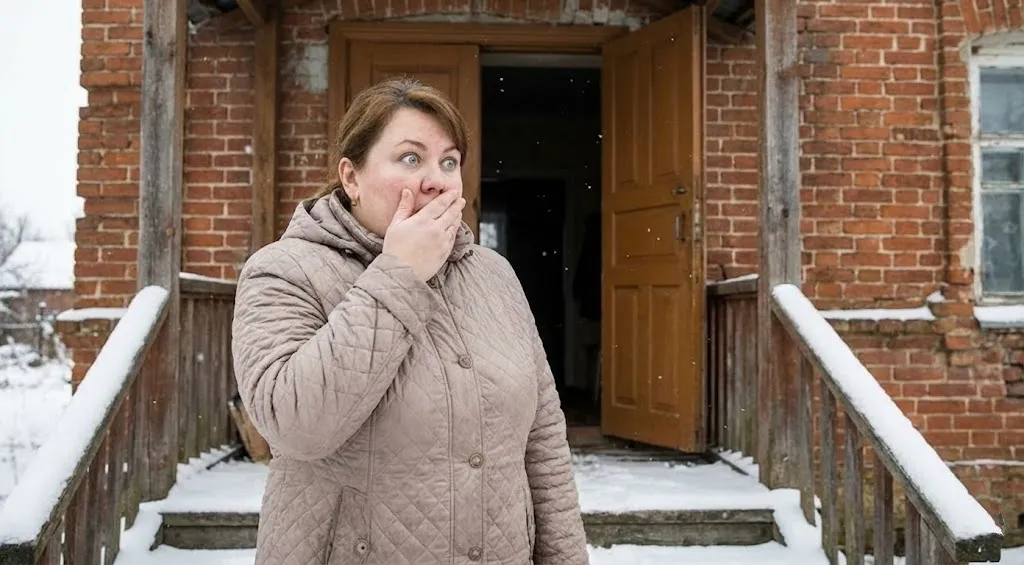
Elena Kravchuk stood in line at the checkout of the local “Produkty” grocery store, clutching a worn-out string bag to her chest. Outside, a blizzard was sweeping the streets; December had been particularly snowy this year. Fifty-eight years old is an age when you no longer run around supermarkets looking for sales, but go to the familiar place near your home where the cashiers know you by name.
Ahead, right at the checkout, a stooped old woman in a faded downy shawl was fumbling. She poured change from a worn-out wallet onto the counter, counting the coins with trembling fingers. On the conveyor belt lay the most modest of purchases: a loaf of bread, a carton of milk, three potatoes, and a small onion.
“Ma’am, you’re short,” said the cashier, Sveta, a young woman with tired eyes. “You’re eighteen hryvnias short.”
“How can that be, dearie?” the old woman muttered in confusion, recounting the coins. “I counted at home, I counted it all.”
Behind Elena, someone sighed in annoyance. The line was growing, people were rushing home from the bad weather. Elena looked at the old woman’s hunched figure, her hands red from the cold, her cheap purchases, and something stirred inside her. How many times had she herself walked past someone else’s sorrow, pretending not to notice? How many times had she turned away so as not to see another’s need? But today, something compelled her to step forward.
“Sveta, ring it up with my things,” Elena said, holding out a two-hundred-ruble bill over the old woman’s shoulder. “I’ll pay.”
“Oh, dear, what are you doing,” the old woman fussed, turning around. “You don’t have to, I’ll just put something back.”
“Don’t worry, ma’am,” Elena smiled warmly. “It’s nothing, not worth mentioning.”
The old woman raised her eyes to her, and Elena involuntarily flinched at their strange, piercing gaze. Her eyes were not old at all: clear, deep, as if they saw right through you, straight into your soul. The woman was small, fragile, her face furrowed with deep wrinkles, but in those eyes shone an extraordinary strength, an ancient wisdom.
“Thank you, my dear,” the old woman said, her voice trembling with gratitude as she gathered her purchases into a worn plaid bag. “Your kindness will not be forgotten. It will be returned to you.”
Elena shrugged, paying for her own groceries: a chicken for soup, vegetables, bread, a couple of cans of food. Victor was leaving on another trip that evening, for a week, maybe ten days. She had to prepare food for his journey and stock up on essentials for herself while he was away.
Thirty-two years of marriage, and all that time she had been seeing him off on his trips, waiting for his return, cooking, washing, cleaning. Life flowed in a familiar groove, monotonous, predictable. She had already picked up her bags, about to leave, when she felt a surprisingly strong touch on the sleeve of her worn coat. The old woman was standing beside her, clutching the fabric with her sinewy fingers so tightly that Elena couldn’t immediately pull away.
“Listen to me carefully, my dear,” she whispered, moving so close that Elena could feel her breath. The old woman smelled of mothballs, dried herbs, and something else elusive, ancient. “When your husband leaves for the night, don’t touch the snow in the yard. Do you hear me? No matter what he tells you, don’t clear it until morning. Let it lie untouched, white.”
“What?” Elena blinked in confusion, trying to understand the strange words. “What snow?”
“Don’t touch the snow until morning,” the old woman repeated slowly, distinctly, as if hammering each word into Elena’s consciousness. Her fingers squeezed the sleeve even tighter, almost painfully. “Promise me. It’s very important. Your life depends on it, believe an old woman.”
“Yes, alright, alright,” Elena agreed mechanically, freeing her arm and involuntarily taking a step back.
Her heart began to beat anxiously; she felt uneasy under that intense, almost hypnotic gaze…