
 Let’s Keep It Real
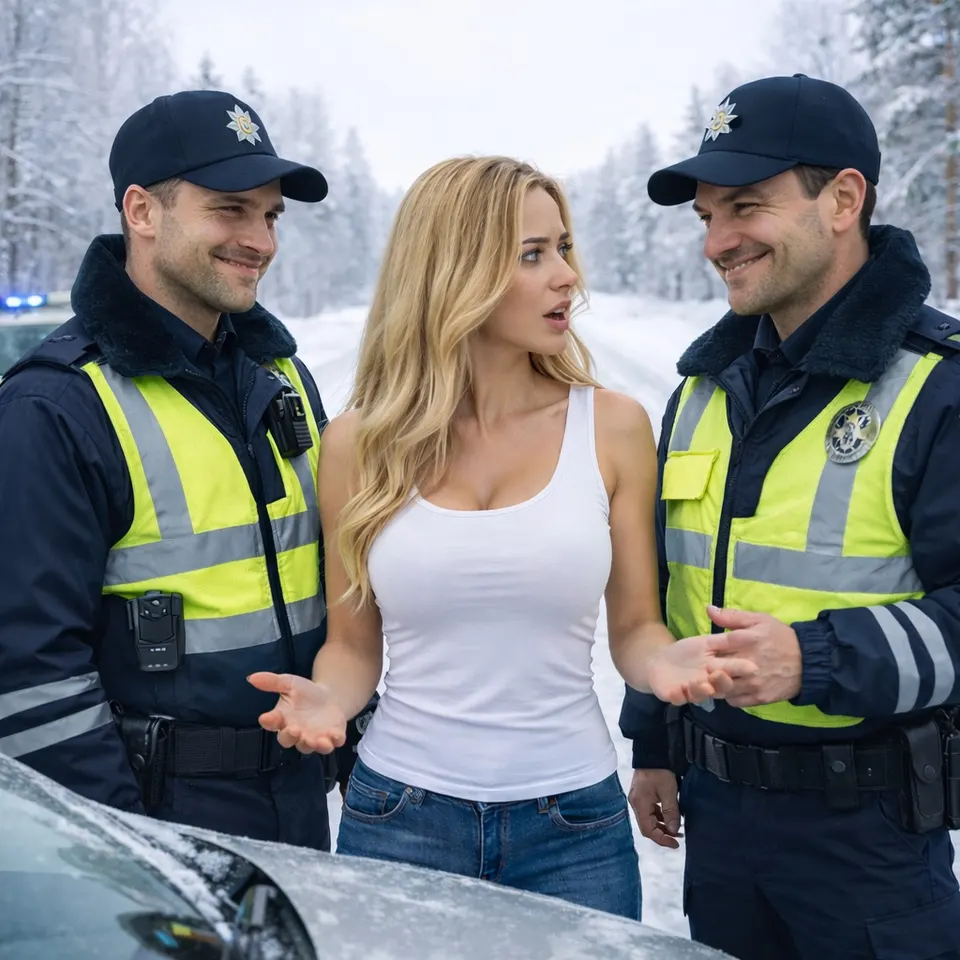
It was well past midnight when a heavy black Chevy Tahoe tore through the darkness along Interstate 81, heading north toward the Virginia state line. Behind the wheel sat thirty-two-year-old Sarah Miller. To the world, she was a quiet professional; to the Department of Defense, she was a Major in an elite military intelligence unit.
Sarah was known for a flawless record and a reputation for finishing every mission, no matter the cost. Her dark hair was pulled back into a tight, practical ponytail, and her sharp gray-green eyes scanned the empty highway illuminated by the Tahoe’s powerful LEDs. She was returning from a high-stakes operation on the coast, the details of which were classified at the highest levels of the Pentagon.
In the passenger seat, tucked inside a tactical bag, was a courier pouch containing documents of immense national security importance. The orders Sarah had received before departure were absolute and uncompromising.
She was strictly forbidden from interacting with anyone, making unnecessary stops, or deviating from her route until she reached the secure facility in Northern Virginia. The digital clock on the dash read 11:47 PM. She was about fifty miles from her destination.
For a brief moment, Sarah allowed herself a shallow breath, relaxing her shoulders and thinking the most dangerous part of the trip was behind her.
At that exact moment, her rearview mirror exploded with the strobe of blue and red lights. Initially, it was just one cruiser, but within seconds, two more joined the formation.
Three patrol cars from a local sheriff’s department boxed her in, aggressively forcing her toward the shoulder. The silence of the night was shattered by the distorted, metallic bark of a loudspeaker. The driver of the black Tahoe was ordered to pull over and kill the engine immediately.
Sarah glanced at the mirror, her mind instantly running through a tactical assessment. Her heart rate climbed, but not from fear—it was the cold, calculated adrenaline of a professional. She didn't know who these men were, and she didn't have the luxury of checking their credentials.
Her standing orders didn't allow for "routine traffic stops." Furthermore, she couldn't call her CO for guidance.
In this remote stretch of the Appalachians, cell service was non-existent, and using a satellite phone in front of local law enforcement would be a massive breach of security protocol. Major Miller made a decision in a fraction of a second.
She floored the accelerator. The Tahoe’s V8 roared as the heavy SUV surged forward, disappearing into the blackness of the mountain pass. Thus began a high-speed pursuit that the locals would be talking about for years to come.
The three patrol cars—two Ford Explorers and a Dodge Charger—gave chase. The wail of their sirens echoed through the sleeping valley.
The lead car was driven by Sergeant Bill Vance, a forty-year-old with a reputation for being a "highway pirate." He was a man with a heavy jaw and a mean streak, who viewed his badge as a license to bully anyone who crossed his county line.
In the second car was Deputy Mark Dixon, a man whose personnel file was thick with complaints about "excessive force" and "unprofessional conduct." He enjoyed the power trip of the badge a little too much.
The third car was manned by Tyler Reed, a twenty-eight-year-old rookie who did whatever the older guys told him to do without asking questions. These three weren't just a patrol unit; they were a crew.
They had turned this stretch of the interstate into a personal ATM, shaking down out-of-state drivers for "cash bonds" to avoid trumped-up charges. This night was supposed to be another easy score.
But the woman in the Tahoe wasn't following the script. Sarah handled the heavy vehicle with surgical precision, using the curves of the mountain road to her advantage.
She knew this road; she had memorized the topography before the mission. She used the Tahoe’s weight to hold the line on sharp turns, the speedometer needle hovering between 100 and 115 mph. The SUV’s suspension soaked up the uneven pavement, but the deputies were relentless.
Vance was screaming into his radio, his face turning a deep shade of purple. No one ignored his lights. No one ran from him.
He radioed ahead to a stationary checkpoint near the county line, ordering them to deploy a spike strip. He wanted this "bitch" stopped at any cost. Twenty miles of high-speed chaos passed in a blur of burning rubber and screaming engines.
Up ahead, Sarah saw the flashing lights of the roadblock. The trap was closing. Two more cruisers were parked across the lanes, and a dark line—the spike strip—was stretched across the asphalt. She had seconds to choose. Going off-road at 100 mph into the trees was a death sentence.
Turning around was impossible. She tried to thread the needle by dipping onto the gravel shoulder, but the deputies had anticipated the move. Four sharp pops rang out as the hollow steel spikes shredded her heavy-duty tires.
The Tahoe bucked and swayed as the rims ground into the pavement. Sarah fought the steering wheel, managing to bring the vehicle to a controlled stop in the ditch rather than flipping it. A thick cloud of dust and acrid smoke enveloped the SUV. For a moment, there was only the sound of ticking metal and hissing air. Then, the sound of heavy boots on gravel.
The three patrol cars formed a semi-circle around the disabled Tahoe, their high beams blinding Sarah. Vance, Dixon, and Reed stepped out, weapons drawn. Vance, his voice shaking with rage, ordered her out of the vehicle with her hands up.
Two more deputies from the roadblock joined them, five armed men against one woman. Sarah sat perfectly still, her hands on the wheel. She was processing the tactical reality: five shooters, no exit, and a mission-critical folder in the seat next to her.
She knew dozens of ways to disable a man, but those techniques required an opening. Right now, she needed to survive to protect the documents. She slowly raised her hands. When she stepped out of the Tahoe, her face was a mask of cold stone. The contrast between her slight frame and the aura of command she projected made the deputies hesitate for a heartbeat. Vance stepped forward, his boots crunching on the glass.
He loomed over her, smelling of stale coffee and cheap cigarettes. He asked her if she thought she was special, his eyes roaming over her in a way that made her skin crawl. Dixon and Reed flanked her, blocking any path to the woods. Sarah reached into her pocket, pulled out her military ID, and held it out firmly.
She identified herself as Major Miller, Army Intelligence, on a secure mission. She demanded they contact her commanding officer immediately. Her voice was level, devoid of the panic they expected. But Vance didn't even look at the ID. He backhanded it out of her hand, sending the silver and green card fluttering into the mud.
He told her he didn't care if she was the Secretary of Defense. He accused her of felony evasion, assault with a deadly weapon (the car), and resisting arrest. He told her she was looking at ten years in a state facility. He turned to his buddies, laughing, calling her a "high-and-mighty fed." Dixon stepped closer, his eyes lingering on her.
He made a comment about how they "didn't get many pretty ones" out here. Reed chuckled nervously. The air was thick with a predatory energy. Sarah realized this wasn't a legal proceeding; it was a kidnapping by men with badges. But she also knew something they didn't: they had just picked a fight with a woman trained to dismantle people like them.
Vance didn't bother with the Miranda rights. He grabbed Sarah by the shoulder and slammed her against the hot hood of the Tahoe. The metal burned her cheek. He yanked her arms behind her back, ratcheting the handcuffs so tight they cut into her wrists. It wasn't about security; it was about pain.
Sarah had been through SERE (Survival, Evasion, Resistance, and Escape) training. She knew how to compartmentalize physical pain. But the violation of her dignity was a debt she began to record in her mind. Meanwhile, Dixon was tossing the interior of the Tahoe. He threw her personal gear—a change of clothes, a book, her shaving kit—into the dirt.
He stepped on her book with a muddy boot while searching for the "good stuff." Vance told him to find the documents. Reed searched the trunk, tossing her spare tire aside. Sarah watched everything. She memorized their badge numbers, the way Vance squinted, the scar on Dixon’s hand. She was a professional observer, and right now, she was building a file.
Vance grabbed her by the hair, pulling her head back. He hissed in her ear that her "uniform" wouldn't save her here. He told her this was his county, and he was the only law that mattered. The pain was sharp, but Sarah didn't make a sound. She just looked him in the eye with a gaze so cold it should have warned him. But Vance was too arrogant to see it.
Dixon finally found the courier pouch. He held up the classified folder like a trophy. Vance snatched it, flipping through pages he didn't have the clearance to see. He mocked the "top secret" stamps, calling them "government gibberish."
Sarah warned them that those documents were a matter of national security. Vance just laughed, a harsh, braying sound. He said the only "security" he cared about was making sure she learned her lesson. Reed pulled out his phone and started filming her, mocking her disheveled appearance for his own amusement.
Dixon walked up and ran a greasy finger down her cheek, "cleaning" off the dust. It was a slow, insulting gesture. Sarah jerked her head away, her eyes flashing with a fury that made Dixon flinch for a second. He recovered by gripping her chin hard enough to leave bruises, telling her to "be a good girl."
The two deputies from the roadblock, sensing things were going south, quietly retreated to their cars. they didn't want to be witnesses, but they weren't going to stop it. That was the "thin blue line" in this county.
Major Miller calculated her odds. Three armed men, her hands bound. If she moved now, the documents might be destroyed in the scuffle. She had to wait. She forced her muscles to relax, suppressing the urge to break Dixon's windpipe. Vance ordered them to take her to the "substation"—a remote, unofficial building they used for "special" cases.
They shoved her into the back of Vance’s cruiser. Dixon sat next to her, crowding her space, his leg pressed against hers. Reed sat in the front, still filming. Vance pulled away, leaving the Tahoe abandoned on the shoulder. Dixon leaned in, whispering that they were going to "take real good care" of her.
His hand moved to her knee, sliding up her thigh. Sarah clenched her jaw so hard her teeth creaked. She told herself: *Not yet. Wait for the opening.* The drive to the substation took forty minutes. Forty minutes of Dixon’s wandering hands and Reed’s crude jokes.
By the time they reached the small, dilapidated brick building in the woods, Sarah had a mental map of the route and a list of every crime they had committed. The substation smelled of mold and old tobacco. Vance led her through a side door, bypassing any official desk.
They threw her into a small interrogation room with no windows. A single buzzing fluorescent light flickered overhead. Vance threw some paperwork on the table and left, telling the other two to "keep an eye on the Major." The door slammed shut.
Dixon sat on the edge of the table, his knees inches from hers. Reed leaned against the wall, his phone still out. The silence was heavy. Dixon told her he liked her "tough girl" act, saying it made things more interesting. He reached out to unbutton her tactical shirt, "to see if she was hiding any more weapons."
Vance walked back in, carrying the classified folder. He had left it in the car, but now he tossed it on the table. He started listing charges: speeding, reckless driving, assaulting an officer. He told her she’d be lucky to see the sun again in ten years. Sarah sat in total silence, her face unreadable.
Vance blew cigarette smoke in her face, describing how "pretty girls" like her fared in the state penitentiary. Dixon, standing behind her, began rubbing her shoulders, his fingers dipping toward her chest. He suggested there was a "way out" of this if she was "cooperative."
Sarah finally spoke. Her voice was low and calm. She told them they were making a mistake that would end their lives as they knew them. She gave them one chance to walk away. The room erupted in laughter. They thought it was hilarious—a handcuffed woman threatening three armed men.
Vance stopped laughing and backhanded her across the face. Her head snapped to the side, a trail of blood appearing on her lip. He grabbed her by the hair and told her she was "nothing." He ripped the top two buttons off her shirt. Dixon cheered, and Reed kept filming.
Inside Sarah, the "Major" took a backseat to the "Operator." The adrenaline was a cold fire. Vance decided to put her in the holding cell in the basement for a few hours to "cool off" before they "really got started." He told Dixon to take her down and remove the cuffs—he didn't want marks on her wrists that couldn't be explained as "resisting."
Dixon led her down a dark flight of stairs to a damp, concrete cell. He unlocked the cuffs with a smirk, telling her he’d be back in an hour for a "private session." He slammed the barred door and left. Sarah sat on the thin, moldy mattress, closed her eyes, and visualized the building's layout. She waited.
Two hours later, the door at the top of the stairs opened. It wasn't Dixon; it was the rookie, Reed. He had been drinking, and he thought he’d get a head start on the others. He opened the cell door, a leering grin on his face. As he reached for her, Sarah moved like a blur. She caught his wrist, used his own momentum to slam him into the concrete wall, and applied a sleeper hold. In ten seconds, he was out.
She stripped him of his keys, his Glock 17, and his phone. She zip-tied him to the bed frame using his own gear and gagged him. She moved up the stairs like a ghost. In the breakroom, Vance and Dixon were finishing a bottle of bourbon. Sarah didn't burst in; she knocked.
Vance opened the door, expecting Reed. Instead, he found the business end of a Glock. Before he could shout, Sarah drove the grip of the pistol into his nose, shattering the bone. He hit the floor, clutching his face. Dixon lunged for his holster, but Sarah was faster. A front kick to his solar plexus folded him, and a follow-up knee to the temple ended the fight.
It was over in six seconds. Sarah stood over them, her breathing steady. She didn't kill them—that would be too easy. She cuffed them to the heavy radiator pipes. She went into the office, retrieved her classified folder, and found the keys to an unmarked Ford Taurus in the lot.
She looked at Vance, who was sobbing through a broken nose. She told him, "I told you I was a Major. You should have listened." She took their phones—the ones with the videos of the assault—and vanished into the night. She knew the local police would be looking for her, so she ditched the car in a neighboring county and hiked ten miles to a safe house.
She contacted her CO, Colonel Miller (no relation), and laid out the situation. The "official" story in the news was that a dangerous fugitive had attacked three deputies. The local Sheriff was calling for her head. Sarah stayed underground, waiting for the military's legal team to move.
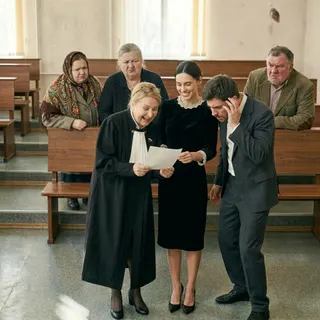
When she was eventually "captured" at a bus station in Roanoke, it was a media circus. The local DA wanted the death penalty. Sarah sat through the preliminary hearings with that same stone-cold expression. Vance and Dixon sat in the front row, wearing neck braces and looking like victims. The judge, a friend of the Sheriff, sentenced her to three years pending a full trial.
She spent thirty days in a regional jail. She didn't complain. She didn't fight. She just waited. Behind the scenes, the Pentagon was playing hardball. They had the videos from Reed’s phone, which Sarah had uploaded to a secure server before her "arrest." They had the Tahoe’s dashcam footage. They had everything.
On the thirty-first day, the cell door opened. It wasn't a guard; it was a JAG officer and a US Marshal. All charges were dropped. The "Major" was back. But Sarah wasn't finished. She didn't want a settlement; she wanted a scorched-earth policy.
She spent her leave time systematically dismantling them. She didn't use a gun; she used the truth. She sent the videos of the assault to Vance’s wife, a Sunday school teacher. She sent the records of their "highway shakedowns" to the IRS and the FBI. She leaked Dixon’s history of violence to the local paper.
Within a month, Vance’s wife had filed for divorce and taken the house. Dixon was indicted on federal civil rights charges. Reed, the rookie, turned state's evidence to avoid prison. They were ruined—financially, socially, and legally.
Sarah paid one last visit to the county. She found Vance sitting on a bench outside the courthouse, looking like a ghost of the man he used to be. She didn't say a word. She just walked past him, dropped a single silver Major’s rank insignia at his feet, and kept walking.
The aftermath was a total purge of the local department. The Sheriff resigned, and the "highway pirates" were a thing of the past. Sarah returned to her unit, but the fire for the "game" had dimmed. She had seen the worst of her own country on that dark road.
A year later, Sarah retired from the Army. She bought a small cabin in the Blue Ridge Mountains, not far from where it all happened, but far enough to be at peace. She spent her days hiking and her nights reading by the fire.
Sometimes, locals would see a fit, quiet woman in the grocery store and wonder about the gray-green eyes that seemed to see right through them. They didn't know her name, but they knew the legend of the woman who broke the "untouchable" deputies.










Share how the story made you feel
0Comments appear after a quick automatic check. Please no links, ads or personal data.
Next to your name we show your country, determined from your IP address; the address itself is never shown, and only a hashed fingerprint of it is kept to stop spam.