
 Let’s Keep It Real
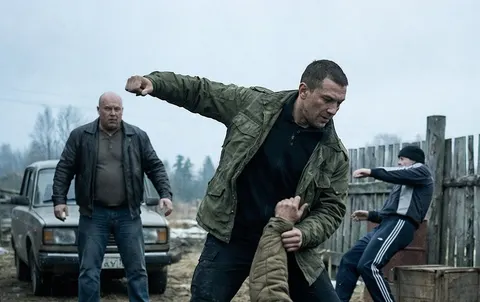
The skinny one pulled out his phone. “That’s him. Same scar too.” The big one shoved Michael in the shoulder.
The bag hit the pavement. “What’s the matter, tough guy?” Michael bent down, picked up the bag, and said nothing.
The short one spat near his shoes. “Heard you got wrecked inside. Guess that’s your life out here too.” The skinny one kept recording.
The short one spat in his face, the big one shoved him in the chest. Michael stood there and memorized everything. Faces, voices, the way they moved, the way they hit—everything that might matter later.
After five minutes they got bored. “Get lost, loser. And don’t let us see you again.” They walked off laughing.
Michael picked up his bag, checked to make sure his father’s photo was still there, and lit a cigarette. His hands didn’t shake. Half an hour later, a black SUV pulled up.
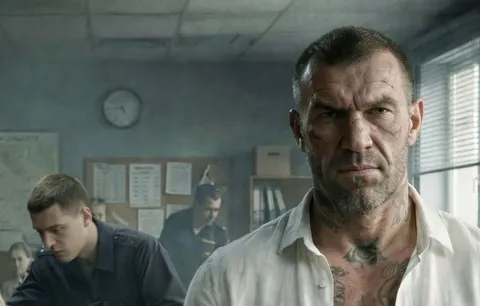
George Gray stepped out. Forty-five years old, scar through one eyebrow, gold watch. The man who ran things across the region.
George hugged Michael. “You’re out, brother. Ten years is no joke.”
Then he noticed the red mark on Michael’s face. “Who touched you? Tell me.” “Nothing. Just nonsense.”
George told his driver, Stan, to find out who had been hanging around the gate. Ten minutes later, the answer came back. “Gus, Tank, and Lenny,” George said, furious.
“Low-level trash using Paul Rostov’s name. Rostov’s been in Montenegro for two years, and these clowns are collecting protection money under his banner.” “Why haven’t you dealt with them?”
“Gus is the nephew of an assistant police chief. If I move on them, it gets loud, and Rostov might take it the wrong way. But if they laid hands on you, say the word and they’re gone by morning.”
Michael shook his head. “No. I’ll handle it.”
“How exactly? This doesn’t end clean.” “I’ve got my own way. Stay out of it.”
George was quiet for a moment, then nodded. “All right. But if you change your mind, call me.” The SUV rolled into Michael’s old neighborhood.
Peeling apartment buildings, a broken playground, a dirty courtyard. George stopped by the second entrance. “Your dad’s place. Hang in there, brother.”
Michael climbed to the fourth floor. The stairwell smelled damp, the walls were covered in graffiti. Apartment 32.
The key had been passed along a month earlier through the prison administration by an old neighbor named Mr. Grayson. Inside, the place was empty and dusty. Old furniture. Faded wallpaper.
Photos still hung on the walls. Michael as a boy. His father still young. It all felt like somebody else’s life.
That evening there was a knock at the door. Mr. Grayson stood there—sixty, rough hands, tired face. “Come on, Mike. Let’s have some tea.”
Share how the story made you feel
0Comments appear after a quick automatic check. Please no links, ads or personal data.
Next to your name we show your country, determined from your IP address; the address itself is never shown, and only a hashed fingerprint of it is kept to stop spam.