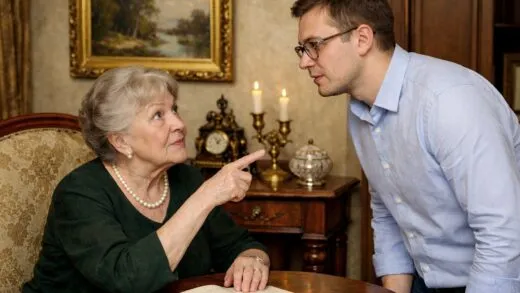
“I’m not responsible for how long you live,” she said bluntly. Her words cut deeper than Eleanor expected. Natalie spoke of death as an inconvenient delay—one she did not plan to honor.
Her wedding was imminent; she did not want to wait. In her view, youth entitled her to immediate comfort. There was no room in her plan for a frail relative who made demands on space or patience.
Eleanor’s hands trembled as she said softly that she had nowhere to go. Her connections were local—this neighborhood, this building, this granddaughter—and now that safety felt fragile.
Natalie popped a bubble of gum and let it burst loudly. Her behavior emphasized her indifference; she was unmoved by Eleanor’s distress.
She suggested, without much irony, that her grandmother consider a nursing facility. Professionals there would be better equipped to care for someone in Eleanor’s condition, Natalie said, and the apartment could be set up for the young couple.
Eleanor folded her fingers together and tried to find words that might reach the young woman who’d once been a child she had raised. She talked about the small things they’d shared—sore nights, school plays, sick days—hoping to reconnect Natalie to a quieter sense of obligation.
But Natalie saw those memories as manipulative and asked her not to play on her emotions. Her impatience was more than an attitude; it was a refusal to accept being questioned.
Unexpectedly, Eleanor’s voice hardened. She refused to leave. For the first time in many years, she felt a firm edge to her resolve. Leaving would feel like giving up the last bit of dignity she had left.
“This is my home,” she said. “I’ve paid for it with more than money. I will stay.” Her words were calm—neither defiant showmanship nor theatrical pleading—but they were firm and honest.
Natalie scoffed at the thought of death, as if it were an abstract inconvenience she could ignore. She disliked anything that reminded her of age or decline.