
 Let’s Keep It Real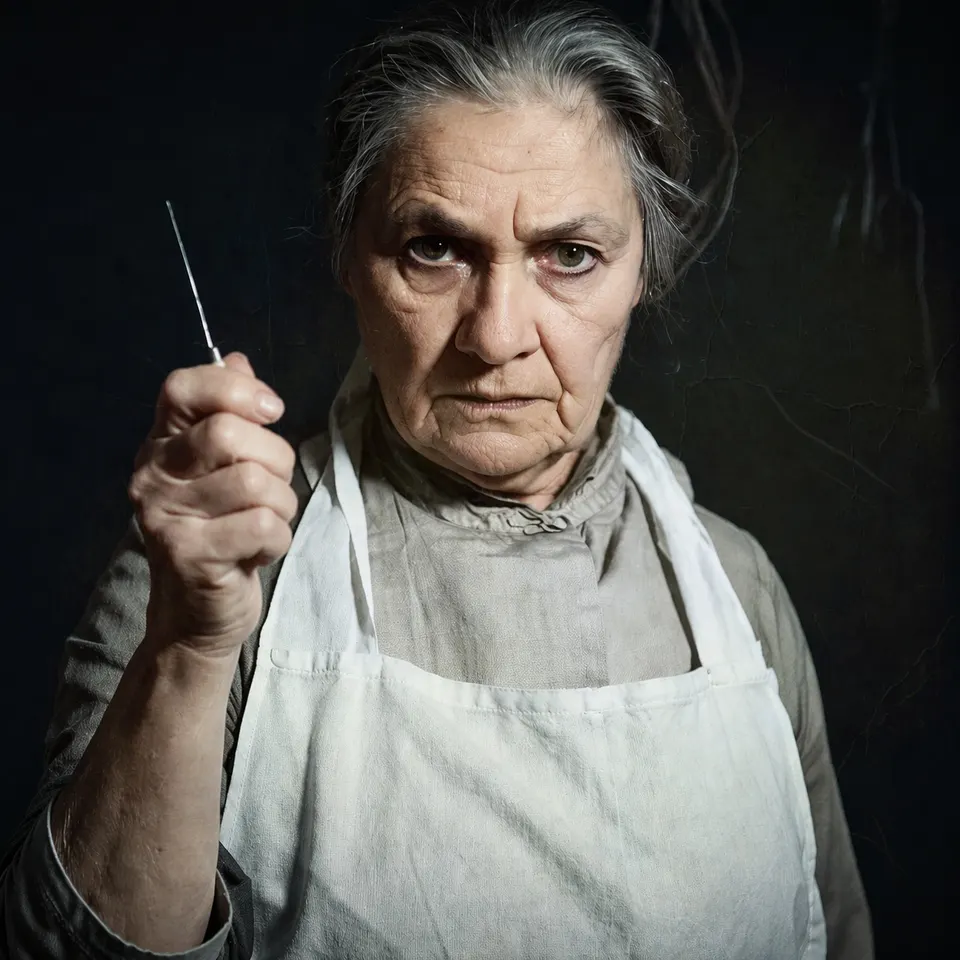
He didn’t wake up because of pain. Not yet. The novocaine was still doing its job. He woke to something else—the cold, unmistakable metallic clink of steel against the rim of an enamel tray.
Fall, 1952. A forgotten basement beneath an abandoned boiler house in a locked-down factory town somewhere in Appalachia. The young man strapped tight to an old discarded operating table was Victor Rankin, son of the local party boss—the golden boy, the kind of kid who had always figured life would clear a path for him.
Just the day before, he’d been drinking expensive brandy, laughing loud, sure the whole world belonged to him. He’d believed his last name was armor, something no law and no decent person would dare challenge. But now he stared, sick with animal fear, into the eyes of the woman leaning over him.
Her hands were steady. Her eyes held no rage. That was the worst part. What he saw there was colder than hatred—professional focus. She held the scalpel with the easy confidence of someone who had used it a thousand times.
The woman bent close to his ear and whispered the words that made his insides drop. “Don’t move, Victor. I know anatomy better than you know your times tables. One wrong twitch and I hit the femoral artery.”
“You’d bleed out in three minutes. And I need you alive. Alive, and able to remember.” Victor tried to scream, but the gag packed in his mouth swallowed the sound.
Then he felt the cold touch of steel low on his abdomen and understood what was about to happen. In five minutes, he would never again be the man he had always assumed he was. So how did an ordinary hospital orderly—a quiet woman from the morgue—become the worst nightmare of the town’s privileged sons?
Why did the police, even when they had a pretty good idea who was behind it, hesitate to lay a hand on her? And was it true that her revenge was carried out with such clinical precision that even seasoned detectives had to step outside for air at the crime scenes? This is the story of what can happen when the law shields predators instead of the people they hurt.
To understand how a person crosses into that kind of cold violence, you have to look back. Antonia Parker was not the plain, worn-out neighbor people took her for. Around town, everybody knew her simply as Toni from the morgue.
She was forty-five, though hard years made her look closer to sixty. Thin, tough, all tendon and bone, with hands permanently stained by bleach and hard work. Her job was the kind nobody wanted—washing bodies, stitching them after autopsy, cleaning what was left behind on the steel tables.
Local troublemakers gave her a wide berth. She carried that funeral-home chill with her, along with the smell of formalin and disinfectant. But almost nobody knew who she had been before that. In 1942, she had been the head operating-room nurse in a field hospital near the front.
For days at a time, with no sleep and bombs falling nearby, Antonia stood at the table. She saw the kind of injuries war movies leave out: limbs torn away, flesh shredded beyond recognition, gangrene spreading through what was left.
And sometimes, when the surgeons dropped from exhaustion, she took the scalpel herself. She cut fast, clean, and without panic. She knew how to separate dead tissue from living tissue if it meant saving the patient.











Share how the story made you feel
0Comments appear after a quick automatic check. Please no links, ads or personal data.
Next to your name we show your country, determined from your IP address; the address itself is never shown, and only a hashed fingerprint of it is kept to stop spam.