
 Let’s Keep It Real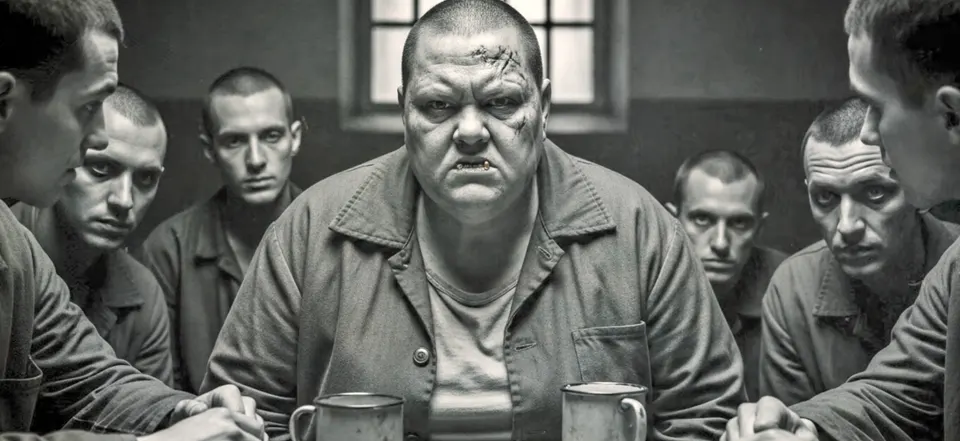
October 1947. The northern mountains. A forest that seems to go on forever.
A prison train with barred windows eases to a stop on a side track. The clang of couplers, the hiss of steam, and the barking of German shepherds tear through the frozen quiet. Women are marched off the cars.
These aren’t just inmates. This is a special transfer group. Everything is mixed together here: wartime collaborators, thieves, killers, and women who landed here through plain bad luck.
One figure stands out from the sea of gray coats and headscarves—Katherine Melnik, called Katya. She’s only 29, but her eyes look decades older. Cold, empty, and familiar with more death than the whole escort detail put together.
She carries herself differently from the others. Back straight. Eyes sharp, scanning the perimeter. It’s a habit no rifle butt, no cellblock, no sentence can beat out of her.
Katya steps down from the railcar into mud mixed with snow. The cold cuts straight to the bone, but she doesn’t even flinch. She wears an old field blouse with the insignia ripped off, covered by a prison coat two sizes too big.
Six months earlier, that blouse had carried a combat medal and a citation for valor. Now there are only grease stains and torn threads where the decorations used to be. May 1945. Victory at last.
The enemy capital has fallen, everyone is celebrating, and the air smells like lilacs and gunpowder. Staff Sergeant Melnik is heading back to regimental headquarters to turn in paperwork before discharge. She has 43 confirmed kills.
Forty-three enemy officers and machine gunners who will never fire another shot. She’s respected. Decorated. A war hero. Then, in a hallway at headquarters, Major Ryabov from supply cuts her off.
This rear-echelon officer spent the war sitting on crates of canned meat while Katya lay in swamp water for days at a time waiting for a clean shot. Ryabov is drunk and convinced the war excuses everything. He drags her into an office, tries to tear open her blouse, muttering about celebration and “a little gratitude.”
Katya doesn’t scream. Doesn’t cry. Doesn’t call for help. She reacts on instinct. Palm strike to the jaw. Knee to the groin.
Major Ryabov drops like a sack of feed, taking an expensive captured chair down with him. Result: a double fracture of the major’s jaw, and a military tribunal for Sergeant Melnik. The hearing is quick.
No one wants to hear about attempted rape. A victorious officer is considered untouchable. The testimony of a drunk supply major outweighs the word of a sniper. Sentence: eight years in a labor camp for assault and serious bodily injury.
Then comes the stripping of rank and medals. Just like that, Katya Melnik, the division’s best shot, becomes inmate number CX-402. And now she’s here, at Women’s Corrective Labor Colony No. 12.
The heavy wooden door of the quarantine barracks slams shut behind her, cutting off the bitter air. Inside is the stale smell of unwashed bodies, damp clothes, and cheap tobacco. There are forty women in quarantine, and the bunks are stacked three high.
There aren’t enough beds for everyone, so some sit on the floor. Katya walks to the back of the barracks. She knows the first rule of any war: take the best position you can.
She doesn’t choose a spot by the stove, where people fight nonstop over heat, and not by the door, where the draft cuts through everything. She finds a corner with a clear view of the whole room. She takes off her pack and puts it under her head.
She hasn’t slept in three days during transport, but no one lets her rest. In the center of the barracks, at the best spots near the table, sits a group of women. The criminals. The local management.
In the middle is a big, heavy woman with a pockmarked face and a gold tooth. Her name is Zoya, called Lute. Second sentence. Armed robbery. She runs this barracks with fear and habit.
Beside her are two enforcers—thin, mean women ready to jump whoever Lute points at. Lute noticed the new arrival right away. Too proud. Too clean. Too straight-backed.
Women like that don’t last long in a place like this. They get broken early so everyone else gets the message. “Hey, soldier girl.” Lute’s voice creaks like an old wagon wheel. The whole barracks goes quiet. Women tuck their heads down.
The show is starting. Katya slowly opens her eyes but doesn’t stand. “You deaf?” Lute gets up and walks to Katya’s bunk.
Her two helpers trail behind her like shadows. “I’m talking to you. Those boots look awfully nice. Officer boots?”
And they are nice boots—captured leather, fitted right to her feet. The kind you could cross half a continent in without tearing up your heels. In camp, boots like that are currency. Boots like that keep you alive.
In state-issued junk, your feet rot in a month. “Take them off,” Lute says, spitting sunflower seed shells right onto Katya’s boot. “I need them more. You can wrap your feet in rags.”
The barracks goes dead quiet. The only sound is wood snapping in the little iron stove. Everyone watches Katya, waiting to see how this ends.
If she gives them up, she’s marked as prey and will be robbed and humiliated for the rest of her sentence. If she refuses, she could get a sharpened spoon in the ribs. Katya slowly sits up.
She looks at Lute not from below, like a victim, but straight at the bridge of her nose, the way she’d look through a sight. Distance: three feet. Three opponents. Lute probably has a shiv in her sleeve. The woman on the left is holding a heavy mug.
The one on the right is there for numbers. “I said take them off, you little—” Lute loses patience and reaches for Katya’s collar. Katya moves almost too fast to see.
She catches Lute’s wrist and twists it hard in the wrong direction. At the same time, she chops the side of her hand into Lute’s neck. Short. Dry. Efficient.
Lute chokes, eyes bulging. She drops to the floor clutching her throat, unable to pull in air. The two helpers rush forward, but Katya is already on her feet.
She sweeps one woman’s legs out and sends her face-first into the corner of an iron bunk. The other freezes when she sees Katya’s expression. There’s no rage in it. Just cold math.
The look of someone who killed for a living, every day, the way other people punched a clock. “These are my boots,” Katya says quietly but clearly. Her voice is calm, a little rough.
“Come at me again and I’ll crush your windpipe. Understood?” Lute wheezes on the floor and gives a shaky nod. The authority she built over years of fear and violence has just taken a hit. Not destroyed. But shaken.
And women like her don’t forgive that. She’ll back off for now, but tonight there’ll be payback. Katya sits back down on the bunk. The adrenaline barely registers.
To her, that wasn’t a fight. It was a small tactical problem. She understands one thing clearly: no sleeping now. The next move will come from behind. In the corner of the barracks, an older woman with an intelligent face has been watching.
Her name is Vera Pavlovna, a former literature teacher sent here for reading banned poets to her students. She quietly makes the sign of the cross. She’s seen plenty of women try to stand up to Lute.
Usually they’re carried out feet first within a week. But this new one is different. Death seems to hang around her like cold air.
Katya pulls a small piece of sugar from her pocket. It’s all she has left from the transport ration. She puts it in her mouth and lets it dissolve slowly.
She needs the glucose to keep her head clear. She passed the first test. But that was only the beginning. Next comes work assignment.
If she thinks the worst thing in this camp is the criminal women in the barracks, she’s wrong. The worst thing here is the security chief, Captain Ivashin. Stories about his cruelty travel well beyond the camp fence.
Tomorrow they’ll meet. The night in quarantine is tense. Katya dozes in fifteen-minute stretches, waking at every creak in the floorboards.
Lute and her crew whisper in their corner, shooting Katya ugly looks. They didn’t attack tonight, which means they’re planning something bigger—or they’re scared. Fear is a useful tool, and Katya knows how to use it.
Morning begins with metal struck against metal. Wake-up. Roll call. Count. Breakfast is a bowl of cloudy slop and a chunk of black bread hard as dirt.
Then they’re lined up in the yard. Twenty below zero. Wind sharp enough to knock the breath out of you. In front of the formation walks the camp commander himself, Captain Ivashin.
Tall. Trim. Great coat fitted perfectly. Handsome face, but somehow lifeless, like a department-store mannequin. He loves order. And he loves breaking people.
“New arrivals,” his voice carries across the yard without effort. “Forget who you were on the outside. Here, you are nothing. Dirt under my boots.”
“Your job is to work off your debt to the state. Trees don’t cut themselves.” Ivashin walks down the line, studying faces.
He stops in front of Katya. He notices the bruise under Lute’s eye—the result of her recent “fall.” Then he looks at Katya’s straight back and unbroken stare.
“Name,” he says. “Melnik,” Katya answers evenly. “Rank. Charge.”
“Former staff sergeant. Article 193.” Ivashin gives a crooked smile.












Share how the story made you feel
0Comments appear after a quick automatic check. Please no links, ads or personal data.
Next to your name we show your country, determined from your IP address; the address itself is never shown, and only a hashed fingerprint of it is kept to stop spam.