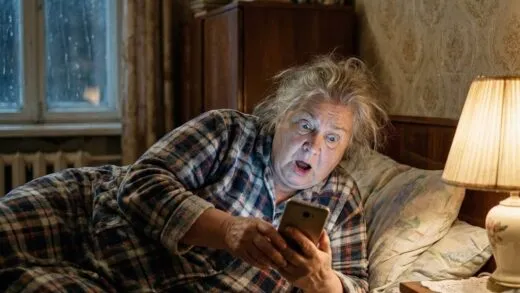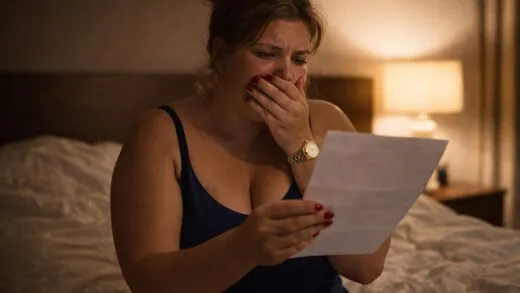

Susan began to wail about her “abandoned, unprepared son,” demanding Eleanor come back and take care of him. Eleanor’s reply was simple: take care of it yourselves. She said she was done and walked out, pushing past her stunned husband and walking into the hall—leaving Susan speechless.
From the hallway came the mercenary question: who would pay the utilities now? Eleanor pointed out that the bills should be paid by the people living in the apartment, especially since she wasn’t on the lease. Susan launched into accusations that Eleanor only wanted their property.
Susan sneered that she and her son had no intention of putting a small-town woman on the lease and risk their investment. Eleanor said a brief goodbye and left the inhospitable home for good.
She felt her strength leaving her by the second; the walk to the stairwell seemed endless. By the time she reached the sidewalk the heavy duffel and the notebook-filled grocery bag felt like lead. Her legs shook from the day’s work.
She made it to a nearby bus shelter and collapsed onto the bench. Eleanor had nothing left to do but wait.
Her eyes closed, and she fell asleep right on the bench. At that moment, Evan was driving back after a productive day—he was feeling quietly pleased with himself.
His veterinary clinic had finally become profitable. Caring for animals had been his passion since he was a kid, and the neighborhood knew him as someone who could calm a nervous dog or diagnose a sick cat. For five years his reputation had grown, and clients were increasingly suggesting he open his own practice. About six months earlier his mother had surprised him with a serious talk.
She handed him a sum of money she’d been saving and suggested he use it to open a clinic. Evan had been taken aback. He had assumed the family savings were tied up in the house, the lake house and his tuition. It turned out his mother had quietly put money aside for years.
Evan wanted to refuse—he didn’t want to take his mother’s nest egg. Susan had played down the idea of a gift and framed it as a loan. That conversation eventually convinced him to take the leap.
That evening, with payroll handled and the clinic in the black, Evan tucked a little cash into an envelope for his mother. He was content; the numbers were finally turning the right way. On his way home a dog darted into the street and he braked hard. The dog ran off.
After the scare he noticed a woman asleep on a bus bench, clutching a bag and a heavy duffel. Her clothes didn’t look like someone living on the street, which worried him—falling temperatures and late-night streets can be dangerous. Evan walked over and checked on her.
She barely opened her eyes, then drifted back to sleep. He lifted her carefully and carried her to his car. The next thing she knew she was in a warm house, and then her consciousness blurred again.
Margaret, Evan’s mother, watched with a mixture of surprise and concern as her son carried an unfamiliar woman into the living room. Evan set her down gently on the couch and went back outside for her things. Margaret, who’d been wiping dirt from the floor, shook her head and carried cups of hot tea in.
In the kitchen she asked who the woman was. Evan explained he’d found her at the bus stop and had called Greg, an old friend who worked as a physician. He insisted the woman looked decent—she had school notebooks in her bag—so he couldn’t just leave her out in the cold.
Margaret nodded approvingly and made tea. She believed in helping people when they were down on their luck; you never knew when a hand could make the difference.
About half an hour later Greg arrived. He did a basic check and took her temperature. The verdict was encouraging: no signs of infection or a heart problem. She was simply exhausted.
Greg gave her a mild sedative to help her sleep and left instructions for fluids and rest. When Eleanor finally opened her eyes she was in a bright, clean room that smelled faintly of baking and disinfectant.