
 Let’s Keep It Real
she’s our medic. If you’re sick, she helps.
But anybody tries anything else, I’ll deal with it myself. Everybody clear?” he said to the prisoners.
The car answered with a low murmur of agreement. Even the men who had looked at Anna like wolves a minute earlier now saw something different. She was no longer prey. She was useful.
Night fell over the train, but nobody in car seven slept. Everyone was waiting to see what came next. The first night was the worst.
Anna sat in the corner assigned to her, back against the cold wall of the car. Crutch settled nearby on the lower bunk. He did not sleep. He kept watch.
The car was dark, lit only by moonlight filtering through the small barred window near the ceiling. “You awake?” Crutch asked quietly. “Yes,” she said.
“Good. Don’t sleep the first three nights if you can help it. After that, you adjust.” “Why are you doing this? Protecting me?” she asked. A long pause followed.
Outside, the wheels kept up their steady rhythm. Someone coughed in the far corner. Someone else muttered in his sleep. “I had a daughter once. About your age,” the thief said at last.
“They took her young, along with her husband. Said they were enemies of the state. She was a schoolteacher.” “I wasn’t a teacher. I worked in an office,” Anna said.
“Same difference. Educated woman. They’re cutting those down like wheat these days.” In the dark came the sound of someone edging toward their corner. Crutch did not move. He just said loudly, “One more step and you’ll regret it. Back to your bunk, Red.”
The footsteps stopped, then retreated. Crutch went on as if nothing had happened. “There are a hundred ninety-eight men in this car.” “Fifty thieves, maybe thirty politicals, the rest common criminals.”
“Each one has his own code, his own story. But a man shut up this long can turn into something ugly. So what do I do?” Anna asked. “Make yourself necessary. Make every man in here understand you’re worth more alive than broken.”
“You said you can treat people. Good. But that’s not enough.” At dawn, the guards came. Two soldiers with rifles and a sergeant brought the ration: black bread, dried fish, hot water.
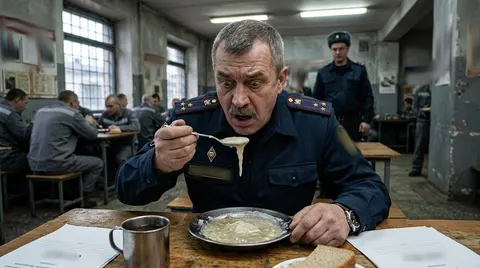
The sergeant looked over the car, saw Anna in the corner, and smirked. “Well, political, how was your first night? Nobody bother you?” Crutch stood and walked to the bars.
“Tell your captain this: she’s under my protection. If he wants her dead, he can come do it himself. Otherwise he’s wasting his time.” The sergeant spat.
“We’ll see how long your protection lasts, old man,” he said. After the guards left, the ration was divided. That was its own ritual with its own rules.
The thieves divided things first, then the politicals and common criminals got what was left. Crutch gave Anna part of his ration. “Eat. You’ll need your strength.” She chewed the stale bread and washed it down with warm water they called tea.
Around her, life in the car went on. Some men played cards drawn in charcoal on scraps of cardboard. Some sharpened makeshift blades. Some just lay still, conserving energy. By noon, a man with an educated look, glasses with one cracked lens, and a gray beard approached her.
“Excuse me, I’m Professor Vorontsov, a historian. I heard you’re helping the sick,” he said. “I’ll do what I can,” Anna answered.
“My bunkmate has had a fever for three days. He’s delirious. Could you take a look?” the man asked. Anna followed him.
In the far corner, on the top bunk, lay a young man of about twenty-five. He was burning up. She touched his forehead—hot as a stove. Typhus, maybe, or something close to it.
She needed to bring the fever down, but had nothing to work with except water from a bucket she had noticed nearby. She took off her sweater, soaked it, and laid it across the man’s forehead.

Share how the story made you feel
0Comments appear after a quick automatic check. Please no links, ads or personal data.
Next to your name we show your country, determined from your IP address; the address itself is never shown, and only a hashed fingerprint of it is kept to stop spam.