
 Let’s Keep It Real
someone asked.
“I’ve got my own,” he said, pulling a fresh white roll from inside his coat. It landed like a slap. That night Bull made his move—but not the way anyone expected.
He went not to Anna, but to Rat, the same informer who had given up his streptocide. “Hey, Rat, let’s talk.” “What do you want?” Rat said, tense.
“You’re smart. You know how things work. The bosses want information. Who runs this car, who’s planning what, especially about the woman.” “I’m not informing for you,” Rat said flatly.
“Come on. Everybody knows what you are. Here’s the deal: you give me information, I get you food and protection.” Rat was quiet for a moment, then said softly, “And if I say no?”
“Then something unfortunate happens. Maybe not right away. But it happens.” The next morning Rat went straight to Crutch in front of everybody.
He said it loud enough for the whole car to hear: “Bull is Melnikov’s plant. He tried to recruit me to inform.” Silence fell. All eyes turned to Bull.
Bull stood up slowly. “He’s lying. He’s the rat, not me.” “We’ll sort that out,” Crutch said.
“Car tribunal. Right now.” The hearing was quick. Witnesses came forward—men who had heard the late-night exchange. The white bread and pork fat Bull carried counted as evidence too.
The verdict was unanimous. “By our code, informers and provocateurs are finished,” Crutch said. “But we’re not killing him.”
“He can sit in the corner with the men who tried to force themselves on her. And if anybody gives him water, he answers to me.” Bull tried to fight.
But against two hundred men, even his size meant nothing. They shoved him into the corner with the five outcasts. Now there were six. That evening Melnikov came, saw Bull there, and understood his plan had failed.
“Well, Mikhailova, think you’ve won? Six days left. Plenty of time.” “Captain,” Colonel Karelin said unexpectedly.
“I’ve seen war. I’ve seen death. And I’ve learned one thing: evil loses. Not always right away. Sometimes years later. But it loses.”
“Because it eats away at the man doing it. You’re already finished, Captain. You just don’t know it yet.” Melnikov went pale, turned, and walked out.
That night Anna sat awake in her corner.
She looked up through the little window at the stars. Somewhere under those same stars were her children. Were they alive? Did they remember her?
“What are you thinking about?” Crutch asked, sitting down beside her. “What comes after this. The camp. The mines.”
“If you live, that’s luck. If you don’t, some would call that luck too.” “Do you think I’ll live?” she asked. “You? Yes. You’re one of the ones who do.”
“Not because you fight for yourself. Because you fight for other people. Those are the ones who somehow keep going. Like a law of nature.” “And you?” Anna asked.
Crutch gave a crooked smile. “I’m sixty-two. Twenty years in camps behind me. I’ve already lived my sentence. Now I’m just finishing out the calendar. But I’ll tell you this.”
“These thirty days with you gave me back something I thought was gone for good.” “What?” “Something worth hanging on to.”
“Even here. Especially here.” There were three hours until dawn, and six days until the final station. And everybody in that car knew the hardest part was still ahead.
Day twenty-five. The train was moving through marshland, and through the cracks came a heavy, rotten smell. Added to the smell of bodies, sickness, and waste was the smell of decay from outside.
Men were literally gasping. “Can’t breathe. Need air,” someone rasped in the half-dark. And that was when the real traitor in the car was exposed—not the one they had expected.
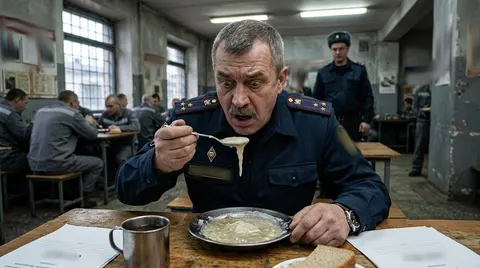
That morning, while the meager ration was being handed out, Doctor noticed something odd. One of the political prisoners, a quiet bespectacled man named Berman, had too much bread. “Where’d the extra come from?” the former medic asked directly.
“What extra? I’m eating my own,” Berman said. “No, you’re not. I count every piece. You’ve got double.” They started digging.
It turned out Berman had spent the last three nights passing information to the guards through a crack by the door. In exchange, he got extra food.
“What information?” Crutch stood over him, and there was something hard in the old thief’s eyes. “Nothing major. Just who said what. I told them about the woman.”
Silence. Then a quiet question: “What exactly?” “That she was organizing people. That there could be a mutiny because of her. That Colonel Karelin—”
He never finished. Jackal hit him first. Then others joined in, beating him methodically. Not to death, but close.
Anna tried to stop it. “Enough! You’ll kill him!” “Let him die,” one of the thieves growled. But then an unexpected defender stepped in.
Colonel Karelin moved between the crowd and the beaten man. “That’s enough. We are not animals. Even a traitor gets judged properly.”
“What judgment? He informed on us!” “Exactly why there has to be one. Otherwise we become what they say we are.” It was a strange trial in a death car.
Judges: three senior thieves, including Crutch. Prosecutor: Doctor. Defense: Berman himself. “I have a family. Three children. My wife is sick.”
“They promised me if I cooperated, my family would be left alone.” “They promise everybody that,” Crutch said sharply. “Then they come for everybody anyway. You thought only about yourself.”
“No. I thought about my children. You don’t understand. My youngest is four.” The car went quiet. Many of the men had children. Each one pictured his own.
The sentence surprised everyone. “Don’t kill him. But don’t forgive him either. He sits alone.”
“Not with the men in the filth corner—he’s not one of them. But not with us either. Right in the middle. And every day he gets to look at the people he sold out.”
Berman was seated in the center of the car, in an empty circle. No one was allowed to speak to him, approach him, or share food. He sat on his little island of shame and slowly unraveled from the loneliness of being surrounded by two hundred people and still alone.
But the betrayal had consequences. That evening Melnikov arrived in a good mood. “Mikhailova. Thanks to information from your friends, I know about your plans.”
“Colonel Karelin, you are under arrest for organizing a mutiny. Step out.” “You have no evidence.” “I have witness testimony.”
“Testimony from a frightened informer is not evidence, even by your standards.” “Who said anything about standards? We’re in a railcar. I’m the standard here.” He nodded to the guards.
They raised their guns toward the colonel. Then something extraordinary happened: the whole car—all two hundred men—stood up and blocked Karelin with their bodies. “You going to shoot?” Crutch asked.
“Two hundred men? Like a mass execution?” “If I have to.” “And how do you explain two hundred dead prisoners to your superiors?”
Melnikov knew Crutch was right. Shooting an entire car was not just abuse of authority. It was mass murder, and it would end him. “Fine. But remember this: five days left, and I intend to use them.”
He left, and the men sat back down. A victory? No. Just another delay. Day twenty-seven.
Outside the window, the hills of the far north were already visible. It got colder by the hour. In a car built for southern routes, men were freezing, especially at night.
Anna gave her padded jacket to a sick young man who was coming down with pneumonia. She sat in just a shirt and shivered. “You’ll freeze,” Crutch said, draping his own jacket over her.
“What about you?” “I’m used to it. Twenty winters in camp teaches you a few things.” “Like what?” she asked.
“How to warm yourself from the inside. Think about heat. Home. A stove. Your mother baking pies. If you remember it hard enough, it helps.” That night something happened that every survivor would remember.
Someone in the far corner started singing softly, barely above a whisper, an old prewar song. Another voice joined in. Then a third.
Within a minute the whole car was singing—thieves and politicals, old men and young. They sang to stay warm. They sang to keep from losing their minds. They sang to remember they were still human.
The guards outside first shouted, “Stop singing!” But the singing did not stop. Then they pounded on the door with rifle butts, but it made no difference. Two hundred voices were stronger than fear.
Then one of the thieves started a rough street song, and again the whole car joined in. Even Professor Vorontsov, who clearly had never known such songs, tried to keep up.
And then came something nobody expected. Anna began to sing. A lullaby she used to sing to her children.
“Sleep now, my little one, close your eyes and rest.” The car fell quiet and listened. She sang with so much ache in her voice, so much longing for her children, that hardened criminals wiped their eyes.

Share how the story made you feel
0Comments appear after a quick automatic check. Please no links, ads or personal data.
Next to your name we show your country, determined from your IP address; the address itself is never shown, and only a hashed fingerprint of it is kept to stop spam.