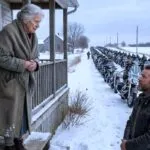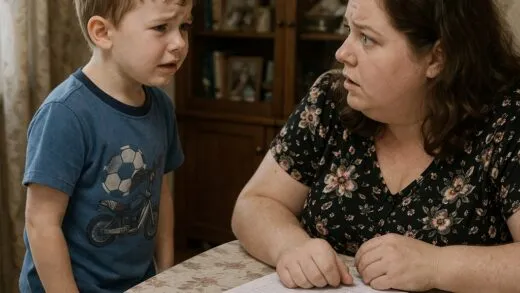

Andrew Sullivan stood at the edge of the Pittsburgh farmers’ market, his eyes locked on his mother. Vera was on the ground. Her small folding table had been kicked over, and her homegrown tomatoes were crushed into the gravel and mud.
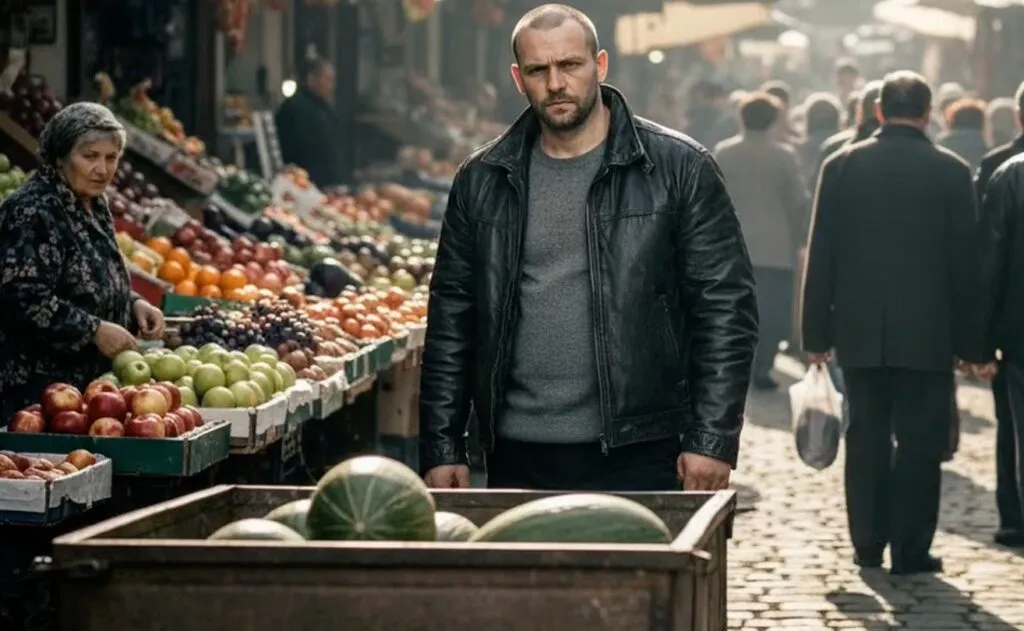
Three young men in expensive North Face jackets loomed over her, laughing. One was filming the whole thing on a high-end smartphone.
— “Come on, lady, give us a show! Do a little dance for the camera!” the one with the phone yelled, nudging her shoulder with the toe of his designer boot.
His mother was shaking, her eyes downcast. The crowd around them went silent, people looking away, unwilling to get involved. Andrew’s fists clenched at his sides.
Nine years in a state penitentiary had taught him one thing: “If you have to hit, hit first. And hit hard enough that they don’t get back up.”
But to understand how Andrew ended up at that market, where that icy glare came from, and why those three privileged punks had just made the biggest mistake of their lives, you have to look back at how it all started.
Andrew Sullivan was born in the spring of 1982 in a blue-collar neighborhood outside of Pittsburgh. His father walked out when he was three, leaving his mother, Vera, to raise him alone. She worked double shifts at the local textile mill—twelve-hour days, modest pay, and a permanent look of exhaustion. But she never complained. She raised her son in a small two-bedroom rental on the edge of town.
Andrew was a quiet, stubborn kid. He wasn’t much for books, but he was a natural with his hands. By fourteen, he was a “garage rat,” hanging around Mr. Henderson’s shop down the street. Henderson fixed everything from old Fords to the occasional European import. Andrew watched, learned, and eventually started turning wrenches himself. By sixteen, he could rebuild a transmission with his eyes closed.
He graduated high school in 1999 and went straight to work at a private auto shop. He didn’t make much, but he learned fast. His boss, a man named George, used to say, “The kid’s got talent, but he’s got a short fuse when things aren’t right.”
That was true. Andrew didn’t go looking for trouble, but he couldn’t stand a bully. In 2002, his best friend, Mike, was hit by a SUV while crossing the street. The driver was the son of a local county commissioner, drunk as a lord. The kid walked: his father pulled strings, witnesses suddenly “forgot” what they saw, and the police report was sanitized. Mike was left in a wheelchair, and the driver never even offered an apology.
Andrew nearly snapped then. He wanted to handle it himself, but his mother held him back: “Andy, don’t. They’re powerful people. They’ll crush us.”
He listened. That time. By 2004, Andrew was running his own small repair bay. He was making decent money, helping his mom move into a nicer place. Life was steady until the spring of 2006. A friend, Vic, got in deep with some local bookies—the kind of people who don’t take “I’ll have it next week” for an answer. Vic showed up at Andrew’s door at midnight, pale and shaking: “Man, they’re gonna kill me. Help me out.”
Andrew didn’t walk away. He went with Vic to talk to the collectors. The conversation went south fast. A fight broke out. Andrew defended himself, striking first against a man who pulled a knife. The man fell, hitting his head hard against a concrete curb. He ended up in a coma with a severe brain injury.
The system moved fast. Andrew was arrested two days later. Vic vanished, moving out of state and cutting all ties. The trial lasted three months. Andrew had a public defender, and the prosecution was aggressive. The victim survived but was permanently disabled. The judge handed down a sentence: 9 years in state prison for aggravated assault. Andrew was 24.
His mother sat in the back of the courtroom, silent tears streaming down her face. Before the bailiff led him away, he looked at her and said, “I’m sorry, Mom. I’ll be back.”
Prison was a wake-up call in the fall of 2006. Maximum security, a number on his chest, and a hard lesson in survival. Andrew didn’t break. He kept his head down, stayed out of the gangs, but made it clear he wasn’t a victim. He worked in the prison machine shop, eventually becoming the lead mechanic for the facility’s fleet.
Nine years is 3,285 days. Andrew remembered every one of them. Letters from his mother came every two weeks. She wrote, “I’m working, I’m okay, I’m waiting for you.” He’d reply, “I’m holding on. See you soon.”
The years changed him. He wasn’t just lean and muscular; he was hard. His face had set into stern lines, and his eyes had a cold, calculating depth. Prison taught him patience, the value of silence, and how to solve a problem completely, without half-measures. He made connections—not with the loudmouths, but with the quiet men who knew how the world really worked, both inside and out.
He didn’t plan for revenge. He just planned to live.
March 2015. He was 33. The prison gates opened, and Andrew stepped out. He had a bag of clothes and his release papers. The air smelled like freedom and wet pavement. He caught a bus back to his hometown and watched the world go by through the window. The city looked different, but the problems felt the same.
He arrived at his mother’s apartment in the evening. The building was the same—peeling paint, rusty railings, a neglected courtyard. He used the spare key his mother had sent him. The apartment was quiet, clean, and smelled like home. On the table was a note: “Andy, if you’re reading this, I’m at work. There’s food in the fridge. I’ll be home soon. Love, Mom.”
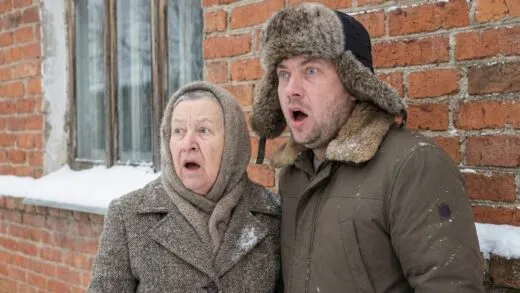
Andrew sat on the sofa, rubbing his face. Nine years of waiting for this moment. Now he was here, and he didn’t know what to feel. Half an hour later, there was a knock at the door. It was Mrs. Gable, the neighbor from across the hall.
She gasped: