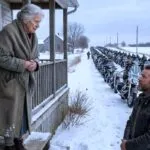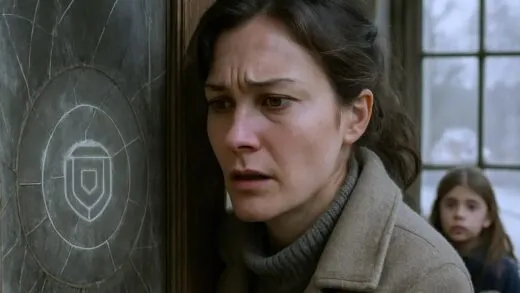

Valentina opened her eyes and looked at the church fence: the old woman was still sitting on her piece of cardboard, motionless, her head bowed. Valentina took a few steps towards her, wanting to ask again, but something stopped her. Fear? Superstition? Or just common sense: it’s not wise to pester a beggar with questions, people would think she was out of her mind.
She turned and walked home at a brisk pace. The walk took about fifteen minutes; their building—a typical nine-story block—was three blocks from the church. As she rode the elevator to the seventh floor, Valentina kept replaying the old woman’s words in her head: “When your husband asks for the keys, don’t give them to him.” When he asks? Not “if,” but “when.” That meant he would definitely ask. Today? Tomorrow?
The apartment greeted her with silence and coolness: Valentina had opened the windows before leaving, and the rooms had aired out during the morning. Gennady had already left for work, though what kind of work was it at his age. He worked part-time as a consultant at a private security firm, coming into the office a couple of times a week to check some documents and talk with the younger employees. More for self-respect than for the money, as he himself admitted.
Valentina went to the kitchen, unpacked the bag, and put the groceries in the refrigerator. Her hands were still trembling slightly. She poured herself a glass of water, drank it in one gulp, and leaned against the table. What nonsense. The ravings of a mad old woman. A coincidence. Maybe she was really a psychic; such women sometimes have visions of the future. Or maybe she was just sick, spouting nonsense to every passerby, and it just seemed to Valentina that it was about her. But why was it so specific? About her husband, the keys, the safe?
She went into the bedroom and stopped in front of the painting—a modest landscape with a birch grove, bought at a flea market back in the 90s. Behind the painting, in the wall, was the safe. Small, the size of a shoebox, but secure, with a combination lock and keys. Valentina moved the painting aside: the gray door of the safe was tightly closed, everything as usual. She took the keychain from her purse, found the right key—small, flat, with a yellow ring for identification. She twirled it in her fingers.
The second key was in the box. What if the old woman was right? What if Gennady really asked for the keys? Valentina went to the dresser, opened the top drawer, and took out a carved wooden box—a gift from her mother for her thirtieth birthday. The box held all sorts of trinkets: old earrings, a chain with a cross, a few buttons, a note from her husband from their youth. And the spare key to the safe on a separate ring.
She took the key and looked at it for a long time. Then she clenched it in her fist, closed the box, and put it back in the drawer. No, this was foolish—hiding a key from her own husband because of some beggar’s words. They had lived together for thirty years, raised a daughter, and gone through good times and bad. Gennady had never been materialistic, never meddled in her affairs; she had always managed the money herself.
And yet. Valentina returned to the kitchen, sat at the table, and propped her head in her hands. Fragments of thoughts and memories swirled in her mind. For the past few months, Gennady had become somewhat absent-minded, pensive. She attributed it to age (he would be 63 in July); retirees often become withdrawn, retreating into themselves. A few times he had come home late in the evening, saying he was delayed at work, although she knew the office closed at six. When she asked, he would brush it off, saying he had visited an old friend, had a drink with him.
Maybe she was just becoming suspicious with age? Seeing problems where there were none. Gennady had never given her a reason for jealousy or distrust. A typical man, a bit rough around the edges sometimes, not very talkative, but honest and decent. Thirty years they had lived in harmony. But why then did this anxiety not leave her? Why were the blind woman’s words stuck in her head like a splinter?
Valentina spent the rest of the day busy with chores, trying not to think about the morning’s episode. She made borscht, fried cutlets, ironed shirts, dusted, and watered the flowers on the balcony. Ordinary tasks that usually calmed her, bringing a measured joy of home comfort. But today, her hands worked on autopilot, while her thoughts kept returning to the church, to the blind beggar, to her hoarse voice and the death grip of her cold fingers.
Around three o’clock, Irina called.
— Mom, how are you? What are you doing?
— Oh, just doing chores around the house, — Valentina answered, holding the phone with her shoulder as she continued ironing a shirt. — How are you, sweetie?
— I’m fine. Listen, we won’t be able to come on Saturday, Maxim’s practice was moved to the weekend. We’ll definitely come next weekend.
— Alright, no problem. The main thing is that you don’t overwork yourself. I heard you have a crunch time at work.
— Everything’s fine, Mom. What’s wrong, your voice sounds strange?
Valentina froze with the iron in her hand. Her daughter always sensed her mood, even over the phone.
— Everything’s fine, just a little tired.
— Are you sure? Is Dad okay, not sick?
— Dad’s fine, at work. Don’t worry.
They talked a bit more about her grandson, the weather, and other trifles, and when Valentina hung up, she felt a little better. Her daughter’s voice always had a calming effect, a reminder that there was something real, reliable, and unshakable in this world.
Valentina finished her cold tea and looked at the clock: half-past four. Gennady usually came home around seven; if he was late, he would call to let her know. She went into the bedroom and stopped by the painting again. The foolish thought wouldn’t leave her: what if Gennady really did ask for the keys?
She moved the painting, dialed the code (their wedding date, Gennady knew the code, nothing secret). She inserted the key, turned it, and opened the door. Inside the safe were neat stacks of bills, bound with bank wrappers, several envelopes with documents, their marriage certificate, Irina’s birth certificate, diplomas, Gennady’s military ID. And her precious three and a half million.
Valentina ran her fingers over the stacks of money. This money was all that was left of her parents’ home, of her childhood, of her mother’s love and care. She planned for it to stay here, safe, until it was truly needed. For treatment, for her grandson, to help her daughter if necessary. She closed the safe, turned the key, and put the painting back in place. Then she took her keychain, unhooked the small yellow key, and held it in her palm.
Hide it? Or not? God, what a foolish thing to do—hiding a key from her own husband. But the old woman’s words echoed in her ears like a spell: “Don’t give him the keys! Say you lost them.” Valentina slipped the key into the pocket of her housecoat, then changed her mind, took it out, and put it in her handbag, in a hidden zippered pocket. She moved the spare key from the box there as well. Let them stay together until evening. Then she’d see. If Gennady didn’t ask anything, she would put everything back and forget this foolishness like a bad dream.
But something inside, a sixth sense, told her that the blind old woman was telling the truth.
Gennady came home at seven sharp, as usual. Valentina heard the key turn in the lock, the front door slam, and his heavy sigh as he took off his shoes in the hallway. She stood at the stove, stirring the borscht, and felt her shoulders tense and her pulse quicken.
— I’m home, — his voice came from the corridor.
— Dinner’s almost ready, — she replied, trying to make her voice sound natural. — Go wash your hands and sit down.
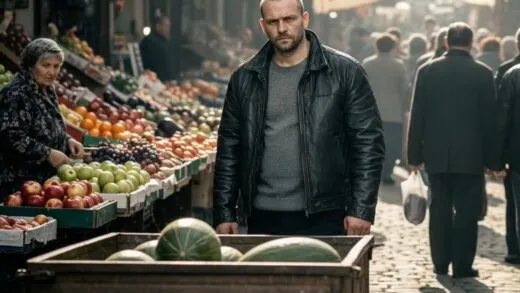
Gennady went into the bathroom. Valentina heard the sound of running water, then he appeared in the kitchen—a tall, heavyset man with thinning gray hair and a tired face. His military posture was still evident in the set of his shoulders and his straight back, but age was taking its toll: bags under his eyes, sagging cheeks, bluish veins on his temples. He sat down at the table, and Valentina immediately noticed that something was wrong with him. Usually, her husband came home from work calm, even good-natured, telling stories from the office, asking how she had spent her day. But today he was silent, staring at one spot, drumming his fingers on the table.
— How was your day?