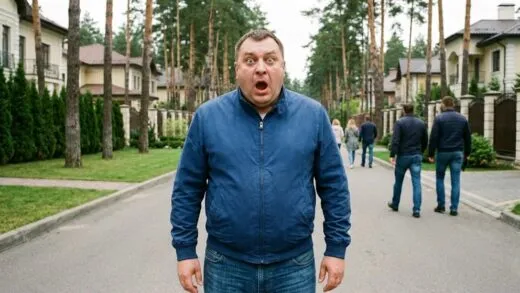
Natalya smirked—a bitter, crooked smile.
“The first few years were good. At least, that’s what I thought. I was little, didn’t remember anything about the past, didn’t know I had a sister. The Dorokhovs were… normal. Not mean, not cruel. Just cold. My father worked a lot, my mother took care of the house. I was fed, clothed, sent to school. But love—that real, warm love you read about in books—that wasn’t there. I grew up like a flower in a pot on a windowsill: watered, but unnoticed.”
She fell silent. The waitress brought her coffee, placed it on the table, and left.
“When I turned thirteen, my mother got sick. Seriously, terminally. Cancer, just like your mom, as strange as that sounds. It’s like some curse hangs over our family.” Natalya shook her head. “She faded over several months. And one night, a week before she died, she called me to her side.”
Dasha held her breath.
“She was lying in bed, small, withered, almost transparent. I sat next to her, took her hand. And then she told me.” Natalya’s voice trembled. “She said, ‘Forgive me, girl. I should have told you sooner. You have a sister, a twin. You were separated at the orphanage. I don’t know where she is, I don’t know if she’s alive. But you must know the truth.'”
“And you believed her?”
“Not right away. At first, I thought it was the delirium of a dying woman. That the medicine was confusing her thoughts. But then she pulled an envelope from under her pillow. Old, yellowed. Inside was that same photograph—two girls in identical dresses. And an adoption certificate with my real name. It turns out I had a different name before the Dorokhovs took me. My name was Nata. And my sister’s was Olya. Natalya and Olga. We were named after some relatives of our biological mother.”
Dasha felt a lump form in her throat. Nata and Olya. Two girls, two halves of a whole, torn apart by fate.
“After my adoptive mother’s death, I started searching,” Natalya continued. “I was thirteen. I was alone. My father had become completely distant by then. He was only interested in his work. I wrote inquiries to archives. I searched for information about the orphanage we were taken from. But I hit walls everywhere. The archives had burned down. The documents were lost. The people who might have known something were dead or had moved away. It was like looking for a needle in a haystack that was constantly on fire.”
“Twenty years,” Dasha whispered. “You searched for twenty years.”
“Twenty-three, to be precise. With breaks. Sometimes I would despair, give up the search for months, even years. Then I would start again. It became…” She paused, searching for the word. “An obsession. The meaning of my life. I couldn’t stop, you see? Somewhere out there in the world was my sister. My other half. The person with whom I shared a womb. A heartbeat. How could I not look for her?”
Dasha looked at the woman before her and saw something familiar in her. Not just her mother’s features—something else. The same obsession, the same inability to give up that her mother had when she fought her illness to the very last day.
“Six months ago, I finally got lucky,” Natalya said. “I found a woman who had worked at that orphanage in the early nineties, right when we were being adopted. She was already over seventy. She didn’t remember the details well. But one thing she remembered for sure: the twins, Nata and Olya, were taken by different families on the same day. Olya was taken to the west, Nata to the east. She even remembered the last name of the family that took Olya. And I started following that thread.”
“And you found Mom.”
“I found her. Only too late.”
They sat in silence. Outside, a light rain began to fall—fine, unpleasant, autumnal.
“Natalya…” Dasha gathered her courage. “I spoke with my grandmother yesterday. My mom’s mother-in-law. She… she knew about you. She knew Mom had a sister. And she kept quiet all these years.”
Natalya flinched.
“She knew? How?”
“Grandma Raya let it slip. A long time ago, before my parents’ wedding. Grandma Zina overheard and decided to keep quiet. To ‘protect the family,’ as she said.”
A shadow crossed Natalya’s face—quick, dark.
“So your mother could have found out about me,” she said slowly. “Could have searched. Could have found me. But she wasn’t given the chance.”
“She didn’t remember you. She was three years old.”
“So what? I didn’t remember either!” Natalya interrupted. “But I learned the truth and started searching. And she wasn’t even told. She was deprived of a choice.”
A deep, long-held bitterness entered her voice. Dasha suddenly understood: this woman carried not only the sorrow of a lost sister, but also anger. Anger at those who had separated them. At those who could have reunited them and didn’t.
“Grandma Zina told me to be careful,” Dasha blurted out. “She said that ‘people are not always who they seem.'”
Natalya gave her a long look.
“And you think that’s about me?”
“I don’t know. I don’t know anything anymore.”
“Dasha…” Natalya leaned forward, and her voice softened. “I understand you don’t trust me. You don’t know me. To you, I’m a strange woman who appeared out of nowhere with an incredible story. But I can prove everything I’ve told you. I have documents. Photographs. The results of a genetic test I did when I found the information about your mother. If you want, we can do a test together. You and I. So you can know for sure.”
“A genetic test?”