

“On one condition.” Dasha stood up. “Natalya is a part of my life now. My aunt. The only connection to Mom’s real family. You will not interfere with our relationship. You will never lie to me again. About anything. And you will meet with her. Talk to her. Apologize for what you did—both three years ago and twenty years ago.”
“Dasha, I’m not sure I can.”
“You can. If you want to remain my father, you can.”
She left the room, leaving him alone. She went up to her room, lay on her bed, and stared at the ceiling. The moon was shining outside—full, bright. The same moon had been shining two weeks ago when she went to the cemetery, not knowing that day would change everything.
She took out her phone and wrote a message: “Natalya. I talked to Dad. He confessed. To everything. He wants to meet you tomorrow. Will you come?”
The reply came a minute later.
“I’ll come. I’ll definitely come.”
Dasha smiled—for the first time in these two weeks. A real smile. Her mom would have been proud of her. Her mom would have wanted them to find each other—her daughter and her sister. And maybe, just maybe, something new could be built from the broken pieces. Not the same as before. But also real. Also valuable. A family.
A month later, Dasha went to the cemetery again. Saturday. Morning. The first snow. She cleaned the grave, laid down the white chrysanthemums, and sat on the bench.
“Hi, Mom,” she said quietly. “I brought you a gift.”
She took a photograph from her pocket. The same one: two little girls in identical dresses, holding hands.
“This is you and Natalya. Your sister. You were together, at least at the beginning. And now you’re together again—in my heart.”
She placed the photograph by the flowers. She heard footsteps behind her. Dasha turned around. Natalya and her father were walking down the alley side by side, in silence. Not friends, not relatives. Just two people brought together by grief, trying to find their way to each other.
They stopped at the grave. Natalya knelt down, touched the headstone.
“Hi, little sister,” she whispered. “I finally found you.”
Her father stood beside her, his head bowed. His lips moved silently—in prayer or a plea for forgiveness. Dasha looked at them, at her family, broken and reassembled, and felt something warm spreading through her chest. Not happiness, no. Happiness was still a long way off. But hope. And with hope, you can live.
A year later, Natalya’s apartment had changed. Dasha’s textbooks appeared on the shelf next to the flowers. On the wall, a photo from her 15th birthday: her, Natalya, and her father at the holiday table. Smiling cautiously, unaccustomedly, but sincerely. In the corner, her favorite blanket and a stack of books she read here on weekends. Not a second home. Just another home.
“Look what I found,” Natalya pulled an old envelope from a dusty box. “It’s from my adoptive mother. She left it with the picture of the twins. I thought I had read everything back then, when I was thirteen. Turns out, I hadn’t.”
Dasha put down the album she was flipping through and moved closer. Natalya unfolded the yellowed paper. She read in silence, and Dasha watched her expression change: from calm to astonishment, from astonishment to something resembling shock.
“What is it?”
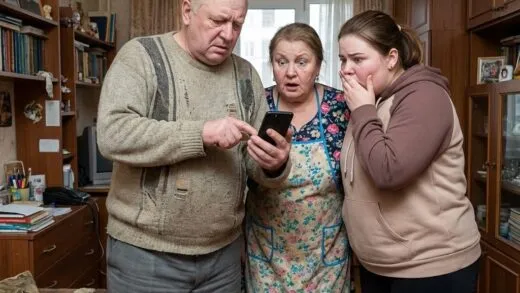
“She… she… our biological mother.” Natalya’s voice grew hoarse. “She didn’t die in childbirth. She gave us up. Herself. She signed the papers and left.”
Dasha froze.
“But you said…”





Comments are closed.