
 Let’s Keep It Real
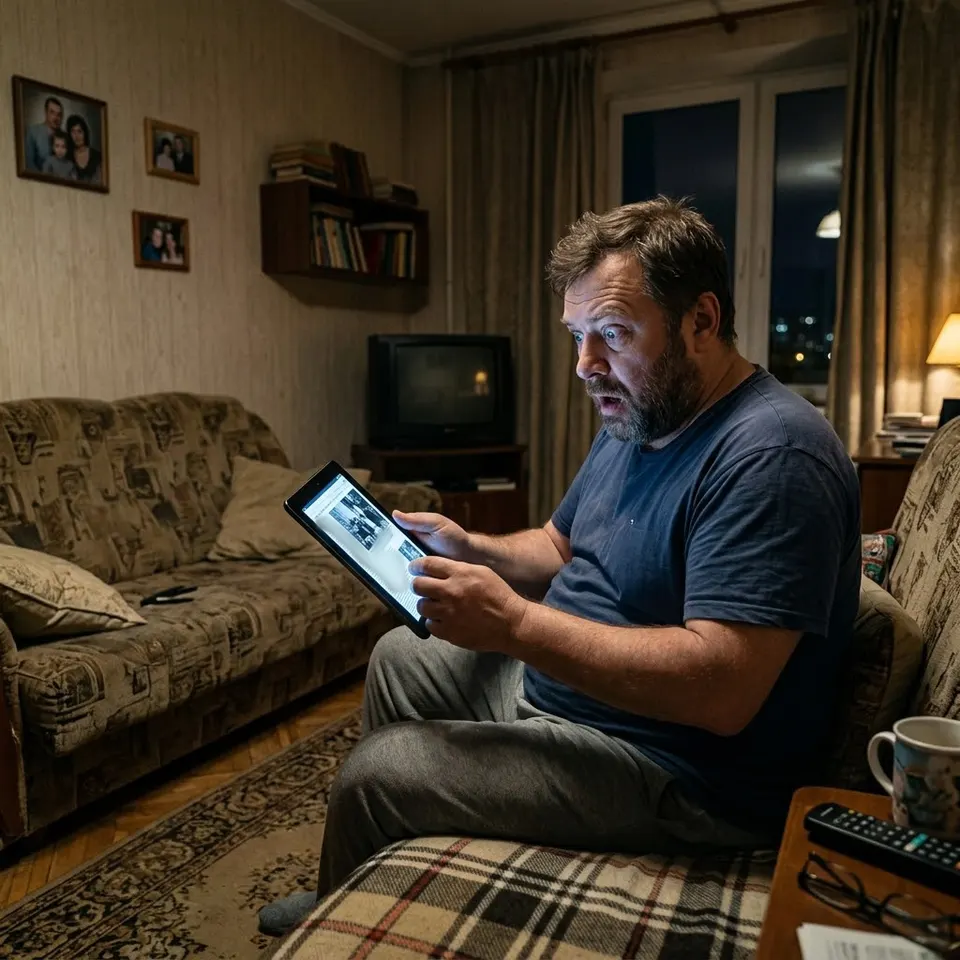
At exactly 2:30 in the morning, I woke up to the soft creak of the bedroom door and realized—she’d done it again. My wife, Susan, had been lying beside me just a minute earlier. I could still feel the warmth where her back had been, but now the sheet was already cooling off. I lay there in the dark, listening as her footsteps faded down the hallway, and my heart was pounding so hard you’d think I wasn’t a 63-year-old retired contractor, but some teenage kid sneaking around where he didn’t belong.
You know that feeling when the ground doesn’t drop out from under you all at once, but inch by inch? You’re standing there, swaying, telling yourself maybe you imagined it—but no, this was the fifth night in a row. My name is Victor Gromov. I’m 63 years old, a retired construction engineer, and I’ve been out of work for about four years now.
I want to tell you a story that turned upside down everything I thought I knew after nearly four decades of marriage. It’s the story of how I spied on my own wife, convinced I’d catch her cheating on me with our son-in-law—and instead found something far worse. Susan and I had been married 38 years.
Thirty-eight years. That’s basically my whole adult life. We met on a job site when I was a young engineer and she worked in the design office. She was beautiful, sharp as a tack, with long dark hair and the kind of eyes that made you feel she saw right through you.
I fell for her right away, like a fool. We got married fast. Six months later our first daughter, Allison, was born, and then came our younger one, Katie. I worked construction jobs all over the region, dragging the family from one place to another, and Susan never once complained.
She was my anchor, my safe place. I thought we were the kind of couple whose roots had grown together too deep to ever pull apart. Then this started.
Five nights earlier, I woke up by accident. At my age, your bladder doesn’t exactly respect your sleep schedule. I got up, used the bathroom, came back, and noticed Susan wasn’t there. At first I figured she’d gone to the kitchen for a glass of water.
But twenty minutes passed, and she still hadn’t come back. So I got up quietly, barefoot on the cold hardwood floor, and stepped into the hallway of our three-bedroom suburban house. The kitchen was dark. So was the bathroom.
Then I heard voices coming from the back bedroom—the one our son-in-law, Mike, was using. Low voices, muffled, but definitely two people talking. Mike is married to our younger daughter, Katie.
He’s 31, works in software from home. Decent enough guy, really, though I never fully understood him. Quiet, private, always behind a screen.
He and Katie got married three years ago, and about a year ago they moved in with us. Rent was high, they were trying to save for a down payment, and we had a spare room once Allison moved out. Family helps family. I didn’t think twice about it.
But standing there in the dark hallway, listening to those voices, I felt something cold settle in my chest. My wife and my son-in-law. In his room. In the middle of the night.
I moved closer and pressed my ear to the door. I couldn’t make out the words, but the tone was low, intimate in a way I didn’t like. Susan’s voice sounded soothing, almost tender, and Mike was mumbling something back.
Then silence. I stood there for ten minutes, maybe more. My legs started to ache, my back stiffened up. Finally the door opened, and I barely made it back to the bedroom in time.
Susan came in a minute later, slipped into bed beside me like nothing had happened. The next morning I didn’t say a word. I told myself maybe Mike was going through something, maybe Susan was just helping him, trying to calm him down. It could happen. People have problems.
But the second night it happened again. Then the third. Then the fourth. Every time, right around 2:30, she’d get up and go to his room. Stay there twenty minutes, sometimes thirty, then come back.
And every morning she acted like everything was perfectly normal. Made me oatmeal, smiled, asked how I slept. I’d look at her and feel something tightening inside me.
By the fifth night, I couldn’t sleep at all. I lay there staring at the ceiling, waiting. And then again—the creak, the footsteps, the soft click of the door.
I got up and went back to his room. This time I heard a little more clearly. Susan was saying something like, “It’s going to be okay, don’t panic,” and he answered in a voice that sounded shaky.
Was he crying? I stood there like an idiot while my mind ran wild. What exactly was going on between them?
Was my wife—mother of my daughters, grandmother to two little boys—having an affair with our son-in-law? Under my roof? It sounded insane. But what else was I supposed to think?
Katie, our younger daughter, was away on a work trip at the time. She worked for a regional marketing firm and traveled now and then. She’d left ten days earlier and wasn’t due back for another week.
So Mike was alone, and Susan was going into his room every night. Coincidence? I tried to tell myself yes, but doubt gnawed at me like a rat in the walls.
The next morning, after Susan left for the grocery store, I went into Mike’s room. He was at his desk, headphones on, typing away. He turned, saw me, and took them off.
“Need something, Victor?” he asked politely, but there was tension in his voice. I looked at him.
Just an ordinary guy. Thin, glasses, pale face, needed a shave. Tired-looking. Nothing remarkable. But I could feel anger starting to boil up in me.
“Everything okay with you?” I asked, trying to sound casual. “You seem off lately.” He flinched a little and looked away.
“Yeah. Just a lot of work. I’m tired.” “Sleeping okay?” I asked.
“I sleep. Why?” He looked at me carefully, and I thought: he knows I suspect something. Or maybe I was imagining that too.
I didn’t push it. Just nodded and left. But by then I’d made up my mind. I was going to find out the truth, one way or another.
That same day I went to an electronics store in the shopping center and bought a small security camera. The kid behind the counter—couldn’t have been older than twenty-five—showed me how to connect it to my phone and set it to record. It cost me $120, which wasn’t nothing on a fixed income.
But I didn’t care. I had to see with my own eyes what was happening between my wife and my son-in-law in my own house. That evening, I set up the camera.
Susan had gone out to a friend’s birthday dinner, and Mike was in his room as usual. I had about two hours. I picked a spot in the hallway across from his door.
There was an old shelf there with dusty figurines Susan had collected years ago. Little porcelain dancers, a deer, a few odds and ends. I shifted them around and tucked the camera behind the deer.
I aimed the lens at Mike’s door. The camera was small, black, about the size of a deck of cards. You wouldn’t notice it unless you were looking for it.
I connected it to my phone, just like the salesman showed me. The app lit up with a clear view of the hallway, the door, part of the wall. Even in low light, the picture was decent.
I set it to record on motion. That was it. Trap set. I slipped my phone into my pocket and noticed my hands were shaking.
I felt sick with myself. Sixty-three years old, and I’d turned into some paranoid old man spying on his wife. But what choice did I have? Ask her directly?
She’d deny it. I could see that already. She was hiding something, and I needed to know what. That night I didn’t sleep.
I lay there watching Susan. She slept peacefully, breathing evenly, the lines in her face softened. My Susan.
I remembered a train ride we took back in the late ’80s, moving for one of my jobs. She sat by the window, watching the trees go by, humming under her breath. I looked at her and thought: that’s it. That’s my whole life right there.
I was going to love that woman until the day I died. And I had—thirty-eight years of loving her. And now I was lying next to her, suspecting something I could barely bring myself to say out loud.
At 2:30 she stirred. I shut my eyes and pretended to be asleep. I heard her get up carefully, pull on her robe, cross the room, open the door quietly—and leave.
I pulled my phone from under the pillow and opened the app. The screen lit up. The hallway was empty for a second. Then Susan came into view in her old blue robe, barefoot.
She walked to Mike’s door and knocked softly. The door opened almost at once. Mike stood there in a T-shirt and gym shorts.
I couldn’t see his face clearly—the camera angle was too high. They whispered for a moment. Then he stepped back. She went in, and the door closed.
I stared at that closed door on my screen and felt everything inside me go cold. There it was. Proof. My wife was going into my son-in-law’s room in the middle of the night while our daughter was out of town.
What else could they possibly be doing in there? Talking? About what? I tried to come up with some innocent explanation, but nothing came.
They weren’t discussing chili recipes at 2:30 in the morning. Twenty minutes passed. Then thirty. I watched the time stamp in the corner of the screen, and every minute felt like an hour.
Finally the door opened and Susan came out. This time I got a better look at her face: tired, but oddly calm. She adjusted her robe and walked back down the hall.
The camera caught her from behind until she disappeared from frame. A minute later she was back in bed beside me, as if nothing had happened. I lay awake until morning, staring at the ceiling, listening to her breathe, wondering what I was supposed to do next.
Start a fight? Throw them both out? File for divorce? I was 63 years old. Was I really going to start over now?
And maybe—just maybe—I was still reading it wrong. Maybe Mike was having some kind of breakdown and Susan was honestly trying to help. But if that was true, why the secrecy? Why the middle of the night? Why not tell me?
At breakfast, I watched them both. Susan was frying eggs, humming like always. Mike came into the kitchen looking rumpled, still in the same T-shirt, poured himself coffee, and nodded at me.
“Morning, Victor.” “Morning,” I muttered. He sat down and looked at his phone.
Susan set a plate in front of me and smiled. “Eat before it gets cold.” I looked at the eggs and knew I had no appetite.
Still, I picked up my fork and ate in silence. Susan glanced at Mike. Just for a second. He glanced back. I caught it.
There was some understanding between them. Some private connection. And I wasn’t part of it. “Susan,” I said, setting down my fork, “Katie called yesterday. Asked how Mike was doing.”
I was lying. Katie hadn’t called. I just wanted to see how they reacted. Susan stiffened. I saw the corner of her mouth twitch. “Oh? And what did you tell her?”
“I told her everything seemed fine. Everything fine, Mike?” He looked up from his phone. Pale face, dark circles under his eyes.
“Yeah. Fine. Just a lot of work.” “Not sleeping much?” I asked, and the room went still. He swallowed.
“Some nights are rough.” “Then maybe go to bed earlier,” I said flatly. “No point tossing and turning all night.”
Susan jumped in fast. “Victor, don’t get on him. He’s got deadlines. Big project.” “That’s right,” Mike said, grateful.
I looked at both of them and thought: they’re in this together. They’re hiding something from me, and it’s not just work stress. It’s something else.
That afternoon I watched the footage again. Then again. I kept looking for details, but all the camera gave me was the hallway and the door. Nothing more. I needed more information.
I thought about putting a camera in Mike’s room, but even I knew that was too far. Besides, he was home all day. I’d never get the chance. So I decided on something else.
The next night, when Susan went in there, I’d sneak up to the door and listen. Maybe I’d hear enough to figure it out. Risky, sure. If they caught me, I’d look like a lunatic. But by then I was past caring.
So the sixth night came. I waited, wound tight as piano wire. Susan fell asleep quickly, probably worn out from being on her feet all day.
I lay there counting the minutes. At 2:25 she stirred, got up, put on her robe, and left. I waited a minute, then got up too.
Quietly, on the balls of my feet, I moved into the hallway. Mike’s door was cracked open this time. Maybe Susan hadn’t shut it all the way. A dim desk lamp was on inside.
I moved closer, pressed myself against the wall beside the door, and held my breath. Then I heard Mike’s voice. Low, but clear enough: “I can’t keep doing this, Susan.”
“This is killing me.” “Shh, easy,” Susan said in that calm voice of hers. “I know. But you have to hang on.”
“For how long? It’s been a year and nothing’s changed.” “It will,” she said. “I promise. It just takes time.”
“And if Katie finds out? If Victor finds out? Then what?” There was a pause. I stood there with my fingers digging into the wall, my heart pounding so hard I thought they’d hear it.
“Victor won’t find out,” Susan said firmly. “I’ll make sure of that. And Katie… Katie isn’t ready to know.”
“But this affects her more than anyone.” “Exactly why she’s not ready,” Susan said. “Trust me.” Then silence.
Then Mike let out a sound—half sob, half breath. “I’m sorry,” he muttered. “I’m sorry for all of it.” “Enough,” Susan said, more firmly now. “Stop blaming yourself.”
“This is not your fault. Not at all.” I stood there and understood nothing. What were they talking about? What wasn’t his fault? What wasn’t Katie supposed to know?
I wanted to burst into that room, grab them both, and demand answers. But my legs wouldn’t move. I just stood there in the dark hallway of my own house and felt like a stranger in it.
I got back to the bedroom before Susan did, climbed into bed, and pulled the blanket up to my chin. My hands were shaking. Those words kept replaying in my head: “It’s not your fault. Katie isn’t ready to know. I’m sorry.”
What did it mean? What secret were they hiding? And where exactly did I fit into all this, besides being the one who “must not find out”? Susan came back ten minutes later, slipped into bed quietly, and settled onto her side.
I lay with my back to her, jaw clenched so hard it hurt. I wanted to turn around and ask her straight out: what are you doing in there? What are you talking about? But I didn’t.
Why not? Because I was afraid of the answer. Whatever it was. In the morning I got up feeling wrecked, head pounding, no sleep to speak of.
Susan was in the kitchen making oatmeal. She always said it was good for a man my age. Usually I grumbled and ate it anyway.
That morning I sat down and said, “Susan, we need to talk.” She turned from the stove and raised an eyebrow. “About what?”
“About you and Mike.” I saw the color drain from her face. She pressed her lips together and looked away. “What exactly do you mean?”
“You go into his room every night. You think I haven’t noticed?” There was a long pause. She set the pot down, came over, and sat across from me.
She looked at me for a long moment, studying my face, then sighed. “Victor, Mike is going through a hard time. He needs support.” “What kind of support happens in the middle of the night?”
“He can’t sleep. He gets overwhelmed. I can’t just leave him like that.” “And me?” I said, my voice rising despite myself. “I’m your husband. I’m not sleeping either.”
“I’m lying there wondering why my wife is sneaking off to another man’s room.” “Victor!” she snapped. “How can you even say that?”
“Mike is our daughter’s husband. He’s family.” “Then explain what’s going on with him. Why the secrecy? Why not tell me?”
She went quiet. Stared down at the table. Picked at the edge of a napkin. I waited.
Finally she looked up. “I can’t tell you. I’m sorry. It’s… it’s not my secret to tell. I promised him.”
That did it. I slammed my fist on the table hard enough to rattle the bowls. “You promised him? What about what you promised me when we got married?”
“To be honest with me. To stand with me. Not with somebody else.” “Victor, lower your voice. Mike will hear.” “Good. Let him hear. Let him come out here and explain himself.”
But Mike didn’t come out. The house stayed quiet. He was probably sitting in his room listening to every word. I looked at Susan, and she looked back at me, and there was a wall between us I’d never felt before.
For the first time in 38 years, I didn’t understand my wife. She felt like a stranger. “Fine,” I said, standing up slowly. “If you won’t tell me, I’ll find out myself.”
I left the kitchen, got dressed, and walked out of the house. Just walked out. Let the front door slam behind me. Took the sidewalk past the mailbox and down the street.
It was November. Cold wind cutting through my jacket. I kept walking through our subdivision, past strip malls and bus stops and people going about their business, and not one of them knew an old man’s life was coming apart at the seams.
I walked and thought and replayed everything. Maybe I’d missed something. Maybe there had been signs. Mike and Katie had been married three years.
The wedding was small. Maybe thirty people. Mike had seemed like a decent young man then—polite, quiet, hardworking. Katie glowed the whole day.
I remember thinking then: good, my youngest found a solid man. Allison had already been married five years by that point, living across town with her husband and their two boys. Katie had found her person too. Everything looked good.
Then they rented an apartment for a year on the other side of town. Seemed to be doing fine. Katie would stop by and say things were going well.
Mike had gotten a raise. They were saving for a house. I was glad for them. Then about a year ago Katie called and said, “Dad, would it be okay if we moved in for a while? Rent’s killing us, and we want to save faster.” I said yes, of course.
Susan agreed too. We had the room. No point letting it sit empty. So Mike became part of the household. The first few months were quiet.
They lived their life, we lived ours. Mike worked from home, Katie commuted to the office. In the evenings we’d eat together, sometimes watch TV. Just ordinary family life.
But about three months earlier, I’d noticed Katie was getting tense. She’d come home from work and go straight to their room. She and Mike would whisper sometimes, and if I walked in, they’d stop.
Mike got more withdrawn too. I chalked it up to stress. People have their own problems. Then this started.
Katie’s work trips began stacking up. Before, she traveled once every couple months. Now suddenly she was gone all the time. A week away, home for three days, then gone again.
And right in the middle of that, Susan started going into Mike’s room at night. Coincidence? I didn’t believe in coincidence.
I walked all the way to the shopping plaza, bought a coffee I didn’t want, and sat on a bench outside a pharmacy. It tasted like cardboard. I pulled out my phone, opened the camera app, and watched the previous night again. Susan knocks. Mike opens. She goes in. She comes out.
Nothing new. But now I had those scraps of conversation too. “It’s not your fault. Katie isn’t ready to know.”
Not ready to know what? And what exactly wasn’t his fault? Then a thought hit me: maybe this was about Katie. Maybe she was sick and they were hiding it from me.
Maybe that was why Mike was falling apart and Susan was trying to hold him together. But if that were true, why keep it from me? I’m her father. I had a right to know. And why say “it’s not your fault”? Fault for what?
I called Katie. She picked up on the fourth ring.
“Hey, Dad. Everything okay?” Her voice sounded tired. I pictured her in some hotel room with a laptop open on the bed. “Yeah, fine. Just wanted to hear your voice. How are things? When are you coming back?”
“Day after tomorrow. I’m okay. Just tired.” Then she asked, “How’s Mike doing? Is he okay?” There it was. She was asking about him.
So she was worried. So she knew something. “Seems okay. Should he not be?” I asked. Silence.
“No, nothing like that. He’s just seemed kind of shut down lately, and I worry.” “Katie, are things okay between you two? Tell me straight.” “Yeah, Dad. We’re okay. Just a lot of work for both of us. That’s all.”
She was lying. I knew it in her voice. My daughter—the one I taught to ride a bike, the one I walked to school—was lying to me.
Just like Susan. Just like Mike. Everybody was lying. “All right,” I said. “Come home soon. We miss you.” “I miss you too. Tell Mom and Mike I said hi.”
She hung up. I stared at the screen. “Tell Mike I said hi.” She was worried about him, but she wouldn’t tell me why.
I got home around lunchtime. Susan met me at the door, looking guilty. “Victor, I’m sorry. I didn’t mean to hurt you.”
“Fine,” I muttered, taking off my jacket. “Forget it.” But I didn’t forget. Not for a second. I just decided I’d handle it differently.
If they weren’t going to talk, then I was going to watch, listen, and dig until I had the whole truth, no matter how ugly it turned out to be. The next two days I lived in a strange kind of fog. I acted normal.
Ate breakfast with Susan. Watched TV. Read the paper. But inside, I was boiling. I was waiting for night.
Every night I watched the camera footage, listened at the door, and somehow understood less each time. Mike would say, “I can’t live like this anymore. It’s tearing me apart.” Susan would answer, “Hang on. It’ll settle down. I’ll help you.”
“What if the truth comes out?” he’d ask. “It won’t,” she’d say. “Victor doesn’t know, and he can’t know.” That phrase—“he can’t know”—got under my skin more than anything else.
Why exactly couldn’t I know what was happening in my own family? On the third night after that, I hit my limit. Susan came back from Mike’s room and slid into bed, and I lay there staring into the dark.
I started thinking about my life. About how I met Susan. About the years we built together. I’d been a young engineer once, ambitious, full of energy. Worked twelve-hour days on major projects, then drove across town just to see her.
We’d sit on apartment steps, kiss until dawn, talk about the future. She wanted children, a home, a family. I wanted a career, big projects, my name attached to something lasting—but for her, I chose family first.
We moved to the suburbs when Allison was two. I got on with a bridge and infrastructure contractor. Katie was born there, in a county hospital not far from where we still live.
Susan left work to raise the girls. Money was tight. I picked up side jobs, hauled materials on small residential sites in the evenings. My hands cracked, my back ached, but I kept going.
Because that was my family. My girls. My Susan. And then there was the thing I spent years trying not to think about. It happened 28 years ago, when Katie was only three.
I was working on a multi-story housing project outside town. The site foreman was a man named Nick Sullivan. Good man. Honest. Solid.
He had a son, Michael, maybe sixteen at the time. The kid would come by the site now and then, help his dad with paperwork, carry plans from one trailer to another. Skinny kid. Glasses. Quiet.
Then one day there was an accident. A scaffold platform gave way on the third floor. I was the one responsible for safety checks on that section.
By procedure, I was supposed to inspect every brace, every fastener, every support. But I didn’t. I was in a rush. Buried in paperwork.
I had a report due by the end of the day. I signed off without checking. And the platform collapsed.
Two workers were hurt, but Nick Sullivan took the worst of it. A concrete panel came down on him.
He died at the scene. Forty-two years old. Left behind a wife and a teenage son. There was an investigation. I should have been charged.
I should have answered for negligence, for a man’s death. But the company executive—man named Walter—buried it. He owed me a favor.
A year earlier I’d covered for him on a supplier issue, and he returned the favor. Documents were altered. Blame got shifted to a site supervisor who had already left the company and moved out of state. That man took the fall, and I walked away clean.
But I wasn’t clean. I knew exactly who was responsible. My signature was on that inspection form. I was the one who didn’t check the supports.
Nick Sullivan died because of me. I went to the funeral. Stood off to the side. Watched his wife crying over the casket. Watched his son Michael standing there red-eyed and stunned. I wanted to walk up and say it was me. I wanted to take the blame.
But I didn’t. I was a coward. I kept my mouth shut. I went home, held Susan, and told myself I’d never think about it again. Just move forward. So I did.
I lived with that weight for 28 years. Susan didn’t know. Nobody knew. Just me and Walter, and Walter died of a heart attack ten years ago. I thought the secret had gone with him.
But now, lying there in the dark listening to Susan breathe, I had a thought I couldn’t shake. What if? What if that old secret had something to do with what was happening now? No. Impossible. How could it?
Sullivan. Nick Sullivan. His son Michael… Michael.
I sat up in bed so fast my heart nearly stopped. Michael Sullivan? No. My son-in-law was Mike Carter.
I remembered clearly when Katie brought him home. “This is Mike Carter,” she’d said. Carter, not Sullivan. But… I got out of bed and went quietly to the kitchen.
I turned on the light and pulled down the old box where we kept family papers. Birth certificates, passports, insurance forms, all that. And there was a copy of Katie and Mike’s marriage certificate.
I unfolded it under the kitchen light. Katherine Gromov and Michael Nicholas Carter.
Nicholas. Son of Nicholas. My hands started to shake.
I sat down on a kitchen stool and stared at the paper. Nicholas. His father’s name was Nicholas. Carter could be his mother’s maiden name.
Maybe his parents divorced and he took her last name. But the middle name stayed. I tried to remember that teenage boy from the site.
Twenty-eight years had passed. I’d only seen him a handful of times. Skinny, glasses, quiet—just like my son-in-law. No. It had to be a coincidence.
There had to be a thousand Michael Nicholases in America. But the doubt sank its teeth in. I went back to bed, lay down, shut my eyes, and didn’t sleep at all.
If it was him—if Mike Carter was really Michael Sullivan, Nick Sullivan’s son—then what? Had he married Katie on purpose? To get close to me? To punish me?
But how would he know? I never told anyone. Not a soul. And Susan—did she know? Was she helping him? Was that why she said, “It’s not your fault”? Because the fault was mine?
My fault that his father died 28 years ago, and now he’d come back to collect? No. That was crazy. The kind of thing a sleep-deprived old man tells himself at 3 a.m.
I had to calm down and verify it. The next morning I couldn’t wait any longer. I waited until Susan left for a doctor’s appointment, then knocked on Mike’s door. He opened it, surprised.
“Victor?” “Can I come in?” He hesitated, then nodded. I stepped inside.
Ordinary room. Bed, desk, computer, dresser. A few framed photos on the wall. Mike and Katie at their wedding. The two of them at the beach. Another one.
I stepped closer and looked. In one photo Mike stood with an older woman, his arm around her shoulders. Probably his mother.
“That your mom?” I asked. “Yeah,” he said quietly. “She passed away two years ago.” “I’m sorry. And your dad…”
A long pause. I turned around. Mike was standing there pale, fists clenched.
“My dad died a long time ago. Construction accident. I was sixteen.” The room went still.
I looked at him and suddenly saw that boy from 28 years ago standing by his father’s casket. Same eyes. Same shape to the face. Older now, broader, carrying himself like a man—but it was him.
“Sullivan,” I said, my voice barely working. “You’re Michael Sullivan.”
He didn’t answer. Just looked at me. And in his eyes I finally saw what I’d been circling all those nights. Pain. Hatred. And something else too: fear.
Mike said nothing. Just stood there in the middle of the room looking at me. I could see his mouth trembling.
He tried to speak, but nothing came out at first. Finally he said, “How do you know?” “Your middle name. Your age. Your father. And your face. You look like him.”
He turned away and walked to the window. Stood there with his back to me, shoulders tight. I waited. The silence stretched on forever.
Then he spoke without turning around. “I took my mother’s last name after he died. She went back to her maiden name. Said it would make it easier to start over.”
“But I kept Nicholas. I couldn’t let that go. It was all I had left of him.” “Did you know who I was when you met Katie?”
Pause. “No. I met her by accident in a coffee shop three and a half years ago. We started talking. I liked her. I didn’t even know her last name at first.”
“And when did you find out?” “When she told me her father was Victor Gromov. Retired construction engineer…” He stopped.
I stepped closer. “What did you feel?” He turned around. His face was wet with tears.
“I almost ran. I wanted to disappear and never see her again. But I couldn’t. I already loved her. Do you understand? I fell in love with the daughter of the man who killed my father.”
The word hit me like a punch. Killed.
I took a step back. “I didn’t kill him. It was an accident.” “An accident?” He gave a bitter laugh.
“You signed off on a safety check you never did. My father died because you were too busy to do your job. And then you covered it up and let somebody else take the blame while you went on living your life.”
“For twenty-eight years. Comfortable. Untouched. How do you know all that? Who told you?” “My mother. She heard it from one of the investigators.”
“He told her off the record that you were the real one responsible, but the case got buried. She wanted to fight it. She wanted the truth. But she didn’t have money, or connections, or strength. So she just… wore herself out with grief.”
“I grew up watching her cry at night. Watching her work three jobs to keep us afloat. I hated you before I even knew your face. I just knew the name: Victor Gromov.”
“And I promised myself someday I’d find you and make you pay.” I stood there listening, each word cutting deeper than the one before. I had always known I was guilty.
But hearing it from the son of the man I got killed—that was something else entirely. “Then I met Katie,” he said, quieter now. “And everything got complicated.”
“I couldn’t hurt her. She hadn’t done anything wrong. She was the best thing in my life. I tried to forget. Tried to move on. I married her thinking maybe I could live with it, put the past away.”
“But I couldn’t.” “Why not?” He dragged a hand across his face.
“Because every time I look at you, I see my father’s casket. I sit at the same table with the man who destroyed my family and pretend everything’s normal. It’s tearing me apart.”
“And then Susan noticed.” “Susan? She knows?” “Yeah. Two months ago I broke down.”
“She came in one night, saw me crying, asked what was wrong, and I told her. All of it. I didn’t want to, but I couldn’t hold it in anymore. She listened. Then she said it wasn’t my fault”.
“She said you were the one at fault, but that revenge wouldn’t bring my father back. She’s been helping me hold it together. Comes in when I’m at my worst. Talks me down.”
So that was it. Susan knew. She knew our son-in-law was the son of the man I got killed.
And she’d been helping him. Comforting him. Keeping the truth from me. I didn’t know what I felt most—anger, pain, relief. “Does Katie know?”
Mike shook his head. “No. Susan said we can’t tell her. It would destroy your family. Her family.”
“Katie loves you. If she found out you were responsible for my father’s death, it would break her in half. She’d be torn between us. Susan thinks silence is the only way to spare her.”
“And you? Do you want revenge?” He looked me in the eye for a long time. Then he said quietly, “I don’t know.”
“Part of me does. Part of me wants you to hurt the way I hurt, the way my mother hurt. But another part of me loves Katie. And I love your wife too, in a different way. She’s been kinder to me than I deserve.”
“I don’t want to destroy any of this. But I can’t forgive you either. I’m stuck between hate and love, and it’s driving me out of my mind.”
I sat down on the edge of his bed because my legs felt weak. My head was spinning. All those nights, all those suspicions—and the truth had been real, just not the truth I’d imagined. My wife wasn’t cheating on me.
She was protecting me. Protecting all of us from a truth that could blow the whole family apart. “What happens now?” I asked hoarsely.
“I don’t know,” Mike said with a shrug. “Susan says eventually it’ll get easier. That I’ll make peace with it and move on. But right now… right now it’s still bad.”
I looked at him—this young man I had made fatherless 28 years ago. I took away his father, his childhood, his family’s stability. And still he had married my daughter, lived in my house, and tried to hold himself together. He was stronger than I ever was.
“I’m sorry,” I said. “I’m sorry, Mike. I was guilty. I was a coward then, and I stayed one. I don’t deserve forgiveness, but I’m asking anyway.”
He didn’t answer. Just stood there looking at me. There was no rage in his eyes now, and no forgiveness either. Just exhaustion. Then the front door opened.
Susan’s voice came down the hall: “Victor? I’m back from the doctor.” Mike and I looked at each other. He wiped his face on his sleeve and straightened up.
“You should go,” he said. “I’ll be out in a minute.” I stepped into the hallway and pulled the door shut behind me. Susan was taking off her coat. She saw me and smiled.
“You look pale. You feeling okay?” I walked over and hugged her hard—harder than I had in years. She stiffened in surprise, then hugged me back.
“Victor, what is it?” “Nothing,” I said into her hair. “Just… thank you. For everything.”
She didn’t know what I meant. But I did. Thank you for holding this family together. Thank you for helping Mike. Thank you for carrying what I should have carried myself.
My Susan. My strong one. That evening we all sat together in the kitchen.
Susan made pot roast and potatoes, my favorite. Mike came out for dinner and sat across from me. We ate mostly in silence. Susan tried to keep conversation going, asking little questions, but neither of us gave her much.
She could feel the tension. I could see it in her face. But she didn’t push. After dinner I said I was going for a walk, put on my jacket, and headed outside.
Cold November evening. Streetlights on. I walked through our neighborhood, past the playground, past the benches where the older folks sit in summer. Now it was empty and still.
I made my way to the edge of the subdivision near an old row of detached garages. I used to rent one there years ago before I sold my truck. No point keeping a vehicle in retirement if you don’t need it. I stopped by the fence and pulled out a pack of cigarettes.
I’d quit ten years earlier, but that day I’d bought a pack on the way back from the doctor’s office. I lit one. It tasted awful. Bitter. But it gave my hands something to do. I stood there smoking and thinking about what I’d learned.
Michael Sullivan. Nick’s son. He hadn’t entered my family by design, apparently. Life had just thrown him and Katie together. Or maybe fate, if you like that kind of word.
No, he said they met by accident. Maybe they did. But even so… how do you fall in love with the daughter of the man you blame for your father’s death? How do you marry her? Live under the same roof? Look that man in the eye every day?
I kept hearing what he’d said: “I’m stuck between hate and love.” That had to be its own kind of hell. I tried to imagine myself in his place.
If someone had killed my father, and years later I met his daughter and fell in love with her… could I have done what Mike did? I doubt it. I probably would’ve run. Or lashed out. Or both.
But Mike stayed. He suffered through it for Katie. And then I thought about my daughter. My Katie. She knew nothing.
She’d married this man, brought him into our home, built a life with him, while he carried all that pain and all that anger. Susan knew. Now I knew. But Katie didn’t. Were we protecting her—or lying to her in the worst possible way?
I finished the cigarette, ground it out, almost lit another, then thought better of it and went home. The house was quiet. Susan was washing dishes in the kitchen. Mike was in his room.
I went into the bedroom, lay down on top of the covers, and stared at the ceiling. I heard Susan finish up, walk down the hall, pause in the doorway. “Victor, you coming to bed?”
“In a minute,” I muttered. She stood there a second, then shut the door.
I was alone with the question I couldn’t answer. Do I tell Katie?
If I did, everything would blow apart. She’d learn her father was responsible for her husband’s father dying. She’d never look at me the same way again. And how could she stay married to Mike after that? Their marriage might not survive it.
So what then? Keep quiet and live with the lie? Pretend everything was fine? That night, when Susan fell asleep, I stayed awake again.
Waiting. 2:30 came. She stirred—but didn’t get up. Just lay there.
I turned toward her. “Susan, you awake?” She flinched. “Yeah. You?”
“Yeah. Come to the kitchen. We need to talk.” We got up and went into the kitchen. I turned on the light and put the kettle on. Susan sat at the table, watching me carefully.
“What do you want to talk about?” she asked. I sat down across from her and took her hand. “I know about Mike. I know who he is. And I know you’ve been helping him.”
“How did you find out?” “I put it together. Name, age, the story. And I talked to him today. He told me everything.”
Susan covered her face with both hands. Her shoulders shook. She was crying quietly, almost soundlessly. I stood up and put my arms around her. “Hey. Don’t cry. I’m not angry. I understand why you kept it from me.”
She looked up, face wet. “I didn’t know what to do, Victor. I was in shock. I realized it really was your fault, and that you’d hidden it all these years.”
“But I couldn’t throw him out. I couldn’t tell Katie. It would’ve destroyed everything. So I tried to help him. To keep him from falling apart. To keep this family from coming apart with him.” “You did the right thing,” I said quietly.
“You’ve been holding all of us together. Thank you.” She looked at me with fear in her eyes. “What are you going to do now? Are you going to tell Katie?”
I sat there a long moment. The kettle clicked off. I got up, poured us both tea, came back, and sat down. “I don’t know. Part of me wants to tell her. To confess everything. To finally own it.”
“But another part of me sees Katie. And Mike. And you. So no—I don’t know.” Susan wrapped both hands around her mug and stared into it.
“Mike begged me not to tell you,” she said. “He was afraid you’d throw him out. Or start a war. Or worse—tell Katie yourself.” “I’m not throwing him out. And I’m not telling Katie. Not now.”
“But I have to figure out some way to make this right.” “Make it right?” she said softly. “You can’t make it right.”
“Maybe not. But I can try. I owe that young man. I owe his mother. I owe his father. I have to do something.”
I didn’t know what that something was. But I knew that just going on as if nothing had happened would be the same cowardice that made me stay silent 28 years ago. And I’d had enough of that.
“I’ll talk to him,” I said. “Tomorrow. I’ll try to understand what he needs. Maybe money. Maybe help. Maybe he just needs to hear me say I’m sorry.”
Susan shook her head. “What he needs is time and some peace. Don’t push him, Victor. He’s hanging by a thread already.”
“All right. I won’t push. But he needs to know I’m sorry. That I’m willing to do whatever I can to make some kind of amends.” We sat in that kitchen until dawn.
Drinking tea and talking. Susan told me how Mike would break down at night, how he said he hated himself for not being able to hate me cleanly. How afraid he was that Katie would find out and leave him.
How badly he wanted to put the past behind him and couldn’t. I understood then: that young man was suffering every bit as much as I was, maybe more, because he hadn’t done anything wrong. I had. When the sun started coming up, Susan said one thing very clearly.
“Promise me this. Whatever you decide to do, talk to me first. Don’t do anything rash. This family is fragile right now. One wrong move and everything comes apart.”
I promised. And I kept that promise. The next day I didn’t corner Mike. Didn’t force a conversation. I just lived the day.
Read the paper. Watched the news. Helped Susan with lunch. Acted like everything was normal, while inside I kept turning over the same question.
How do you make amends for something that can’t be undone? How do you carry guilt that big and still sit at the dinner table every night? The next morning Katie called early.
She said she’d be home that evening around seven. Her voice sounded tired but cheerful. I listened and thought: she’s going to walk in, hug me, hug Mike.
She’ll tell us about her trip. Laugh. And the three of us will sit there pretending everything is fine. That’s a lie, isn’t it?
But what choice did we have? I spent the whole day on edge. Susan baked Katie’s favorite apple pie and hummed in the kitchen.
Mike came out for lunch looking pale but steady. We ate in silence. He went back to his room. I sat in the living room watching the clock. One, two, three. Time dragged.
At 5:30 I couldn’t stand it anymore. I knocked on Mike’s door. He opened it and looked at me. “Can we talk?” I asked. He nodded and stepped back.
I went in and shut the door. We stood there in the middle of the room looking at each other. Finally I said, “Katie’s coming home soon. We need to decide how we’re going to handle this.”
“Like we always do,” he said quietly. “We act normal.” “But it’s not normal anymore. I know who you are.”
“You know that I know. Susan knows. We’re all tied together by this now.”
“Katie doesn’t know,” he said. “And I don’t want her paying for your mistake from 28 years ago.” He sat down on the edge of the bed and lowered his head.
“I don’t want that either. That’s why I’ve kept my mouth shut. Why I stay here. Why I sit across from you every day and try not to come apart.”
“What do you need to make it easier?” I asked, pulling the desk chair over and sitting down. “Money? I can sell the cabin. Sell whatever I have. I’ll give you everything.”
He looked up at me, startled. “Money? You think money gives me my father back?”
“No,” I said. “It doesn’t give you back your childhood. Or your mother. But it’s something.”
“Compensation?” he said. “I don’t want compensation.” “Maybe not. Maybe you want time. Or maybe you want me to confess.”
“Publicly,” he said. “Go to the police. Tell the truth. Clear my father’s name. Let people know you were the one responsible.”
I thought about that. Go to the police after 28 years? The case was dead. Files probably gone. Statute of limitations long passed. They wouldn’t put me in jail.
But there would be a scandal. My name. Our family. Local news, maybe worse. Katie would find out. Allison would find out. My grandsons would find out. They’d know their grandfather let another man take the blame for a death.
“If I do that,” I said slowly, “this family comes apart. Katie may never forgive me. She may not even stay with you after that. Not because she doesn’t love you—but because she won’t know how to live with it.”
“Is that what you want?” Mike was quiet for a long time. Then he turned toward me. “No. It isn’t.”
“That’s why I’ve stayed quiet. But every day I stay quiet, it eats at me. Do you understand that? I love Katie more than anything. But living here with you feels like I’m betraying my father every day.”
I got up, walked over, and put a hand on his shoulder. He didn’t pull away. “Mike, I can’t bring your father back. I can’t undo what I did. But I can try to be better now. For you. For Katie. For all of us.”
“Tell me what to do, and I’ll do it. Just don’t ask me to destroy this family. Please.”
He looked at me for a long time. There was so much pain in his face it was hard to hold his gaze. Finally he said, “Then live with it. Just live with it and know what you did.”
“Carry the guilt the way I carry the pain. And when Katie asks why I’m quiet, don’t tell her everything’s fine. Just tell her life is complicated. That everybody carries something.”
“But don’t tell her the truth. Ever. Promise me.”
“I promise,” I said, and my voice shook. We stood there, my hand on his shoulder, and I felt something in me give way for good. I knew then I would never forgive myself. I’d carry that guilt to the end.
But if that was the price of Katie’s happiness—of Mike keeping his life together—I would pay it. At seven that evening Katie came through the front door with her suitcase, cheeks pink from the cold, puffy coat half-zipped. She hugged Susan first, then me.
“Dad, I missed you guys so much! Mom, is that apple pie? Mike—” Mike came out of his room.
Katie ran to him, threw her arms around him, kissed him. He held her tight and closed his eyes. I saw the way he held on, like he was afraid to let go.
She pulled back and looked at him. “Mike, you lost weight. And you look pale. Are you feeling okay?”
“You need to take care of yourself. Mom, are you feeding him?” Susan smiled. “We try. He’s as stubborn as your father.”
We sat down to dinner. Katie told us all about the trip, the meetings, the new contract her firm landed. She talked fast, laughed, waved her hands around.
We listened, nodded, smiled when we were supposed to. Katie didn’t notice the way Mike looked at her. He sat beside her, holding her hand, looking at her like she was both his whole world and the one thing he was afraid to lose.
I saw it. Susan saw it too. Katie didn’t. She was happy. And that was what mattered.
After dinner Katie and Mike went to their room. Susan and I stayed in the kitchen. I washed dishes while she dried them, and we didn’t say much. Finally she asked, “Did you talk to him?”
“Yeah.” “And?” “He asked me to carry the guilt and keep quiet for Katie’s sake.”
“I agreed.” Susan set down the dish towel, came up behind me, and wrapped her arms around my back. “You’re trying, Victor. That matters.”
I shook my head. “A good man wouldn’t have gotten another man killed and hidden it for 28 years. I was a coward. But I’m trying to do at least one thing right. For Mike. For Katie. For you.”
We stood there like that for a long time in our old kitchen, the window dark above the sink.
From down the hall we could hear Katie and Mike talking softly. Her voice light, his lower and quieter. Ordinary family sounds.
Ordinary on the outside. Inside, there were cracks and secrets and old pain. But the four of us held on, because we loved each other in spite of all of it.
A week passed. Life seemed to settle back into routine. Katie went to work. I watched the news.
We ate dinner together, talked about little things. But I could see Mike still wasn’t okay. If anything, he got quieter.
Katie noticed. She tried to get him to talk, but he brushed her off. “I’m fine. Just tired.” Susan stopped going into his room at night. He told her he could manage on his own.
But he couldn’t. One evening, about four days after Katie got back, I overheard them talking. I was passing their room and the door was cracked open.
Katie was saying, “Mike, I can see you’re not okay. You barely eat. You barely sleep. Tell me what’s going on.”
“Talk to me. This isn’t just work. You’ve changed. You’ve pulled away from me. Do you not love me anymore?” Her voice broke. I could hear she was crying.
Mike said something low, probably trying to calm her down. Then he said, “Katie, I love you more than anything. You’re my whole life.”
“But I’m going through something right now. Please be patient with me.” “Going through what? I’m your wife. I should know.”
“You can’t know. It’s not about you. It’s about me. About my past.” “What past? Mike, you’re scaring me.”
Silence. Then Mike said, tired and worn out, “Don’t be scared. It’ll be okay. I’ll work through it. Just give me time.”
I moved away from the door and went back to the bedroom. Lay down and stared at the ceiling. I knew then he wasn’t going to hold out forever.
Sooner or later Mike would crack. He’d tell Katie everything—or do something worse. I could see it in his eyes. He was right on the edge. And I was the reason. I’d put him there 28 years ago.
The next day I made a decision. That morning, after Katie left for work, I went into Mike’s room. He was sitting at his computer, but he wasn’t really working. Just staring at the screen.
“Mike, we need to have a serious talk.” He turned and nodded. I shut the door and sat down across from him.
“You’re not getting through this. I can see it. Katie can see it. You can’t keep going like this. You’re wrecking yourself, and you’re going to wreck your marriage too.”
“I know,” he said quietly. “But I don’t know how to do it any differently.” “Maybe I do,” I said. “I found a way to help.”
He looked at me carefully. “What way?” I pulled an envelope from my jacket pocket and handed it to him.
He opened it, took out the papers, and stared. “What is this?”
“My will. I changed it. The house and the cabin go to you when I die. Not to Katie. Not to Allison. To you.”
“It doesn’t erase anything. But it’s something. An inheritance from the man who took your father from you.” Mike dropped the papers onto the desk.
He looked at me like I’d lost my mind. “Are you serious?” “Completely.”
“The house, the cabin, everything tied to them. It’ll be yours. This place alone is worth around $450,000. The cabin and land maybe another $180,000. Enough that you and Katie could have a real start.”
“That’s not right,” he said. “Katie and Allison are your daughters. They should inherit from you.”
“They won’t know until I’m gone. By then, maybe you’ll be able to tell Katie I wanted it this way. That you were like a son to me. Which, strange as it sounds, is true.”
“No,” he said. “I’m not taking your money.”
“This isn’t about buying you off,” I said. “It’s about doing one thing that resembles fairness. Your mother should have had help. You should have had help. I can’t give it to them now. I can only give it to you.”
He sat there in silence, looking from the papers to me and back again. Finally he said, “Does Susan know?”
“Yes. I talked to her first. She agreed. She wants you to have some peace too.”
“And Katie? What am I supposed to tell her someday?” “Tell her I wanted to help you both. Tell her I loved you like a son.”
“That part is true. Because I do, Mike. In spite of everything, I do. You’re a better man than I ever was.”
His eyes filled with tears. He stood up fast and turned away. “Don’t say that. You don’t know what’s in my head.”
“I know enough. You want to hate me, but you can’t do it cleanly. Because you love Katie. Because you respect Susan. Because you’re not a cruel man.”
“Your father was a good man, and you take after him. He’d be proud of you.” Mike turned back around, tears on his face.
“How would you know what kind of man he was? You got him killed.” “I worked with him for two years,” I said. “He was honest. Fair. He stood up for his crew. Everybody respected him. So did I.”
“That’s why I never got over it. Because it was my carelessness that took a good man away from his family. I’ve lived with that for 28 years, and I’ll live with it until I die.”
Mike sat down on the bed, covered his face with his hands, and cried. I sat there watching him and wanted to go over and put a hand on his shoulder, the way I had with my daughters when they were hurting.
But I didn’t. I hadn’t earned that right. Eventually he lowered his hands and wiped his face.
“Okay,” he said. “I’ll accept the will.”
“Not because I forgive you. I don’t. Maybe I never will. But Katie deserves a better life. If this helps her, then I’ll accept it. But don’t mistake that for forgiveness.”
“I won’t,” I said. “I’m not asking for that. Just live well. Love my daughter. Give her a good life. That’s all I want.”
He nodded. We sat there in silence.
Outside, a truck went by. Somewhere a dog barked. Just an ordinary weekday in the suburbs. But for us, it felt like crossing some kind of line.
We had an understanding. Not peace. Not forgiveness. But an understanding. And that was something.
After that conversation, things began to shift. Not all at once, but little by little. Mike got a little steadier. A little less shut down.
At dinner he started making the occasional joke, answering Katie with more than one-word replies. She noticed right away and was thrilled. She told me and Susan:
“I don’t know what changed, but Mike seems like himself again.”
Susan and I would just glance at each other and say nothing. A month passed. December came. Christmas lights went up around the neighborhood, and Mike and Katie decided to redo their room—new paint, new curtains.
Mike helped her move furniture, paint trim, hang rods. They worked side by side and laughed together. I’d stand in the hallway and watch them and think: maybe this really can settle down.
Maybe the will had given Mike some sense that the scales had shifted, even just a little. One evening, close to Christmas, I was sitting in the den watching some forgettable show when Mike came in.
“Victor, mind if I sit down?” “Of course.” I turned the volume down.
He sat in the armchair across from me, coffee mug in both hands, and didn’t say anything for a while. I waited. Finally he said, “I wanted to thank you. For the will. And for trying to make things right.”
“No need to thank me,” I said. “It’s the least I can do.” “No,” he said. “You could’ve done nothing. You could’ve told yourself the past was the past and left it there.”
“But you didn’t. You’re trying. I see that.” He paused, then went on.
“I still haven’t forgiven you. Honestly, I don’t know if I ever will. The pain’s still there. I still see my father’s casket when I close my eyes. I still remember my mother crying at night.”
“But I realized something. The hatred is destroying me, not you. So I decided to let it go.”
“Not forgive. Let go.” I looked at him and felt my throat tighten. This young man, whose life I had damaged so badly, was sitting across from me telling me he was letting go. He was stronger than I’d ever been.
“Thank you,” I said, and my voice came out rough. “That’s more than I deserve.”
“Maybe. But I’m not doing it for you. I’m doing it for me. And for Katie. I want to be happy with her. I don’t want to drag this poison into the rest of my life. So I’m letting it go.”
We sat there in silence. The TV kept talking in the background, but I didn’t hear a word of it. I was just looking at Mike and thinking how lucky we all were that he was the man he was.
That he hadn’t chosen revenge. That he hadn’t blown up our family. “Mike,” I said, “if I’d had a son, I’d have wanted him to be like you. Honest. Strong. Decent.”
“Your father raised a good man. I’m sorry he didn’t live to see who you became.” Mike looked away and brushed at his eye.
“That’s enough,” he said. “Don’t.” “No. It needs saying. Because it’s true.”
He stood up and set his mug down. “Katie’s waiting. We’re still hanging curtains.”
“Go on,” I said. “And thank you. Again.” He nodded and left.
I sat there in my chair, staring at the TV while faces flashed and people talked and none of it registered. All I could think was this:
Mike and I had reached some kind of understanding. Not peace. Not forgiveness. But understanding. And that was more than I had any right to expect.
That night, when Susan and I got into bed, I put my arm around her and said, “I think we’re going to be okay.” “Why do you say that?” she asked.
“Because Mike let go of the past. He told me himself. He’s not carrying the hatred the same way anymore. Maybe now we can all move forward. Maybe we can actually be a family.”
Susan turned toward me and put her hand on my cheek. “Victor, I’m proud of you. You did what you could.”
“You’re a good man. And I love you.” Those words meant more to me than I can explain, because Susan knew the truth.
All of it. And she still loved me. Still stood beside me. Still chose me, even with all my failures and all my cowardice.
We spent Christmas together. Katie and Mike. Me and Susan. Allison came over with her husband and the boys.
We set the table, turned on the TV, watched the holiday specials. Katie hugged me and said, “Dad, thanks for everything. You’re the best.” I hugged her back and thought: if only you knew.
But she didn’t know. And she wasn’t going to. Because Mike and Susan and I had decided that together—for her sake, for the family’s sake.
Mike stood beside Katie with his arm around her shoulders. He caught my eye and gave me a small nod. I nodded back.
There was understanding between us. We were carrying this secret together now. And we would carry it to the end.
January passed quietly. Mike looked better. Color came back to his face. The dark circles under his eyes faded.
Katie was happy. She said things between them were finally back on track. They were making plans—maybe a beach trip in the summer, maybe finally getting serious about buying a place. I listened and thought: they don’t know that one day this house will be theirs. Maybe that’ll be one good surprise in all this.
Then in February something happened I never saw coming. Katie came home one evening, gathered us all in the kitchen, and her whole face was lit up.
“I have news,” she said. “Mike and I are having a baby.” Susan let out a little cry and rushed to hug her.
Allison happened to be over that afternoon and jumped in too. Mike stood there smiling. I looked at them and felt my chest fill with something warm.
A baby. A grandson or granddaughter. New life. I walked over to Mike and held out my hand.
He took it firmly. “You’re going to be a good dad,” I said. “Thanks, Victor.”
We stood there shaking hands. And in his eyes I saw something new: hope. He was looking ahead now, not backward. That was what mattered.
That night, after everyone had gone to bed, I sat out on the back porch with a cigarette. I’d slipped back into the habit for good by then. At my age, I figured there were bigger problems than nicotine.
I sat there smoking slowly and thinking about life. About how one mistake can wreck so many lives. But also about how love, family, and grace can heal things you’d think were beyond repair.
Mike hadn’t forgiven me. Maybe he never would. But he had let go.
He’d given me a chance. Given all of us a chance to keep living. And I was more grateful for that than I could ever put into words.
Eight months passed. October came around again. Leaves turned yellow outside, just like they had when all this started. But now everything was different.
Katie gave birth to a little girl at the end of September. They named her Hope. Seven pounds, black hair, blue eyes.
She had a strong set of lungs and wanted feeding every three hours. Katie was exhausted and happy. Mike carried that baby around at night when she cried.
He looked at her like he was holding the whole world. I watched him a lot in those months. Mike had changed for good.
He was calmer. More grounded. Like some weight had finally come off his shoulders. He had found his place in our family. He wasn’t an outsider anymore.
Katie loved him even more, if that was possible. Susan adored him like a son. Even Allison, who had always been polite but distant with him, now joked around and called him her brother-in-law like she meant it.
We never told Katie the truth. The secret stayed between me, Susan, and Mike. And over time I came to believe that was the right thing.
Some things are better left buried. Not because we’re cowards, but because the living matter more than the dead. Katie didn’t deserve to carry my guilt.
Little Hope didn’t deserve to grow up in a family torn apart by old wounds. One evening, when Hope was about a month old, I sat in the living room holding her while she slept. She was so small, so warm, breathing in those tiny baby breaths.
I looked at her face and thought: this is what a new beginning looks like. Clean. Innocent. She doesn’t know anything about guilt or the past.
For her, the world starts fresh. And that’s how it should be. Mike came into the room and stopped in the doorway.
“Victor, you need a break? I can take her.” “No,” I said. “She’s fine. She likes being held.”
He came over and sat down beside me. Looked at his daughter. His face was soft in a way I hadn’t seen before.
“You know,” he said quietly, “when she was born, I thought about my dad. About how he’ll never meet his granddaughter. That hurt.”
“But then I thought—he’d want me to be happy. He’d want me to have a family, kids, a future. So that’s what I’m going to do. Live for that. Not for the past.”
“Your father would be proud of you,” I said, still looking at Hope.
“You’re a good father. A good husband. A good man.” Mike was quiet for a moment, then asked, “Have you forgiven yourself?”
I thought about that. Had I?
No. I carried that guilt every day. Every hour. It had become part of me.
It didn’t destroy me anymore, but it never left. “No,” I said honestly. “I haven’t. And I won’t. I accepted that I made a terrible mistake. That a good man died because of me. That I was a coward who hid for 28 years.”
“But I’ve also accepted that I still have a family who loves me. A son-in-law who gave me a chance. A granddaughter who needs her granddad.”
“So I’m going to live for them. That’s all I can do.” Mike nodded.
“That’s fair,” he said. “Thank you.” We sat there in silence. Hope stirred, opened her eyes, looked up at me.
Then she closed them again and went back to sleep. I rocked her gently, and for the first time in a long while, I felt calm. Truly calm.
“Mike,” I said, “you know about the will. But there’s something else I want you to know. If I die tomorrow, or in a year, or twenty years from now, it doesn’t matter.”
“What matters is this: I’m grateful to you. For sparing this family. For giving all of us a chance to stay together. For loving my daughter. For giving me this little girl. Thank you.”
He looked at me, eyes wet. “You don’t need to thank me. I didn’t do it for you”.
“I did it for Katie. For Hope.” “I know,” I said. “Still. Thank you.”
Katie came into the room and saw us there with the baby. “Well, you two look serious. What are you talking about?” “Life,” Mike said, standing up.
“How lucky we are.” Katie smiled, came over, and took Hope from my arms. “You two are the best. Dad, Mike—I love you both.”
She carried the baby back to the bedroom, and Mike and I were left alone. He held out his hand. I took it. Firm handshake, man to man.
“Victor,” he said, “we made it.” “Yeah,” I said. “We did. And we’ll keep making it.”
He left, and I stayed there in the living room.
I walked over to the window and looked out at the evening lights. Cars passing. Porch lights glowing. Life going on.
Mine was going on too.
Not simple. Not clean. Still carrying guilt. Still carrying secrets.
But I wasn’t carrying them alone. I had Susan, my rock. My daughters. My son-in-law. My grandkids.
I had my family. And I think about this sometimes: what if I had done the right thing 28 years ago? What if I had confessed and taken the consequences?
Would things have been better? Maybe. Maybe Mike wouldn’t have suffered the way he did. But then maybe he and Katie never would have found each other. Maybe Hope never would have been born.
Life turned out the way it turned out. I can’t change that. What did I learn from all of it?
That the truth has a way of surfacing, sooner or later. That guilt doesn’t disappear just because you hide from it. That letting go isn’t the same as forgetting.
And that family is worth fighting for, even when everything feels like it’s coming apart. Mike didn’t forgive me. Not really.
But he gave me the chance to be a grandfather to his daughter. To be part of his family. And that was more than I deserved.
Would you be able to live under the same roof as the man who destroyed your life? Could you let go of hatred for the sake of love? Could you make peace with something unforgivable?
I don’t know. But Mike did. And that makes him the hero of this story, not me.
I’ve lived 64 years. I made a mistake that cost a man his life. I hid. I lied. I took the coward’s path. But in the end, I tried to do something right.
Tried to be better. And my family gave me that chance. For that, I’ll be grateful as long as I’m breathing.
Life isn’t a fairy tale. There’s no neat line between good people and bad people, no easy answers. There are just people who fail, suffer, and try to find their way back.







Share how the story made you feel
0Comments appear after a quick automatic check. Please no links, ads or personal data.
Next to your name we show your country, determined from your IP address; the address itself is never shown, and only a hashed fingerprint of it is kept to stop spam.