
 Let’s Keep It Real
“She’ll probably turn up,” the officer said tiredly. In the 1990s, a business owner disappearing without a trace was hardly unheard of. Debt, kidnapping, retaliation—there was no shortage of criminal explanations.
But Eleanor didn’t owe anyone money and, as far as anyone knew, had no enemies likely to go that far. Her car was found only two days later. The cherry-red sedan was neatly parked on the shoulder of an eastern highway, miles from home.
The doors were locked, and the interior was spotless. Her purse, ID, house keys, and expensive lighter sat on the passenger seat. The cash was gone, but there were no signs of a struggle.
Crime scene technicians examined every inch of the interior and trunk. They found no fingerprints except Eleanor’s. No blood. No stray hairs. No useful trace evidence.
Nothing at all. It was as if she had simply pulled over, stepped out of the car, and vanished. Detectives began working through the standard theories.
Was it a simple robbery? If so, why leave behind a nearly new, expensive car? Was it a planned kidnapping?
But no ransom demand ever came. A business dispute? Her operation was too small to suggest a major criminal turf war.
The investigation quickly started bogging down, turning into one more unsolved case. But then, in whispers over kitchen tables and cigarette breaks, a nickname surfaced for the first time: “Brick.” The pharmacist had let it slip while describing the man who helped Eleanor, and the name stuck.
Someone remembered seeing a similar man near the shop of another businesswoman in a neighboring district a few weeks earlier. She too had disappeared in broad daylight. Her white sedan had later been found abandoned on a quiet roadside.
Who was this elusive figure with the square face? Detectives dug through records and questioned dozens of people. But the man known only by that grim nickname seemed to have come out of nowhere.
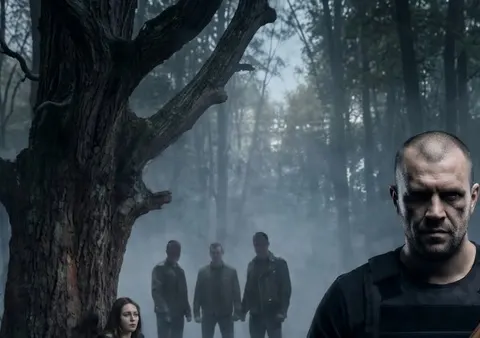
His description was pieced together from fragments, nervous glances, and the guesses of frightened witnesses. Tall—close to six foot six—with cropped hair and shoulders so broad they seemed too large for a standard doorway.
And his eyes—cold, flat, unreadable. He didn’t waste words. He just stared. That heavy, fixed look made people deeply uneasy.
In fact, the monster had a real name: Andrew Kravitz, age twenty-nine. His whole life had been one long injury that never healed. He was born into a world that had no use for him.
His mother struggled with severe addiction and died of an overdose before he turned five. He never knew his biological father. A state children’s home became his family, his school, and his prison all at once.
That was where he learned the central rule of his damaged life: hit first, or get hit. At the home he earned his nickname not just because of his heavy, square jaw. He got it because he had a frightening habit of ending any conflict with one brutal blow.
He didn’t just fight. He broke people—physically and emotionally. At fourteen, that violence ended in a terrible, irreversible tragedy. It started with an ordinary argument with other boys over some stupid joke.
Kravitz went after a younger boy with his fists. He didn’t stop at a beating. In a fit of blind rage, he bit into the boy’s neck.
The teenager nearly severed the child’s carotid artery. Doctors somehow saved the boy, but he was left permanently disabled. After that, Andrew Kravitz was sent to a juvenile correctional facility.
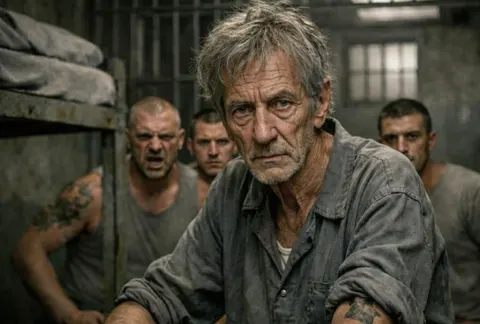
That hard institution became the real school of his life. There he settled on his view of the world once and for all. Society was divided into predators and prey, and he decided he would never again be prey.














Share how the story made you feel
0Comments appear after a quick automatic check. Please no links, ads or personal data.
Next to your name we show your country, determined from your IP address; the address itself is never shown, and only a hashed fingerprint of it is kept to stop spam.