
 Let’s Keep It Real
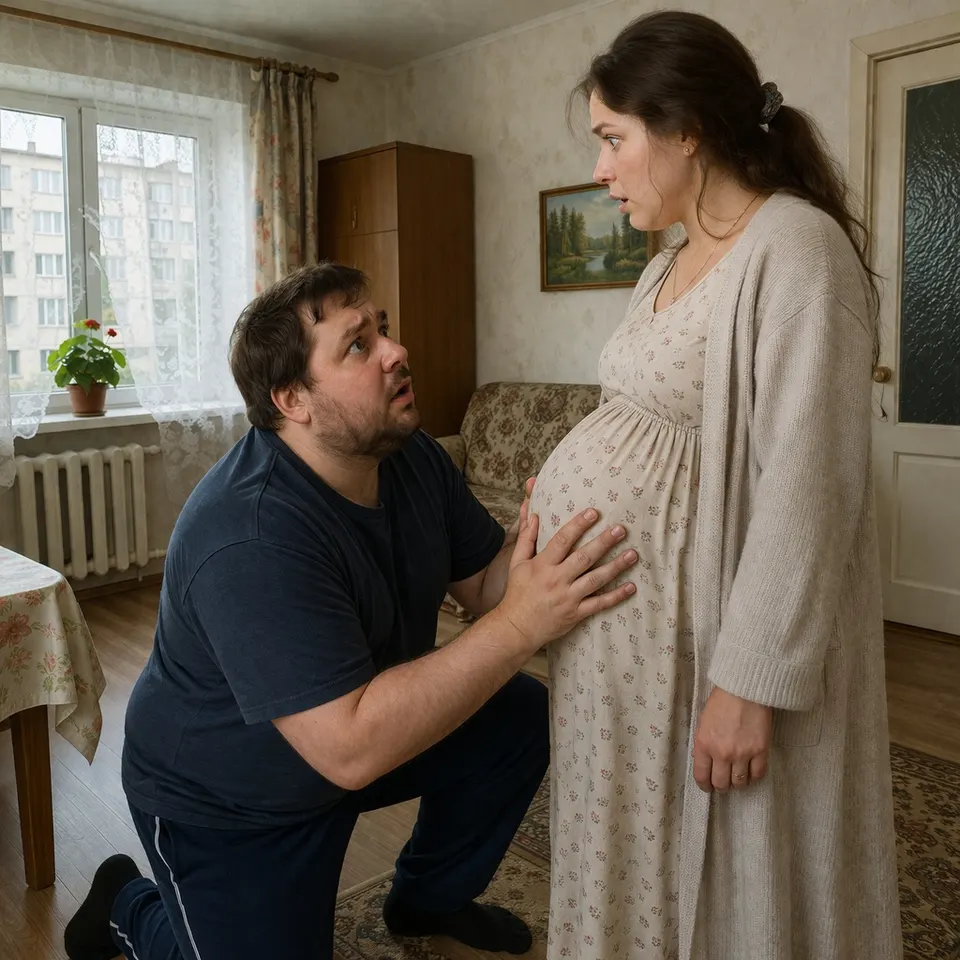
That day, my sister was the happiest woman in the world. She was just a week away from her due date, and we were laughing, setting up the nursery, and taking turns feeling the baby kick. Everyone did—except my husband.
He’s an OB-GYN. He touched her stomach and, a minute later, pulled me out into the hallway, white as a sheet, and said two words that turned our lives upside down. “Call 911.” We thought we understood grief.
But we had no idea what terrible secret my sister had been carrying inside her for the past two weeks. If you believe family means the people who stay when your world falls apart, hit like right now. And if you think some things can’t be forgiven, even by the people closest to you, tell me in the comments.
This story may make you question everything. That fall was the kind that makes you want to stop time, as if some gifted, slightly melancholy painter had brushed the whole town with his best colors. The maples on our quiet suburban street blazed gold and crimson, and in the mornings the light in the house looked warm as honey.
I stood by the window and watched the groundskeeper slowly rake leaves into big rustling piles. Those piles reminded me of my thoughts—heaps of memories, hopes, and quiet disappointments I kept trying to sort through. My name is Marina.
I’m a graphic designer, and my studio is a cozy corner of our condo filled with monitors, paper samples, and sketches. Working from home was my refuge, my cocoon, where I could retreat when the outside world got too loud and demanding. “Morning, sweetheart.” I turned at the sound of that low, slightly raspy voice.
My husband, Evan, came out of the bedroom buttoning up his white medical coat. He worked as an obstetrician at the regional women’s hospital, and his calm manner and easy smile made him a favorite with patients. The second I saw him, I smiled.
He was the only person who could clear the fog in my head just by walking into the room. We’d been married five years—five years of love, understanding, and trying. We didn’t have children.
For two years we went from doctor to doctor, sat through endless tests, and went through two rounds of IVF that led nowhere. Oddly enough, it didn’t poison our marriage. If anything, the shared hurt tied us closer together and taught us to value each other more.
We learned to live with that pain the way people live with a chronic condition. It was always there in the background, but we didn’t let it run our lives. “Working late again?” I asked, straightening the collar of his coat.
“Maybe. There’s a chance I’ll have an emergency C-section, but I’ll try to get home early.” He kissed my cheek. His hands, warm and steady, rested on my shoulders.
“Your sister and Ben are coming tonight, right?”
My younger sister, Katie, taught second grade, and her students adored her.
Three years earlier she’d married Ben, a dependable, easygoing loan officer at a local bank. Now Katie was eight months pregnant. It was her first pregnancy, long hoped for, and our whole family was excited.
“Right, and Mom said she’d stop by too and help out. Katie’s gotten so big lately, I swear it looks hard for her just to walk across the room. But she’s so happy. She’s glowing,” I said.
“I know. Just looking at her makes me feel better too.” There wasn’t a trace of dishonesty in my voice. I really was happy for her. Sure, in the darkest corner of my heart, a small sharp little thing sometimes stirred—envy.
When I saw how naturally it had happened for her, how beautiful and effortless she looked carrying this baby, I’d sometimes think, Why not me? But I pushed those thoughts away. I loved my sister more than anyone, and her happiness was part of mine.
Evan and I were grateful just to be included in the joy of waiting for a new little person. If not through us, then through her. Around six that evening, the doorbell rang.
I opened it and found Katie on the doorstep, beaming, one hand supporting her big belly. Her shoulder-length blonde hair looked fuller than usual, and pregnancy had softened her face and given her that unmistakable expectant-mother glow. Ben stood beside her with a hand on her shoulder.
Tall, kind, and steady, he looked at his wife with such open devotion it made my chest tighten. They were one of those couples people call solid. “Hey!” Katie hugged me with one arm while the other stayed protectively on her stomach.
“And we brought backup.” Our mother stepped out from behind her carrying a big tote bag with fresh parsley sticking out of the top. Mom was old-school, not especially talkative, but she had a huge heart. She always seemed to show up exactly when she was needed, and her quiet presence calmed people down better than speeches ever could.
“Mom, hi! Come on in—don’t stand out there,” I said.
“Fourth floor and no elevator,” Mom muttered, though her eyes were smiling.
“And Katie doesn’t need to be climbing stairs right now.” “Mom, I’m fine,” Katie said, waving it off as she stepped into the entryway, breathing a little hard. “The baby’s been really active today. Probably excited to visit Aunt Marina and Uncle Evan.”
“Really? Let me feel.” I reached for her belly with the enthusiasm of a kid. Firm and round as a ball, it seemed to have a life of its own.
Then I felt it—a strong, distinct thump under my hand. “Wow. That’s definitely movement. Future soccer player, maybe.”
We all laughed. Just then Evan got home from work, and the house filled with voices, laughter, and that happy kind of family commotion. We gathered in the kitchen while I plated the chicken curry I’d made—Katie’s favorite.
Mom chopped salad while the men debated something in the living room. Naturally, the conversation turned to the baby. “So, have you picked a name yet?” Evan asked as he came into the kitchen and gave Katie’s shoulder a quick squeeze.
“We still don’t know the sex, so we’ve got two lists,” Katie said happily. “If it’s a boy, maybe Michael. If it’s a girl, Anna. But Ben wants something a little less common, right, honey?”
“I just think a name should stand out a little,” Ben said with a smile. “But in the end, whatever Katie wants goes.” “Have you bought everything yet?” I asked, and Katie looked a little sheepish.
“Not everything. We still haven’t gotten the crib or the car seat. Mom said it used to be bad luck to buy too much ahead of time, and honestly we weren’t sure what to get.” “Oh, please,” Mom cut in, setting the salad bowl on the table.
“That old superstition is nonsense. Back in my day we got things ready ahead of time because we had to. Washed diapers, ironed blankets. Now stores are full of everything and you two are still waiting.” “Mom, we talked about this,” Katie said gently.
“I’m checking into the hospital Monday anyway, so we figured we’d get everything done this weekend.” “Then let’s all go shopping tomorrow,” I said. “And we’ll help get the nursery set up.”
“Evan can come too, right? He’s off tomorrow.” “Of course,” Evan said with a nod. “I’ve never shopped for baby gear before. Might be useful field research.”
Mom just shook her head, the way she did when she thought people were tempting fate. In her view, you waited until the baby arrived, then the husband and relatives ran out and bought what was needed in a day. “Mom, seriously,” Katie said, laughing.
“It’s the twenty-first century. We want everything ready before the baby comes home. We want her to have a cozy little nest.” That evening we stayed at the table for a long time, making plans for the weekend and laughing.
Looking at my sister’s happy face, at Ben’s steady care, at my husband’s thoughtful smile, and even at Mom’s familiar grumbling, I felt my heart fill with a quiet warmth. This was my family, and I felt lucky to belong to it. Saturday morning, just as planned, we headed to a big baby store out by the mall.
The day was sunny but cool in that unmistakable fall way. The second Katie stepped into that huge showroom full of cribs, strollers, and shelves of tiny clothes, she stopped like a kid in a toy store. Her eyes lit up.
“Oh my gosh, look at all this. I don’t even know where to start.” “Easy,” I said, taking her arm with a grin.
“We start with the fun part. Clothes.” We could have wandered those aisles for hours.
I picked up tiny onesies soft as clouds, little footed sleepers with bears on the knees, and socks small enough to fit over my thumb. The pastel colors, the softness of the fabric, the sheer size of everything made something inside me tremble. I pictured a tiny hand wrapping around my finger, little feet kicking inside those absurdly small pants.
In those moments I could almost feel the emptiness in me filling with borrowed joy—still not mine, but close enough to warm me. Katie carefully pushed a stroller back and forth, testing how it turned and folded. Meanwhile, Ben and Evan stood with serious expressions listening to a sales associate explain the pros and cons of different crib models.
They looked less like men buying nursery furniture and more like they were comparing SUVs. Evan, with his doctor’s mindset, asked about safety standards, mattress support, and materials. Ben cared more about how the crib would look in the nursery and whether it would last.
Watching them, I couldn’t help smiling. Each in his own way, they were already trying on fatherhood. In the end we bought everything: a beautiful white crib, a good stroller, a top-rated car seat, and piles of clothes, blankets, and toys.
At the register, Ben firmly pulled out his card and shut down every attempt we made to chip in. “This is our gift,” I said, trying to push his hand away. “Nope,” Ben said with a smile.
“Your gift is all the help. This part’s on me.” On the drive home, with the car packed full of boxes and shopping bags, Katie let out a happy sigh.
“I’m so lucky to have all of you. This baby is going to grow up surrounded by so much love.” Sunday morning we gathered at Katie and Ben’s place.
Their house was full of sunlight and the smell of fresh baking—Mom had made her apple pie. The plan was simple. The guys would put together the crib while Mom, Katie, and I sorted the purchases, washed and folded baby clothes, and got the room ready.
“All right, gentlemen, let’s get to it,” Ben said, opening the huge box of crib parts. Evan studied the instruction sheet. “This thing has enough pieces to build a satellite,” he said dryly.
Mom and I carried bags into the nursery. It was a small bright room with a window facing a quiet cul-de-sac. Still empty, it felt like it was waiting for someone.
We spread the tiny clothes out on the floor, and the room immediately filled with that sense of expectation. “All this fuss ahead of time,” Mom muttered again, but I saw her eyes shine when she picked up a little knit cap with ears. “Still, I hope everything goes smoothly.”
“Mom, please,” Katie said, tired now as she lowered herself into a chair. “Everything’s going to be fine. We just want it to be ready.”
A couple of hours later, the crib was assembled. White, clean-lined, and sturdy, it stood in the middle of the room like a promise. “Looks good,” Ben said, wiping his forehead.
“Not bad for two amateurs.” Katie and I made up the mattress with a fitted sheet covered in little giraffes and hung a mobile with bright animals over the crib. The room changed before our eyes. It came alive.
“Thank you, all of you,” Katie said, looking around at us with tears in her eyes. “I never could’ve done this alone. I’m so happy.”
By evening, when everything was done, we sat down for tea and pie. We were all a little tired, but in a good mood. Katie leaned back in her chair with both hands resting on her stomach.
“This baby has been doing gymnastics all day,” she said with a smile. “Probably excited about the nice room.” “Well, let me see,” Mom said, suddenly interested after sitting quietly for a while.
She walked over and put her hand on Katie’s belly the old-fashioned way.
She stood there for a minute with a serious face. “Yep. Active little thing. Going to have your stubborn streak.”
We laughed. “Marina, come feel,” Katie said. “You’ve done the most work today.”
I walked over and put my hand on her firm stomach again. This time what I felt seemed a little different. Not a sharp, springy kick like before, but more of a slow rolling movement under the skin, almost like a wave.
I didn’t think much of it. I figured the baby had just turned or stretched. “Definitely moving. Strong kid.” “Evan, what about you?” Katie said, smiling at my husband.
“Give us the professional opinion.” Evan was usually a little reserved, but he gave in to the mood. “All right, let’s see what this little troublemaker is up to,” he said with a smile.
He walked over, crouched down, and gently—almost weightlessly—placed his broad hand on her belly. His hands were a doctor’s hands, used to catching the smallest details. He shifted his palm slightly, then again.
I watched his smile slowly disappear. It didn’t just fade—it drained away, leaving behind a look of focused tension. A deep line formed between his brows.
He didn’t take his hand away. He began making small, careful palpating movements, the way doctors do during an exam. He wasn’t just feeling. He was assessing.
Trying to find the baby’s head, back, position. Trying to sense that subtle but unmistakable muscle tone that belongs to a living body. “Well?” Katie asked, not noticing the change in him.
“Pretty active, right?” The silence stretched. The room went still except for the ticking of the wall clock.
Evan slowly lifted his hand from my sister’s belly. His face had gone pale—nearly the same color as his coat. He stood up, staring past us at the wall.
“Evan?” I said first. My voice sounded too loud. “What is it?”
He turned his head toward me slowly. In his eyes I saw something I had never seen in all our years together. Not fear. Certainty. Cold, terrible certainty.
He took my arm, his fingers cold as ice. “Marina, come out here a minute.” His voice was low, tight, unfamiliar.
“What? Why?” I said, completely lost. “We’re having tea.”
“Now,” he said, with a firmness that left no room for argument. He looked straight at me, and there was such alarm in his eyes that I felt my stomach drop. “Where are you two going?” Katie asked, uneasy now.
Ben and Mom were staring at us too, confused. “Just a second,” I said, trying to smile casually, though my lips barely worked. “We’ll be right back.”
Evan led me into the hallway and then out onto the landing. When the apartment door shut behind us, he leaned against the wall. The dim overhead light made his face look almost waxy.
“Call 911,” he said, breathing the words out. His voice shook. “Right now.”
“What? Why? For what?” I stammered, my brain refusing to catch up.
“Evan, what happened? Katie feels fine. We were all just laughing.” “Didn’t you notice anything when you felt her stomach?” His face tightened.
“Notice what? The baby was moving. I felt it. We all did.”
Evan gripped my shoulders and made me look at him. “Marina, listen to me as a doctor, not as your husband. What we felt in there—that wasn’t fetal movement. That wasn’t muscle tone. It was...” He stopped, searching for words.
“It felt more like shifting gas, or the uterus reacting around... around tissue that’s no longer living. A healthy baby at this stage moves differently. There’s tone. Resistance. A response to touch.”
“There was nothing. No response. No life.” I stared at him, refusing to believe it. “But those kicks, those waves...” “We wanted to believe it,” he said, his voice breaking.
“All of us did. We wanted so badly to feel life that we mistook every spasm, every movement in Katie’s intestines, every tightening of muscle for the baby. That’s not uncommon for family. But to a trained hand...” He swallowed hard. “Something is very wrong, and it’s been wrong for a while.”
In that moment, when Evan said those terrible, measured words, my world collapsed. The beautifully decorated nursery, the happy faces, the smell of apple pie—it all turned instantly into scenery in a nightmare. My knees gave out, and I slid down onto the cold concrete landing.
“That can’t be true,” I whispered, but the words caught in my throat. Evan was already pulling out his phone. “911? I need an ambulance.
Woman, 38 weeks pregnant, possible intrauterine fetal demise. Address...” And through the apartment door I could still hear Katie laughing.
She was telling Ben some funny story about one of her students, and that laugh—so happy, so unaware—cut right through me. I couldn’t get up. I just sat there on the cold floor with my arms around my knees, staring at nothing.
Then, in the distance, a siren started up. It grew louder, sharper, pushing through the quiet of the fall evening. It sounded like a cry.
The kind I couldn’t get out of my own throat. Every second stretched. I was still on the floor while Evan stood over me like a silent guard. He had finished the call and was holding the apartment key in one hand. He couldn’t bring himself to open the door.
How were we supposed to tell them? How was I supposed to look my sister in the eye? The door opened on its own.
Ben stood there. “What are you two doing out here? Mom’s worried, Katie...” He stopped when he saw me and took in Evan’s face.
“What happened?” At that exact moment the siren became deafening. Red and blue light flashed across the walls of the hallway and across our stunned faces.
The ambulance had pulled up right outside. “What’s going on, Evan?” Ben’s voice had panic in it now.
Evan stepped forward and put a hand on his shoulder. “Ben, Katie needs to go to the hospital. Now.”
“The hospital? Why? What’s wrong with her? She was fine...”
Mom appeared in the doorway, her face tight with worry. “Evan, what is it? Why is there an ambulance?”
“Mrs. Parker, it’s just to check something out. To be safe,” Evan said, his voice suddenly calm again, his doctor’s composure taking over.
“There’s something I don’t like. Better to have her evaluated right away.” Then the door opened wider, and we saw Katie.
She stood in the hall looking at us, confused. “Why would I go to the hospital? I’m not going anywhere.”
“I feel fine. The baby’s moving. I can feel it.” Just then two EMTs came up the stairs with a stretcher.
“You the one who called?” one asked. “Yes,” Evan said, stepping toward them and showing his hospital ID.
“I’m a physician. Thirty-eight weeks. Concern for acute fetal distress or absent fetal heart tones. She needs immediate evaluation.”
He chose his words carefully—enough to convey urgency without saying the worst part out loud. “What? What distress?” Katie grabbed the doorframe.
“I’m not going. I feel perfectly fine.” Somehow I managed to stand.
My legs felt weak. I walked over to my sister. “Katie, honey, it’s just to check. Please.”
“The doctors are here. Let’s just go in, make sure everything’s okay, and come right back home.”
“It’s just precaution,” Ben said quietly, putting his arms around her. He didn’t understand any more than I did, but he trusted Evan. “Let’s do what he says.”
Katie looked from me to Ben to Mom. Her eyes were full of fear and hurt. “But why? What’s wrong?
You’re all acting strange.”
There was a childlike note in her voice now, the sound of someone being pushed toward something frightening and unexplained. The EMTs, seeing how shaken she was, brought up a wheelchair.
“Come on, ma’am,” one of them said gently. “We’ll get you down safely.” At last Katie gave in.
She sat down, still looking around in confusion. As they wheeled her out, her eyes fell on the nursery with its new white crib. And for just a second, something like panic flashed across her face.
“Mom, stay here, okay?” Evan said as he pulled on his jacket. “We’ll call you.” “I’m going with you,” Ben said firmly.
“Me too,” I whispered. We followed my sister down the stairs. I held her hand. Her fingers were cold.
“Marina, I’m scared,” she whispered. “What’s happening?” “Everything’s going to be okay,” I kept saying, like a prayer.
But I didn’t believe it myself. The drive to the women’s hospital felt endless.
I sat beside Katie in the ambulance, Ben across from us, while Evan followed in our car. Katie was silent, staring out the window at the passing streetlights. She kept rubbing her belly, as if trying to reassure herself that everything inside was still the same.
When we got to the ER entrance, they were already waiting. Evan had clearly called ahead. A gray-haired doctor with a grave expression met us.
“Evan, I understand. Take her straight to exam three. Ultrasound is ready.” It was the department chief, which told me this was serious.
In the exam room, they asked Katie to lie down. She did what they said, but her eyes tracked every movement the staff made. The ultrasound tech spread cold gel over her stomach.
“Baby, you’re okay, right?” Katie whispered, staring at the ceiling. “Mom’s right here.” A black-and-white image appeared on the screen.
I didn’t understand any of the shapes or shadows, but I saw the way Evan and the doctor’s faces tightened. The tech moved the probe over her stomach again and again. The doctor leaned closer to the monitor, changing angles, enlarging the image.
The silence in that room was unbearable. Five minutes passed—maybe less, maybe more. It felt like forever. Finally the doctor gave the tech a small nod.
The machine was turned off. “Evan, a word,” the doctor said quietly. They stepped into the hall.
I stayed with Katie and Ben. “Well?” Katie asked, hope still in her voice. “Why isn’t anyone saying anything?”
“Easy, honey,” Ben said, taking her hand. “We’ll know in a second.”
A minute later the doctors came back. Evan’s face was blank. Not calm—empty, as if every feeling had been stripped out of it.
The doctor pulled up a stool beside the exam table and sat down next to Katie. “Katie...” he began, very gently. “Doctor, the baby’s okay, right?” she interrupted, her voice pleading now.
The doctor took a breath. “Katie, I’m very sorry.” “Sorry for what?” Her smile began to slip.
“We were unable to detect a fetal heartbeat.” Time stopped. Even the air in the room seemed to freeze.
Katie stared at him, trying to process the words. “No heartbeat.” “What does that mean?”
“It means your baby has died,” the doctor said as softly as he could. Katie slowly shook her head. “No. You’re wrong.”
“That’s impossible. The baby moved an hour ago. We all felt it.”
“Ben, Marina, tell him.” “Katie,” Ben said, rushing to her and wrapping his arms around her shoulders. “No!” she cried out.
“Your machine is wrong. The baby is alive. I can feel him. I’m the mother—I know.”
“Katie, please listen to the doctor,” I said, moving to her other side, tears running down my face. “You too?” she snapped, turning on me.
“Are you all doing this to me? I know my own baby.” The doctor signaled to a nurse.
She stepped out and came back a few minutes later with a thick chart. “Katie,” the doctor said again, opening it. “There’s something in your records.”
“Two weeks ago, you came into this hospital by ambulance.” Ben looked at his wife in surprise. “You came here? Katie, what happened?
I didn’t know anything about that.”
“It was nothing serious,” Katie said weakly. “I slipped on the stairs and got a little dizzy. The neighbor overreacted and called 911. I told them I was fine.”
“Do you remember what happened next?” the doctor asked gently, watching her closely. “They brought you here to triage.” “Right, they checked me,” Katie said, trying to remember.
“They said they wanted an ultrasound to make sure the baby was okay after the fall.” “That’s right,” the doctor said. “And here’s the note from the attending physician.”
He turned a page in the chart. “At that time, fetal heartbeat was present and normal. Mild uterine irritability, but nothing critical.”
“He recommended that you stay for observation for a day or two, but you declined because you felt fine. Here is the form you signed refusing admission.” “See?” Katie said suddenly, almost relieved.
“Everything was fine. I went home, and everything stayed normal. The baby kept moving.” “Katie,” the doctor said, his voice very quiet now.
“Did you come back the next day for the follow-up they instructed you to get?” Katie looked down. “No. I felt okay. Nothing hurt. I didn’t think I needed to spend more time in a hospital.”
The doctor closed the chart and looked at all of us. His face was heavy with sympathy. “I’m afraid the worst likely happened after you left—possibly that night or the next day.”
“The fall may have triggered a placental abruption. Not a sudden catastrophic one—a partial one. That can be deceptive.”
“At first everything can look stable. Then the blood supply to the baby begins to fail, and the baby slowly slips away. It can happen over hours, quietly, with very few symptoms for the mother.”
The room went silent. We were all trying to absorb what he was saying. “So...” Ben whispered.
“The baby... was alive when she left here?” “Yes,” the doctor said. “And if Katie had stayed under observation, we likely would have seen the changes.”
“We would have caught it on monitoring or repeat ultrasound. We could have done an emergency C-section. We could have saved the baby.”
The words hit like a blow. Katie stared at him with wide, uncomprehending eyes. “But... I... I didn’t know.”
“I thought everything was okay.” “I understand,” the doctor said. “You’re not a physician. You had no way to know. But you did decline observation.”
Katie slowly turned toward Ben, then toward me. Her face began to change with the horror of understanding. Not just that the baby was dead—but that there may have been a chance to save the child if she had stayed.
“No,” she whispered. “No, no, no. I didn’t hide anything,” she suddenly cried.
And now it wasn’t denial. It was despair and guilt. “I didn’t know. I didn’t mean to. The baby... I thought the baby was moving.”
And in that moment it became clear why her mind had built such a strong defense. Accepting that the baby had died was unbearable. But accepting that the baby might have lived if she had simply stayed in the hospital—that was almost impossible.
The guilt was so overwhelming that her mind had chosen illusion instead. In that illusion, the baby was still alive, still moving, and that meant her decision to go home had been reasonable. She wasn’t just denying the death. On some level, she was protecting herself from a guilt too large to carry.
“Katie, honey, this is not your fault,” I said, rushing to her and holding her shaking shoulders. “You didn’t know. You couldn’t have known.”
“I killed him,” she sobbed into me. “I killed my own baby by being stubborn.” “No,” Ben said firmly, stepping in and wrapping his arms around both of us.
“This was a terrible accident. Do you hear me? A tragedy. We’ll get through it together.”
The doctor quietly explained the rest, almost as if summing up what had happened. “The movements you thought you felt were most likely muscle spasms or bowel activity.”
“Your need to feel the baby, your need to believe everything was all right and that you had made the right decision, made those sensations feel like fetal movement.” The room fell into a heavy silence. Now the pieces fit.
There had been no malpractice, no negligence. There had been a tragic chain of events and one understandable decision that led to irreversible loss. And then a crushing guilt so powerful that my sister’s mind had built a fragile wall of illusion around her just to survive.
That day, Katie was evaluated by a psychiatrist. The diagnosis sounded frightening—dissociative symptoms, a break from reality brought on by extreme stress. The doctor said that with treatment and support, people do recover.
The next day, Katie had surgery. The baby’s tiny body was fully formed, with delicate features and a heartbreaking stillness. The four of us stood in a small quiet room.
In the little casket Ben held in both hands were flowers. We said goodbye in silence. And only then, for the first time, Katie truly faced what had happened.
She broke down completely. She wasn’t only grieving her daughter. She was grieving the happy illusion she had lived inside for those last two weeks.
Three months passed. Outside, deep clean snow covered everything. It wrapped the town in a white hush, as if trying to hide every scar and every hurt.
Katie spent that time in a specialized treatment center. It was a quiet place surrounded by woods. Daily therapy, group sessions, and above all our steady support slowly began to help.
She was learning how to look at the world again without turning away from reality. The first weeks were brutal. Guilt ate at her. She refused food, lay for hours staring at the ceiling, or cried and repeated the same sentence over and over: “I killed him. I did this.”
The therapist explained that this was the hardest stage. The protective wall had come down, and now she was alone with a truth her mind experienced as a sentence. I drove out to see her every other day.
Evan and Ben came almost every evening after work. Mom came on weekends with homemade food and sat for long stretches by Katie’s bed, quietly stroking her hand. That silence said more than comfort ever could. It held all the weight of a mother’s love and grief.
One afternoon Katie and I sat in the common room of the clinic. Snow drifted down outside the big window. Everything there was designed to feel calm and safe.
“Marina,” she said quietly, still looking at the fire, “the doctor says it wasn’t my fault, that it was a chain of events, but I... I can’t believe that. I keep replaying that day. If I had just stayed. If I had just listened...”
There was no hysteria in her voice anymore. Just deep sadness and guilt that had settled into her bones. “Katie, ‘if only’ is poison,” I said, taking her hand.
It was warm, which felt like a good sign. “You made the decision based on what you knew then.”
“You felt fine. You had no way of knowing what would happen next. None of us did.” Ben became her shadow, her anchor.
He barely left her side. His whole life seemed organized around one goal now: helping his wife out of that dark place. He started seeing a therapist too, to learn how to support her without letting both of them drown in blame.
“I should have known,” he admitted to me one day. “I should’ve been with her more. If I’d been there, I would’ve made her stay in the hospital.”
“Ben, stop,” I said firmly. “You can’t take on her guilt too, or you’ll both go under. Neither of you caused this.”
“A terrible thing happened. That’s the truth.” Evan watched her progress both as a doctor and as family. “Her guilt is irrational, but to her it feels absolutely real,” he told me at night.
“The goal isn’t to argue her out of it. It’s to help her eventually forgive herself. That takes time. But she’s strong. She’ll get there.”
Four months later, when the first signs of spring began to show, Katie was discharged. We all went to bring her home. The first thing she did when she walked into the house was go to the nursery.
The room had been left untouched. The white crib, the animal mobile, stacks of tiny clothes on the dresser. She stood in the doorway for a long time before stepping inside.
Ben came up behind her and put his arms around her shoulders. “Do you want me to pack it all up?” he asked quietly.
“No,” Katie said, shaking her head.
“I need to do it myself. Tomorrow.” The next day, when I called, she told me she and Ben had donated all the baby things to a foster care charity.
“I cried while I packed every single item,” she said. “Every sleeper, every sock. I asked my baby to forgive me.”
“I talked to him. And somehow it helped a little. Like maybe he heard me.” Spring that year came fast and hard.
It was as if nature itself was trying to make up for lost time, to heal what winter had broken. Katie began to come back to life with it. She went back to teaching.
At first it was hard. Every child reminded her of what she had lost. But eventually she realized that the noise, the questions, the laughter of children were part of what was helping her heal. She poured all her unused love into those kids, and they gave it right back.
One day in late May she called me. “Marina, I’ve been thinking. I never really thanked you and Evan properly—especially him. If it hadn’t been for what he noticed that night, I don’t know...”
“Katie, don’t say that. We’re family.” “No, listen. I want you two over for dinner this weekend. Ben and I have something we want to tell you.”
That Saturday we went to their house. Katie looked almost like herself again. Same soft smile. Same warm eyes.
Only now there was a shadow in them that would probably always remain. She set the table and made my favorite salad. Everything looked normal.
But all of us knew normal had changed for good. We were different now—closer, tougher, more careful with one another. After dinner, while we were having tea, Katie took Ben’s hand.
“We wanted to tell you something. We’ve thought about it for a long time, and we’ve made a decision.” She paused and gathered herself. “We want to adopt.”
I froze with my cup in my hand. Evan looked at them, surprised. “You taught me something important,” Katie said, turning to me.
“Family isn’t only blood. Family is love and showing up. Even without blood ties, love can make strangers your own.”
“I see that every day at school. Kids come from all kinds of homes. The happiest ones aren’t always the ones who look like their parents. They’re the ones who are loved.” “That’s... that’s wonderful,” I said, tears rising again.
“You two would be wonderful parents.” The adoption process was long and exhausting.
There was paperwork, home studies, parenting classes, interviews. Evan and I supported them through every step, helped with forms, sat with them in waiting rooms, and just stayed close. Sometimes Katie lost heart. She cried and said it would never happen, that she didn’t deserve to be a mother after what had happened.
But Ben was steady as ever. He’d hold her and say, “You’ll be a great mom because you know what life costs. You know what love costs.” And in the end, they made it through.
That same fall, a year after the tragedy, they brought home a five-year-old boy. His name was Michael. He was quiet and serious, with huge brown eyes that seemed to hold more than a child should have to carry.
He had already been through three foster placements. On the first evening, the three of them sat down to dinner, and Michael picked at his food for a while without saying much. Then he looked up at Katie with those solemn eyes and asked softly,
“Are you going to be my mom now? For good?”
Katie couldn’t answer right away. She just cried.
She went over to him, wrapped her arms around his thin little body, and whispered, “Yes, sweetheart. For good. Thank you for choosing us.”
From that day on, Evan and I became Aunt Marina and Uncle Evan. We loved that serious little boy with our whole hearts. He was our nephew, our family.
Two more years passed. We were sitting around the big table at Katie and Ben’s house on New Year’s Eve. Michael, now seven, had changed from a quiet, frightened little boy into a lively chatterbox.
He was breathlessly telling us about his school holiday concert, his friends, and the gift he’d asked Santa for. Katie watched him with a kind of happiness on her face I hadn’t seen even during her pregnancy. “Remember?” she said quietly after Michael ran off to his room to play with the train set Evan had given him.
“That night, I thought it was the end of the world. I thought my life was over.” “I remember,” I said, taking her hand. “But it wasn’t the end,” she said, looking around at all of us—me, Evan, Ben, Mom.
“It was a beginning. A hard one. But a real one.” Ben put his arm around her shoulders.
“We learned the main thing,” he said. “Family isn’t just sharing the good times and laughing together. It’s not walking away when everything falls apart. It’s helping gather up the pieces of someone’s broken heart and believing they can love again.”
Mom, who had been quiet until then, spoke up. “Family is roots,” she said. “A storm can tear off the branches. New ones grow back. Sometimes stronger.”
And in her plain, slightly awkward words was all the wisdom anyone needed. That night I thought about Evan and me, about our own quiet sorrow that had never really left. It had simply become part of our lives, like a scar that no longer hurts but never disappears.
Looking at Katie and Ben, at the happiness they had fought so hard for, I suddenly understood that maybe our story wasn’t over either. That there are more ways to become a parent than the one you first imagined.
Maybe our path would look something like my sister’s. I slipped my hand through Evan’s arm and leaned against his shoulder. “I love you,” I whispered.
“Love you too,” he said. I knew there would still be hard things ahead. But I wasn’t afraid anymore.
Because I had finally understood something important. Love isn’t what exists only when life is easy. Love is what walks through hell with the people who matter to you and comes out the other side still holding on.
It’s looking at each other and knowing that as long as you stay together, no storm gets the last word. One decision, made for understandable reasons, set off a chain of events that ended in tragedy. That thought haunted all of us for a long time.
But eventually I came to see this: life isn’t made up of perfect choices and bad ones. It’s made up of choices and consequences.
And what matters most is not only the mistake you made, but what you do afterward. Can you face the consequences honestly? Can you find a way not just to survive, but to turn your deepest pain into new love and new life, the way my sister did?
Do you believe even the worst tragedy can become the start of something good? Or are there mistakes that can never be repaired? I’d really like to know what you think.








Share how the story made you feel
0Comments appear after a quick automatic check. Please no links, ads or personal data.
Next to your name we show your country, determined from your IP address; the address itself is never shown, and only a hashed fingerprint of it is kept to stop spam.