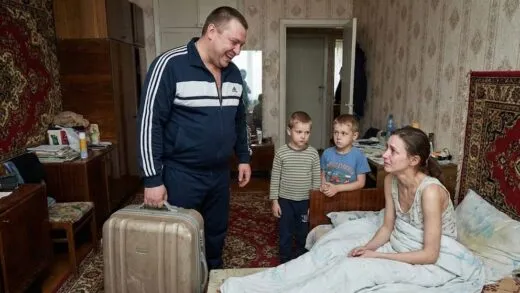
Mike’s friends could remember more than one time when he’d stepped into a brutal street fight without a second thought. He couldn’t walk past something unfair. He couldn’t stand by while a bigger guy beat on someone weaker. He wasn’t naturally aggressive, but in moments like that, a cold resolve came over him, and even the worst hotheads usually backed off.
No one could have imagined then that this very trait—this sharpened sense of justice—would one day turn against him and end in catastrophe. His send-off was loud, crowded, and a little sad. Everybody had packed into the small apartment—parents, relatives, friends.
His father, a broad-shouldered factory man who didn’t waste words, slapped him on the back and said the Army was a school of life, the kind that turned boys into men. His mother kept wiping her eyes while spooning salad onto plates, her heart tight with a bad feeling she couldn’t shake. Susan sat beside Mike, holding his hand, saying almost nothing because she was afraid if she started talking, she’d cry.
Then came the train station—the noise, the rush, the tinny music over the loudspeakers. Mike, already in that awkward, oversized uniform, hugged his mother goodbye and shook his father’s hand. His last look was for Susan.
He held her close, as if trying to memorize her warmth for the next two long years.
— I’ll wait for you, — she whispered.
— I’ll come back, — he said.
He had no idea that the ordinary young man boarding that train would never really return. Someone else would come back in his place. June 1986.
The capital didn’t greet him with parade-ground shine but with the dull fence of an Army post somewhere on the outskirts. Along with dozens of other bewildered young men, he stepped through the gate, and the old world simply stopped existing. The first thing that hit him was the smell—bleach, cheap paint, and something sour drifting in from the mess hall. Then the cold echoing barracks hallways, the iron bunk beds made with obsessive, lifeless precision, the dim government-issue bulbs—everything about the place seemed designed to erase the individual, to turn “you” into one more interchangeable part in a machine.
No first name—just a last name. No own clothes—just the same rough, scratchy uniform for everybody, cut like it had been made for somebody else. At first, life seemed ruled by a strict, if pointless, order.
A barked shout: “Company, up!” At six in the morning—cold water at the sink, running drills on the parade ground, formation, chow, more drills, lights out. The rhythm wore a man down, but at least it was predictable.
Mike clung to that predictability like a drowning man grabbing driftwood, hoping that was all Army life was. But it was only the surface, a thin coat of paint over rotten wood, a front hiding another reality—unofficial, and far crueler. Before long, Mike started noticing the shadows. Shadows in the dark corners of the barracks, in the smoking area, in the dim washrooms.
There was an invisible hierarchy, all but more powerful than rank or regulations. There were the “new guys”—fresh recruits, with no rights to speak of. And there were the “old hands”—the men with six months or less left to serve.
They were the real kings of the place. They moved differently—loose, lazy, unhurried, like owners with nowhere they had to be. They spoke more quietly than the officers, but their orders, even whispered, got obeyed faster than any shouted command.
Mike saw another recruit from his intake forced to scrub toilets with a toothbrush until they shined. He saw men pulled from their bunks at night and taken to the supply room, where dull, methodical thuds and muffled groans carried through the walls while everybody else pretended to be asleep. The air itself felt soaked in fear.
It was a sticky kind of fear, almost physical. It made men walk with their eyes down and flinch at every sharp voice. And that fear had a face and a name—Sergeant Voronov. Big, quiet, thick-necked, with a bull’s stare and fists the size of small melons.
He almost never raised his voice. He didn’t need to. The sound of his heavy steps in the hallway was enough to bring the whole company to dead silence. Voronov wasn’t just a sadist.
He was the living embodiment of the whole rotten system, its chief priest and executioner. And his cold, measuring gaze had already settled on Mike more than once. Voronov’s personal attack dog—and Mike’s main tormentor—was Private Gafurov, a wiry, quick little guy with darting eyes and a crooked grin.
Gafurov, who’d grown up in a world where only brute force and nerve earned respect, took a dislike to Mike from day one. Why? Because Mike didn’t scramble to please anybody. Because he didn’t grovel. Because there was no pleading submission in his eyes—only quiet self-respect.
Gafurov read that silence as educated-boy arrogance, and he hated it on sight. The breaking point came fast—one week after Mike arrived. The mess hall.
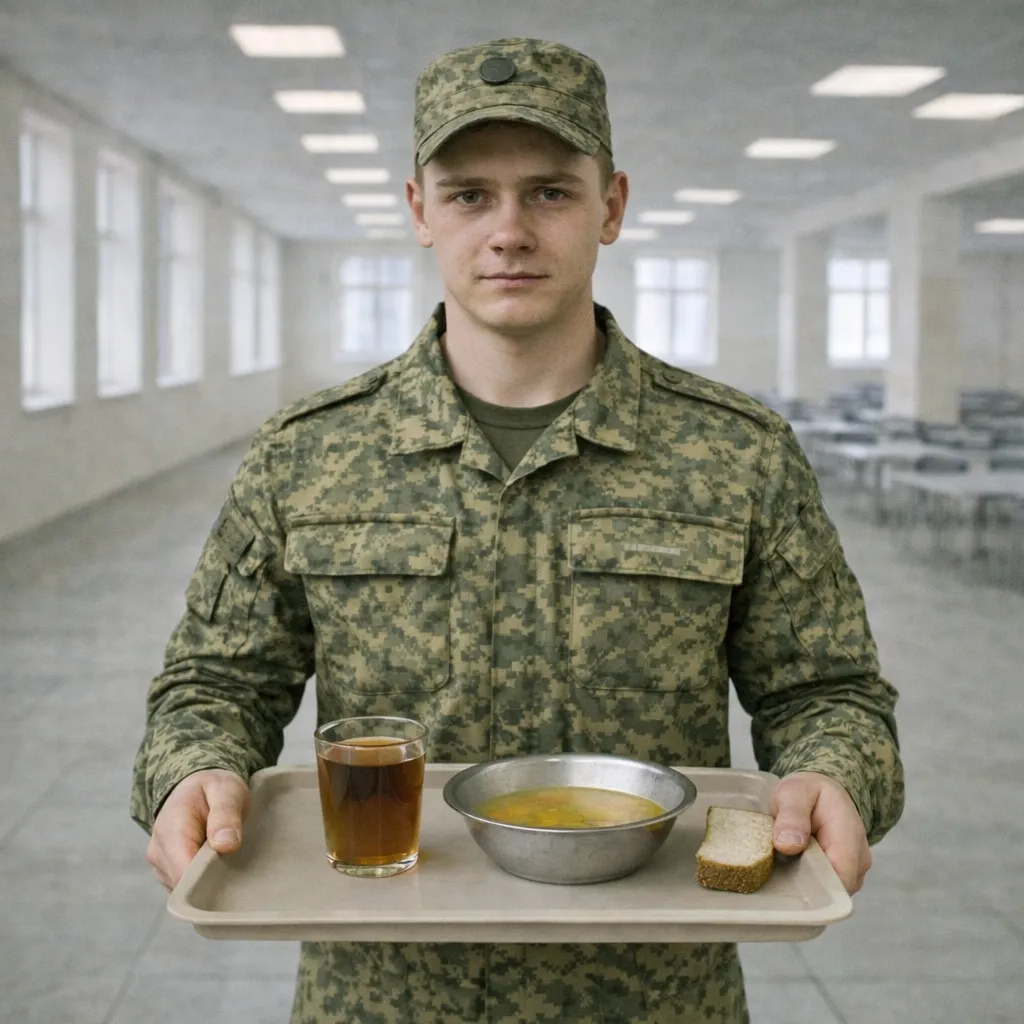
The smell of sour cabbage and overcooked noodles hung in the air. The company ate fast and hard because hunger was a soldier’s constant companion. Mike sat with his head down over an aluminum bowl.
Then Gafurov’s mocking voice sounded right by his ear: