Anna Sotnikova stood in the corridor of city hospital No. 7 in the small provincial town of Voznesensk, holding a plastic bag with her mother’s belongings. It had been five days since Angelina Sotnikova’s funeral, but the pain still gripped her chest like a vise, not allowing her to breathe freely. The eighteen-year-old girl felt completely lost in this huge world without her only close relative.
A nurse from the oncology department, a stout woman in her fifties, looked at her with sympathy:
— Dear, there’s still a robe and slippers left.
— I’ve collected everything that was in the nightstand.
— My condolences to you. Your mother was a very good, patient woman. We all grew to love her over these months.
Anna was a fragile girl of medium height, a brunette with long, curly hair and big blue eyes—a spitting image of her mother in her youth. Anya nodded, not trusting her voice. A lump formed in her throat whenever someone mentioned her mom in the past tense.
Just a week ago, Angelina had been alive, joking despite the pain, making plans for her discharge, which never happened.
— Thank you for everything, — Anna finally managed to say. — For the care, for the kindness.
She hurriedly headed for the exit, not wanting to stay any longer within these walls, saturated with the smell of medicine and human grief. Outside, it was a warm April morning, the sun was shining brightly, and it felt like a sacrilege. How could the world go on living its ordinary life when her world had collapsed?
At home, in their small two-room apartment on the outskirts of the city, Anna placed the bag on the kitchen table and for a long time couldn’t bring herself to open it. Every one of her mother’s things was imbued with her presence, her warmth. Finally, gathering her courage, she carefully took out her mom’s favorite blue robe, slippers with embroidered flowers, and a book of poems that her mother had been rereading in her final weeks.
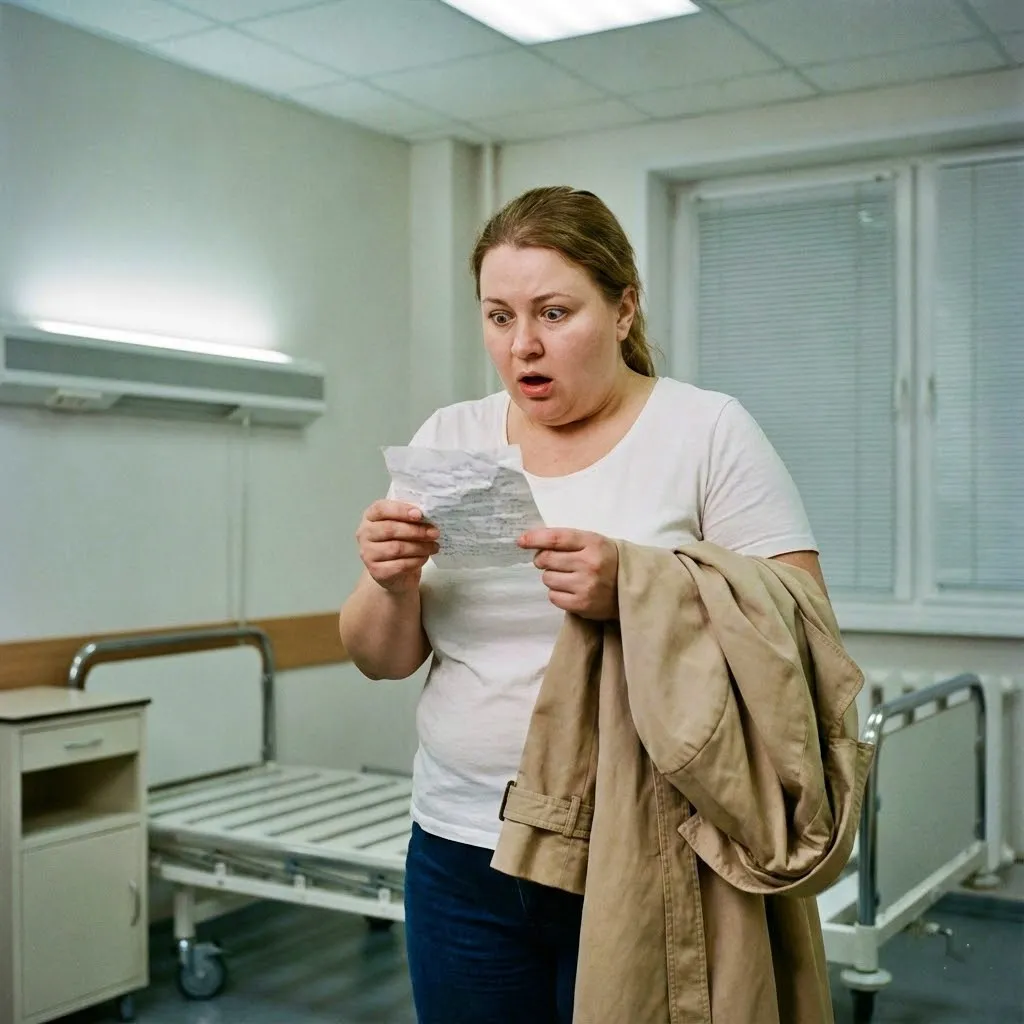
When Anna picked up the robe to put it in the closet, a piece of paper, folded in four, fell out of the breast pocket. The girl frowned: her mother was usually very neat and never left unnecessary things in her pockets. Unfolding the note, Anna saw her mother’s familiar handwriting—clear, beautiful, the kind she had tried to imitate in her childhood.
“My dearest Annushka, if you are reading these lines, it means I am no longer with you. I know you are in great pain right now, and forgive me for leaving you alone. But I could not leave without taking care of your future. Exactly three months from the day of the funeral, come to my grave at two in the afternoon. A person will be waiting for you there who will help you understand many things I didn’t have time to tell you in life. Trust him, he is a close friend of mine. Remember, I will always love and protect you, wherever I am.”
— Your mom? — Anna reread the note several times, not believing her eyes. — Mom planned everything in advance. She knew she wouldn’t recover.
And what friend was she talking about? As far as Anna could remember, her mother had no close friends, only colleagues from the city library and a few neighbors with whom she maintained friendly relations.
The girl sank onto the sofa, the note still in her hand. Questions swirled in her head, with no answers. Her mother had always been an open book to her; they shared everything, kept no secrets from each other. Or so Anna thought. Suddenly, a thought struck her: what if her mother had really been hiding a lot? What if their whole life wasn’t as simple and clear as it seemed?
Angelina Sotnikova was a woman of extraordinary spiritual strength. At 47, she looked younger: slim, elegant, with intelligent blue eyes and a gentle smile. She worked as the head librarian, adored classical literature, and raised her daughter alone. She spoke reluctantly about her husband, Anna’s father, only saying that he had died in a car crash when the girl was just a year old.
The following days passed in a strange fog. Anna mechanically went to her job at a small café run by Marina, where she worked part-time as a waitress after school, prepared for her final exams, and sorted through her mother’s things. But her thoughts constantly returned to the mysterious note. She took it out of its hiding place under the mattress several times, away from prying eyes, rereading every word, trying to find a hidden meaning.
Why exactly three months? What friend was supposed to come to the cemetery? And most importantly, should she even go? The rational part of her mind suggested it could be someone’s cruel joke, that someone could have planted the note in her mother’s robe after her death. But the handwriting was unmistakably her mother’s; Anna knew it better than her own….