
There was never enough money. Yelena demanded more and more. Grigory had to take a second job – as a night watchman at a construction site. He worked as a loader during the day, came home for a couple of hours in the evening, and then left for his shift until morning. He slept four hours a night, ate in a hurry, and looked worse and worse. Yelena showed him no pity. She would say, “You have to provide for the family. It’s your duty.” Grigory would nod, stay silent, and keep working.
One evening, when he was already 50, Yelena announced:
— I’m filing for child support. I need a guarantee that you’ll support the children if we get a divorce.
— But we’re not getting a divorce, — Grigory objected.
— Not yet. But who knows what tomorrow will bring? I have to protect my children.
She filed the papers. The court ordered child support. Yelena took the money but demanded even more for additional expenses: clothes, toys, after-school clubs. Grigory began to break. He was tired, angry, and would snap at his wife. Yelena responded coldly, harshly, forgiving nothing. Their relationship turned into a constant war.
When Kamila turned 10 and Pavel 7, Yelena filed for divorce.
— I don’t need you anymore, — she said calmly, putting documents into a folder. — You’re not fulfilling your duties as a husband. You’ll pay the maximum amount of child support.
Grigory tried to protest, but the court sided with Yelena. He was left alone, obligated to pay child support for two children. Almost all his money was gone. He continued to live in the communal apartment, working two jobs, barely making ends meet.
He went to a notary and asked if he had any claim to his first deceased wife Larisa’s apartment. But the notary told him that Larisa had inherited the apartment from her deceased mother before their marriage, and before her own death, she had willed the apartment to her sons in equal shares. There was no mention of Grigory in the will. He left with nothing, realizing that life was making him pay in full for his actions.
Sometimes, lying on the bed in his room while his neighbors screamed and fought through the wall, Grigory would remember his first family: Larisa, her kind face, her quiet voice. He would remember Matvey and Yelisey, little boys who looked at him with hope and love. “Somewhere out there are my two sons,” he would think. “I wonder how they are? They must be grown up now. They probably hate me. And they’re right to.” He never tried to approach them. He was afraid. Ashamed. And for what? He could give them nothing. No money, no support, no love. He was an empty, drained, broken man.
One night, while on duty as a watchman, he saw his reflection in a dark window. A gaunt, gray-haired, stooped man with a lifeless gaze. He was 55, but he looked 75. “What have I done with my life?” he thought. “What have I done to them?” But there was no answer. Only silence, the cold autumn night, and an emptiness inside.
Meanwhile, Matvey was finishing his surgical residency. His mentor was Dr. Rusakov, a highly experienced surgeon, demanding but fair. He had immediately recognized Matvey’s talent, his golden hands, his sharp mind. He took him on complex surgeries, explained the intricacies, and shared his experience.
— You will be an excellent surgeon, — Rusakov would say. — You have the most important things — patience and a sense of responsibility. You can’t be taught that.
Matvey worked day and night. He studied medical literature, watched recordings of surgeries, and practiced his skills on simulators. He knew: surgery was his calling. Saving lives, restoring people’s health — that was something worth living for.
Yelisey enrolled in law school. He chose to specialize in family law. He wanted to help women abandoned by their husbands, children left without support, and everyone who faced injustice.
— I will fight for people like you and me, — he told Matvey. — For those who have been betrayed. So they won’t be left defenseless.
The brothers continued to live in their mother’s apartment, next to Maria Pavlovna and Yevgeny Petrovich. They visited them every day, helped around the house, and bought groceries and medicine.
— You are family to us, — Matvey would say, hugging Maria Pavlovna. — We will never leave you.
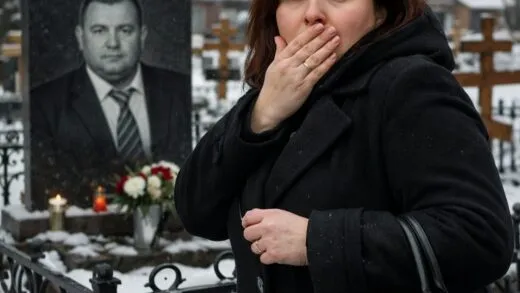
Every month, they still went to their mother’s grave. They stood by the grave, told her the news, and shared their successes. Matvey talked about his work, Yelisey about his studies. They felt that she could hear them, that she was proud of them. Life was getting better. It was hard, slow, but steady. The brothers moved forward, overcoming obstacles, never giving up, never breaking. They remembered the promises made to their mother and kept their word firmly.
And Grigory sank deeper into poverty and loneliness. No one visited him. His children with Yelena were growing up but rarely saw their father. Yelena wouldn’t allow it. She said he was a failure. “I don’t want you to take after him.” Kamila and Pavel grew up thinking of their father as a man who couldn’t achieve anything in life. They didn’t respect him, didn’t love him. To them, he was just a source of child support, an obligation that couldn’t be shaken off. Grigory felt it. And he remained silent. What could he say? Justify himself? Explain? Words were meaningless. Actions were what mattered. And his actions spoke for themselves. Fate was slowly but surely preparing a lesson for him. A lesson he would learn very soon. A lesson that would change everything.
Fifteen years had passed since Larisa’s death. Matvey had turned 30. He had become a surgeon spoken of with respect at the hospital. Young, talented, with nerves of steel and golden hands. Dr. Rusakov was proud of his student and often told his colleagues, “This young man will go far. He has it all – intelligence, patience, compassion.” Matvey had recently moved to a large city hospital where the most complex surgeries were performed. He was invited to join the team of leading surgeons. It was a recognition of his skill. He worked a lot, sometimes spending hours in the operating room without a break. He saved lives, fought against death, and won more often than he lost.
Yelisey, at 25, was already a practicing lawyer. He specialized in family law, helping women defend themselves against abusive husbands, fighting for children’s rights, and seeking justice in child support disputes. His name was becoming known. Clients came to him through recommendations, thanked him, and cried with relief when he won their cases…