
I sat and listened as two people, whom the system was ready to recognize as my accusers and experts, discussed me like a project, like a task that needed to be solved in such a way that I would be left without money, without a home, and if possible, without my daughter. They discussed it cynically, calmly, with glasses in their hands, occasionally clinking them. The edge of a bottle flashed on the screen, a part of Vorontsov’s face reflected in the glass, his smug smirk. At one point, he even uttered a phrase that sent a barely audible whisper through the courtroom: he said that such house-husbands usually break quickly, you just have to show them that no one takes them seriously. And then he added that if I lost my temper in his office, it would be a gift, because the judge would definitely appreciate a recording of an emotional outburst correctly.
When the video ended, a silence fell over the courtroom, the likes of which I had never heard before. Even the clock seemed to stop ticking. The judge sat slightly leaned forward, her lips pressed into a thin line, her eyes cold and very attentive. She asked the clerk to rewind the recording to several fragments and play again the moments where they talked about coaching Sofya, about withdrawing the money, about the pre-planned outburst in the office. Each time, Marina’s anxious breathing became louder. Finally, she snapped, jumped up, and shouted that it was all taken out of context, that she was drunk, that she had just blurted out something she shouldn’t have, that the child had no right to eavesdrop on her, let alone film her. Chernov tried to support her, starting to talk about the inadmissibility of such a recording, about the violation of the right to privacy. But his words hung limply in the air, because the entire courtroom had just heard how he and the respected specialist were discussing how to circumvent the law and deceive the court under the guise of caring for a child.
Kharlamov stood up, requested that the recording be admitted into evidence, and emphasized that the original file, not some edited excerpt, was on the very device the girl had brought. That the child was acting not on my behalf or at my instruction, but out of fear of being forced to lie. The judge looked at Sofya and asked if this was true, if I had not convinced her to film something or bring it to court. Trembling, but firmly, my daughter replied that I didn’t even know about the recording, that she was afraid that if she only told the truth with words, they wouldn’t believe her, but this way, it wouldn’t be just her story, but something that could be seen and heard. Then she looked at me, her lips trembled, and I saw a single tear roll down her cheek. And only then did it fully hit me how much this child had been forced to grow up through this ordeal.
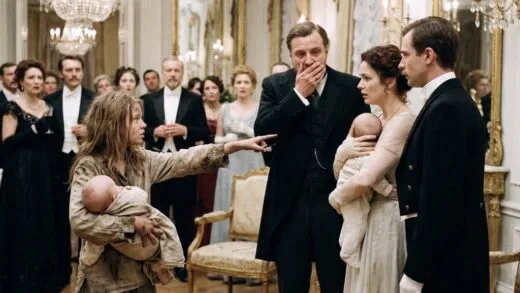
The judge announced a short recess, ordered everyone to leave the courtroom, but asked Sofya and Aunt Olga to remain. When we went out into the corridor, Marina lunged at my cousin with such fury that she had to be pulled away. She screamed that she was a traitor, that she had allowed the girl to stage this spectacle. Chernov was hissing something in her ear, clearly trying to regain some semblance of control, but his face, so recently smug, was now pale and tense. Vorontsov was not in the courtroom; he was not present for the ruling, and I suddenly became almost physically curious as to how he would react when he found out his professional secret was no longer a secret. But that wasn’t the main thing. The main thing was happening now behind a closed door, where the judge was listening to the child without our presence. And I stood in the corridor, leaning against the wall, and for the first time in many months, I felt not only fear, but also that fragile sensation that the thick glass they had kept me behind had finally cracked.
The recess seemed to last an eternity, though in reality, not much time had passed. The people in the corridor first whispered, then fell silent. Some went out for a smoke, some made calls, some glanced at me out of the corner of their eye, as if at a man whose carefully constructed cage had just shattered before his eyes. Marina paced between the benches, sometimes lashing out at Aunt Olga, sometimes defiantly pretending she didn’t care, but the more she tried to keep her back straight, the more clearly you could see her fingers trembling. At one point, she went to the far end of the corridor and dialed a number. I couldn’t hear the words, but from the fragments of phrases, I understood she was likely calling Vorontsov, telling him about the recording, about Sofya, about the judge, her voice growing more and more frantic, then she cut the call short, snapped her phone shut, and simply slid down the wall to the floor, holding her head in her hands.
When we were called back into the courtroom, the air seemed different, heavy, but no longer hopeless. I took my seat. Marina returned to her side, pale but composed. Chernov was clearly trying to regain his usual confidence, adjusting his tie, whispering to her, but his eyes betrayed that their entire beautiful construct was cracking in his mind. The judge took her place, asked everyone to be seated, and said that, given the new materials that had emerged, she needed to clarify some points before moving to the final formulation of the decision. Her voice was just as dry, but in that dryness, one could now hear not the usual indifferent weariness, but the cold focus of a person who has suddenly seen a rotten frame beneath a layer of plaster…